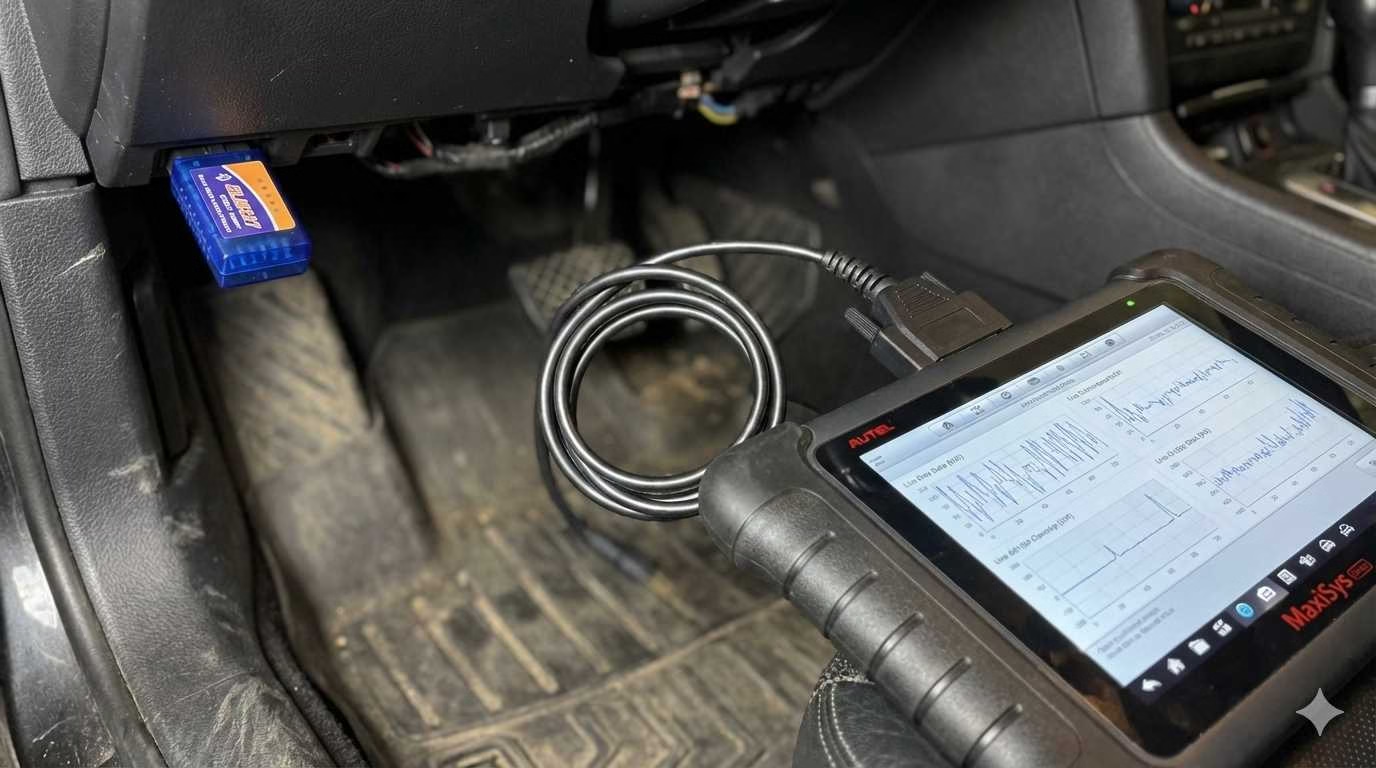
Your check engine light turns on.
You buy a cheap $20 scanner.
It shows codes like P0171 or P0300.
You look up the code online.
You buy a new part.
You install it.
The light comes back on.
This is not bad luck.
This happens because you confused reading codes with real diagnosis.
Basic scanners only show what is wrong.
They don’t show why it is wrong.
In this guide, I will explain:
- What cheap scanners really do
- What they hide from you
- Why these hidden details matter
- How to avoid wasting money on parts you don’t need
For better results, try a real OBD2 scanner that shows live data.
Why Cheap Scanners Trick You
Let me share a true story.
A car owner sees their check engine light.
They use a cheap scanner.
It shows code P0420.
The internet says “replace catalytic converter.”
They spend big money on a new converter.
One week later, the light returns.
Why?
The converter was not the real issue.
The true problem was:
- A small exhaust leak
- An engine misfire
- A lazy oxygen sensor
- Skewed fuel measurements
The code did not lie.
But it did not tell the full story.
A trouble code is just a symptom.
It shows a system is out of range.
It does not show which part failed.
Remember this one truth:
Cheap scanners only read codes.
Real scan tools find problems.
Real diagnosis needs data cheap tools hide:
- Live sensor readings
- Module-specific errors
- Test results
- Component control features
For learning how to read these live sensor values, check out our guide on understanding OBD2 fuel trims.
Section 1: What Cheap OBD2 Scanners Really Do
Let’s be fair to cheap scanners.
They do have value.
But only for simple tasks.
Most basic OBD2 tools are just code viewers.
They only show emissions issues.
Here is what they actually do:
- Show basic engine codes (P0xxx codes)
- Clear codes and turn off the check engine light
- Offer very limited “freeze frame” data
- Can’t see non-engine issues
That’s it. That’s all they do well.
When someone says “my scanner says it’s the O2 sensor,” they are wrong.
The scanner only shows a code with “O2” in the name.
It does not test the sensor.
It does not prove the sensor failed.
Cheap scanners are not diagnostic tools.
They are simple code readers.
They only show basic emissions data.
If your car has TPMS issues or other non-engine problems, cheap scanners won’t help at all.
Section 2: What Real Scan Tools Can Do
A good scan tool is not about fancy screens.
It is about talking to your car fully.
It shows more data from more parts of your car.
A. Live Data Streams
Codes are fixed.
Real diagnosis is fluid.
Live data turns guessing into knowing.
Instead of seeing “system too lean,” you watch fuel trims in real time.
Instead of “misfire detected,” you see which cylinder misfires under load.
Instead of replacing a thermostat for code P0128, you check temperature changes.
Real repair shops watch this live data:
- Sensor voltages (O2, AFR, MAP, MAF)
- Fuel trim values (ECU corrections)
- Misfire counts (by cylinder and driving state)
- Temperature differences (coolant vs air vs transmission)
- Engine load data
- EVAP system actions
Live data shows the full story.
Codes only show the ending.
Your car sets a code after seeing a pattern.
Live data shows you the pattern as it forms.
This saves you from replacing good parts.
No more buying parts based on code descriptions alone.
B. Manufacturer-Specific Codes
Many car problems show no check engine light.
This shocks DIYers.
They think the check engine light is the only warning.
It is not.
It mostly shows emissions issues.
Real scan tools see hidden codes.
These codes live in parts basic scanners cannot reach:
- ABS and stability systems
- Airbag and safety systems
- Transmission control modules
- Body computers (doors, lights, security)
- Steering and suspension systems
This explains why you might see:
- ABS warning light with no engine codes
- Traction control light with no check engine light
- Transmission problems with no codes at all
Your car stores these faults in separate computers.
If your tool cannot talk to them, you are blind.
For issues like these, understanding your car’s electrical system becomes crucial.
C. Freeze Frame and Mode $06 Data
Intermittent problems defeat cheap scanners.
Freeze frame data is a snapshot.
It shows conditions when a fault happened.
It records RPM, temperature, speed, and more.
This snapshot saves hours when problems only happen sometimes.
Mode $06 data is even more powerful.
It shows tests your car runs on itself.
It can show failing parts before they set codes.
This is real diagnosis:
- A catalytic converter code might start with bad fuel mixture
- A misfire might only happen at certain speeds
- An EVAP leak might only show during specific conditions
Cheap scanners rarely show this data well.
Even when they do, the data is hard to read.
You need a tool that translates this data into plain facts.
Section 3: Bidirectional Controls – The Real Game Changer
One feature separates true diagnostic tools from simple code readers: bidirectional control.
Bidirectional control lets you command your car’s parts.
You can turn things on and off.
You can run tests.
You can open valves.
You can cycle solenoids.
This lets you verify what works.
No more guessing or hoping.
I use these tests daily:
- Cooling fan tests:
Command low speed and high speed fans.
If low speed works but high speed fails, you found your issue.
It could be a resistor, relay, wiring, or control module. - EVAP purge valve tests:
Command the purge valve to open at idle.
Watch how fuel trims react.
No reaction means one problem.
Engine stumbling means another.
This isolates stuck valves from leaks. - ABS system tests:
Activate ABS solenoids and pump motors.
Confirm the pump runs.
Listen for valve clicks.
Verify the module can control the circuit.
This saves you from replacing good hydraulic units.
Why this matters:
Parts swapping fails because it guesses.
Bidirectional tests prove what works and what doesn’t.
They confirm:
- If a part responds to commands
- If wiring can carry proper power
- If computers see the responses
Cheap scanners can’t do this.
They only speculate about problems.
Guessing costs money when you buy parts you can’t return.
Before winter hits and causes more car issues, learn why batteries fail in cold weather and how proper diagnostics can prevent breakdowns.
Section 4: Problems Cheap Scanners Can’t Solve
Here are common car problems that defeat cheap scanners:
- ABS warning light with no codes
The fault lives in the ABS computer.
You need ABS codes and live wheel speed data.
This shows which sensor fails and when. - Transmission in limp mode with no check engine light
Many cars store transmission faults in a separate computer.
You need transmission codes and live data.
You must see line pressure and commanded vs actual gears.
You might need adaptation values to understand the problem. - EVAP leaks that only happen sometimes
EVAP tests only run under specific conditions.
Your car checks fuel level, temperature, and driving patterns.
You need freeze frame data and monitor status.
You might need to command purge/vent valves.
Sometimes you need smoke testing guided by scan tool data. - Random misfires with no stored codes
Mild misfires might not trigger codes.
You need misfire counters and Mode $06 data.
Watch fuel trims under load.
This shows problems without guessing coils and spark plugs. - Stalling after warm-up
A cheap scanner might show nothing.
Live data can reveal: - Failing crank sensors
- Throttle body issues
- Fuel pressure problems that appear when parts heat up
- Multiple warning lights after battery replacement
Modern cars need relearning after battery changes.
Steering sensors, stability control, and throttle systems need calibration.
Basic scanners can’t perform these calibrations or see module faults.
In every case, you don’t need more codes.
You need:
- Access to the right computer modules
- The right live data streams
- Proper test results
- The ability to run functional tests
For more on electrical issues that scanners might miss, see our guide on choosing the best car battery tester.
Section 5: When Cheap Scanners Are Good Enough
I’m not saying cheap scanners are worthless.
They have real uses for simple tasks.
They work well for basic triage, not full diagnosis.
Here’s when cheap scanners are enough:
- Fixing simple issues you already know about
Example: Your gas cap was loose.
It triggered an EVAP code.
You tighten the cap.
The scanner clears the code. - Quick emissions checks
Example: Confirming your car is ready for an emissions test.
You check monitor status before going to the inspection station. - First look at a problem
Example: Is this an engine issue or something else?
A cheap scanner gives you a starting point.
Used properly, cheap scanners keep you informed.
They prevent blind driving with warning lights on.
The mistake is expecting too much.
Cheap scanners can’t:
- Pinpoint failing parts
- Explain intermittent issues
- Show why problems happen
That’s not their job.
Don’t expect them to do it.
For those deeper issues, you need proper diagnostic equipment and knowledge about your vehicle’s systems. And if you’re battling cold weather car problems, our winter car care guide can help prevent many common issues that trigger check engine lights.
Section 6: When You Really Need a Good Scan Tool
This is where DIYers lose the most money.
This is where I get serious.
You need a real scan tool when:
- The warning light returns after a repair
You replaced a part.
The code came back.
Stop doing the same thing again.
You need data and tests.
You must prove what the computer sees. - Multiple systems act up together
Modern cars are networks.
One bad part can break many systems.
A charging problem can cause communication errors.
A brake switch fault can break cruise control, ABS, and transmission.
Without full access, you chase ghosts. - Problems only happen sometimes
Intermittent faults need special attention.
You must watch data while the problem happens.
A code after the fact doesn’t tell the full story. - You’re tired of buying wrong parts
The most expensive tool is misdiagnosis.
A good scan tool pays for itself fast.
It prevents one or two wrong electronic part purchases.
I’m not saying you need the most expensive tool.
You need the right features:
- Full module access
- Easy-to-read live data
- Good freeze frame data
- Clear Mode $06 presentation
- Bidirectional control for testing
Price doesn’t guarantee these features.
Some affordable tools have them.
Some expensive tools lack them.
Focus on capability, not cost.
For a guide to choosing the right diagnostic tool, check out our best OBD2 scanner recommendations based on real mechanic feedback.
Conclusion: Codes Don’t Fix Cars – Diagnosis Does
A cheap scanner shows what’s wrong.
A real scan tool shows why it’s wrong.
Treat codes like clues, not verdicts.
If you treat codes like final answers:
- You replace parts that aren’t broken
- You waste time and money
- Your problems come back
If you treat codes as starting points:
- You follow with real data
- You run proper tests
- You verify with functional checks
- You fix cars faster
- You save money and stress
Match your tool to your problem.
Don’t wish for a cheap fix to a complex issue.
Smart diagnosis isn’t fancy.
It’s honest about what you can see.
It’s honest about what you can’t see.
This honesty saves you:
- Time on repairs
- Money on parts
- Frustration with returning issues
For more automotive diagnostic tips and tool reviews, check out our other guides on ReviewFriendly. And don’t forget our detailed guide on reading OBD2 live data to get the most from your scan tool.