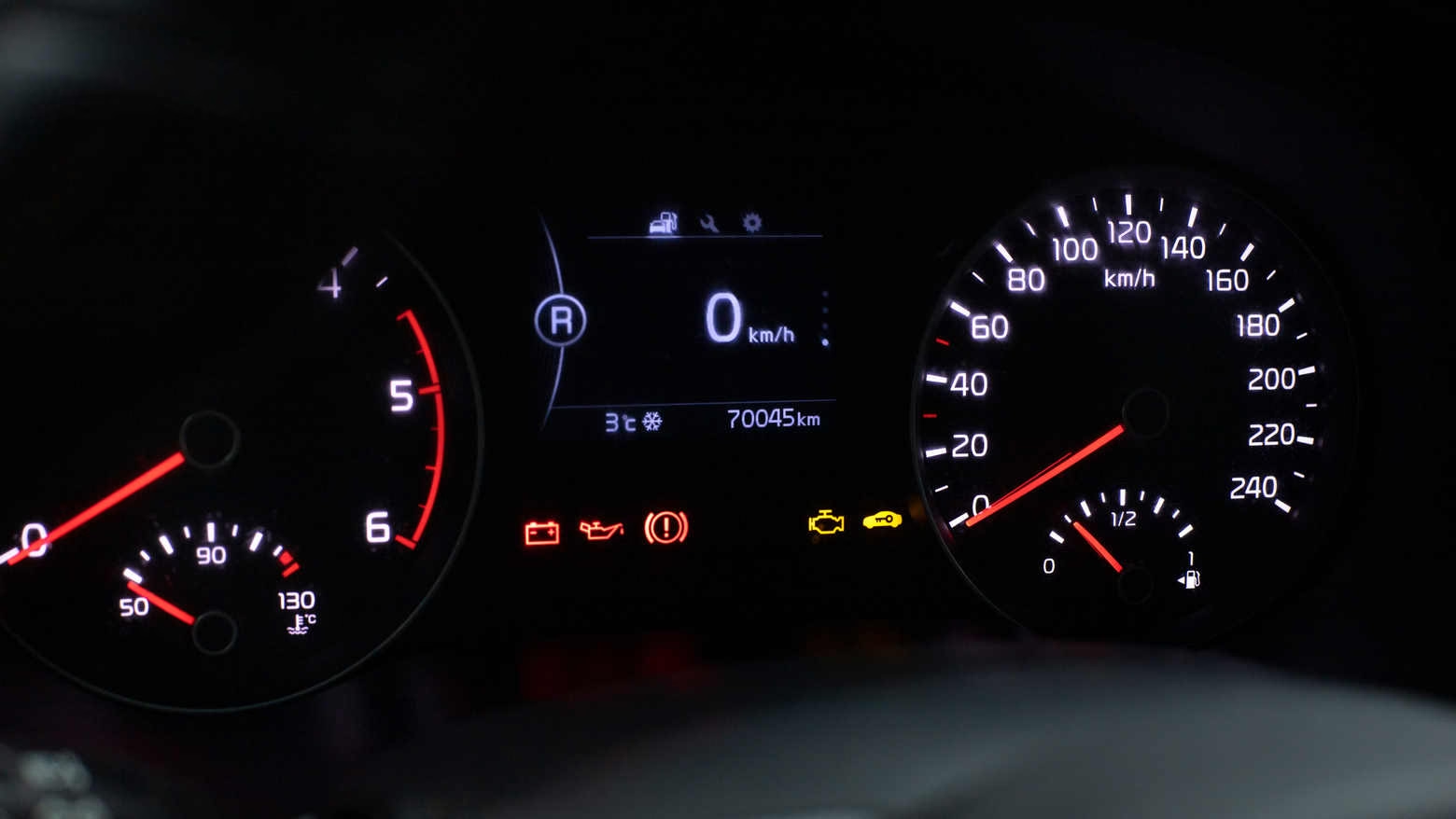
Reality check: TPMS isn’t just a simple light
Here’s something many quick tips miss: a TPMS light often isn’t just a warning that clears when you press a button.
On most cars, the TPMS system checks more than just tire pressure. It needs to see valid signals from sensors with the right IDs. If this doesn’t happen, the light stays on—even when all tires have perfect pressure.
This is why popular fixes often fail:
- “Just hold the reset button.” Many cars don’t have a true TPMS reset button. When they do, it usually starts a relearn process or clears a temporary alert—not magic.
- “Disconnect the battery.” This might clear some memory. But it won’t fix sensor IDs or bring a dead sensor back to life.
- “Drive for 10 minutes.” Driving can update readings on a healthy system. But it can’t replace missing sensor data or force a module to accept unknown IDs.
If your TPMS light won’t reset, your car is usually telling you one of three things:
- You’re not at the correct pressure
- Your car needs a TPMS relearn
- A sensor is failing or dead
TPMS basics made simple
Most modern cars use Direct TPMS. These are battery-powered sensors inside each wheel. Usually, they’re part of the valve stem or strapped to the wheel.
Each sensor sends out:
- Its unique ID number
- Tire pressure (and often temperature)
- Status updates (like battery health on some systems)
Why sensor batteries die: They have sealed, non-replaceable batteries made to last 5–10 years. Heat, time, and miles shorten this life. When the battery gets weak or dies, the sensor may send signals sometimes—or not at all.
Important: A dead sensor can’t be “reset.” In many cars, a dead sensor can’t be “relearned” either. If it’s not sending signals, the car has nothing to learn.
Reset vs Relearn vs Repair (where most advice fails)
1) “Reset” (what it really does)
What a TPMS reset actually does:
- Clears a temporary warning, OR
- Sets current pressures as the new “normal,” OR
- Makes the module check status again after you fix pressure
When a TPMS reset works:
- Your tires were low and are now properly inflated
- All sensors are working and talking to the car
- The system just needs a short drive to confirm stable readings
When a TPMS reset fails:
- The car can’t “see” one or more sensors
- Stored sensor IDs don’t match the current sensors
- The light is on due to a system fault (not pressure)
- You set pressure to the tire sidewall max instead of the door placard value
Bottom line: A reset isn’t a cure. It’s routine maintenance that only works when the system is healthy.
2) “Relearn” (what it is and why it matters)
TPMS relearn means your car learns (or re-learns) which sensors to listen to. This involves:
- Registering sensor IDs to your vehicle
- Assigning sensor positions (LF/RF/LR/RR) if your car tracks locations
- Building a fresh sensor list after changes
When you need a TPMS relearn:
- Tire rotation (on cars that track sensor positions)
- Sensor replacement (new sensors have new IDs)
- Seasonal wheel swaps (different sensors on winter/summer wheels)
- After replacing the TPMS module or updating software
Why many cars need a tool for relearning: Some systems need a TPMS activation signal. A tool “wakes” each sensor in a specific order. Others need ID entry through a scan tool. Some can auto-learn while driving—but only under perfect conditions with good sensors.
Simply put: If you changed wheels or sensors and the light won’t clear, “just drive more” often won’t help.
3) Bad sensor (the one thing a reset can’t fix)
Signs your TPMS sensor is failing:
- TPMS light blinking vs solid: On many cars, a blinking TPMS light at startup that later turns solid means a system fault (dead sensor, communication issue), not low pressure.
- The light comes and goes (sign of weak battery in a sensor)
- One wheel never shows pressure on a scan tool
- You see error codes like “no signal” or “invalid ID”
How good shops find bad sensors:
- They use a TPMS tool to trigger each sensor and check its signal
- They compare what sensors send with what the car expects
- They check for frequency issues (wrong sensors for your car)
Poor diagnosis often happens when:
- Shops only read generic codes (“TPMS fault”) and guess
- They don’t test each sensor individually
- They replace all sensors because “they’re old” without checking which one failed
Sometimes replacing all old sensors is smart. But this is a choice—not a diagnosis.
Why shops often “guess” (and it’s not always greed)
TPMS diagnosis looks easy but can be tricky. Here’s why guessing happens:
- Time pressure: Proper TPMS work takes time—checking pressures, scanning data, and testing sensors. This often costs more than customers expect.
- Basic tools: Many cheap scanners only show generic codes. They can’t tell which sensor is missing or if IDs match.
- Fear of comebacks: Some shops replace all sensors to avoid repeat visits when mixed-age sensors fail one by one.
- Customer expectations: People think resetting TPMS is free. When told they need diagnosis, they suspect being upsold. This pushes shops toward quick answers.
Not all shops are careless. TPMS is caught in a storm of time limits, tool limits, and trust issues.
DIY diagnosis: what you can check yourself
You can narrow down the problem without guessing. But be honest—you can’t fully test a sensor network without the right tools.
What you can check right now
- Use the door placard, not tire sidewall. The placard shows the pressure your TPMS expects. Sidewall numbers are maximum ratings—not your target.
- Check all tires. Don’t forget the spare if your car monitors it.
- Cold weather changes pressure. A “fine” tire yesterday can trigger TPMS today when it’s cold.
- Watch the light behavior. A solid light often means pressure issues. A blinking-then-solid light often means a system fault.
- Consider your car’s age. If your car is 7–10+ years old with original sensors.
- Think about recent work. Did you rotate tires, swap wheels, or install new tires?
What you can’t check without tools
- Which specific sensor is dead (needs a TPMS tool)
- Whether the problem is mismatched IDs, wrong sensor frequency, or module settings
- If a sensor fails only when moving or in temperature changes (needs live data tests)
Smart DIYers avoid random parts replacement. Come to a shop with clear observations instead.
Relearn tools: when to buy one
A TPMS relearn tool does one or both of these:
- Activates sensors so your car (or tool) can read their IDs and pressure
- Guides the relearn process (usually LF → RF → RR → LR), helping the car save IDs and positions
OEM vs universal tools
- OEM procedures might use your car’s menu, a scan tool, or specific button presses. Sometimes they require factory tools.
- Universal relearn tools work on many vehicles by waking sensors and supporting common relearn modes. But they don’t work on all cars or sensor types.
When buying a tool makes sense
- You swap seasonal wheels (summer/winter sets) yearly
- You maintain multiple vehicles at home
- You often rotate tires on a car that needs position relearning
When paying a shop is smarter
- You rarely change wheels or sensors
- Your problem is likely TPMS sensor failure (needs confirmation and possibly new parts)
- You don’t want to risk buying an incompatible tool
Truth: A tool saves money if you often do work that needs relearning. It won’t fix dead sensors or wrong parts.
Common myths (and why they’re wrong)
Myth: “Disconnecting the battery resets TPMS.”
Reality: It might clear some alerts. But it won’t fix sensor IDs or missing signals. If the module can’t see a sensor, the light comes back.
Myth: “Overinflate the tires and the light will clear.”
Reality: Overinflation isn’t a fix. TPMS logic isn’t tricked by extra pressure. You might create safety risks and wear out tires faster. Inflate correctly.
Myth: “Driving longer forces a reset.”
Reality: Driving updates readings only on healthy systems with working sensors. It can’t make the module learn new IDs on cars that need a formal relearn process.
Myth: “All TPMS systems work the same.”
Reality: Relearn methods vary greatly. Some auto-learn. Some need trigger tools. Some need ID entry. Some track wheel positions. Others don’t.
Myth: “If pressures are right, the light must mean a bad sensor.”
Reality: Not always. After wheel swaps, mismatched IDs can keep the light on—even with perfect pressure.
Simple decision tree for your TPMS light
Stop guessing with this clear path:
1) If a tire was low and you fixed the pressure:
A TPMS reset (or short drive) may work—but only if all sensors are working and the system is healthy.
2) If you rotated tires, swapped wheels, or replaced a sensor:
You likely need a TPMS relearn. Many cars won’t complete this without a tool or special procedure.
3) If your TPMS light blinks then goes solid:
Treat this as a system fault—not just pressure. This points to TPMS sensor failure, wrong sensors, or registration issues.
4) If your car is 7–10+ years old on original sensors:
A dying battery is likely the culprit. No reset or relearn will fix a sensor that can’t send signals.
Best takeaway: “TPMS reset” is often the wrong goal. The real fix depends on whether your system is unhappy about pressure, sensor identity/position, or sensor health. Once you know which issue you face, the solution becomes clear—not a gamble.