1) The Real Problem: “Holds Air” Doesn’t Mean “Safe”
Your tire gets a puncture. Air leaks out. You get it patched up. The tire holds air again. You think you’re safe.
You might not be.
A repair can stop air loss but still leave your tire weak. It might look fine. It might drive fine. But it could fail suddenly when hot, at high speed, or under heavy load.
Truth is simple: not every puncture should be fixed. Some “successful” repairs are still unsafe.
2) The Three Options Explained
A) Tire Plug
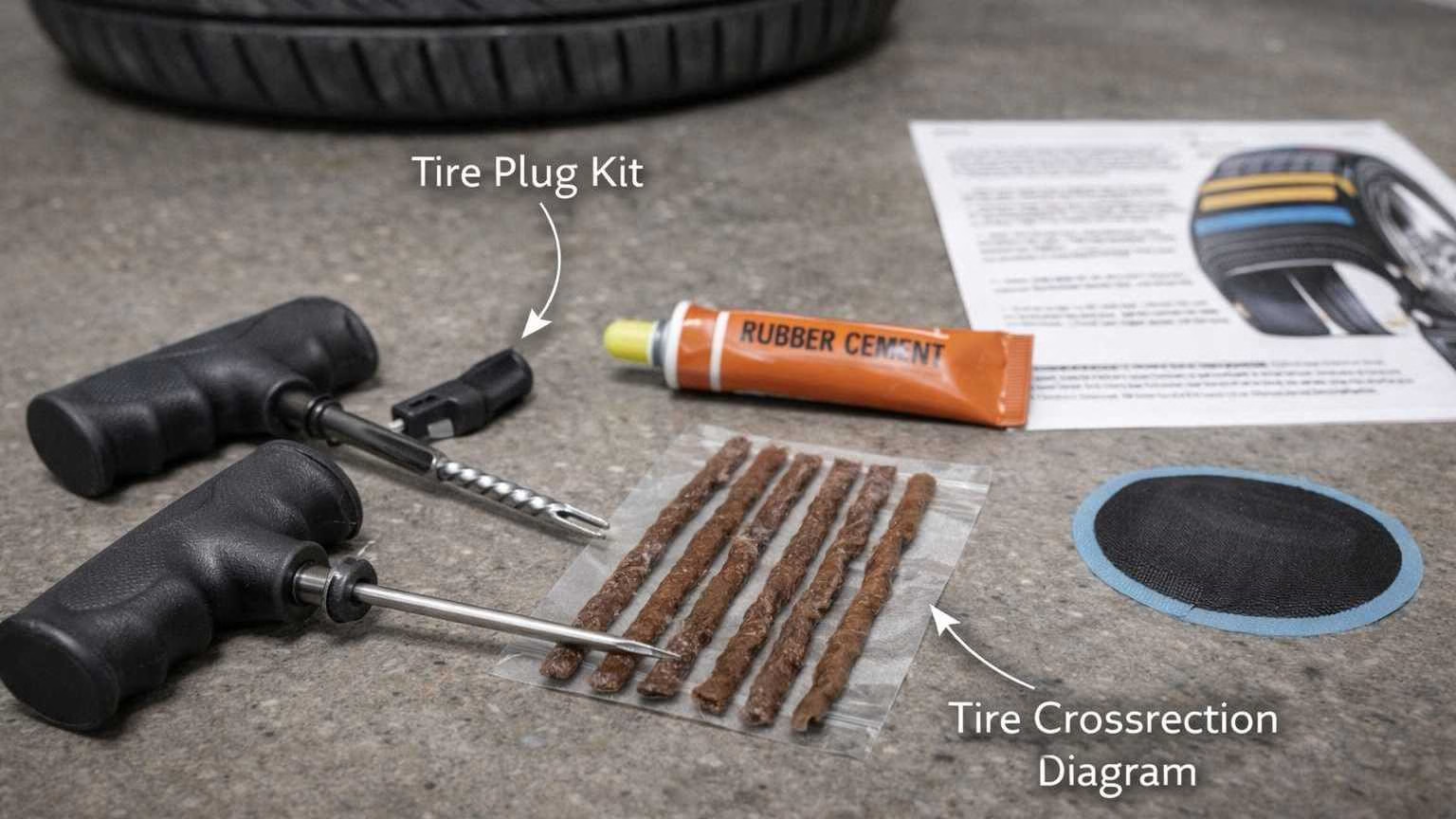
A tire plug is a rubber strip pushed into the hole from outside. It fills the puncture path and tries to stop air loss.
Why people use plugs:
- They’re fast
- You don’t need to remove the tire
- They often stop leaks right away
When a plug might work:
- As a short-term fix to get you to a proper repair shop
- For small, clean holes in the tread area
- Only when the tire wasn’t driven while flat
Why safety experts call plugs temporary:
- You can’t see inside the tire to check for damage
- Plugs don’t properly seal the inner liner
- They can’t fix hidden damage from driving on low pressure
What a plug won’t tell you:
- If the tire was driven while flat (this weakens sidewalls)
- If the hole inside is jagged or angled strangely
- If the puncture is too close to the shoulder area
Bottom line: A plug might hold air, but that doesn’t mean it’s safe. Treat plugs as emergency fixes only, unless a pro removes the tire, checks it inside, and does a proper repair.
B) Tire Patch
A patch goes on the inside of your tire after removing it from the wheel. A technician looks inside, cleans the area, and seals the hole.
Why patches seal better than plugs:
- They seal the actual air-holding layer directly
- The tire must be removed, forcing an internal check
- It’s a careful repair process, not just stuffing a hole
What patches can fix:
- Small holes in the center tread area
- Clean punctures that didn’t damage internal belts
What patches cannot fix:
- Sidewall or shoulder injuries
- Damage from driving on flat tires (look for scuff marks inside)
- Big, torn holes
- Broken steel belts or fabric layers
Why patches are safer than plugs:
Patches require looking inside your tire. This inspection matters because tires fail in ways beyond just leaking air. Heat damage and internal separation cause dangerous failures.
Why patches still have limits:
A patch seals air leaks. It doesn’t rebuild damaged structure. If steel belts or fabric layers are broken, sealing the hole won’t make your tire strong again.
C) Tire Replacement
Sometimes you just need a new tire. This is required when the tire’s structure might be damaged, or when the hole is in a high-flex area that can’t be safely repaired.
Replace your tire when:
- The puncture is in the sidewall or shoulder
- Steel belts or fabric cords are visible
- The hole is large, jagged, or torn
- You drove on a flat tire (this causes hidden heat damage)
- There are multiple punctures close together
- Previous repairs failed or overlap
Why some damage can’t be repaired:
Your tire isn’t just a rubber balloon. It’s a complex structure designed to flex in specific ways. Damage to high-flex areas (sidewall/shoulder) or to internal cords changes how stress moves through the tire. This is where dangerous failures start.
Why ignoring this advice causes blowouts:
Most blowouts aren’t from small nail holes suddenly exploding. They happen when heat-weakened materials or separated belts finally give way at high speed.
3) The Safe Repair Zone: Where Repairs Work (and Where They’re Dangerous)
Picture your tire tread in three parts:
- Center tread: The flat middle section that touches the road evenly
- Shoulder: The outer edges where tread meets sidewall
- Sidewall: The flexible side section between tread and wheel
Safe repair zone:
- Only the center tread area
- This part has strong reinforcement and controlled flex
Danger zones:
- Shoulder areas flex more and get hotter than center tread
- Sidewalls should never be repaired for punctures – they flex constantly and need perfect cord strength
Why shoulder and sidewall damage is unsafe:
These areas work hard with every tire rotation. A repair that might last in the center tread can loosen in these zones. Worse, it might hide broken cords. Broken cords in the sidewall aren’t just air leaks – they mean loss of strength.
What happens when these areas get damaged:
- Internal cords can tear or weaken
- Heat builds faster in damaged spots
- The tire may bulge (a sign of broken cords) or suddenly burst when driving fast
If your puncture is in the sidewall or near the shoulder, replace the tire. No exceptions.
4) Blowout Risk Factors (Air Loss Isn’t the Only Danger)
Your tire can be dangerous even if it’s not leaking air. Watch for these warning signs:
- Sidewall punctures – These damage the tire’s structure. Sealing them won’t bring back strength. Replace the tire.
- Large or jagged holes – Clean nail holes are one thing. Torn injuries cut through belts and cords. These create unpredictable weak spots.
- Driving on flat tires – This overheats the tire. Look for scuff marks, rubber dust, or wrinkles inside. Even after fixing the hole, heat damage can cause later failure.
- Exposed steel belts or cords – If you see metal or fabric threads, the tire’s strength is compromised. This is a structural emergency. Replace it.
- Multiple close punctures – Two holes near each other create a weak zone that flexes abnormally. Even small holes together can be unsafe.
Remember: Tires can fail suddenly from heat and separation without slowly leaking air first. “It’s not leaking” is not a safety test.
5) Plug + Patch Combo (The Professional Standard)
The best repair method combines a plug and patch. This is installed from inside after removing the tire. It seals the inner liner like a patch while filling the hole channel like a plug.
Why professionals prefer this method:
- The tire is removed and fully inspected inside
- The inner liner gets a proper seal
- The puncture channel is filled to block moisture
Even this excellent method has limits:
- Won’t work for shoulder or sidewall punctures
- Can’t fix heat damage from driving on flat tires
- Won’t help if belts or cords are damaged
- Is unsafe with multiple close injuries or overlapping repairs
Important truth: Even perfect sealing can’t fix broken structure. A tire that holds air might still be dangerous.
6) Common Myths (Quick Truths)
Myth: “If it holds air, it’s safe.”
Truth: Holding air only means the leak slowed. It doesn’t show hidden cord damage or separation risks.
Myth: “Sidewall plugs work for small holes.”
Truth: Sidewall punctures damage your tire’s strength. No plug can restore that. Replace sidewall-punctured tires.
Myth: “Patches last forever.”
Truth: Good internal repairs last long when done right in the safe zone. But they can’t fix already-damaged structure.
Myth: “DIY plugs equal pro repairs.”
Truth: Professional repairs include removing the tire and checking inside. Without that step, you’re guessing about safety.
7) Simple Decision Guide (Safety First)
Use this easy framework:
Plug = temporary emergency fix only
- Purpose: Get enough air to drive slowly to a repair shop
- Mindset: This is not a permanent solution
Patch or plug-patch = limited use
- Only for small, clean holes in the center tread
- Requires: tire removal, internal inspection, no heat damage signs
Replace = safest choice sometimes
- Always for sidewall or shoulder punctures
- Always when you see cords, belts, big tears, or multiple holes
- When you can’t be sure the tire is structurally sound
When choosing between “maybe safe” and “clearly safe,” let the tire guide your decision.
8) Conclusion: The Real Skill Is Knowing When Not to Repair
Tires are safety parts. They carry your vehicle’s weight. They handle braking and turning forces. They absorb heat and impacts every mile. This isn’t where you want to gamble with optimistic repairs.
Saving a few dollars today with an unsafe repair can cost much more later—through faster wear, loss of vehicle control, or a sudden failure while driving fast.
The wise approach is simple: Only repair punctures in the safe center tread zone using proper internal methods. Replace tires with sidewall or shoulder damage. Replace tires with structural damage. Knowing when not to repair is the true skill that keeps you and others safe on the road.
P.S. For more tire safety tips, check our complete Tire Pressure Guide to understand how proper inflation prevents many puncture-related failures. And if you’re preparing for emergencies, our guide to the Best Tire Inflator for Trucks can help you get safely to a repair shop when you have a slow leak.
P.P.S. Worried about your car battery during winter tire changes? Understand why “Short Trips” Kill Car Batteries and how to protect your vehicle’s electrical system during cold months.