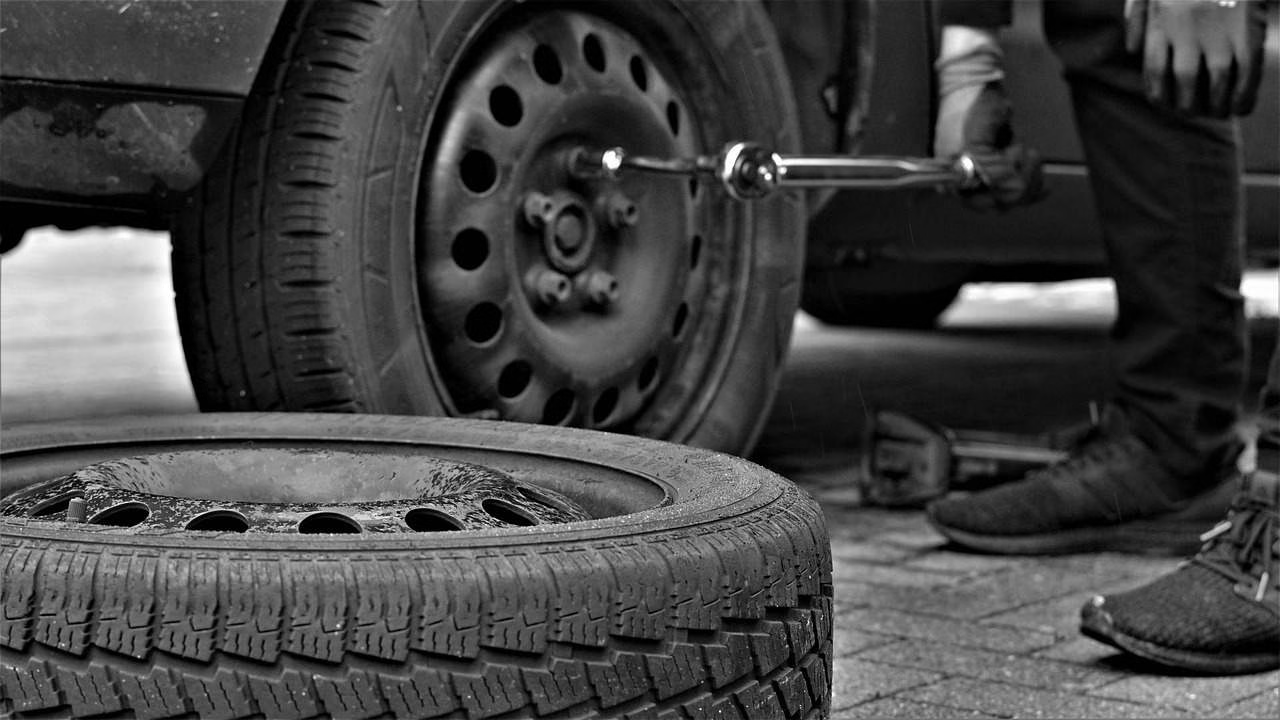
Slow tire leaks are sneaky. They don’t make a big show. Your tire looks fine. Your car drives normally. The pressure just drops a little bit at a time.
Many drivers waste days guessing what’s wrong. They add air. They reset the warning light. They hope the problem disappears.
Here’s what most people miss: slow leaks often aren’t in the tread. Air escapes through the valve core. It leaks around the rim edge (bead). Or it seeps through a tiny puncture that only leaks sometimes.
If you keep guessing, you’ll keep refilling your tire. This causes uneven tire wear. It stresses your TPMS sensor. It damages your tire’s internal structure from running underinflated.
This guide helps you find the exact problem. You’ll run simple tests to pinpoint the leak: valve core, bead leak, or nail/screw puncture. Then you’ll know which fix actually works.
Learn more about proper tire pressure settings here.
Quick Leak Type Comparison
Use this simple guide before testing:
- Valve core/stem leaks
• Air loss: Hours to a few days
• Often mistaken for: “Must be a nail”
• Can you fix it without removing the tire? Usually yes (core), sometimes no (stem) - Bead leaks (rim-to-tire seal)
• Air loss: Days (sometimes faster when cold)
• Often mistaken for: “Bad tire” or “TPMS problem”
• Can you fix it without removing the tire? No (real fix needs bead removal) - Tread punctures (nail/screw)
• Air loss: Hours to weeks (depends on object and angle)
• Often mistaken for: “Valve leak” (because punctures hide well)
• Can you fix it without removing the tire? Plugs work temporarily, but aren’t the best final fix
Never use sealant-in-a-can as a solution. Never just keep topping off your tire. These choices make finding the real problem harder. They make proper repair more expensive later.
Valve Core Leaks (The Most Missed Problem)
What is a valve core?
Inside your valve stem lives a tiny spring-loaded check valve. This is your valve core. It opens when you add air. It seals shut when you remove the air chuck. This small part can leak enough to drop your pressure slowly.
Why valve cores leak
Valve cores fail for simple reasons:
- Dirt gets inside and blocks a clean seal
- Heat and age weaken the rubber seal
- Corrosion or damage from air-chuck use (especially if angled)
- Missing caps let moisture and debris inside (caps aren’t just dust covers)
Why repair shops miss this problem
Many leak checks focus only on tread and sidewall. If no puncture is obvious, the valve core gets overlooked. This happens especially with slow, intermittent leaks.
Simple tests you must do
- Soapy water test on valve opening
• Mix dish soap and water (it should foam easily)
• Remove the cap
• Put soapy water on the valve opening
• Watch for growing bubbles. Steady bubbles mean a leak. - Wiggle test (with cap removed)
• Gently wiggle the valve stem
• Lightly tap around the core area
• If bubbling starts or gets worse when moving it, suspect a bad core or stem. - Overnight pressure check
• Check pressures when tires are cold (before driving)
• Inflate all tires to the same pressure
• Park overnight
• Recheck cold pressures next morning
• If one tire drops more than others, you have a real leak
• Then do the soapy-water test to confirm if the valve is leaking
Fixes that actually work
Valve core replacement (cheap and fast)
- Replacing the core takes just minutes with a valve-core tool
- This often fixes the problem permanently if the stem is good
When you need a full stem replacement
Replace the whole stem (or TPMS valve) if:
- The rubber stem is cracked, dry, or leaking at the wheel base
- The metal stem shows corrosion or damaged sealing surfaces
- Bubbles form at the stem base where it meets the wheel
Why caps matter
- Use proper sealing caps, not decorative ones
- Good caps keep dirt and moisture out
- This prevents future core leaks
Bottom line: If your leak is at the valve core, test it, replace the core, and move on. If it’s leaking at the stem base, replacing just the core won’t help.
Bead Leaks (Common on Older Wheels)
What is a tire bead?
The bead is the reinforced edge of your tire. It seals against your wheel rim. Air pressure pushes the bead into the rim seat. If the rim surface is rough, corroded, bent, or dirty, air escapes around this seal.
Why bead leaks happen
Common causes include:
- Rust on steel wheels
- Oxidation and pitting on aluminum wheels
- Old bead sealer residue or dirt
- Bent rim edges (from curbs or potholes)
- Cold weather that shrinks rubber and reveals weak seals
Why bead leaks show up after mounting or seasonal changes
A newly mounted tire might hold air at first. Then leaks start as the wheel oxidizes. Or as the tire bead relaxes. Or when temperatures drop. Cold weather often reveals weak bead seals because pressure drops and rubber stiffens.
Tests you need to do
- Soapy water around rim edge
• Jack up your car safely or remove the wheel
• Spray soapy water around the entire rim edge where tire meets wheel
• Check both outer and inner bead areas
• Look for tiny bubbles forming along the rim - Listening test after reinflation
• Inflate to correct cold pressure
• In a quiet area, rotate the wheel slowly
• Listen closely near the rim edge
• A bead leak can hiss faintly, especially if losing more than a few PSI weekly - Check for visible corrosion
• Look for white powdery spots on aluminum wheels
• Check for rust flakes on steel wheels near the bead seat
• Pitting or heavy corrosion where the bead seals is a strong clue
Honest fixes for bead leaks
Reseating the bead isn’t permanent with corrosion
- Deflating and reinflating might stop leaks briefly
- But corrosion creates new leak paths
- If the rim surface is damaged, the leak will return
Sealants are temporary fixes only
- Liquid sealant inside the tire masks leaks briefly
- It makes proper repair harder later
- It can cause balancing problems
- It’s not a real solution for corroded bead seats
Real fixes require proper work
A lasting fix usually needs:
- Breaking the bead off the rim
- Cleaning the bead seat down to solid metal (removing all corrosion)
- Refinishing if needed, then remounting correctly
If your rim is bent or deeply pitted, replacement might be the only reliable answer. A tire can’t seal against a damaged surface forever.
Nail or Screw Punctures (Not Always Easy to Find)
Why nails leak slowly for weeks
A nail or screw can act like a plug. It blocks the hole just enough to leak slowly. The leak rate changes with temperature. It changes with speed. It changes as your tire flexes. That’s why you might lose just 1-2 PSI every few days with a real puncture.
Why leaks may only appear when driving
When your tire rolls, the tread flexes. This can open a puncture slightly. At rest, it may seal better. After driving, it might leak faster.
Tests you should run
- Rolling inspection method
• Move your car forward a few feet at a time
• Inspect the tread as it rotates into view
• Look for shiny metal, dark dots, or anything unusual
• Check the full circumference and both tire shoulders
• Many punctures hide near shoulders where they’re hard to see - Soapy water on tread blocks
• Spray soapy water across the tread surface in sections
• Focus on grooves and small cuts where objects hide
• Watch for steady streams of bubbles
• If the object is still in place, bubbles form around it - Pressure loss after short drives
• Set tire to correct cold pressure
• Drive 10-20 minutes
• Park and recheck pressure once cooled
• If loss is worse after driving than sitting, a tread puncture is likely
Repair rules you must follow
Plug-only repairs are temporary
- An external plug can stop air loss temporarily
- It doesn’t inspect internal damage
- It doesn’t seal the inner liner reliably long-term
- Treat plug-only as a get-you-home fix, not a permanent solution
Plug + patch from inside is the correct repair
- The proper fix for repairable tread punctures is an internal patch with plug
- This seals the inner liner and fills the injury channel
- It requires removing the tire for proper installation
Sidewall punctures are never repairable
- If the puncture is in the sidewall or shoulder flex area, replace the tire
- These areas flex too much for a safe repair
- Also replace tires if you drove on them while very low – internal damage may make them unsafe
What NOT to Do (Critical Advice)
Never use tire slime or sealants as a solution
- Sealants contaminate your tire interior
- They interfere with proper patching later
- They create messy cleanups that shops charge extra for
- They cause balancing issues
- They can damage or contaminate TPMS components
- Most importantly: sealants hide the real leak path you need to find
Never keep refilling and calling it fixed
- Repeated refilling delays the real repair
- It’s easy to forget your tire is compromised
- Even mild underinflation accelerates shoulder wear
- It increases heat and hurts fuel economy
- A slow leak that becomes fast usually happens at the worst time
Never ignore slow leaks just because you have TPMS
- TPMS sensors aren’t causing most slow leaks
- But they can be damaged by moisture, corrosion, and repeated low-pressure driving
- Running low pressure flexes your tire more
- This creates heat that weakens tire structure over time
Simple truth: Find the leak. Fix the leak. Stop the cycle.
Quick Decision Guide (What to Test First)
Follow this order based on your symptoms:
If losing air overnight (noticeable drop by morning):
- Check valve core and stem first (soapy water on valve opening, then stem base)
- If valve is clean, check tread for punctures next
- If tread looks clean, check bead edges
If losing air over several days:
- Start with bead leak inspection (soapy water around rim edges; look for corrosion)
- Then do rolling tread inspection (nails hide well)
- Finish with valve core test (quick and often missed)
If air loss worsens after highway driving:
- Suspect tread puncture that opens when flexing (soapy water on tread; rolling inspection)
- If nothing shows, check for bead leaks (heat and flex change sealing slightly)
- Check valve core last unless you saw bubbling there
If leak changes with temperature (fine when warm, low when cold):
- Suspect bead leaks first, especially on older wheels or with visible corrosion
- Still check valve core quickly—it takes seconds and costs almost nothing to fix
Fast rule: When you see bubbles, stop guessing. Follow the bubbles.
Conclusion: Fix the Cause, Not the Symptom
Slow tire leaks don’t reward hope. They reward smart diagnosis. Most frustration comes from assuming “it must be a nail” or blaming your TPMS. People skip simple tests that reveal the real problem.
Test in this smart order: valve core and stem first, then tread, then bead. Use soapy water and your eyes. When you find the source, match the right repair to the problem:
- Valve cores are cheap and fast to replace
- Bead leaks often need proper rim cleaning
- Punctures in the tread deserve an internal plug-plus-patch
Practical takeaway: Don’t keep feeding air to a mystery. Find the exact leak point once. Fix it correctly. Stop losing time, money, and tire pressure.
For more tire care tips, check out our guide on proper tire pressure settings.