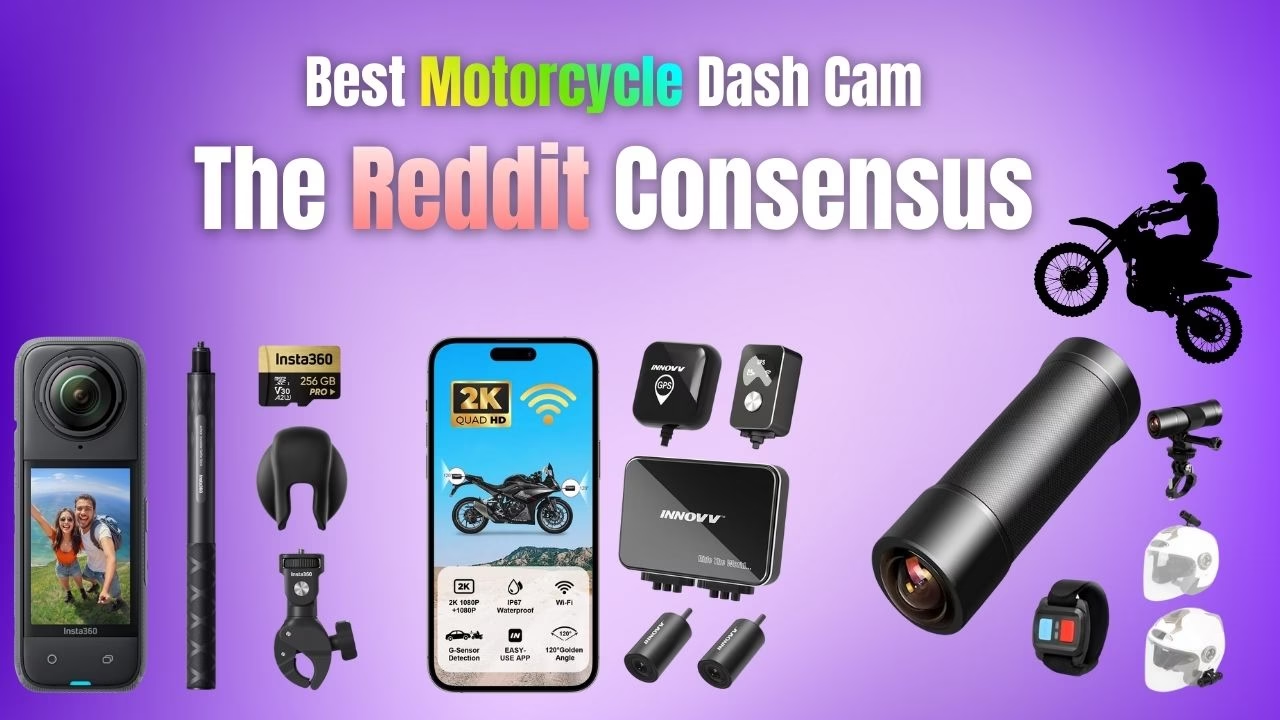
We analyzed 12 months of Reddit threads to find the best motorcycle dash cams. Skip the marketing: here is the truth about vibration and GoPro failure.
1. INNOVV K7 Motorcycle Dash Cam
The Brutal Verdict: Buy if you want a permanently wired, reliable evidence cam that turns on with your bike—but prepare to ignore the useless EIS feature and deal with a painful installation.
Check Price on Amazon →2. Insta360 X4 Motorcycle Bundle
The Brutal Verdict: Buy if you are a content creator who wants cinematic 360° videos—but avoid if you need reliable, set-and-forget evidence for commuting, as it overheats and requires constant management.
Check Price on Amazon →3. VSYSTO WiFi Helmet Camera
The Brutal Verdict: Buy if you want a cheap, removable helmet-mounted option for quick trips—but be ready to juggle battery charging and deal with a flaky mobile app.
Check Price on Amazon →Most reviews of the ‘best motorcycle camera’ are just recycled marketing content. They praise spec sheets and bury the real-world trade-offs—like how some cameras vibrate apart on a V-twin or melt on a hot day (similar to the issues we found testing the best dash cams for heat in cars).
You want insights from riders who have experienced these cameras over thousands of miles, not press releases. This article is built from long-term user reports and forums. We dug through the noise to show you the ugly truths other reviews hide, so you don’t waste your money on a setup that fails when you need it most.
On a bike, “good footage” isn’t enough. You need footage that exists every time. That’s the heart of best motorcycle dash cam advice. Riders don’t want a hobby. They want proof. So this section focuses on reliability, proper placement of dash cam, and a setup you’ll actually keep running.
- Why a GoPro can let you down
- What to look for (bike-first checklist)
- Front & rear: is a dual dash cam worth it?
- How to install dash cam on motorcycle
- Proper placement of dash cam
- Does it work when engine is off?
- UK, Australia, Singapore, Philippines, Malaysia
- Dash cam use in Europe
- FAQ
Why a GoPro will let you down as a motorcycle dash cam (most of the time)
Action cams are awesome for highlights. They’re not always awesome for evidence. If you’ve asked is a gopro better than a dash cam, here’s the reality riders keep repeating: a dash cam is built to be boring. Action cams are built to be fun. For daily riding, boring wins.
Where action cams fall short on a bike
- Startup friction: if you must press buttons, you’ll eventually forget.
- Battery anxiety: long rides turn “dash cam with longest battery life” into a real problem.
- Overheating risk: sun + windscreen + high recording settings can stress small bodies.
- File gaps: missed clips happen when storage fills or settings aren’t dialed in.
- Mount drift: vibration can slowly change the angle without you noticing.
When an action cam does make sense
There are times it shines. Just know what you’re signing up for. Think “content capture,” not “set-and-forget incident recording.”
- Weekend rides and scenic footage
- Short commutes where charging is easy
- Helmet POV storytelling
- Daily commuting reliability
- Parking security expectations
- “Always recording” peace of mind
Best motorcycle dash cam checklist: what matters on a bike (not in a car)
The question what is the best motorcycle dash cam usually means: “Which one will survive weather, vibration, and everyday riding without me babysitting it?” Here’s the bike-first checklist that keeps you out of regret.
- True weather resistance: rain happens. Sprays happen. Your setup should shrug it off.
- Vibration resilience: stable mount + stable internals = usable footage.
- Auto-record every ride: turn the key, it records. Done.
- Readable plates in motion: motion clarity beats “pretty still frames.”
- Simple clip protection: one action to lock an important moment.
- GPS option (if you want context): helpful for route, speed, and timeline.
Budget and value without disappointment
Searches like best budget motorcycle dash cam, best cheap motorcycle dash cam, and even “motorcycle dash cam best buy” style browsing all share the same fear: paying less and getting unreliable footage. The best value motorcycle dash cam is the one that records consistently, not the one with the flashiest spec list.
Mount stability, weather resistance, and consistent recording behavior.
Marketing features you won’t use, complicated settings, and “hero” specs that don’t help in real incidents.
If your readers also search best dash cam for car and motorcycle, the practical answer is: a bike-specific system usually fits the bike better, faster, and cleaner.
Best motorcycle dash cam front and rear: is a dual dash cam worth it?
Short answer: often, yes. Rear footage changes the story. It catches tailgaters, rear bumps, and the moments you didn’t see coming. That’s why “best motorcycle dash cam front and rear” keeps trending in best motorcycle dash cam reddit threads.
- You ride in heavy traffic or do a lot of highway miles
- You’ve had close calls from behind
- You park in busy areas and want more context
- You want fewer disputes, faster resolution
- You want the simplest install possible
- You mainly care about forward incidents
- You prefer minimal wiring and faster setup
- You plan to add rear later
How to install dash cam on motorcycle (clean, safe, and repeatable)
If your readers type how to install dash cam on motorcycle or install dash cam on motorcycle, they usually want one thing: a tidy setup that doesn’t interfere with riding. Here’s the install flow that keeps it calm.
- Plan your camera positions first. Choose front view and rear view angles before mounting anything.
- Choose safe cable routes. Keep wiring away from steering head movement, suspension travel, chain/belt areas, and heat sources.
- Mount the front camera securely. Level the horizon and confirm it won’t hit fairings or bars at full lock.
- Mount the rear camera for context. Stable beats “perfectly centered.” Avoid splash zones if possible.
- Connect to reliable power. Use a power plan that starts recording with the bike and stays stable under vibration.
- Test and lock a clip. Do a short ride, then confirm file saving and clip protection work the way you expect.
Dash cam disadvantages (and how to avoid them)
Every setup has trade-offs. The goal is reducing the ones that actually annoy you. Here are common dash cam disadvantages riders mention—plus the quick fixes.
- Extra wiring: solve it with careful routing and small ties so nothing flaps in the wind.
- Wind noise in audio: treat audio as optional. Your video is the evidence star.
- Maintenance: wipe lenses regularly, especially after rain and dusty rides.
- Storage surprises: format on a schedule and lock important clips immediately.
Proper placement of dash cam on a motorcycle (the angles that actually help)
Placement is everything. On bikes, the wrong angle turns “4K” into “I can’t tell what happened.” The best motorcycle dash cam setup captures the road, the lane context, and the approach. Not just the sky. Not just your handlebars.
- Mount where vibration is lowest and the view is unobstructed
- Aim slightly downward to capture plates and lane markers
- Avoid placing directly behind reflective windscreens if glare is severe
- Confirm full steering lock clearance
- High enough to see following vehicles clearly
- Protected from direct spray when possible
- Aim to capture approach, not just your tail light
- Secure cables so nothing rubs or pinches
Dash cam does they work when engine is off? (parking mode, explained simply)
Riders ask it a bunch of ways: “dash cam does they work when engine is off” or “does it record when parked?” The honest answer: it depends on your power setup. Many motorcycle dash cams are designed to record while riding automatically. Parked recording is possible in some setups, but it requires the right power plan and sensible settings.
Two easy mental modes
- Ride-only recording: simplest and most common. Turn key, it records.
- Parking/security recording: possible, but needs careful power planning so you don’t create battery stress.
“GoPro as dash cam” and engine-off reality
This is where action cams often frustrate people. Engine off means you’re relying on battery behavior and your own memory to start/stop recording. That’s a lot to ask after a long ride.
Best motorcycle dash cam by region (UK, Australia, Singapore, Philippines, Malaysia)
People search region-specific phrases like best motorcycle dash cam uk, best motorcycle dash cam australia, best motorcycle dash cam singapore, best motorcycle dash cam philippines, and best motorcycle dash cam malaysia because weather, road conditions, and shopping options vary. The good news? The core priorities stay the same.
Focus on weather resistance, stable mounts, and clear night visibility in wet streets. Lens wiping becomes a habit. Make it easy.
Focus on reliable startup, stable power, and clean placement that handles road spray and grime. Consistency is still the goal.
Dash cam use in Europe (and can you use a dash cam in Germany?)
Riders also ask about dash cam use in europe and specifically can you use a dash cam in germany. Rules can vary by country, and enforcement can vary by context. The practical approach is simple: use the camera for safety and evidence, keep sharing responsible, and follow local privacy expectations.
- Mount discreetly and don’t obstruct your view
- Keep clips private unless needed for an incident
- Avoid posting identifiable footage casually
- Use short, incident-focused exports
The best motorcycle dash cam is about protection, not performance art. A calm, respectful approach helps you get the benefits without unnecessary trouble.
Frequently asked questions (motorcycle dash cams)
What is the best motorcycle dash cam?
What is the best dash cam for a motorcycle if I’m on a budget?
How to install dash cam on motorcycle without making a wiring mess?
Is a dual dash cam worth it on a motorcycle?
Does a motorcycle dash cam work when the engine is off?
Is a GoPro better than a dash cam for a motorcycle?
What is the best motorcycle dash cam for helmet use?
What about 4K and “best motorcycle dash cam 4k” searches?
Can you use a dash cam in Germany and across Europe?
Here’s theh the loudest specs. It’s the one that records every ride without begging for attention. If an action cam makes you manage batteries, buttons, and “did it start?” worries, it’s not a dash cam. Choose boring reliability. Your future self will thank you.
INNOVV K7: The “Set it and Forget it” Specialist
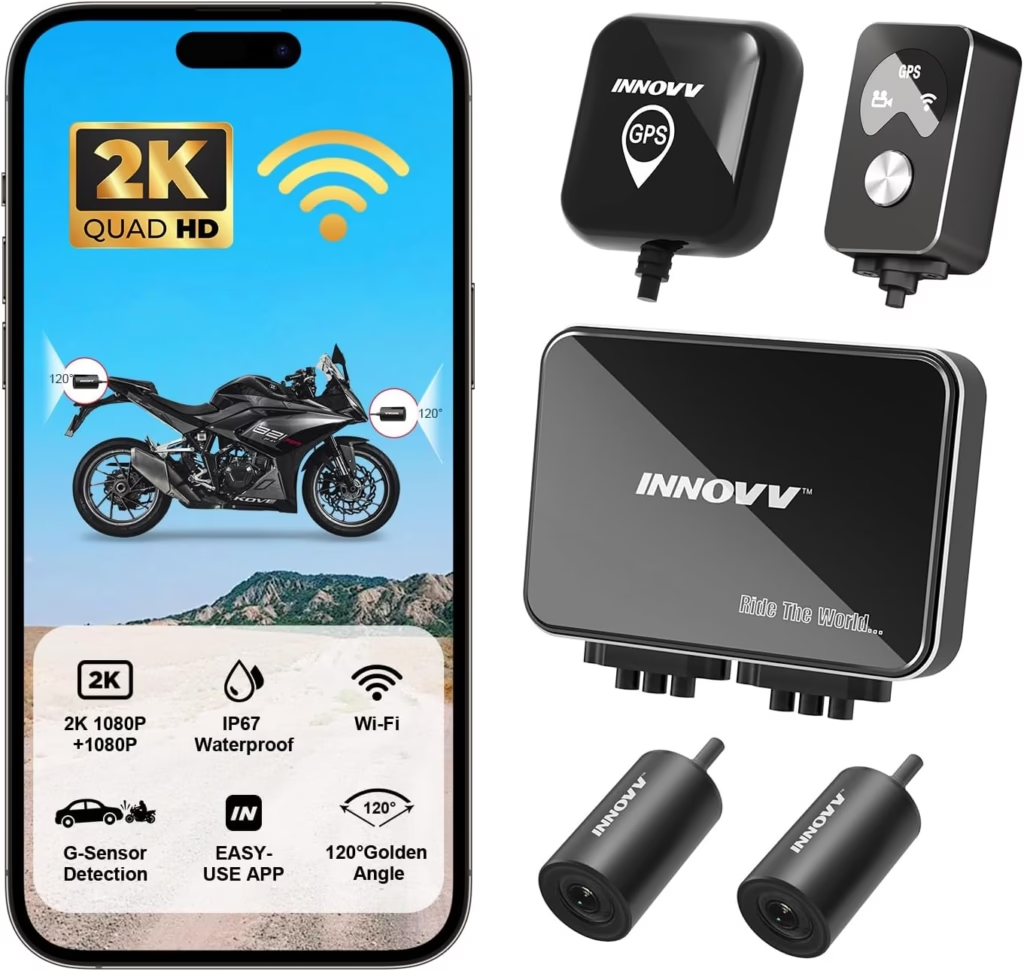
INNOVV K7 Dual Dash Cam
The only true “Set-and-Forget” system. It’s painful to install, but once it’s in, it captures evidence reliably every single time you turn the key.
- Powers on with Ignition (Zero battery anxiety)
- Waterproof & Permanent (Hardwired)
- Actual evidence (Not just a toy)
If you want a camera that acts like a black box for your bike, this is the consensus choice. Users keep the K7 because once it’s installed, it just works. It powers on with your ignition, loops records reliably, and is built to handle rain and grime. It’s the definition of low-maintenance evidence capture.
The “Marketing vs. Reality” Slap: The Useless EIS
Innovv markets Electronic Image Stabilization (EIS) as a key feature for smooth, vibration-free video. The reality reported by long-term users is the exact opposite. Turning on EIS often degrades image detail, crushes the bitrate, and makes crucial details like license plates unreadable.
“The EIS mode is totally useless IMO… If you use the EIS mode, it will be a challenge to read any license plates… which is disappointing.”
The installation is also a significant hurdle. While a hardwired system is great once it’s done, users report that cable management for the two cameras, GPS, and microphone can be a nightmare, especially on sportbikes with limited space.
The Verdict:
Buy if you ride daily and want a permanently installed, always-on system for legal evidence that you never have to think about.
Avoid if you are buying it specifically for smooth, stabilized video or if you aren’t comfortable with a complex, multi-hour installation project.
Insta360 X4: The Content Creator’s Dream (And Commuter’s Nightmare)
Riders love the X4 for one reason: creative flexibility. Its 360-degree capture allows for incredible cinematic shots, and the ability to reframe footage in post-production means you never miss the action, no matter where it happens around you. For motovloggers and weekend warriors, it’s an unparalleled tool.
The “Marketing vs. Reality” Slap: It’s Not a Dash Cam
Marketing positions the X4 as an ultra-rugged, do-it-all camera. The reality for daily riders is that it’s a high-maintenance diva. It is not a “set-and-forget” dash cam. Users report that it overheats and shuts down in direct sunlight or slow traffic, fails to reliably capture readable license plates for legal evidence due to its wide lenses, and requires you to remember to charge it and turn it on every single ride.
“You can’t make out license plates… even in fine light… It doesn’t have means of locking important clips… just isn’t good enough image quality to capture license plates for evidence.”
The Verdict:
Buy if you are a creator who is willing to manage batteries, deal with overheating, and spend hours editing footage for that perfect shot.
Avoid if your main priority is a reliable, zero-touch safety camera for your daily commute.
VSYSTO WiFi Helmet Camera: The Budget Helmet Option
The appeal of the VSYSTO is its simplicity. It’s a straightforward, helmet-mounted camera that gives you a rider’s-eye view. It’s easy to snap on and off, and the WiFi feature allows for relatively quick footage transfer to your phone without needing a computer. For short trips or as a secondary angle, it gets the job done on a budget.
The “Marketing vs. Reality” Slap: The Software Gap
While the hardware is functional, the user experience is let down by its software ecosystem. There is very little recent long-term reliability data on Reddit, and users from older threads consistently report that the mobile app is weak, clunky, and unreliable. You are buying a decent camera let down by the software you need to use it.
“The software… works… but [it’s flaky].”
The Verdict:
Buy if you want a cheap, removable helmet-mounted solution for occasional rides and don’t mind dealing with a mediocre app.
Avoid if you need a primary, always-on safety camera or if you expect a polished, reliable software experience.
Motorcycle Cam Survival Guide
Bikes vibrate at high frequencies that destroy image sensors and shake USB cables loose. Here is how to keep the system alive.
Final Verdict: Which One Fits Your Ride?
- For the Daily Commuter who wants evidence, not a hobby: Get the INNOVV K7. It’s a pain to install, but once it’s in, you never have to touch it again.
- For the Weekend Warrior & Content Creator: Get the Insta360 X4. Just accept that it’s a creative tool that requires active management, not a passive safety device.
- For the Budget Rider needing a quick POV: Get the VSYSTO Helmet Camera. It’s a simple, low-cost way to get a camera on your helmet, as long as you can tolerate the app.