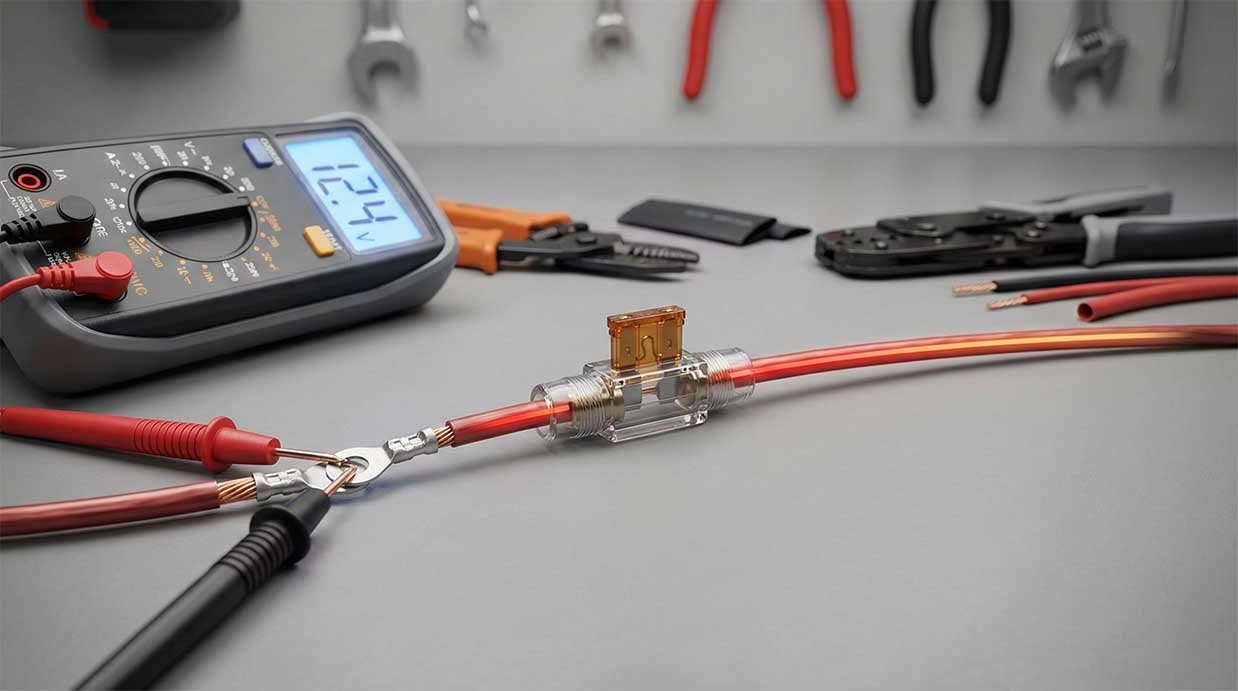
Installing lights, an inverter, a fridge, a compressor, or a winch — and the accessory keeps shutting off?
Most “mystery” issues are not mysterious at all. They usually come from:
- Wire that is too small
- Too much voltage drop
- A fuse that does not match the circuit
This wire gauge, fuse size, and voltage drop calculator removes the guesswork.
Enter your amps or watts, select your system voltage (12V or 24V), add the one-way cable length, and choose your allowed voltage drop. The tool then gives you:
- A practical AWG recommendation
- A fuse size that protects the wire properly
Use it to plan new installs with confidence. Use it to diagnose low-voltage cutoffs. Use it to prevent overheating, dim lights, and blown fuses.
Get it right the first time — and avoid wasting money on the wrong cable.
When you move from permanent 12V/24V wiring to temporary 120V power tools, cord length and voltage drop still matter. Use our free extension cord gauge calculator to pick the right AWG size for the run and load.
For 12V/24V installs (lights, compressors, inverters, fridges, winches): estimate wire size from voltage drop, then pick a fuse that protects the wire.
Result
Outputs include recommended wire gauge, estimated voltage drop, and a fuse size that protects the wire.
Fuse goes as close to the power source as practical. Never upsize a fuse to “stop blowing” unless the wire and connectors are rated for it—heat is how vehicle fires start.
Frequently Asked Questions:
What wire gauge do I need for a 12V accessory drawing 20 amps over 15 feet?
Enter 12V, 20A, and 15 feet (one-way) into the calculator.
It will automatically double the length to account for the full circuit path. That includes the positive and return wires.
Then it recommends an AWG size that keeps voltage drop within your chosen limit.
Simple inputs. Accurate result.
What wire size should I use for a 500W inverter on 12V with a 10-foot run?
Enter 500 watts and 12V. The calculator will convert watts to amps for you.
Next, enter your cable length.
If your inverter shuts off under load, voltage drop may be too high. Lower the allowed drop to 3%. You will usually see a thicker wire suggested.
Thicker wire = more stable voltage.
What fuse size should I use for LED lights that draw 8 amps?
Enter 8 amps. Then select whether the load runs continuously.
The calculator will:
- Suggest a proper fuse size
- Increase fuse rating slightly for continuous loads
- Prevent oversizing that could damage the wire
The goal is simple: protect the wire first, not just the device.
How do I calculate wire gauge using watts instead of amps?
Type your wattage into the watts field.
Then choose your system voltage, such as 12V or 24V.
The calculator converts watts to amps automatically. From there, it calculates wire size based on voltage drop.
No manual math required.
Why does my accessory keep shutting off even though the fuse isn’t blowing?
This is often caused by voltage drop, not a bad fuse.
When voltage falls under load, the device may trigger:
- Brownout protection
- Low-voltage cutoff
The fuse stays intact. But the device shuts down.
Lower the allowed voltage drop percentage or upgrade to thicker wire. That usually fixes the issue.
What voltage drop percentage should I use for car electronics vs general accessories?
Use around 3% for sensitive electronics, such as:
- Fridges
- Inverters
- ECU-powered devices
Use around 5% for general accessories.
Short and occasional loads can tolerate more drop. But performance may suffer.
When in doubt, go lower. Stability matters.
What wire gauge do I need for a 24V system to run the same watts as 12V?
At 24V, current is roughly half compared to 12V for the same wattage.
Lower current means:
- Smaller wire may work
- Longer runs become easier
- Voltage drop improves
Enter 24V and your wattage into the calculator to see the difference instantly.
Copper vs aluminum: how much larger should aluminum wire be?
Aluminum has higher resistance than copper.
That means it must be thicker to carry the same current with the same voltage drop.
When aluminum is selected, the calculator automatically recommends a larger gauge than copper for the same setup.
Copper is smaller and more efficient. Aluminum must compensate with size.
Should I measure cable length one-way or total loop length?
Enter the one-way length only.
The calculator automatically accounts for:
- Positive conductor
- Return path
Voltage drop depends on the full circuit length. The tool handles that for you.
My fuse keeps blowing — should I use a bigger fuse?
Not right away.
A larger fuse can let the wire overheat. That creates a fire risk if the wire is undersized or a short exists.
Before increasing fuse size:
- Verify actual current draw
- Check grounds and connections
- Inspect for shorts
- Upgrade wire size if needed
Then select a fuse that protects the wire properly.
Never size the fuse just to stop it from blowing.
For more DIY wiring, diagnostics, and garage-tool guides, go to the Automotive Hub.
Symptoms + Quick Diagnosis
Your fridge keeps shutting off. Your winch sputters mid-pull. Lights dim when the bilge pump kicks on. This isn’t “quirky” – it’s voltage drop screaming at you. Low voltage cripples 12V/24V systems silently. Devices brown out, controllers reset, batteries drain faster.
You’ll see erratic shutdowns, sluggish motors, or flickering LEDs. Don’t blame the appliance first. Grab a multimeter. Measure voltage at the device while it’s running. If it’s below 11.5V (for 12V systems) or 23V (for 24V), voltage drop is your culprit. Your wires are too thin, too long, or both.
Stop guessing. Plug your amps, cable run, and acceptable drop % into this calculator. It’ll pinpoint the exact wire gauge and fuse size your setup demands. No more trial-and-error.
Common Mistakes
“I used the same gauge as my house wiring.” Big error. AC home wiring ignores voltage drop; DC systems live or die by it. 14AWG might handle 15A in your kitchen, but in a 12V boat/RV? It’ll choke at 10 feet.
“My device draws 20A, so I grabbed 20A fuses.” Deadly. Fuses protect wires, not devices. A 20A fuse on 16AWG wire (max safe 10A) won’t blow before the wire melts. “I cut corners with cheap, undersized wire.” Penny-wise, fire-foolish. Thin wire = high resistance = heat buildup.
That “slight warmth” you ignore? It’s the prelude to melted insulation. “I measured one-way cable length.” Voltage drop happens round trip. Double your cable run length in the calculator – or your math is useless.
Safety Warnings
This isn’t “nice-to-have” advice. It’s non-negotiable.
- ⚠️ Undersized wires cause fires. Not “might.” Will. Heat from excessive voltage drop ignites insulation, especially near fuel lines or dry wood. Your 12V system isn’t “low risk” – it’s a high-current hazard.
- ⚠️ Wrong fuse size = no protection. Too large? Wire burns before the fuse blows. Too small? Nuisance trips that leave you stranded. Match the fuse exactly to the wire’s ampacity – not the device.
- ⚠️ Voltage drop below 10.5V (12V) or 21V (24V) destroys electronics. Lithium batteries cut off. Sensitive controllers fry. Don’t push limits to save $20 on wire.
- ⚠️ Marine/RV environments demand marine-grade wire. Stranded tinned copper (like Ancor) resists corrosion. Solid-core or automotive wire will fail faster near moisture.
Recommended Tools List
Your calculator spits out a wire gauge (e.g., 8AWG) and fuse size (e.g., 50A). Don’t wing the tools. Here’s what you actually need for that result:
- Wire Gauge = 8AWG? → Grab Ancor Marine Grade Tinned Copper Wire (8AWG). Why? Stranded for vibration resistance, tinned for corrosion. Non-marine wire cracks in RV/boat environments. (Calculator logic: 8AWG handles 55A at 3% drop for 15ft 12V runs – but only if it’s quality wire.)
- Fuse Size = 50A? → Use a Blue Sea Systems MRBF Fuse Block + 50A Fuse. Why? MRBF fuses handle high inrush currents (like winches) without blowing prematurely. Cheap auto fuses won’t. (Calculator logic: 50A protects 8AWG wire per ABYC standards – but only if the fuse type matches the load.)
- Verifying Voltage Drop? → Fluke 116 HVAC Multimeter. Why? Measures true voltage under load (not just idle). Auto-ranging avoids errors. Dollar-store meters lie about low-voltage readings. (Calculator logic: If your “12V” reads 10.8V under load, you’ve got >10% drop – this tool proves it.)
- Stripping 8AWG Safely? → Klein Tools Wire Stripper (CAT# 11055). Why? Precise jaws for thick marine wire. Cheap strippers nick strands, increasing resistance and fire risk. (Calculator logic: Damaged strands = smaller effective gauge = higher voltage drop than calculated.)
Stop gambling with your safety. A $40 wire upgrade prevents $4,000 in fire damage. Run your numbers. Buy the right parts. Sleep soundly. 🔌
🔧 Auto care & accessories
Straightforward guides – from pressure adjusters to roof boxes, OBD2, winter prep and sun shades
Tire Pressure Guide: Door Jamb vs. Sidewall & Winter Drops Explained
Why the door jamb number is law, the danger of sidewall max, and how cold weather robs PSI.
Read guideBest Car Roof Box 2026: Aero Silence vs. The “MPG Killer”
Aerodynamic vs. classic boxes – real fuel economy hit, noise levels, and which one fits your gear.
Compare boxesBest OBD2 Scanner Reddit 2026: BlueDriver vs. Foxwell [Real Test]
Reddit-vetted scanners that actually read BMW, Toyota, Ford – without breaking the bank.
See winnerHow to Read OBD2 Live Data: Fuel Trims & O2 Sensors Explained
Stop guessing – interpret fuel trims, oxygen sensor cross-counts, and spot vacuum leaks with live data.
Master live dataWinter Car Care Guide: Storage, Survival & Why Batteries Die in the Cold
Prepare your car for subzero temps – battery chemistry, tire pressure drops, and anti‑freeze checks.
WinterizeBest Windshield Sunshade 2026: Custom Fold vs. Universal Roll
Custom-fit vs. cheap roll – which one actually keeps cabin temps down and doesn’t scratch tint.
Pick shade