
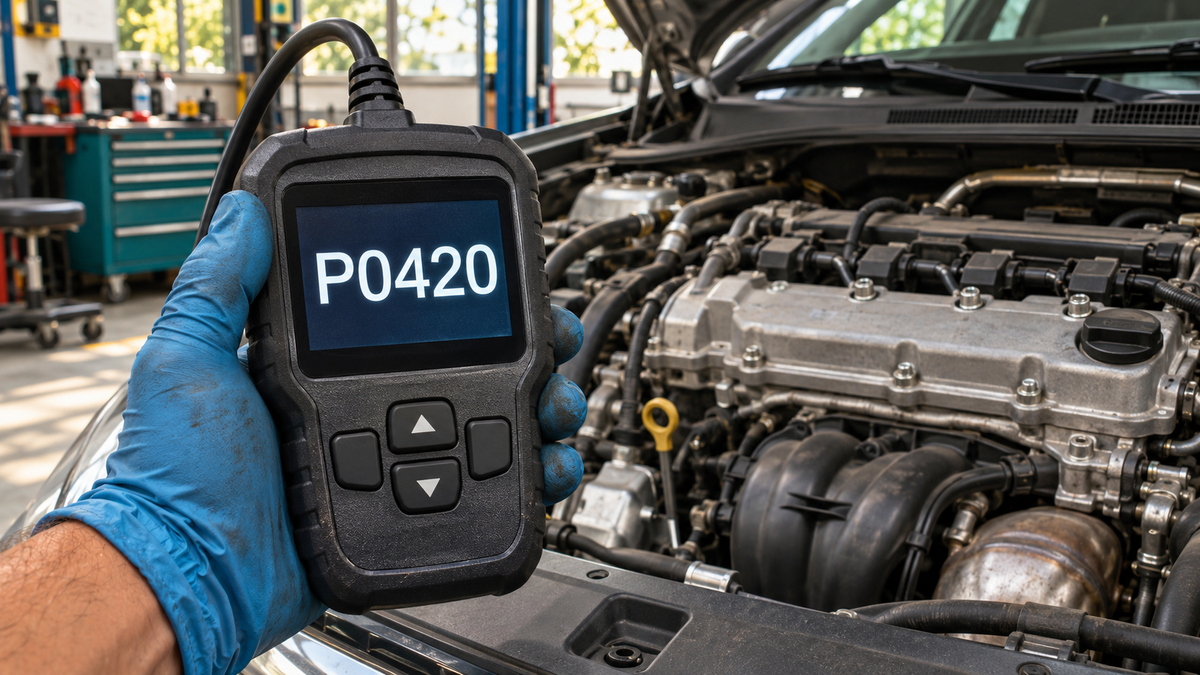
You just paid for engine work. The car drove home fine. Now the check engine light is back. P0420 after engine repair means your car detected low catalyst efficiency on Bank 1 [the side with cylinder one]. A loose exhaust joint can skew the test. Oil or coolant burned before the repair can also damage the converter.
First, save the scan. Then find out which parts came off during the job and whether the car ran its catalyst test before you picked it up. Those two details can save you from paying for the wrong fix.
1. Is your catalytic converter actually dead? What a post-repair P0420 tells you
Your converter helps clean the exhaust. Once hot, it stores and releases oxygen as it works. Your car uses exhaust sensor readings to judge how well it does that job. P0420 tells you the Bank 1 system fell short on that test.
Why did the light come on 50–100 miles after leaving the shop?
Your scanner calls this test the catalyst monitor. If the shop cleared the codes, the monitor went back to “incomplete.” A battery disconnect can reset it, too. Ask what the shop did before you assume it reset anything.
Suppose the light came on 60 miles later. Your first few trips may have been too short to get the exhaust hot enough. A later trip may have met the heat, speed, and load conditions your car needs. The miles tell you when you saw the light. Each car has its own rules for running the test.
Was P0420 there before the repair, or did it return afterward?
Ask for the scan from before the job and the one from pickup. If the first scan shows P0420, the car had already seen a fault. If the pickup scan says “no codes” and “catalyst incomplete,” the car still had a test left to run.
- Pending means the computer saw a fault. It may need to see it again to turn on the light.
- Confirmed means the fault met the rules to store the code. Check whether the light is on now.
- Permanent means the car keeps a record until it can verify the fix. You may still see this entry after the light goes out.
A fresh P0420 after a reset tells you the car saw the fault again. Without an earlier scan, you may never know when the damage began. You can still check whether the engine and exhaust work as they should now. If short trips were quiet, see why P0420 can first show up on a longer drive.
2. Four ways engine repairs can trigger or reveal P0420
Get the work order out before you look under the hood. Circle the parts the shop removed. A loose plug after an engine swap calls for a different test than coolant loss after a head gasket job.
A. P0420 after engine rebuild — check disturbed O2 sensors and wiring
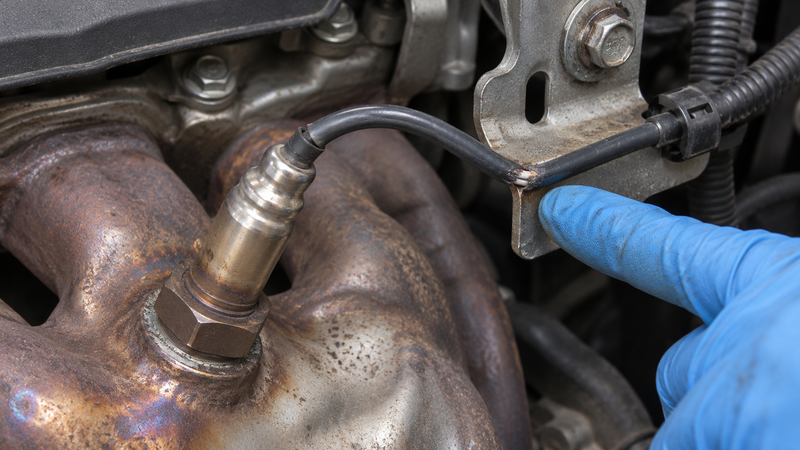
An engine can go back in with a sensor plug partly seated. A wire can also get pinched against a bracket or hang against hot exhaust. With the engine off and cool, look at the plugs and clips you can reach from above.
The upstream sensor sits ahead of the converter. It helps the car adjust fuel. The downstream O2 sensor [oxygen sensor behind the converter] helps the car check the converter. Ask the shop to trace both sets of wires on Bank 1.
If you also see a sensor heater or circuit code, give the shop that code first. Ask for a wire and sensor response test. Some cars use a wideband front sensor [measures a wide air-fuel range]. Its scan graph can look quite different from the rear sensor graph even when both work.
If the shop also replaced a sensor, here’s what to check when P0420 returns after an O2 sensor change.
B. Intake vacuum leaks and exhaust leaks — why the location matters
On the intake side, check the air duct and small hoses that came off. A split boot past the airflow meter lets air in after the car has measured it. The car may add fuel to make up for that extra air.
Fuel trim [fuel the computer adds or subtracts] can help narrow the search. If the car adds lots of fuel at warm idle but much less at a steady higher speed, ask for an intake leak test. A smoke test can reveal a gap hidden beneath a hose.
On the exhaust side, start at the joints the shop opened. A gap ahead of the front sensor can affect fuel control. A leak near the rear sensor can draw in fresh air and skew the catalyst test. Tell the shop if you hear a new tick on a cold start or see black soot at a flange.
C. P0420 after head gasket repair — did coolant or oil reach the converter?
Think back to the days before the head came off. If the engine burned coolant or oil, some of it went through the exhaust. Deposits can coat the sensors or the active surface inside the converter. A new head gasket can stop the leak while those deposits remain.
Where the fluid went matters. Oil spilled on the outside of a hot exhaust pipe can smell for a while. That smell alone tells you little about the inside of the converter.
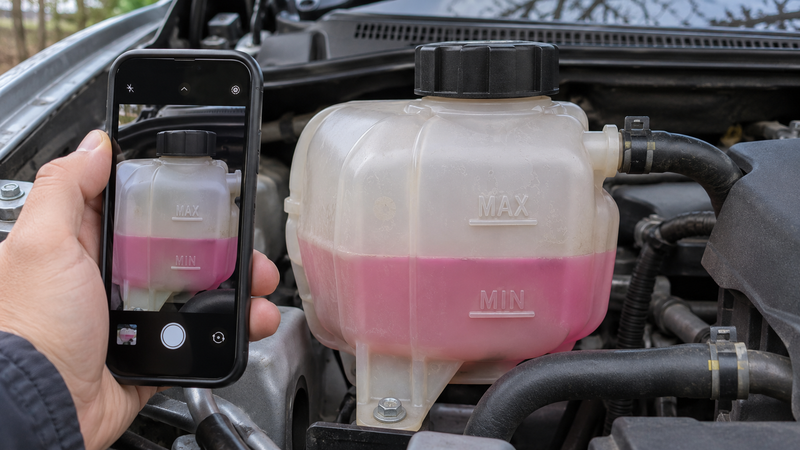
Check the coolant level with the engine cold and parked on level ground. Take a photo, note the miles, and check again under the same conditions. Track oil use as your manual directs. If the coolant keeps dropping, ask the shop to find the leak before you try a drive cycle.
D. P0420 after timing chain replacement — check timing and fuel control
Did the engine start shaking or lose power as soon as you got it back? Save any misfire codes and any cam/crank correlation code [cam and crank positions disagree]. Those clues give the shop a reason to check cam control and verify the chain timing.
Once warm, a gas engine often adjusts fuel around its stoichiometric ratio [air and fuel in chemical balance]. Short-term trim shows its quick corrections. Long-term trim shows what it has learned over time. Ask the shop to compare both with misfire counts and, where available, readings from the other bank.
If your scan also shows P0430, check what can affect both banks before approving two converters.
A cylinder that skips a burn can send fuel and oxygen into the exhaust. That can overheat a converter. If the engine runs smoothly and P0420 stands alone, the code gives you little basis to reopen the timing cover.
3. Post-repair verification checklist — what to check before buying a converter
Work down this list before anyone clears the scan. You can do the first checks in your driveway. The later steps give you specific tests to discuss with the shop.
- Check whether you should drive. If the light flashes, the engine shakes badly, or the temperature climbs into the hot range, pull over safely. Shut the engine off and call for help. Skip the test drive.
- Save the evidence. Photograph the codes, their status, the catalyst readiness screen, and the odometer. Save any freeze-frame data [engine readings when a fault set]. Check which code the frame belongs to.
- Read the other codes. Flag any misfire, fuel mixture, sensor circuit, or cam timing code. Ask which fault could affect the catalyst test and which one the shop plans to check first.
- Look where the work took place. With the engine cool and off, look for loose plugs, missing clips, and open hoses. Take a photo before moving anything. Leave parts beneath the car for the shop to inspect.
- Check for leaks. Note fluid levels and any new exhaust tick. Ask the shop to test the intake or exhaust joints it opened. A small leak can leave little visible soot.
- Verify how the engine runs. Ask for warm fuel trims, misfire counts, and front and rear sensor response on Bank 1. Have the shop compare the results with the test for your engine.
- Confirm the converter finding. Once the engine runs well and the exhaust is sealed, ask for the maker’s catalyst test. If P0420 returns after that test runs, ask to see the result behind the estimate.
Keep the scan photos, work order, and fluid notes together. A photo from pickup and one from the day the light returned can tell the shop more than a guess about the mileage.
4. How to reset P0420 and verify the repair
If you just got the car back, leave the code in place until the shop sees it. Clearing it can wipe the freeze-frame data and reset readiness. That removes clues the shop could use on your return visit.
When to clear the code and how to run the right drive cycle
Once the fault is fixed and the scan is saved, follow the service steps for your year, engine, and model. If they call for a reset, use the scan tool. A permanent code clears when the car verifies the fix. Pulling a battery cable won’t erase it.
A drive cycle [trip that meets the test conditions] may call for a warm-up, steady cruise, or slowing down with your foot off the gas. Use the procedure for your car and follow it only where traffic allows. Scan again after the trip.
- Incomplete, light off: The catalyst check still has to run. Ask which test condition is missing if it stays that way.
- Complete, light off, no pending or confirmed P0420: The test ran without a new P0420 showing on this scan. Keep the result with your repair notes.
- P0420 pending or confirmed again: Save the new scan and call the shop. Repeated resets make the fault harder to trace.
When to take a post-repair catalytic converter code back to the mechanic
Call promptly if you have new rough running, ongoing fluid loss, or a code tied to cam timing. Even if the car feels fine, a returning P0420 after a completed test deserves a follow-up. Give the shop the mileage and describe what changed since pickup.
5. Conclusion — what to do before authorizing a converter
If you’re facing P0420 after engine repair, take your scan and estimate to the service desk. Ask these three questions before you sign.
- Was P0420 on the scan before the engine work?
- Had the catalyst test run when I picked up the car?
- Which test points to the converter, and did you find anything that could damage the next one?
If the shop found a leaking joint, ask for the scan after they seal it. If the engine and sensors check out and the converter fails its own test, ask them to attach that result to the estimate. You’ll have a clear reason for the repair you approve.
If the converter failed its test, compare P0420 repair options and warranty coverage before you sign.