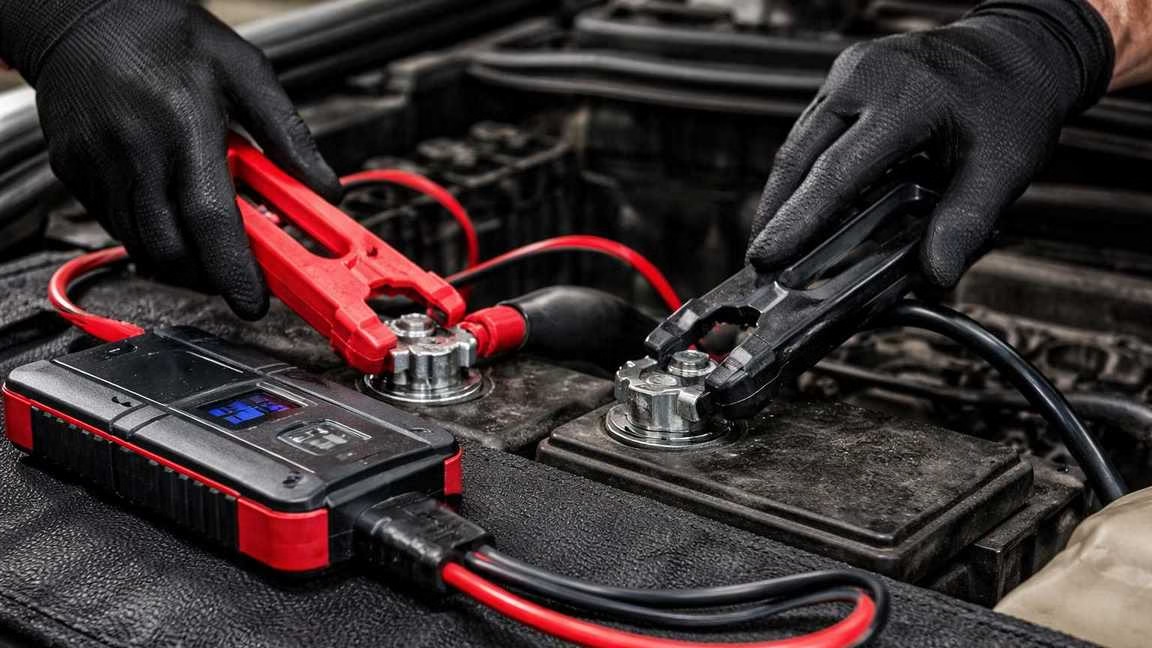
It’s a cold morning. Your car won’t start. You’re late and stressed. This is when mistakes happen.
A portable jump starter is a powerful lithium device. It can deliver hundreds of amps quickly. Used right, it’s safe. Used wrong, it can spark, melt clamps, or damage your car’s electronics.
This guide shows you:
- The exact, correct clamp order.
- What “reverse polarity” means and how to fix it.
- When you should NOT jump your car because it’s unsafe or pointless.
What a Portable Jump Starter Actually Does
A portable jump starter has a lithium battery made to deliver a big burst of power. This helps your starter motor turn the engine when your car battery is weak.
How it’s different from jumper cables:
- Jumper cables borrow power from another car.
- A jump starter is its own power source with built-in safety features.
Why clamp order matters:
- That burst of energy is strong. A wrong connection can cause a dangerous short or a big spark.
- Many modern starters will beep or lock out if they sense a wrong connection. This is a safety feature, not a glitch.
Correct Clamp Order (The Safe Way)
Follow these steps in order. Don’t improvise.
1. Turn Everything OFF
- Turn the ignition completely OFF.
- Turn OFF all accessories: lights, radio, heater, and phone chargers.
- Why: This gives you a clean electrical state and prevents surges.
2. Find the Battery Terminals
- Find your 12-volt battery or its jump posts. Some cars hide the battery in the trunk or under a seat.
- Clearly identify the Positive (+) and Negative (-) terminals. Don’t just rely on cable colors.
3. Connect RED First
- Attach the RED clamp firmly to the Positive (+) terminal or post.
- Make sure it bites into clean metal, not plastic.
4. Connect BLACK to Ground
- Attach the BLACK clamp to a solid, unpainted metal part of the engine or frame. This is a chassis ground.
- Why ground, not the battery? It’s safer. It keeps the final connection spark away from the battery and avoids sensors on the negative cable.
- If you can’t find a good ground, use the battery’s Negative (-) terminal as a last resort.
- A small spark here can be normal. Large, repeated sparks are not. Stop if you see them.
Helpful Link: If your battery keeps dying, our guide on Why “Short Trips” Kill Car Batteries explains the cause and a simple fix.
5. Turn On the Jump Starter
- Some units turn on automatically. Others need you to press a power button.
- Avoid “boost” or “override” modes. They can bypass safety protections.
6. Try to Start the Car
- Crank the engine for no more than 3–5 seconds.
- If it doesn’t start, wait 30–60 seconds before trying again.
- Limit yourself to 2–3 attempts.
- Why: Extended cranking overheats the starter and your jump pack.
If it starts, let the engine idle for a moment before removing the clamps.
Reverse Polarity Warning: What It Means
If your jump starter beeps or shows a “reverse polarity” alert, it thinks the clamps are on backwards. It will likely lock out to prevent damage.
Common causes:
- You misidentified the positive and negative posts.
- The clamps aren’t making a clean connection (corrosion, paint, loose fit).
- The black clamp is on a bad ground.
What to do (in order):
- Turn the jump starter OFF.
- Remove the BLACK clamp, then the RED clamp.
- Re-check the positive (+) marking. Don’t guess.
- Clean the contact points or find a better, unpainted ground.
- Reconnect: RED to Positive (+) first, then BLACK to ground.
- If the warning continues, STOP. The battery may be dead or damaged.
What NOT to do:
- Don’t force clamps onto bad spots.
- Don’t bypass the safety warning.
- Don’t keep trying without fixing the issue first.
Helpful Link: Unsure if your battery is the problem? Learn about the Best Car Battery Testers that can diagnose issues before you get stranded.
When You Should NOT Use a Jump Starter
Be honest with yourself. If any of these are true, do not jump the car.
- The battery is frozen or looks swollen. It could rupture.
- The battery is cracked, leaking, or smells like rotten eggs. Risk of fire or explosion.
- It’s a hybrid or EV and you’re unsure. Use only the manufacturer’s 12V jump points to avoid damaging high-voltage systems.
- You hear rapid clicking but no crank after multiple tries. This could be a bad starter, not just a dead battery.
- The dashboard is completely dead. The battery may be too far gone for a jump starter to help.
- The jump starter or clamps are getting hot. This signals a dangerous problem.
If you see any of these, stop. Call for roadside assistance or a tow. A wrong jump can cost more than a service call.
Common Mistakes That Damage Cars
- Reversing the clamps. Can blow fuses and fry expensive computers (ECU/BCM).
- Jumping with accessories on. Causes voltage spikes that can harm electronics.
- Cranking too long. Overheats the starter and jump starter cables.
- Trying over and over without a cooldown. Builds up heat and stresses all components.
- Thinking “it can’t hurt.” Overconfidence leads to poor connections and overrides.
After the Car Starts (Most People Skip This)
Starting is only half the job. Do this next:
- Disconnect in reverse order: Turn off the jump starter. Remove the BLACK (ground) clamp first, then the RED (positive) clamp.
- Drive the car. Letting it just idle may not recharge the battery enough, especially in cold weather or with start-stop systems.
- Get your battery checked. A jump start is a rescue, not a repair. If your battery is old or dies again soon, it needs replacement.
Helpful Link: For long-term battery health in winter, a Battery Maintainer is a great investment. Also, understand the different types with our guide on AGM vs. Flooded Battery Charging.
Quick Safety Checklist
Portable Jump Starter Safety — Quick Scan
- Before: Ignition OFF. Everything OFF. Park brake on.
- Look: Don’t jump if battery is swollen, cracked, leaking, or smells bad.
- Connect: RED to Positive (+) first. BLACK to a solid metal ground second.
- If it beeps: STOP. Disconnect. Check terminals and connections.
- Crank: 3-5 seconds max. Wait 30+ seconds between tries.
- Stop if: Anything gets hot, smokes, or you see big sparks.
- After: Disconnect BLACK first, then RED. Drive to recharge.
Conclusion
Staying safe with a jump starter is simple. Use the correct clamp order, make solid connections, and know when to stop. It’s a powerful tool when used right.
Be prepared:
- Keep your jump starter charged.
- Find your car’s battery and jump points before you need them.
- Practice the steps once on a nice day.
Follow this guide to handle a dead battery calmly, avoid costly mistakes, and get back on the road safely.
Helpful Link: For more essential winter car care tips, from battery survival to storage, read our complete Winter Car Care Guide.