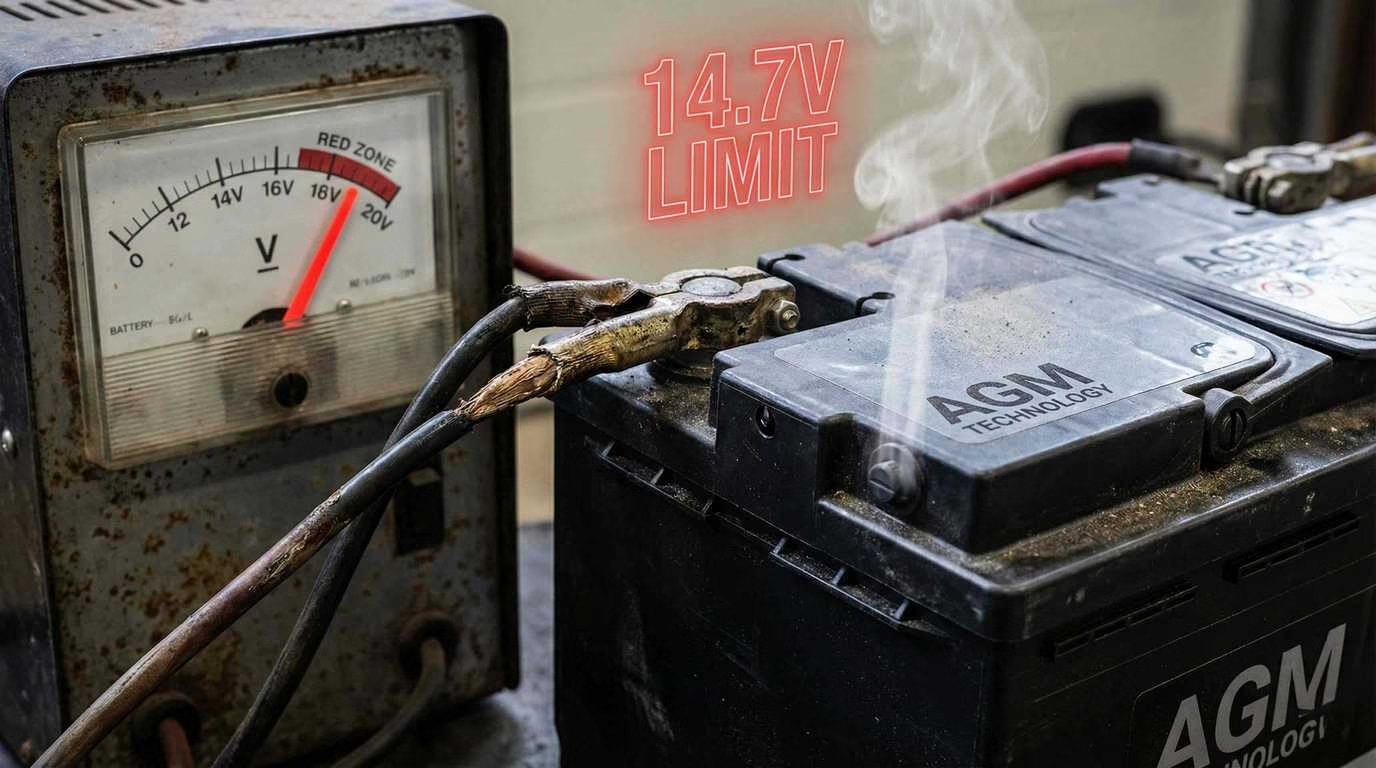
⚠️ WARNING: STOP!
Do not press the “Recondition” button on an AGM battery unless your manual explicitly says it is safe. Standard reconditioning modes use high voltage (16V+) which will boil the electrolyte, vent the gas, and permanently ruin a sealed AGM battery in hours.
The “Silent Killer”
You bought a premium AGM battery for your car because the forums said it lasts longer. A year later, it’s dead. You blame the battery brand, but the real culprit is sitting on your garage shelf: your grandfather’s “dumb” charger.
You treated your high-tech AGM battery like a 1970s tractor battery, and you “dried out” the mat.
The Thesis
AGM batteries are sealed systems. Unlike old-school batteries where you could top off the water if it boiled over, an AGM battery cannot be refilled. If you overcharge it and vent the gas, that capacity is gone forever. Game over.
The Physics: Wet vs. Mat
To understand the charging danger, you have to understand the physical difference.
- Flooded (Wet Cell): Liquid acid sloshes around inside. If you charge it too hard and it gets hot, the water turns to gas (boils). You simply pop the caps and add distilled water to fix it.
- AGM (Absorbed Glass Mat): The acid is suspended in a fiberglass sponge. There is no free liquid sloshing around. It is a Valve Regulated Lead Acid (VRLA) system. It is designed to recombine gases internally, but only if you stay within strict pressure limits.
The Charging Profile Difference (The Science)
This is where the damage happens. Chargers are not “one size fits all.”
1. Flooded Profile (The Boiler)
- Voltage: Loves higher voltage, often pushing 15.0V – 15.5V.
- Goal: This high voltage is intentional. It causes “gassing” which bubbles the acid, mixing it up to prevent stratification (where acid separates from water). This is healthy for a wet battery.
2. AGM Profile (The Precision Limit)
- Voltage: Strict limit, usually 14.4V – 14.8V (max).
- Goal: Charge without gassing.
- The Danger: If you feed 15.5V into an AGM, the internal pressure spikes. The safety valve pops open (you might hear a hiss), and the hydrogen/oxygen gas escapes. The glass mat dries out. Since you cannot add water, the battery’s capacity drops permanently.
The “Recondition Mode” Trap (CRITICAL)
This is the most common way DIYers kill AGMs.
What is Reconditioning (Desulfation)? It is a controlled overcharge. The charger blasts the battery with high voltage (15.8V – 17.0V) to vibrate the lead plates and break up sulfate crystals.
The Rule:
- Old Chargers: NEVER use “De-sulfate” or “Recondition” mode on an AGM. It will cook it.
- Smart Chargers (NOCO/CTEK): Some modern chargers have a specific “AGM Recondition” mode. However, even then, many manufacturers (like Optima) advise against it unless necessary. If you must use it, ensure your charger explicitly states it has an AGM-safe recondition curve.
| Battery Type | Max Charge Voltage | “Recondition” Safe? | Self-Discharge |
|---|---|---|---|
| AGM (Flat Plate) | 14.4V – 14.8V | NO* (Unless specialized) | Low (1-3% / month) |
| Flooded (Wet) | 15.5V+ (Equalizing) | YES | High (10-15% / month) |
| GEL | 14.1V – 14.4V | NEVER | Very Low |
Storage & Maintenance
Because AGMs have lower self-discharge rates, they are better for cars that sit (like Corvettes or seasonal trucks). However, when you do charge them, you need intelligence.
This is why we recommend Smart Maintainers. A device like the Best Battery Maintainer (such as a NOCO Genius or CTEK) will detect the battery chemistry.
- It will charge an AGM to 14.7V and then stop.
- It will switch to “Float Mode” (13.6V) to keep it topped off without boiling it.
Not sure if your AGM is already cooked? A simple voltage test isn’t enough. You need to test the Internal Resistance (Ohms). A high resistance reading usually means the mats are dried out. Use a proper analyzer (check our guide to the Best Car Battery Tester) to see if it can be saved.