
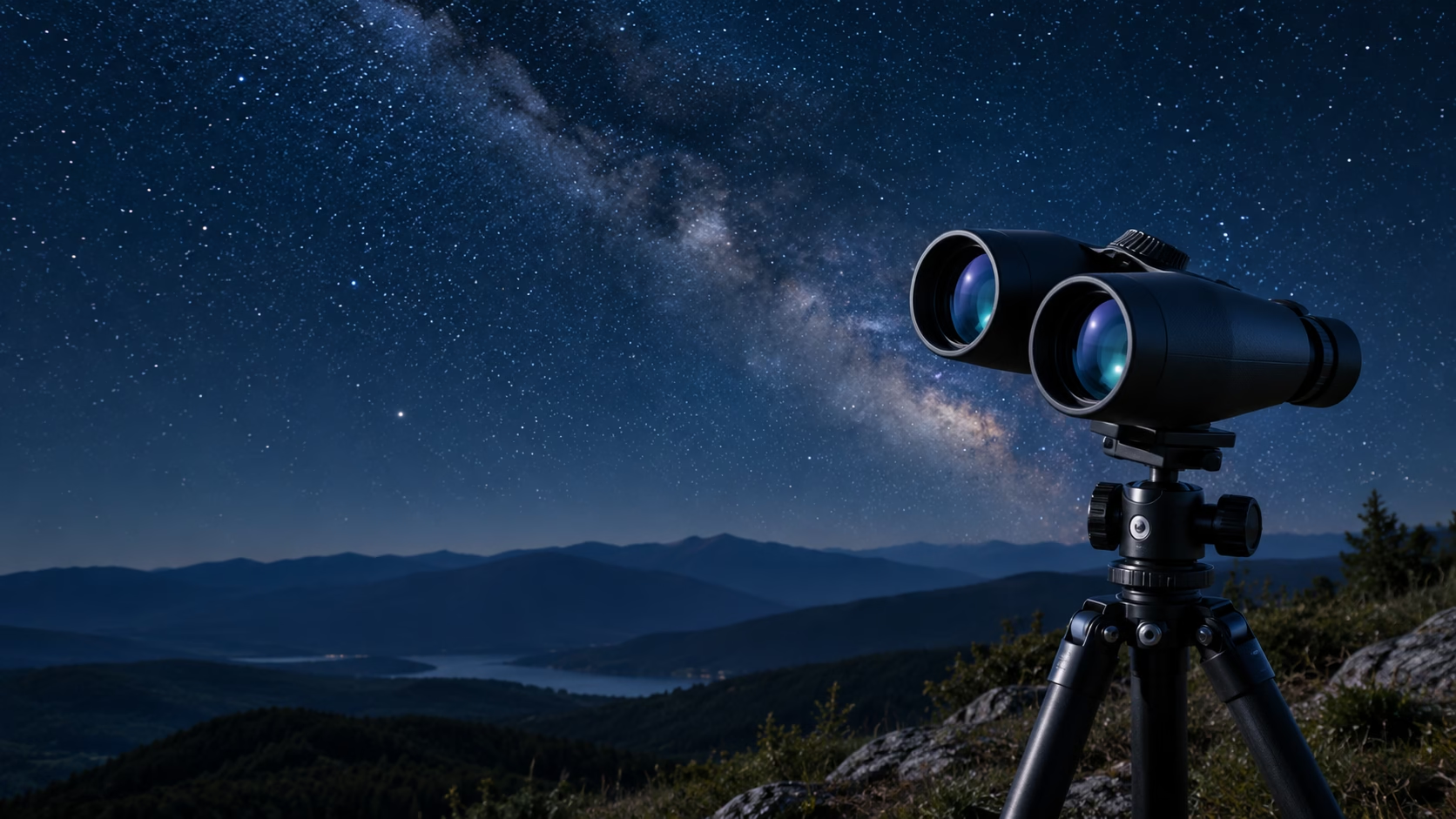
The best high quality binoculars for stargazing suit how you like to watch. For steady handheld views, start with the Canon 10×42 L IS WP. For good value, consider the Nikon Action EX 10×50. If you prefer premium optics without batteries, look at the Fujinon 10×50 FMTR-SX.
You don’t need the biggest pair to enjoy the night sky. You need clear views, a steady grip, and a good fit.
These picks draw on expert tests, owner reviews, and buyer discussions. The research includes praise, faults, and mixed views from actual use. This is a research-based guide, not a hands-on test of all eight models. This page contains Amazon affiliate links. If you buy through them, I may earn a commission at no extra cost to you. As an Amazon Associate I earn from qualifying purchases.
The Best Stargazing Binoculars at a Glance
Start with how you plan to use your binoculars. A pair for short walks serves a different need than a mounted setup.
The table shows where each model makes sense. Keep the main tradeoff in mind as you compare.
| Model | Best suited to | Handheld or supported | Main advantage | Main compromise | Buying link |
|---|---|---|---|---|---|
| Canon 10×42 L IS WP | Premium handheld stargazing | Handheld | Steady views with little setup | High price and added weight | View on Amazon |
| Fujinon 10×50 FMTR-SX | Premium conventional optics | Support helps | Strong contrast and a wide view | Heavy, with separate eye focus | Search Amazon |
| Canon 15×50 IS | More handheld detail | Handheld, with breaks | High power with image stabilization | Narrower view and more bulk | View on Amazon |
| Nikon Action EX 10×50 | Value-focused general use | Handheld or supported | Useful views at a lower cost | Softer views near the edge | View on Amazon |
| Oberwerk 15×70 Deluxe | Longer supported sessions | Mount recommended | Large lenses and center focus | Mount cost and setup | Search Amazon |
| APM MS 10×50 ED | Astronomy use and eye fit | Support helps | Good usable eye relief | Weight and stock limits | Search Amazon |
| Celestron SkyMaster Pro ED 15×70 | Value-focused mounted viewing | Mount recommended | Appealing optics for the price | Mixed reports on fit and sharpness | View on Amazon |
| Canon 12×36 IS III | Light, portable stabilized viewing | Handheld | Less weight than larger Canon models | Discontinued on Canon’s US store | Search Amazon |
Amazon listings can change. Check the exact model, seller, condition, and warranty before you buy. Links marked “Search Amazon” open results, which may include other models.
Choose Your Observing Style First
For quick handheld sessions
A good handheld pair makes short sessions easy. You can step outside, find a clear patch of sky, and start.
The Nikon Action EX 10×50 is a sensible place to begin. Its 10× power [objects appear ten times larger] gives a useful mix of reach and sky coverage.
You may still see stars shake as your hands move. A chair with armrests can help you hold the view steady.
The Canon 10×42 L IS WP tackles that shake with image stabilization [a powered system that reduces shake]. It costs much more, but the benefit fits frequent handheld use.
Choose the Nikon if price matters most. Consider the Canon if shaky views spoil your time outside.
For more detail without carrying a mount
The Canon 15×50 IS gives you more power while keeping the view steadier. That can help with lunar features and smaller star groups.
The tradeoff is a tighter view of the sky. Finding your target can take more care than with a wider pair.
Weight matters, too. Even with steady images, your arms still hold the binoculars.
This model suits deliberate viewing with rests between targets. It may feel less natural for long, casual sweeps.
For longer sessions with a tripod
The Oberwerk 15×70 Deluxe and Celestron Pro ED 15×70 suit supported use. Their large lenses and higher power offer a different way to explore.
Plan for the whole setup before you buy. You need a suitable mount, enough height, and a way to aim upward.
A basic tripod can steady the view yet leave your neck strained. Think about where you will sit or stand, too.
Our Research-Based Binocular Recommendations
Canon 10×42 L IS WP — Best Overall for Premium Handheld Stargazing
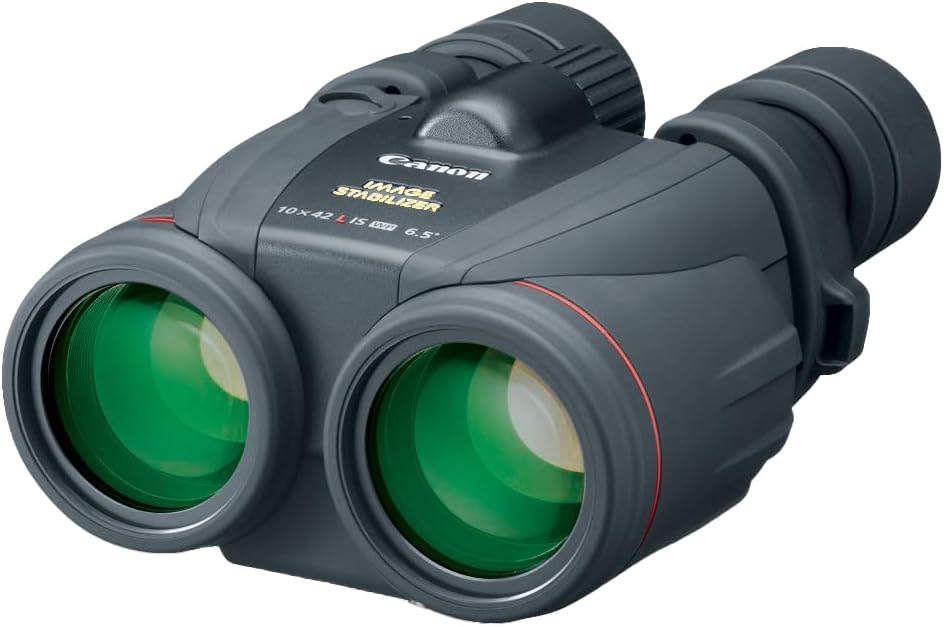
The Canon 10×42 L IS WP earns its place through ease of use. Its appeal is a clear view you can hold steady without a tripod.
Firsthand reviews describe sharp stars across much of the field. They also praise the way stabilization helps reveal detail.
That makes this pair a strong choice for broad sky views. You can scan a star field, pause on a cluster, then move on.
The 42mm aperture [width of each front lens] may seem small beside larger models. Yet lens size alone does not tell you what you will see. Hand shake can hide detail that good optics could otherwise show.
There are clear costs. These binoculars are expensive and fairly bulky for their lens size. The powered system also needs batteries.
Eye fit deserves a check before you commit. An excellent view means little if the eyecups press against your face.
Choose this pair if you want premium handheld views and expect to use it often. Choose the Canon 15×50 for more power, or the Nikon for lower cost.
View the Canon 10×42 L IS WP on Amazon
Fujinon 10×50 FMTR-SX — Best Premium Conventional Option
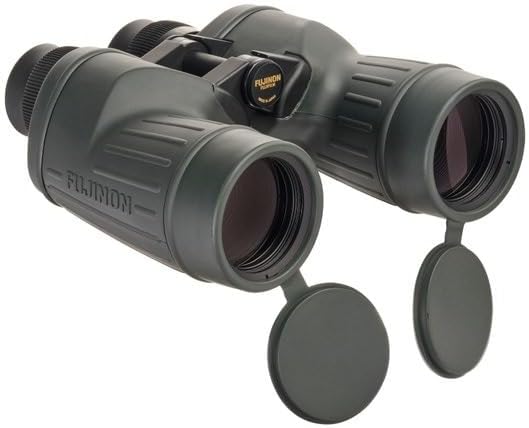
The Fujinon 10×50 FMTR-SX suits you if you value optics without powered parts. It pairs a wide view with strong contrast and substantial construction.
Expert comparisons and older measurements support its strong night-sky performance. The evidence spans different versions, so it does not prove every sample performs alike.
Its main drawback is easy to feel: weight. At roughly 1.45kg, it asks more of your arms than many smaller pairs.
You can hold it for short looks. For longer sessions, braced elbows or a mount make more sense.
Each eyepiece has its own focus control. That works well for stars, where your focus stays near the same point. It is less handy for watching nearby and distant subjects in quick turns.
This is a good choice for careful, unhurried viewing. It is less appealing if you want a light pair for walks.
Choose this pair if you want premium conventional optics and can support the weight. Compare it with the APM if eye fit or local supply favors that model.
Search Amazon for the Fujinon 10×50 FMTR-SX
Canon 15×50 IS — Best for Higher-Power Handheld Viewing

The Canon 15×50 IS is for times when you want a closer look. Its extra power can reveal more detail than a typical handheld 10× pair.
Without support, that power would also make shake more obvious. The stabilization helps keep the view useful.
Firsthand tests praise the detail this combination can show. They also note that the view feels less broad and relaxed than lower-power options.
That is the key choice. Do you enjoy sweeping large areas, or studying smaller targets?
The 15×50 suits the second approach. It can be rewarding on lunar features and star clusters.
It is not weightless, though. Your arms may tire before you finish exploring a target. A seated stance and short breaks can help.
The stabilizer is not flawless, either. Reviewers have noted small changes in star shape at times.
Choose this pair if more handheld detail matters more than a wide, easy view. Pick the Canon 10×42 if you want a more versatile sky-scanning pair.
View the Canon 15×50 IS on Amazon
Nikon Action EX 10×50 — Best Value for General Stargazing

You do not need premium pricing to get useful views. The Nikon Action EX 10×50 is a strong example.
Its wide field helps you find targets and trace star patterns. Center focus also makes it easy to share or use during the day.
Owner reports support its value for backyard astronomy. Older measured tests also found it competitive among affordable 10×50 models.
There are limits. Stars near the edge will not look as tidy as through the strongest premium options. It also has enough weight to tire your arms during long sessions.
If you wear glasses, try the fit first. Usable eye relief [space for your eye or glasses] can be less than the listed figure.
Check the model name with care. Action EX or Action Extreme is the pair covered here. Nikon’s Action and Aculon lines are different products.
This is a sensible first serious pair if you are still learning your habits. You can find out what you enjoy before spending much more.
View the Nikon Action EX 10×50 on Amazon
Oberwerk 15×70 Deluxe — A Strong Supported-Viewing Choice

The Oberwerk 15×70 Deluxe suits longer sessions with a mount. It offers large lenses, useful power, and a center focus wheel.
Owner discussions praise its optical value. Some users also prefer its handling to heavier or separately focused options.
That does not make it a good fit for every face. Reports differ on focus feel, eye placement, and overall comfort.
This is worth remembering when comparing scores or specs. Two people can use the same pair and prefer different alternatives.
For sustained use, budget for support. Brief handheld looks may work for some users, but they are not the best basis for buying.
The included mounting adapter helps with setup. You still need a suitable tripod or other support.
Oberwerk’s specialist service is part of the appeal. Check the warranty terms and service arrangements for your location.
Choose this pair if you want a supported astronomy setup with center focus. Compare total cost and fit with the Celestron Pro ED before deciding.
Search Amazon for the Oberwerk 15×70 Deluxe
APM MS 10×50 ED — Worth Considering for Eye Relief and Astronomy Use
The APM MS 10×50 ED deserves a look if eye fit is a priority. An independent measurement found about 16.5mm of usable eye relief.
That is more useful than relying on a brochure number alone. Still, your glasses and face shape affect how much field you can see.
Owner reports describe clear, wide night-sky views. Its ED glass [glass that helps reduce color fringes] is one part of the optical design.
The body is heavy for a handheld 10×50. Support helps you enjoy it for longer.
Each eyepiece focuses on its own, much like the Fujinon. Folding rubber eyecups may also feel less handy than twist-up cups.
One owner reported flaws in the finish. That is a reason to inspect your purchase, not proof of a broad fault.
Price and supply can vary sharply by market. Include shipping, returns, and local service when comparing offers.
Choose this pair if its fit works well for you and the buying terms make sense. The Fujinon is a useful alternative to compare.
Search Amazon for the APM MS 10×50 ED
Celestron SkyMaster Pro ED 15×70 — A Value-Focused Mounted Option

The Celestron SkyMaster Pro ED 15×70 has a strong value case. Some firsthand reports describe crisp lunar views and pleasing star colors.
Other owners report less tidy stars, color fringes, or poor eyeglass fit. Those mixed results deserve space beside the praise.
You should treat this as a conditional choice. A good sample that fits you could be rewarding. A poor fit could limit the view, even if the optics are sound.
At about 2.1kg, this is a mount-first purchase for most users. Include the correct adapter and support in your budget.
The large eyecups also deserve attention. Users with narrow eye spacing or glasses may find them awkward.
Check the full name before buying. The SkyMaster Pro ED 15×70 differs from the basic SkyMaster and non-ED Pro.
Choose this pair if you want a mounted setup at an appealing price. Buy with clear return terms so you can check fit and image quality.
View the Celestron SkyMaster Pro ED 15×70 on Amazon
Canon 12×36 IS III — A Portable Remaining-Stock Option

The Canon 12×36 IS III offers stabilized viewing in a lighter package. Its roughly 660g body is easier to carry than the larger Canon models.
Reviews show why it can still work well for astronomy. A steady view can make good use of its smaller lenses.
It has limits, though. It is not waterproof, and some glasses wearers cannot see the full field.
Its smaller aperture also matters when you compare it with larger, mounted binoculars. Stabilization reduces shake; it does not add lens area.
There is now a buying concern, too. At the October 2026 check, Canon’s US store labeled this model discontinued.
That does not prove all dealer stock has gone. It does mean you should confirm condition, warranty, and seller details.
Consider this pair if you find suitable remaining stock and value low weight. Do not pay a large scarcity premium without comparing the other Canon options.
Search Amazon for the Canon 12×36 IS III
Which Pair Should You Choose? Three Useful Comparisons
Canon 10×42 L IS WP vs Canon 15×50 IS
The 10×42 gives you a broader view. That helps with large star groups and relaxed sky scanning.
The 15×50 brings smaller targets closer. You gain detail, but lose some sky coverage and ease of handling.
Choose the 10×42 for a versatile premium pair. Choose the 15×50 if higher-power viewing is your clear goal.
Nikon Action EX 10×50 vs Fujinon 10×50 FMTR-SX
Both offer the familiar 10×50 format. Their price, weight, and viewing feel are quite different.
The Nikon gives you a lower-cost start and simple center focus. The Fujinon offers a more refined optical view, with more weight to support.
Choose the Nikon if you want good views without a large outlay. Choose the Fujinon if you will use its optical gains and accept its bulk.
Oberwerk 15×70 Deluxe vs Celestron Pro ED 15×70
Both make more sense with a mount. Compare the complete setup rather than the binocular price alone.
The Oberwerk draws praise for value and has specialist support. The Celestron has strong positive reports, but clearer conflicts on sharpness and eye fit.
Choose the Oberwerk if its fit and service terms suit you. Choose the Celestron if the price appeals and you can test it with easy returns.
What Makes Binoculars High Quality for Stargazing?
Magnification and aperture
In “10×50,” the first number is power. The second is each front lens’s width in millimeters.
More power can show finer detail, but it also makes shake more visible. Larger lenses gather more light, while adding size and weight.
A 15×70 is not simply a better 10×50. It asks you to observe in a different way.
Sharp stars across the field
Stars are useful tests because they appear as tiny points. Poorly controlled optical faults can stretch or smear them.
Check whether reviews describe the center or the whole view. A sharp center does not promise sharp edges.
A wider usable field makes scanning more pleasant. It also means less need to move a target back to the middle.
Stability
Your hands move, even when you feel still. Higher power makes that motion easier to see.
A mount reduces shake and takes weight off your arms. Image stabilization helps with shake while keeping the setup portable.
Neither approach suits every session. Pick the one you will use.
Eye relief and interpupillary distance
Eye relief is the space between your eye and the eyepiece. You may need more room if you keep your glasses on.
Interpupillary distance [the space between your pupils] determines how far apart the barrels must sit.
Check both, but do not stop at the numbers. Large eyecups or a recessed lens can change the real fit.
Weight and mounting
Think about a full session, not a ten-second hold. A pair can feel fine in a shop and tiring under stars.
For mounted use, check height, aim range, and adapter fit. A steady view is less useful if you must bend your neck.
Budget for those parts before choosing larger binoculars.
Weather protection and ownership
Night use can mean dew, damp grass, and sudden rain. Weather sealing is worth considering.
Treat water-resistance claims as stated limits, not promises against all damage. Also check returns, repair options, and regional warranty terms.
Labels such as ED or fully multi-coated [treated surfaces that reduce light loss] help describe a design. They do not replace evidence from actual use.
What Can You Realistically See?
The Moon is an easy place to start. You can explore its bright plains, dark patches, and features near the shadow line.
Star clusters can be just as rewarding. The Pleiades and the Double Cluster show why wide views matter.
Under dark skies, you can sweep rich Milky Way fields. Some bright galaxies and nebulae [clouds of gas and dust] are also within reach.
Expect faint objects to look subtle. They will not resemble colorful, long-exposure photos.
Light pollution, haze, and moonlight all affect the view. A darker site may help more than a small equipment upgrade.
If detailed planet views are your main goal, consider a telescope. Binoculars excel at broad views and quick, simple sessions.
How We Selected and Compared These Binoculars
The research focused on how each pair serves real night-sky use. It weighed expert tests, owner reports, and product details.
The comparison used six criteria:
| Criterion | Weight |
|---|---|
| Fit for general stargazing | 30% |
| Owner satisfaction and evidence quality | 25% |
| Optical performance | 15% |
| Reliability and durability | 10% |
| Value for the price | 10% |
| Availability and support | 10% |
At least two distinct firsthand reports informed each main product assessment. That does not mean every claim has two-source proof.
Measured results were kept separate from personal impressions. Manufacturer specifications were not treated as independent tests.
Older reports helped where newer evidence was thin. Yet model changes, eyesight, and sample differences can affect comparisons.
The research and availability checks date to October 29, 2026. The Canon 12×36’s status changed its place in this guide.
Affiliate links did not decide which models were included. A good product remains worth discussing even when Amazon stock is unclear.
This is a research-based shortlist. It does not claim personal testing or a review of thousands of customer posts.
Frequently Asked Questions
Are 10×50 binoculars good for stargazing?
Yes. They offer a useful mix of power, lens size, and sky coverage. Many people can hold them for short sessions. For longer looks, rest your elbows or use support. Comfort varies, so do not assume every 10×50 will feel equally steady.
Should I choose 10×50 or 15×70?
Choose 10×50 if you want easier handheld use and less setup. Choose 15×70 if you are willing to use a mount. The larger pair can show more, but its weight and power make steady support more important.
Are image-stabilized binoculars worth the extra cost?
They can be, especially if you prefer handheld viewing. A steadier image helps you see detail that shake might hide. The tradeoffs include cost, batteries, and added parts. If you already enjoy mounted observing, conventional binoculars may offer better value for your needs.
Can binoculars work well in a light-polluted area?
Yes, though your target choices matter. The Moon, bright stars, and many open clusters can still be rewarding. Faint galaxies and broad nebulae are harder. Bigger lenses do not remove skyglow, so keep your expectations tied to local conditions.
Do I need a tripod?
Not for every pair or every session. Lower-power binoculars often work well handheld, while large 15×70 models benefit greatly from support. Even a 10×50 can show more when held steady. Your strength, comfort, and session length all affect the choice.
What matters if I wear glasses?
Check usable eye relief, eyecup shape, and eye spacing. Listed eye relief alone may not tell the full story. Recessed lenses can reduce the room available. Try to view the whole field without pressing your glasses against the eyepieces.
Are expensive binoculars always better for astronomy?
No. A costly pair may have excellent optics yet fit you poorly. It may also be too heavy for how you observe. Pay for gains you will use, such as sharper edges, better contrast, or stabilization. Price alone does not ensure a better night outside.
Should I buy binoculars or a telescope first?
Start with binoculars if you want wide views and little setup. They can help you learn star patterns and enjoy short sessions. A telescope makes more sense if close views of planets are your main aim. The two tools serve different purposes and can work well together. If a simple beginner telescope feels like the better next step, see our guide to an affordable telescope for beginners.
Which Stargazing Binoculars Should You Buy?
Before buying high quality binoculars for stargazing, picture your next clear night. Will you step out for ten minutes, or set up for an hour?
For brief handheld sessions, decide whether shake bothers you enough to pay for stabilization. If it does, the Canon 10×42 L IS WP is the strongest starting point here.
If you are still learning what you enjoy, keep the first purchase sensible. The Nikon Action EX 10×50 leaves more room in your budget.
For careful, supported viewing, compare the Fujinon with the 15×70 options. Let your preferred field of view and comfort guide that choice.
Once your pair arrives, check the fit in daylight. Then try a bright star and the Moon. Keep it only if the view feels clear, comfortable, and easy to return to.