1. Why Jack Failures Are So Dangerous
Floor jack failures are scary. When they happen, your car falls fast. There’s no time to react. Your body can’t stop tons of steel.
Most jack accidents start quietly. Then small mistakes add up:
- The jack saddle slips off-center
- You lift from the wrong spot
- The ground isn’t level
- A wheel rolls slightly
- The saddle slides off
Common failure stories:
- A jack on slightly sloped pavement lifts a car. Then the car shifts as suspension moves. The jack can’t roll with it. The saddle slides off.
- Someone lifts near a rusty pinch weld. The metal bends. The saddle pops out.
- Someone does a “quick job” with just the jack holding the car. A tiny hydraulic leak drops it without warning.
- An unchocked wheel turns as the car rises. The jack now pulls at an angle.
This checklist helps you avoid saying “It just slipped.” Slips have causes. You can control most of them.
2. Pre-Lift Reality Check (Before You Start)
Safety starts before the jack touches your car. If the ground or vehicle can move, your setup will fail.
Surface matters most:
- Concrete is best – it stays flat and firm
- Avoid warm asphalt – jack wheels sink in
- No dirt, gravel or uneven pavers
- No slopes or crowned driveways
Weight and ratings:
- Never use a jack at its maximum rating
- Leave plenty of safety margin
- Side loads (when the car shifts) add dangerous stress
Wheel chocks save lives:
The parking brake isn’t enough. Neither is putting your car in Park or in gear.
Chock smart:
- Chock wheels staying on the ground
- Chock both front and back of each tire
- Lifting front? Chock both rear wheels.
- Lifting rear? Chock both front wheels.
- Goal: Make car movement impossible
Also: Clear heavy items from trunk and cabin. A shifting toolbox can change your car’s balance mid-lift.
3. Finding Proper Jack Points (Where Most People Fail)
A proper jack point handles concentrated force without bending. Many car parts look strong but aren’t designed for lifting.
Common jack point types:
- Pinch welds: These are folded seams along your rocker panels. Only use factory-designated spots. Rust here isn’t cosmetic – it’s dangerous thinning.
- Subframes: These carry major weight but avoid thin edges. If a pry bar dents it, your jack will too.
- Axle housings: Good for solid axle vehicles, but ensure the saddle can’t roll off curved surfaces.
- Differential centers: Often strong but watch for oil that makes surfaces slippery.
Never lift from:
- Control arms (they pivot)
- Floor pans (they fold)
- Exhaust parts or shields (not structural)
How to spot good jack points without manuals:
- Follow suspension mounting points
- Look for doubled metal or flat pads
- Avoid large flat sheet metal areas
- Check for damage: crushed seams, rust, or shiny scrape marks
For more on protecting your car’s frame, see our guide to best pinch weld jack pads on Reddit.
4. Floor Jack Placement & Lift Technique
Floor jacks need to roll as they lift. This isn’t optional – it’s how they avoid dangerous side loads.
Position correctly:
- Align the jack with expected car movement
- Suspension shifts as cars rise
- The jack must follow that movement
Saddle alignment is critical:
- Center the saddle exactly under your jack point
- Off-center lifting creates wedging force
- Wedges slip under pressure
Lift slowly and watch:
- Fast pumping hides problems
- Slow lifts let you see issues early
- Listen for unusual sounds
Stop immediately if:
- The saddle drifts off-center
- Jack wheels lift off the ground
- One side rises faster than the other
- Chocks move or tires shift
Keep the path clear:
- Sweep away pebbles and debris
- Jack wheels must roll freely
- Stuck wheels force saddles to slide
- Sliding saddles fall off
For choosing the right jack for your needs, check our best floor jack guide (Daytona vs Arcan).
5. Jack Stand Placement: Supporting, Not Hoping
Hydraulic jacks lift. Jack stands support. Don’t confuse them.
Hydraulic systems can fail silently. Seals leak. Valves bypass. That’s why you need mechanical backup.
Good stand locations:
- Reinforced pinch weld points (with good metal)
- Boxed subframe sections near suspension mounts
- Axle tubes (if you want suspension loaded)
Bad stand locations:
- Moving suspension parts
- Thin sheet metal
- Rounded surfaces where stands can slide
Stand setup rules:
- Match stand heights when using two
- Fully engage all locking mechanisms
- Lower slowly onto stands
- Watch each stand take weight evenly
- Keep the jack lightly touching as backup (not as support)
For extra safety, consider a quality magnetic parts tray nearby to keep tools organized while you work.
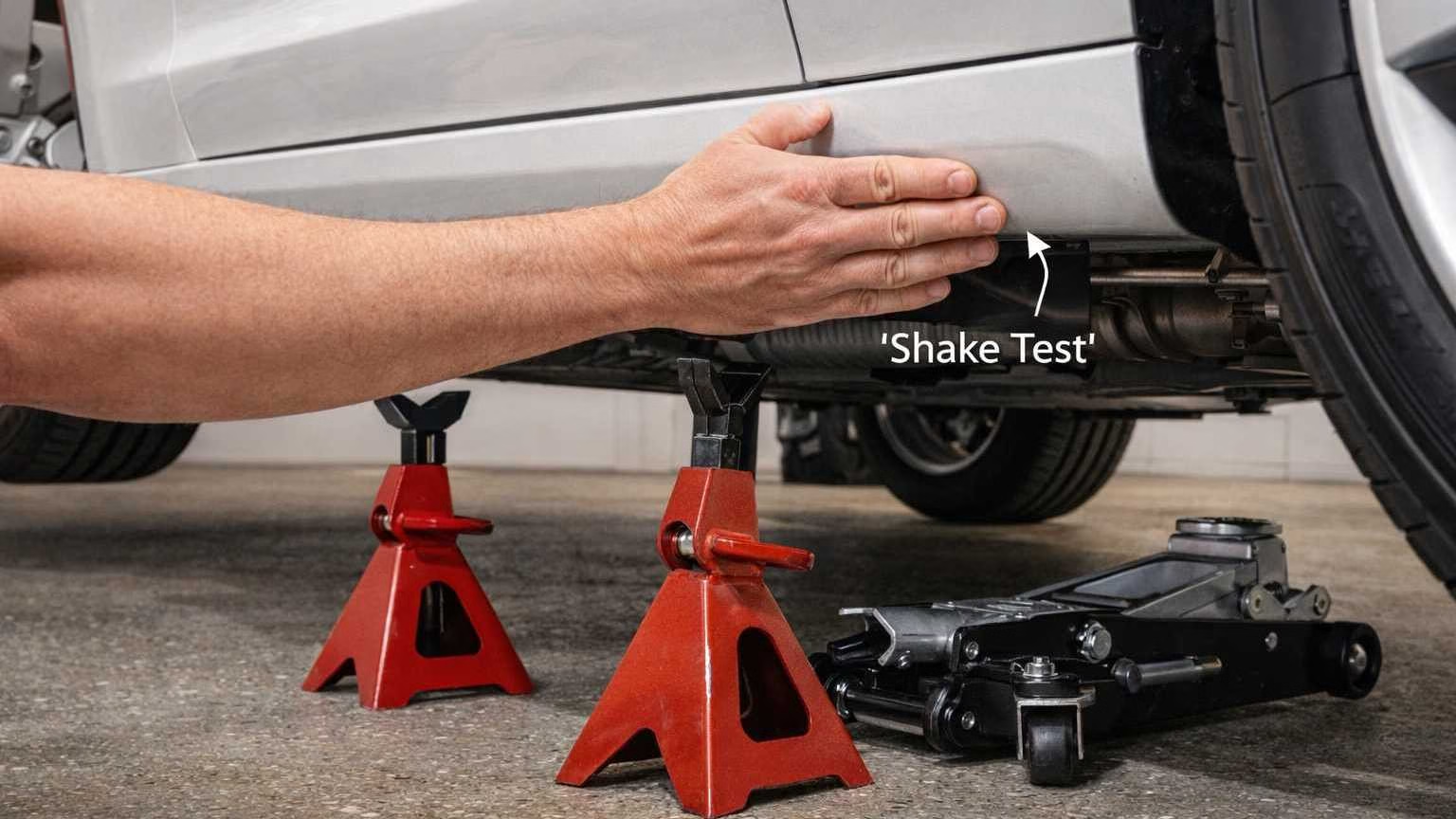
6. The Shake Test (Your Safety Net)
The shake test proves your setup is stable before you slide underneath. If something will fail, you want it to happen now.
How to shake test safely:
- Keep feet clear of pinch points
- Push on solid body parts (not bumpers)
- Try fender areas or rockers near pillars
- Push side-to-side AND front-to-back
How hard to push:
- Use force like opening a stuck door
- Firm but controlled
- Not timid, not reckless
- You’re testing stability, not moving the car
Good vs. bad movement:
- OK: Tiny tire flex or suspension settling
- NOT OK: Stands sliding, feet lifting, rocking, or sudden shifts
If anything moves unexpectedly: STOP. Raise the car. Reset everything. Try again. A failed shake test is a gift – it saved you from being underneath when it failed.
7. Common Jacking Mistakes That Cause Injuries
Skipping wheel chocks:
- Car rolls when lifted
- Jack tilts and saddle slips
- Car drops onto stands that can kick out
Using makeshift supports:
- Bricks crumble suddenly
- Wood splits without warning
- Cinder blocks shatter violently
- These don’t bend – they break
Relying on the jack alone:
- Slow leaks trap you underneath
- Clearance disappears while you work
- No backup when failure happens
Working on slopes:
- Gravity adds constant sideways pull
- Cars try to roll downhill
- Jacks get side-loaded
- Stands tilt under uneven pressure
Other dangerous habits:
- Lifting on visibly rusty pinch welds
- Placing stands too close together
- Setting stands on soft asphalt that sinks
- Not rechecking after removing wheels (changes balance)
8. Final Safety Checklist
FLOOR JACK SAFETY CHECKLIST

SURFACE
□ Ground is flat and hard (concrete is best)
□ No slope or crown in the surface
□ Jack and stands sit on clean, debris-free spots

SECURE THE VEHICLE
□ Transmission in Park or in gear
□ Parking brake set (backup only)
□ Wheels chocked properly:
   - Lifting front? Chock both rear wheels
   - Lifting rear? Chock both front wheels
   - Chock both sides of each tire

JACK CHECK
□ Jack capacity exceeds vehicle weight
□ Jack rolls freely on its wheels
□ Saddle and handle work smoothly

JACK POINTS
□ Lift point is truly structural
□ No rust, cracks or oil on contact points
□ Saddle centered exactly on lift point

LIFT TECHNIQUE
□ Lift slowly and watch for problems
□ Jack stays vertical under load
□ Jack wheels can roll freely

JACK STANDS
□ Two stands under structural points
□ Stands at matching heights
□ Locks fully engaged
□ Car lowered slowly onto stands

SHAKE TEST (MUST PASS)
□ Push car firmly side-to-side and front-to-back
□ No stand movement or rocking
□ No shifting or settling
□ If anything moves: STOP, reset, and retest
9. Why Rushing Is the Real Enemy
Most jack injuries happen during “quick jobs.” Changing a tire. Checking brakes. A fast peek underneath.
Speed kills here. Those extra minutes for chocks, stands and the shake test are your safety net.
This checklist forces you to slow down at the right moments. Those minutes separate a safe job from a story that starts with “I was only under there for a second…”
For keeping your jack in top condition, don’t miss our guide on how to bleed air and refill oil in your hydraulic jack.
Your life is worth more than saved minutes. Always run the shake test. Always use stands. Always chock wheels. Every single time.