
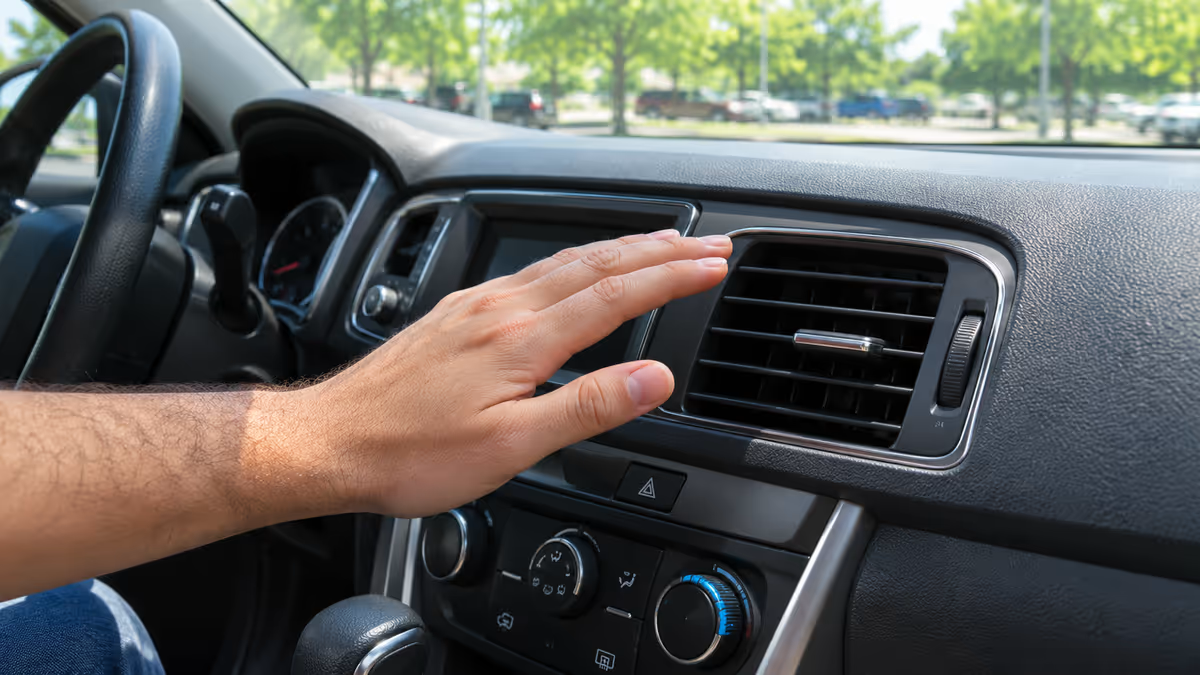
If your car AC stops cooling after some time, feel the air at a dash vent. Does it still blow hard, or has it dropped to a trickle? A loud fan with weak airflow can mean ice has built up behind the dash. A strong stream that turns warm at red lights points you toward the fan at the front of the car.
What happens next matters, too. Does the cold air return as soon as traffic moves? Or do you have to leave the AC off for a while? Those details help even if the AC works by the time you reach the shop.
Quick answer: What changes when the cooling stops?
Keep the cabin fan at one speed. That makes it easier to tell whether the air grew warm or less air reached your face. Here’s where each clue leads.
| What you notice | Where to start |
|---|---|
| The blower sounds strong, but air fades to a trickle. | Check the cabin filter. Try the thaw check below. |
| Air stays strong but gets warm at stops. | Look for debris at the grille. Ask the shop to check the cooling fan. |
| Air stays strong but turns warm even at road speed. | Have the shop check the compressor and its controls while the fault is present. Refrigerant charge also matters. |
| The blower goes quiet and the air stops. | Try another fan speed. The cabin blower, its power supply, or its speed control needs a closer look. |
How to narrow it down before you visit a shop
You can learn quite a bit from the driver’s seat. Leave the AC settings alone until you can park safely. If the glass starts to fog, use the settings you need for a clear view.
1. Check the vents while the fault is happening
Choose the dash vents and set the temperature to cold. Take the fan out of auto mode and pick a fixed speed. Hold your hand near the same center vent you used when the air felt cold.
Turn the fan up one step. If only the highest setting moves air, check why the blower motor only works on high. If you hear it speed up but feel little change, check the floor and windshield vents. Air that comes out there instead gives the shop a reason to check the door that directs it. If all the vents feel weak, move on to the thaw check.
2. Compare traffic, open-road driving, and an AC-off break
Think back to the last red light. If the vents warmed up there and cooled again once you gained speed, tell the shop. That pattern is easy to miss during a short test in a service bay.
If airflow faded, park where you can wait safely. Switch the AC off and keep the cabin fan running. Leave the fan speed and vent selection as they were. If the breeze slowly picks up, ice may have melted off the cooling fins behind the dash.
There’s no set thaw time. If the breeze stayed strong throughout and only the temperature changed, tell the shop that instead. A brief stop can also give a hot electrical part time to cool.
3. Inspect the two places air can be blocked
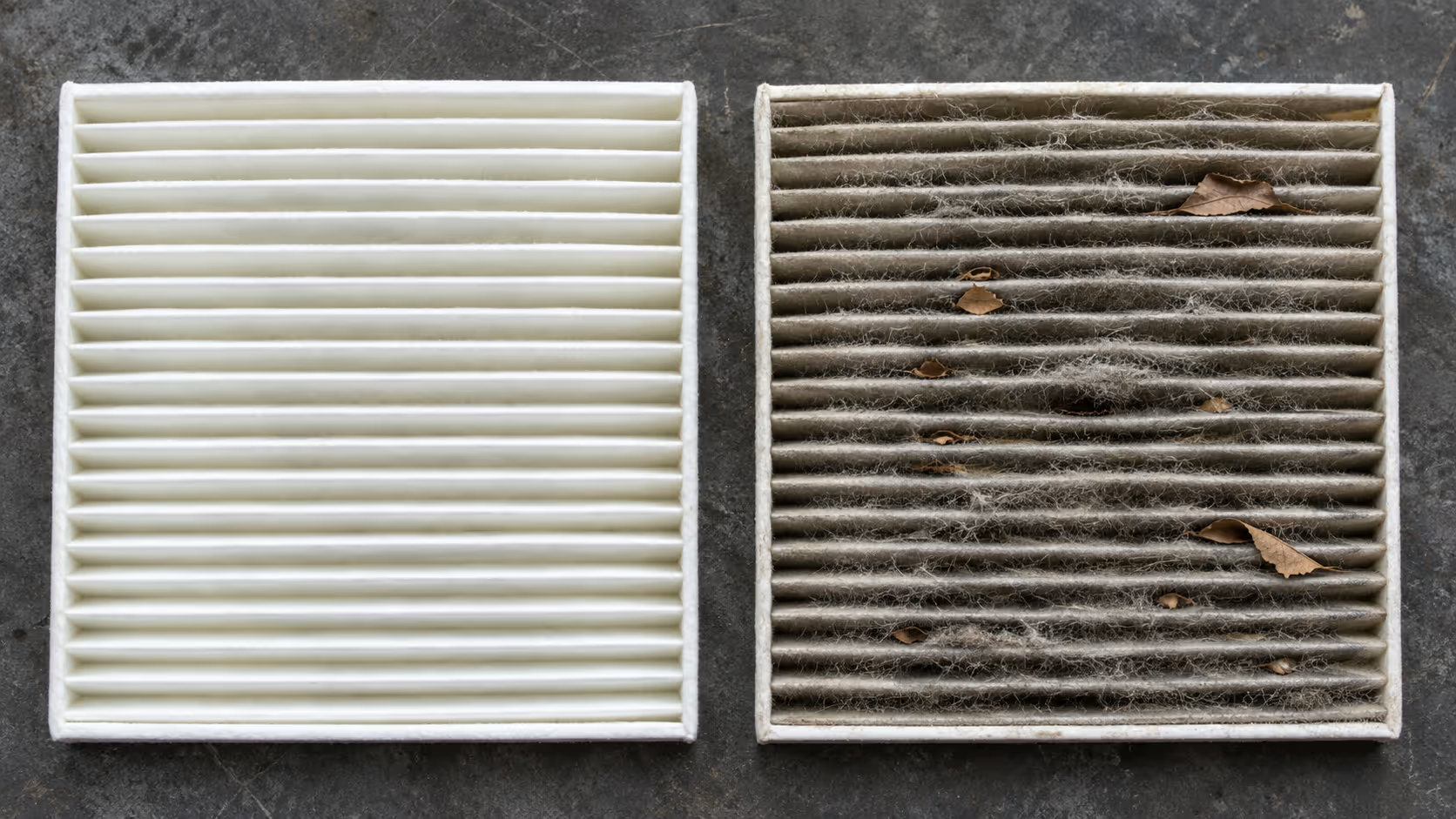
Start with the cabin filter if your car has one you can reach. Check the owner’s manual for access and the correct filter. Replace one that’s packed with dust or leaves, and follow the airflow arrow. A filter clog often makes the vents feel weak from the start.
Next, switch the vehicle off and look through the front grille. A mat of leaves can block the condenser, the finned part that sheds AC heat. Keep hands and tools clear of fans and belts. Electric fans can start with the engine off.
What to log when your car AC stops cooling after some time
Once you park, jot down these details while they’re fresh. A quick phone note works well if the AC cuts out on your commute.
- How long the AC ran before the change, and whether the day felt hot or humid.
- Whether you were stopped, in slow traffic, or at a steady road speed.
- Whether the blower still sounded strong and which vents had airflow.
- Whether driving faster, switching cooling off, or letting the car sit brought relief.
- Any dash warning, recent AC work, or change since the last recharge.
Why the AC starts cold and then turns warm
Your AC moves heat from one set of fins to another. The cold fins behind the dash take heat out of cabin air. The hot fins up front release that heat outdoors. Which side loses airflow helps explain what you feel at the vent.
Airflow fades as ice builds behind the dash
The cold part behind your dash is the evaporator. Water from humid air collects on its fins and usually drains away. If the fins stay below freezing, that water turns to ice. As ice fills the narrow gaps, less air can pass through.
A clogged cabin filter can cut the flow of warm air over those fins. A loose or faulty temperature sensor can also let the coil get too cold. If a thaw restores airflow but the fault returns, ask the shop to check both.
Some 2013–2014 Ford Escape and 2013 C-MAX models had this pattern on long, humid drives. If you own one, ask whether Ford bulletin 14-0006 applies to your car. Other models need checks that fit their own AC design.
Cooling fades in traffic when the condenser can’t shed heat
At road speed, air flows through the grille and over the condenser. At a red light, the car relies much more on its cooling fan. On many cars, that fan also pulls air through the radiator.
A fan that runs too slowly can let heat and pressure build at idle. The vents may warm up even though the cabin blower feels fine. Once traffic moves, air through the grille can bring cooling back.
A weak fan motor is one possibility. Debris, a bad connection, or a missing fan command can give you much the same result. Before you approve a new fan, ask if the shop checked its power and speed while the AC was warm.
A refrigerant leak leaves too little charge for the cooling load
Refrigerant carries heat out of the cabin in a sealed loop. If some leaks out, you may still feel cool air when you start. As the load rises, the system may struggle. On some cars, low pressure can also trigger a compressor shutoff.
Pay attention to the time scale. Air that warms halfway through one drive has several possible causes. If a recharge helped for a few weeks and the same fault came back, ask where the charge went. Find out whether the last service included a leak test.
The compressor or its electrical controls cut out when warm
Some belt-driven compressors use a clutch to turn cooling on and off. A weak clutch coil may engage when cold and fail to pull in when hot. A relay or wiring fault can also cut power once the car warms up. The cabin fan can keep blowing the whole time.
A clutch can cycle during normal use, and some compressors have no cycling clutch. A click alone tells you very little. The useful test is whether the system asks for cooling while the vents are warm, and whether the compressor responds. If the clutch stays off when the vents turn warm, see what to check when the AC compressor clutch won’t engage.
A sticking valve or ice inside the refrigerant circuit interrupts cooling
Your car uses an expansion valve or a small fixed opening called an orifice tube. It controls the flow of refrigerant into the evaporator. If a valve sticks or the opening clogs, the vents can turn warm while the air still blows hard.
Moisture inside the sealed pipes can also freeze at that opening. Cooling may return once the ice melts. This differs from frost on the outside of the evaporator, where ice blocks the air itself. Tell the shop if the fault began after someone opened the AC system.
What you can fix yourself and when to see a mechanic
If an engine temperature warning comes on, pull over safely. Follow your manual’s overheating instructions and leave the hot coolant cap closed. If you lose a clear view through the windshield, stop somewhere safe.
At home, you can replace an accessible cabin filter and clear loose leaves from the outside of the grille. Book a check if the fault comes back after a thaw, the blower cuts out, or the AC keeps losing charge. Leave sealed pipes and live fan tests to the shop.
Why a DIY refrigerant top-up can backfire
A refill can’s gauge reads pressure at one point. It can’t weigh what’s already in the car. Adding refrigerant by guesswork can leave too little or too much, and either can hurt cooling. If the fault is a fan or a relay, a refill won’t fix it.
A shop can recover the old charge and refill by the weight on the vehicle label. Ask about leak testing if the charge was low. Keep the lines closed yourself. Escaping refrigerant can freeze skin or injure your eyes.
In the U.S., federal rules generally ban deliberate venting of common car refrigerants. Technicians who service car AC for pay need Section 609 certification and approved refrigerant-handling equipment.
What to ask the shop to test while the AC is warm
Give the shop your trip notes when you book. If the fault takes half an hour to appear, say so. A cold vent during a five-minute check won’t tell them what happened later.
- Weak airflow with a loud blower: Ask them to check cabin airflow, the evaporator temperature reading, and signs of icing.
- Warm air at stops: Ask if the cooling fan reached its commanded speed and whether air could pass through the condenser.
- Strong, warm air even at speed: Ask what the compressor was told to do, how it responded, and what the pressures showed during the fault.
- Cooling faded again after a recharge: Ask how much refrigerant they recovered and how they’ll check for a leak.
Before approving a part, ask which test showed it had failed. For a compressor quote, that might be a comparison between its control signal and the pressure change it produced.
What intermittent car AC problems can cost to diagnose and fix
These U.S. estimates from September 2026 give you a starting point. Each row covers a separate service. Your model, local labor rate, and refrigerant type can change the price. Taxes, fees, and related repairs can add to the bill.
| Service | Estimated U.S. cost |
|---|---|
| AC diagnosis | $122–$179 |
| AC recharge | $285–$369 |
| Condenser fan assembly replacement | $576–$652 |
| Condenser replacement | $841–$988 |
The condenser and its fan are separate parts. If a quote says “condenser,” ask which part failed and what the price includes. For a recharge, ask whether the fee covers a leak test or only the refill. Check whether the shop credits the diagnostic fee toward the repair before you add the amounts together.
How to reduce the chance of cooling trouble returning
Check the cabin filter at the interval in your manual. If the vents start to feel weak sooner, check it sooner. Keep the grille clear, especially after driving through leaves. Skip pressure washing the delicate fins.
Keep your AC service receipt with your trip notes. If cooling fades again, record how many days passed and what the vents did. That history helps the shop decide whether to revisit a leak, an airflow problem, or a fault that only shows up when hot.
Frequently asked questions
Why does my car AC blow cold for 20 minutes and then turn warm?
Twenty minutes gives you a test window. It can take time for ice to cover the evaporator or for a clutch to fail when hot. Check whether the breeze gets weaker or just warmer. Tell the shop how long it took to happen.
Why can I hear the fan running when hardly any air comes out?
The fan can spin even if a dirty filter or an iced evaporator blocks the air. Check the other vents first. If airflow starts strong, fades everywhere, then returns after a thaw, tell the shop about that sequence.
Why does my AC get warm at red lights but cool down once I’m moving?
Road speed sends air over the condenser. At a light, a weak cooling fan or blocked fins can let heat build. If the breeze stays strong through both changes, ask for a condenser airflow check at idle. If the air turns warm while the blower stays strong, and your heater behaves the same way at stops, the cause sits on the coolant side. See why a car heater only works when driving is usually a flow problem.
Why does turning the AC off for a while make it work again?
If airflow slowly comes back with the cabin fan still on, ice may have melted off the evaporator. If airflow never changed, the break may have let a hot clutch or relay work again. A restart alone can’t identify the part.
Can low refrigerant cause intermittent cooling, and would a recharge fix it?
Yes, low charge can cause weak or intermittent cooling. A correct refill may bring back cold air. If a leak caused the loss, it can happen again until someone finds and repairs the leak.
What to do the next time your AC turns warm
If your car AC stops cooling after some time, note three things once you’re safely parked. How hard did the vents blow? Were you moving or stopped? What brought the cold air back?
Save the trip checklist and take it to your appointment. Even if the vents blow cold at the shop, you can describe just what the technician needs to reproduce.