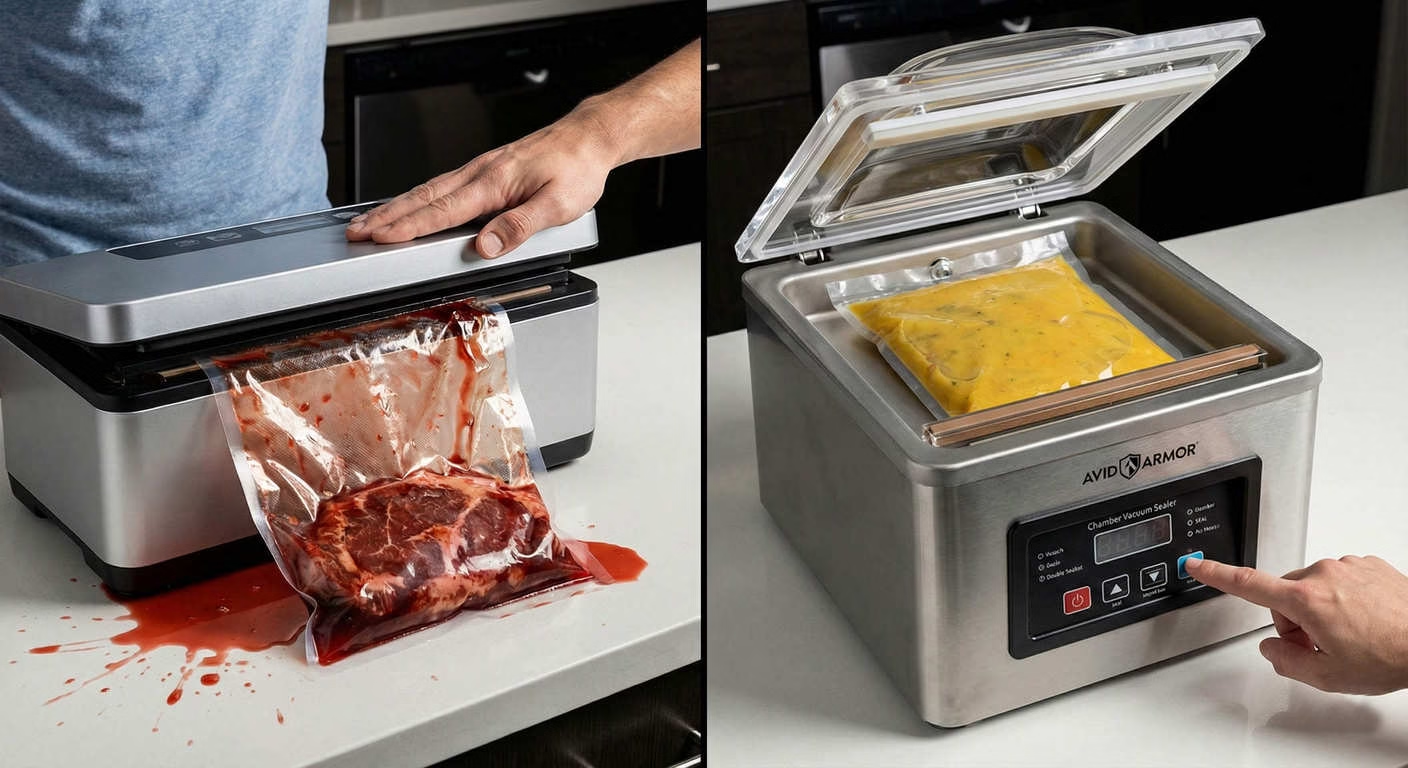
If you are reading this, you probably just ruined a batch of venison or marinade because your “Moist Mode” vacuum sealer sucked all the juice into the pump and died.
Here is the brutal truth: Standard suction sealers (like FoodSaver) cannot fight physics. If you put a bag of liquid in them, the vacuum will pull the liquid out before it pulls the air out. Marketing claims about “drip trays” are just band-aids.
If you want to seal wet food, soups, or marinated meat without freezing it first, you need a Chamber Sealer, not a suction sealer. If you are on a budget, you need a suction sealer with a double-seal override. We analyzed real user reports to find the only three machines that actually work.
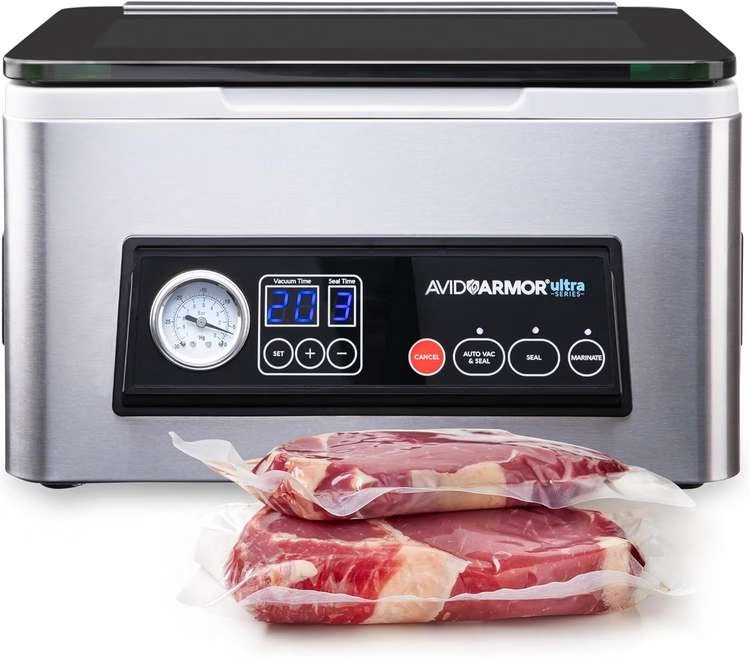
Avid Armor USV20 Ultra Series
The Brutal Verdict: The only machine on this list that can seal 100% liquid soups and marinades without failing. It uses chamber tech, not suction.
Check Price on Amazon →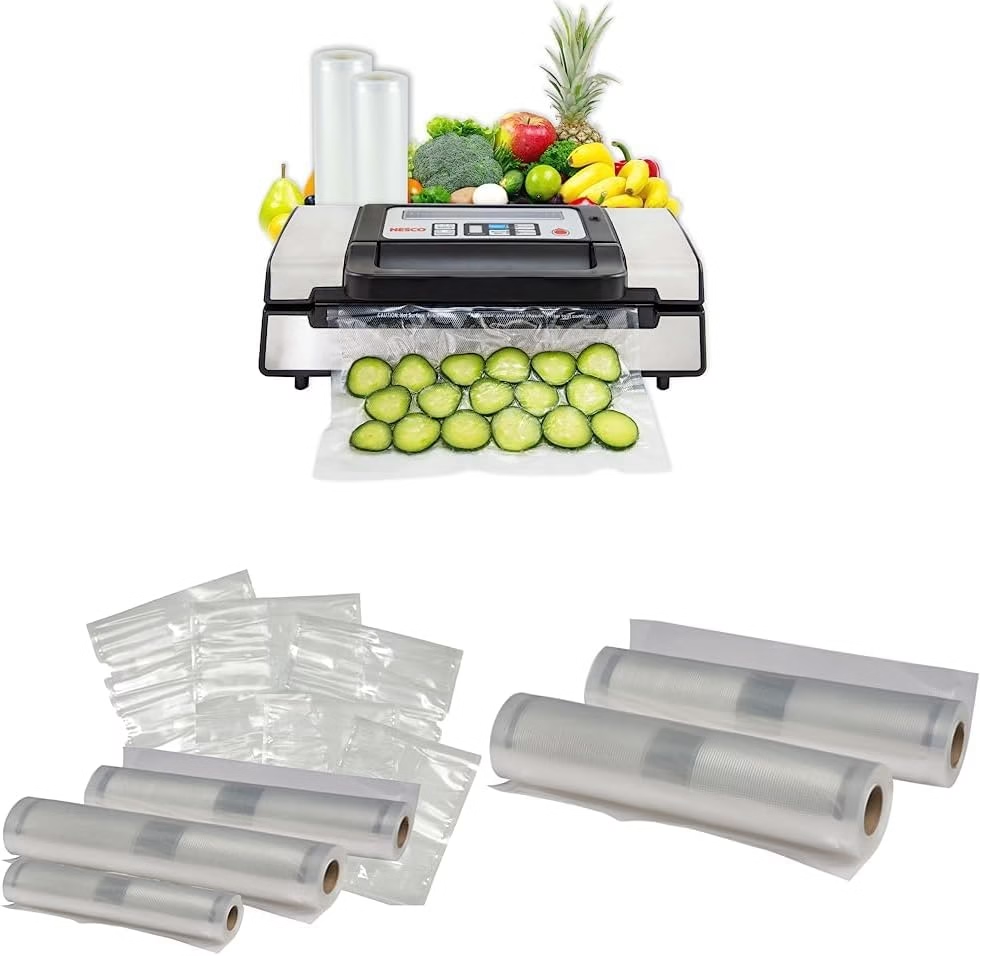
Nesco VS-12 Deluxe
The Brutal Verdict: The best “suction” sealer for damp foods. It has a double-seal bar and a handle lock that won’t snap like the FoodSaver.
Check Price on Amazon →How to Vacuum Seal Wet Food (Without the Juice Disaster)
Reddit threads love a good “it depends.” And they’re right. The best vacuum sealer for liquids isn’t always the same as the best vacuum sealer for meat or the best vacuum sealer for sous vide. The trick is matching the machine style, the bag type, and a simple prep routine so your seal holds and your countertop stays clean.
How to seal wet food like a pro No-mess method
- Pre-chill first. Spread soups, sauces, or marinades in a shallow container and chill until thick. For meat, pat it dry. Less free liquid = cleaner seals.
- Use the “folded lip” trick. Fold the top edge of the bag outward before filling. When you unfold, the seal area stays clean.
- Go slow with pulse. If your machine has pulse control, use it. Stop the suction the moment liquid creeps upward.
- Seal twice. A second seal is cheap insurance—especially if you want a freezer-tough pack for the best vacuum sealer for freezing meat routine.
- Freeze-flat for liquids. For broth or sauce, partially freeze in the bag (laid flat) then vacuum and seal. This is the easiest way to “can vacuum sealer” liquids without chaos.
Bag & accessory guide (the SEO questions everyone asks) Bags, jars, containers
- What are the best vacuum sealer bags? Look for embossed/channel bags (or rolls) that match your sealer type. Thicker “freezer-grade” bags help with wet foods and sharp edges.
- What are the best food vacuum sealer bags? Choose food-safe, BPA-free options designed for freezing and sous vide. If you’re sealing liquids, thicker is usually better.
- Can vacuum sealer bags be reused? Often, yes—especially for dry goods. For raw meat or fish, reuse is possible only if you wash and sanitize thoroughly (and many people prefer not to).
- Can vacuum sealer use any bag? Not reliably. Most external sealers need textured/channeled bags to pull air out. Smooth bags tend to fail unless they’re made for your machine type.
- Can vacuum sealer bags be boiled? Many sous vide–rated bags can handle hot water, but always check the bag’s temperature rating. “Boil-safe” depends on materials and thickness.
- Mason jars & containers: If you want the best mason jar vacuum sealer setup, prioritize a reliable jar attachment and a strong gasket. It’s also the cleanest way to store dry goods without bag waste.
- Clothes and travel: “What are the best vacuum sealer bags for clothes?” Usually means compression travel bags, not food bags. They’re great for luggage, but don’t mix them into food sealing.
Choosing the best vacuum sealer machine (wet-food edition)
If you’re wondering what is the best vacuum sealer you can buy, start with the food you actually seal. For juicy steaks, marinated chicken, or saucy meal prep, look for strong suction, a moist mode, and a dependable seal. If you constantly seal soups, stews, or ultra-wet foods, a chamber design is often the “easy button.” That’s why “what are the best rated vacuum sealers?” can have different answers depending on whether your kitchen runs dry or wet.
Is a vacuum sealer worth it in 2026?
For most households, yes. If you freeze meat, meal prep weekly, buy in bulk, or cook sous vide, it pays for itself fast. Less freezer burn. Better flavor. Fewer “mystery bags” leaking in the drawer. Even a best affordable vacuum sealer can make a noticeable difference if you pair it with quality bags and good habits.
Frequently Asked Questions
What are the best food vacuum sealers for wet foods?
For wet foods, the “best” usually means control (pulse + moist mode) and a strong, consistent seal. If you seal liquids often, a chamber-style unit is typically the easiest route. If you seal wet food occasionally, a good external sealer with double sealing can still be the best vacuum sealer for home use.
Can vacuum sealers seal liquids, or is that a myth?
It’s real. But the method matters. External machines can struggle when liquid rushes toward the seal bar. Thickening (chilling) and using pulse solves most of it. For soups and thin sauces, freezing-flat first is the cleanest workaround. So yes—can vacuum sealers seal liquids—just not always the “dump and press start” way.
What are the best vacuum sealer bags for food (and do I need special bags)?
Most external sealers work best with textured/embossed channel bags. That texture lets air escape. If you’re asking “do vacuum sealers need special bags?” the honest answer is: for best results, yes. Choose thicker bags for wet foods, sharp bones, and long freezer storage. Rolls are great if you want custom sizes and fewer wasted inches.
Can vacuum sealer bags be reused?
Many people reuse bags for dry goods (rice, nuts, coffee, crackers). For raw proteins, reuse is possible but controversial. If you do reuse, wash thoroughly with hot soapy water, sanitize, and fully dry. When in doubt, don’t risk it—new bags are cheaper than food poisoning.
Can a vacuum sealer use any bag? (Including zipper bags?)
“Any bag” is the fastest route to weak seals. Smooth bags often won’t evacuate properly in external machines. Some sealers work with certain zipper-style systems, but performance varies. If you’re chasing the best vacuum sealer and bags combo, match bag type to machine type and prioritize a clean, dry sealing area.
What are the best mason jar vacuum sealers, and why bother?
A jar setup is perfect for pantry storage: coffee, flour, dehydrated snacks, spices, and even meal-prep salads. If “what are the best mason jar vacuum sealers?” is on your list, look for easy attachments, strong seals, and reliable gaskets. It’s also a nice alternative when you’re tired of bags.
What’s the best handheld vacuum sealer—does it actually work?
Handheld models can be surprisingly handy for snacks, deli meats, and quick fridge storage. They’re not usually the absolute best vacuum sealer for heavy freezer duty, but they can be the best fit for small kitchens and light use. Think “convenience first,” not “industrial power.”
Which is the best vacuum sealer machine for meat and meal prep?
For meat, look for consistent suction, a wide seal, and dependable bags. If you process a lot at once—hunters, bulk buyers, or big families—choose a heavy-duty unit that won’t overheat during long runs. That’s how you get “best vacuum sealer for meat” results in real life, not just on spec sheets.
Is a vacuum sealer worth it if I already use freezer bags?
If you freeze often, yes. Vacuum sealing removes air, which means less oxidation and less freezer burn. It also stacks flatter and labels cleaner. If you’re tired of tossing freezer-burned food, that alone answers “is a vacuum sealer worth it?”
Where do people usually buy them—Amazon, Walmart, Costco, Cabela’s?
Anywhere. The better question is: does it have the features you need and are replacement bags easy to find? Whether you’re comparing a best vacuum sealer amazon deal, a best vacuum sealer at walmart pickup, a Costco bundle, or a Cabela’s option for game processing—focus on seal reliability, accessory support, and bag availability.
1. Avid Armor USV20: The “Buy Once” Chamber Sealer
Avid Armor USV20 Ultra
- Liquid Proof: Can seal open bags of soup, water, or bloody meat.
- No Cool Down: Run 50 bags in a row without overheating.
- Cheaper Bags: Uses smooth bags which are cheaper than textured FoodSaver bags.
Why Everyone Loves It
Tired of freezing soup in Tupperware before sealing? This solves that. The chamber equalizes pressure. Liquids won’t boil or spill. Just place the bag inside, close the lid, and you get a perfectly flat seal every single time.
The Reality Check
Marketing calls it “compact.” Don’t believe it.
- It’s heavy (over 20 pounds).
- It needs serious counter space.
- You can’t tuck it in a drawer like a FoodSaver.
Yes, it costs three times more than basic sealers. But you’ll save long-term with cheaper bags.
Our Verdict
✅ Buy it if: You hunt, fish, or prep large batches of liquid-rich foods.
❌ Skip it if: You only seal dry goods like rice or coffee. It’s serious overkill.
2. Nesco VS-12: The “FoodSaver Killer”
Why It Wins
Reddit users swear by the Nesco VS-12. They ditch FoodSaver models for two reasons:
- Its heavy-duty locking handle (no more broken plastic latches).
- Its “Double Seal” heat bar. If moisture ruins the first seal, the second one holds strong. Perfect for damp steaks or fish.
The Truth About “Moist Mode”
Ignore the “Moist” setting hype. This is still a suction sealer. Try sealing chicken soup? It’ll suck out broth and make a mess. The setting only slows the pump slightly—giving you time to stop it manually. No magic here.
Our Verdict
✅ Buy it if: You need a budget-friendly sealer that handles damp foods well.
⚠️ But remember: Always pre-freeze liquids first.
3. FoodSaver V4400: Proceed with Caution
The Only Upside
Bags are easy to find at Walmart. That’s really its sole advantage. The auto bag detection can be handy—when it actually works.
Why It Fails
This model is why people Google “vacuum sealer not working.”
- Liquid drips clog its sensor. Then it runs nonstop or refuses to seal.
- The “removable drip tray” is tiny. One leaky marinade bag floods the electronics.
Our Verdict
✅ Okay for: Dry pantry items like pasta or crackers.
❌ Avoid if: You handle wet foods, hunt, or meal-prep regularly. It’s a flimsy toy next to the Avid Armor or Nesco.
Final Verdict
If you handle liquid-heavy foods (stews, marinades, fresh game meat), you must buy the Avid Armor USV20. It is the only tool that physically solves the liquid problem. If you buy a suction sealer for liquids, you are paying to be frustrated.
If you are on a budget and willing to pre-freeze your liquids, save money and get the Nesco VS-12. It is louder, but it outlasts the FoodSaver by years.
How to Seal Soup WITHOUT a Chamber Sealer
Can’t afford the $300 Avid Armor? Use these physics hacks to force your cheap Nesco or FoodSaver to handle liquids without breaking.
🍖 Garage Preservation Guides
You have the meat. Now keep it safe.