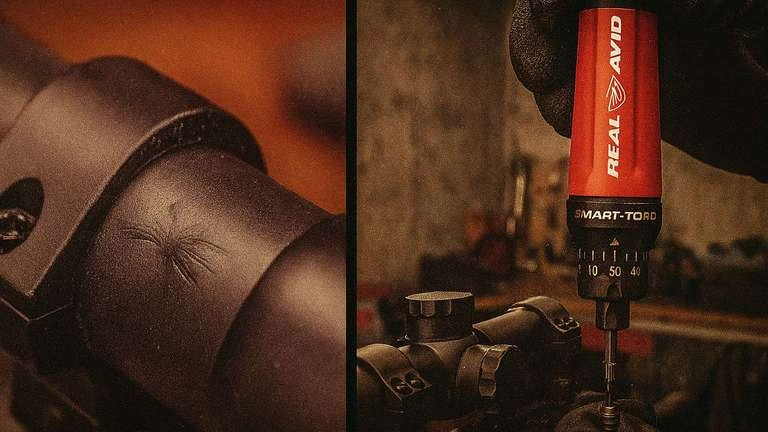
Stop guessing. If you are mounting a $2,000 Vortex Razor scope using a $5 Allen key from IKEA, you are not “tightening” it—you are slowly crushing the aluminum tube.
Most “Best Torque Screwdriver” reviews are written by people who have never leveled a reticle or bedded an action. They list cheap Amazon knockoffs that lose calibration after three clicks.
I don’t care about “value packs.” I care about holding zero.
We analyzed threads from r/LongRange, r/Gunsmithing, and r/AR15 to find the tools actual precision shooters trust to keep their optics from flying off at the range. Here is the brutal truth about inch-pound precision.
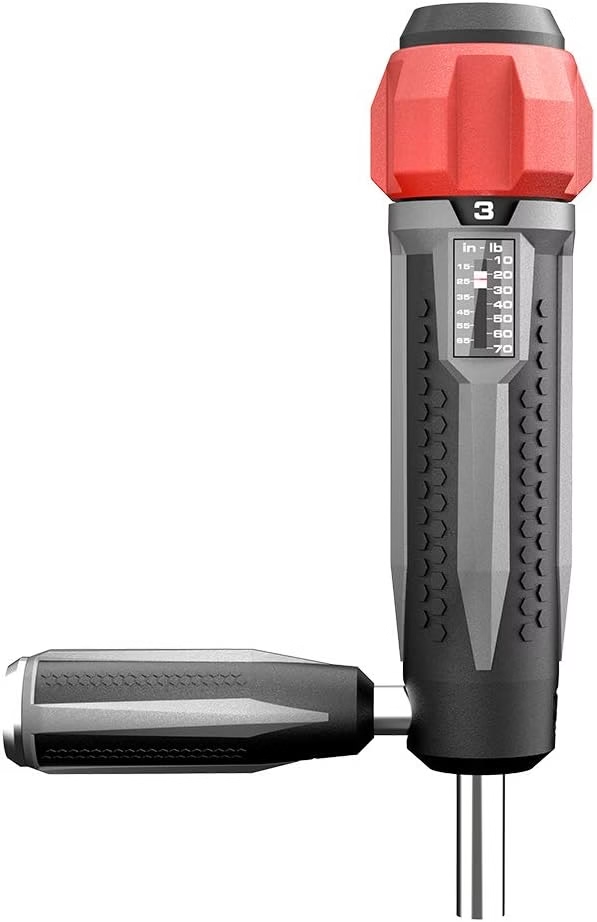
Real Avid Gunsmithing Torque Wrench Kit
The Brutal Verdict: Buy this if you hate guessing. Unlike the Wheeler, this clicks in precise 1 inch-lb increments so you never “guesstimate” a setting.
Check Price on Amazon →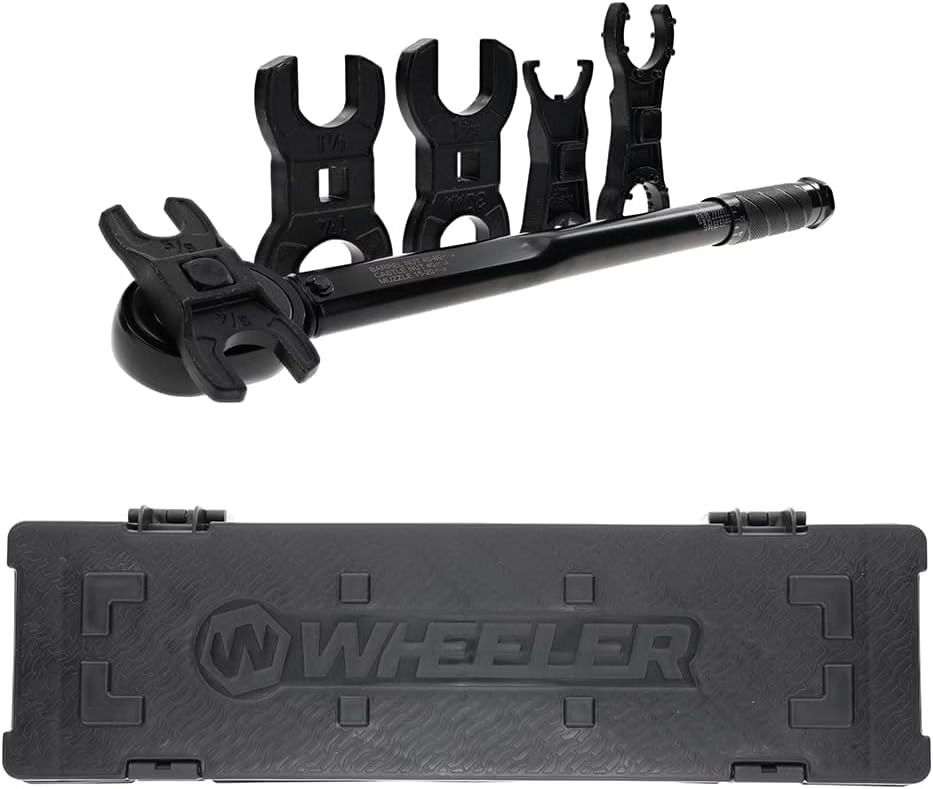
Wheeler XL F.A.T. Wrench
The Brutal Verdict: Buy only if you are on a budget and mostly work at a bench. It’s crude and hard to read, but it’s the industry standard for a reason.
Check Price on Amazon →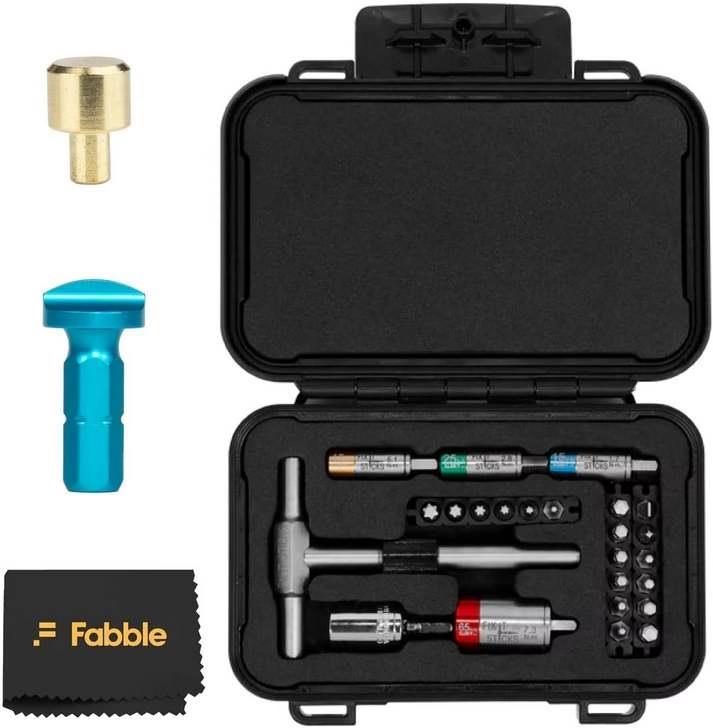
Fix It Sticks Maintenance Toolkit
The Brutal Verdict: Buy if you shoot PRS or travel. It’s expensive, but it’s the only kit that lives in your range bag without taking up space.
Check Price on Amazon →Best Torque Screwdriver for Gunsmithing (The “Inch‑Pound” Truth)
The “truth” is simple: small fasteners don’t need brute force. They need repeatable control. That’s why people keep searching what is the best torque screwdriver for gunsmithing and best inch pound torque screwdriver for gunsmithing. Inch‑pounds help you tighten to a target without stripping heads, crushing parts, or chasing mystery shifts later.
What are torque screwdrivers used for in gunsmithing?
A torque screwdriver for gunsmithing is used to apply a set amount of rotational force to a screw. That sounds technical. In real life, it means consistent screw tension. Consistent tension means fewer problems. It also explains why gunsmithing torque screwdrivers are a go-to for careful installs and repeatable adjustments.
- Prevent damage: stop before you over-tighten and deform parts.
- Improve repeatability: same torque, same hold, same results.
- Reduce guesswork: you don’t need “feel” to be perfect every time.
Digital or click-style? Choose your “confidence type.”
If you want numbers you can see, you’ll naturally lean toward the best digital torque screwdriver for gunsmithing. If you prefer a simple stop/click signal, you may prefer a classic feel. Either can be a good torque screwdriver for gunsmithing if it’s consistent and fits your common torque range.
What torque should I use for screws? A simple inch‑pound process.
When people ask what torque should i use for screws, they usually want a safe, repeatable way to tighten without damage. This is the practical routine that makes any gunsmith torque screwdriver feel easier—and makes your results more consistent.
Start with the manufacturer spec (when available)
Specs remove guesswork. If you have a stated inch‑pound range, use it. If you don’t, keep your approach conservative and consistent, then verify performance through careful checks rather than brute force.
Use the right bit and seat it fully
Bit fit matters more than most people think. A properly seated bit reduces cam‑out and helps a gunsmithing torque screwdriver deliver the torque you set—cleanly and predictably.
Increase torque in small steps
If you’re unsure, step up gradually. That’s the “inch‑pound truth”: tiny changes can be the difference between secure and stripped. This is also why many prefer the best torque screwdriver gunsmithing tools that adjust smoothly.
Stop at the signal—don’t chase “one more turn”
When the tool signals you’ve hit the setting, stop. Overriding the signal cancels the benefit of using a best gunsmith torque screwdriver approach in the first place.
Recheck the process, not your grip strength
If something feels off, re-seat the bit and repeat smoothly. If you’re thinking how to get more torque on a screwdriver, the better move is usually better technique and the right tool—not extra force.
Pick a tool that matches your screws, your bits, and your habits
The “best” choice usually depends on range, feedback, and how you work. If you’re comparing options like best gunsmith torque wrench vs best gunsmithing torque wrench, remember: wrench-style tools often fit higher torque work, while a gunsmith torque screwdriver shines in inch‑pound precision.
Fast checklist for a good gunsmith torque screwdriver
- Choose a range that covers your common inch‑pound values for a best gunsmith torque screwdriver experience.
- Prioritize clear feedback so you stop on time—this matters for any best gunsmith torque driver routine.
- Make bits easy: a solid gunsmith torx screwdriver set setup reduces slipping and stripped heads.
- For multi-setup work, a gunsmith torque screwdriver set keeps the workflow consistent and faster.
- If budget matters, aim for consistent results first—how you find the best gunsmithing torque screwdriver affordable without sacrificing reliability.
FAQ: the searches people keep making (and the simple answers)
Best torque screwdriver for gunsmithing reddit: what do people care about most?
In “best torque screwdriver for gunsmithing reddit” threads, the same themes pop up: repeatable torque, a signal you can’t miss, and a bit system that doesn’t slip. People want fewer stripped heads and fewer “mystery shifts.” Simple. Practical. Proven by use.
What is the best torque screwdriver for gunsmithing?
The best torque screwdriver for gunsmithing is the one that matches your typical inch‑pound range, delivers consistent results, and makes it easy to stop right on the set torque. If it’s comfortable, clear, and repeatable, it’s a winner—whether you call it best gunsmith torque screwdriver or good gunsmith torque screwdriver.
If you prefer complete coverage, look for the best torque screwdriver set for gunsmithing that matches how you actually work.
Best digital torque screwdriver for gunsmithing: when does digital help?
The best digital torque screwdriver for gunsmithing can be great when you want a numeric readout and easy adjustments. It feels reassuring. But the real advantage comes from keeping your technique consistent: steady pressure, proper bit seating, and stopping at the target without “just a little more.”
What are torque screwdrivers used for—beyond “tightening screws”?
What are torque screwdrivers used for? Consistency. They deliver repeatable clamping force, which helps parts stay where they should. That’s why a gunsmithing torque screwdriver is so valuable: it makes your results repeatable, not luck-based.
It’s also why many people searching best torque screwdriver for firearms or best torque screwdriver for guns end up focusing on range coverage and feedback rather than raw power.
How to get more torque on a screwdriver without damaging anything?
If you’re Googling how to get more torque on a screwdriver, the safest answer is: don’t force it. Use the right bit, keep it seated, and use a controlled inch‑pound tool. More force often means more damage. Better control means better outcomes.
What drill has the best torque—and should you use it for this job?
People ask what drill has the best torque because drills feel powerful and fast. But inch‑pound work is a precision problem, not a power problem. For consistent results, a torque screwdriver for gunsmithing is the better tool for final tightening.
1. Real Avid Smart Torq
Real Avid Smart Torq
- 1 Inch-Lb Clicks: No guessing if you are at 15 or 17 in-lbs.
- Ergonomic Spinner: The free-spinning top makes one-handed use incredibly stable.
- Unidirectional Clutch: Impossible to accidentally over-torque when backing out a screw.
The Consensus Strength: This is the tool for people who value their eyesight. The Reddit consensus is overwhelming: The Real Avid Smart Torq is superior to the Wheeler because of the adjustment mechanism. Instead of sliding a ring down a painted scale (which rubs off over time), you dial a knob at the bottom.
The Marketing vs. Reality Gap: Real Avid markets the “Force Assist” handle (a T-handle attachment) as a major feature. The Reality: It’s actually the only way to comfortably use the tool at high torque (60+ in-lbs). The grip is a bit slick, so without the T-handle, torquing action screws to 65 in-lbs can be slippery.
“The FAT Wrench adjustments were always too coarse and poorly marked. I was always guessing. The Smart Torq has 1 inch-lb click adjustments and feels better made than the cheap plastic of the FAT Wrench.” — Reddit User JustHereForTheGuns
The Verdict:
- Buy if: You need to mount a scope ring at exactly 18 in-lbs and don’t want to guess.
- Avoid if: You rely on the integrated LED light—users report it fades or flickers after a few months.
2. Wheeler F.A.T. Wrench (Analog)
The Consensus Strength: This is the “Honda Civic” of gunsmithing. It is unexciting, bulky, and crude, but it works. Almost every gun owner has one on their bench. It is reliable enough for 90% of tasks, provided you treat it right.
The Marketing vs. Reality Gap: Wheeler markets this as a precision instrument accurate to +/- 2 in-lbs. The Reality: The scale is a nightmare to read. The red line is thick, and the hash marks are small. Is it set to 15? Or 17? You have to squint to tell. Furthermore, users report that the bits are “soft as butter” and prone to rust if you look at them wrong.
“I have a T10 bit from their kit that never sees more than 15 inch-pounds and it’s partially twisted already. The wrench is fine, but throw the bits in the trash and buy Wiha.” — Reddit User (r/Gunsmithing)
The Verdict:
- Buy if: You want the cheapest reliable option and primarily work at a dedicated workbench.
- Avoid if: You are OCD about precision or have bad eyesight. The “guesstimate” scale will drive you crazy.
3. Fix It Sticks (The Works)
The Consensus Strength: If you ask the “High Rollers” in the PRS (Precision Rifle Series) community what they use, the answer is always Fix It Sticks. This is a modular, portable kit that fits in a pouch the size of a sandwich. It uses “Torque Limiters”—preset attachments that spin freely once the torque is reached.
The Marketing vs. Reality Gap: The marketing claims it replaces a shop full of tools. The Reality: It is slow. Because you have to swap out the physical limiters (e.g., take off the 15 in-lb limiter, put on the 25 in-lb limiter), it is annoying for bench work where you are constantly changing specs. It is designed for field use, not shop production.
“Fix It Sticks are great, but they’re pricey. I keep them in my range bag because they are compact, but at home, I grab the Wheeler because swapping limiters is a pain.” — Reddit User PvtDonut1812
The Verdict:
- Buy if: You need a kit for your range bag or travel. It is bombproof and impossible to break.
- Avoid if: You are on a budget ($100+) or want to quickly change torque settings without swapping parts.
Scope Mounting Hacks: Inch-Lbs vs. Ft-Lbs
The #1 reason people crush scope tubes is confusing units. 15 Foot-Pounds is 180 Inch-Pounds. If your manual says “15 in-lbs” and you use a Ft-Lb wrench, you will destroy the optic.
Final Verdict: Which One Fits Your Job?
- The “Precision” Choice (Winner): Real Avid Smart Torq. The 1 in-lb clicks make it the easiest to use accurately. It eliminates the “reading error” of the Wheeler.
- The “Budget” Choice: Wheeler F.A.T. Wrench. If you just need to mount a scope once a year and save money, this is fine. Just buy better bits.
- The “Pro/Travel” Choice: Fix It Sticks. If you are competing or carrying your tools to the range, this is the only option that fits in a pocket and survives a nuclear blast.
🔧 Complete Your Garage
You have the torque wrench. Now get the tools to do the rest of the job.
Best Floor Jacks
Daytona vs. Arcan: Why the “Snap-on Clone” at Harbor Freight is the best value.
Best OBD2 Scanners
BlueDriver vs. Foxwell: The scanners that actually explain how to fix the code.
Best Jump Starters
Stop asking strangers for cables. The lithium packs that survive -20°F weather.
Best Tire Inflators
Viair vs. Milwaukee: The only pumps that handle 35-inch truck tires without blowing fuses.
Best Oil Extractors
Why “Topside” oil changes are faster, cleaner, and require zero crawling.
Best Battery Tenders
NOCO vs. Battery Tender: How to keep your car alive during winter storage.