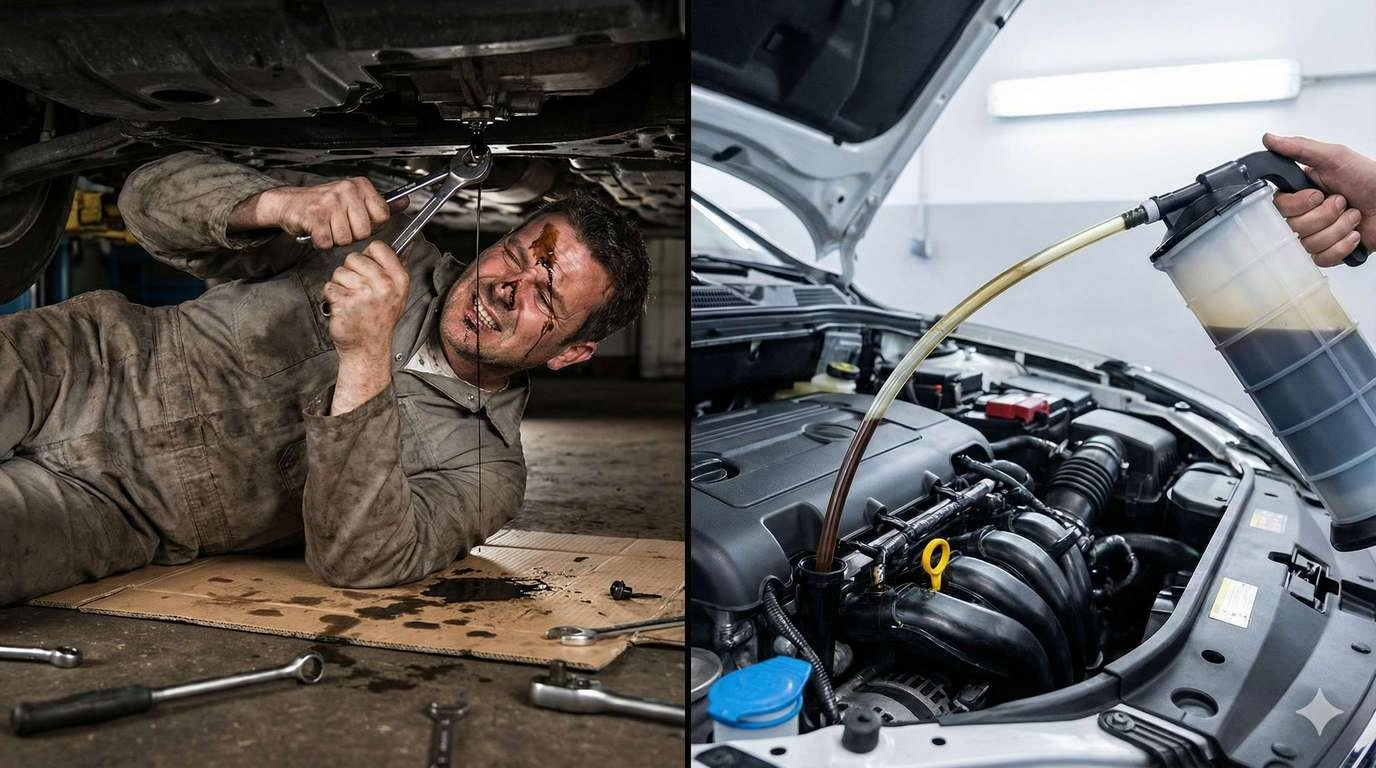
If you are still crawling under your car to change your oil, you are doing it wrong.
The “Old School” method involves lifting the car, placing jack stands, stripping the drain plug, and getting hot oil up your sleeve.
The “Smart” method (used by Mercedes and Audi mechanics) is to suck the oil out through the dipstick tube. It takes 10 minutes. You don’t even get your hands dirty.
We analyzed threads from r/MechanicAdvice and r/GolfGTI to find the only three extractors that actually hold a vacuum and won’t leak all over your garage floor.
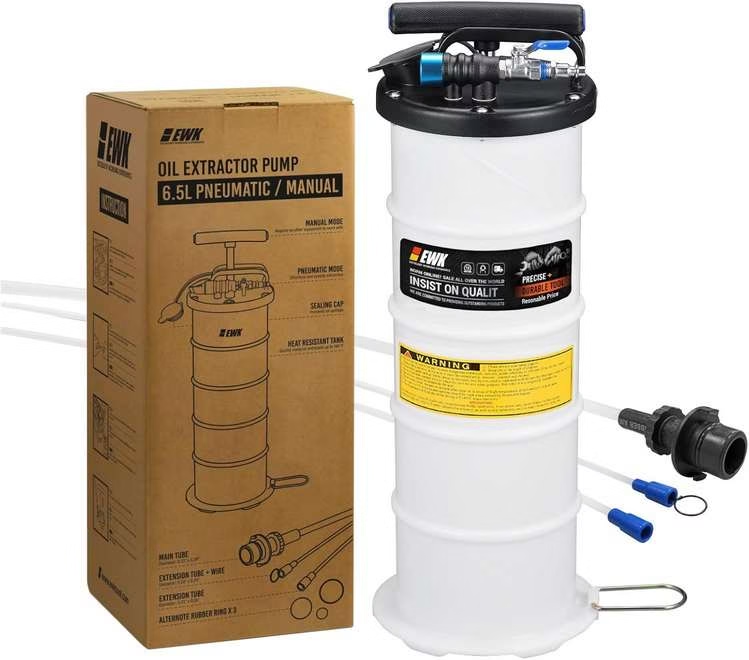
EWK 6.5L Pneumatic/Manual
The Brutal Verdict: Buy this if you have an air compressor. It connects to your air line and sucks the oil out automatically while you drink a beer. It also has a hand pump for backup.
Check Price on Amazon →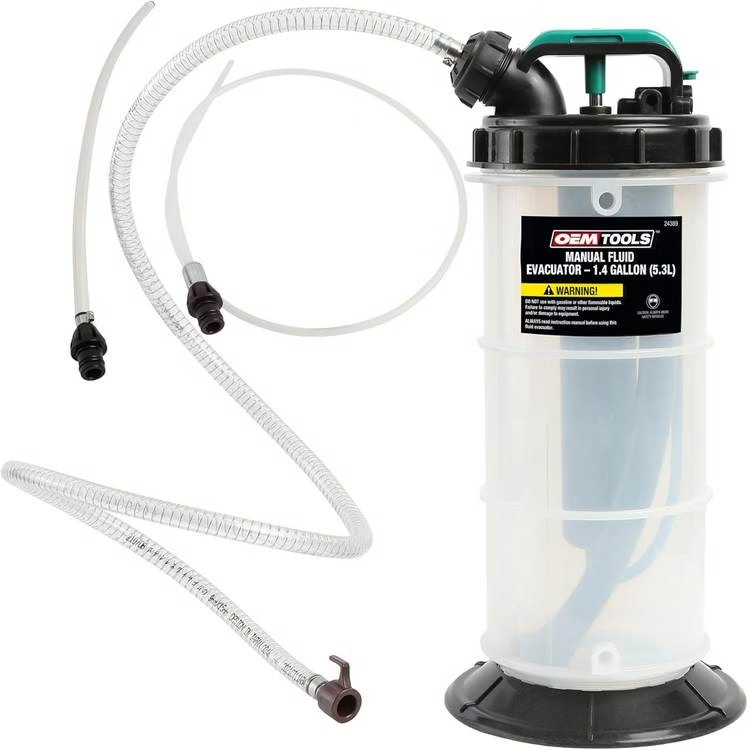
OEMTOOLS 24389 (5.3L)
The Brutal Verdict: Buy this if you want a simple tank that just works. No air lines, no complex seals. You pump it by hand, create a vacuum, and wait.
Check Price on Amazon →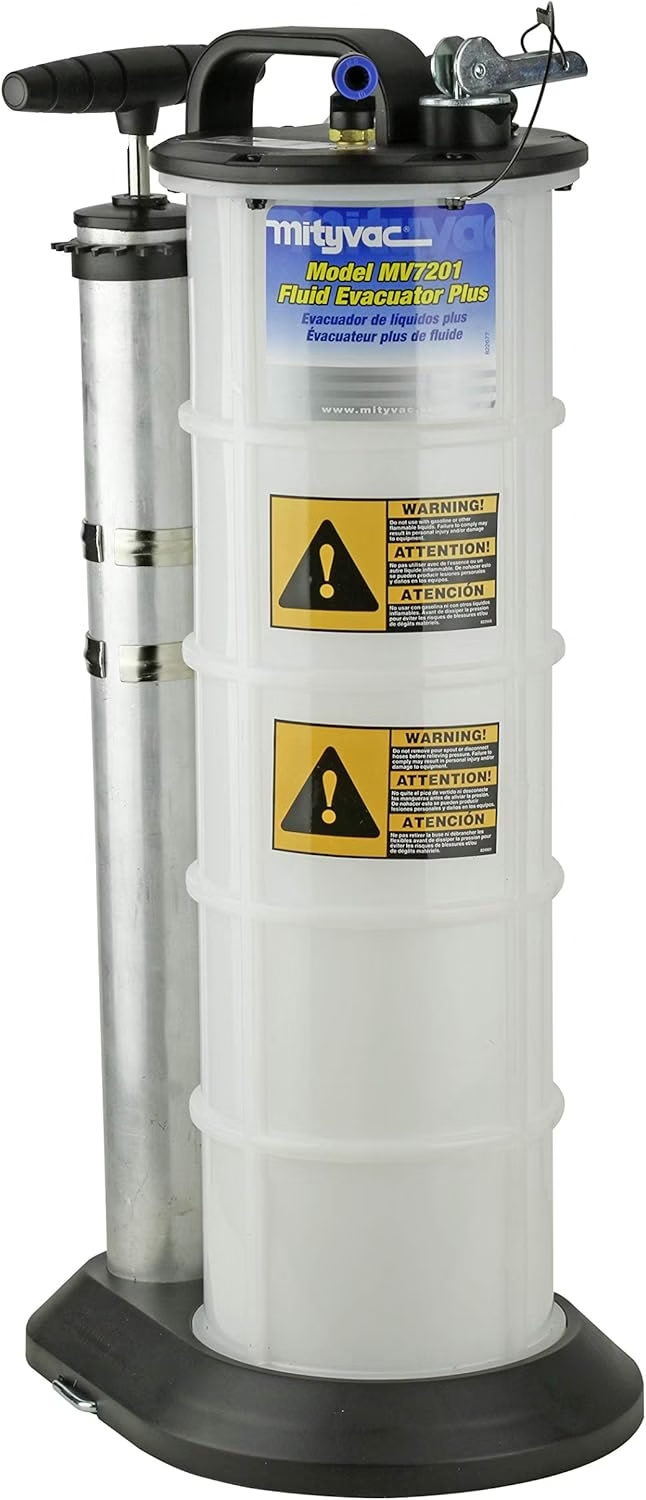
Mityvac 7201 Fluid Evacuator Plus
The Brutal Verdict: Buy this if you also change Transmission Fluid. It is the only one that can SUCK fluid out and PUSH fluid back in. Essential for diffs and transmissions.
Check Price on Amazon →Real Talk: Are Oil Extractor Pumps Any Good?
If you frequent automotive forums, the debate between the best manual oil extractor fans and the “drain plug purists” is endless. But for 2026, the consensus is clear. Do oil extractors work? Yes, but with one caveat: they work best when the oil is warm.
Is it the best oil extraction method for everyone? Here is the breakdown:
- The Good: No more crawling on concrete or stripping drain plug threads. It is the best oil extractor for home use if you value clean hands and speed.
- The Bad: They do not work on all cars. If your vehicle has a baffled oil pan (like some older trucks) or a dipstick tube that doesn’t reach the bottom, you might leave sludge behind.
While most buy these for their daily driver, this is arguably the best oil extractor for boat owners and the best oil extractor for lawn mower maintenance. Why? Because boat engines and mowers often have drain plugs that are impossible to reach without making a massive mess.
Frequently Asked Questions
What is the best oil extractor pump capacity?
Size matters. For most 4-cylinder engines, a 6-liter unit is fine. However, for trucks or larger SUVs, you need an 8 liter oil extractor (or even an 8 quart oil extractor). If you buy too small, you will have to stop mid-change to dump the oil, which defeats the purpose of a clean job.
Should I build a homemade oil extractor?
We see searches for homemade oil extractor pump plans often, usually involving glass jars and vacuum cleaners. Don’t do it. Hot oil can weaken makeshift seals, and glass jars can implode under vacuum pressure. A professional oil extractor is built with heat-resistant HDPE plastic that won’t warp or shatter.
Are oil extractors worth it for a one-time use?
If you pay a shop $80+ for an oil change, an extractor pays for itself in two uses. Plus, using an oil extractor for engine oil changes means you can inspect your fluid quality more frequently without the hassle of lifting the car.
A manual oil extractor requires you to pump a handle (like a bicycle pump) to create vacuum. A pneumatic extractor hooks up to your air compressor. The top oil extractors in 2026 often feature a “dual-mode” that lets you do both—perfect if you want to use it on the boat (manual mode) and in the garage (pneumatic mode).
1. EWK 6.5L Pneumatic/Manual Extractor
EWK 6.5L Pneumatic/Manual Extractor
- Automatic Mode: Connects to shop air for hands-free suction.
- Heat Resistant: The tubes won’t melt in hot oil (up to 175°F).
- Versatile: Works on lawnmowers, cars, boats, and jet skis.
Why Everyone Loves It:
Reddit adores the EWK. It kills the hard work. Manual pumps need 20-30 pumps to pull cold oil. That’s exhausting. The EWK? Just flip a switch. Its tubes are thinner than rivals. They slide into tight spots (like BMW dipsticks) where others jam.
Marketing vs. Reality Check:
They call it “Fast.” Truth? Cold oil slows it to a crawl. Warm your engine 5 minutes first. Cold oil is thick like syrup. Hot oil flows like water. You also need a decent air compressor (3+ gallons) for best results.
“Oil changes on my VW GTI used to suck. Now I hook up the EWK, crack a beer, and listen for the gurgle. Best $80 ever.”
— u/EuroCarFan
The Verdict:
✓ Buy if: You own an air compressor. You value your time and comfort.
✗ Avoid if: You lack an air compressor (get their manual version instead).
2. OEMTOOLS 24389 (5.3L)
Why Everyone Loves It:
This is the “no-nonsense” pick. No valves to leak. No fancy seals to break. Just a tough bucket with a pump. It’s cheap, rugged, and works anywhere. Perfect for apartment dwellers or mobile mechanics.
Marketing vs. Reality Check:
They promise “One Pump Operation.” Truth? That’s a myth. You’ll pump 10-15 times to start. Then pump again halfway through. Thick oils (like 5W-40) make it a real arm workout.
“It’s boring but bulletproof. I’ve dropped it three times—still works. Pro tip: Push tubes all the way down or you’ll miss half the oil.”
— Verified Amazon Review
The Verdict:
✓ Buy if: You need a zero-power tool. You want something unbreakable and simple.
✗ Avoid if: You drive a big truck (5.3L fills fast; you’ll empty it mid-change).
3. Mityvac 7201 Fluid Evacuator Plus
Why Everyone Loves It:
This tool has a superpower: reversing flow. It sucks fluid out. Then flips to pump fluid in. That’s magic for transmission or differential jobs. You can refill hard-to-reach spots from underneath your car.
Marketing vs. Reality Check:
They claim “Leak Proof.” Truth? It often leaks from the top seal. Overfill it? Tip it? Disaster. It’s messier than the EWK. Treat it gently. Pump too hard while refilling? The seal pops off.
“I bought it for my Audi’s DSG service. Refilling the transmission from below saved me. But the pump handle feels cheap next to my EWK.”
— u/AudiTech
The Verdict:
✓ Buy if: You change transmission or differential fluid. You need that refill trick.
✗ Avoid if: You only do engine oil changes (too complex for the risk).
Extractor Hacks: Getting Every Drop Out
People claim extractors leave “sludge” behind. That only happens if you extract cold oil or miss the low spot in the pan.
Final Verdict: Which One Fits Your Job?
Pick your fighter based on your garage:
- For the “Lazy” Mechanic (Best Overall):
EWK 6.5L Pneumatic
Let shop air do the work. Once you try it, you’ll never go back. - For the “Backyard” Mechanic (Simple & Tough):
OEMTOOLS 24389
No power? No problem. It works in driveways, garages, or parking lots. - For the “Advanced” Mechanic (Transmission Guru):
Mityvac 7201
That reverse-flow trick is worth the fuss for gear oil jobs.
Your oil change just got easier. Happy wrenching! 🔧
🔧 Complete The Job
You changed the oil. Now finish the maintenance checklist.
Best OBD2 Scanner
Don’t forget to reset your “Service Due” light. We tested the best scanners that can do it instantly.
Best Shop Inflator
While the oil drains, top up your tires. The Milwaukee M18 is the fastest cordless option we tested.
Best Battery Maintainer
If your car sits for weeks, keep the battery alive. NOCO vs Battery Tender tested.
Best Garage Heater
Changing oil in the winter? Stop freezing. We found the best heaters for uninsulated garages.