
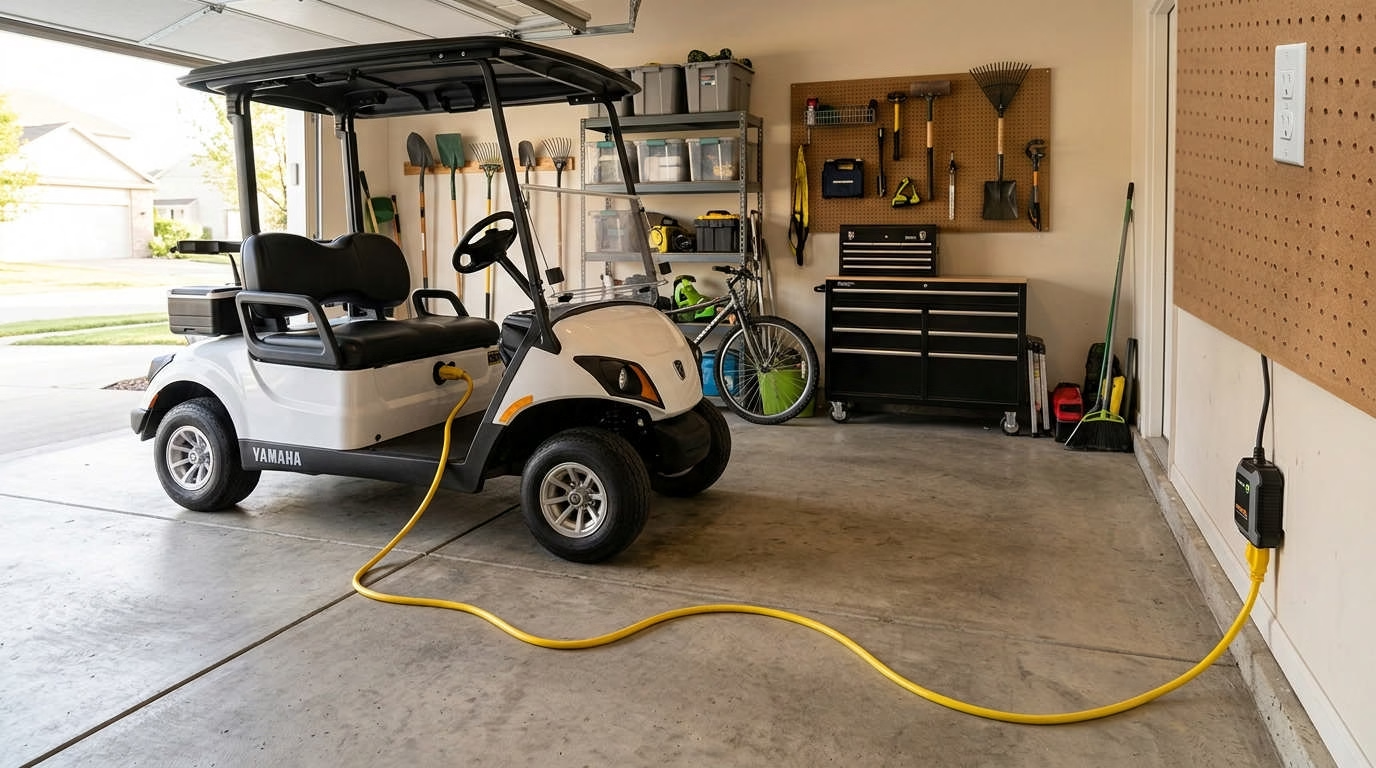
Before I ranked these cords, I reviewed thousands of owner comments, customer reports, and buyer discussions. The list reflects how these products perform after real use, not how impressive they look in an ad.
The best extension cord for charging a golf cart is usually a 25-foot, 10-gauge, grounded outdoor cord. It should have one outlet and a valid safety listing. The Southwire Polar/Solar 10/3 is my top pick due to its thick wire, flexible jacket, and trusted build.
Still, check your charger manual first. Some charger makers tell you not to use an extension cord at all.
The Best Extension Cords for Charging a Golf Cart at a Glance
This table shows the strongest choices from the 20 products reviewed. Each finalist uses 10-gauge wire for better power flow and lower heat risk.
| Features | Southwire Polar/Solar | Iron Forge Cable | Southwire AgriPro | POWGRN | EP Lighted | LifeSupplyUSA |
|---|---|---|---|---|---|---|
| Rank ⭐ | 1 | 2 | 3 | 4 | 5 | 6 |
| Product |  |  |  |  |  |  |
| Award | Best Overall | Best Rugged Value | Best for Workshops | Best Budget 10-Gauge | Best High-Visibility | Best for 50-Foot Run |
| Gauge | 10/3 | 10/3 | 10/3 | 10/3 | 10/3 | 10/3 |
| Length | 25 ft | 25 ft | 25 ft | 25 ft | 25 ft | 50 ft |
| Best For | Most golf cart owners | Garages & mild climates | Oil, dirt, hard use | Lower-cost setups | Dark garages & driveways | Longer reach |
| 🔗 Price | Check Price | Check Price | Check Price | Check Price | Check Price | Check Price |
Quick answer: Choose the shortest 10/3 cord that reaches your charger. A 25-foot model is a better fit than a 50-foot model for most homes.
Do not treat any cord as a permanent wiring fix. If you charge every day from far away, add a closer outlet.
Quick Recommendations
You may not need to compare every small detail. These four choices fit the most common charging setups.
Best Overall Choice
The Southwire Polar/Solar 1787SW0002 is the best all-around choice.
It has thick 10-gauge wire and a tough outdoor jacket. It also stays more flexible in cold weather than most vinyl cords.
Choose it if you want:
- A 25-foot cord
- Strong cold-weather performance
- A lighted end
- A proven cord brand
- A high level of build quality
Its main downside is cost. It is also heavy, which is normal for a true 10/3 cord.
Best Affordable 10-Gauge Choice
The POWGRN 25-Foot 10-AWG cord offers good value.
You still get 10-gauge wire, a grounded plug, and a lighted end. It also has an outdoor-rated jacket and an ETL safety listing.
The brand has less long-term evidence than Southwire. Still, the core design fits this job well.
Best Choice for a Workshop or Equipment Shed
The Southwire AgriPro 10/3 is built for rough spaces.
Its jacket resists oil, grease, moisture, and wear. That makes it useful in a farm shop, tool shed, or service area.
The black jacket can be hard to see. Use care if the cord crosses a walkway.
Best Choice When You Need 50 Feet
The LifeSupplyUSA 50-Foot 10/3 is the best longer option here.
Its 10-gauge wire gives you more power-flow margin than a 12- or 14-gauge cord of the same length. However, it is heavy and takes up more space.
Expert tip: Do not buy a 50-foot cord if 25 feet will reach. Extra length adds weight, resistance, and trip risk.
Can You Use an Extension Cord to Charge a Golf Cart?
Sometimes. Your charger manual gets the final say.
A suitable golf cart charger extension cord must match the charger’s wall-side power needs. It also needs a sound outlet, intact plugs, and a dry place to connect.
Safety warning: Do not use an extension cord if the charger manual bans one. Stop charging if a plug becomes hot, loose, dark, soft, or smelly.
Check the Charger Manual and Input Label First
Find the data label on your charger. Look for its input voltage and amps.
Do not use the charger’s output amps to choose a cord. Output amps flow from the charger to the battery. Input amps come from the wall.
Look for details such as:
- Input voltage, often shown as 120V
- Input current, shown in amps
- Cord instructions
- Grounding needs
- Indoor or outdoor limits
- Required circuit protection
If the manual says “do not use an extension cord,” follow that rule. A thick cord does not cancel the warning.
Why Golf Cart Chargers Are Hard on Extension Cords
A phone charger draws little power. A golf cart charger can pull a steady load for hours.
That long run time can expose weak points, including:
- Thin wire
- Loose wall outlets
- Bent plug blades
- Worn cord ends
- Damp connections
- Shared circuits
- Coiled cords
Most heat issues start at a connection. The plug may fit loosely, or the metal contacts may be worn.
This is why plug quality matters as much as gauge.
When a Permanent Outlet Is the Better Solution
An extension cord makes sense for short-term or occasional use. It makes less sense as a daily fix.
Consider a closer outlet if:
- You charge the cart every day
- You need 50 feet or more
- The cord crosses a driveway
- The connection sits outdoors
- The wall outlet feels loose
- The breaker trips often
- People may trip over the cord
A new outlet costs more at first. Yet it removes a long cord and an extra plug connection from the setup.
How We Selected the Best Golf Cart Charging Extension Cords
I started with 20 likely choices. I then removed cords with weak specifications, poor use cases, or limited trust signals.
Amazon ratings were only one part of the review. I also looked for repeated owner feedback, safe design, known materials, and a sound brand record.
Initial Product Screening
The starting list included products from:
- Southwire
- Iron Forge Cable
- POWGRN
- EP
- LifeSupplyUSA
- Klein Tools
- US Wire and Cable
- Yellow Jacket
- Huanchain
- Watt’s Wire
- DEWALT
- PlugSaf
- Skrizcable
The following designs lost points:
- 14- or 16-gauge cords for long runs
- Indoor-only cords
- Two-prong plugs
- Unclear safety listings
- Three-outlet ends
- Very long cords without a clear need
- Listings with mixed or unclear specifications
A multi-outlet cord can be well made. However, it may tempt you to run another tool on the same circuit.
For golf cart charging, one outlet is simpler.
Electrical Suitability
Wire gauge and length received the most weight.
A lower gauge number means thicker wire. Therefore, 10-gauge wire is thicker than 12-gauge wire.
Thicker wire helps limit voltage drop. It also gives you more margin during a long charge.
I favored:
- 10/3 construction
- 15-amp ratings
- Grounded plugs
- 25-foot lengths
- Single receptacles
- Outdoor jackets
The “3” in 10/3 means the cord has three wires. Those are hot, neutral, and ground.
Build Quality and Safety Certification
A good cord needs more than thick copper.
I looked for:
- UL or ETL safety listings
- Molded plug ends
- Strong strain relief
- Reinforced blades
- Weather-rated jackets
- Clear printed ratings
- An intact ground pin
UL and ETL are independent safety testing marks. They do not promise that a product can never fail. However, they carry more weight than vague phrases like “pro grade.”
Owner Feedback and Independent Evidence
I gave more weight to patterns than single reviews.
Useful reports described:
- Years of use
- Plug temperature
- Cold-weather handling
- Jacket wear
- Trips and breaker issues
- Loose connectors
- Storage problems
- Use under steady loads
Short comments like “works great” added little. Detailed reports from long-term owners carried more weight.
Conflicting reports also needed context. A cord may stay cool on one charger but warm up on another. Cord length, outlet wear, air heat, and charger draw can all change the result.
Value and Long-Term Use
The cheapest cord is not always the best value.
A low-cost cord becomes expensive if you replace it twice. It is worse if a worn end harms the outlet or charger plug.
I judged value through:
- Wire size
- Cord length
- Jacket type
- Plug quality
- Brand record
- Safety listing
- Expected service life
- Price compared with similar cords
Southwire costs more in many cases. POWGRN and EP offer lower-cost options with the core features most buyers need.
Best Extension Cords for Charging a Golf Cart
The models below rank from the strongest choice to the most limited. The lower-ranked cords are not bad. They simply fit fewer users or have less long-term evidence.
| Spec / Model | Southwire Polar/Solar | Iron Forge Cable | Southwire AgriPro | POWGRN | EP | LifeSupplyUSA |
|---|---|---|---|---|---|---|
| Rating | 15A, 125V | 15A, 125V | 15A, 125V | 15A, 125V | 15A, 125V | 15A, 125V |
| Jacket | SJEOOW | SJTW | SJTOW | SJTW | SJTW | SJTW |
| Safety Mark | Listed | UL | UL | ETL | ETL | Varies by model |
| Main Strength | Cold flexibility | Rugged value | Oil resistance | Affordable 10 gauge | Bright and easy to see | 50-foot reach |
| Main Limitation | Higher cost | Stiff when cold | Low visibility | Less long-term data | Smaller evidence base | Heavy and bulky |
1. Southwire Polar/Solar 1787SW0002 25-Foot 10/3: Best Overall
The Southwire Polar/Solar takes first place because it gets the basics right. It then adds a better jacket than most budget cords.
The 10/3 wire suits a demanding 25-foot run. Its SJEOOW jacket also stays flexible in very cold weather.
Key specifications
- Length: 25 feet
- Wire: 10/3
- Maximum current: 15 amps
- Voltage: 125 volts
- Jacket: SJEOOW
- Outlet count: One
- Lighted end: Yes
- Use: Indoor and outdoor
SJEOOW is a flexible, weather- and oil-resistant cord type. It tends to stay softer than common vinyl.
Real-world advantages
- Easy to move in cold weather
- Thick wire limits voltage loss
- Light shows when power reaches the end
- Bright color is easy to spot
- Molded ends feel firm
- Jacket handles rough floors well
The cord feels heavy because it contains thick wire. That weight is a fair trade for its power capacity.
Common drawbacks
- Costs more than basic SJTW cords
- Takes more effort to coil
- Large connector may not fit small covers
- May be more cord than light users need
| Pros | Cons |
|---|---|
| Thick 10-gauge wire | Premium price |
| Flexible in cold weather | Heavy |
| Strong outdoor jacket | Bulky plug end |
| Lighted end | Harder to store |
| Trusted brand | Limited need for light chargers |
Best for: You want a well-made 25-foot cord for a garage, carport, or cold area.
Confidence in main benefits: High
Confidence in main drawbacks: High
Verdict: This is the most balanced product in the group. It costs more, but its jacket and build support long-term use.
2. Iron Forge Cable 25-Foot 10/3: Best Rugged Value
The Iron Forge Cable model offers a tough build at a fair price. It uses 10/3 wire and a simple single outlet.
Its vinyl jacket handles scrapes, sun, and normal garage use well. Reinforced blades help protect the plug from bends.
Key specifications
- Length: 25 feet
- Wire: 10/3
- Maximum current: 15 amps
- Voltage: 125 volts
- Maximum power: 1,875 watts
- Jacket: SJTW
- Safety mark: UL
- Lighted end: Yes
Real-world advantages
- Strong molded plug ends
- Thick wire for steady loads
- Fair price for 10/3 construction
- Light confirms power at the far end
- Bright color aids visibility
- Good resistance to normal wear
Its jacket is less flexible in deep cold than the Southwire Polar/Solar jacket. That matters if you store the cord in an unheated shed.
Common drawbacks
- Gets stiff in cold weather
- Heavy to carry
- Clear power light may fade with age
- Molded ends feel large
- Locking versions may not suit all plugs
| Pros | Cons |
|---|---|
| Rugged jacket | Cold-weather stiffness |
| UL listed | Heavy |
| Reinforced blades | Bulky ends |
| Good value | Several similar variants |
| Lighted outlet | Light may lose brightness |
Best for: A home garage in a mild climate.
Confidence in main benefits: High
Confidence in main drawbacks: Medium to high
Verdict: Iron Forge is a smart middle choice. It gives you a thick cord without the top Southwire price.
3. Southwire AgriPro 64817501 25-Foot 10/3: Best for Workshops and Farm Buildings
The Southwire AgriPro is made for dirty work areas. Its SJTOW jacket resists oil and harsh shop grime.
That feature matters around lawn gear, farm tools, and service bays. Oil can harm some cord jackets over time.
Key specifications
- Length: 25 feet
- Wire: 10/3
- Maximum current: 15 amps
- Maximum power: 1,875 watts
- Jacket: SJTOW
- Safety mark: UL
- Outlet count: One
- Color: Black
SJTOW means the jacket resists weather and oil.
Real-world advantages
- Deals well with oil and grease
- Handles wide heat changes
- Uses thick copper wire
- Strong molded ends
- Good fit for rough floors
- Less likely to crack from shop use
Its black jacket blends into dark floors. Route it along a wall when you can.
Common drawbacks
- Harder to see in low light
- Heavy for casual use
- Often costs more than standard cords
- May lack a lighted end on some versions
- Overbuilt for a clean, warm garage
| Pros | Cons |
|---|---|
| Oil-resistant jacket | Black color is hard to see |
| Wide heat range | Heavy |
| Strong plug build | Premium price |
| Thick 10/3 wire | Few useful extras |
| Good shop durability | Too much for some homes |
Best for: A workshop, barn, shed, or cart service area.
Confidence in main benefits: High
Confidence in main drawbacks: High
Verdict: Pick the AgriPro for a harsh setting. In a clean home garage, the Polar/Solar may feel easier to use.
4. POWGRN 25-Foot 10-AWG: Best Budget 10-Gauge Cord
POWGRN offers the needed core features at a lower price. You get 10-gauge wire, a lighted end, and an outdoor jacket.
The cord also carries ETL and cETL safety marks. That helps it stand above cheap cords with vague claims.
Key specifications
- Length: 25 feet
- Wire: 10/3
- Maximum current: 15 amps
- Voltage: 125 volts
- Maximum power: 1,875 watts
- Jacket: SJTW
- Safety mark: ETL and cETL
- Lighted end: Yes
Real-world advantages
- Good price for true 10-gauge wire
- Easy-to-see power light
- Handles common outdoor use
- Includes a storage strap
- Flexible in normal weather
- Single outlet keeps the setup simple
Do not confuse “waterproof” marketing with a safe wet plug. Keep every open connection dry.
Common drawbacks
- Less long-term brand history
- Fewer hands-on tests
- Basic plug finish
- Power light may not last as long
- Weather claims can sound broader than they are
| Pros | Cons |
|---|---|
| Lower price | Less long-term evidence |
| 10-gauge wire | Basic finish |
| ETL listed | Unknown light lifespan |
| Lighted end | Broad marketing claims |
| Storage strap | Not equal to premium rubber |
Best for: You need 25 feet and want to keep costs down.
Confidence in main benefits: High
Confidence in main drawbacks: Medium
Verdict: POWGRN is the best budget option here. You get the right wire size without paying for a premium jacket.
5. EP 25-Foot 10/3: Best High-Visibility Choice
The EP cord stands out due to its bright jacket and lighted end. That can help in a dark garage or shared drive.
Its core design is sound. It has 10/3 copper wire, one grounded outlet, and an ETL safety listing.
Key specifications
- Length: 25 feet
- Wire: 10/3
- Maximum current: 15 amps
- Voltage: 125 volts
- Maximum power: 1,875 watts
- Jacket: SJTW
- Safety mark: ETL
- Lighted end: Yes
Real-world advantages
- Easy to see near a parked cart
- Thick conductors
- Firm grounded plug
- Reinforced blades
- Light shows power at the outlet
- Fair cost for the specifications
Good visibility does not remove trip risk. Route the cord away from doors and walking paths.
Common drawbacks
- Less long-term evidence than Southwire
- Thick cord feels bulky
- Product details can differ by color
- Indicator lifespan is unclear
- Few unique features beyond visibility
| Pros | Cons |
|---|---|
| Bright jacket | Limited long-term data |
| Lighted end | Bulky |
| 10/3 copper wire | Variant details may differ |
| ETL listed | Basic jacket |
| Competitive cost | Smaller brand record |
Best for: Dark garages, carports, and areas with foot traffic.
Confidence in main benefits: Medium to high
Confidence in main drawbacks: Medium
Verdict: EP makes sense if you value visibility. POWGRN has a wider feedback base, while EP offers a simple bright design.
6. LifeSupplyUSA 50-Foot 10/3: Best for a 50-Foot Run
The LifeSupplyUSA earns a place for one clear reason. It provides 50 feet of reach without dropping to thin wire.
Its 10/3 conductors give you more margin than common 12/3 and 14/3 cords. That does not make 50 feet equal to 25 feet, though.
Key specifications
- Length: 50 feet
- Wire: 10/3
- Maximum current: 15 amps
- Voltage: 125 volts
- Maximum power: 1,875 watts
- Jacket: SJTW
- Outlet count: One
- Lighted end: Yes
Real-world advantages
- Reaches distant parking spots
- Thick wire suits the longer run
- Bright color improves visibility
- Light confirms power at the end
- Large pool of owner feedback
- Useful for short-term layouts
This cord is much heavier than a 25-foot model. You also need room to lay it out during use.
Common drawbacks
- Heavy and tiring to coil
- Takes up storage space
- Adds more resistance than 25 feet
- Creates more trip risk
- Poor fit for daily permanent use
| Pros | Cons |
|---|---|
| 50-foot reach | Very heavy |
| 10-gauge wire | Bulky storage |
| Lighted outlet | More voltage loss |
| Bright jacket | Greater trip risk |
| Single outlet | Not a permanent fix |
Best for: Occasional use when a 25-foot cord will not reach.
Confidence in main benefits: High
Confidence in main drawbacks: High
Verdict: This is the strongest long-run choice in the group. Still, a closer outlet is better for daily charging.
Product Comparison by Charging Situation
Your setup matters more than a small difference in price. Match the cord to the space, climate, and real distance.
| Charging Situation | Best Match | Why |
|---|---|---|
| Standard home garage | Southwire Polar/Solar | Great all-around build |
| Mild climate and rough use | Iron Forge Cable | Tough and fairly priced |
| Cold winter | Southwire Polar/Solar | Flexible jacket |
| Farm or repair shop | Southwire AgriPro | Oil-resistant jacket |
| Lower budget | POWGRN | Affordable 10-gauge design |
| Dark driveway | EP | Bright jacket and light |
| True 50-foot need | LifeSupplyUSA | Thick wire at longer length |
For a Standard Garage
Most garages need a 25-foot 10/3 cord at most.
The Southwire Polar/Solar offers the best total package. Iron Forge is a strong alternative if cold weather is not a major concern.
Use a high wall outlet if possible. Keep the connection away from places where tires may roll over it.
For Cold Weather
Cold can make a vinyl cord stiff. A stiff cord is harder to lay flat and harder to store.
The Southwire Polar/Solar is the best fit here. Its jacket stays flexible at much lower heat levels.
The AgriPro also handles wide temperature swings well. However, its black color is harder to see on dark floors.
For Workshops, Barns, and Equipment Sheds
A work area brings oil, dirt, sharp tools, and rough floors.
The Southwire AgriPro fits this setting. Its oil-resistant jacket is the main reason to choose it.
Iron Forge also works well in a clean shop. Keep either cord away from fuel, battery acid, and moving equipment.
For Longer Runs
Long cords add resistance. That can lead to more voltage loss.
If you need 50 feet, use a thick cord. The LifeSupplyUSA 10/3 is a better choice than a thin 50-foot yard cord.
Do not join two 25-foot cords together. One full-length cord removes an extra connection point.
For a Limited Budget
Do not save money by dropping to a thin 16-gauge cord.
Instead, keep the correct gauge and choose a simpler brand. POWGRN is the best value choice here.
EP is also worth a look if color and visibility matter more to you.
How to Choose the Right Extension Cord for a Golf Cart Charger
“Heavy duty” is not a wire size. You need to read the actual specifications.
The following factors help you choose a cord that fits your charger and parking space.
Start With the Charger’s Input Amperage
Read the input section on the charger label.
Look for a format like:
- Input: 120V AC
- Current: 8A
- Frequency: 60Hz
The exact numbers will vary. Use your charger’s real input figure.
Your extension cord must support that load for the full charge time. Also check the charger manual for special limits.
Choose the Correct Wire Gauge
American Wire Gauge, or AWG, measures wire thickness.
The numbers seem backward:
- 10 gauge is thicker than 12 gauge
- 12 gauge is thicker than 14 gauge
- 14 gauge is thicker than 16 gauge
Here is a simple guide:
| Gauge | Relative Size | General Fit for Cart Charging |
|---|---|---|
| 10 AWG | Very thick | Best margin for 25–50 feet |
| 12 AWG | Thick | May suit short approved runs |
| 14 AWG | Medium | Often a poor fit for long charging |
| 16 AWG | Thin | Avoid for demanding charger use |
| 18 AWG | Very thin | Not suitable |
You can use the extension cord gauge calculator to compare gauge, length, and load.
The calculator helps with the math. Your charger manual still comes first.
Use the Shortest Length That Reaches
Shorter wire has less resistance. It is also easier to store and less likely to become a trip hazard.
Use this quick process:
- Measure from the wall outlet to the charger.
- Follow the real path around walls and doors.
- Add only a small amount of slack.
- Choose the shortest standard size that reaches.
- Do not leave the excess tightly coiled.
If 25 feet reaches, do not buy 50 feet. If you need 100 feet each day, consider a new outlet.
Look for a Recognized Safety Listing
Look for a UL or ETL mark on the product and cord tag.
These marks show that the product design passed set safety tests. They do not make poor use safe.
Avoid cords that only use vague phrases such as:
- Safety tested
- Lab approved
- Pro quality
- Contractor style
- Industrial strength
A real listing should name the testing body.
Confirm That the Cord Is Grounded
Use a three-prong cord with an intact ground pin.
Never:
- Break off the round ground pin
- Use a two-prong adapter
- Force a plug into a worn outlet
- Bypass a damaged ground
- Alter the charger plug
Grounding gives fault current a safer path. That can reduce shock risk when other protection works as designed.
Understand Outdoor Cord Jacket Ratings
Cord letters describe the jacket and use.
| Mark | Plain Meaning |
|---|---|
| S | Flexible service cord |
| J | 300-volt insulation |
| T | Vinyl jacket |
| E | Flexible rubber-like jacket |
| O | Oil resistant |
| W | Outdoor rated |
Common types include:
- SJTW: Outdoor vinyl cord
- SJEOW: Flexible outdoor cord with oil resistance
- SJEOOW: More oil resistance inside and out
- SJTOW: Outdoor vinyl cord with oil resistance
For a clean garage, SJTW may be enough. For cold or oily spaces, a premium jacket makes more sense.
Examine Plug Quality and Strain Relief
The cord ends take the most abuse.
Look for:
- Thick molded ends
- Firm blades
- Full strain relief
- No gaps in the plastic
- A snug receptacle
- An intact ground pin
Strain relief is the thick section where the cord meets the plug. It reduces sharp bends at that weak point.
Do not keep using a cord with a loose plug end.
Decide Whether You Need a Lighted End
A lighted end tells you that power reaches the cord’s outlet.
That feature helps when:
- The wall outlet is far away
- The garage is dark
- The breaker has tripped
- You need a fast power check
The light does not show that the cart is charging. It also cannot detect low voltage or a weak outlet.
Prefer a Single Outlet
One charger needs one cord outlet.
A three-way end may let someone add:
- A heater
- A power tool
- A fan
- A shop vacuum
- Another charger
Those extra loads can strain the circuit. A single outlet reduces that chance.
10-Gauge vs. 12-Gauge Extension Cord for a Golf Cart Charger
Both sizes can carry useful loads. The better choice depends on length, charger draw, and the manual.
A 10-gauge cord gives you more margin. A 12-gauge cord weighs less and often costs less.
| Feature | 10 Gauge | 12 Gauge |
|---|---|---|
| Wire thickness | Thicker | Thick |
| Weight | Higher | Lower |
| Cost | Higher | Lower |
| Voltage loss | Lower | Higher |
| Storage | Harder | Easier |
| Best use | Long or demanding runs | Short approved runs |
When a 12-Gauge Cord May Be Enough
A 12/3 cord may work for a short run if:
- The charger manual allows it
- Its rating meets the charger load
- The cord is 25 feet or shorter
- The wall outlet is firm
- The cord is fully uncoiled
- All parts stay dry
- You check for heat
A good 12/3 cord is far better than an unknown “heavy-duty” cord with thin wire.
When a 10-Gauge Cord Is the Better Choice
Choose 10/3 if:
- You need 25 to 50 feet
- You charge often
- The charger draws a steady load
- The area gets hot
- You want less voltage loss
- You prefer more wire-size margin
All six ranked choices use 10-gauge wire. This was a planned filter, not a claim that 12 gauge never works.
Why Gauge Is Not the Only Safety Factor
A thick wire cannot fix a bad outlet.
It also cannot fix:
- Bent plug blades
- Wet connections
- A worn charger cord
- A shared circuit
- Damaged insulation
- A weak breaker
- Charger faults
- Corroded battery parts
Treat the setup as one system. The weakest part can cause the failure.
How to Use an Extension Cord With a Golf Cart Charger
A good cord can still become unsafe if you use it poorly.
Use the steps below each time you charge.
Inspect the Outlet, Cord, and Charger Before Connecting
Take a few seconds to check the full setup.
Look for:
- Cuts
- Cracks
- Flat spots
- Soft plastic
- Dark marks
- Bent blades
- Missing ground pins
- Loose outlet fit
- Exposed copper
- Signs of water
Do not cover damage with tape and keep charging. Replace the cord.
Fully Uncoil the Extension Cord
Remove the storage strap. Lay the cord out in a loose line.
Do not leave most of it wrapped in a tight coil. A coil can hold heat.
Avoid sharp bends around:
- Door frames
- Cart tires
- Shelf legs
- Charger handles
- Metal edges
Give the cord room to stay cool.
Keep Every Connection Dry and Off the Ground
An outdoor rating protects the jacket. It does not seal an open plug joint.
Keep the connection:
- Out of rain
- Away from puddles
- Off wet grass
- Above damp floors
- Clear of sprinklers
- Away from washing areas
Do not wrap a wet connection in a plastic bag. Moisture may become trapped inside.
Plug Into a Suitable Wall Outlet
Use a grounded wall outlet that holds the plug firmly.
Avoid:
- Power strips
- Cube adapters
- Two-prong adapters
- Multi-plug blocks
- Daisy-chained cords
- Loose outlets
A plug that sags or falls out needs attention. Stop using that outlet until it has been checked.
Check for Heat During the First Charging Cycle
Check the setup after about 15 minutes. Check it again later in the charge.
Focus on:
- The wall plug
- The wall outlet cover
- The extension cord ends
- The charger’s AC plug
A slight change from room temperature may occur under load. A hot plug is not normal.
Stop charging if you notice:
- A hot plug or outlet
- A burning smell
- Soft or melted plastic
- Buzzing or crackling
- A flickering power light
- Dark marks
- A loose connection
- Repeated breaker trips
Unplug the system safely. Have the parts checked before trying again.
Store the Cord Properly After Charging
Let the cord cool and dry first.
Then:
- Wipe away dirt.
- Coil it in large loose loops.
- Avoid tight bends at the ends.
- Secure it with a wide strap.
- Store it in a dry spot.
- Protect the blades with a cap if supplied.
Do not leave the cord on the floor where tires can crush it.
Common Mistakes to Avoid
Many charging problems begin with simple choices. The mistakes below show up often because they seem harmless.
Using a Thin Household Extension Cord
A thin lamp or yard cord may power the charger at first. That does not make it a sound choice.
Thin wire has more resistance. Long charging periods can expose that weakness.
Check the printed gauge on the jacket. Do not judge wire size by color or thickness alone.
Buying More Length Than Needed
Extra cord is not free electrical capacity.
It adds:
- Resistance
- Weight
- Cost
- Storage trouble
- Trip risk
- More jacket to inspect
Measure first. Then buy the shortest suitable size.
Daisy-Chaining Two or More Extension Cords
Joining cords adds another plug connection.
That joint may be:
- Loose
- Wet
- Dirty
- Worn
- Hidden under the cart
Use one cord of the right length. If that cord becomes too long for regular use, install a closer outlet.
Leaving the Cord Coiled During Charging
A neat coil looks safe. Yet it can trap heat.
Fully uncoil the cord before charging. Spread it out without creating a walking hazard.
Assuming “Heavy Duty” Means 10 or 12 Gauge
“Heavy duty” is a sales term. It does not tell you the wire size.
Read the jacket or listing for:
- 10/3 or 12/3
- Amp rating
- Voltage rating
- Jacket code
- Safety mark
- Indoor or outdoor use
Skip products that hide those details.
Ignoring a Loose or Worn Wall Outlet
A loose outlet creates a poor metal connection. Poor contact makes heat.
Signs include:
- Plug drops down
- Plug falls out
- Outlet face looks dark
- You hear buzzing
- Plastic feels warm
- Power cuts in and out
Do not bend the plug blades to make them fit. Have the outlet checked.
Charging Through a Power Strip or Multi-Outlet Adapter
Many power strips are meant for small devices. They are a poor match for long charger loads.
A strip also lets you add more devices to the same path. Plug the suitable cord into a sound wall outlet instead.
Maintenance and Replacement Guide
A quality cord can last for years. Its life depends on heat, use, storage, and physical wear.
Check it often rather than waiting for a clear failure.
How to Clean an Outdoor Extension Cord
Unplug both ends first.
Use a dry cloth to remove loose dust. For stuck dirt, use a lightly damp cloth and mild soap.
Avoid:
- Fuel
- Strong solvent
- Brake cleaner
- Harsh shop chemicals
- Soaking the ends
- Pressure washing
Let the cord dry fully before its next use.
How to Coil and Store a Heavy 10-Gauge Cord
Use wide, loose loops.
Do not wrap the cord tightly around your elbow. That method can twist the cable and strain the ends.
A 50-foot 10/3 cord needs a large hook or reel. Make sure any reel lets you remove and fully uncoil the cord during use.
If you also run larger garage tools, Review Friendly’s air compressor CFM calculator can help you match an air compressor to your tools. Keep those tools off the cart’s charging circuit.
Signs That the Cord Should Be Replaced
Replace the cord if you find:
- Deep cuts
- Cracked insulation
- Flat or crushed areas
- Exposed copper
- Burn marks
- Melted plastic
- Loose blades
- Missing ground pin
- Separated strain relief
- A loose female outlet
- Heat that returns
- Power that cuts in and out
Do not repair serious cord damage with tape. Tape may hide the problem without restoring safe insulation.
When You Should Install a New Outlet Instead
An extension cord should solve a reach problem, not become part of the building.
A fixed outlet often makes more sense for regular charging.
Signs a Permanent Outlet Is Worth the Cost
Consider an outlet upgrade if:
- You charge most days
- You need more than 25 feet
- The cord crosses a path
- Cars drive over the cord
- The plug sits outdoors
- You often charge overnight
- The circuit serves many tools
- The breaker trips
- The current outlet is loose
A long cord may cost less today. A proper outlet offers a cleaner long-term setup.
Benefits of a Dedicated Charging Location
A good charging space can provide:
- Shorter cable runs
- Fewer plug joints
- Less trip risk
- Better weather cover
- Easier charger storage
- Less voltage drop
- A clear inspection area
Mount the charger as directed by its maker. Keep space around it for air flow.
If a rider needs help getting in and out of vehicles, this guide to the best car handle assists for elderly people covers simple mobility aids for safer entry and exit.
What to Discuss With a Licensed Electrician
Show the electrician the charger label and manual.
Ask about:
- Circuit capacity
- Outlet location
- Ground-fault protection
- Weather-rated covers
- Grounding
- Existing wire condition
- Local electrical rules
- Other loads on the circuit
Do not ask for a larger breaker without checking the wall wiring. A breaker must match the circuit wire.
Final Verdict
The best extension cord for charging a golf cart is the shortest approved cord that meets your charger’s input needs.
For most suitable setups, that means a 25-foot 10/3 outdoor cord with one grounded outlet.
- Southwire Polar/Solar is the best overall choice.
- Iron Forge Cable offers rugged value.
- Southwire AgriPro suits oily, rough work areas.
- POWGRN is the best lower-cost 10-gauge option.
- EP works well where visibility matters.
- LifeSupplyUSA is the better choice when you truly need 50 feet.
Your charger manual remains more important than this ranking. If it bans extension cords, install a suitable outlet instead.
Also watch the wall outlet. A thick, high-quality cord cannot make a worn connection safe.
Frequently Asked Questions
These short answers cover the most common questions about golf cart charger extension cords.
What Gauge Extension Cord Should I Use for a Golf Cart Charger?
Check the charger manual first.
A 12-gauge cord is often treated as the minimum for a short approved run. A 10-gauge cord gives you more margin, mainly at 25 to 50 feet.
Avoid thin 16- and 18-gauge household cords.
Is a 10-Gauge Cord Better Than a 12-Gauge Cord?
A 10-gauge cord has thicker wire. It tends to lose less voltage and handle long loads better.
It also costs more and weighs more. A good 12-gauge cord may suit a short run if the charger maker allows it.
How Long Can an Extension Cord Be for a Golf Cart Charger?
There is no safe universal length.
The answer depends on:
- Charger input amps
- Wire gauge
- Outlet quality
- Cord condition
- Air temperature
- Charger rules
Use the shortest cord that reaches. Twenty-five feet is a better choice than 50 feet when both can do the job.
Can I Use a 50-Foot Extension Cord to Charge My Golf Cart?
You may be able to use one if the charger manual permits it.
Choose thick wire, such as 10/3, and fully uncoil the cord. Keep all connections dry and check them for heat.
For daily 50-foot charging, a closer outlet is the better fix.
Can I Use a 100-Foot Extension Cord?
A 100-foot run is not a good default choice for golf cart charging.
The long wire adds resistance and more chances for damage. It also creates a large trip hazard.
If you need 100 feet on a regular basis, speak with an electrician about a closer outlet.
Can I Leave a Golf Cart Charging Overnight on an Extension Cord?
Follow your charger maker’s rules.
Do not leave an extension-cord setup alone until you have checked the full charge path under load. Even then, a direct wall connection is the better setup.
Never leave it unattended if a plug feels warm, loose, wet, or damaged.
Should the Extension Cord Get Warm?
The cord should not become hot.
Heat at a plug may point to a loose outlet, weak contact, damage, or excess load. Stop charging if the plug becomes hot or smells burnt.
Do not keep testing it by running another charge.
Can I Use an Outdoor Extension Cord in the Rain?
An outdoor jacket does not make the plug joint safe in rain.
Keep all connections dry and off the ground. Do not place them in a puddle or under an open drain.
Use a proper outdoor charging area if rain exposure is hard to avoid.
Do I Need a Ground-Fault-Protected Outlet?
Ground-fault protection adds shock protection in damp areas. It is common in garages, sheds, and outdoor spaces.
Follow the charger manual and local electrical rules. Ask an electrician if you are unsure about the outlet.
Can I Plug the Charger Into a Power Strip?
Avoid power strips and multi-outlet adapters.
Plug the charger’s suitable extension cord into a firm, grounded wall outlet. This removes extra connections and reduces the chance of added loads.
Can an Extension Cord Damage a Golf Cart Charger or Battery?
A poor cord setup can cause low voltage, heat, or unstable power.
That may make the charger shut down or work poorly. It can also harm plug ends and wall outlets.
The cord does not directly charge the battery. It powers the charger, so problems often appear on the charger’s wall side first.
Does a Lithium Golf Cart Need a Different Extension Cord?
Battery type alone does not set the cord size.
Choose the cord from the charger’s AC input rating. A lithium charger and a lead-acid charger may have very different power needs.
Read the label on the exact charger you own.
Why Does the Breaker Trip When I Charge My Golf Cart?
Possible causes include:
- Other devices share the circuit
- The charger has a fault
- The cord is damaged
- A plug connection is weak
- The circuit is not suitable
- Moisture entered a connection
- The breaker or outlet has a problem
Do not keep resetting the breaker. Unplug the charger and find the cause first.