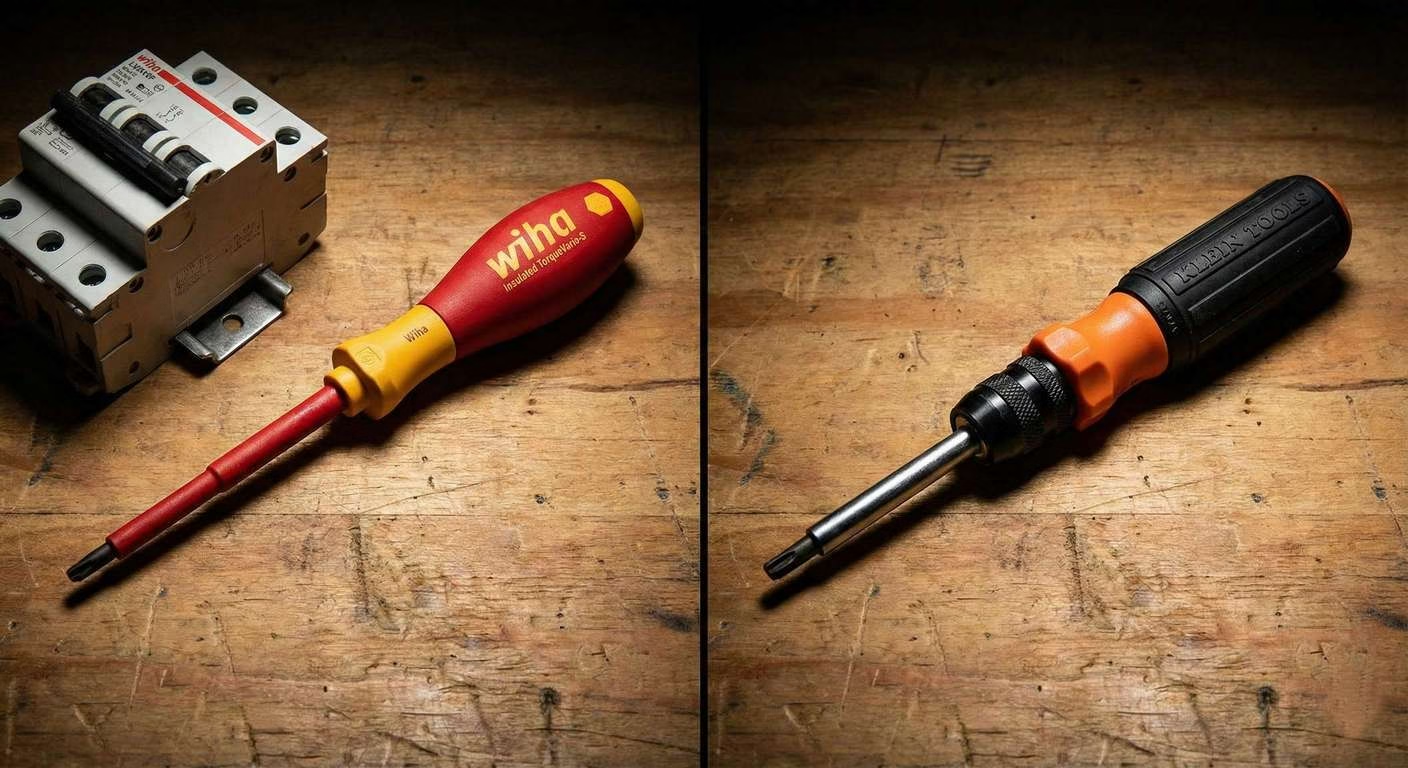
If you are browsing Amazon for a torque screwdriver, you are about to make a dangerous mistake.
Most “Best Torque Screwdriver” lists mix gunsmithing tools (like the Wheeler FAT Wrench) with electrical tools. If you use a Wheeler—which has a solid metal shaft—inside a live 200-amp panel, you are holding a lightning rod.
For electrical work, accuracy is secondary. Insulation (VDE Rating) is the only spec that matters.
We analyzed 12 months of feedback from professional electricians to settle the debate: Do you need the expensive German Wiha (the “Gold Standard”), or is the standard-issue Klein Tools set enough to pass inspection without blowing up your bank account?
Here is the brutal truth.

Klein Tools 57032 Set
The Brutal Verdict: Buy this. It’s widely available, holds calibration well enough for code inspections, and costs half the price of the German brands.
Check Price on Amazon →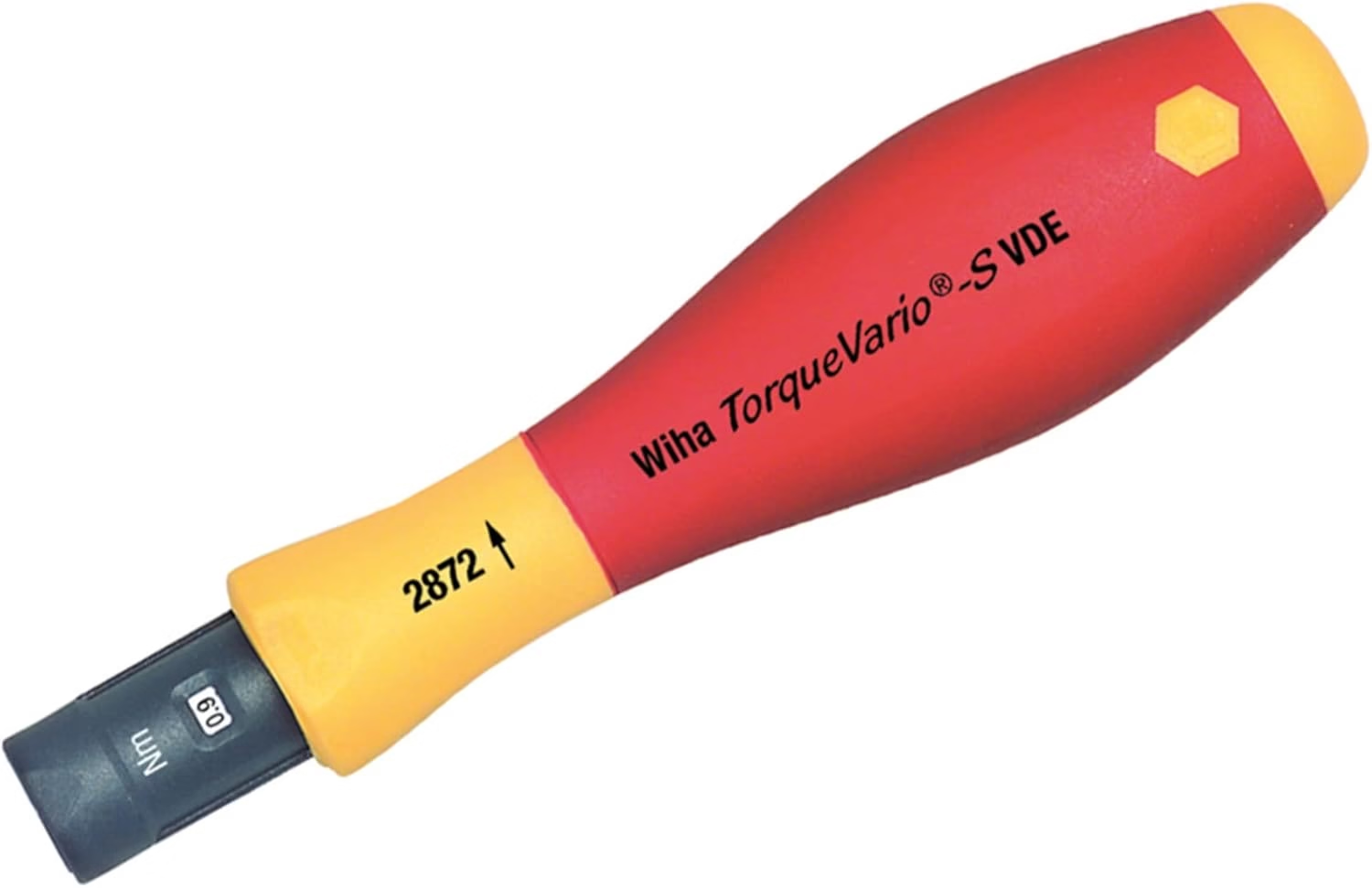
Wiha TorqueVario-S (VDE)
The Brutal Verdict: Buy only if you work on high-voltage industrial panels daily. It’s the “Ferrari” of drivers, but arguably overkill for residential work.
Check Price on Amazon →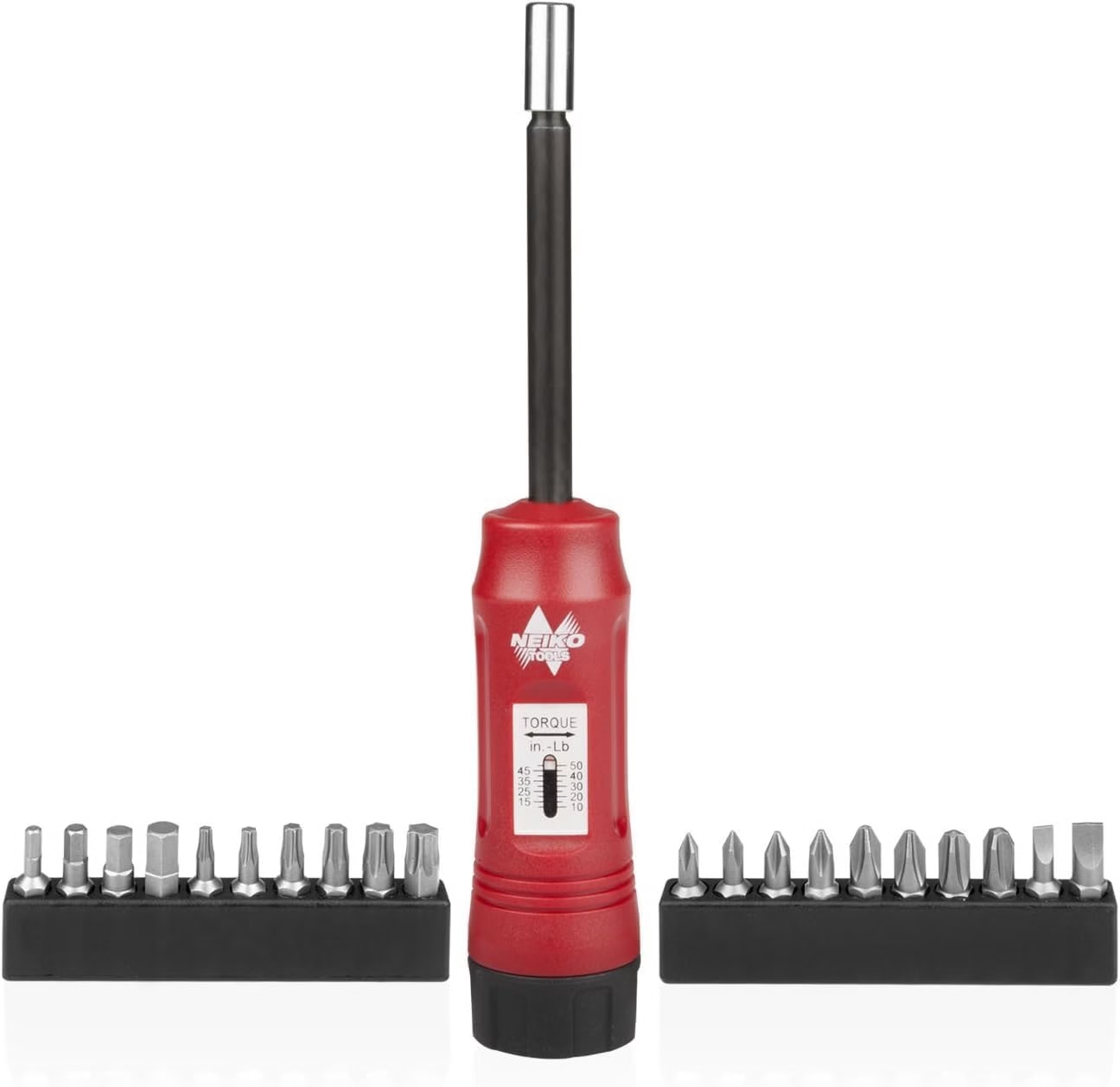
Neiko 10573B (Uninsulated)
The Brutal Verdict: DO NOT BUY for electrical work. This has a metal shaft. We included it here only to show you what a “Gunsmithing” driver looks like so you can avoid it.
Check Price on Amazon →Do electricians use torque screwdrivers in 2026? Yes—here’s why it’s a safety win.
If you’ve ever wondered do electricians need torque screwdrivers, the short answer is: for many terminations, it’s the easiest way to tighten to spec and reduce repeat call-backs. A torque screwdriver for electricians isn’t about “extra steps.” It’s about predictable results.
What it solves (the problems you actually feel)
Under-tightened connections can loosen. Over-tightened ones can deform conductors or damage terminals. That’s why electricians torque screwdriver reviews tend to praise one thing: consistency. When your torque is repeatable, your installs are calmer—and your troubleshooting gets shorter.
- Fewer hot spots: torque-to-spec helps reduce loose termination risk that can lead to heat build-up.
- Cleaner inspections: “tight enough” becomes measurable instead of a guess.
- Less rework: repeatable torque means fewer surprises after energizing.
Manual vs. electric: which torque approach fits your work?
Many people searching electric screwdriver best torque are really trying to pick the right “feel” for daily installs. Manual torque drivers shine for precision. Electric torque drivers can speed up repetitive fastening—but only if they control final torque reliably.
- Precision first: for terminations, choose accuracy and a clear torque signal.
- Speed second: the best electric torque screwdriver should still finish to spec—every time.
- Don’t confuse tools: “what drill has the best torque” is a different question than torque-to-spec for electrical terminations.
How to torque electrical terminations the right way (quick, clean, repeatable)
This is the workflow many pros follow when choosing the best torque screwdriver for electrical work. It’s simple. It’s fast. And it makes your results easier to trust—especially when torque specs matter.
Find the torque spec first
Look for the manufacturer’s torque value on the device, label, or documentation. The goal isn’t maximum force—it’s the correct force.
Match the bit and seat it fully
Use a correctly sized bit and keep it straight. Full engagement reduces cam-out and helps the torque driver read accurately.
Set torque, then tighten smoothly
Apply steady pressure until the tool signals you’ve hit the setting. No jerks. No “one more for luck.”
Stop at the signal
When the tool clicks, breaks, or alerts, stop. That moment is the whole point of using a torque driver.
Recheck technique, not brute force
If something feels off, don’t crank harder. Re-seat the bit, confirm the spec, and tighten again cleanly.
Common mistakes that ruin results
- Using a drill because you’re asking “what drill has the best torque” instead of using torque-to-spec for terminations.
- Chasing the highest torque electric screwdriver when the job demands controlled torque and repeatability.
- Overriding the signal with extra force—this defeats the purpose of a best electrician torque screwdriver workflow.
- Skipping consistency checks when you’re building an electricians torque screwdriver routine across crews.
Frequently asked questions electricians are searching in 2026
These answers are built around what people actually type—like what is the best torque screwdriver for electricians—and what experienced installers care about most: safety, repeatability, and speed without shortcuts.
What is the best torque screwdriver for electricians?
The best torque screwdriver for electricians is the one that hits the torque range you use most, signals clearly when you reach the set point, and stays consistent over time. For electrical terminations, accuracy and repeatability beat “more power” every day.
If you’re comparing options, think “best torque screwdriver for electrical work” = the right range + reliable indication + comfortable control.
Do electricians need torque screwdrivers, or is hand-tight enough?
Many connections come with a torque spec for a reason. So when people ask do electricians need torque screwdrivers, the real issue is risk management. A torque driver reduces guessing. It helps you avoid under-torque and over-torque—two common causes of failures that don’t show up until later.
That’s also why the question do electricians use torque screwdrivers keeps trending: the tool is an easy upgrade that can prevent hard-to-find problems.
Best torque screwdriver for electricians reddit: what do real users focus on?
In threads that read like “best torque screwdriver for electricians reddit,” the winning points are usually the same: a torque signal you can’t miss, settings that don’t drift, and a grip that stays stable when you’re working overhead or in tight panels. People love speed—but not at the expense of consistency.
Is the best electric torque screwdriver always better than a manual one?
Not always. The best electric torque screwdriver can be amazing for repetitive fastening, but termination work still demands controlled, repeatable torque. If “electric screwdriver best torque” means “fast,” make sure it also means “finishes to spec,” not just “spins harder.”
What’s the difference between the best torque wrench for electricians and a torque screwdriver?
A torque wrench is typically for larger fasteners and higher torque ranges. A torque screwdriver is built for lower ranges and smaller hardware—exactly where many electrical termination specs live. So “best torque wrench for electricians” and “best torque wrench for electrical work” can be valid searches, but they don’t automatically replace a torque screwdriver for terminations.
Should I buy a set or a single driver for electrical work?
If you bounce between devices with different specs, a set can be a smart move. Searchers often look for the best electricians torque screwdriver set because it reduces “wrong range” headaches and speeds up daily work. If your work is consistent, one well-chosen tool in the correct range can be enough.
Reading electricians torque screwdriver reviews can help you spot the patterns: consistent range coverage beats extra accessories you’ll never use.
1. Klein Tools 57032 Torque Screwdriver Set
Klein Tools 57032
- Code Compliant: Covers 10-50 in-lbs (NEC Standard).
- Value: Costs significantly less than Wiha or Wera.
- Familiar Grip: Uses the classic Klein cushion grip you already own.
1. Klein 57032 — the reliable daily driver
This is the workhorse. It’s not fancy. It just works. Electricians like it because it balances cost and performance.
Key points
- Comes with the common bits (#1, #2 Phillips, square, etc.).
- Easy torque adjustment. You won’t fumble it in a dark panel.
- Rugged and built for daily use.
Marketing vs reality
Klein calls it a “precision instrument.” That’s fair, but there’s one real gripe: the click is soft. On a loud job site, you may not hear it. The driver gives a subtle slip feel instead of a loud snap. If you wait for a big noise, you can over-tighten.
User tip
- Trust the feel, not the sound. When it hits the torque limit, it gives a small slip. Stop there. If you wait for a loud click, you risk stripping the screw.
Verdict
Buy this if you want a solid, code-compliant tool for residential or commercial work. It’s rugged, affordable, and gets the job done. Avoid it only if you work in very noisy places and depend only on an audible click.
2. Wiha TorqueVario-S (VDE Insulated) — for the safety-first pro
This is the premium pick. It is ideal when safety is non-negotiable. The VDE insulation is molded into the shaft and is slimmer than many rivals. That makes it easier to reach tight screws in terminal blocks.
Key points
- Slim VDE insulation for tight spaces.
- Rated for 1000 V (when used with the correct parts).
- Ergonomic handle that reduces wrist fatigue.
Marketing vs reality
Wiha calls it the “ultimate adjustable driver.” It is excellent. But be aware of the bits. The SlimLine blades use a special lock to keep the VDE rating. You can’t swap in any generic 1/4″ bit. If you lose a bit, you must buy Wiha replacements.
User complaint
- The tool is great, but the proprietary bits can be a hassle. You’re tied to the Wiha bit system.
Verdict
Buy this if you work on live industrial panels or if safety is your top concern. The peace of mind is worth the price. Avoid it if you hate buying specialty bits or if you often lose bits.
3. Neiko 10573B — accurate, but not for electrical panels
This tool is accurate and cheap. Mechanics and gunsmiths love it. It reads well and works for bolts and scope rings.
Key points
- Accurate and easy to read.
- Good value for mechanical work.
- Not insulated — metal shaft.
Marketing vs reality
Amazon may suggest this for electricians because it has “torque” in the name. That is risky. The shaft is metal and not insulated. If that metal touches a live bus, you can short a panel. That can lead to sparks, burns, or worse.
Real user warning
- Metal shaft + live panel = danger. Do not use this on electrical work.
Verdict
Buy this for bikes, rifles, or engine bolts. Do not use it in a breaker box. Keep it far from live electrical work.
Breaker Hacks: Stopping “Arc Fault” Fires
90% of electrical fires start at loose connections. But “over-tightening” crushes the copper wire, which also causes looseness over time (“Cold Flow”).
4. Final Verdict: Which One Fits Your Job?
- For the Everyday Electrician: Get the Klein Tools 57032. It is safe, code-compliant, and affordable. It’s the industry standard for a reason.
- For the Safety-Obsessed Pro: Get the Wiha TorqueVario-S. The VDE insulation is superior, and the ergonomic handle saves your wrist during all-day panel makeups.
- For Mechanics (Not Sparkies): The Neiko 10573B is great for bolts, but keep it far away from your breaker box.
🔧 More Tool Guides
Don’t buy the wrong tool. Check our brutal “Safety vs. Marketing” tests for other garage essentials.
Gunsmithing Drivers
See the “metal shaft” drivers you must AVOID for electrical work (but are great for rifles).
Mechanic’s Torque Wrenches
Need 100 ft-lbs for lug nuts? We tested Icon vs. Tekton to see if Harbor Freight holds up.
Best Garage Lighting
Can’t read the breaker panel? Stop working in the dark. The best high-lumen shop lights tested.
Best Floor Jacks
Lifting a heavy work truck? We explain why the Daytona is a secret Snap-on clone.