
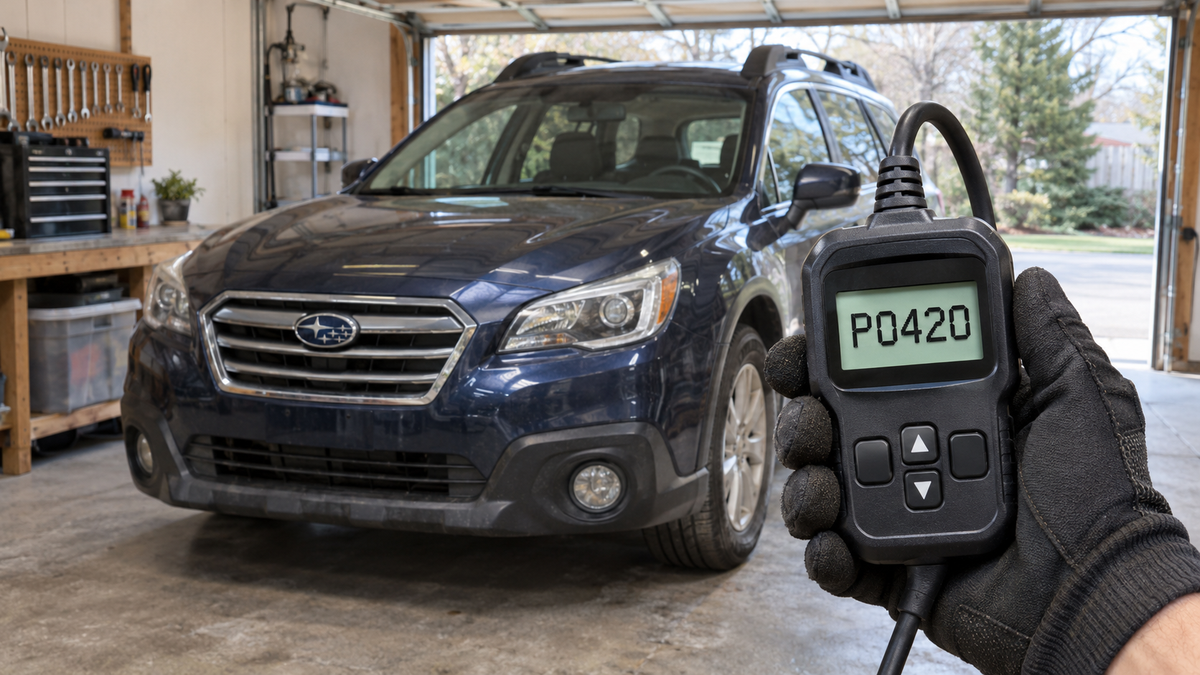
What Does P0420 Mean on a Subaru?
P0420 on a Subaru means the engine computer found low catalytic converter efficiency on Bank 1. The code tells you which test failed. The next step is to save your scan data and look for other codes, oil use, and exhaust leaks.
If the light is steady and your Subaru runs well, a short trip to a shop may be fine. If the light keeps flashing or the car shakes hard, pull over safely. Hold off on buying a sensor or converter until you know which test points to it.
The converter, or cat, helps clean up the exhaust. On an engine with two monitored banks, Bank 1 is the side with cylinder 1. Check your exact engine layout to find the part the code refers to.
Can You Drive a Subaru With P0420?
A steady check engine light may be the only thing you notice. You may also hear a tick at cold start or smell exhaust. Those clues make a leak worth checking early.
| What you notice | What to do |
|---|---|
| Steady light, normal power, and no other warning signs | Make a short, gentle trip for a scan or diagnosis. Book the check soon. |
| A new tick, a rattle, or mild loss of power | Get the exhaust checked soon. Skip long trips and heavy loads while you work out the cause. |
| A light that keeps flashing, severe shaking, a sharp drop in power, overheating, an oil-pressure warning, or fumes in the cabin | Pull over safely, shut off the engine, and arrange help. If fumes enter the cabin, get everyone into fresh air. |
A flashing light can mean a misfire that harms the cat. If the light flashed and then went out, save the codes and read what to do when the check engine light flashes and then stops. If you lose power under load, ask the shop to check for a blocked exhaust. Low catalyst efficiency and poor exhaust flow are different faults.
What Causes P0420 on a Subaru?
Rank the Causes by What the Car Is Doing
Start with the clue that best fits your car. Use this order to pick your first test and avoid paying for parts on a hunch.
| Clue on your Subaru | What to check first |
|---|---|
| Misfire, fuel trim, or sensor heater code | Test the fault behind that code. Run the catalyst check again after the fix. |
| Cold-start tick, soot, or a code after exhaust work | Check for a leak near the monitored section. |
| Regular oil top-ups or unexplained coolant loss | Find out where the fluid goes. |
| Code after a downpipe change or a known software issue | Check part fit, leaks, and the right factory calibration. |
| P0420 alone with a sealed exhaust, sound sensors, and a failed catalyst test | Check the monitored converter for loss of efficiency. |
The code can come and go as the car runs its checks. A quiet week after a reset gives you little to go on until the catalyst monitor has run again.
How Burning Oil Can Ruin the Converter
Oil that burns inside the engine sends ash and other deposits into the exhaust. Over time, those deposits can coat the parts of the cat that clean the exhaust. A new converter can suffer the same damage if the engine still burns oil.
A low dipstick reading tells you to look for oil loss. Check for leaks on the outside of the engine first. If you keep topping up and see no clear leak, ask about the crankcase vent (PCV) system, piston rings, and valve seals. If you drive a turbo model, add turbo oil leaks to that list.
Some early Subaru 2.5L FB25 and 2.0L FB20 engines had a documented oil-use issue. The Forester, Impreza, Legacy, and Outback entries below show where to check. The model year gives you a starting point. Your VIN and transmission help pin down whether the bulletin fits.
Keep a simple oil log
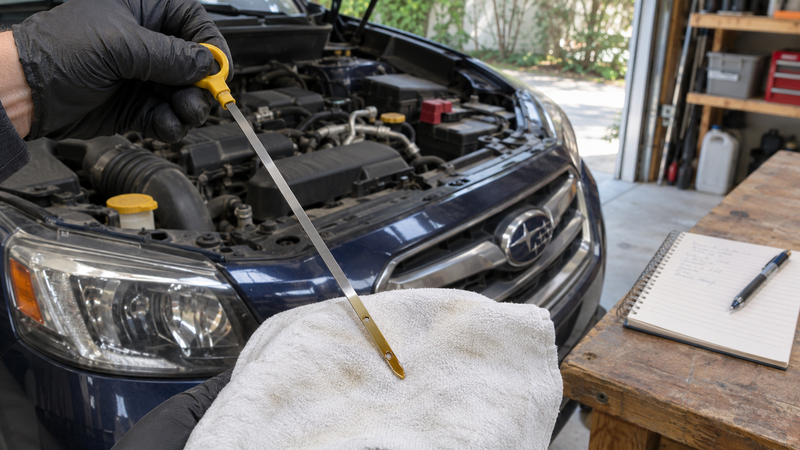
- Park on level ground. Use the wait time and oil-check steps in your owner’s manual.
- Start at the full mark with the right oil. Write down the date and mileage.
- Check the level the same way each time. Write down how much oil you add to get back to the full mark.
- Divide the total quarts added by the miles driven. Multiply by 1,000 to get quarts per 1,000 miles.
If you add half a quart over 500 miles, that works out to one quart per 1,000 miles. Keep the oil in the safe range as you track it. A dealer may need to run its own test for a warranty claim.
Find and fix the source of the oil loss before you fit a confirmed bad cat. If you need both repairs, ask for a quote that shows each job on its own line.
Exhaust Leaks, Misfires, Fueling, and Coolant
A leak near the cat or a sensor can draw in air and skew the scan data. Look for a dark soot mark or a tick that fades as the pipes warm up. A small leak can take a shop smoke test to find.
A misfire or an engine that runs rich can send extra fuel into the exhaust and overheat the cat. Start with the cause of the misfire or mixture code. If the coolant level keeps falling and white vapor stays after warm-up, have the cooling system checked for an internal leak. Coolant that reaches the exhaust can damage the cat too.
Diagnose Subaru P0420 in This Order
1. Save Data and Check the Cheap Clues First
Start with the data you already have. It can tell you what was happening when the code set.
- Save stored, pending, and permanent codes if your tool shows them. Save freeze frame and readiness too. Freeze frame is a snapshot of the engine when it logged a fault.
- Note the year, engine, mileage, and any work done just before the light came on. Check the VIN for open campaigns and ask about the right software for your car.
- Look into misfire, fuel mixture, sensor circuit, and heater codes first. Repair confirmed faults and see if P0420 comes back after the monitor runs.
- Check oil and coolant when it’s safe to do so. With the exhaust cold, look for soot, cracks, loose hardware, and wires that touch the pipe.
If you need a closer look under the car, use a shop or a safe lift setup. Never get under a car held up by a jack alone. This P0420 repair guide can help you sort the same basic clues on any car.
2. Test the Front A/F Sensor and Rear O₂ Sensor Separately
Front air/fuel sensor
The front A/F sensor sits ahead of the cat. It tells the computer how rich or lean the mix is, so the computer can adjust fuel. On a warm engine in closed loop, log the front A/F or lambda reading and both short- and long-term fuel trims. Closed loop means the engine is using sensor feedback to adjust the mix.
A wideband A/F sensor uses a different type of signal from a common switching O₂ sensor. Your scan tool may show lambda, current, or a value scaled by the tool. Use the right data label and specs for your Subaru. This guide to fuel trims and O₂ sensor data explains what to log.
A shop with the right Subaru scan tool can command a change in fueling. It then checks whether the front sensor tracks the target. A slow or biased response can send diagnosis in the wrong direction. Have the shop check the circuit and rule out leaks or a real fuel fault before it calls the sensor bad.
Rear O₂ sensor
The rear O₂ sensor reads exhaust after the monitored cat. A working cat can smooth out changes in the rear signal under the right test conditions. Too much activity at the rear can fit a worn cat, once you’ve checked for leaks and confirmed the sensors work. A flat or slow trace can have more than one cause. The graph gives you a clue to test.
Check the plug and wires for heat damage, corrosion, or a loose pin. A shop can check heater power, ground, and signal wiring to the specs for your car. Replace the sensor if it fails its response test and the circuit checks out. If both sensors pass and the catalyst monitor still fails, move on to the converter test.
3. Confirm the Converter and Verify the Repair
Ask which test showed that the exact converter on the quote had failed. Subaru’s procedure varies by engine and year. Some scan tools show Mode $06, which can give you the monitor’s test result and limit. Use that result only if your scanner can read and label it for your car.
Once the shop has ruled out leaks and sensor faults, a completed monitor that fails again adds weight to a converter diagnosis. If power drops under load, ask about a separate exhaust flow or backpressure test.
After the repair, use the drive steps for your year and engine. Then check the catalyst monitor, the light, and any pending codes. A monitor still marked “not ready” has yet to give you a result.
If the light only returns on longer trips, see why P0420 can show up after a long drive.
P0420 by Subaru Model: What to Check First
Your model name gets you close. The year, engine, and transmission tell you which branch to use. Match those details and the VIN before you apply a bulletin or order a part.
| Subaru model | First clue worth checking |
|---|---|
| Forester | Early FB25 oil use or the 2.0 turbo XT’s software history |
| WRX | Exhaust changes, a J-pipe leak, or a manual model’s calibration |
| Impreza | Early FB20 oil use or the later Subaru test |
| Legacy | Early FB25 oil use or a front exhaust bellows leak |
| Outback | Engine and bank layout, oil use, and the front pipe campaign |
P0420 on a Subaru Forester
If you have a 2011–14 Forester with the FB25, or a 2015 manual FB25, check the dipstick log and VIN for the early oil-use bulletin. On an older EJ25, look at oil loss, coolant loss, and exhaust leaks based on what you see.
Drive a 2014–15 Forester XT with the 2.0 turbo? Ask whether bulletin 11-146-14 applies to your current engine software. For a 2017–18 2.5L or a 2019–23 Forester, check whether the steps in 09-110-23R fit your car. The bulletin gives you a test path before you pay for a converter.
P0420 on a Subaru WRX
Start by working out what’s on your car now. On an FA20DIT or FA24 WRX, check the J-pipe and gaskets if the code came up after exhaust work. Look for leaks and make sure the sensors and wiring fit. On a used WRX, ask about old parts or a tune even if the seller put the stock pipe back on.
For a 2023–24 WRX with a manual gearbox, ask about bulletin 09-124-24. It covers a case where a downshift can lead to a false P0420. On a 2019–21 2.5L turbo manual STI, ask about 09-131-25R. The STI bulletin’s P0420 provision excludes the 2015–18 cars. Have the shop verify the VIN and current software before any reflash.
P0420 on a Subaru Impreza
If yours is a 2012–13 Impreza with the FB20, or a 2014–15 manual FB20, start with your oil-use history. Subaru’s old oil extension had VIN and transmission limits. An oil log still helps you find the fault even if the term has run out.
For a 2017–23 Impreza, check the scope of 09-110-23R. Match your trim and engine when you look up test steps. A WRX or STI manual can look close in a search result yet give you the wrong pinout or test for your Impreza.
P0420 on a Subaru Legacy
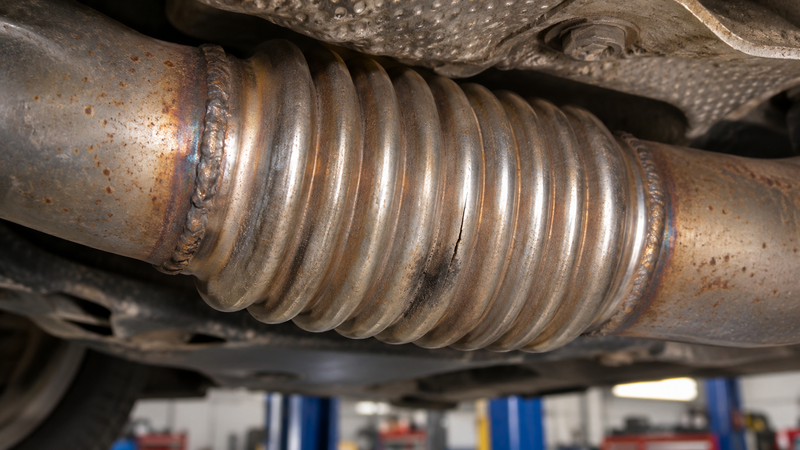
On a 2013–14 Legacy with the 2.5L FB engine, review oil use and check the VIN limits in the oil bulletin. On a 2015–16 2.5L, ask Subaru to check for WUJ-95R. That campaign addresses cracks in the flexible bellows of the front exhaust pipe on certain cars. A new exhaust noise or smell makes this check worth doing early.
Revised bulletin 09-110-23R lists the 2017–19 2.5L and 2020–23 Legacy. On an older turbo or six-cylinder car, use the right exhaust diagram to match the code to the monitored part.
P0420 on a Subaru Outback
On a 2013–14 2.5L FB Outback, log oil use. On a 2015–16 2.5L, check for the WUJ-95R front pipe campaign. Subaru lists the 2017–19 2.5L and 2020–23 Outback in the revised P0420 bulletin.
The 2.5L, XT, and older six-cylinder cars can use different pipes and sensor layouts. If you have both codes on a six-cylinder, read what P0420 and P0430 together mean before pricing both banks. Check the under-hood emissions label and the VIN so the shop can quote the right assembly and check coverage.
Subaru P0420 Fixes, Costs, Warranty, and Emissions
Fix the Fault You Confirmed
You can save scan data, log oil use, and look at cold parts you can reach. If you find loose or damaged wiring, trace the fault to the plug, wire, or sensor before ordering a part. If the exhaust leaks, fix the leak and rerun the check. If a misfire, oil burning, or coolant leak damaged the cat, deal with that fault before you fit the new one.
Leave seized sensors, work under the car, and factory scan-tool tests to a shop if you lack the gear or safe access. Have a shop verify the software and run any approved reflash. Ask for the test result and the exact part that needs work.
Compare Sensor and Converter Quotes
A written quote should say which sensor or converter the shop plans to change. Ask for the part number, labor, and any gaskets or hardware. Also ask whether the diagnosis, tax, and any fix to protect the new cat are included.
| Repair or part | Parts | Labor | Total or note |
|---|---|---|---|
| O₂ sensor swap, broad U.S. estimate | $347–$387 | $93–$136 | $440–$523 |
| Converter swap, broad U.S. estimate | $2,044–$2,133 | $236–$347 | $2,280–$2,480 |
| OEM Forester converter and pipe, example listing | About $3,548 | Get a quote | Parts price only |
| CARB-approved rear converter for a qualifying 2013 Outback 2.5L manual, example listing | About $612 | Get a quote | Parts price only |
These are November 2026 examples. The Forester and Outback parts are for different jobs. For a fair price check, ask for the same converter position on your VIN in both OEM and legal aftermarket options. Ask for separate front A/F and rear O₂ quotes if you’re weighing sensor costs.
Check Warranty and Readiness Before Smog
Start with the VIN, mileage, and original in-service date. The U.S. federal warranty covers specified major emissions parts, including the cat, for eight years or 80,000 miles, whichever comes first, when the claim meets the terms. California rules can cover listed high-cost parts for seven years or 70,000 miles. Some qualifying PZEV or TZEV cars have 15-year or 150,000-mile emissions coverage. Check your warranty booklet and the rules for your car and state.
Ask a Subaru dealer to check open campaigns and warranty coverage. If you own a 2005 PZEV Legacy or Outback, also ask about the old WVI-19R program and whether that work was ever done. A service bulletin gives the shop test or repair steps. A campaign or warranty has its own terms. The old oil-use extension for eligible cars was eight years or 100,000 miles from the warranty start date.
For road use, choose a legal converter that matches your car. Check the CARB approval number and test group where your state requires them. Deletes, spacers, and simulators used to defeat emissions controls are illegal for U.S. road use.
A code reset can put your readiness monitors back in a waiting state. Use the drive steps for your Subaru after the fix. Check the light, monitor status, and any permanent codes against your state’s rules before you go for a test.
How to Protect the Replacement Converter
Keep your oil log for a while after the repair. Use the oil grade in your owner’s manual and check the level the same way each time.
- Deal with new misfire or fuel trim codes soon.
- Check fresh oil or coolant loss before it can harm the new cat.
- Keep the repair order, part number, and scan results.
- If P0420 returns, check whether the same test failed under the same conditions.
Those notes also help if you need to ask the shop about its parts or labor warranty.
If P0420 comes back after a new converter, review the first repair before paying for another one.
When to See a Subaru Mechanic
Get help right away if the light keeps flashing, you smell exhaust in the cabin, or the engine shakes hard. Book a check if oil or coolant keeps dropping, the car loses power, or the catalyst monitor fails after the basic checks.
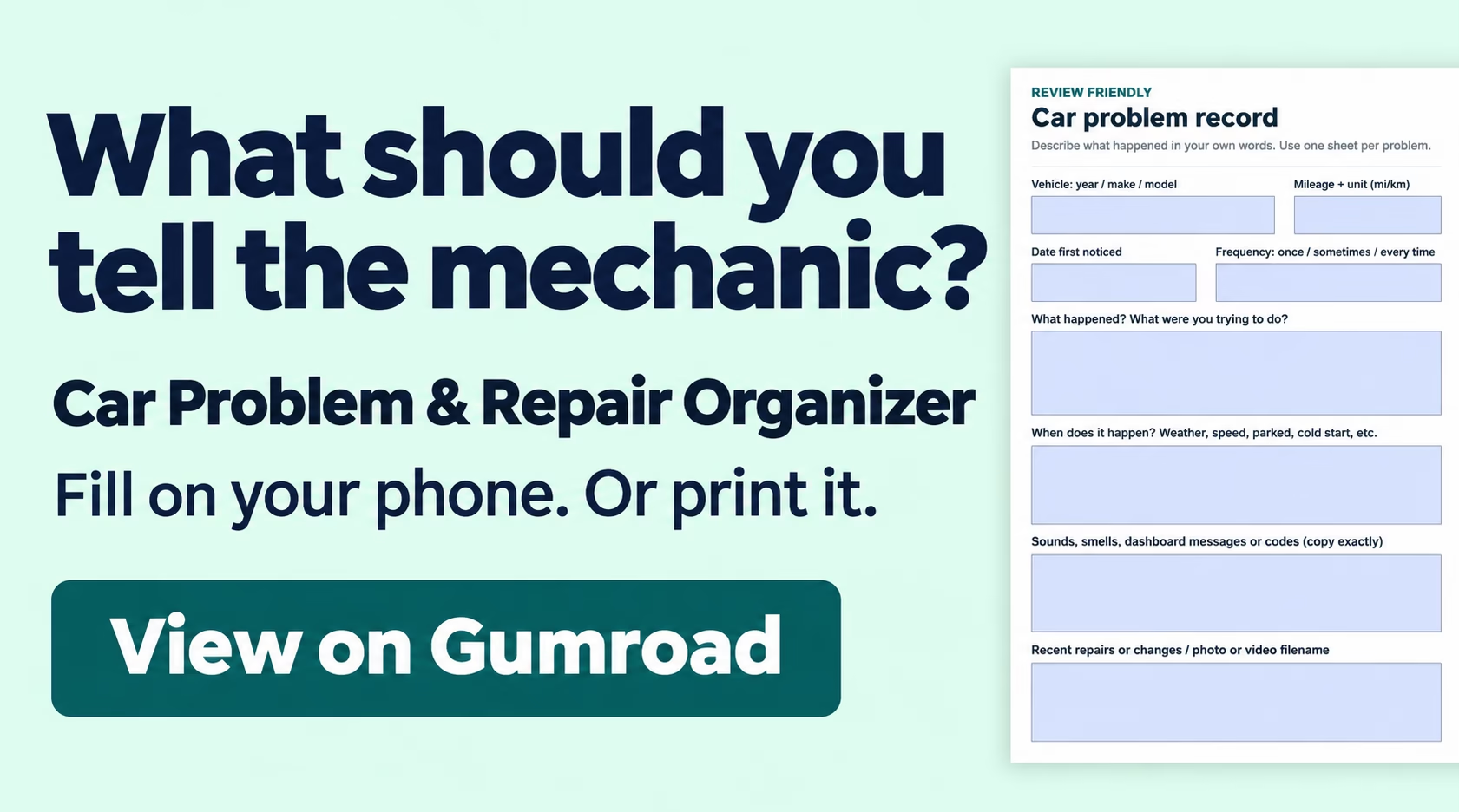
Bring your code list, freeze frame, oil log, and dates for recent exhaust work. Ask which test found the fault and which converter the quote covers. If you want to keep those notes on your phone, use the repair organizer below.
Subaru P0420 FAQ
Can I drive my Subaru with P0420 if it feels normal?
If the light is steady and there are no other warning signs, a short drive to a shop may be fine. Stop safely if the light keeps flashing, power drops sharply, or you smell exhaust inside.
Can a bad O₂ sensor cause P0420 on a Subaru?
Yes. A slow or biased signal can affect the monitor. Confirm the sensor response and check its wires, plug, and heater circuit before you order one.
Why did P0420 come back after I replaced an oxygen sensor?
Check that you changed the right sensor and used the correct part. Then check for leaks and other codes. Use this guide to P0420 after an oxygen sensor change to plan the next test.
Can burning oil trigger P0420 on a Forester or Outback?
Yes. Oil that burns in the engine can leave deposits in the cat. Track how much you add and how far you drive. Use the year, engine, and VIN to check for the early FB oil bulletin.
Why did my WRX get P0420 after a J-pipe or tune change?
Check the part’s fit, the flange seals, the sensor leads, and the software that’s on the car. Use road-legal parts and have the shop verify any factory update for your VIN.
How much does it cost to fix P0420 on a Subaru?
It depends on which test fails. A sensor job and a converter assembly can differ by hundreds or thousands of dollars. Ask for a parts and labor split and a coverage check.
Will Subaru cover my catalytic converter?
It may, if the car and fault meet the terms. Give the dealer your VIN, mileage, and in-service date. Ask about the emissions warranty and any active campaign.
Will my Subaru pass emissions after I clear P0420?
Clearing the code can reset the tests your car must run. Check the light, readiness, and any permanent codes against local rules. Save this Subaru P0420 checklist and bring your scan report and oil log to the shop if the code returns.