
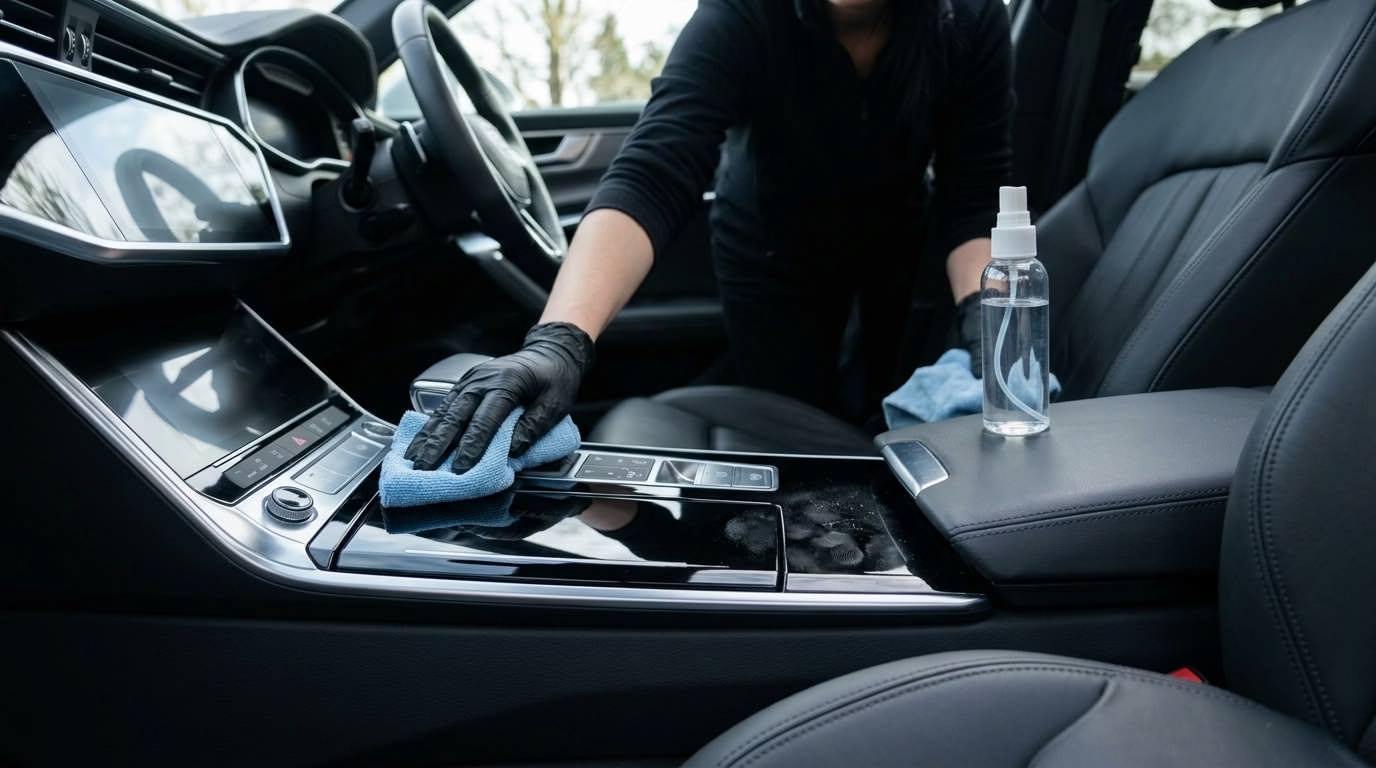
Before I ranked these products, I reviewed thousands of owner comments, customer reviews, and detailing discussions. The final picks reflect repeated results from real use, not just claims printed on a bottle.
The best cleaner for piano black car interior trim is Gyeon Q²M InteriorDetailer. It removes dust, fingerprints, and light oils without leaving a greasy shine.
However, it is not the best choice for every mess. Koch-Chemie works well on very delicate trim. P&S Xpress offers more power for greasy or neglected surfaces.
Your cleaning method matters just as much as the spray. Piano black trim scratches with ease. Even a good cleaner can cause damage when used with a dirty towel.
Building a complete interior kit? Pair these piano-black specialists with the broader best car cleaning products guide — it covers everyday interior cleaners, UV protectants, and exterior washes that work alongside the options above.
The Best Piano Black Interior Cleaners at a Glance
The six products below serve different needs. Use this table to find the best match for your car and cleaning habits.
This page contains Amazon affiliate links. If you buy through them, I may earn a small commission at no additional cost to you.
Quick recommendation: Start with Gyeon if your trim is in good shape. Use P&S Xpress only when you need more cleaning power.
Why Piano Black Car Interior Trim Is So Difficult to Clean
Piano black looks rich and sleek when clean. Yet it shows every mark, speck of dust, and towel streak.
The surface is also far softer than it seems. This makes your tools and cleaning method very important.
Piano Black Is Softer Than It Looks
Most piano black trim is glossy plastic or coated plastic. It is not as hard as glass or your car’s exterior paint.
Fine grit can cut into the finish during a simple wipe. The result is a web of tiny marks that stands out in direct light.
Why Dust and Dry Wiping Cause Fine Scratches
Dust may contain hard bits of sand and road grit. A dry towel can drag those bits across the panel.
Always remove loose dust before wiping. Then use enough cleaner to create a slick layer between the towel and trim.
Why Fingerprints, Oils, and Haze Are So Visible
Piano black reflects light like a dark mirror. Skin oil and cleaner residue break up that reflection.
Gyeon and Koch-Chemie ASC work well here. Both focus on a clean finish instead of added shine.
Cleaning and Scratch Removal Are Different Jobs
A cleaner removes dust, oil, and grime. It cannot fill or erase a scratch.
Trying to scrub away scratches often makes them worse. Existing damage needs gentle polishing, protective film, or professional care.
Important: A stronger cleaner will not remove scratches. More pressure may add new ones.
You may also find this guide helpful: how to remove scratches from piano black trim.
How We Chose the Best Cleaners
A good piano black cleaner needs more than raw cleaning power. It must work with little pressure and leave a clear finish.
The final picks earned strong marks across several key areas.
Cleaning Performance on Real Interior Contamination
The products were judged on common cabin messes. These include dust, fingerprints, body oil, food marks, and light grease.
P&S Xpress offers the most cleaning power here. The other five are better suited to regular care.
Finish Quality and Residue Control
A cleaner should not leave oily patches or a fake shine. Both can look worse than the dirt.
Gyeon, Koch-Chemie, and Nextzett are strong choices for a natural finish. Griot’s also dries without a greasy feel.
Surface Safety and Material Compatibility
Piano black often sits beside leather, screens, buttons, and clear gauge lenses. A useful cleaner should be safe around those materials.
Still, check your owner’s manual first. Screen coatings can vary between car brands and models.
Long-Term Satisfaction and Evidence Quality
Repeated owner feedback matters more than one glowing review. Reports from skilled detailers also carry more weight.
I focused on patterns that appeared across many discussions. Isolated complaints received less weight unless the same issue kept appearing.
Price, Dilution, and Overall Value
Bottle price does not tell the full story. Concentrates may cost far less with each use.
ONR offers the lowest cost per mixed bottle. P&S also gives good value in larger sizes.
Product Availability and Ease of Use
Ready-to-use sprays remove the risk of mixing errors. They are also easier to keep in a small detailing kit.
Griot’s is often one of the easiest options to find. Koch-Chemie may need to be ordered from a detailing shop.
Product evaluation checklist:
- Safe for glossy plastic
- Good cleaning lubrication
- Removes fingerprints with little pressure
- Leaves minimal residue
- Avoids unwanted shine
- Offers fair value
- Has steady owner feedback
- Works around nearby materials
- Includes clear directions
Best Cleaners for Piano Black Car Interiors Reviewed
Each cleaner below has a clear strength. Match that strength to the state of your trim.
Do not use a heavy cleaner if you only have dust. The mildest product that works is often the safest choice.
1. Gyeon Q²M InteriorDetailer: Best Overall

Gyeon offers the best mix of ease, surface safety, and finish quality. It lifts dust, fingerprints, and fresh body oils without leaving a sticky layer.
It also works across many cabin materials. That makes it useful around screens, seats, and dashboard trim.
| Pros | Cons |
|---|---|
| Good on fingerprints and light grime | Costs more than a concentrate |
| Leaves a clean, non-sticky finish | Not made for deep grime |
| Works on many interior surfaces | Can dry quickly on warm panels |
| Simple ready-to-use formula | May need two passes on oily marks |
| Suitable for regular care | No major UV focus |
Best suited for: Newer cars, large center consoles, touchscreens, and regular upkeep.
Skip it if: Your trim has thick grease, old dressing, or dried spills.
Evidence confidence: High for the benefits and medium for the drawbacks.
2. Koch-Chemie Allround Surface Cleaner: Best for Delicate Piano Black

Koch-Chemie ASC is a smart choice for sensitive surfaces. It cleans fingerprints, dust, and light grease without adding gloss.
It works especially well near screens and clear gauge covers. The formula is ready to use and needs little effort.
| Pros | Cons |
|---|---|
| Gentle on sensitive hard surfaces | Expensive for its bottle size |
| Leaves little visible residue | Not strong on old grime |
| Good for screens and glossy trim | Adds no lasting protection |
| Does not create fake shine | May require a second pass |
| Simple spray-and-wipe use | Harder to find in some areas |
Best suited for: Luxury cabins, screens, gauge lenses, and delicate glossy panels.
Skip it if: You need one cleaner for deep stains and heavy family-car messes.
Evidence confidence: High for both benefits and limits.
3. P&S Xpress Interior Cleaner: Best for Heavy Dirt

P&S Xpress has more bite than a quick detailer. It handles grease, body oil, food residue, and old cabin dirt.
It still leaves a fairly natural finish. However, it needs more care on fragile piano black than a mild detail spray.
| Pros | Cons |
|---|---|
| Stronger cleaning action | Often stronger than routine care needs |
| Popular with working detailers | Needs careful removal |
| Good value in large sizes | No main UV benefit |
| Works on many cabin materials | Not safe to assume for every screen |
| Removes oily traffic marks | May need dilution for light work |
Best suited for: Used cars, family vehicles, cupholder areas, and neglected consoles.
Skip it if: Your trim only has light dust or a few fingerprints.
Warning: Test P&S Xpress in a hidden spot. Never add pressure just because a stain remains.
Evidence confidence: High for both its power and its limits.
4. Griot’s Garage Interior Detailer: Best UV-Protecting Detailer

Griot’s combines light cleaning with UV protection. It also helps reduce static, which may slow dust buildup.
The finish looks clean and natural. It does not leave the greasy look linked with old dashboard dressings.
| Pros | Cons |
|---|---|
| Offers UVA and UVB protection | Only has light cleaning power |
| Helps control dust | May need a second towel |
| Leaves a natural finish | Cannot remove stubborn grease |
| Works on many solid surfaces | UV gains are hard to measure at home |
| Easy to find | Scent may not suit everyone |
Best suited for: Daily drivers parked outdoors and cars in sunny areas.
Skip it if: You need to strip old dressing or remove heavy grime.
Evidence confidence: High for the benefits and medium for the drawbacks.
5. Optimum No Rinse Wash & Shine: Best Budget Concentrate

Optimum No Rinse, often called ONR, is a concentrated wash. It can also serve as a mild interior cleaner when mixed as directed.
Its main benefit is lubrication. This helps your towel lift light dust instead of dragging it dry.
| Pros | Cons |
|---|---|
| Very low cost per use | Requires careful mixing |
| Good lubrication for light dust | Weak against grease |
| Useful inside and outside the car | Strong mixes may streak |
| Leaves little added shine | No main interior UV benefit |
| Takes up little storage space | Less handy than a ready spray |
Best suited for: Regular dust removal, small product kits, and owners who already use ONR.
Skip it if: You dislike mixing products or need strong stain removal.
Mixing note: Follow the directions on your exact ONR bottle. Formulas and label advice may change.
Evidence confidence: High for both the benefits and mixing concerns.
6. Nextzett Cockpit Premium: Best Matte-Finish Cleaner

Nextzett Cockpit Premium is made for a factory-style cabin finish. It removes light dirt without making the dashboard look wet or glossy.
Its anti-static action also helps with dust. The mild formula suits frequent upkeep better than deep cleaning.
| Pros | Cons |
|---|---|
| Natural, glare-free finish | Mild against stubborn grime |
| Useful anti-static action | Scent divides users |
| Works on many plastic surfaces | Not stocked everywhere |
| Long history of owner use | Protection is fairly light |
| Does not feel greasy | Costs more than mixed ONR |
Best suited for: Clean cars where a factory-matte cabin is the main goal.
Skip it if: Your console has old grease, sticky spills, or built-up dressing.
Evidence confidence: High for the benefits and medium for the drawbacks.
Which Piano Black Cleaner Should You Buy?
The right choice depends on the mess in front of you. It also depends on how often you clean.
Use the table below as a quick decision guide.
| Your situation | Best match | Main reason |
|---|---|---|
| New car with light fingerprints | Gyeon Q²M InteriorDetailer | Best overall balance |
| Very delicate glossy trim | Koch-Chemie ASC | Gentle, residue-free cleaning |
| Grease or old grime | P&S Xpress | Stronger cleaning action |
| Car parked outdoors | Griot’s Interior Detailer | Cleaning plus UV protection |
| Lowest cost per use | ONR | Highly concentrated |
| Factory-matte cabin | Nextzett Cockpit Premium | Natural finish and dust control |
Best Choice for a New or Well-Maintained Car
Choose Gyeon for a simple all-round solution. It handles most marks found in a well-kept cabin.
Koch-Chemie ASC is a strong alternative for very fragile trim. It also suits cars with large screens.
Best Choice for Greasy or Neglected Trim
Choose P&S Xpress for true grime. It has more cleaning power than the other finalists.
Remove loose grit first. Then use several soft passes rather than one hard scrub.
Best Choice for Sun-Exposed Interiors
Griot’s Interior Detailer makes the most sense here. It combines light cleaning with stated UV protection.
UV protection does not stop scratches. You still need a clean towel and safe wiping method.
Best Choice for the Lowest Cost Per Use
Choose ONR if you are happy to mix a concentrate. One bottle can support many cleaning jobs.
It is most useful for light dust and regular care. Do not expect it to cut through thick grease.
Best Choice for a Natural, Non-Greasy Cabin
Nextzett gives the rest of your cabin a calm, factory look. It avoids the wet shine left by some dressings.
Your piano black will still look glossy. That gloss comes from the panel itself, not the cleaner.
When You May Need Two Products Instead of One
One product cannot always handle each cleaning job well. A two-product setup gives you more control.
Keep P&S Xpress for deep cleaning. Use Gyeon, Koch-Chemie, or Griot’s for regular care.
What to Look for in a Piano Black Interior Cleaner
Brand names help narrow your options. Yet the formula and use case matter more.
Look for the features below when you compare other products.
Adequate Lubrication
Lubrication helps the towel glide over the trim. It also helps lift fine dirt away from the surface.
ONR performs well in this area. Gyeon also gives your towel useful working moisture.
Appropriate Cleaning Strength
Use a light cleaner for dust and fingerprints. Save stronger formulas for grease and old residue.
Gyeon and Koch-Chemie fit routine care. P&S Xpress fits deeper cleaning.
Streak-Free and Residue-Free Performance
Any leftover film will stand out on piano black. A good product should wipe clean without hard buffing.
Avoid oily formulas that hide dirt under shine. They often attract more dust later.
Compatibility With Screens and Clear Plastics
A product may be safe for hard plastic but not for a screen coating. Treat these as separate surfaces.
Read the cleaner label and your car manual. When in doubt, apply a small amount to the towel first.
UV Protection and Anti-Static Properties
UV protection may help trim that gets strong sun. Anti-static products can also slow visible dust buildup.
Griot’s focuses on UV protection. Griot’s and Nextzett both offer useful dust-control features.
Scent and Cabin Comfort
Scent does not improve cleaning. Still, it matters inside a small cabin.
Nextzett, Griot’s, Gyeon, and P&S all have distinct scents. Choose a mild option if smells bother you.
Concentrate Versus Ready-to-Use Formula
A concentrate gives you better value. A ready spray gives you consistent results with less work.
ONR is the main budget concentrate here. The other options are easier for quick cleaning.
Related guide: best all-purpose cleaner for car interiors.
What You Need Before Cleaning Piano Black Trim
The cleaner is only one part of the job. Your towel and dust tools can have a bigger effect on scratches.
Build a small kit for glossy cabin trim. Keep those tools away from dirty exterior work.
A Clean, Soft Microfiber Towel
Use a soft, edgeless microfiber towel. Reserve it for screens and gloss trim.
Even a costly towel can scratch when dirty. Replace it as soon as it touches a gritty surface.
A Separate Final-Wipe Towel
Keep a second towel for the final pass. It removes faint moisture and shows you any remaining streaks.
Different towel colors help prevent mix-ups. Store both in a clean, sealed bag.
A Safe Dust-Removal Tool
A small detailing blower is ideal for loose dust. It limits surface contact.
If you use a brush, make sure it is clean and very soft. Never press its bristles into the panel.
For debris elsewhere in the cabin, see this guide to the best car vacuums recommended by Reddit users. Keep the vacuum brush away from piano black trim.
Good Lighting
Check the panel with a soft inspection light. Light from the side will show haze and fine marks.
Do not work in harsh heat or direct sun. Warm trim can dry the cleaner too fast.
Pre-cleaning checklist:
- Suitable cleaner
- Fresh microfiber towel
- Separate finishing towel
- Clean detailing blower
- Soft brush, if needed
- Good lighting
- Owner’s manual
- Hidden test area
How to Clean Piano Black Car Interior Without Scratching It
A safe method reduces contact, pressure, and trapped dirt. Take your time and work on one small area.
The steps below apply to all six recommended products.
Step 1: Work in a Cool, Shaded Interior
Park in shade and let the cabin cool. A hot panel makes cleaner dry before you can remove it.
Cool trim gives you more working time. It also helps prevent streaks.
Step 2: Inspect the Surface Before Touching It
Look for dust, sticky spots, grease, and old scratches. Do not assume each mark is dirt.
Use a mild detailer for light marks. Choose P&S Xpress only when the surface needs more cleaning power.
Step 3: Remove Loose Dust Without Wiping
Blow loose dust away before using a towel. Pay close attention to seams and button edges.
Do not place a vacuum nozzle on the panel. Avoid brushes that have touched seats or carpet.
Step 4: Apply Cleaner to the Towel
Mist the cleaner onto your towel. Do not soak it.
This limits overspray around screens and switches. It also gives you better control near panel gaps.
Step 5: Wipe in Straight Lines With Minimal Pressure
Move the towel in slow, straight passes. Let the damp fibers lift the dirt.
Do not scrub in circles. Circular marks often catch light from every angle.
Step 6: Turn the Towel to a Clean Side
Fold your towel into quarters before use. This gives you several clean faces.
Turn to a fresh face after each small section. Stop once every side has collected dirt.
Step 7: Perform a Gentle Final Wipe
Use your second towel to remove faint moisture. Apply almost no pressure.
Gyeon, Koch-Chemie, Griot’s, and Nextzett should leave little residue when used in small amounts.
Step 8: Inspect Before Repeating
Check the result under side lighting. Stop if you see new haze, color transfer, or fresh marks.
A second soft pass is safer than harder rubbing. Change products only if the dirt needs more cleaning power.
Quick cleaning checklist:
- Cool the panel.
- Inspect the surface.
- Blow away loose dust.
- Mist cleaner onto a clean towel.
- Wipe in straight lines.
- Turn the towel often.
- Dry with a second towel.
- Check the finish before repeating.
How to Handle Different Types of Dirt
The same cleaner will not suit every mark. First, identify what you need to remove.
Start mild. Increase cleaning strength only when needed.
Light Dust
Use a blower before touching the panel. Follow with ONR, Gyeon, Koch-Chemie ASC, or another mild cleaner.
Do not wipe loose dust with a dry cloth. That creates needless risk.
Fingerprints and Skin Oils
Gyeon and Koch-Chemie ASC are ideal for fresh prints. Griot’s and Nextzett also work well.
Hold the damp towel over the mark for a moment. Then wipe once with low pressure.
Grease, Food Residue, and Makeup
Use P&S Xpress for these tougher marks. Test it in a hidden spot first.
Two gentle passes are safer than hard scrubbing. Use a clean towel face for each pass.
Dried Cleaner or Dressing Residue
Old dashboard dressing may smear each time you wipe. A deeper clean can remove that film.
Use P&S Xpress with care. Follow with a clean, damp towel if the product directions call for it.
Sticky Spills Around Buttons and Seams
Apply cleaner to a towel or small swab. Keep liquid away from gaps.
Do not flood the area. Repeat controlled passes until the spill lifts.
Mineral Spots or Unknown Stains
Begin with the mildest cleaner. Do not reach for vinegar or strong household chemicals.
Unknown marks may be surface damage rather than dirt. Seek professional help if a safe cleaner has no effect.
Common Piano Black Cleaning Mistakes
Most piano black damage comes from contact. The wrong towel or extra pressure can harm the finish fast.
Avoid these common errors.
Wiping the Surface While It Is Dry
A dry towel can drag grit across the panel. Add safe moisture before contact.
Blow away loose particles first. Then wipe with a clean, damp towel.
Using a Dirty or Low-Quality Towel
A towel may look clean while holding sharp grit. Keep trim towels separate from all other cloths.
Never use a towel that touched wheels, carpets, or door sills.
Spraying Product Directly Onto the Dashboard
Direct spray can enter seams, switches, and screen edges. It can also leave heavy spots.
Spray your towel instead. Use only enough product to make it lightly damp.
Applying Too Much Pressure
Pressure does not make the cleaner stronger. It only pushes grit harder against the finish.
Use more dwell time or a better-suited cleaner. Stop if the mark will not lift.
Using Household Glass Cleaner or All-Purpose Cleaner
Household sprays may contain strong chemicals or leave haze. Some can harm plastic and screen coatings.
Use an automotive cleaner approved for the surface. Test it before treating a visible area.
Applying Greasy Interior Dressing
A greasy dressing attracts dust and shows smears. It may also make nearby controls feel slick.
Griot’s and Nextzett leave a more natural cabin finish.
Trying to Clean Away Existing Scratches
Scratches are physical damage. Cleaner cannot wash them off.
More rubbing can add haze around the scratch. Stop and assess the trim before trying correction.
Using a Vacuum Brush on the Trim
Vacuum brushes collect sand and grit from carpet. That makes them risky on glossy plastic.
Use air for the trim. Save the vacuum for carpets and seat gaps.
Avoid using: Paper towels, cleaning wipes, magic erasers, dry dust cloths, dirty brushes, harsh solvents, rough pads, and carpet vacuum attachments.
How to Protect Piano Black Interior After Cleaning
A clean panel still needs care. The best protection plan reduces dust, sun exposure, and direct contact.
No spray can make piano black scratch-proof.
Use a Light UV-Protecting Interior Detailer
Griot’s Interior Detailer adds UV protection during regular care. This makes sense for cars parked outside.
Use a small amount and wipe it dry. Protection should not leave a slick film.
Reduce Dust With Anti-Static Maintenance
Less dust means less wiping. That alone can lower the risk of new marks.
Griot’s and Nextzett both offer anti-static benefits. A clean cabin filter may also help.
Apply Paint-Protection Film for Physical Scratch Resistance
Paint-protection film, or PPF, adds a clear layer over the trim. That layer takes the wear instead of the panel.
PPF is the strongest choice for new consoles. It also works well after light correction.
Consider Satin Film to Reduce Reflections
Satin film changes the look from glossy to soft and muted. It hides fingerprints and cuts glare.
This is a bold fix, but it is practical. Check a sample before covering the whole console.
Minimize Unnecessary Contact
Keep keys, cables, phones, and hard objects away from the trim. Avoid resting items on glossy console panels.
Do not wipe each small speck as soon as it appears. Fewer safe cleanings often beat frequent contact.
Store a Safe Maintenance Kit in the Car
Keep a small cleaner bottle and sealed microfiber in the trunk. Do not leave them loose in a dusty door pocket.
Avoid long-term storage in extreme heat. Check the product label for storage limits.
Can Scratched Piano Black Trim Be Restored?
Some light marks can improve. Deep damage may need more than polishing.
The right choice depends on coating thickness and scratch depth.
When Light Polishing May Help
A very fine polish may reduce light haze. Use a product made for delicate plastic or fine finishing.
Test a hidden spot first. Stop after the least aggressive method gives a clear result.
Why Aggressive Compounds Are Risky
Piano black coatings can be very thin. A cutting compound may remove that coating at edges.
Rough pads add more risk. Do not treat cabin trim like thick exterior paint.
When to Hire a Professional Detailer
Call a professional for deep scratches, large panels, or costly trim. Ask for examples of past piano black work.
Also ask how the finish will be protected later. Correction without protection may not last.
When Film or Replacement Makes More Sense
PPF can hide some light marks while adding future protection. It may cost less than repeated correction.
Replacement makes more sense if the coating has worn through. No polish can restore missing material.
Fingernail check: If the scratch catches your nail, cleaning will not remove it. Polishing may not fully repair it either.
A Simple Piano Black Maintenance Schedule
Piano black does not need daily wiping. A light, careful routine creates less wear.
Adjust the schedule to match your car and local dust level.
After Every Drive
Leave light dust alone. There is no need to wipe after each trip.
Clean fresh spills as soon as you can. Blot first instead of dragging the spill.
Weekly or As Needed
Blow away loose dust. Use Gyeon, Koch-Chemie, ONR, Griot’s, or Nextzett for visible marks.
Skip the cleaning if the panel still looks clean. Less contact means less risk.
Monthly
Inspect the trim under side lighting. Wash your special towels apart from dirty detailing cloths.
Use P&S Xpress only if a mild cleaner no longer removes the grime.
Every Few Months
Check any protective film for lifted edges. Review UV product directions before adding another layer.
Replace worn towels. A cheap new towel costs less than damaged trim.
After a Spill or Contamination Event
Act early on sunscreen, makeup, food grease, and sugary drinks. These marks may become harder to remove over time.
Use P&S Xpress if a mild detailer fails. Keep liquid away from buttons and gaps.
Frequently Asked Questions
These short answers cover the most common questions about glossy interior trim. Use them as quick guidance before cleaning.
What Is the Best Cleaner for Piano Black Car Interior?
Gyeon Q²M InteriorDetailer is the best overall choice. It works well on dust, fingerprints, and light grime.
Choose Koch-Chemie ASC for very delicate trim. Use P&S Xpress for heavier dirt.
How Do You Clean Piano Black Trim Without Scratching It?
Blow away dust first. Apply cleaner to a fresh microfiber towel.
Wipe in straight lines with almost no pressure. Finish with a second clean towel.
Can I Use Water on Piano Black Interior Trim?
Distilled water can remove light dust. It may not cut through skin oil or grease.
Avoid flooding the panel. Keep moisture away from screen edges and switches.
Can I Use Glass Cleaner on Piano Black Plastic?
Do not assume every glass cleaner is safe. Some contain chemicals that may cloud plastic or harm coatings.
Use a cleaner approved for glossy plastic. Check the instructions for your car’s screens too.
Can I Use an All-Purpose Cleaner on Piano Black Trim?
A mild automotive formula may work if its label allows it. Strong cleaners are often unneeded for routine care.
Use P&S Xpress for real grime. Choose a gentle detailer for normal dust and prints.
Is ONR Safe for Piano Black Interior Trim?
Many owners use ONR for light cleaning due to its slick feel. Correct mixing is key.
Follow the current label on your bottle. Test a hidden area before first use.
Does Piano Black Trim Need UV Protection?
UV protection can help surfaces exposed to strong sun. It does not stop scratches from grit or towels.
Griot’s Interior Detailer is the best option here if UV care is a priority.
Will Ceramic Coating Stop Piano Black Trim From Scratching?
A coating may make dirt easier to remove. It may also reduce light staining.
It is not a hard physical shield. PPF offers much better scratch protection.
Can Scratches Be Removed From Piano Black Interior Trim?
Very light haze may improve with careful polishing. Deep scratches may remain.
A professional can judge the coating first. Severe damage may need film, refinishing, or replacement.
What Type of Microfiber Towel Is Best for Piano Black Trim?
Use a soft, edgeless microfiber towel. Reserve it for delicate trim and screens.
Clean fabric matters more than a high fabric weight. One trapped grain can still scratch.
How Often Should Piano Black Interior Trim Be Cleaned?
Clean it only when needed. Daily wiping creates needless contact.
A weekly or monthly check suits most cars. Dusty areas may require more frequent care.
Should Cleaner Be Sprayed on the Trim or the Towel?
Spray the towel in most cases. This controls the dose and protects nearby electronics.
Follow the cleaner’s label if it gives different steps.
How Can I Keep Dust Off Piano Black Trim?
Use an anti-static detailer and keep the cabin filter clean. Avoid driving with open windows in dusty areas.
Griot’s and Nextzett may help slow dust buildup. No spray will stop dust fully.
Is Piano Black Interior Paint or Plastic?
It varies by vehicle. The panel may be glossy molded plastic, painted plastic, or coated decorative trim.
Check your owner’s manual before polishing it. Construction differences can change what is safe.
Final Verdict
The best cleaner for piano black car interior trim is Gyeon Q²M InteriorDetailer. It offers the best balance for normal dust, fingerprints, and light oils.
Koch-Chemie ASC is the safer choice for highly delicate surfaces. P&S Xpress has the extra power needed for old grime.
Choose Griot’s if UV protection matters most. Pick ONR for low running costs. Use Nextzett for a factory-matte cabin finish.
The product is only half the answer. Remove dust first, use a spotless towel, and apply almost no pressure. Those simple habits will protect the trim far better than constant polishing.