
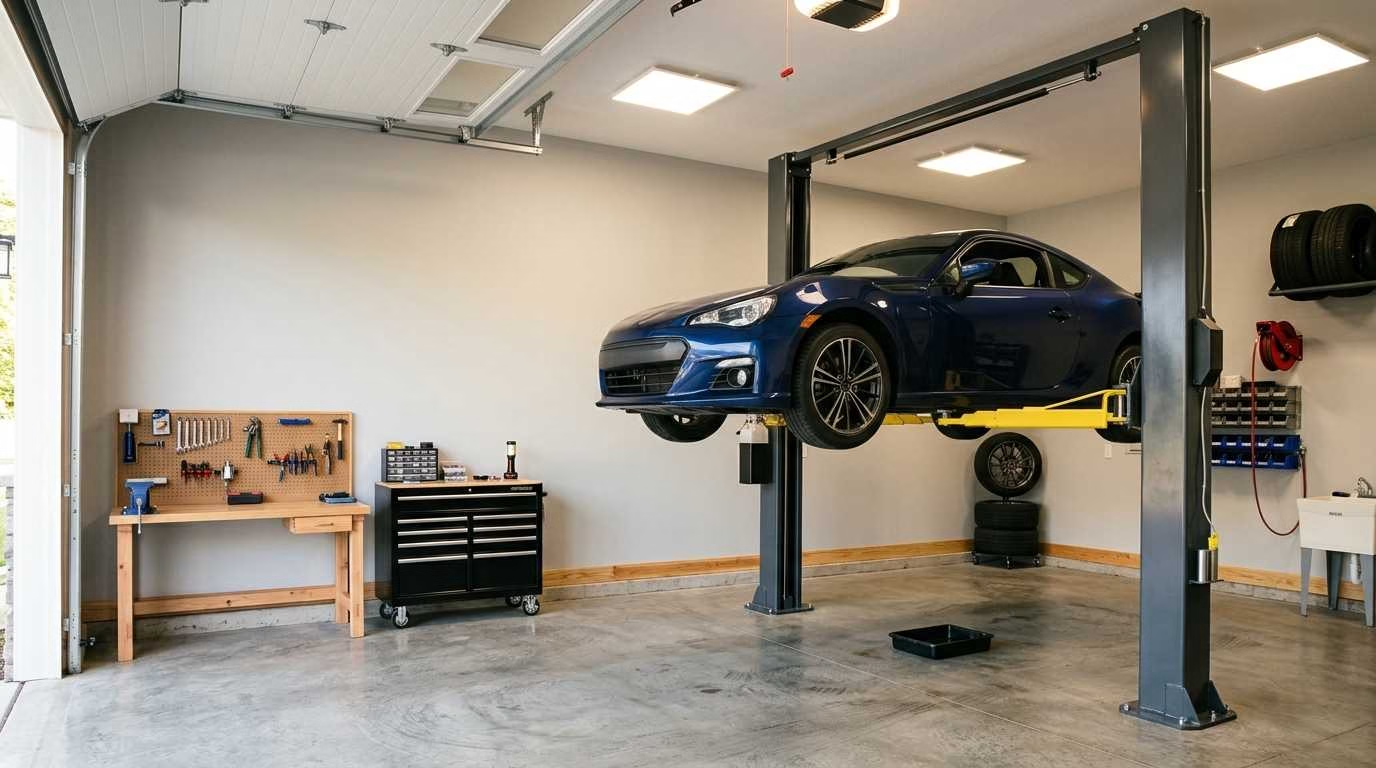
The best 2 post car lift for home garage use is the BendPak 10AP for most people. It provides a 10,000-pound capacity, flexible arm placement, strong safety features, and broad vehicle support.
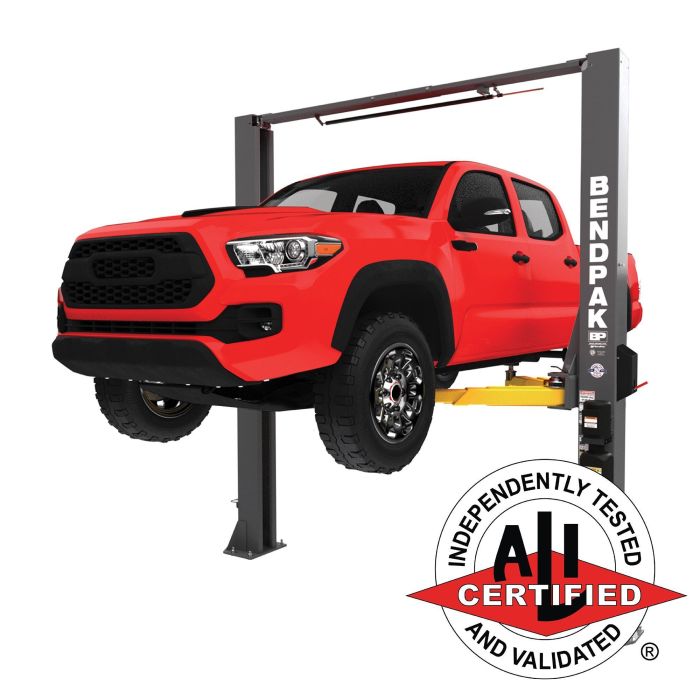
However, it will not fit every garage. The Atlas PVL10 offers better value. The GP-7LCS works under a low ceiling. The MaxJax M7K suits a shared garage.
Your ceiling, floor, vehicles, and budget should guide your choice. This guide will help you check each one before you commit.
The Best 2 Post Car Lifts for Home Garages at a Glance
This page contains Amazon affiliate links. If you buy through them, I may earn a small commission at no additional cost to you.
Prices change often. Freight, power work, floor repairs, and setup may cost extra.
For most people, the BendPak 10AP is the best all-round choice. The Atlas PVL10 is a smart alternative if you want strong value. If your ceiling is low, start with the GP-7LCS or MaxJax M7K.
Before making a short list, measure your whole bay. Do not measure the ceiling alone. Check the door, tracks, opener, lights, shelves, and vehicle roof.
Our Top Picks in Detail
Each lift below serves a different type of garage. Start with your space and vehicle needs. Then compare price and added features.
1. BendPak 10AP: Best 2 Post Car Lift for Most Home Garages
Quick Verdict
The BendPak 10AP is the most balanced choice here. It can lift many cars, crossovers, sport utility vehicles, and light trucks.
Its arms support both symmetric and asymmetric loading. That gives you more freedom when your vehicle list changes.
It suits a serious home mechanic who wants one permanent lift. You will need enough ceiling height, floor strength, and electrical power.
Check PriceKey Specifications
- Rated capacity: 10,000 pounds
- Design: Clear-floor [no raised center plate]
- Loading style: Symmetric or asymmetric
- Width: Adjustable during setup
- Drive system: Dual hydraulic cylinders
- Locks: Single-point release
- Arm restraints: Automatic
- Power: 220-volt supply
- Adapters: Adjustable pads and stackable extensions
- Typical price: Around the upper midrange
- Best match: Mixed cars and light trucks
Always check the current manual. The exact height and width can vary by setup.
What We Like
The adjustable width is a major plus. A narrow setup saves floor space. A wider setup gives you more room through the posts.
The flexible arms also help with mixed vehicles. You can set up a sports car differently from a long pickup.
Other useful points include:
- Low arm profiles for many modern cars
- Strong automatic arm locks
- Clear space between the columns
- Easy access for a transmission jack
- Good access to common service parts
- Broad adapter support
- Established replacement part supply
The 10,000-pound rating also gives you room to grow. You may own a small sedan now. Your next vehicle could be a full-size sport utility vehicle.
What Could Be Better
The price may be hard to justify for light weekend work. You must also plan for freight, unloading, oil, power, and setup.
The 10AP is not a low-roof lift. A standard eight or nine-foot garage will not suit it.
Other drawbacks include:
- A dedicated power circuit is often needed.
- The overhead beam limits roof clearance.
- The shipment is large and heavy.
- Setup may need two or more people.
- Direct brand support receives mixed owner feedback.
A good local dealer can solve many of these issues. Ask who will handle parts and warranty needs before delivery.
What Owners and Forum Users Say
Owners often praise the thick steel, smooth rise, and flexible arms. Many like the way it handles both cars and trucks.
The main complaints tend to involve delivery or support. Some buyers report slow replies or unclear freight details.
That does not make the lift poor. It does show why the dealer matters. A good installer can be more useful than a small price cut.
Best For
Choose the BendPak 10AP if you:
- Work on several types of vehicle
- Want a long-term garage setup
- Have room for a full-height lift
- Need clear access between the posts
- May lift sport utility vehicles or light trucks
- Prefer flexible arm placement
Not Ideal For
Look elsewhere if you:
- Have a ceiling near nine feet
- Need to remove the posts after each job
- Only perform rare oil changes
- Cannot add a 220-volt circuit
- Have not confirmed the concrete depth
- Need a low-cost lift
The 10AP makes sense when you will use its range. It is less appealing for a tiny bay or rare repair work.
2. Triumph NT-9FP: Best Budget 2 Post Car Lift
Quick Verdict
The Triumph NT-9FP offers a high rated capacity for its price. Its floor-plate design also avoids a tall overhead beam.
That makes it tempting for a home shop on a tight budget. Yet the low price comes with real trade-offs.
You may get simpler locks, basic instructions, and weaker local support. Check the exact model and its current safety status before you choose it.
Check PriceKey Specifications
- Rated capacity: 9,000 pounds
- Design: Floor-plate [raised center cover]
- Loading style: Depends on the model setup
- Overhead beam: None
- Power: Check the exact version
- Typical price: Lower-cost range
- Best match: Cars and light hobby use
- Certification: Confirm the exact current model
- Floor space: Raised plate between posts
Do not rely on a store heading alone. Download the matching manual by model number.
What We Like
The price is the main draw. It may cost far less than a premium 10,000-pound lift.
The floor-plate design also works under lower ceilings. The cables and lines pass under a steel cover on the floor.
Useful features include:
- Good rated capacity for the price
- No overhead crossbeam
- Straightforward basic layout
- Useful access to wheels and brakes
- Smaller upfront cost
- Practical for weekend vehicle work
A budget lift can serve a careful owner well. It still needs the right floor and correct setup.
What Could Be Better
The floor plate becomes an obstacle. You must roll jacks, drain pans, seats, and tool carts over it.
The plate can also make transmission work less pleasant. Some low rolling tools may catch on the edge.
Other concerns include:
- Less polished paint and hardware
- Basic setup instructions
- Limited local parts support
- Unclear certification on some listings
- Fewer refined arm options
- Lower resale value
- More risk from unknown sellers
The cheap sticker price is not your total cost. Freight and floor work may cost the same as they do for a premium lift.
What Owners and Forum Users Say
Some Triumph owners report years of normal home use. They often praise the low price and simple design.
Other buyers raise concerns about support, small hardware, finish, and lock design. These points matter because you will work below the load.
A positive owner story is useful. It does not replace a current manual, safe setup, or model certificate.
Best For
The NT-9FP may suit you if you:
- Work on cars a few times each month
- Have limited roof height
- Need to control the upfront cost
- Keep vehicle weight well under the limit
- Can inspect and maintain the lift
- Have local setup help
Not Ideal For
Skip it if you:
- Lift heavy diesel trucks
- Need daily shop use
- Want the best dealer network
- Move floor jacks across the bay often
- Want clear open floor space
- Cannot confirm the exact safety status
Important Editorial Note
A lift can work well for one owner without being right for you. Floor depth, setup skill, and vehicle weight can change the result.
Think about three separate questions:
- Does the lift work?
- Has the exact model passed a known safety test?
- Does it suit your floor, vehicle, and repair work?
You need a clear answer to all three.
Buying a checked used model from a known brand can also make sense. A safe used lift may beat a new unit with weak support.
3. Atlas Platinum PVL10: Best Value 10,000-Pound Lift
Quick Verdict
The Atlas Platinum PVL10 sits between low-cost lifts and premium shop models. It gives you a 10,000-pound rating and a flexible arm layout.
It is a strong value for a mixed home garage. You get a clear floor, useful arm reach, and truck adapters.
The main concern is local support. Check whether a nearby shop can service it.
Check PriceKey Specifications
- Rated capacity: 10,000 pounds
- Design: Clear-floor
- Safety status: ALI certified
- Loading style: Symmetric or asymmetric
- Front arms: Three-stage [short and long reach]
- Maximum rise: Up to about 81.5 inches with adapters
- Power: 220 volts
- Warranty: Separate structural and parts terms
- Concrete: Check the current manual
- Best match: Cars, crossovers, and light trucks
Some parts can extend above the main columns. Include that extra height in your garage plan.
What We Like
The PVL10 gives you many high-end features without the highest price. Its short front arms are useful on compact cars.
Those arms can also reach farther when needed. This helps if you own vehicles with very different lift points.
Key strengths include:
- Certified 10,000-pound rating
- Flexible loading positions
- Useful three-stage front arms
- Clear floor between posts
- Good lift height
- Truck adapters often included
- Fair warranty terms
- Strong price-to-feature balance
This mix makes the Atlas appealing to a broad range of home users.
What Could Be Better
The full height may surprise you. The cylinders can reach above the listed column height.
You also need a wide bay. The posts, power unit, and door space all take room.
Further drawbacks include:
- Heavy freight shipment
- Forklift or terminal pickup may be needed
- Local service differs by area
- Dedicated power is required
- Oil may not come with the lift
- Added cables may be needed for some layouts
Ask for a complete setup drawing. Do not rely on one height number from a sales page.
What Owners and Forum Users Say
Atlas owners often call the brand good value. Many home users report few issues with normal use.
Owners also mention successful work on race cars, older cars, and some pickup trucks. However, local dealers shape the support experience.
A nearby shop that stocks cables, seals, and pads adds real value. It can matter more than a minor feature change.
Best For
The Atlas PVL10 suits you if you:
- Want a certified 10,000-pound lift
- Own both cars and light trucks
- Need short front arms
- Have room for a full-size setup
- Want more value than a premium lift offers
- Have a local service option
Not Ideal For
It may not suit you if you:
- Have a low ceiling
- Cannot unload heavy freight
- Lack a 220-volt supply
- Have a narrow one-car bay
- Cannot find nearby part support
- Need removable posts
For many buyers, this is the sensible middle choice. It avoids the cheapest build without reaching premium prices.
4. BendPak GrandPrix GP-7LCS: Best 2 Post Lift for a Low Ceiling
Quick Verdict
The GP-7LCS is made for a common home garage problem. Its posts fit below a ceiling close to nine feet.
You still get open floor space between the columns. That is rare among low-roof two-post lifts.
The trade-off is lift height. You may sit on a rolling stool instead of standing upright.
Check PriceKey Specifications
- Rated capacity: 7,000 pounds
- Overall height: About 106.5 inches
- Floor layout: Clear-floor
- Basic rise: About 54 inches
- Rise with pads: About 58 inches
- Minimum pad height: About 4.5 inches
- Power: 220 volts
- Arms: Low-profile, flexible placement
- Width: About 125 inches
- Best match: Cars under a nine-foot ceiling
Measure your garage door in its open position. The door may sit lower than the ceiling.
What We Like
This lift can fit where a normal two-post model cannot. That is its main strength.
It also leaves the middle floor open. You can move a drain pan or small jack without crossing a raised plate.
Other useful points include:
- Low overall column height
- Low arms for sports cars
- Automatic locks
- Clear center floor
- Flexible arm placement
- Permanent setup
- Better access than many scissor lifts
- Useful working height for seated repairs
If you own normal cars, the 7,000-pound rating may be enough.
What Could Be Better
The GP-7LCS costs a lot for its capacity. Much of that price pays for its special low-roof design.
Its rise may also disappoint tall users. You cannot stand under most cars.
Other limits include:
- Poor fit for heavy pickups
- Less rise than a full-size lift
- Roof clearance remains tight
- Garage tracks can block the vehicle
- A 220-volt circuit is needed
- Posts stay in the bay at all times
Check the taller GP-7LC if you have more roof space. A little extra height can improve comfort.
What Owners and Forum Users Say
Low roof height is one of the top problems in home garages. Many owners must choose between a short lift and major roof work.
Users like having access to brakes, suspension, and the full underside. They accept that seated work is part of the deal.
Some owners lift the garage door tracks. Others fit a wall-mounted opener. Both changes can free space above the vehicle.
Best For
Choose the GP-7LCS if you:
- Have a ceiling near nine feet
- Work on cars and small sport utility vehicles
- Want open floor space
- Prefer fixed posts over removable ones
- Own low sports cars
- Do not need full standing height
Not Ideal For
Avoid it if you:
- Own a heavy diesel pickup
- Need to stand under the vehicle
- Want maximum capacity for the price
- Need the bay clear after each job
- Have roof tracks below the lift beam
- Cannot add 220-volt power
You may also want to improve the room itself. Better visibility matters under a short lift. See these garage lighting options for car detailing for useful overhead ideas.
5. MaxJax M7K: Best Portable 2 Post Car Lift
Quick Verdict
The MaxJax M7K gives you two-post access without fixed columns. You can unbolt the posts and store them after use.
It also runs on a common 110-volt supply. That can save the cost of a new high-power circuit.
Still, portable does not mean effortless. The posts are heavy, and the floor needs fixed anchors.
Check PriceKey Specifications
- Rated capacity: 7,000 pounds
- Overall height: About 89.5 inches
- Power: 110 volts
- Design: Removable two-post
- Anchors: Threaded floor inserts
- Maximum rise: Mid-rise work height
- Arms: Low profile
- Hydraulics: External hoses and power unit
- Storage: Posts roll on wheels
- Best match: Shared or low-roof garages
The anchor points remain in the floor. Fit their covers when the posts are stored.
What We Like
The removable layout is the clear advantage. You can use the bay for parking, woodwork, or other jobs.
It also works below many standard garage ceilings. The short posts avoid a tall overhead beam.
Other benefits include:
- Common 110-volt power
- Open access under the vehicle
- Low arms for many cars
- No permanent overhead frame
- Posts can move on built-in wheels
- Smooth direct hydraulic drive
- Useful for small garages
- Better wheel access than a drive-on lift
The M7K can be a good fit if the garage must serve your whole home.
What Could Be Better
The price is high for a mid-rise lift. A fixed 10,000-pound model may cost a similar amount.
The hydraulic hoses can also cross your work zone. You need a safe way to place and protect them.
Other drawbacks include:
- Heavy posts
- Setup work before each use
- Limited standing height
- 7,000-pound capacity
- Floor anchors still required
- Storage space needed for both posts
- Less convenient for frequent use
Many owners stop moving the posts. The setup becomes permanent even though it can move.
What Owners and Forum Users Say
Owners like the low roof needs and open access. They also like getting the bay back when needed.
Yet repeated setup can become a chore. Moving two heavy posts takes time and clear storage space.
Before buying, choose an exact storage spot. Measure the path from that spot to the anchors.
Best For
The M7K is a good match if you:
- Share the garage with other hobbies
- Have a low ceiling
- Cannot add 220-volt power
- Work on cars under 7,000 pounds
- Need clear wheel access
- Can store the posts safely
Not Ideal For
Skip it if you:
- Need full standing height
- Work on heavy trucks
- Use a lift every day
- Have no post storage area
- Expect an anchor-free lift
- Dislike floor hoses
A heated work area also helps during slow winter jobs. If your space lacks wall insulation, compare these garage heaters for an uninsulated garage.
6. Rotary SPOA10-AV: Best Premium 2 Post Car Lift
Quick Verdict
The Rotary SPOA10-AV is the premium choice for long-term use. Its short front arms can fit small cars. They can also extend for larger vehicles.
Rotary has strong support in many areas. Local shops often know how to service these lifts.
The cost is high, though. You also need a wide bay and a ceiling near 12 feet.
Check PriceKey Specifications
- Rated capacity: 10,000 pounds
- Safety status: ALI certified
- Design: Asymmetric, clear-floor
- Front arm reach: About 18.5 to 41 inches
- Rear arm reach: About 27.6 to 58.3 inches
- Minimum pad height: About 3.4 inches
- Maximum rise: About 81.5 inches
- Power: 208 to 230 volts
- Minimum ceiling: About 12 feet
- Suggested bay: About 12 by 24 feet
Check the full setup drawing. Added options can change the needed roof space.
What We Like
The arm design is the standout feature. Short arms help you reach pickup points on compact cars.
The same arms offer a broad sweep. That makes the lift useful for a mixed vehicle group.
Other strengths include:
- Strong long-term service record
- Good parts support
- Wide vehicle coverage
- Low pad height
- Clear center floor
- Smooth shop-grade operation
- Well-known local service network
- Useful adapter sets
- High resale appeal
If your lift sees regular use, these details can save time.
What Could Be Better
The price is the largest drawback. Many home users will not need its full build quality.
It also takes a lot of space. A standard home garage may not have enough height or width.
Other limits include:
- High freight cost
- Professional setup adds cost
- Large power needs
- Tall overhead frame
- Premium options increase the total
- Too much lift for rare oil changes
You pay for range, support, and long life. You should use those benefits often enough to justify them.
What Owners and Professional Mechanics Say
Mechanics often praise Rotary lifts for long service life. Many have used them daily for years.
Owners also like the arm range. It makes correct vehicle placement easier across many body styles.
Like any brand, Rotary still needs care. Cables, locks, pads, and anchors need checks.
Best For
Choose the SPOA10-AV if you:
- Use your lift often
- Work on many vehicle types
- Need short and long arm reach
- Want strong local service
- Have a large, tall garage
- Plan to keep the lift for years
Not Ideal For
It is not the best fit if you:
- Have a low roof
- Need a compact setup
- Only perform light maintenance
- Have a strict budget
- Cannot add the right power supply
- Do not have local service
How We Chose the Best Home Garage 2 Post Lifts
A high capacity alone did not earn a place. Each lift had to suit real home use.
I compared safety status, dimensions, arm reach, floor needs, support, and owner feedback. I also looked for common repair and setup issues.
Safety Certification
ALI stands for Automotive Lift Institute. Its mark shows that a specific lift model passed a set test process.
Certification applies to the precise model and setup. It does not cover every lift from the same brand.
Before you choose a model:
- Search for its full model number.
- Check its current listing.
- Confirm that added parts are approved.
- Compare the label with the manual.
- Avoid vague claims about partial approval.
A non-certified lift is not sure to fail. It simply lacks the same third-party check.
Vehicle Coverage
Your vehicle must fit in more ways than weight. The arms must reach the proper support points.
Check these details:
- Actual vehicle weight
- Front and rear axle weight
- Wheelbase
- Body width
- Ground clearance
- Factory lift points
- Arm reach
- Pad height
- Adapter needs
A long truck may fit the weight rating but not the arm layout. A low car may need thin arms.
Residential Garage Compatibility
Home garages have more limits than repair shops. Roof tracks, wall shelves, and narrow doors can block a lift.
Measure:
- Floor to ceiling
- Floor to open garage door
- Space between side walls
- Full bay depth
- Power unit clearance
- Door-opening room
- Vehicle roof height
- Light and heater clearance
Do not forget heat. An overhead unit may sit in the vehicle’s path.
Arm Design and Reach
Lift arms swing under the vehicle. Their pads contact approved frame or body points.
Short arms help with compact cars. Long arms help with trucks and long frames.
Look for arms that:
- Retract far enough
- Reach each lift point
- Fit under low side skirts
- Lock firmly after rising
- Accept the right adapters
- Stay within their load limit
Arm design affects safe balance. It also controls how far you can open the car doors.
Warranty, Parts, and Local Support
A long warranty sounds good. You still need someone to answer the phone.
Ask the seller:
- Who handles freight damage?
- Who approves warranty work?
- Are seals and cables in stock?
- Can a local team service the lift?
- Does the warranty include labor?
- How long are parts supported?
- What voids the warranty?
Keep your receipt, model label, and serial number. Take photos before and after setup.
Owner Feedback
Owner discussions can expose issues that product pages miss. Long-term comments are more useful than first-day reviews.
I gave more weight to reports about:
- Years of use
- Types of vehicles lifted
- Hydraulic leaks
- Lock problems
- Cable wear
- Parts support
- Freight damage
- Setup quality
- Arm reach
- Floor and roof limits
One bad review does not prove a pattern. The same applies to one glowing review.
What Size 2 Post Lift Do You Need?
The right size depends on your heaviest vehicle. Future vehicles matter too.
Leave a safe gap below the lift’s limit. Do not treat the stated rating as a target.
Is a 7,000-Pound Lift Enough?
A 7,000-pound lift can suit many passenger cars. It may also handle some compact sport utility vehicles.
It is often a good fit for:
- Sports cars
- Sedans
- Small wagons
- Compact crossovers
- Older light cars
- Small project vehicles
Check added weight from tools, armor, batteries, and cargo. Modifications can change both weight and balance.
When to Choose a 9,000-Pound Lift
A 9,000-pound model gives you more range. It can suit cars, crossovers, and some half-ton pickups.
It works best when:
- Your vehicles stay well under its limit.
- The arms fit each lift point.
- Your floor meets the manual.
- Truck adapters are approved.
- You only lift heavy models on rare days.
Do not assume every 9,000-pound lift can handle the same truck. Arm lengths and pad limits differ.
When a 10,000-Pound Lift Makes More Sense
A 10,000-pound lift is often the best home-shop size. It covers more vehicles without becoming too large.
It can make sense if you:
- Own a full-size sport utility vehicle
- Work on half-ton pickups
- Have several vehicle types
- Plan to change vehicles
- Want stronger resale appeal
- Need taller truck adapters
You still need to check axle balance. Vehicle weight is not split evenly across four pads.
Do You Need a 12,000-Pound Lift?
Consider 12,000 pounds for heavy diesel trucks, large vans, or service bodies. These vehicles can be far heavier than they look.
A larger lift may also require:
- Thicker concrete
- More bay width
- Taller columns
- Longer arms
- More power
- Larger anchors
- Higher setup costs
Do not buy a huge lift for one rare task. Paying a shop may cost less.
Why You Should Not Buy Based on Capacity Alone
The total rating is only one limit. Each arm has its own load limit.
Vehicle balance also changes during repairs. Removing an engine can make the rear much heavier.
Check:
- Total vehicle weight
- Front and rear axle weight
- Load on each arm
- Approved lift points
- Center of mass
- Changes during repair
If the setup feels wrong, lower the vehicle. Do not try to fix balance while it is high.
Symmetric vs Asymmetric 2 Post Lifts
These terms describe how the vehicle sits between the posts. Neither type is best for all vehicles.
Your usual vehicle size should guide your choice.
What Is a Symmetric Lift?
A symmetric lift keeps more of the vehicle centered between the posts. The front and rear arms may have similar reach.
This layout often suits:
- Long pickups
- Large sport utility vehicles
- Vans
- Rear-wheel-drive cars
- Vehicles with a centered weight load
The main drawback is door space. A post may sit near the front door edge.
What Is an Asymmetric Lift?
An asymmetric lift places more of the vehicle behind the posts. Its columns may turn toward the bay.
The front arms are often shorter. Rear arms may reach farther back.
Benefits include:
- Better front door clearance
- Easier access to the cabin
- Good fit for many cars
- Useful support for crossovers
- Less risk of hitting a post
Correct placement still matters. Follow the model’s stated loading method.
What Is a Versymmetric or Bi-Metric Lift?
These names describe lifts that support more than one loading style. The arm setup can suit both cars and light trucks.
This feature works well in a mixed home garage. You get more freedom without owning two lifts.
However, flexible does not mean unlimited. Stay within the manual’s approved layouts.
Which Configuration Is Best for a Home Garage?
Use this quick guide:
- Mostly cars: Choose asymmetric.
- Mostly long trucks: Consider symmetric.
- Cars and trucks: Choose an adaptable model.
- Narrow garage: Focus on door clearance.
- Short sports cars: Check front arm retraction.
- Heavy vans: Check both weight and wheelbase.
Arm range is often more important than the label.
Clear-Floor vs Floor-Plate 2 Post Lifts
Both types can raise a vehicle safely when installed as stated. The main difference is where the lines and cables run.
A clear-floor lift routes them overhead. A floor-plate lift routes them across the floor.
Advantages of a Clear-Floor Lift
A clear-floor model leaves open space between the columns.
That makes it easier to use:
- Transmission jacks
- Rolling seats
- Drain pans
- Tool carts
- Engine supports
- Floor sweepers
Nothing crosses the middle of your work zone. This is better for frequent use.
Disadvantages of a Clear-Floor Lift
The overhead beam needs roof space. It can also limit how high a tall vehicle can rise.
Common concerns include:
- Greater ceiling height
- Roof contact risk
- Conflict with door tracks
- Harder overhead assembly
- Higher setup cost
- Large shipment parts
Check the shutoff bar height. It may hang below the top beam.
Advantages of a Floor-Plate Lift
A floor-plate lift avoids an overhead beam. That helps in a low garage.
It may also offer:
- Lower purchase price
- Simple top clearance
- Easier fit below roof framing
- No roof shutoff bar
- More room above tall cabins
A floor-plate lift can be the practical choice when height is fixed.
Disadvantages of a Floor-Plate Lift
The center cover can become annoying. You must step or roll over it all day.
It can:
- Catch small wheels
- Block low jacks
- Create a trip point
- Trap dirt and oil
- Limit undercar movement
- Slow transmission work
Check the plate shape and height before you choose one.
Which Is Better for Home Use?
Choose a clear-floor lift if your roof allows it. The open floor is easier to live with.
Choose a floor-plate model if roof height leaves no other sound option. A portable lift may also work.
Measure Your Garage Before Buying a Lift
A small measuring error can make a lift unusable. Measure twice, then check the setup drawing.
Mark the proposed layout on your floor before ordering.
Minimum Ceiling Height
You need space for the lift and the vehicle. The vehicle roof often becomes the true limit.
Measure from the floor to:
- The ceiling
- The open garage door
- Door tracks
- Light fixtures
- Storage racks
- Heater parts
- Opener rails
- Low roof beams
Add the vehicle height to the planned rise. Include pad and adapter height.
Garage Width
Overall lift width is not the whole story. You need space beside both posts.
Allow room for:
- Power unit access
- Electrical box access
- Car doors
- Arm movement
- Wall storage
- Walking paths
- Tool carts
- Future service
A wide lift can make the second garage bay hard to use.
Bay Depth
The vehicle can extend past the posts in both directions. Leave room near the door and rear wall.
A deep bay helps with:
- Engine hoists
- Long pickups
- Open tailgates
- Workbenches
- Exhaust work
- Parts carts
A 24-foot bay is more flexible than a short standard bay.
Garage Door and Opener Clearance
The open garage door often becomes the lowest point. Test both open and closed positions.
Possible fixes include:
- High-lift tracks
- Tracks closer to the ceiling
- A wall-mounted opener
- Moved ceiling braces
- A new door path
Use a garage door professional. Springs and cables store dangerous force.
Electrical Requirements
Many full-size lifts need 220 or 240 volts. Some portable models use 110 volts.
Your electrician should check:
- Circuit voltage
- Breaker size
- Wire size
- Motor load
- Outlet type
- Disconnect needs
- Code rules
- Cable protection
Follow the lift manual. Do not run a large motor from an unsafe extension lead.
Create a Cardboard or Tape Layout First
Use painter’s tape to mark:
- Column bases
- Vehicle center line
- Arm swing
- Door opening
- Power unit
- Garage door path
- Tool storage
- Walking space
Park your real vehicle on the marks. Open every door and walk around it.
This simple test can save a costly return.
Concrete Requirements for a 2 Post Car Lift
Two posts place a large load on small floor areas. The anchors also resist side force.
Your slab must meet the exact lift manual. A guess is not enough.
Check the Manufacturer’s Manual First
Each model can require a different floor.
The manual should state:
- Minimum slab depth
- Minimum concrete strength
- Anchor size
- Hole depth
- Edge distance
- Joint distance
- Crack limits
- Cure time
Use the manual for your exact model. Similar lifts may use different base plates.
How to Verify Slab Thickness
Building plans may list the slab depth. They may not show later changes or weak spots.
More reliable options include:
- Core drilling
- A professional floor check
- Ground scan testing
- Original pour records
- Builder records
Do not trust the depth at a floor drain. The slab may vary across the bay.
Concrete Strength and Condition
Depth is only one part. The concrete must also have enough strength.
Check for:
- Wide cracks
- Soft surface layers
- Voids below the slab
- Crumbling edges
- Old patch work
- Deep cuts
- Thick floor coatings
- Water damage
A coating can hide cracks. It can also affect the base plate if installed poorly.
Expansion Joints, Cracks, and Floor Edges
Do not place anchors too close to a joint or free edge. The concrete can split under load.
The manual will state the needed gap. Follow its exact value.
Also avoid placing one post on firm concrete and one on a weak patch.
When to Pour Reinforced Footings
New pads may be needed if:
- Slab depth is unknown
- Concrete is too thin
- Cracks cross the post area
- Voids sit below the floor
- You plan to lift heavy trucks
- The manual asks for more depth
- The old slab has weak patches
A floor professional should plan the pad size and steel. Let the new concrete cure fully.
Why More Concrete Is Not Automatically Better
A deep block can still fail if it has poor steel or weak concrete.
Safe footings depend on:
- Correct size
- Good material
- Proper steel
- Full cure time
- Correct post location
- Proper anchor holes
- Clean drilled holes
Do not invent your own footing plan. Use the manual and local expert advice.
The Real Cost of Installing a Home Garage Car Lift
The product price is only the start. A low-cost lift can become expensive after floor and power work.
Build a full budget before ordering.
Lift Purchase Price
Home lifts tend to fall into four groups:
- Budget floor-plate lifts
- Midrange full-size lifts
- Certified premium lifts
- Special low-roof or portable lifts
Low-roof designs may cost more per pound of capacity. You pay for the compact shape.
Freight and Unloading
Most lifts arrive by truck. The driver may not place the crate inside your garage.
Plan for:
- Freight fees
- Home delivery fee
- Liftgate service
- Terminal pickup
- Trailer rental
- Forklift hire
- Damage checks
- Safe storage
Inspect the crate before signing. Photograph torn wrap, bent steel, or leaking parts.
Professional Installation
A setup team may handle:
- Crate breakdown
- Column placement
- Beam assembly
- Drilling
- Anchors
- Arm setup
- Cable balance
- Hydraulic bleeding
- Lock tests
Ask whether travel, oil, and electrical work are included.
Electrical Work
Your power costs depend on the current garage wiring.
You may need:
- A new breaker
- New cable
- A wall outlet
- A hard-wired switch
- A motor disconnect
- A permit
- Panel work
Get this checked before delivery.
Concrete Work
Floor work can exceed the lift price. That is common with old or thin slabs.
Possible costs include:
- Core testing
- Floor cutting
- Waste removal
- New steel
- Fresh concrete
- Surface repair
- Curing time
- Coating repair
Do not rush the cure period to save a few days.
Fluids, Adapters, and Accessories
The box may not include everything.
Budget for:
- Hydraulic oil
- Truck extensions
- Pinch-weld pads
- Frame cradle pads
- Anchor covers
- Under-hoist stands
- Drip pans
- A rolling seat
- Hose guards
- Adapter racks
Use only approved adapters.
Annual Inspection and Maintenance
A lift needs care even if it sees light use.
Plan to check:
- Cable tension
- Anchor torque
- Lock movement
- Arm locks
- Pad wear
- Hydraulic lines
- Cylinder seals
- Bolt tightness
- Unusual noise
A trained inspector can catch wear that you may miss.
Sample Total-Budget Scenarios
These examples help with planning. They are not fixed quotes.
Budget Setup
- Basic floor-plate lift
- Sound existing concrete
- Short delivery distance
- Simple electrical connection
- Owner assembly with professional checks
This can keep costs low. Yet you should still budget for oil, freight, and anchors.
Midrange Setup
- Certified 10,000-pound lift
- Professional installation
- Dedicated 220-volt circuit
- Truck adapters
- Freight and liftgate service
This is a common serious home-shop plan.
Premium Setup
- High-end commercial lift
- New reinforced pads
- Garage door conversion
- New power circuit
- Professional delivery and setup
- Added support stands and jacks
The installed cost may be far above the lift price.
Common Problems Owners Report
Most complaints relate to planning, setup, or support. The steel frame is not always the problem.
Good measurements can prevent many issues.
The Lift Does Not Fit as Expected
Common errors include:
- Measuring the posts only
- Missing cylinder height
- Ignoring the open door
- Forgetting the shutoff bar
- Missing light fixtures
- Ignoring the power unit
- Forgetting vehicle roof height
Ask for a full dimension drawing before ordering.
The Arms Cannot Reach the Lift Points
The vehicle may be too short or placed too far forward. The front arms may also be too long.
Other causes include:
- Wrong loading style
- Incorrect adapters
- Low side skirts
- Wide running boards
- Long wheelbase
- Poor column placement
Never use a homemade extension. Use approved pads and positions.
The Vehicle Feels Unstable
Lower it at once. Do not work under a vehicle that moves or feels wrong.
Possible causes include:
- Wrong pickup points
- Poor vehicle position
- Uneven pad height
- Loose arm locks
- Weight near one end
- Removed heavy parts
Review the loading guide before raising it again.
Uneven Lifting
One side may rise faster due to cable or fluid issues.
Possible causes include:
- Poor cable setup
- Air in the system
- Uneven floor
- Loose anchors
- Worn parts
- A blocked line
Stop using the lift until the cause is fixed.
Hydraulic Leaks
A small wet spot can grow into a larger fault.
Check:
- Hose ends
- Pump fittings
- Cylinder seals
- Line damage
- Shipping plugs
- Fluid level
Do not search for a high-pressure leak with your hand.
Poor Customer Support
You can cut this risk before you order.
Ask:
- Is the seller an approved dealer?
- Who stocks parts?
- Who pays return freight?
- Who covers labor?
- Is there a local repair team?
- How are damaged crates handled?
- How fast do parts ship?
Get key terms in writing.
2 Post Lift Safety Tips Every Home Mechanic Should Follow
A good lift still needs a careful owner. Most safe use comes from routine habits.
Never rush vehicle placement.
Confirm the Vehicle’s Actual Weight
Curb weight is only a starting point. Added parts and cargo can increase it.
Think about:
- Fuel
- Tools
- Cargo
- Steel bumpers
- Winches
- Toolboxes
- Service bodies
- Larger batteries
If weight is unclear, weigh the vehicle first.
Use the Manufacturer’s Recommended Lift Points
Factory lift points are made to carry the load. Random frame or floor areas may bend.
Use:
- The vehicle manual
- A trusted lift-point guide
- Correct pad types
- Approved adapters
Check that all four pads have full contact.
Perform a Low-Rise Stability Check
Raise the tires only a few inches. Stop and inspect every pad.
Check:
- All pads remain centered.
- The arms have locked.
- The vehicle sits level.
- Nothing bends or slips.
- The vehicle does not rock.
Lower it if anything looks wrong.
Lower the Lift Onto Its Mechanical Locks
Hydraulic pressure raises the vehicle. Mechanical locks hold it during work.
Raise the lift past a matching lock point. Then lower it onto the locks as the manual states.
Both sides should rest at the same level.
Recheck Balance During Major Repairs
Removing a heavy part can move the vehicle’s balance point.
Take extra care when removing:
- An engine
- A transmission
- An axle
- A battery pack
- A truck bed
- A fuel tank
- Heavy suspension parts
Use support stands before the weight shifts.
Use Approved Support Equipment
An under-hoist stand can control part movement. A transmission jack supports heavy units below the vehicle.
Match each tool to the load. Do not use wood scraps as a tall support stack.
Inspect the Lift Regularly
Make a short check before each use:
- Look for fluid.
- Check pad wear.
- Test arm locks.
- Watch cable position.
- Check anchors.
- Listen for new sounds.
- Test both safety locks.
- Clear the floor.
Book a deeper check on the stated service schedule.
Never Exceed the Rating
A built-in safety margin is not spare capacity. It protects against normal force and wear.
Never lift above the stated limit. Never test the lift with an unknown heavy vehicle.
Essential Accessories for a Home Garage Lift
The right tools make your lift easier and safer to use. Start with support gear, not cosmetic upgrades.
Vehicle-Specific Adapters
Different vehicles need different pad shapes and heights.
Common options include:
- Pinch-weld pads
- Truck frame extensions
- Frame cradle pads
- Low-profile pads
- Stackable blocks
Use parts approved for the lift.
Under-Hoist Support Stands
These stands help steady heavy parts during repair. They can also limit movement after weight changes.
They do not replace the lift locks. Use them only as directed.
Transmission Jack
A tall transmission jack lets you remove gearboxes while standing.
Check:
- Rated load
- Maximum height
- Minimum height
- Base width
- Wheel size
- Tilt control
A raised floor plate can block small jack wheels.
Rolling Mechanic’s Seat
A rolling seat helps under a short lift. It is useful with the GP-7LCS and MaxJax.
Look for:
- A wide base
- Strong casters
- Adjustable height
- A stable seat
- Tool storage
Garage Door Conversion
High-lift tracks can move the open door closer to the roof. A wall opener removes the center rail.
This can create useful roof space. Have a garage door expert plan the change.
Protective Accessories
Small items can protect your vehicle and lift:
- Door edge guards
- Column pads
- Hose covers
- Drip pans
- Adapter racks
- Anchor caps
- Cable guards
Good lighting also reduces missed setup errors. These garage lighting ideas can help you reduce harsh shadows.
Should You Buy a New or Used 2 Post Lift?
A used premium lift can offer great value. It can also hide wear from years of hard use.
Treat it like safety gear, not used furniture.
Advantages of Buying New
A new lift gives you:
- Full documents
- Clear model details
- Current parts
- Known service history
- Warranty cover
- Matching accessories
- Freight records
- Current setup instructions
It also makes the safety status easier to confirm.
Advantages of Buying Used
A used lift may let you afford a better brand. Local pickup can also reduce freight cost.
Good used options may offer:
- Higher build quality
- Better arm design
- Strong parts support
- Lower cost
- Good resale value
The deal works only if the lift is complete and sound.
Used-Lift Warning Signs
Walk away from:
- Bent columns
- Bent arms
- Weld repairs
- Missing model plates
- Frayed cables
- Deep rust
- Damaged locks
- Mixed parts
- Unknown motors
- Missing manuals
Fresh paint can hide old repairs. Check below and inside the carriages.
Costs That Can Erase the Savings
A cheap used lift may need:
- New cables
- New hoses
- Fresh seals
- Missing adapters
- New anchors
- Transport
- Disassembly
- Setup
- A professional check
Price these items before making an offer.
The Smarter Used-Lift Strategy
Follow this process:
- Choose a known model.
- Record its full serial number.
- Confirm parts remain available.
- Ask who removed the lift.
- Inspect each structural part.
- Replace worn load parts.
- Use new approved anchors.
- Have it set up and tested.
A checked used Rotary, Forward, Challenger, Atlas, or BendPak can beat an unknown new lift.
Alternatives to a 2 Post Car Lift
A two-post lift is best for many repair jobs. It is not best for every garage.
Your space or repair style may point to another design.
Four-Post Lift
A four-post model supports the vehicle by its tires. You drive onto two runways.
It works well for:
- Long-term storage
- Easy loading
- Vehicle stacking
- Fluid service
- Exhaust work
- Wheel alignment
Wheel work may require bridge jacks. The larger frame also takes more floor space.
If storage matters more than open wheel access, compare the best 4-post car lifts for a home garage.
Scissor Lift
A scissor lift folds below or between the vehicle. It suits small garages and lower ceilings.
It works well for:
- Brake jobs
- Tires
- Detailing
- Body work
- Basic service
The center frame may block exhaust or drive parts.
Portable Frame Lift
A portable frame lift uses two short lifting frames. You can store them against a wall.
It suits:
- Oil work
- Brake jobs
- Tire changes
- Small garages
- Low ceilings
It does not offer the same open undercar access as a two-post lift.
Inspection Pit
A pit gives you standing access below a parked vehicle. It needs major building work.
You must plan for:
- Drainage
- Water
- Air flow
- Lighting
- Safe stairs
- Fall covers
- Local building rules
- Flammable vapor
A pit also leaves the wheels loaded. It does not help much with suspension work.
Jack and Jack Stands
A floor jack and stands remain useful for light work. They cost less and need no fixed setup.
Use them on a flat, firm floor. Follow the vehicle’s correct support points.
Never work below a vehicle supported by a jack alone.
Final Verdict
The best 2 post car lift for home garage use depends on the garage itself.
- Best overall: BendPak 10AP
- Best budget: Triumph NT-9FP
- Best value: Atlas Platinum PVL10
- Best for low ceilings: BendPak GrandPrix GP-7LCS
- Best portable: MaxJax M7K
- Best premium: Rotary SPOA10-AV
For most serious home shops, a certified 10,000-pound clear-floor lift is the best starting point. It leaves room for larger future vehicles.
The Atlas PVL10 offers strong value. The BendPak 10AP provides greater all-round flexibility. The Rotary makes sense for high use and broad vehicle needs.
Use this order before making your choice:
- Verify your concrete.
- Measure the whole garage.
- List every vehicle you may lift.
- Check the exact model’s safety status.
- Find local parts and service.
- Price the complete setup.
Do not force a tall lift into a short garage. A lower-rise model that fits well is safer and easier to use.
FAQs About 2 Post Car Lifts for Home Garages
What is the best 2 post car lift for a home garage?
The BendPak 10AP is the best all-round choice for many home garages. It offers a 10,000-pound rating and flexible vehicle placement.
The Atlas PVL10 is better for value. The GP-7LCS suits low roofs.
How tall should a garage be for a 2 post lift?
Many full-size lifts need about 12 feet of roof height. Some need more or less.
Low-roof models can fit near nine feet. Always include the open garage door and vehicle roof in your check.
Can you install a 2 post lift on a 4-inch concrete slab?
Some models allow a four-inch slab with a stated strength. Other lifts need thicker concrete.
The slab must also be free from bad cracks, edges, joints, and voids. Follow the exact model manual.
Is a 9,000-pound lift enough for a pickup truck?
It can handle some unloaded half-ton pickups. That does not mean it fits every truck.
Check true weight, axle load, wheelbase, arm reach, and pad points.
Should I buy a 9,000-pound or 10,000-pound lift?
Choose 10,000 pounds if space and budget allow. It gives you more room for future vehicles.
A 9,000-pound model can suit cars and light hobby work.
Is an asymmetric or symmetric lift better?
Asymmetric lifts offer better door space for many cars. Symmetric lifts often suit long trucks and vans.
A flexible arm design is best for mixed vehicles.
Are cheap 2 post car lifts safe?
Low price does not always mean unsafe. It may mean weaker support, basic parts, or no formal test.
Check the exact model, locks, arms, parts, manual, and safety status.
Does a 2 post lift need to be professionally installed?
Professional setup is strongly advised. This is most important when floor depth or power needs are unclear.
A trained installer can also set cables and locks correctly.
Can I install a 2 post lift myself?
A skilled owner may handle some mechanical work. Floor and electrical checks may still need trained help.
Incorrect anchor holes or cable setup can create serious risk.
Can a 2 post lift be installed outside?
Only use a lift outside if its maker allows it. Rain, rust, wind, water, and power safety create added risks.
Most standard home models are made for indoor use.
Can I park a car under a vehicle on a 2 post lift?
Do not assume a service lift is approved for long-term storage. Check the model manual.
A four-post lift is often better for stacked parking.
How much does a home garage lift cost to install?
The lift price is only one part. You may also pay for freight, power, floor work, oil, tools, and setup.
A simple job may cost little beyond the lift. Major floor and door changes can add thousands.
How often should a 2 post lift be inspected?
Check key parts before each use. Follow the maker’s full service plan as well.
A trained lift expert should inspect it on the required local schedule.
Is ALI certification required for a home garage lift?
It may not be required in every home garage. It still gives you a useful third-party safety check.
Confirm the exact model rather than trusting the brand name.
What happens if I remove an engine or transmission while the car is on the lift?
The vehicle’s balance will change. One end may become much lighter or heavier.
Use approved support stands and reassess the balance before removing the part. Follow the vehicle and lift instructions.