
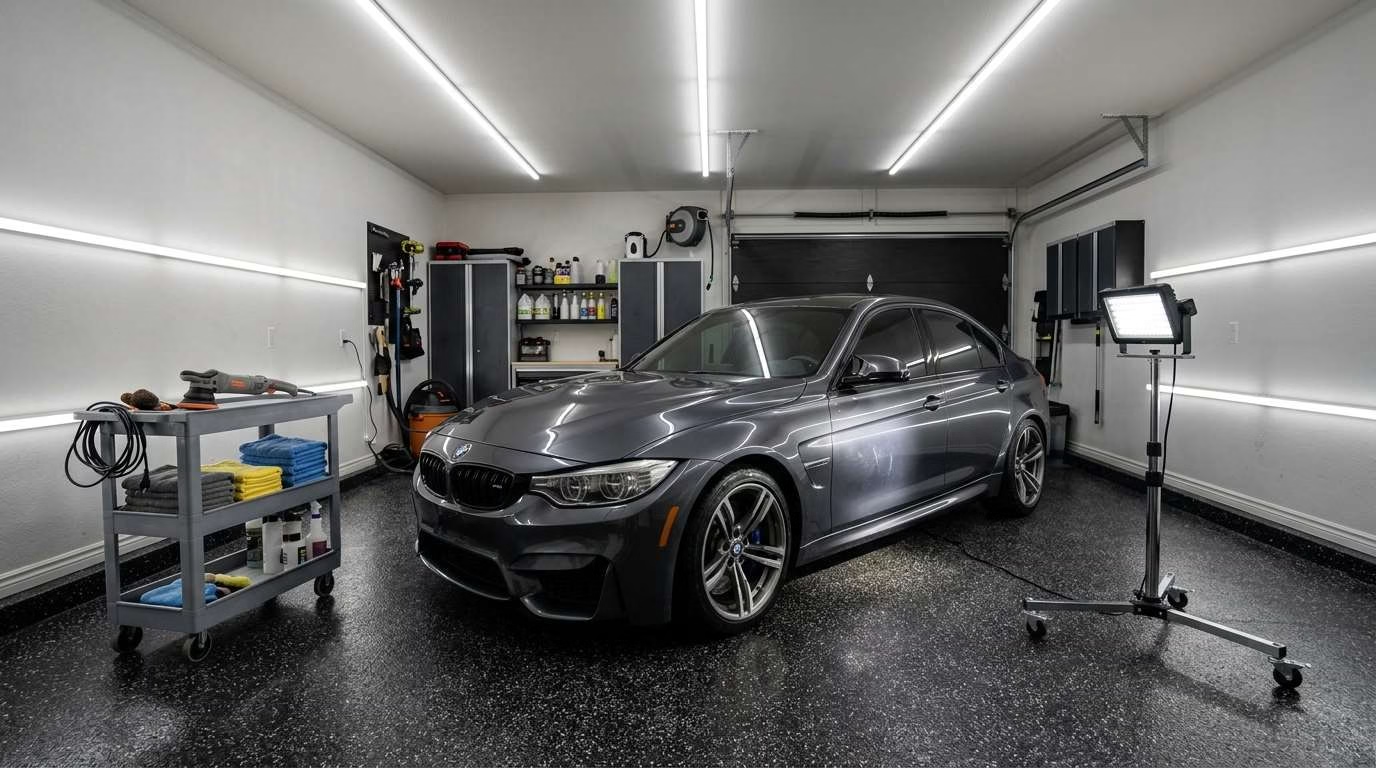
The best garage lighting for car detailing combines broad 5000K shop lights with a focused inspection light. The shop lights help you clean and work safely. The inspection light reveals swirls, haze, scratches, and missed spots.
No single fixture does every job well. A bright ceiling may still leave doors and rocker panels dark. That is why a layered lighting setup works best.
Quick answer: The Scangrip MultiMatch R is the best overall inspection light. Barrina T8 fixtures are a solid choice for broad garage coverage. The Braun Color Match Light offers a cheaper way to inspect paint.
Best Garage Lighting for Car Detailing at a Glance
Prices, features, and kit sizes may change. Check the current product details before you plan your garage layout.
The 7 Best Garage Lights for Car Detailing
Each light below solves a different problem. Some light the whole room. Others help you inspect a small area of paint.
The best option depends on your garage, budget, and work style.
1. Scangrip MultiMatch R: Best Overall

The Scangrip MultiMatch R offers the best mix of range and control. You can hold it, mount it, or place it on a stand.
Its wide beam lights more of the panel than a flashlight. That helps during long polishing jobs. You spend less time moving the light after each pass.
You can also change the light color. This helps create contrast on different paint finishes. Light paint often needs a warmer tone. Dark paint can respond better to a cooler tone.
The light works well for:
- Paint inspection
- Machine polishing
- Final wipe-downs
- Ceramic coating checks
- Spotting haze and sanding marks
- Checking lower doors and bumpers
Its magnetic base is useful in a home garage. You can attach it to a metal cabinet or rolling cart. This gives you flexible placement without buying a stand at once.
A cart also gives you space for towels and polish. If you need a better storage setup, these heavy-duty garage storage cabinets can help keep tools and lighting gear organized.
What owners tend to like
- The beam covers a useful part of the panel.
- Light output can be reduced for close inspection.
- Several light colors work across many paint shades.
- The base and mounting options make setup easier.
- It can run as a work light and inspection light.
What may bother you
The price is the biggest concern. A matching stand can raise the total cost further.
Battery life also drops at full power. That is normal for a strong portable light. Still, you need to plan charging before a long correction.
The beam may also feel too direct for some coating jobs. A diffuser can create softer light. Softer light often makes coating streaks easier to see.
Best for: You want one flexible light for most exterior detailing tasks.
Skip it if: You only need cheap overhead lighting for washing and basic cleaning.
Verdict: The MultiMatch R suits both serious home users and working detailers. It gives you more control than a basic work light.
2. Braun Color Match Inspection Light: Best Budget

The Braun Color Match Inspection Light is a smart first step. It costs far less than many dedicated detailing lights.
Its focused beam helps reveal small paint flaws. You can move it around the panel until a scratch catches the light. This is much harder with fixed ceiling fixtures.
The light is useful for spotting:
- Swirl marks
- Fine scratches
- Polishing haze
- Missed polish residue
- Small sanding marks
- Uneven paint finish
It also has a magnetic mounting point. You can attach it to a cabinet, cart, or other steel surface. This is handy when both hands are busy.
What owners tend to like
- It offers good defect visibility for the cost.
- The body is easy to carry around a car.
- It works on both light and dark paint.
- The magnet supports hands-free use.
- It can handle routine garage work.
What may bother you
The light has less color control than premium models. You may need to change the beam angle more often on some paint colors.
Its smaller beam also limits panel coverage. It is best for inspection, not lighting a whole door during polishing.
Ceramic coating high spots can be another weak point. A hard spot beam may hide broad streaks. Soft side light often works better for that task.
Best for: Beginners, weekend detailers, and tight budgets.
Skip it if: You need a wide light for full-car paint correction.
Verdict: This is a low-risk way to add proper paint inspection to your garage.
3. Barrina T8 4-Foot 5000K LED Shop Lights: Best Overhead Lighting
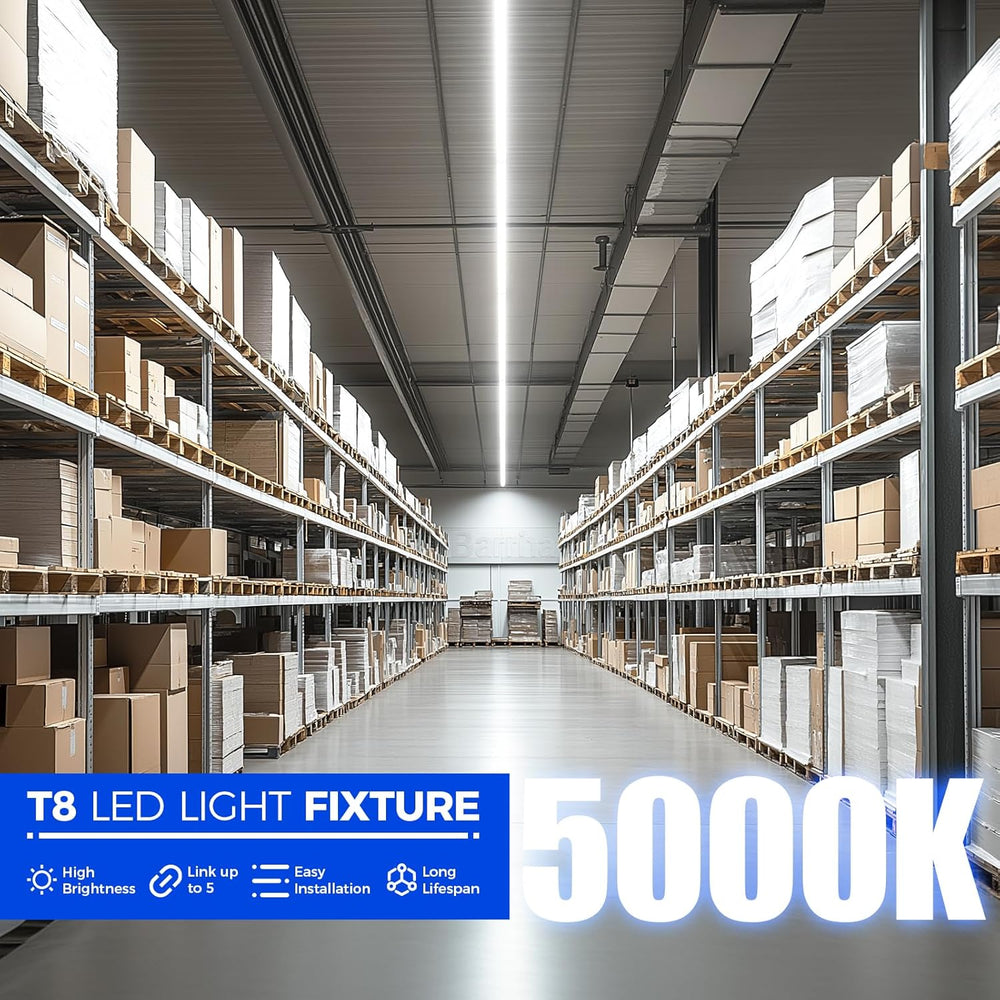
Barrina T8 lights give your garage a bright base layer. They work well for general cleaning, drying, vacuuming, and tool use.
The 4-foot, 5000K version is the practical choice for most garages. The light looks clean and fairly neutral. It does not have the deep blue cast of many 6500K fixtures.
The T8-style units also provide more output than slim T5 strips. That makes them a better fit for ceiling use.
Why several fixtures work better
One bright fixture creates dark zones. Several smaller fixtures spread light across the room.
A good layout should cover:
- Both sides of the car
- The front and rear
- The workbench
- The wash area
- Garage corners
- Storage and chemical shelves
You can place two rows on the ceiling. Add wall strips later if the lower panels remain dark.
What owners tend to like
- The lights provide strong output for the price.
- Linkable fittings make expansion easier.
- You can use them on walls or ceilings.
- Multi-packs work well in one-car garages.
- They use less power and make less heat than halogen lights.
What may bother you
The housings can feel light and thin. Some connectors may also require care during installation.
Visible wires can make the garage look untidy. Plan each cable run before mounting the lights. Cable channels can improve the finished look.
Long-term life may vary between kits. A failed integrated light often means replacing the full fixture.
Clear lenses can also cause glare. A frosted lens feels softer and may reduce eye strain.
Best for: You need affordable light across the whole garage.
Skip it if: You expect overhead lights alone to reveal every paint flaw.
Verdict: Barrina T8 lights are a useful foundation. Pair them with a focused inspection light.
4. Scangrip SunMatch 4: Best Handheld Inspection Light

The Scangrip SunMatch 4 is built for close paint checks. Its compact shape makes it easy to move around curves and narrow areas.
You can inspect mirrors, pillars, bumpers, and door edges without moving a large stand. It is also useful between polishing passes.
Hold the light away from the paint first. Then change the angle and distance. Defects often appear when the reflection moves across the panel.
What owners tend to like
- It feels easy to carry around the vehicle.
- The beam works well in tight areas.
- Adjustable output reduces harsh glare.
- It is useful for quick progress checks.
- It stores more easily than a panel light.
What may bother you
The small beam covers less paint. You must move it often during a full correction.
Heat may also affect long sessions. A compact light has less space to shed heat. Lower output can improve comfort and battery time.
It also costs more than a standard flashlight. You are paying for light control, build quality, and detailing-focused features.
Best for: You want a compact light for close inspection.
Skip it if: You want to light a whole panel from a tripod.
Verdict: The SunMatch 4 works best as a focused inspection tool, not your only garage light.
5. Scangrip MultiMatch 3: Best Professional Tripod Light
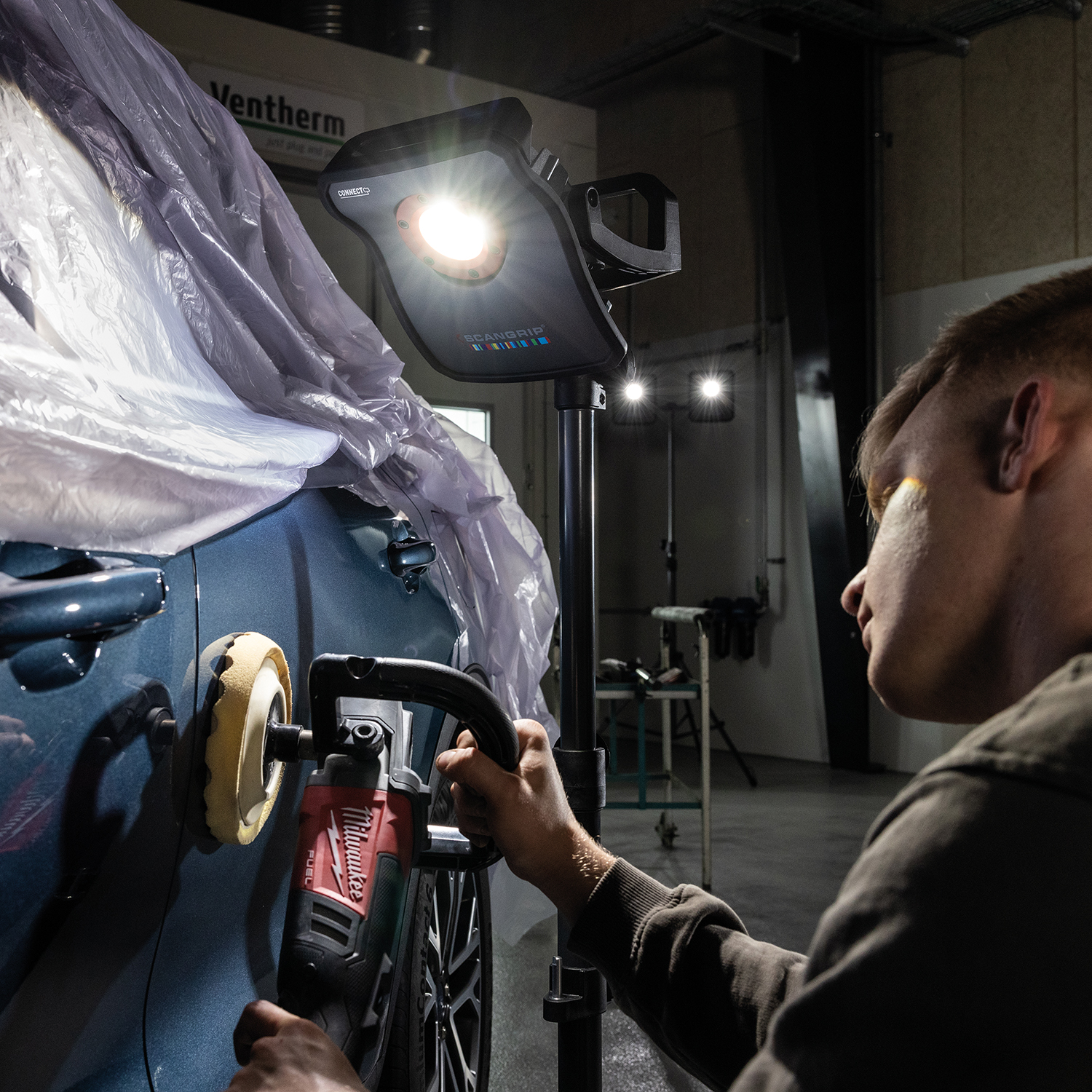
The Scangrip MultiMatch 3 suits long paint correction jobs. Its wide beam can cover a hood, door, or quarter panel.
A tripod gives you a fixed lighting angle. This helps you compare results after each polishing pass. You can also repeat the same setup on the next panel.
Different paint colors may hide defects under one light tone. The MultiMatch 3 gives you several light color settings. This lets you change the contrast without moving the car outside.
What owners tend to like
- The wide beam works well on large panels.
- Strong output supports full paint corrections.
- Several color settings suit varied paint.
- A rolling stand makes panel changes faster.
- Corded use helps during long jobs.
What may bother you
The full setup can cost a lot. The light, stand, and spare power gear add up.
It also needs floor space. A crowded home garage may not leave room for a tripod beside the vehicle.
The controls can take time to learn. You may not need every setting for routine work.
Best for: Professional detailers and serious paint correction work.
Skip it if: You detail one or two family cars each year.
Verdict: The MultiMatch 3 gives you repeatable panel lighting. That matters during long and detailed correction jobs.
6. Scangrip I-Match Headlamp: Best for Interiors and Hands-Free Work

Ceiling lights struggle inside a car. The roof, seats, doors, and your own body block the beam.
The Scangrip I-Match Headlamp solves part of that problem. It follows your eyes and keeps both hands free.
This makes it useful for:
- Vacuuming under seats
- Cleaning footwells
- Inspecting fabric stains
- Working around pedals
- Cleaning wheels
- Checking wheel wells
- Inspecting engine bays
- Mobile detailing at night
A headlamp also reduces stops. You do not need to place a work light every time you change position.
What owners tend to like
- The beam follows their line of sight.
- Both hands remain free.
- It works well in tight spaces.
- It reduces shadows inside the cabin.
- It is easy to carry between jobs.
What may bother you
Headlamps can feel warm during long sessions. A lower setting may reduce heat and extend battery life.
Bright light can also reflect off glass and glossy trim. Aim the lamp slightly down when cleaning screens or piano-black panels.
A headlamp cannot replace full garage lighting. Think of it as a support tool.
Best for: Interior work, wheels, engine bays, and small spaces.
Skip it if: You only need exterior paint inspection.
Verdict: A good headlamp saves time where fixed lights cannot reach.
7. LZHOME 5000K Hexagon Garage Lights: Best Showroom Lighting
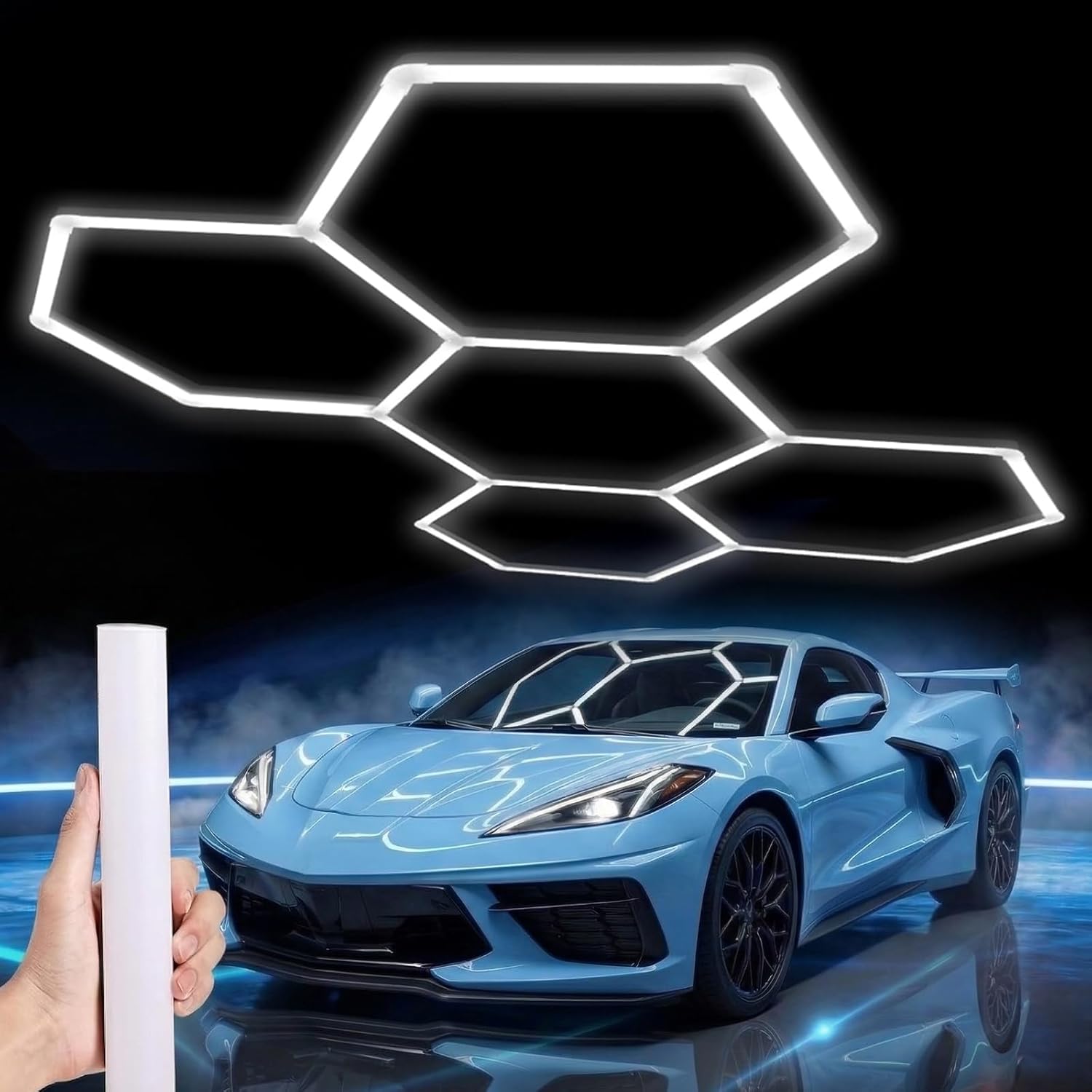
Hexagon lights create a clean studio look. Their bright shapes stand out in photos and videos.
The LZHOME 5000K system is a better fit for detailing than very blue 6500K kits. The more neutral tone is easier on your eyes.
These lights can work well for:
- Customer handovers
- Vehicle photos
- Social media videos
- General cleaning
- Showroom display
- Garage branding
However, appearance and function are not the same. The grid pattern reflects across paint and glass. That reflection may hide small flaws or distract your eyes.
What owners tend to like
- The ceiling looks modern and professional.
- The grid produces strong general light.
- Cars look striking in photos.
- Kits can cover a large area.
- The layout gives a studio a clear visual style.
What may bother you
Installation takes time. Each joint must fit well. A poor connection may affect part of the grid.
Replacing one failed section can also be awkward. You may need access above or around the full system.
The reflected pattern is another concern. It looks impressive but may get in your way during polishing.
Best for: Customer-facing studios, photography, and garage presentation.
Skip it if: Your main goal is low-cost paint inspection.
Verdict: Hexagon lighting adds style and broad light. You still need a focused inspection lamp.
How We Chose the Best Detailing Lights
A useful detailing light must do more than fill a spec sheet. It must help you see flaws and work without strain.
The following points shaped the rankings.
Paint-Defect Visibility
A paint inspection light should expose changes in the clear coat. These changes bend the reflected light.
Useful lights can help reveal:
- Swirls
- Scratches
- Haze
- Holograms
- Sanding marks
- Polish residue
- Coating streaks
No light will show every flaw from every angle. You still need to move the light or your viewing point.
Beam Shape and Coverage
A narrow spot beam creates strong contrast. It works well for small scratches and swirl checks.
A wide beam covers more of the panel. This makes it better during machine polishing.
Diffused light spreads softly across a wide area. It can help with coating checks and general cleaning.
The best setups use more than one beam type.
Color Temperature Options
Color temperature describes how warm or cool light looks.
- Warm light looks more yellow.
- Neutral light looks white.
- Cool light has a blue tone.
Adjustable light can help you create contrast on varied paint. It also lets you choose a tone that feels comfortable.
Light Placement and Portability
A powerful light is not useful if you cannot aim it well.
Useful placement options include:
- Ceiling mounting
- Wall mounting
- Tripod use
- Magnetic bases
- Handheld use
- Head-mounted use
Portable lights matter most during paint correction. Fixed lights matter most for broad garage use.
Durability and Power Options
Garage lights face dust, bumps, heat, and moisture. They may also run for hours.
Look for:
- Impact-resistant housings
- Protected lenses
- Stable mounting points
- Rechargeable batteries
- Corded operation
- Clear battery indicators
- Easy-to-clean surfaces
A replaceable battery can extend the useful life of a premium light.
Price and Long-Term Value
A cheap light is not good value if it fails early. An expensive one also wastes money if you rarely use its features.
Think about:
- How often you detail
- Which jobs you perform
- The cost of stands and mounts
- Replacement parts
- Battery life
- Fixture access
- Warranty support
Spend first on the problems you face now. You can expand the system later.
What Type of Garage Lighting Is Best for Car Detailing?
The best setup uses three layers. Start with ceiling light. Add side light. Then use a movable inspection lamp.
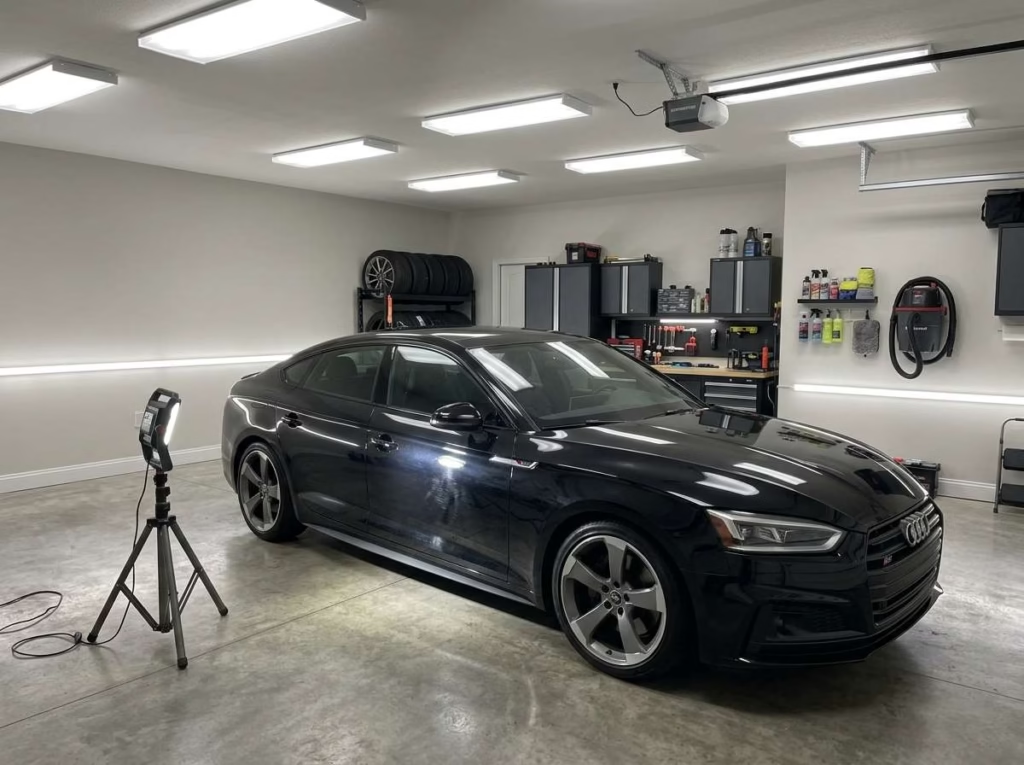
Each layer serves a different task.
Overhead Lights for General Visibility
Overhead lights make the garage safe and easy to use. They support washing, drying, cleaning, and tool work.
They also help with:
- Interior cleaning
- Towel checks
- Product labels
- Wheel cleaning
- Floor care
- General vehicle checks
Yet ceiling light often reflects straight down. This leaves vertical panels with weak contrast.
Wall-Mounted Lights for Lower Panels
Wall lights put light where ceiling fixtures cannot. They improve the view of doors, bumpers, and rocker panels.
You can mount strips in horizontal rows. This works well along the length of the car.
Vertical strips can cover more panel height. They may suit shorter walls or narrow bays.
Avoid bare LEDs at eye level. Frosted covers are more comfortable.
Tripod Lights for Paint Correction
A tripod light can move around the car. You can change its height and angle for each panel.
It works well on:
- Hoods
- Roofs
- Doors
- Fenders
- Rear quarters
- Tailgates
Place the light several feet from the paint. Then adjust the angle until defects appear.
Handheld Swirl Finder Lights
A handheld light gives you fast control. You can inspect small zones without moving a stand.
It is useful for:
- Curved panels
- Tight edges
- Before-and-after checks
- Final inspections
- Small repair areas
A good handheld light is often the cheapest useful upgrade.
Headlamps for Interiors and Tight Spaces
A headlamp follows your view. This reduces shadows inside the cabin.
It is useful under seats, around pedals, and behind wheels. It also helps in engine bays.
Use a lower setting near glass. This reduces glare.
Diffused Lights for Ceramic Coatings
Coating high spots can look like oily streaks or dark patches. A narrow spot beam may miss them.
A broad, soft light creates a larger reflection. This can make streaks easier to track.
Check the panel from several angles. Do not rely on one light position.
How Bright Should Garage Lighting Be for Car Detailing?
There is no perfect lumen number for every garage. Size, wall color, ceiling height, and layout all matter.
Focus on even coverage before extreme output.
Lumens Are Only Part of the Answer
Lumens tell you how much light a fixture produces. They do not show where that light goes.
A high-lumen fixture can still create:
- Dark corners
- Harsh glare
- Deep side shadows
- Bright hot spots
- Weak lower-panel light
Beam shape and placement matter just as much.
Why More Fixtures Can Beat One Powerful Light
Several fixtures spread light across more angles. This reduces the contrast between bright and dark zones.
More fixtures also let you build lighting zones. You can switch off part of the room during inspection.
If one fixture fails, the garage stays usable.
When a Darker Garage Helps
Fine paint flaws often appear best against a darker background. Turn off broad ceiling lights and use one focused lamp.
Aim it across the panel at a low angle. Move your head until the reflection crosses the paint.
This method can reveal marks hidden under full room light.
Avoiding Glare and Eye Fatigue
Very bright fixtures can tire your eyes. Bare LEDs are especially harsh.
Reduce glare with:
- Frosted lenses
- Separate switches
- Dimmers
- Light-colored walls
- Proper mounting height
- Indirect light
- Lower output during close work
Garage temperature also affects comfort. Bright work feels harder in a hot room. If your space doubles as an exercise area, this guide to garage heaters for home gyms explains safe heating choices for shared spaces.
What Color Temperature Is Best for Detailing Cars?
For general garage lighting, 5000K is a safe starting point. It looks clean without feeling too yellow or blue.
An adjustable inspection light gives you more control.
Why 5000K Works Well for General Garage Lighting
A 5000K fixture gives you a daylight-like tone. It works well for cleaning, tools, and most paint colors.
It also makes product labels easy to read. Many people find it less harsh than 6500K.
Warm Light for Light-Colored Paint
White and silver paint can wash out under cool, bright light. A warmer beam may create more contrast.
Try warmer light on:
- White
- Silver
- Beige
- Pale yellow
- Light metallic paint
Do not treat this as a strict rule. Paint type and viewing angle can change the result.
Cool Light for Dark-Colored Paint
Dark paint often responds well to cooler light. The crisp reflection can make swirls easier to spot.
Try cooler settings on:
- Black
- Dark blue
- Deep gray
- Dark green
- Deep red
Switch between tones if one view looks flat.
Is a High Color Rendering Index Necessary?
Color rendering index shows how true colors look. It is often shortened to CRI [color accuracy score].
High CRI helps with paint color and finish checks. It matters most during paint matching.
For swirl detection, beam angle also matters. A high score cannot fix poor placement or a weak beam.
Use CRI as one factor, not the whole decision.
The Best Garage Lighting Layout for Detailing
Your layout should reduce shadows around the full vehicle. It should also leave enough space to walk and work.
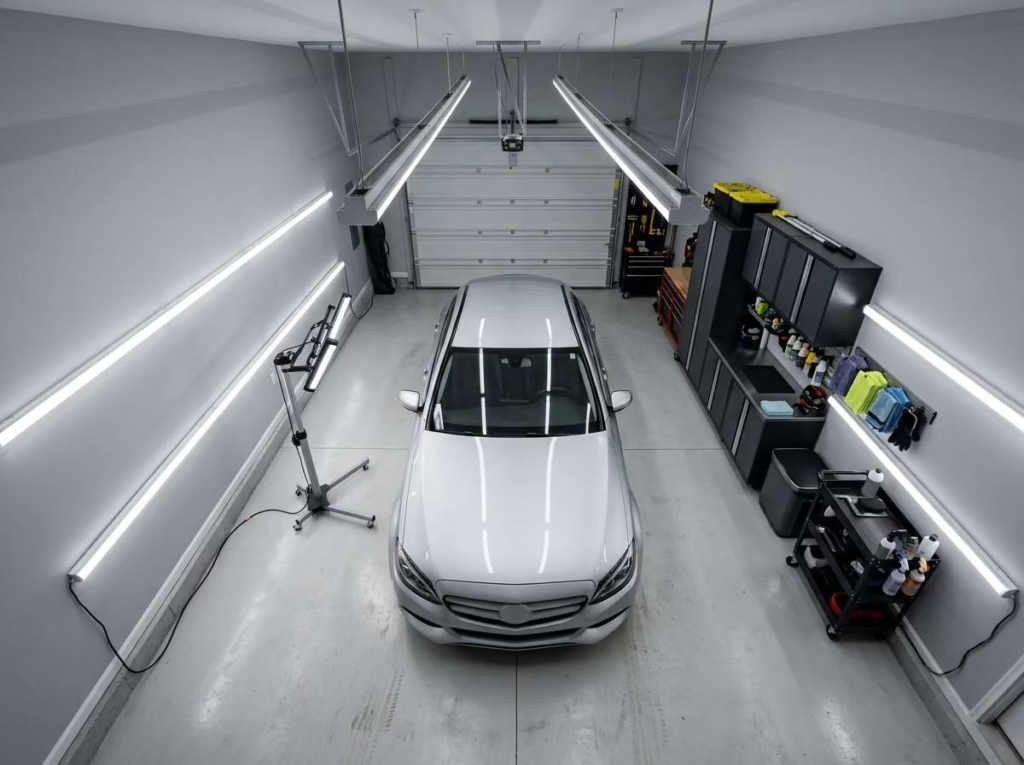
Start with temporary positions. Test them before drilling holes.
One-Car Garage Layout
A simple one-car setup can include:
- Two rows of ceiling fixtures.
- One row on each side of the car.
- Wall light on the darkest side.
- One portable inspection light.
- Separate controls for ceiling and wall lights.
Keep ceiling fixtures away from the garage door tracks. Check the open door position before mounting anything.
Two-Car Garage Layout
Treat each parking space as its own work bay.
Place ceiling rows beside each vehicle. Do not place every fixture over the center lines.
Add side lighting along the outer walls. The center may need another fixture row or movable stand.
Use separate switches for each bay. This lets you inspect one car without lighting the whole garage.
Professional Detailing Bay Layout
A work bay needs more control than a parking garage.
A strong layout may include:
- Diffused ceiling fixtures
- Side-wall light strips
- A rolling panel light
- A handheld lamp
- A headlamp
- Photo lighting
- Separate dimmable zones
Keep cables away from wet floors. Give rolling stands enough room around the car.
Where to Position Wall Lights
Wall lights should strike the side of the car without shining into your eyes.
Test different heights before permanent fitting. One low row and one higher row may work better than one bright strip.
Protect low fixtures from water and impacts. Use products rated for their planned location.
Why Separate Switches Matter
One wall switch gives you little control. Separate zones make the space far more useful.
Useful zones include:
- Ceiling lights
- Left wall
- Right wall
- Workbench
- Showroom lights
- Photo lights
You can turn off broad light during inspection. Then switch it back on for cleaning.
Best Lighting Setup by Budget
You do not need to build the full setup at once. Start with broad coverage and one inspection light.
Upgrade the weak zones as you find them.
Budget Setup
Start with:
- Affordable 5000K shop lights
- One Braun inspection light
- Your current flashlight or headlamp
- Clean, light-colored walls
- Safe extension cords
Add wall light before replacing working ceiling fixtures. Side coverage often makes the larger difference.
Mid-Range Home Detailing Setup
A balanced home setup can include:
- Six to eight Barrina T8 lights
- Two side-wall strips
- One Scangrip MultiMatch R
- Separate wall and ceiling switches
- A metal cart for movable mounting
This setup covers washing, interiors, correction, and final checks.
Professional Detailing Setup
A professional bay may use:
- Commercial diffused ceiling lights
- Wall lights on both sides
- A MultiMatch 3 on a rolling stand
- One compact handheld light
- A quality headlamp
- Separate coating lights
- Dedicated photo lighting
Spend more on safe wiring and easy service access. Downtime costs more in a working shop.
Common Garage-Lighting Mistakes to Avoid
Small planning errors can leave you with glare and dark panels. Avoid these common mistakes.
Choosing Brightness Over Light Placement
A very bright ceiling does not guarantee clear side panels. Light needs to reach the paint from useful angles.
Spread fixtures across the garage. Do not group them in the center.
Using Only Overhead Fixtures
Overhead light helps with general work. It often fails on doors and lower panels.
Add side light or a movable stand. This improves paint inspection more than another central fixture.
Assuming Hexagon Lights Reveal Every Defect
Hexagon lights produce bold reflections. Those shapes can hide fine marks.
Use them for broad light and display. Keep a focused lamp for close inspection.
Installing 6500K Lights Everywhere
A 6500K setup can feel cold and blue. It may also cause more eye strain.
Use 5000K for broad light. Save cooler tones for adjustable inspection lamps.
Mounting Bare LEDs at Eye Level
Bare LEDs can be painful to face. Wall lights need covers or safe mounting angles.
Use frosted lenses where possible. Test the sitting, standing, and kneeling view.
Ignoring Cord Management
Loose cords create trip risks. They also collect dust and spray.
Use clips, channels, and fixed routes. Keep plugs and connectors away from wet areas.
Relying on One Light for Every Job
Paint correction needs contrast. Coating work often needs broad, soft light.
Interior work needs a beam that follows you. Photography has different needs again.
Build your setup in layers.
Failing to Check Electrical Capacity
Linked fixtures still draw power. Too many lights on one circuit can cause trouble.
Follow each product’s linking limit. Use a qualified electrician for permanent wiring.
Cold garages can also affect batteries and working comfort. If your space lacks insulation, read this guide to garage heaters for an uninsulated garage before adding heat.
How to Improve Existing Garage Lighting Without Rebuilding Everything
You can fix many lighting problems without replacing the full system.
Start with simple, low-cost changes.
Paint Walls and Ceilings a Light Neutral Color
White or light gray walls reflect more light. Dark walls absorb it.
A matte or low-sheen finish can reduce harsh glare. It also creates a clean background for inspection.
Add Side Lights Before Replacing Every Ceiling Fixture
If the room is bright but doors look dark, the ceiling is not the main issue.
Add temporary side lighting first. If it works, install a permanent wall fixture later.
Put Existing Lights on Separate Circuits or Switches
Lighting zones let you change the room for each task.
You can use full light for cleaning. Then switch off the ceiling for paint inspection.
Add a Portable Inspection Light
A portable lamp gives you the fastest improvement. It lets you aim light at the exact problem area.
Start with a budget handheld model. Upgrade if beam size or battery time becomes a limit.
Use a Rolling Cart as a Light Stand
A metal cart can hold a magnetic work light. You can move both light and tools around the car.
Lock the wheels during use. Keep the cart clear of hoses and power cords.
Test Temporary Positions Before Permanent Installation
Use clamps, stands, or removable hooks to test placement.
Check the results while:
- Standing
- Kneeling
- Polishing
- Cleaning wheels
- Opening doors
- Raising the garage door
A position that looks good from the entrance may fail during real work.
Garage Lighting for Paint Correction vs. Ceramic Coating
Paint correction and coating work need different reflections. One harsh light may not serve both tasks.
Use direct light for defects. Use broad light for streaks and high spots.
Best Lighting for Paint Correction
Paint correction needs clear contrast.
A useful correction light should offer:
- A focused beam
- Adjustable height
- Several viewing angles
- Controlled brightness
- More than one light color
- Stable placement
Darken the room if the marks disappear under broad light.
Best Lighting for Ceramic-Coating Application
Coating checks need a larger reflection. Wide, diffused light often works best.
Move around the panel and look from low angles. Check panel edges, body lines, and lower sections.
Do not wait too long to inspect. Follow the coating maker’s wipe and cure guidance.
Best Lighting for Final Inspection
Use more than one light source before calling the job done.
A good final check includes:
- Focused light for swirls and haze.
- Diffused light for residue and coating streaks.
- Side light for lower panels.
- Outdoor light when conditions allow.
- A second walk-around after the paint rests.
Check mirrors, handles, pillars, and panel edges. These spots are easy to miss.
Are Hexagon Garage Lights Worth It for Detailing?
Hexagon lights can be worth it for style and broad light. They are less convincing as your main correction tool.
Your goal should guide the choice.
When Hexagon Lights Make Sense
They suit garages used for:
- Customer handovers
- Vehicle photos
- Videos
- Social media
- Showroom display
- Brand presentation
- Broad cleaning light
A neat grid can make a small studio look more polished.
When Conventional Shop Lights Are Better
Standard shop lights usually cost less. They are also easier to place and replace.
They may offer:
- Lower setup cost
- Simpler wiring
- Easier repairs
- Flexible spacing
- Softer reflections
- Less visual clutter on paint
They are the more practical choice for many home garages.
The Better Alternative for Most Home Garages
Spend your lighting budget in this order:
- Broad ceiling coverage
- Side-wall lighting
- A movable inspection light
- A handheld light or headlamp
- Decorative lighting
This order fixes real work problems first.
Frequently Asked Questions
What is the best garage lighting for car detailing?
The best setup combines 5000K ceiling lights, side-wall fixtures, and a movable inspection light. Ceiling lights support general work. Side lights brighten doors and lower panels. A focused inspection lamp reveals swirls, haze, and scratches.
Is 4000K or 5000K better for car detailing?
Both can work. However, 5000K offers a clean, neutral tone for most detailing tasks. A 4000K light feels warmer and may be more comfortable. Adjustable inspection lights give you better control than either fixed choice.
Is 6500K too bright for a detailing garage?
Kelvin does not measure brightness. It measures light color. A 6500K fixture can look harsh or blue, even with moderate output. Many people prefer 5000K for broad garage lighting.
How many lumens do I need for a two-car detailing garage?
There is no fixed number for every two-car space. Ceiling height, wall color, fixture spacing, and beam shape change the result. Aim for even coverage. Use several fixtures instead of one intense central light.
Do I need high color accuracy for paint correction?
High color accuracy helps you judge paint and finish. Yet it does not guarantee strong defect visibility. Beam angle, light size, and placement also matter. A high color score cannot fix a poor lighting layout.
Are LED shop lights good for detailing cars?
Yes. LED shop lights work well for washing, drying, cleaning, and tool use. They also produce less heat than halogen fixtures. Pair them with a focused inspection light for paint correction.
What type of light reveals swirl marks?
A focused, movable light works best. Aim it at the paint from an angle. Then move your head until the reflection crosses the panel. Turning off broad ceiling lights may improve contrast.
Are hexagon lights good for paint correction?
Hexagon lights provide strong general light. However, their grid can create distracting reflections. Use them for presentation and broad coverage. Keep a separate inspection light for correction work.
Do detailing lights help reveal ceramic-coating high spots?
Yes, but beam type matters. A broad, diffused light can show streaks better than a narrow spot beam. Check the panel from several angles and light positions.
Should garage lights be installed on the walls?
Wall lights often improve detailing visibility. They brighten doors, bumpers, wheels, and rocker panels. Use covered fixtures and avoid placing bare LEDs at eye level.
Is a tripod light better than a handheld inspection light?
A tripod light covers more paint and gives stable placement. A handheld light works better on tight curves and small areas. Serious correction work often benefits from both.
Can I use a regular flashlight for paint correction?
Yes, if it has a clean, focused beam. A regular flashlight can reveal swirls and scratches. Dedicated lights add better mounting, output control, and light color options.
Should detailing lights be dimmable?
Dimming is useful but not required. Lower light can improve contrast during paint checks. Higher output helps with cleaning and interior work. Separate lighting zones offer similar control.
Final Verdict
The best garage lighting for car detailing is a layered system, not one bright fixture.
Start with even ceiling coverage. Add side-wall light for doors and lower panels. Then use a movable lamp for correction and final checks.
The strongest options for each role are:
- Best overall: Scangrip MultiMatch R
- Best budget: Braun Color Match Inspection Light
- Best overhead option: Barrina T8 5000K Shop Lights
- Best handheld option: Scangrip SunMatch 4
- Best professional option: Scangrip MultiMatch 3
- Best for interiors: Scangrip I-Match Headlamp
- Best for presentation: LZHOME 5000K Hexagon Lights
If your budget is tight, skip the flashy ceiling grid. Fix dark side panels first. One well-placed inspection light can help more than a ceiling full of glare.