
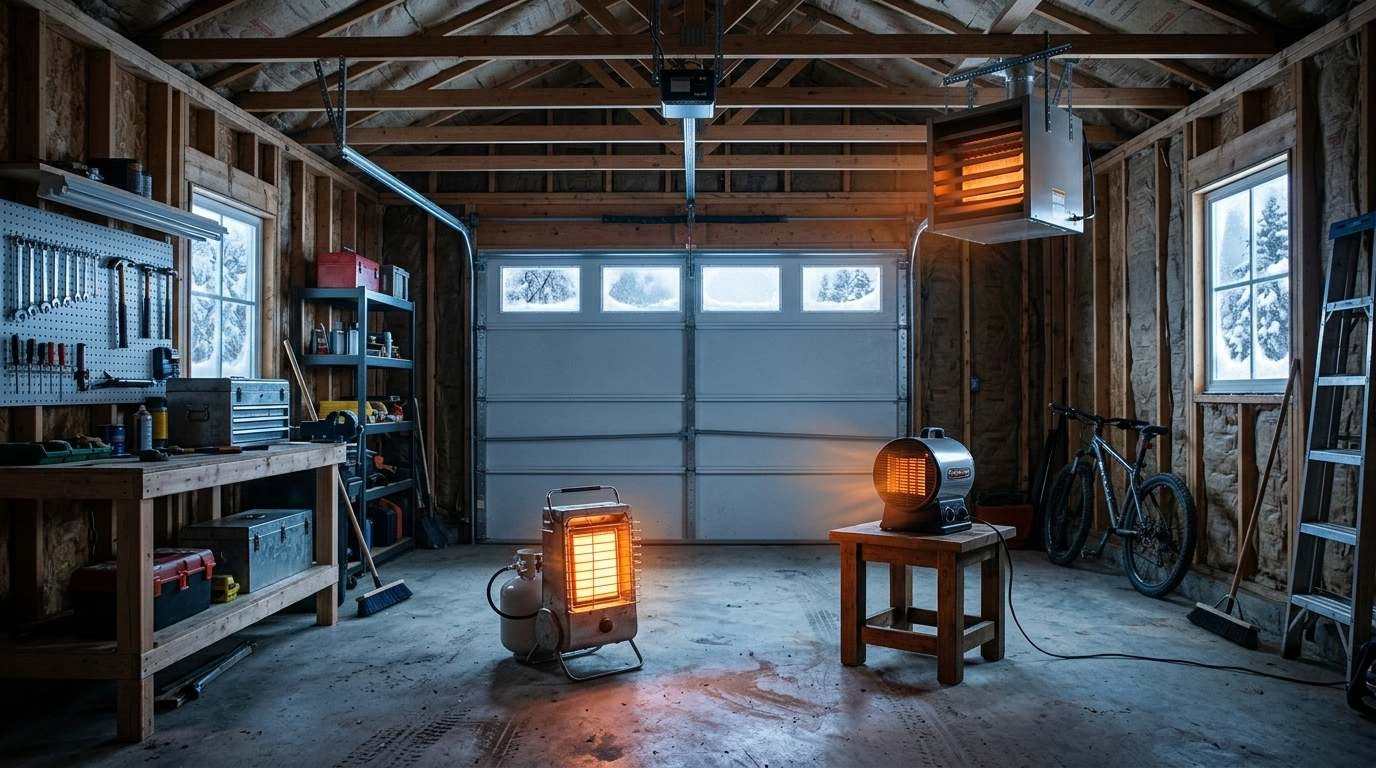
Finding the best garage heater for an uninsulated garage is not just about buying the highest BTU model. You need enough heat for the space, but you must also consider drafts, noise, fumes, power needs, and running costs.
For most one-car garages, the Mr. Heater Big Buddy offers the best balance. It is portable, quiet, and makes a cold work area feel warmer fast. Large or bitterly cold garages need more power. In those spaces, a forced-air propane heater or vented gas unit makes more sense.
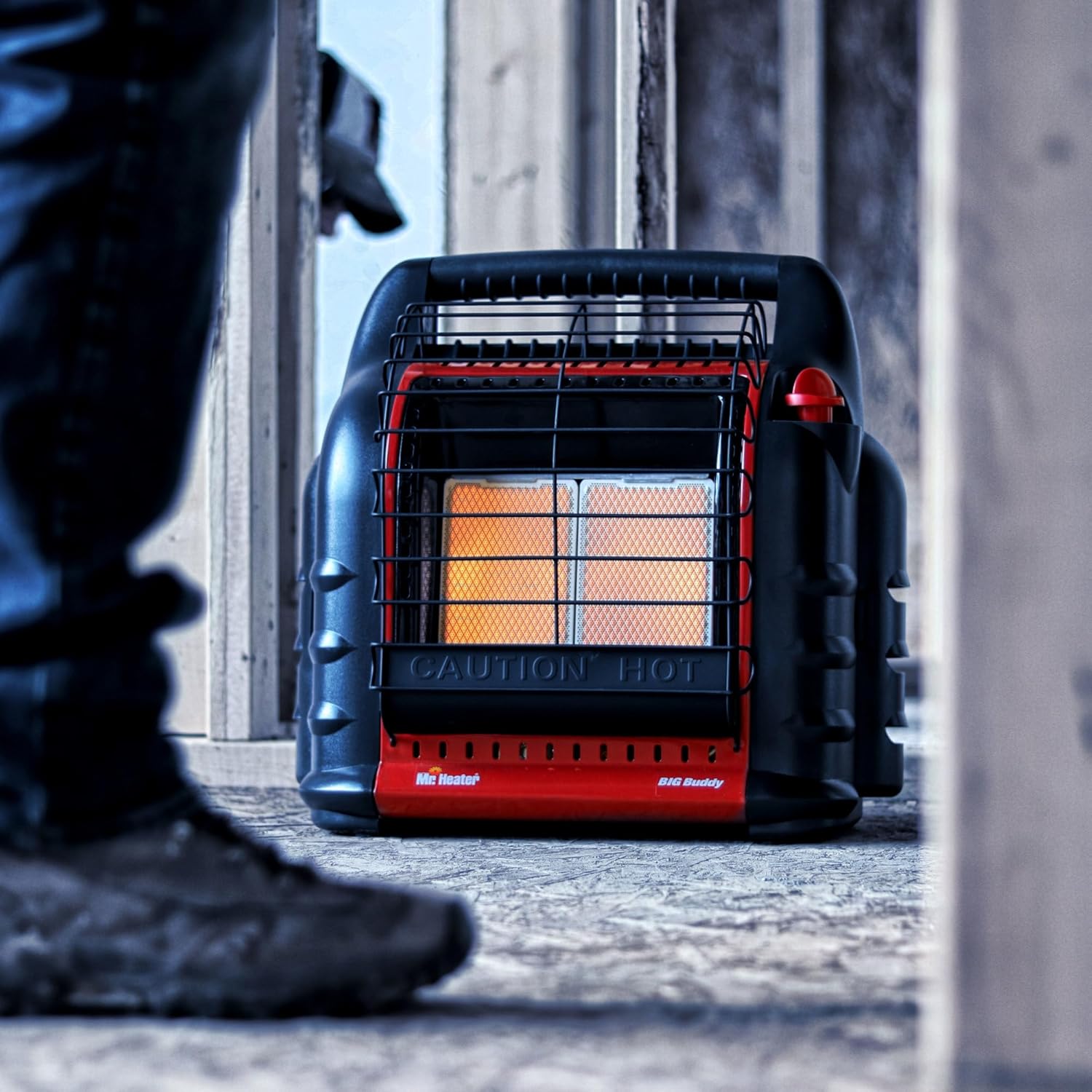
This guide ranks seven heaters by real use case. It also shows where each one falls short. That matters because no heater can fully fix an unsealed, uninsulated building.
Fuel-burning heaters need fresh air. Use a working carbon monoxide detector and follow all clearance rules.
The Best Garage Heaters for Uninsulated Garages at a Glance
Heater coverage claims deserve some caution. Brands often base them on spaces with decent insulation and normal ceiling heights.
An uninsulated garage loses heat through its walls, roof, door, and small gaps. You may need far more heat than the box suggests.
Before choosing, decide what “warm” means to you.
Do you want to heat the whole building? Or do you just need warm hands at a bench? That one choice can save you money and frustration.
How We Ranked These Garage Heaters
A large heat rating does not make a heater the best choice for every garage.
We looked at how these units work in real shops. We also considered common complaints, setup needs, and limits. The final order reflects usefulness, not raw power alone.
Real-World Heating Performance
The first question was simple: Does the heater make the garage usable?
We considered:
- How fast it warms a cold space
- Whether it heats the room or only the user
- How well it deals with drafts
- How it performs in deep winter
- Whether its coverage claim seems realistic
A small radiant heater may feel great from six feet away. Yet the far side of the garage may stay cold. A forced-air unit can warm more space, but it may create too much noise.
Those differences shape the rankings.
Practical Ownership
A heater must fit the way you use your garage.
We compared:
- Noise
- Portability
- Fuel access
- Electrical needs
- Installation work
- Thermostat control
- Storage needs
- Reported reliability
- Likely running costs
For example, a 240V heater may be clean and quiet. It still makes little sense if your garage only has standard outlets.
The same rule applies to natural gas. A gas heater can work well for daily use. Yet the gas line and vent may cost more than the heater.
Safety and Comfort
Heat is not the only concern in a closed garage.
Fuel-burning heaters can produce carbon monoxide. They can also add water vapor to the air. That moisture may settle on cold tools, doors, and vehicles.
Electric models avoid combustion fumes. However, their wiring must match the power draw.
We considered:
- Fresh-air needs
- Carbon monoxide concerns
- Moisture
- Surface temperatures
- Required safety clearances
- Electrical load
- Fuel storage
- Noise during long projects
Your results will still vary. Garage size, ceiling height, wind, and outdoor temperature all matter.
1. Mr. Heater Big Buddy MH18B: Best Overall
The Mr. Heater Big Buddy is the best balanced choice for most one-car garages. It provides useful radiant heat without the roar of a torpedo heater.
It produces up to 18,000 BTU. That is enough to improve comfort in many small garages. However, it may not heat every corner to room temperature.
Check PriceIts main features include:
- Three heat settings
- Portable propane operation
- Tip-over shutoff
- Low-oxygen shutoff
- Optional use with a larger propane tank
- Advertised coverage near 450 square feet
Why Owners Recommend It
Long-term users often praise its simple design. It starts fast and sends heat toward the work area.
In a one-car garage, that heat can make a major difference. You may begin the day in a coat. After the heater runs, a lighter layer may feel fine.
It is also quieter than forced-air propane heaters. You can hold a talk, hear the radio, or focus on detailed work.
Many owners connect it to a 20-pound propane tank. That can reduce how often you change small cylinders. You must use approved hoses, filters, and regulators for your exact setup.
What It Does Best
The Big Buddy shines during short or medium work sessions.
It suits tasks such as:
- Brake work
- Tool repair
- Wood projects
- Weekend car care
- Bench work
- Cleaning and garage reorganization
Radiant heat warms you and nearby surfaces. You feel the heat before all the air gets warm. That helps in a drafty space.
Its portable size also gives you options. You can move it near your current project instead of heating empty corners.
If you are reorganizing your shop, keep a safe gap around the heater. Use closed storage for items that should stay away from heat. Our guide to heavy-duty garage storage cabinets can help you plan that setup.
Downsides to Know
Propane creates water vapor as it burns. In a cold garage, that water can form on metal surfaces.
This may lead to:
- Wet windows
- Damp tools
- Surface rust
- Condensation on the garage door
- A clammy feeling after long use
Ventilation can reduce this issue. It also helps manage combustion gases. Crack a door or window as directed by the heater maker.
The Big Buddy is not ideal for a large two-car garage in deep cold. It may warm your work zone while the rest stays chilly.
Keep propane tanks upright and secure. Never place fuel, paint, oily rags, or spray cans close to the heater.
Bottom line: Choose the Big Buddy for a one-car garage, occasional use, or portable spot heat. It offers a good mix of warmth, low noise, and easy setup.
2. DeWalt DXH60FAV: Best for Large Uninsulated Garages

The DeWalt DXH60FAV takes a much more forceful approach. It burns propane and pushes hot air through the garage.
Its 60,000 BTU output can warm a large space fast. That makes it useful when a small radiant unit cannot keep up.
Check PriceKey details include:
- 60,000 BTU output
- Forced-air heat
- Propane fuel
- Advertised coverage near 1,500 square feet
- Fast warmup
- Portable jobsite design
Why Owners Recommend It
Owners tend to choose this style for one reason: speed.
A torpedo heater can raise the temperature in a cold garage within a short work session. That matters when you do not want to wait hours before touching metal tools.
Similar forced-air units are common in cold northern areas. They can fight drafts better than low-power electric heaters. They also spread heat beyond one fixed workbench.
Some garage owners report large temperature gains within half an hour. Results depend on outdoor cold, wind, air leaks, and garage volume.
What It Does Best
This DeWalt works best for rapid warmup.
It suits:
- Large two-car garages
- Detached workshops
- High ceilings
- Very cold mornings
- Short repair sessions
- Spaces with major air leaks
The fan moves warm air through the building. That can reduce cold pockets and warm more surfaces.
It also offers high heat without new electrical wiring. You still need electricity for the fan, but propane provides the heat.
Downsides to Know
This heater is loud. Think jobsite equipment, not a soft household fan.
The noise can affect:
- Conversation
- Phone calls
- Music
- Video recording
- Work that needs close focus
Combustion also takes place inside the garage. You need fresh air and a working carbon monoxide detector.
Keep it far from:
- Gasoline
- Paint thinner
- Aerosol cans
- Sawdust piles
- Cardboard
- Oily cloths
- Propane cylinders
The heater may show a brief flame during startup. Follow the operating steps and clearance rules exactly.
It is also too powerful for many small garages. The heat can feel harsh at close range. Frequent short cycles may also make comfort less steady.
Bottom line: Pick the DeWalt if you need fast heat in a large garage. Skip it if quiet work matters more than speed.
3. Dr. Infrared Heater DR-988: Best Portable Electric Heater

The Dr. Infrared DR-988 gives you electric heat without propane tanks or combustion fumes. It is a strong choice if your garage already has a suitable 240V circuit.
It draws 5,600 watts. That equals about 19,000 BTU per hour. The conversion makes it easier to compare with propane models.
Check PriceKey details include:
- 5,600W output
- About 19,000 BTU per hour
- 240V power
- Fan-assisted heat
- Portable frame
- Thermostat control
Why Owners Recommend It
Owners like the clean setup. You plug it into the right outlet, set the controls, and let it run.
There is no open combustion. You also avoid propane storage and added water vapor.
The fan helps move warm air around smaller garages. Its thermostat can hold a more stable temperature than a basic radiant heater.
This model makes the most sense in a garage near 400 to 500 square feet. Some air sealing or insulation helps a great deal.
The Catch With Electric Heat
The DR-988 does not use a standard wall outlet.
It needs 240V power and the correct circuit. Your garage panel must also have enough capacity.
Before using it, check:
- Circuit voltage
- Breaker size
- Outlet type
- Wire size
- Panel capacity
- Heater plug design
Do not use a homemade adapter. Do not assume a dryer outlet will work. Plug and circuit types can differ.
If you need new wiring, use a qualified electrician. The added cost may turn a low-priced heater into a larger project.
Electric heat also faces a hard limit. A 5,600W model cannot create more heat by running longer. It will struggle if cold air pours through the garage door.
Bottom line: Choose the DR-988 for a smaller garage with 240V power. It is a good fit when you want steady heat without combustion fumes.
4. Fahrenheat FUH54: Best Permanent Ceiling-Mount Electric Heater

The Fahrenheat FUH54 is made for a more permanent setup. It mounts high, stays out of the way, and provides steady electric heat.
It produces 5,000 watts. That equals about 17,000 BTU per hour.
Check PriceIts main details include:
- 5,000W output
- About 17,000 BTU per hour
- 240V power
- Ceiling or wall mounting
- Adjustable airflow
- Built-in thermostat
Why Owners Like the Permanent Design
A ceiling-mounted heater does not take up floor space. It also avoids cords near your work area.
That makes it useful in a packed garage. You can keep aisles clear and place shelves where portable heaters might sit.
If storage space is tight, our guide to heavy-duty shelves for garage storage offers ideas for using wall space well.
The FUH54 also removes the need to carry propane tanks. It does not add combustion moisture to the room.
You can aim the airflow toward the main work zone. This helps you use its limited output more wisely.
Installation and Performance Limits
This heater needs a dedicated 240V circuit. It also needs the right breaker and wire size.
Most owners should use a qualified electrician for the job. A proper mount matters too. The heater must stay secure and meet all clearance rules.
Its output suits a small garage better than a large drafty shop. In severe cold, it may run for long periods without reaching your target temperature.
That constant use can raise your power bill. Local electricity rates will shape the true cost.
The built-in thermostat also reads the air near the unit. Since heat rises, the ceiling area may warm before your workbench does. Heater angle and placement can improve this.
Bottom line: Choose the FUH54 if you want clean, permanent heat in a smaller garage. It performs best with some insulation and air sealing.
5. Modine Hot Dawg HD45A: Best Permanent Natural Gas Heater

The Modine Hot Dawg HD45A is built for frequent garage use. It mounts overhead and sends a strong flow of warm air across the space.
Its 45,000 BTU output suits many two-car garages. Yet the correct size depends on your local winter and heat loss.
Check PriceKey details include:
- 45,000 BTU output
- Natural gas fuel
- Ceiling-mounted design
- Vented combustion
- Forced-air heat
- Advertised coverage near 1,000 square feet
Why Owners Recommend It
This type of heater can warm a two-car garage in a short time. It also spreads heat better than a small radiant unit.
The ceiling mount keeps the floor open. You do not need to move it each time you start a project.
Natural gas may also cost less than electric resistance heat. That can matter if you use the garage every day.
The vented design sends combustion gases outside. This is a major comfort benefit over an unvented propane heater. Correct installation remains essential.
Why Correct Sizing Matters
A heater can be too small or too large.
An undersized unit may:
- Run without stopping
- Warm the garage too slowly
- Fail during the coldest weather
- Use more fuel than expected
- Leave far corners cold
An oversized model may heat the air too fast. It can shut off before nearby surfaces warm. That may create uneven temperatures.
A proper heat-loss check considers:
- Floor area
- Ceiling height
- Wall type
- Roof insulation
- Garage-door size
- Outdoor winter lows
- Air leakage
- Your target temperature
For a permanent setup, ask a qualified installer to size the unit. A simple square-foot claim is not enough.
The Real Cost Is Installation
The purchase price tells only part of the story.
You may also need:
- A new gas line
- Vent pipe
- Roof or wall work
- Electrical service
- A thermostat
- Mounting hardware
- Permits
- Professional labor
The full setup can cost far more than a portable heater. It makes the most sense when you use the garage often.
Natural gas access is another limit. Extending a line to a detached garage may not be practical.
Bottom line: Choose the Modine for regular heating in a larger garage. It suits homeowners who want a fixed, long-term system.
6. Briza Infrared Heater: Best Quiet Spot Heater

The Briza is a personal heater, not a full garage furnace. That is not a flaw if you use it for the right task.
It produces 1,500 watts, or about 5,100 BTU per hour. It runs from a standard 120V outlet.
Check PriceKey details include:
- 1,500W output
- About 5,100 BTU per hour
- Standard 120V power
- Carbon infrared heating
- Silent operation
- Directional warmth
Why Infrared Heat Feels Different
A fan heater warms the air. An infrared heater warms people and surfaces in its path.
You can feel infrared heat before the garage air gets warm. This makes it useful in a drafty space.
Think of sunlight on a cold day. The air may feel cool, but the light warms your skin. Infrared heat works in a similar way.
The effect drops when you step out of its path. Placement matters more than room size.
What Owners Like
The biggest benefit is silence.
There is no loud fan or torpedo roar. You can work, talk, or listen to music without added noise.
It also gives you:
- Fast personal warmth
- Compact storage
- Simple 120V power
- No propane tank
- No combustion fumes
- Easy workbench placement
It works well while you sit or stand in one place. Tasks such as sharpening tools or small repairs are a good match.
A steady work zone is easier to plan when your tools stay organized. A five-tier heavy-duty shelving unit can keep stored items clear of the heater’s path.
Its Biggest Limitation
At 1,500 watts, the Briza cannot create much total heat.
It may warm your face, hands, and upper body. Yet the garage air may stay cold. The concrete floor and metal tools may also remain chilly.
It works poorly if you move around often. Each time you leave the heating path, you lose much of the benefit.
Do not treat it as a whole-garage solution. Use it as personal heat or as a second heater near your bench.
Bottom line: Choose the Briza if you need silent warmth in one spot. Do not expect it to heat a large uninsulated room.
7. Heat Hog 9,000 BTU: Best Budget Portable Heater

The Heat Hog offers compact propane heat for small garages and work areas. Its wide heating angle is useful, but owner reports appear mixed.
That uneven feedback keeps it at the bottom of this list.
Check PriceKey details include:
- 9,000 BTU output
- Portable radiant heat
- Propane fuel
- Wide heating angle
- Advertised coverage near 225 square feet
- Compact cylinder position
Why Some Owners Like It
The Heat Hog is small and easy to move. It can deliver quick warmth near a workbench or vehicle.
Its broad heating angle spreads radiant heat across a wider zone. That may feel less narrow than some compact propane heaters.
Other useful traits include:
- Simple portable design
- Fast local heat
- Compact storage
- No 240V circuit
- Good size for short projects
It makes the most sense in a small one-car garage. You will get better results if you position it near your task.
Why It Ranks Last
Reliability reports are not consistent.
Some users like the heater. Others report repeated shutdowns or weak performance on low heat.
A safety shutoff can trip for several reasons. Airflow, fuel supply, sensor position, and unit condition may all play a role. Still, frequent shutdowns make a heater hard to trust during a project.
Its 9,000 BTU output also limits its use. It may warm a person and a small area. It will not heat most two-car garages well.
If the Heat Hog and Big Buddy cost about the same, the Big Buddy is the better all-around choice. It offers more output and has stronger long-term feedback.
Bottom line: Consider the Heat Hog for small spaces and short sessions. Be aware that its reliability record appears mixed.
What Type of Heater Works Best in an Uninsulated Garage?
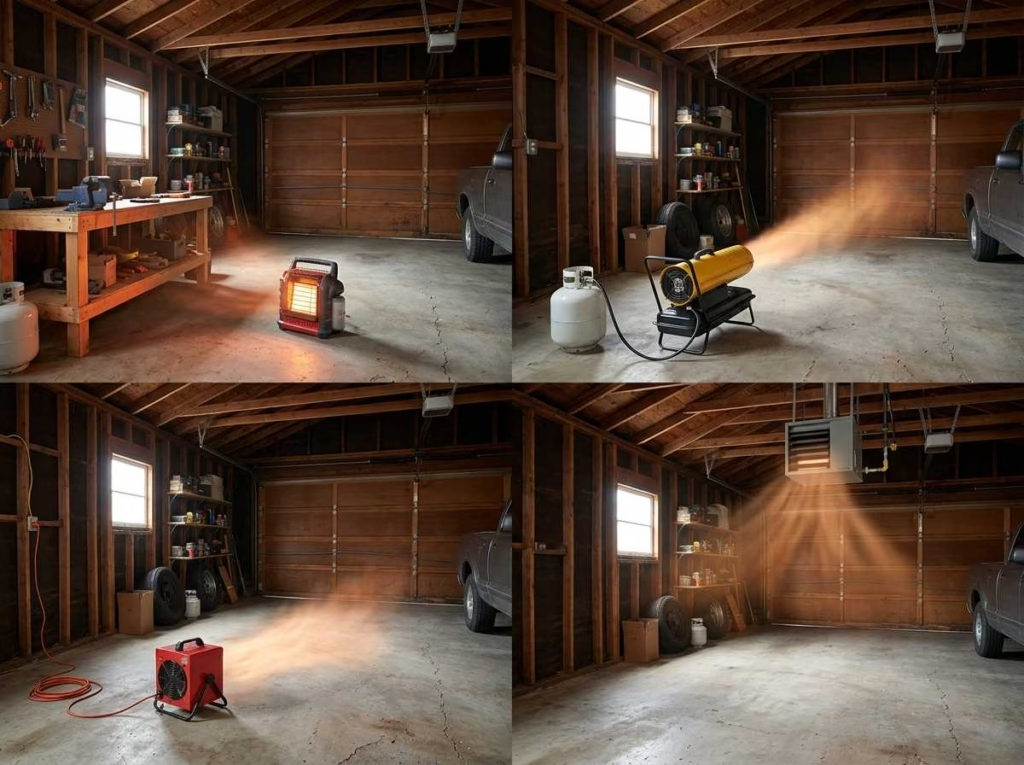
The right heater depends on how much space you want to warm. Fuel access and work habits matter too.
Here is how the main types compare.
Propane Radiant Heaters
Propane radiant heaters warm you and nearby items first.
They are best for:
- One-car garages
- Portable use
- Workbench tasks
- Garages without 240V power
- Short or medium work sessions
Their main drawback is indoor combustion. They need fresh air and a carbon monoxide detector.
They also add moisture. That can be a concern if you store bare metal tools or a classic car.
Propane Forced-Air Heaters
Forced-air propane heaters produce a large amount of heat fast.
They suit:
- Large garages
- Very cold weather
- High ceilings
- Quick warmup
- Short work periods
The fan spreads heat across more space. However, it also creates noise and moves dust.
Ventilation is required. Keep flammable items far from the heater.
240V Electric Heaters
A 240V unit provides clean heat at the point of use. It does not release combustion gases inside the garage.
It works best for:
- Attached garages
- Smaller spaces
- Frequent use
- Owners with existing 240V power
- Garages with some insulation
The main limit is electrical capacity. Installation may require new wiring and a dedicated breaker.
Electric heat can also cost more per unit of heat. Your local rate decides the real cost.
Infrared Electric Heaters
A 120V infrared unit focuses on the person, not the room.
It works well for:
- One fixed bench
- Quiet projects
- Small repair zones
- Supplemental heat
- Garages with standard outlets
Its low output will not overcome major heat loss. It is best seen as wearable warmth without the clothing.
Vented Natural Gas Heaters
A vented gas heater suits regular whole-garage heating.
It performs best in:
- Two-car garages
- Daily-use workshops
- Cold climates
- Permanent setups
- Spaces with natural gas access
The high setup cost is the main barrier. You need safe venting and professional gas work.
For long-term use, the better control and lower fuel cost may justify that expense.
How Much Heat Does an Uninsulated Garage Need?
Square footage is only the starting point.
A garage with an eight-foot ceiling needs less heat than one with a 14-foot ceiling. Both may have the same floor area.
Heat demand also changes with:
- Outdoor temperature
- Wind
- Door size
- Door seals
- Wall construction
- Roof insulation
- Number of windows
- Garage location
- Your comfort goal
As a rough starting point:
- Small one-car garage: 15,000 to 25,000 BTU
- Typical two-car garage: 30,000 to 50,000 BTU
- Large or very drafty garage: 50,000 BTU or more
- Personal spot heat: A 1,500W radiant unit may work
These are planning ranges, not final sizing rules.
A heater rated for 500 square feet may work well in a finished room. The same heater may fall behind in a bare garage.
Your target temperature also matters. Raising a garage from 25°F to 45°F takes less heat than raising it to 68°F.
For tools and short projects, 45°F to 55°F may feel fine with warm clothes. You may not need normal living-room comfort.
Permanent systems deserve a proper heat-loss check. That gives you a better size than a broad coverage claim.
Should You Insulate the Garage Before Buying a Bigger Heater?
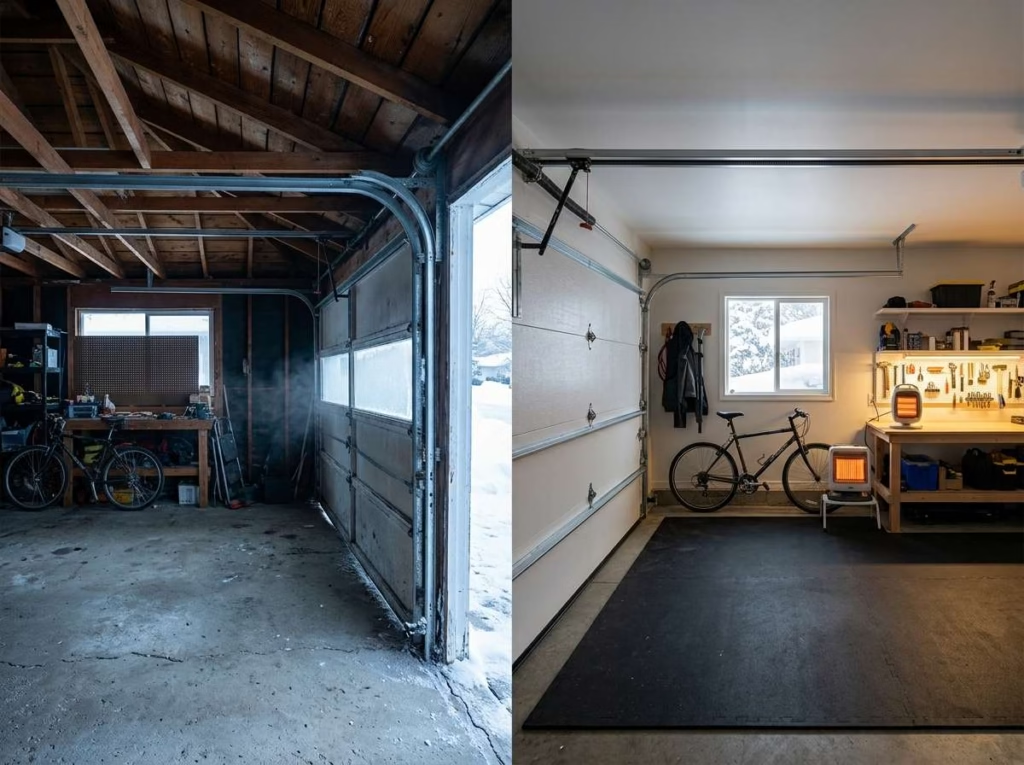
Yes, if the work fits your home and budget.
Basic insulation keeps heat in after the heater creates it. That can improve comfort more than a small jump in heater size.
Start with these steps:
- Seal gaps around the garage door.
- Replace worn bottom weatherstripping.
- Seal the door sides and top.
- Insulate the ceiling or attic.
- Add garage-door insulation.
- Seal wall holes and pipe gaps.
- Insulate open wall cavities where practical.
Why the Ceiling Comes First
Warm air rises. An uninsulated ceiling gives that heat an easy escape path.
Ceiling insulation can slow heat loss and reduce cold drafts. It also helps the garage stay cooler in summer.
Air sealing should come first. Insulation works poorly when outdoor air flows around it.
Check common leak points such as:
- Garage-door corners
- Attic hatches
- Window frames
- Wall outlets
- Pipe holes
- Gaps around vents
- The door leading into the home
Do not block required vents. Combustion heaters still need the fresh air listed in their instructions.
A larger heater is not always the smart fix. You may get better results by creating a smaller heat zone.
Try this approach:
- Hang an insulated shop curtain around your bench.
- Aim a radiant heater into that zone.
- Place a rubber mat over cold concrete.
- Wear insulated boots.
- Close unused storage areas.
- Heat the person before the whole building.
This setup can make a large garage feel usable with much less heat.
Propane vs. Electric vs. Natural Gas: Which Is Cheapest?
There is no single winner for every home. Local fuel prices can change the answer.
Your usage pattern matters just as much. A cheap fuel can still cost more if the heater wastes heat.
Propane offers high output with a low setup cost. It works well for occasional use. Tank refills and moisture are the main drawbacks.
Electric heat is simple and clean at the heater. Yet high-output models need 240V power. Electric rates can also make long sessions costly.
Natural gas often suits frequent heating. Fuel costs may be lower, but the gas line and vent raise the starting cost.
Infrared electric heat can be cheap for one person. You heat the work zone instead of all the garage air.
A useful rule is:
- Occasional use: Portable propane
- One workbench: 120V infrared
- Frequent small-garage use: 240V electric
- Frequent large-garage use: Vented natural gas
- Fast large-space warmup: Forced-air propane
Also consider how long the heat remains after shutdown. An uninsulated garage cools fast. Long heating sessions may waste energy if the building cannot hold warmth.
Garage Heater Safety Checklist
A garage may contain fuel, paint, dust, and hot tools. Treat heater placement as part of the setup, not an afterthought.
Use this checklist:
- Install a working carbon monoxide detector.
- Add fresh air for fuel-burning heaters.
- Follow the heater’s clearance rules.
- Keep gasoline far from all heat sources.
- Store paint and solvents in safe cabinets.
- Remove oily rags from the heating zone.
- Keep sawdust away from open combustion.
- Check propane hoses for damage.
- Use approved regulators and fittings.
- Keep propane cylinders upright.
- Do not use damaged plugs or cords.
- Avoid extension cords with high-watt heaters.
- Use the correct breaker and wire size.
- Keep heaters away from moving vehicles.
- Never leave a portable heater unattended.
Safety shutoffs provide extra protection. They do not replace fresh air, safe placement, or proper use.
A carbon monoxide detector should also have fresh batteries. Test it on a regular schedule.
Permanent electrical, gas, and vent work should meet local rules. Use qualified help if you are not trained for that work.
Which Garage Heater Should You Buy?
Choose your heater based on space, fuel, and how you work.
- Choose the Mr. Heater Big Buddy for portable one-car garage heat.
- Choose the DeWalt DXH60FAV for fast heat in a large space.
- Choose the Dr. Infrared DR-988 for portable 240V electric heat.
- Choose the Fahrenheat FUH54 for a fixed electric setup.
- Choose the Modine Hot Dawg HD45A for regular whole-garage heating.
- Choose the Briza Infrared for quiet heat at one bench.
- Choose the Heat Hog 9,000 for compact propane heat with some risk.
For most occasional users, the Big Buddy is the top overall choice. It offers enough heat for many one-car garages without extreme noise.
The DeWalt is better for large, cold spaces. The Modine is the stronger long-term pick for regular use.
Your best option may also be a mixed setup. Use a main heater to raise the air temperature. Then use a small radiant unit near your bench.
Frequently Asked Questions
What is the best garage heater for an uninsulated garage?
The Mr. Heater Big Buddy is the best balanced portable choice for many one-car garages. It provides up to 18,000 BTU and directs heat toward your work area.
For a large garage, the DeWalt DXH60FAV offers much more power. For daily use, a vented Modine gas heater may provide better long-term comfort.
Can a 1,500W heater warm an uninsulated garage?
A 1,500W heater can warm one person or a small work zone. It will rarely heat a full uninsulated garage well.
Its output is about 5,100 BTU per hour. Drafts may remove that heat almost as fast as the unit makes it.
Place it close to your bench for the best result.
Is propane or electric heat better for an uninsulated garage?
Propane gives you more heat without major wiring work. It suits quick warmup and occasional use.
Electric heat avoids combustion fumes and added moisture. High-output electric heaters need 240V power.
Choose propane for portable high heat. Choose electric for clean, steady heat where proper power is present.
How many BTUs do I need for a two-car uninsulated garage?
Many two-car uninsulated garages need about 30,000 to 50,000 BTU. Deep cold, high ceilings, and severe drafts may raise that need.
This range is only a starting point. Permanent heaters should be sized with a heat-loss check.
Is it safe to use a propane heater in a garage?
It can be used only if the heater is approved for that setting. You must follow its ventilation and clearance rules.
Use a carbon monoxide detector. Keep fuel, paint, dust, and other flammable items far away.
Never assume a low-oxygen shutoff makes poor ventilation safe.
Why does a propane heater cause condensation?
Burning propane creates water vapor. That vapor enters the garage air.
When warm, damp air touches cold metal, water may form. You may see it on tools, windows, doors, and vehicles.
Fresh air and shorter heating sessions can help. Insulation also keeps surfaces warmer.
Will insulating the garage door make a difference?
Yes. Garage-door insulation can slow heat loss through a large surface.
New seals may help even more if the current door has wide gaps. Ceiling insulation may also produce a larger gain.
Start by fixing visible air leaks. Then add insulation where heat escapes most.
What is the cheapest way to heat an uninsulated garage?
Heat a small work zone instead of the whole room.
Seal door gaps, use a radiant heater near the bench, and place a mat over the concrete. Insulated boots and layered clothes also reduce the heat you need.
If you can make one building upgrade, start with air sealing and ceiling insulation.
Can I run a 240V garage heater from a regular outlet?
No. A 240V heater needs the correct circuit and connection.
A regular 120V wall outlet cannot provide the needed power. Do not use a simple adapter or homemade cord.
Have a qualified electrician check the panel, breaker, wiring, and outlet.
Should I leave a garage heater running overnight?
Do not leave a portable heater running unattended.
A permanent system may support thermostat control. It must still be installed and used as directed.
For overnight freeze control, use equipment rated for that task. Make sure the building has safe wiring, clear airflow, and proper venting.
The Best Heater Cannot Fix Unlimited Heat Loss
The Big Buddy is the best garage heater for an uninsulated garage for many occasional users. It is portable, quiet, and strong enough for a typical one-car work area.
Larger garages need more output. A forced-air DeWalt warms them fast, while a vented Modine suits regular use. The Briza makes more sense when you only need warm hands at a bench.
Before buying more power, stop easy heat loss. Seal the garage door and insulate the ceiling where possible.
A smaller heater in a tighter garage can feel much better. It may also cost less to run and create fewer moisture problems.