
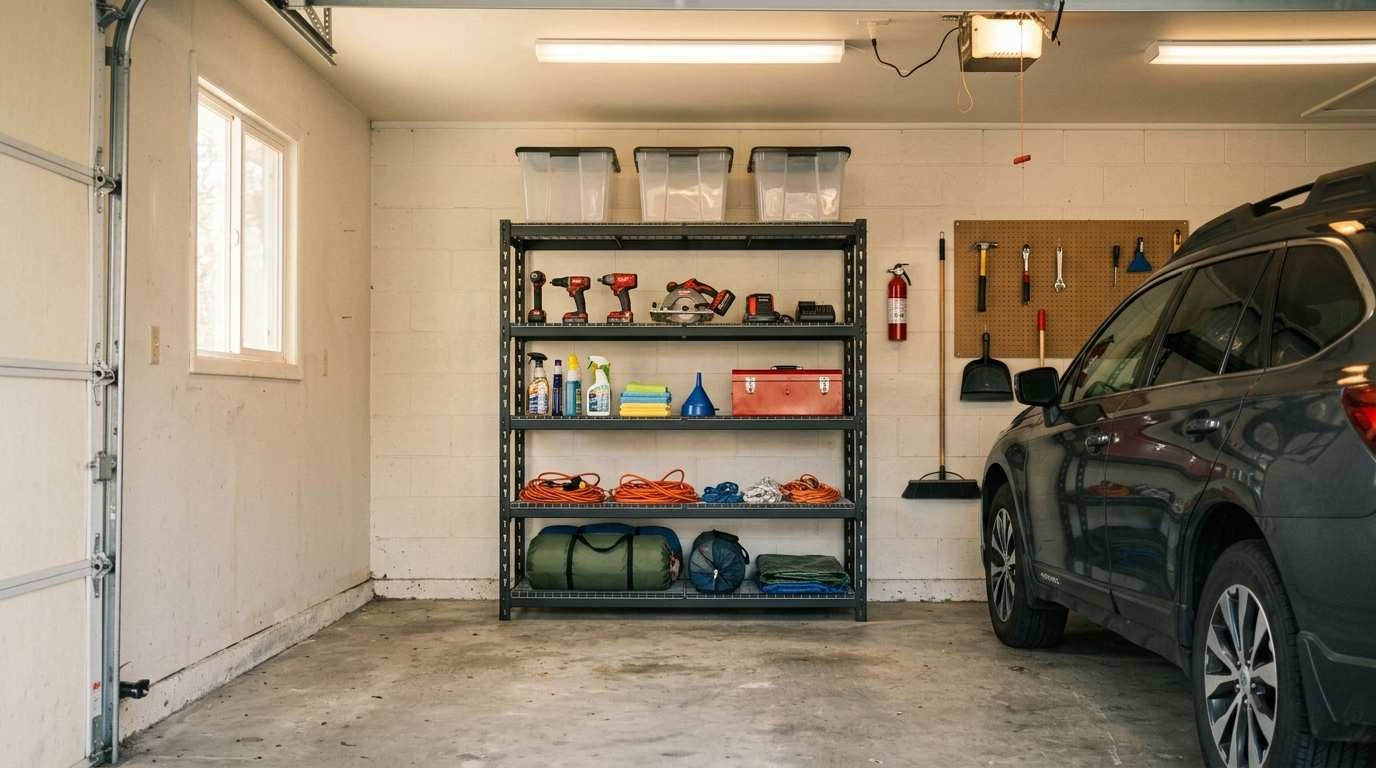
A crowded garage does not always need more floor space. It often needs better use of the walls.
A 5 tier heavy duty shelving unit can turn one small area into useful storage. You can organize tools, storage totes, car supplies, and seasonal gear. The right unit also leaves enough room to park and walk safely.
This guide compares six well-known shelving units sold in the US. Each model suits a different type of garage. Some save floor space. Others hold large bins or convert into low work surfaces.
Quick Comparison of the Best 5-Tier Heavy-Duty Shelving Units
The table below shows the main differences. Prices are not included because they can change by store and location.
That last point matters. A shelf may hold many small boxes safely. The same shelf could bend under one dense item placed in its center.
How We Chose the Best Heavy-Duty Shelving for Tight Garages
A large load rating looks good on a product page. Yet it tells only part of the story.
A useful garage rack must fit your wall and your storage bins. It also needs to stay firm when loaded. Shelf type, depth, and setup matter just as much as strength.
Floor-Space Efficiency
Start with shelf depth. This tells you how far the rack will stick out from the wall.
Common depths include:
- 14 inches: Good for cans, bottles, and small boxes
- 18 inches: Good for tool cases and medium bins
- 24 inches: Good for large totes and bulky gear
A 24-inch rack can store far more than a narrow rack. However, it may block a car door or walking path.
Width also matters. A 36-inch rack can fit between a door and a corner. A 48-inch rack needs more wall space. A 60-inch unit may work best across the back wall.
Do not guess based on an empty garage. Park your car before you measure.
Realistic Load Capacity
Shelf ratings often assume an evenly spread load. This means the weight covers most of the shelf.
Think of 20 small boxes spread across the deck. Now compare that with one 300-pound machine in the center. Both may weigh the same, but they stress the shelf in different ways.
Follow these basic rules:
- Place the heaviest items on the bottom.
- Spread dense items across the shelf.
- Do not exceed the total unit rating.
- Use the feet or wheels supplied with the rack.
- Build the rack on a flat, firm floor.
- Check each beam before adding weight.
A high rating does not turn home storage into warehouse equipment. If you store engines or machine parts, proper industrial racking may be safer.
Shelf Material
Shelf material affects cleaning, moisture resistance, and daily use.
Steel wire
Wire decks let air and light pass through. Dust is less likely to form a thick layer.
Steel wire also avoids the swelling found in wet wood panels. This makes it useful in a damp garage.
The open gaps can cause small items to tip. Tool feet, plugs, and loose hardware may also catch between the wires. A thin shelf liner can solve much of this.
Solid laminate
Laminate gives you a smooth, flat surface. Small tools and bottles sit well on it.
You can slide a case without it catching on wire. Spills are also easier to wipe away.
However, water may harm the board if it enters an edge or crack. Keep wet items off these shelves.
Particleboard
Particleboard is flat and often costs less. It works well in a dry room with an even load.
Moisture is its main weakness. The board may swell, sag, or soften after it gets wet.
If you use particleboard shelves, keep them away from leaks and wet tires. Check the center of each panel from time to time.
You may also wish to explore these heavy-duty metal shelving units if you want to avoid wood-based decks.
Shelf Adjustability
Your storage needs will change. Adjustable shelves help the rack change with them.
Small height steps give you more control. One-inch steps work well for short boxes and cans. Wider steps still work for large totes and tools.
Check whether the shelf height leaves room for:
- Storage totes with lids
- Five-gallon buckets
- Tool cases
- Car-care bottles
- Coolers
- Camping gear
- Small power tools
Some racks can split into two low sections. This can be useful below a window or beside a workbench.
Do not assume every shelf can sit at any height. Some racks need a center shelf at the post joint.
Stability and Wall Anchoring
A tall rack can tip if its top is heavy. It can also move when you pull out a large tote.
Wall anchoring helps reduce that risk. Use the hardware listed in the manual. Fasten it to wall studs where possible.
You should also:
- Load the bottom shelf first.
- Keep each post on the floor.
- Adjust the feet on uneven concrete.
- Check that each beam locks into place.
- Avoid pulling yourself up by the shelves.
- Keep children from climbing the unit.
Never add random casters to a fixed rack. Wheels change how weight moves through the frame. They can also make the rack twist while rolling.
Use only wheels made for that exact model.
Assembly and Long-Term Ownership
A rack that looks simple can still be hard to build. Bent tabs or damaged beams can make the job worse.
Before setup, lay out every part. Check the posts, beams, decks, and feet.
A rubber mallet often helps with boltless racks. It seats the beams without scraping the finish.
Also consider long-term use:
- Can you get replacement shelves?
- Does the brand offer a clear warranty?
- Will the finish resist normal garage moisture?
- Can you add matching units later?
- Can you take the rack apart without damage?
Products change over time. Check the model number, not just the brand name.
The 6 Best 5-Tier Heavy-Duty Shelving Units
Each unit below fills a clear need. The best one for you depends on your wall space, load, and garage layout.
1. Husky 5-Shelf Heavy-Duty Adjustable Garage Storage Rack

Best Overall
The Husky rack offers a useful mix of size and strength. Its five wire decks measure 48 inches wide and 24 inches deep.
The full unit stands 78 inches high. That extra height gives you more room between shelves.
Each shelf has a stated 1,000-pound load rating. The total stated capacity is 5,000 pounds with an even load.
The shelves adjust in 1.5-inch steps. You can build one tall rack or two shorter sections.
Check PriceKey features
- Five steel wire shelves
- Boltless steel frame
- 24-inch shelf depth
- Adjustable shelf positions
- Tall or split setup
- Dry food storage certification
- Lifetime maker warranty
The wire decks are a good fit for garage use. They will not swell like bare particleboard.
Large storage totes should fit better than they would on a 14-inch shelf. You also get enough depth for many tool cases and car supplies.
Pros
- High stated shelf capacity
- Good depth for large totes
- No wood-based shelf panels
- Flexible shelf layout
- Can split into two sections
- Strong warranty coverage
Cons
- May feel too deep beside a parked car
- Heavy parts can be hard to move alone
- Wire gaps may catch small items
- Some versions may use different post joints
- Assembly can take two people
Suitability for tight garages
This model fits best against a back wall. It also works on a wide side wall with enough car clearance.
Its 24-inch depth may cause trouble in a narrow single-car garage. Mark the floor before choosing it.
You can compare the design with Gladiator in this guide to Husky vs. Gladiator shelving.
Best fit: You need deep shelves for tools, totes, and car supplies.
2. Amazon Basics 5-Shelf Adjustable Steel Wire Rack

Best Budget Choice
The Amazon Basics rack takes a different approach. It gives up depth and load capacity to save space.
It measures 36 inches wide and only 14 inches deep. The 72-inch height still gives you plenty of vertical storage.
Each wire shelf has a stated 350-pound rating. The total stated capacity is 1,750 pounds with an even load.
Shelf height adjusts in one-inch steps. You also get four leveling feet.
Check PriceKey features
- Five steel wire shelves
- 14-inch depth
- 36-inch width
- One-inch height steps
- Leveling feet
- No-tool setup
The small footprint is the main reason to consider this unit. It can fit on walls that will not hold a 48-inch rack.
It is also easier to move while empty. That helps if you often change your garage layout.
Pros
- Shallow design saves floor space
- Fits short sections of wall
- Fine shelf height control
- Simple setup
- Works in many rooms
- Useful for light and medium loads
Cons
- Too shallow for many large totes
- Lower load rating than garage racks
- Wire gaps need liners for small items
- Tall shape needs careful leveling
- Not suited to large shop machines
Suitability for tight garages
This rack works well beside a parked car. Its 14-inch depth leaves more room for doors and mirrors.
Use it for:
- Spray bottles
- Car wax and cleaning cloths
- Canned food
- Paint supplies
- Small tool cases
- Extension cords
- Light garden items
Do not treat it like full-size shop shelving. Keep floor jacks and dense bench tools elsewhere.
Best fit: You need useful storage on a very narrow wall.
3. Seville Classics UltraDurable 5-Tier Steel Wire Shelving
Best Premium Mobile Unit

The Seville Classics unit gives you both feet and approved wheels. That makes it more useful if your layout changes often.
The featured model measures 60 inches wide and 24 inches deep. It stands about 76 inches high with its wheels fitted.
Its five wire shelves adjust in one-inch steps. On leveling feet, each shelf has a stated 800-pound rating.
The load limit changes on wheels. The whole unit has a stated 500-pound mobile limit.
That gap is easy to miss. Do not use the rating for the feet when rolling the rack.
Check PriceKey features
- Five wide wire shelves
- Leveling feet and wheels
- Two locking wheels
- One-inch shelf height steps
- No-tool setup
- Dry storage certification
- Commercial-style steel frame
The 60-inch width gives you long storage space. You can place coolers, tool cases, and wide bins on one shelf.
The wheels help with cleaning. You can move the rack away from a wall without taking it apart.
Pros
- Approved mobile setup
- Wide storage surface
- Smooth shelf height control
- Open wire design
- Good stated capacity on feet
- Wheels and feet come with the rack
Cons
- Wide frame needs a long wall
- 24-inch depth takes floor space
- Mobile load limit is much lower
- Large shelves can be hard to handle
- Small items may need shelf liners
Suitability for tight garages
The unit works best across a back wall. It may be too wide for a side wall with doors or outlets.
Its wheels help in a garage that serves many uses. You can move moderate supplies for cleaning or a short project.
Do not roll it while packed with very heavy tools. Weight can shift when a wheel hits a crack.
Best fit: You need a large rack that can move under a lower load.
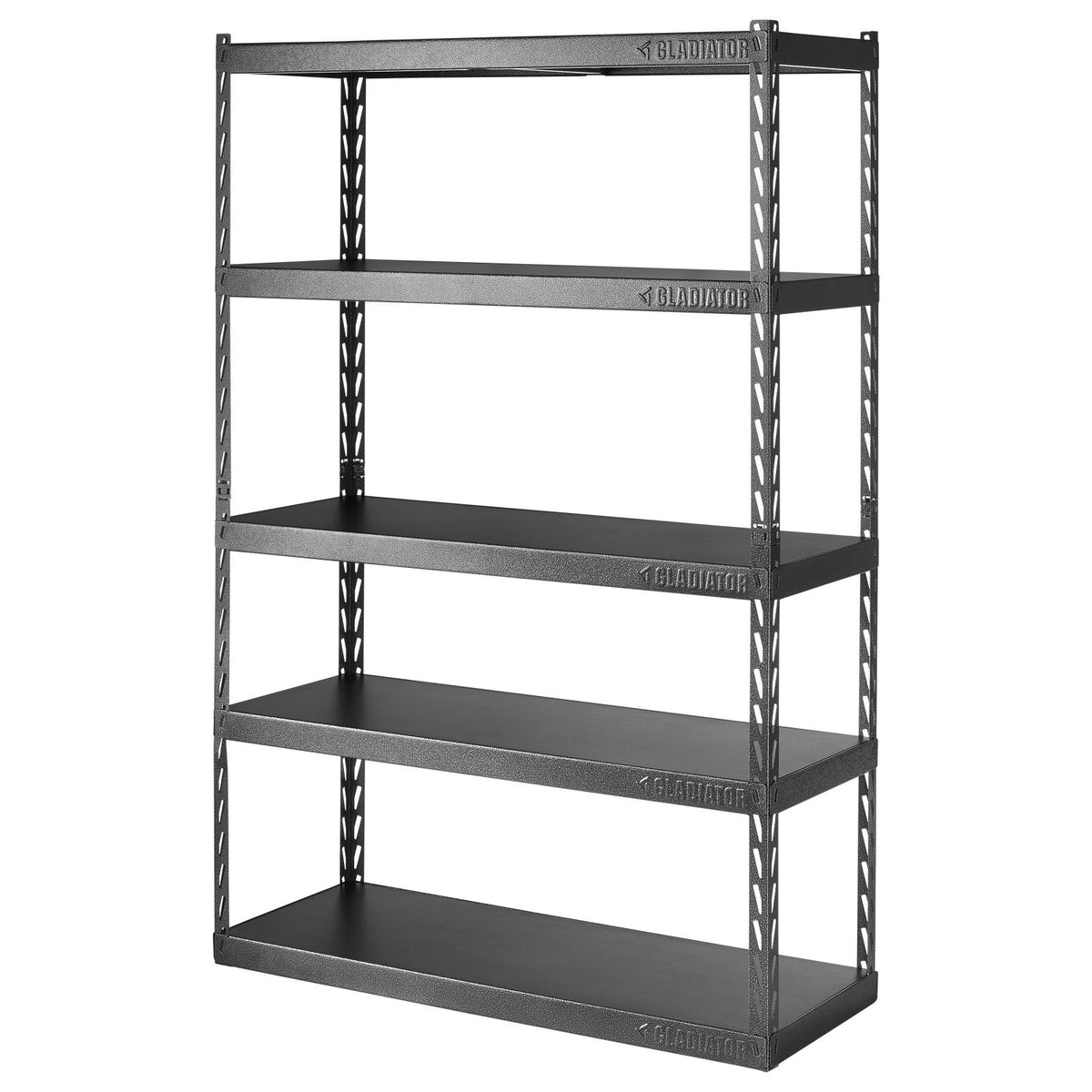
4. Gladiator EZ Connect 5-Shelf Rack
Best for Easy Assembly
The Gladiator EZ Connect sits between narrow wire racks and deep garage racks. Its 18-inch depth makes it easier to fit beside a car.
The unit measures 48 inches wide and 72 inches high. It uses five solid laminate shelves.
Each shelf has a stated 1,000-pound rating with an even load. Its click-and-lock frame needs no normal hand tools.
Check PriceKey features
- Five solid shelves
- 18-inch depth
- Click-and-lock frame
- Tool-free setup
- Dry storage certification
- Ten-year limited warranty
Solid shelves work well for small tools. Plugs and feet cannot slip through open wires.
The smooth decks also make it easier to slide out a storage case. That can be helpful when space is tight.
Pros
- Easier setup than many boltless racks
- Shallower than 24-inch models
- Flat surface supports small items
- Clean, finished appearance
- Strong stated shelf capacity
- Long limited warranty
Cons
- Less room for deep totes
- Board edges need protection from water
- Solid shelves collect more dust
- Shipping may damage tabs or panels
- The frame can feel loose before completion
Suitability for tight garages
The Gladiator is a good side-wall choice. Its 18-inch depth saves six inches over a full 24-inch rack.
That difference may let your car door open farther. It can also make the path to your house safer.
Use trays for oil, paint, or other liquids. A small leak can damage laminate over time.
Best fit: You want flat shelves and a slimmer garage footprint.
5. Muscle Rack 5-Shelf Steel Shelving Unit

Best for Large Storage Bins
The Muscle Rack gives you full 24-inch depth and solid decks. It measures 48 inches wide and 72 inches high.
Five particleboard shelves sit inside a steel frame. Each shelf has a stated 800-pound rating with an even load.
The shelf positions change in 1.5-inch steps. You can build the frame as one tall rack or two low units.
Check PriceKey features
- Five solid particleboard shelves
- 24-inch depth
- Boltless steel frame
- Adjustable shelf positions
- Tall or split setup
- Z-shaped shelf beams
The wide, flat decks work well for large bins. You can also store gear with small feet.
The frame may hold up well for years. The shelf panels are more likely to show wear first.
Pros
- Deep shelves hold large totes
- Smooth surface supports small gear
- Flexible shelf layout
- Can form two low sections
- Boltless setup
- Good stated capacity
Cons
- Particleboard can absorb water
- Panels may sag under a poor load
- Not ideal near wet garage doors
- Replacement deck work may be needed
- Warranty coverage is limited
Suitability for tight garages
This rack works best on a back wall in a dry garage. Its 24-inch depth can hold large bins without much overhang.
Keep it away from rain, snowmelt, and wall leaks. Even one wet corner can spread through a particleboard panel.
You can use trays under fluids and paint. You can also seal replacement plywood if a deck wears out.
Best fit: You want deep, flat storage and can keep it dry.
6. Project Source 5-Tier Heavy-Duty Wire Utility Rack
Best Workbench-Friendly Design

The current Project Source wire rack measures 48 inches wide and 24 inches deep. Its full height is 72 inches.
It includes five adjustable wire shelves. Each has a stated 1,000-pound capacity with an even load.
You can build one tall rack. You can also create two sections that stand about 36 inches high.
That low setup is useful below a window. It can also give you a light project surface.
Check PriceKey features
- Five steel wire decks
- 24-inch depth
- 48-inch width
- Boltless frame
- 1.5-inch height steps
- Tall or split setup
- Powder-coated finish
The wire shelves let air move around your gear. They also avoid the moisture issue found in older wood-deck models.
Check the exact model before you choose one. Similar Project Source racks may use different decks and connectors.
Pros
- High stated shelf capacity
- Deep shelves for large bins
- Wire decks resist normal moisture
- Can form two low units
- Adjustable shelf layout
- Four-side access
Cons
- Too deep for some side walls
- Indoor use only
- Model quality can vary
- Wire decks may need liners
- Requires careful model checking
Suitability for tight garages
The split setup makes this unit stand out. You can place one half below a window and the other beside a workbench.
A low section can hold bins underneath. The top can support light sorting or packing tasks.
Do not use it like a steel workbench. Hard hammer blows may loosen joints or harm the deck.
Best fit: You want storage that can change into two low sections.
Side-by-Side Buyer’s Guide
The six racks share the same basic goal. Their sizes and shelf types make them feel very different in use.
Which Unit Has the Smallest Footprint?
The Amazon Basics rack has the smallest footprint. It is 36 inches wide and 14 inches deep.
The Gladiator comes next at 18 inches deep. It offers more shelf space without reaching the full 24-inch depth.
The other featured models use 24-inch-deep shelves. That size works well for large totes but needs more floor space.
Use these simple rules:
- Choose 14 inches for bottles and small boxes.
- Choose 18 inches for tool cases and medium bins.
- Choose 24 inches for large totes and bulky gear.
Width can also limit your choice. Measure pipes, doors, outlets, and wall corners.
Wire Shelves vs. Solid Shelves
Neither shelf type is best for every garage.
Choose wire shelves if:
- Your garage often feels damp.
- You want more airflow.
- You store large bins.
- You want less dust on the shelf.
- You are willing to use liners.
Choose solid shelves if:
- You store loose hardware.
- Your tools have small feet.
- You want to slide boxes.
- You keep the garage dry.
- You clean spills at once.
Steel wire tends to suit damp garages. Solid decks are often nicer for small tools.
Particleboard can work in a dry space. It needs more care than steel.
Which One Is Best for Large Totes?
The best choices have 24-inch-deep shelves:
- Husky
- Project Source
- Muscle Rack
- Seville Classics
Depth alone does not guarantee a good fit. Measure your totes, including the lids and handles.
Also check the beam opening. A tote may fit on the deck but fail to pass between two shelves.
Leave enough free height to tilt the bin. This matters most on upper shelves.
Which One Is Best for Small Tools and Supplies?
The Gladiator has solid shelves. This helps small tools, chargers, and plugs stay in place.
The Muscle Rack also has flat decks. However, its particleboard needs protection from water.
Wire racks can still work well. Add thin liners or place small parts inside bins.
For items that should stay locked away, see these heavy-duty garage storage cabinets. Open shelving may not suit chemicals, sharp tools, or high-value gear.
Which Unit Is Easiest to Assemble?
A rough setup order is:
- Gladiator EZ Connect
- Amazon Basics
- Seville Classics
- Husky
- Project Source
- Muscle Rack
Your results may differ. A bent post can make an easy rack hard to build.
Unpack all parts before you start. Check the manual and match each beam to its position.
For boltless racks, use a rubber mallet. Tap each joint in small steps.
Do not load the rack until every shelf is level and firm.
Which Unit Is Best for a Damp Garage?
Steel wire is often the safest pick for damp spaces. It does not absorb water.
A good powder coat also helps protect the frame. Still, scratches may expose bare steel.
Solid laminate may handle a small spill. Water can still seep into damaged edges.
Particleboard needs the most care. Keep it away from leaks and wet floor zones.
No indoor rack should sit outside unless its maker allows that use.
Is a Mobile Rack Better for a Small Garage?
A mobile rack can help in a garage that serves many roles. You can move it for cleaning or short projects.
Mobility also adds risk. A tall rack can sway when a wheel hits a crack or tool.
Use only approved wheels. Follow the lower mobile load limit.
Keep the load low and even. Lock the wheels once the rack is in place.
If you rarely move the rack, fixed feet may be the safer choice.
How to Measure a Tight Garage Before Buying Shelving
A tape measure can prevent a large return. Yet you need to measure more than the bare wall.
Park your car first. Then test the space as you use it each day.
Measure More Than the Empty Wall
Record these measurements:
- Clear wall width
- Floor-to-ceiling height
- Maximum shelf depth
- Car mirror clearance
- Open car door clearance
- Interior door swing
- Garage door track height
- Window height
- Outlet locations
- Switch locations
- Foundation ledges
- Baseboard depth
- Pipe and vent positions
Watch for sloped floors. Many garage floors angle toward the door for drainage.
A rack that looks level against the wall may rock on the concrete. Adjustable feet can help on a mild slope.
Test the Shelf Depth With Painter’s Tape
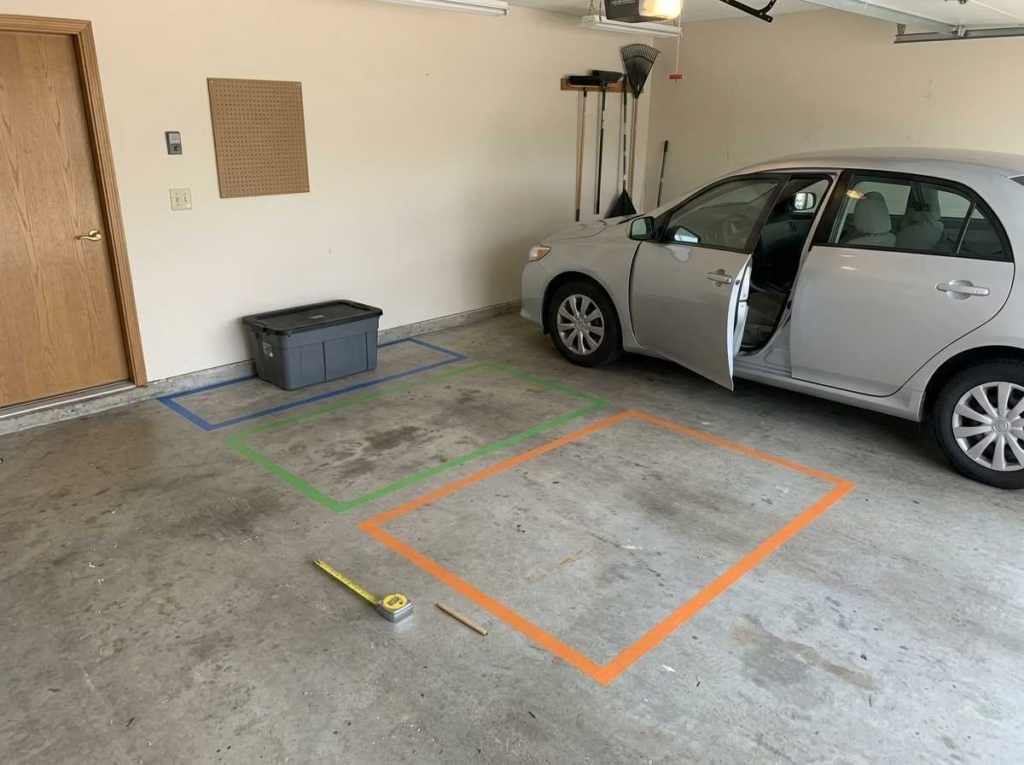
Mark the rack footprint on the floor with painter’s tape.
Then run a simple test:
- Park your largest vehicle.
- Open each car door.
- Walk between the car and tape.
- Carry a large bin through the gap.
- Open nearby home doors.
- Check your freezer or fridge door.
- Test the path with the garage door down.
This test gives you a more honest view than a wall measurement.
You may find that 24 inches works on the back wall. The same depth may fail beside your car.
Leave Room to Load the Shelves
A rack can fit the floor and still be hard to use.
You need enough space to lift and turn your bins. Upper shelves need even more room.
Check whether you can:
- Tilt a tote onto the shelf
- Reach items near the back
- Lift a case without twisting
- Remove a box without hitting the car
- Adjust shelf height after setup
A mixed layout often works best. Use a narrow rack beside the car and a deep rack at the back.
You can also place light seasonal gear overhead. Keep heavy items close to the floor.
Garage Shelving Safety Tips
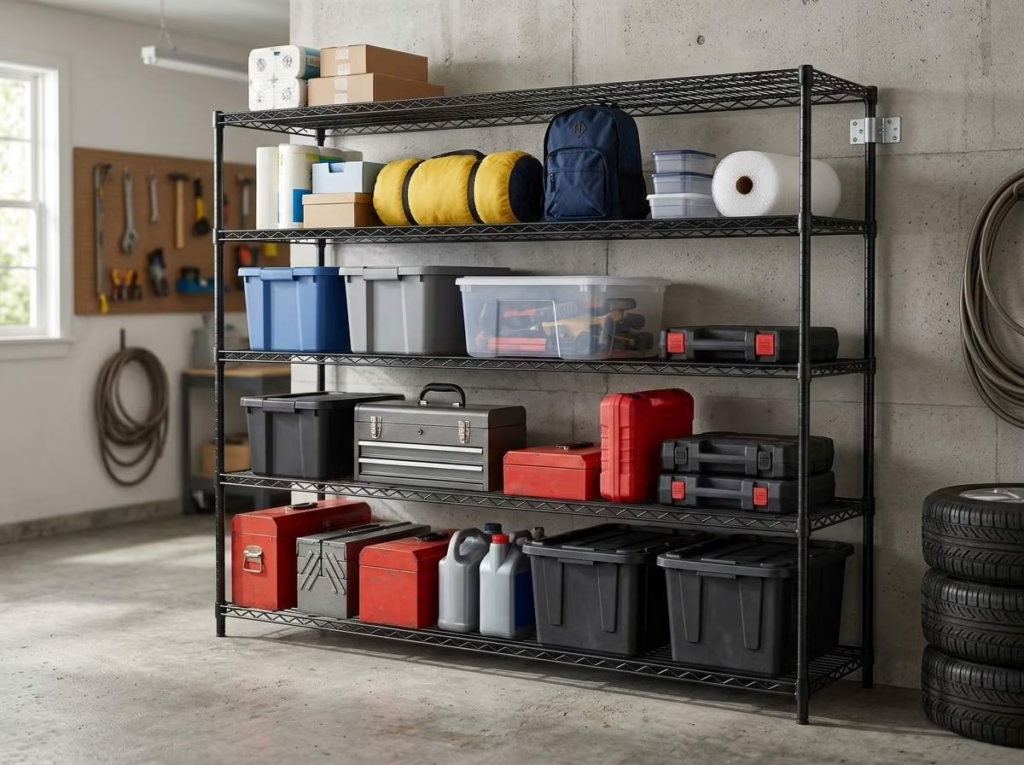
Garage racks can carry a lot of weight. A poor setup can still make them unsafe.
Use these steps:
- Build the rack on a clean floor.
- Read the full setup guide.
- Seat every beam and joint.
- Use approved wall anchors.
- Fasten anchors to studs where possible.
- Place heavy gear on the bottom.
- Spread weight across each shelf.
- Keep the top shelf light.
- Never climb the rack.
- Never stand on a shelf.
- Check the frame after loading.
- Replace bent beams or damaged decks.
- Lock approved wheels before use.
- Do not roll an overloaded rack.
- Keep exits and panels clear.
Check your shelving every few months. Look for rust, leaning posts, bowed decks, and loose joints.
Inspect particleboard after any spill. Replace it if the panel swells or starts to break apart.
Final Verdict
The Husky is the strongest all-around choice for many garages. It gives you deep wire decks, an adjustable layout, and two setup options.
That does not make it right for every wall.
The Amazon Basics unit fits narrow spots. Gladiator gives you a useful 18-inch middle ground. Seville Classics suits lighter mobile use.
Muscle Rack works well for large bins in a dry garage. Project Source offers a handy split setup.
The best 5 tier heavy duty shelving unit is the one that fits after you park. It should also match your load and garage moisture level.
Measure first. Keep heavy gear low. Then choose the shelf depth that leaves you room to move.
Frequently Asked Questions
What is the best 5 tier heavy duty shelving unit for a small garage?
The Husky rack is a strong general choice if you have 24 inches of depth. It holds large totes and uses steel wire decks.
For a narrow side wall, consider Amazon Basics or Gladiator. Their shallower shelves leave more room beside your car.
Is a 24-inch-deep shelf too large for a tight garage?
It may be too large for a side wall. It often works well across the back wall.
Mark a 24-inch line on the floor with tape. Park your car and test the remaining path.
How much weight can a five-tier shelving unit hold?
The rating depends on the model. Units in this guide range from 350 to 1,000 pounds per shelf.
Those ratings assume an even load and correct setup. A rack on wheels may have a much lower limit.
Are wire shelves better than particleboard shelves?
Wire shelves tend to work better in damp garages. They allow airflow and do not absorb water.
Particleboard gives you a smooth surface. It may swell or sag if it gets wet.
Can I put wheels on a heavy-duty garage shelving unit?
Use wheels only if the maker approves them for that model.
Random casters can change the rack’s strength and balance. They may also cause the frame to twist.
Should garage shelving be attached to the wall?
Tall racks should often be anchored. This helps reduce tipping and movement.
Follow the maker’s instructions. Use wall studs where possible.
Can a five-tier rack be used as a workbench?
Some models can split into two low units. These include certain Husky, Muscle Rack, and Project Source racks.
A low storage unit is not always a true workbench. Avoid heavy hammering unless the maker approves that use.
What should I store on the bottom shelf?
Store your heaviest items near the floor.
Good examples include:
- Large toolboxes
- Bulk fluids
- Dense hardware
- Heavy car parts
- Large equipment cases
- Full storage totes
This lowers the center of weight. It also reduces risky lifting.
Do shelf liners reduce a wire rack’s capacity?
A thin liner adds little weight. It does not raise the shelf rating.
Avoid thick or heavy boards unless the maker allows them. Keep the weight spread across the shelf.
How do I prevent particleboard garage shelves from sagging?
Keep the panels dry and spread the load. Avoid placing one dense item in the center.
Check each panel for a dip or crack. Replace weak panels before they fail.
Sealed plywood may last longer in a garage. Make sure it fits the frame and follows the rack’s limits.