
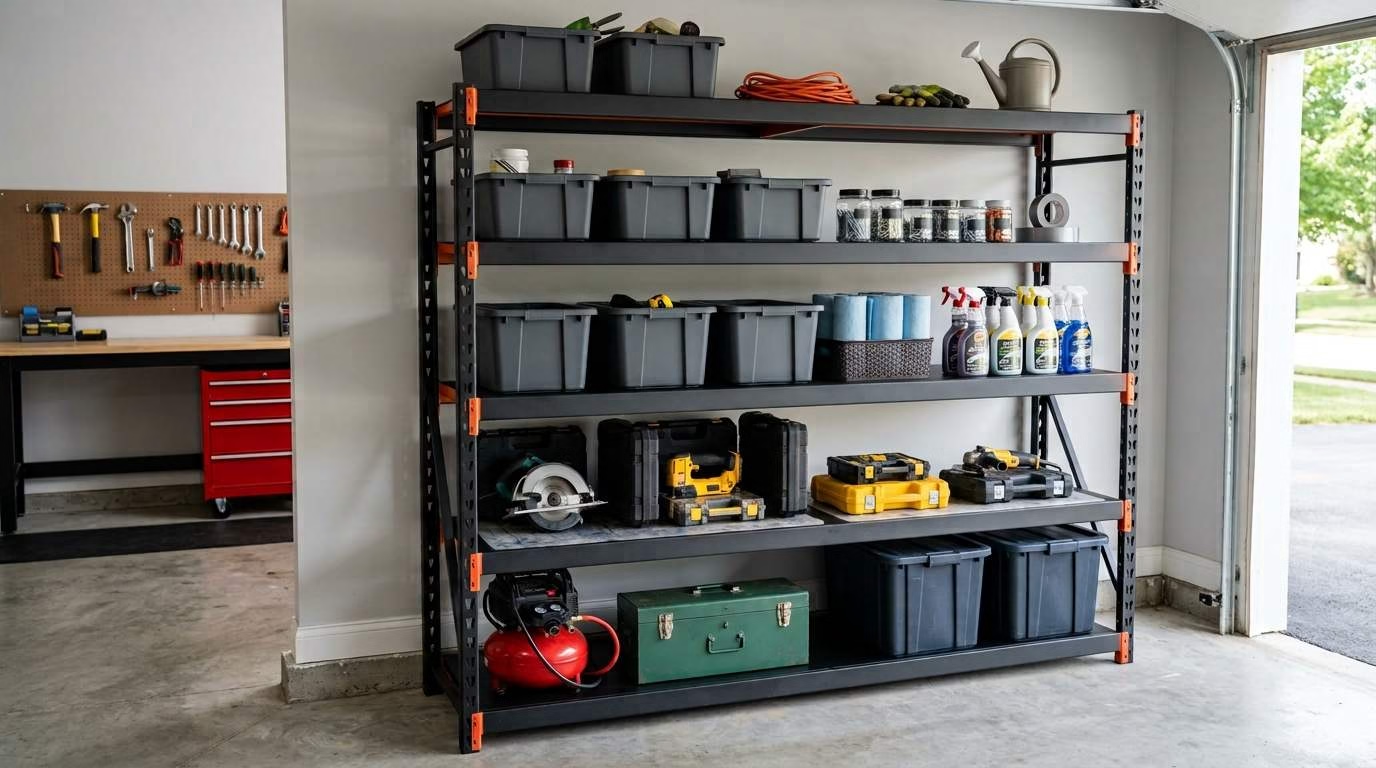
Reibii shelves offer lots of storage for a fair price. They also carry some huge weight claims. This Reibii garage shelving review looks past those numbers to see what you may get.
The short answer is simple. Reibii can work well for tools, totes, car supplies, and home gear. However, the exact model matters. Shelf type, rack depth, weight spread, and floor level all affect safe use.
Review note: Reibii sells many racks under similar names. This article reviews the wider product range and real owner feedback. It does not claim hands-on testing of one exact unit.
| At a glance | Reibii garage shelving |
|---|---|
| Best for | Totes, tools, car supplies, and home storage |
| Main strength | High storage value for the price |
| Main concern | Large load claims need context |
| Shelf types | Metal panels, wire, or engineered wood |
| Assembly | Most models use a boltless design |
| Shelf adjustment | Available on most garage models |
| Wall anchor | Strongly advised for tall racks |
| Best setup | Leveling feet on a flat floor |
| Overall view | Good budget choice for normal garage use |
Quick verdict: Reibii garage shelving can be worth it for a typical home garage. Its racks are roomy, adjustable, and often easy to build. Yet you should not treat them like industrial warehouse racks.
Reibii is best for:
- Plastic storage totes
- Portable power tools
- Car cleaning supplies
- Oil, coolant, and small parts
- Garden tools
- Sports gear
- Light shop stock
- Household overflow
You may want another option for:
- Engines or transmissions
- Large shop machines
- Heavy loads with small contact points
- Wet areas with wood shelf panels
- Commercial work that needs a certified load rating
- Long-term use without wall anchors
Which Reibii Garage Shelving Model Did We Review?
Reibii does not sell one standard garage rack. It sells many sizes and shelf styles. That makes a broad “Reibii shelving review” hard to present as one product test.
The brand offers several common designs:
- Solid metal shelf panels
- Open wire shelves
- Metal frames with engineered-wood decks
- Narrow racks for small spaces
- Wide racks for large totes
- Fixed racks with leveling feet
- Mobile racks with casters
- Tall units that split into two short racks
For this review, the focus is on Reibii’s heavy-duty garage range. That includes common four-tier, five-tier, and six-tier units. Most use steel frames and adjustable shelves.
Before you choose a model, record these details:
- Full model number
- Width, depth, and height
- Shelf count
- Shelf material
- Capacity per shelf
- Total stated capacity
- Capacity with wheels
- Capacity with leveling feet
- Split-rack option
- Anti-tip hardware
- Return terms
This step prevents a common mistake. You may read praise for a solid-metal rack, then order a wood-panel model. Those two products may perform in very different ways.
Depth deserves extra care. A 16-inch rack can work for small tools. Yet it may not hold deep storage totes well. A 24-inch rack takes more floor space but supports large bins better.
Width also affects the load. A wide shelf has a longer span. This can create more flex in the center. Look for center bars or ribs under each shelf.
Reibii Garage Shelving Specifications at a Glance
Specs change across Reibii’s range. Some racks list total loads near 3,000 pounds or more. Smaller utility units may hold far less.
Use the table below as a shopping guide. Check your exact product page before you rely on any figure.
| Specification | What to check |
|---|---|
| Frame material | Steel grade and upright shape |
| Shelf material | Solid metal, wire, or engineered wood |
| Total capacity | Combined load across all shelves |
| Per-shelf capacity | Maximum load on one level |
| Load condition | Evenly spread weight |
| Mobile capacity | Rating when wheels are fitted |
| Stationary capacity | Rating with leveling feet |
| Shelf spacing | How closely each level adjusts |
| Anti-tip parts | Straps, brackets, or wall screws |
| Split design | Can it form two short racks? |
| Finish | Painted or powder-coated steel |
| Warranty | Coverage and claim rules |
| Returns | Time limit and shipping cost |
The total capacity is often the least useful number. You rarely load every shelf to its limit. The load on one shelf matters more.
You should also check how the brand defines a safe load. Most shelf ratings assume the weight is spread across the full area. A large tote spreads force better than a machine with four small feet.
Wheels can change the rating as well. A rack may hold much less when it rests on casters. The wheel stems and mounting points become weak spots.
Treat the listed figure as a limit, not a target. Leave a safety margin. This is wise for any home storage rack.
Unboxing and First Impressions of Reibii Garage Shelving
A heavy rack can suffer damage before it reaches your garage. The carton may be dropped, crushed, or dragged. Inspect the package before you start the build.
Look for:
- Torn box corners
- Loose parts inside
- Bent uprights
- Twisted crossbars
- Dented panels
- Chipped paint
- Missing feet
- Damaged plastic clips
- Missing wall straps
Lay every part on the floor. Match the pieces to the manual. This takes a few minutes but saves time later.
Check the steel tabs with care. A bent tab may stop a beam from locking into place. Do not force it with a steel hammer.
Inspect solid shelf panels from the side. They should sit flat. A small bend may pull down during assembly, but a deep crease can weaken the panel.
Wood panels need a different check. Look for crushed corners, cracks, or swollen edges. Moisture damage may appear as a raised or rough surface.
The finish should cover the main surfaces. Small marks may not affect strength. Bare steel, deep chips, or rust spots need more care.
Take photos before assembly if anything looks damaged. That gives you a record if you need support later.
How Easy Is Reibii Shelving to Assemble?
Most Reibii garage racks use tabs and slots. This is called boltless assembly. You fit each beam into an upright, then tap it down.
The process is simple once the first level is square. Still, large units can feel awkward. A second person can hold the frame while you seat each beam.
Tools and Setup
Many models include a small rubber mallet. It may work, but a full-size rubber mallet gives you more control.
You may also need:
- Work gloves
- Safety glasses
- Tape measure
- Level
- Flat work area
- Step stool
- Wall drill
- Correct wall anchors
Avoid a metal hammer on painted parts. It can chip the finish or bend the tabs. If you must use one, place a wood block between the hammer and rack.
Set aside enough floor space for the full frame. Large models need more room than their final footprint. You may need to turn each section during the build.
One person can often build a small rack. Wide and tall models are easier with two people. The extra help also lowers the risk of a frame falling.
Do not plan around a bold “10-minute assembly” claim. Unboxing, checking parts, leveling, and anchoring take time. A careful build is better than a fast one.
Where Assembly Can Go Wrong
The first shelf controls the shape of the full rack. If that shelf sits out of square, the top may lean.
Common errors include:
- Installing a beam upside down
- Mixing top and bottom posts
- Failing to seat tabs fully
- Building on a sloped floor
- Adding panels before squaring the frame
- Placing both shelf joints on one side
- Striking thin steel too hard
- Forgetting split-post connectors
Build the lowest shelf first. Check both side-to-side and front-to-back measurements. Then add the next level.
Tap each corner in stages. Do not lock one corner fully while another remains loose. Work around the frame until all four corners sit level.
Stand back after each shelf. Check for a lean. It is much easier to fix during the build.
After assembly, press down on each corner. The rack should not rock. Adjust the feet before loading it.
Recheck each joint after you add weight. Loads can help parts settle deeper into their slots.
Build Quality and Materials
Reibii aims at budget and mid-priced storage. You should expect useful home-grade construction. You should not expect the mass of industrial pallet racks.
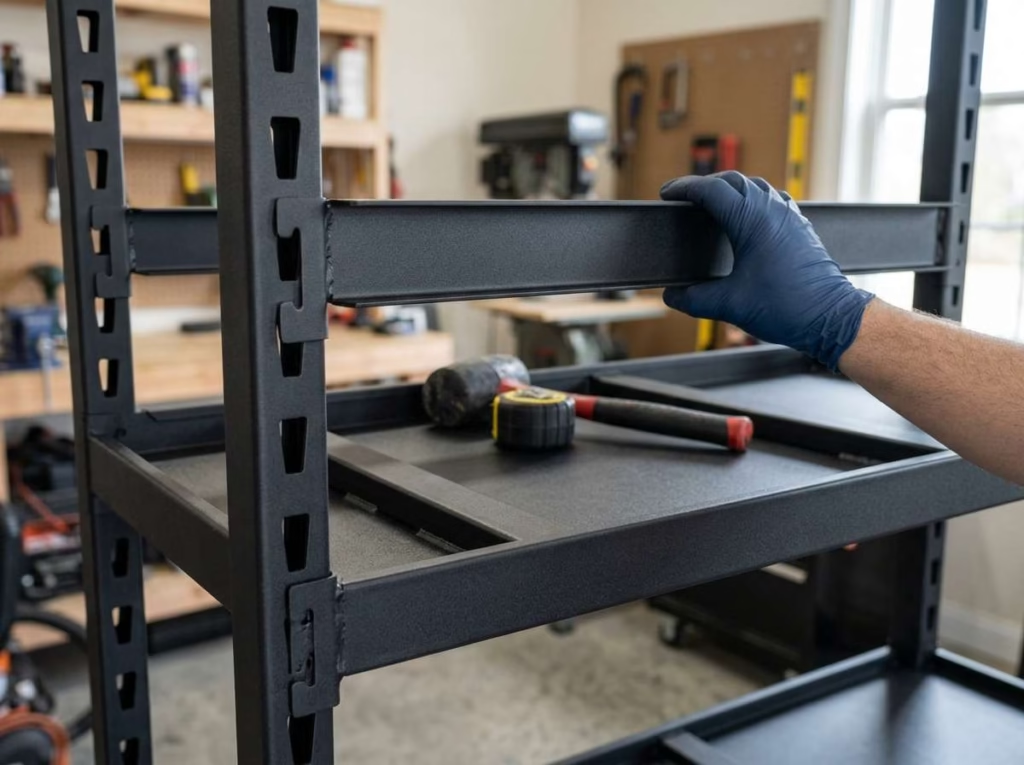
That does not make the shelves weak. It means you need to match the rack to the job.
Frame and Uprights
Upright shape matters as much as steel thickness. Folded edges can make thin steel much stiffer. Extra bends act like small support ribs.
Check these frame areas:
- Upright folds
- Beam tabs
- Post connectors
- Middle support bars
- Shelf braces
- Foot plates
- Caster sockets
A stable frame should resist side movement. Light flex while empty is not always a fault. Many racks become more stable after even loading and wall support.
The beam connections should sit tight. A loose tab may let the beam lift when you move a tote. This is one reason you should avoid dragging loaded shelves.
Paint quality affects long-term care. A clean finish helps block rust. It also makes oil and dust easier to wipe away.
Still, paint cannot protect deep scratches. Touch up bare steel if your garage gets damp.
Shelf Decks
The shelf deck supports your items. Its material can change the whole user experience.
Solid Metal Panels
Solid metal works well for:
- Small tools
- Bottles
- Loose parts
- Car fluids
- Cleaning supplies
The flat surface is easy to clean. Small items do not fall through. Metal also handles damp air better than raw wood.
Yet thin panels can flex. Look for ribs and support bars below them. Place dense items near braces where possible.
Wire Shelves
Wire shelves allow air to move. Dust also falls through instead of building up on a flat deck.
They work well for:
- Large bins
- Boxes
- Towels
- Sports gear
- Light shop stock
Small items can tip between the wires. Add a fitted shelf liner if you store cans, tools, or bottles.
Wire shelves also create pressure points. A hard case with small feet may rest on only a few wires. A flat board can spread that load.
Engineered-Wood Panels
Engineered wood gives you a smooth, quiet surface. It works well for boxes and hand tools.
However, thin panels may sag under dense loads. Moisture can also cause swelling. This makes wood-panel racks a poor fit near leaks or wet garage doors.
If you choose this style:
- Keep panels dry
- Seal exposed edges if suitable
- Spread heavy loads
- Check for sag each month
- Replace damaged decks
- Do not place wet tires on them
If moisture is your main concern, compare Reibii with these heavy-duty plastic shelving units for garages. Plastic will not rust or swell, though it may flex more.
Is Reibii Shelving Actually Heavy-Duty?
“Heavy-duty” has no single meaning for home shelves. One brand may use it for a simple tote rack. Another may use it for a commercial steel frame.
Reibii’s high load claims can look great on paper. Yet safe use depends on the shelf style and setup.
Understanding the Advertised Weight Rating
A total rating combines all shelf levels. It does not apply to one shelf.
For example, imagine a five-tier unit with a 3,000-pound total rating. That may mean up to 600 pounds per level. It does not mean you can place 3,000 pounds on the bottom shelf.
Even that 600-pound figure may require:
- Equal weight spread
- A level floor
- All braces fitted
- Stationary feet
- Correct assembly
- A rack free from damage
Load shape matters too. Ten boxes spread across a shelf create a broad load. A compact tool chest creates a dense load in one area.
Think about a floor jack. Its small wheels place force on narrow points. Add a wood or steel plate under it to spread that force.
Do not count the weight of each item from memory. Check labels or use a scale when possible. Small loads can add up fast.
Recommended Real-World Test
You can test your assembled rack without pushing it to its limit.
Use this safe process:
- Start with an empty wobble check.
- Add light loads to the bottom shelf.
- Spread the weight from side to side.
- Check each joint and support bar.
- Add weight in small steps.
- Watch the shelf center for sag.
- Check the rack from the side.
- Leave the load for several days.
- Check the joints again.
- Stop if anything bends or shifts.
Never stand, sit, or climb on the shelves. Human movement creates a sudden force. Shelf ratings usually cover still loads.
You can place a straight board across the shelf edge. Measure any gap at the center. This helps you spot new sag over time.
Do not run a maximum-load test in a home garage. A failed shelf can damage tools, floors, cars, or people.
Items to Use in Testing
Use normal garage items for a useful test:
- Filled plastic totes
- Tool cases
- Water jugs
- Weight plates
- Bags of soil
- Car cleaning products
- Small compressors
- Boxes of parts
Keep heavy objects low. Use the upper shelves for light and bulky gear.
Your test should match real use. There is little value in loading a shelf with weights if you plan to store empty camping bins.
If you need more load options, compare the rack with other heavy-duty shelves for garage storage.
Stability, Wobble, and Tip Resistance
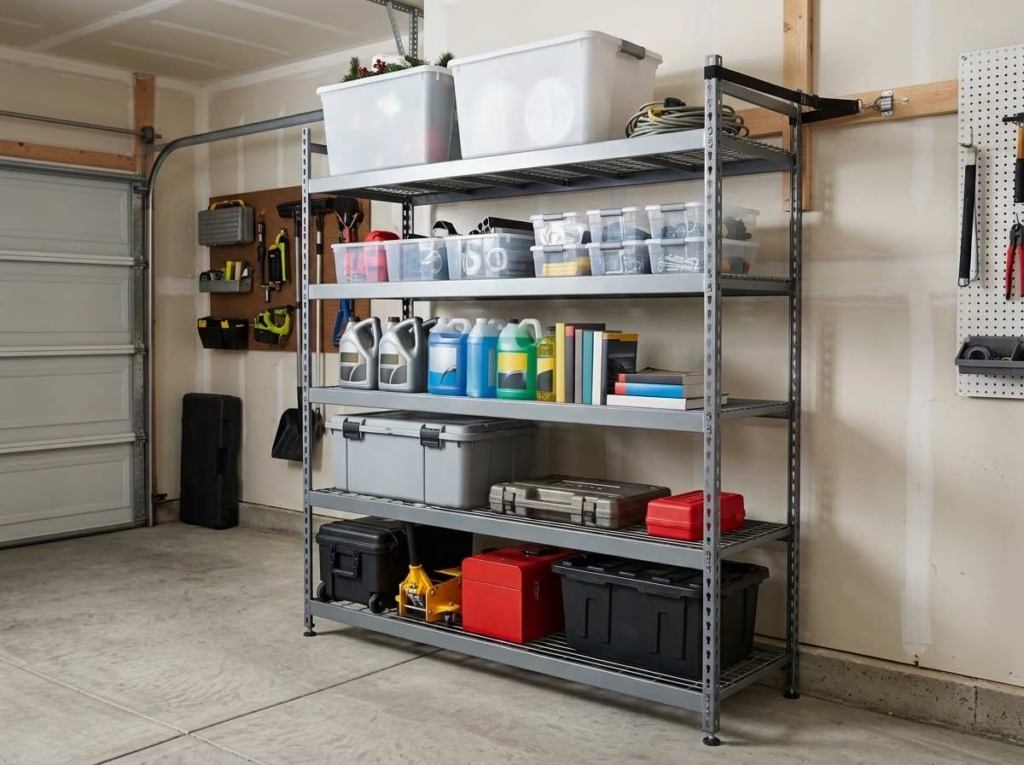
A shelf can hold weight yet still feel unsafe. Side sway and tip risk matter just as much as shelf strength.
Tall racks often move when empty. Their narrow shape gives side force more effect. A load on the lowest shelf may reduce this movement.
Start with the floor. Garage slabs often slope toward the door. Small dips and cracks can also leave one foot off the floor.
Use the leveling feet to remove rocking. Do not use loose scraps of wood as shims. They can slide under load.
Place your items with care:
- Heavy gear on the bottom
- Medium items in the middle
- Light bins on top
- Equal weight on both sides
- Daily-use tools below shoulder height
Wall restraint adds another layer of safety. Attach the rack to a wall stud or solid wall surface. Use hardware that suits the wall type.
Anti-tip straps do not make poor loading safe. They help control the frame if it starts to lean. You still need an even load and level base.
Do not pull a heavy tote off the top with one hard tug. The force can pull the rack toward you. Slide it slowly and support its weight.
Choose a deeper rack if you store large bins. A shallow unit with deep totes may feel top-heavy.
What Reddit and Forum Users Say About Reibii Shelving
Owner discussions give you useful clues. They do not replace a controlled test.
Reibii has less long-term forum history than Husky or Gladiator. That makes it harder to judge ten-year life, spare parts, and future model support.
The Most Important Reddit Finding
The key finding is not a major defect. It is the lack of deep owner history.
Garage owners often ask whether Reibii can match known retail brands. Yet there are fewer detailed updates after years of use.
That leaves several open questions:
- Will the same model remain available?
- Can you get spare beams later?
- Will extra shelves match?
- How well does the finish age?
- Do wood panels sag after several seasons?
- How fast does support solve shipping damage?
This does not mean Reibii is a bad brand. It means the buyer has less long-term proof.
A careful home test becomes more important. Inspect the rack twice a year. Look for rust, bent tabs, panel sag, and loose joints.
Positive Owner Feedback
Positive comments tend to focus on four areas:
- Easy assembly
- Good storage space
- Fair value
- Stable use with normal loads
Some owners also like the split design. You may build one tall rack or two short units on certain models. This can help under windows or workbenches.
Solid metal shelf models also earn praise for easy cleaning. They avoid the moisture concerns found with thin wood decks.
Wire models appeal to users who want airflow. They can work well for bins and large gear.
These reports sound promising. Still, check that the comment covers your exact model. A good report about a wire rack says little about a wood-panel unit.
Common Concerns
The most common concerns include:
- Thin shelf panels
- Bent parts after shipping
- Large capacity claims
- Lower limits with wheels
- Limited long-term owner reports
- Weak support under dense loads
- Questions about future parts
Thin does not always mean weak. Steel shape and support ribs can add strength. Yet thin panels may dent if you drop a hard object.
Wood decks raise a different concern. They may look strong at first but sag after months. Heat and damp air can speed up that process.
The mobile rating needs close attention. Casters are useful, but they add movement and stress. Do not assume the rack holds the same load on wheels.
How Much Should Readers Trust Online Feedback?
Read reviews for patterns, not single claims.
Give more weight to reviews that include:
- The exact model
- Photos of the rack
- Clear load details
- Time owned
- Assembly notes
- Signs of long-term use
- Verified purchase status
Be careful with a review that only says “very strong.” That phrase tells you little. A shelf holding towels has not faced the same test as one holding tools.
Negative reviews also need context. A bent part may point to shipping damage, not poor design. A leaning rack may result from bad assembly or an uneven floor.
Look for repeat issues across many owners. Those patterns offer more value than one extreme story.
Reibii Garage Shelving Pros and Cons
Pros
- Often priced below premium garage brands
- Wide choice of sizes
- Adjustable shelf levels
- Boltless assembly on many models
- Solid metal options
- Wire shelf options
- Some models split into short racks
- Good fit for common storage totes
- Useful depth choices
- High stated capacity for the price
Cons
- Quality varies by model
- Some wood panels look thin
- Total load numbers can mislead
- Wheel ratings may be much lower
- Limited long-term forum history
- Fewer matching add-ons than major brands
- Large units may arrive with bent parts
- Tall racks need wall support
- Dense loads require added care
Reibii sits in a useful middle area. It offers more strength than many light utility shelves. Yet it does not have the same long record as some large garage brands.
If your main goal is five-level storage, see this guide to 5-tier heavy-duty shelving units.
Reibii vs. Husky, Gladiator, and Budget Alternatives
A brand name alone does not tell you which rack is best. Compare size, shelf material, support bars, and return terms.
| Factor | Reibii | Husky | Gladiator | Plastic racks |
|---|---|---|---|---|
| Typical position | Budget to mid-range | Mid-range | Mid to premium | Budget to mid-range |
| Shelf options | Metal, wire, and wood | Steel or wood deck | Steel and wire options | Molded plastic |
| Assembly | Often boltless | Often boltless | Varies by model | Push-fit or tool-free |
| Moisture care | Depends on shelf type | Depends on shelf type | Often good | Very good |
| Local returns | May depend on seller | Often easier | Often easier | Depends on brand |
| Add-on range | More limited | Broad | Broad | Often limited |
| Best use | Home storage value | General garage use | Finished garage systems | Damp and light-duty areas |
Reibii vs. Husky
Reibii often looks stronger on paper for the price. Its listings may show larger total load figures. You should still compare each level’s rating.
Husky has broad store support. You may find local pickup and returns easier. It also has a longer record with garage owners.
Reibii may suit you if raw storage value comes first. Husky may make more sense if you want local service and known parts.
Check the shelf deck as well. A metal Reibii unit should not be compared with a Husky rack that uses wood panels. Match like with like.
Reibii vs. Gladiator
Gladiator often targets finished garages and shop spaces. Its products tend to stress fit, finish, and system support.
Reibii focuses more on storage volume and price. That can make it a better fit for a basic garage or basement.
Gladiator may suit you if you want:
- Matching cabinets
- Wall storage
- A known garage system
- More accessory choices
- A more uniform look
Reibii may suit you if you want:
- A simple freestanding rack
- Adjustable storage
- Strong stated capacity
- Less concern about matching parts
- Lower entry cost
For a direct look at the two established brands, read this Husky vs. Gladiator shelving comparison.
Reibii vs. Industrial Racking
Industrial racks use thicker parts and standard frame designs. Many can expand with extra bays. They also take up more space.
Used warehouse racks may offer great strength. Yet they can create new issues:
- Large floor footprint
- High rack weight
- Sharp edges
- Hard transport
- Complex anchoring
- Poor fit in small garages
Industrial racking makes sense for dense shop stock. It may be too much for holiday bins and garden tools.
Reibii is easier to place in a home. It also looks less industrial. The trade-off is lower long-term proof and fewer standard parts.
Warranty, Returns, and Customer Support
Return terms can matter as much as rack strength. Shelving ships in long, heavy cartons. Sending a damaged unit back may be hard.
Before ordering, check:
- Return window
- Who pays return freight
- Damage report deadline
- Photo needs
- Part replacement process
- Warranty length
- Seller name
- Original box rules
- Refund time
The seller may control the return. This means two identical racks can have different terms on separate sites.
Keep the carton until the rack is complete. Do not throw away labels or foam too early.
If a part arrives bent, request that part first. A replacement beam may solve the issue. Returning the full rack may not be needed.
Take clear photos of:
- The shipping label
- Box damage
- Bent parts
- Missing parts
- Model label
- Full rack after assembly
Do not make a warranty claim based only on a vague load statement. Note the item weights, shelf level, and floor setup. Clear facts help support teams understand the issue.
Who Should Buy Reibii Garage Shelving?
Reibii makes sense if you want practical home storage at a fair cost.
It can suit:
- Homeowners with packed garages
- Renters who need freestanding shelves
- DIY users with portable tools
- Families storing seasonal bins
- Gardeners with soil and plant supplies
- Drivers with car care products
- Small shops with light stock
- Anyone who needs adjustable shelf height
Choose a model at least as deep as your largest tote. Leave enough room to lift the lid or slide the tote out.
Pick solid metal if you store small items or fluids. Wire works well for bins. Wood panels suit dry spaces and spread loads.
Who Should Skip It?
Reibii may not fit every job.
Consider another rack if you store:
- Engine parts
- Large machine tools
- Heavy safes
- Dense metal stock
- Commercial drums
- Oversized batteries
- High-value gear above people or cars
You may also want another brand if you need matching racks years later. Reibii’s catalog may change over time.
Skip wood-panel models in wet garages. One leak can damage a panel. Solid metal, wire, or plastic may serve you better.
A commercial shop may need tested load records. A stated retail capacity may not meet workplace rules.
Final Verdict: Is Reibii Garage Shelving Worth It?
This Reibii garage shelving review finds that the brand can offer good home storage value. The racks suit tools, totes, car supplies, and other normal garage items.
The main limit is not the frame alone. It is the gap between a huge total rating and real garage use. Weight spread, wheels, floor slope, and shelf material all affect the result.
Reibii is worth considering if you:
- Choose the right depth
- Check the exact model
- Keep dense loads low
- Spread weight across each shelf
- Use leveling feet
- Anchor tall units
- Inspect the frame each year
Do not choose by the largest number on the box. A well-supported 2,000-pound rack may work better than a poorly designed 3,000-pound one.
For most homes, Reibii can do the job. Just treat it as heavy home storage, not certified warehouse equipment.
Frequently Asked Questions
Is Reibii a good shelving brand?
Reibii can be a good value brand for home storage. Its range includes useful sizes, shelf styles, and adjustable layouts.
The main concern is consistency. One model may use solid steel decks. Another may use thin wood panels. Always judge the exact rack.
Is Reibii garage shelving really heavy-duty?
It can be heavy-duty for household use. Many models can hold tools, bins, and car supplies with ease.
That does not make every model fit for engines or shop machines. Read the per-shelf rating, not just the total.
How much weight can Reibii shelving hold?
Capacity varies by model. Shelf count, frame width, deck type, feet, and wheels can change the limit.
Use only the figure listed for your exact model. Make sure it covers the setup you plan to use.
Does Reibii shelving wobble?
An empty tall rack may have some side movement. Poor joints and sloped floors can make this worse.
Level the feet and seat every tab. Load the bottom first. Then anchor the frame to the wall.
Does Reibii shelving need to be anchored?
Tall shelving should be anchored. This is even more important near cars, pets, or children.
Use hardware made for your wall. A basic plastic plug may not hold well in every surface.
Are Reibii shelves waterproof?
Solid coated steel handles moisture better than wood. Wire shelves also resist spills, though chipped areas may rust.
Engineered-wood decks are not a good choice for standing water. Wipe spills at once and keep them away from leaks.
Can Reibii shelving be split into two units?
Some models can form two shorter racks. Others must stay as one tall unit.
Check the post design and included connectors. Do not split a rack unless the manual allows it.
Is Reibii better than Husky?
Reibii may offer more storage for the price. Husky often offers easier local service and a longer owner record.
The better choice depends on the exact shelf. Compare deck material, depth, supports, and return terms.
Can Reibii shelving hold an aquarium?
Do not assume it can hold a tank based on the listed shelf rating. Water creates a high, constant load. A small frame shift can cause severe damage.
Use a stand made for the aquarium. If you plan another setup, have the full load and frame checked by a qualified expert.
Where is Reibii shelving made?
Country of origin may vary by model or batch. Check the product label, carton, or current product record.
Do not rely on a broad brand claim. The label on the exact unit gives you the clearest answer.