
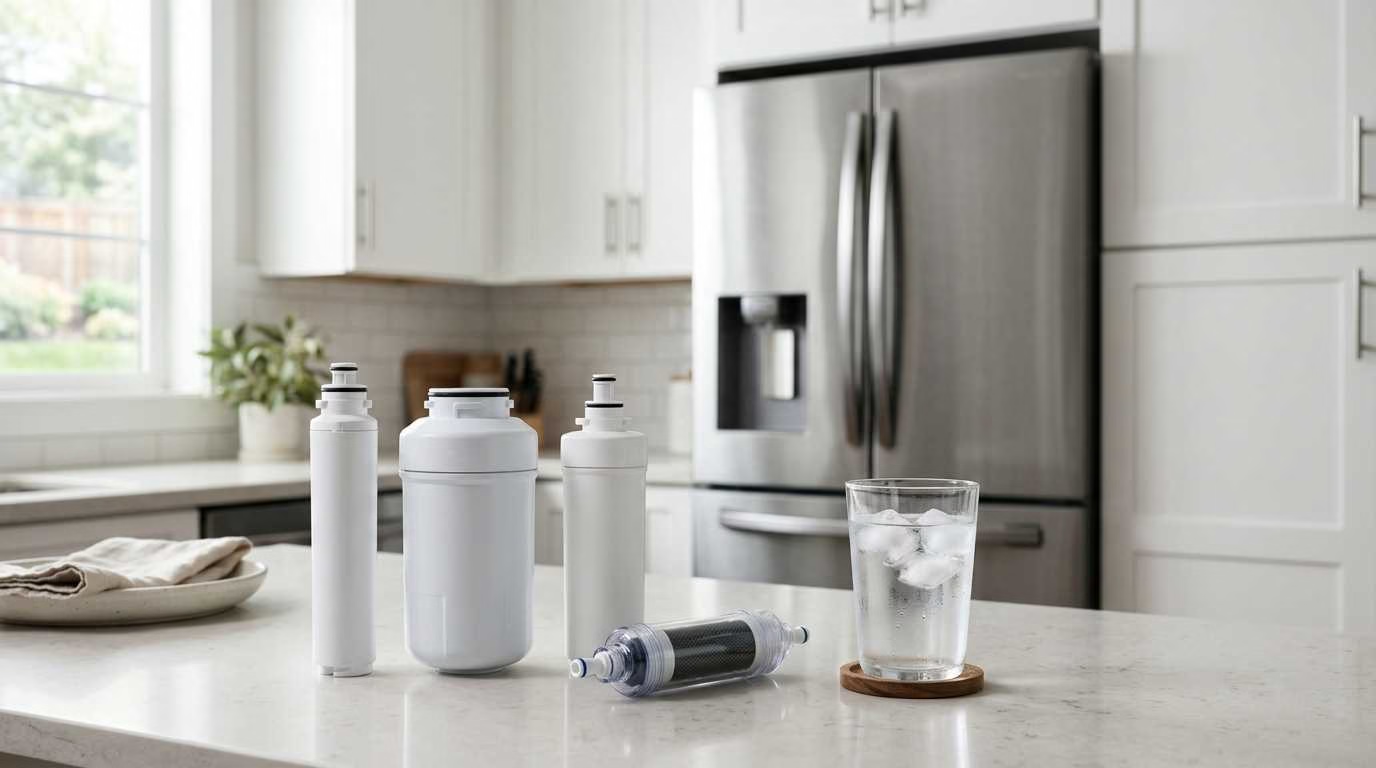
The best refrigerator water filters improve taste and reduce unwanted contaminants. They also fit without leaks or lost water flow.
The right choice depends on your fridge model. EveryDrop Filter 1 is our best overall pick for compatible Whirlpool units. Samsung, LG, GE, and Frigidaire owners need filters made for their systems.
This guide compares nine strong options. It covers fit, filter life, NSF standards, user feedback, and key drawbacks.
Quick Answer: What Is the Best Refrigerator Water Filter?

Here are the top picks by fridge brand and filter type:
- Best overall: EveryDrop Filter 1 EDR1RXD1
- Best for Samsung: Samsung HAF-CINS/EXP
- Best for LG: LG LT1000P
- Best for GE: GE RPWFE
- Best aftermarket value: ICEPURE PRO
- Best for Frigidaire: PureSource Ultra ULTRAWF
- Best premium inline filter: Clearly Filtered Universal Inline
- Best for Bosch: Bosch UltraClarityPro
- Best low-waste option: EcoPure EPINL30
If you want a safe default, choose the genuine filter listed in your fridge manual. You may pay more. Yet you get a more sure fit and clear test claims.
If your fridge is constantly overcrowded and messy, implementing a few clever organization hacks—like using the best refrigerator storage bins—can completely transform your shelf space and make finding ingredients effortless.
A good third-party filter can save money. Just check its exact model in a test group’s public list.
Best Refrigerator Water Filters at a Glance
OEM means the fridge maker’s official filter. An inline filter connects to the water tube behind your fridge.
Prices change often. Always check the full filter number before you choose one.
The 9 Best Refrigerator Water Filters
1. EveryDrop Filter 1 EDR1RXD1 — Best Overall for Whirlpool, Maytag and KitchenAid
EveryDrop Filter 1 is our best overall pick. It fits many fridges from Whirlpool and its related brands.
Those brands include Maytag, KitchenAid, Amana, and JennAir. Still, it does not fit every model from those brands.
Check PriceKey specifications
- Type: OEM internal filter
- Capacity: 200 gallons
- Rated life: Up to six months
- Standards: NSF 42, 53, and 401
- Filter media: Coconut shell carbon
- Best for: Broad filtration with an official fit
Why we like it
Many cheap filters focus on chlorine taste. EveryDrop Filter 1 goes much further.
It can reduce lead and a wide group of other contaminants. It also covers select new chemicals under NSF 401.
Its official design helps protect the filter head. That is the part that holds and seals the filter.
The coconut shell carbon is another plus. It comes from a plant-based source rather than coal.
What owners say
Owners tend to trust the fit of a real EveryDrop filter. Most fit complaints involve cheap copies or the wrong model.
Price is the most common concern. Some users also report slow flow before six months.
That early slowdown does not always mean the filter failed. High sediment can block its small pores fast.
Potential drawbacks
- It costs more than most third-party filters.
- Fake copies are common online.
- Hard or dirty water may cut its useful life.
- Filter 1 does not fit all Whirlpool models.
Best for
Choose this filter if your old cartridge says EDR1RXD1. It suits homes that want more than basic taste control.
Pros
- Covers three key NSF standards
- Reduces lead and select new chemicals
- Fits compatible Whirlpool-family fridges
- Uses coconut shell carbon
- Simple to replace
Cons
- High cost per filter
- May clog early in dirty water
- Easy to confuse with other EveryDrop numbers
EveryDrop makes Filters 1 through 6. These shapes are not the same. Match the full part number, not just the brand name.
2. Samsung HAF-CINS/EXP DA29-00020B — Best for Samsung Refrigerators
The Samsung HAF-CINS/EXP is a trusted OEM pick. It fits select Samsung fridges with a round filter port.
You may also see the part number DA29-00020B. Some older labels use DA29-00020A.
Check PriceKey specifications
- Type: OEM internal filter
- Capacity: 300 gallons
- Rated life: Up to six months
- Standards: NSF 42, 53, and 401
- Shape: Round or tube-shaped
- Best for: Samsung fridges that use DA29-00020B
Why we like it
Its 300-gallon limit beats many 200-gallon filters. That helps homes that use lots of water and ice.
The HAF-CINS model also covers more than poor taste. It can reduce lead, mercury, and select chemicals.
You get a part made for the Samsung filter head. This lowers the risk of a loose fit or bad seal.
What owners say
Many Samsung owners stay with OEM filters for peace of mind. They like the sure fit and steady water flow.
Other owners use third-party options without trouble. Yet the results vary from one filter to the next.
Fake Samsung filters are also a known concern. A copied Samsung logo does not prove the filter is real.
Potential drawbacks
- It costs more than many compatible filters.
- Online sellers may mix real and fake stock.
- Product names are easy to confuse.
- Newer Samsung fridges may use HAF-QIN instead.
Buyer warning
Check these names with care:
- HAF-CIN: A common older version
- HAF-CINS: A newer form with broader claims
- HAF-QIN: A different shape for other Samsung models
- DA29-00020B: A part number tied to HAF-CIN systems
- DA97-17376B: Often tied to HAF-QIN systems
A round HAF-CIN filter will not replace a square HAF-QIN. Use your fridge model to check fit.
3. LG LT1000P — Best for LG Refrigerators
The LG LT1000P is a good match for many newer LG fridges. It offers broad filtration and a simple twist-in fit.
It also reduces more pollutants than many cheap LT1000P copies. That makes it a safer pick for old pipes or known water concerns.
Check PriceKey specifications
- Type: OEM internal filter
- Capacity: 200 gallons
- Rated life: Up to six months
- Standards: NSF 42, 53, and 401
- Common part family: ADQ747935
- Best for: Compatible newer LG fridges
Why we like it
The LT1000P can reduce lead, mercury, asbestos, and benzene. It also targets select drugs and farm chemicals.
Its twist lock is quick to use. You should not need tools for a normal change.
As an LG part, it should also keep the right flow rate. Very dense or poor-fit filters may slow your tap and ice maker.
What owners say
Some LG owners notice no taste change with cheap filters. That can make a three-pack seem like a clear deal.
Yet taste tells you very little about lead. Lead has no taste or smell in water.
Other owners report odd taste or low flow with generic filters. Poor flushing can cause some of these issues.
Potential drawbacks
- It costs more than most LT1000P copies.
- Many look-alike filters pass only basic taste tests.
- Fake LG labels can mislead buyers.
- It will not fit a fridge that needs LT700P.
Editor’s note
A total dissolved solids meter does not give a fair filter test. It reads salts and minerals in water.
Most fridge filters use carbon. Carbon does not remove most dissolved minerals.
Your meter may show the same result before and after filtration. That does not prove the filter has failed.
Pros
- Broad contaminant claims
- Official LG fit
- Easy twist-in design
- Reduces lead
- Covers select new chemicals
Cons
- Pricey as a single filter
- Easy to confuse with LT700P
- Many low-cost copies have weaker test claims
4. GE RPWFE — Best for GE Refrigerators
The GE RPWFE offers some of the broadest filtration in this guide. It can reduce lead, select drugs, and certain PFAS compounds.
PFAS are long-lasting man-made chemicals. They can build up in water and soil.
The filter also has an RFID tag. RFID is a small chip used for filter ID.
Check PriceKey specifications
- Type: OEM internal filter with RFID
- Capacity: Up to 300 gallons
- Rated life: Up to six months
- Standards: NSF 42, 53, 401, and P473
- Best for: Select GE French-door fridges
- Main issue: Filter chip lock
Why we like it
The RPWFE covers a wide set of risks. These include lead, mercury, asbestos, and select drugs.
It also reduces listed forms of PFOA and PFOS. These are two well-known PFAS compounds.
Some GE fridges can sense a filter leak. The system may stop the water to limit damage.
That feature can be useful. A small fridge leak can harm floors before you see it.
For more home protection, see our guide to the best water leak detectors.
What owners say
Owners often praise the water taste. They also like the broad list of reduction claims.
Most complaints focus on cost and the RFID lock. A cheap filter may fit but still fail to pass water.
Some people try chip swaps or bypass tricks. These changes can harm leak alerts or warranty support.
Potential drawbacks
- It is one of the most costly fridge filters.
- Its chip limits your third-party choices.
- Similar GE filter names can cause mistakes.
- Some models stop water without a valid tag.
Important compatibility warning
GE uses several close names:
- RPWF
- RPWFE
- XWF
- XWFE
The letter E often points to an electronic tag. Do not drop it from the part number.
A plain XWF may fit an XWFE port. Yet the fridge may reject it.
Use the exact filter listed in your manual. Check the old label too.
5. ICEPURE PRO — Best Aftermarket Refrigerator Water Filter
ICEPURE PRO is a low-cost option for select fridges. Its Samsung DA29-00020B version is among the best-known choices.
The word PRO matters here. ICEPURE sells more than one filter grade.
Each grade may carry a different set of test claims.
Check PriceKey specifications
- Type: Aftermarket internal filter
- Common fit: Select Samsung DA29-00020B systems
- Rated life: Often six months
- Capacity: Often up to 300 gallons
- Standards: Vary by exact model
- Best for: Lower cost with checked test claims
Why we like it
A good ICEPURE PRO filter may cost far less than OEM. Multi-packs can cut the yearly cost again.
Some PRO models cover lead and cyst reduction. Select versions may also cover new chemicals and stated PFAS forms.
This gives you a path beyond basic NSF 42 filters. You still need to check the exact product code.
What owners say
Many users report easy fitting and good taste. They also like paying less per filter.
Other buyers raise doubts about online reviews. Product pages may also mix basic and PRO facts.
A high star score cannot prove lead reduction. Lab certification carries far more weight.
Potential drawbacks
- Test claims vary by model.
- Basic, Plus, and PRO are not equal.
- Sellers may reuse text across product pages.
- Fit claims can include a vast list of fridges.
Key buying tip
Check these three details before you choose one:
- Exact model number
- Exact NSF standard
- Exact pollutant claims
A filter may have NSF 53 for cysts but not lead. The full public record tells you what it was tested to reduce.
Pros
- Lower cost than OEM
- Multi-packs are easy to find
- Some PRO models cover health risks
- Fits many common filter systems
Cons
- Product labels can confuse buyers
- Test scope varies by part number
- Marketplace details may not match the box
6. Frigidaire PureSource Ultra ULTRAWF — Best for Frigidaire Refrigerators
The Frigidaire PureSource Ultra ULTRAWF uses a push-to-lock fit. It works in select Frigidaire filter systems.
It can reduce chlorine taste, lead, mercury, cysts, and select new chemicals.
Check PriceKey specifications
- Type: OEM push-in filter
- Capacity: 200 gallons
- Rated life: Up to six months
- Standards: NSF 42, 53, and 401
- Part number: ULTRAWF
- Best for: Compatible Frigidaire models
Why we like it
The filter is easy to fit. You push it into the port until it locks.
It also covers far more than chlorine taste. Lead and cyst reduction add real value for many homes.
The true OEM filter should match the Frigidaire holder. This cuts the risk of a poor seal.
What owners say
Many owners find the change quick and simple. Most issues clear after a full flush.
Some users report dark carbon specks. A small amount can appear at first.
The specks should fade as you flush the filter. Stop using it if they do not clear.
A few owners also report stuck or cracked filters. Never force a filter that will not lock or release.
Potential drawbacks
- It costs more than generic copies.
- Some new filters need a long flush.
- A damaged cartridge can stick.
- PureSource names can be hard to sort.
Compatibility note
You may see two common names:
- PureSource 3 WF3CB
- PureSource Ultra ULTRAWF
Some fridges that came with WF3CB can use ULTRAWF. That does not mean every ULTRAWF fridge can use WF3CB.
Check the model page or manual first.
7. Clearly Filtered Universal Inline — Best Premium Refrigerator Water Filter
The Clearly Filtered unit sits on the water line. It does not replace a cartridge inside your fridge.
This design gives it more space for filter media. It can target more pollutants than a small fridge cartridge.
Check PriceKey specifications
- Type: External inline filter
- Connection: Standard ¼-inch water line
- Capacity: 365 gallons
- Best for: Broad contaminant reduction
- Fit: Most fridges with a standard supply line
- Main issue: High start-up cost
Why we like it
The filter targets lead, chlorine, PFAS, and select drugs. It may also reduce fluoride and other hard-to-filter compounds.
It can serve almost any fridge with the right water tube. This frees you from many brand-shaped cartridges.
Its 365-gallon capacity also beats most internal filters. Still, your water quality can shorten that life.
Potential drawbacks
- The unit costs much more at first.
- You need access behind the fridge.
- Your fridge may need a bypass plug.
- A tight space can make setup hard.
- Lab-tested and NSF-certified are not the same claim.
Best for
This filter suits you if local water tests show several concerns. It also helps if your fridge has a weak taste-only filter.
You may prefer this setup if you want one broad filter. Just confirm that your fridge supports a bypass plug.
Certification note
Some brands say their filter was tested to NSF standards. That can show strong lab results.
Yet it is not the same as a live NSF product listing. Look at the test lab, model number, flow rate, and gallon limit.
Good test data should list each pollutant. It should also show the amount reduced.
8. Bosch UltraClarityPro BORPLFTR50 — Best for Bosch Refrigerators
The Bosch UltraClarityPro is built for select Bosch fridges. It is a strong OEM pick for these higher-end units.
It can reduce chlorine, chloramine, lead, cysts, and sediment. Chloramine is a long-lasting water disinfectant.
Check PriceKey specifications
- Type: OEM internal filter
- Capacity: About 240 gallons
- Rated life: Up to six months
- Standards: NSF 42 and 53
- Common model: BORPLFTR50
- Best for: Compatible Bosch refrigerators
Why we like it
This filter targets more than taste. Its health-based claims include lead and cyst reduction.
It also fits the Bosch filter head. That matters in an expensive fridge.
A poor-fit cartridge may stress the filter port. It may also cause a slow leak.
What owners say
Bosch owners tend to trust the OEM design. The main complaint is its price.
Some users look for cheap compatible filters. Fridge repair pros often warn about bad seals and stiff locking tabs.
A tight filter should not need force. Stop if it will not turn with light pressure.
Potential drawbacks
- It has a high OEM price.
- Similar Bosch part numbers appear online.
- A replaced filter head may use another cartridge.
- Cheap copies may not seal as well.
Sub-Zero alternative
Best Sub-Zero option: Sub-Zero 4204490
The Sub-Zero 4204490 is made for select Classic, Designer, and Pro fridges. Its rated life can reach one year.
That long service life means fewer filter changes. It also cuts yearly cartridge waste.
Still, it focuses more on taste and common contaminants. Check its full data sheet if lead or PFAS is your main concern.
9. EcoPure EPINL30 — Best Long-Life and Eco-Friendly Pick
The EcoPure EPINL30 fits on the water line behind your fridge. Its main draw is a service life of up to five years.
That can mean far less filter waste. It also cuts the need to pull out your fridge twice each year.
Check PriceKey specifications
- Type: External inline filter
- Connection: Standard ¼-inch water line
- Rated life: Up to five years
- Main reduction: Chlorine taste, odor, and sediment
- Best for: Safe city water with taste issues
- Fit: Most major fridge brands
Why we like it
The EPINL30 is simple and long-lasting. It comes with parts for common plastic or copper water lines.
It works well if your tap water is already safe. The filter can improve taste and catch small bits of dirt.
Its long life also lowers waste. You may discard one filter instead of several small cartridges.
Potential drawbacks
- It is not our pick for lead.
- It does not offer broad PFAS reduction.
- It is not made to remove germs.
- Dirty water may shorten its life.
- You need room behind or near the fridge.
Honest sustainability note
A truly reusable fridge filter sounds ideal. Yet sealed carbon cartridges should not be washed or refilled.
Used carbon holds trapped waste. Washing it will not restore its full filter power.
Opening a sealed cartridge can also harm its strength. The unit may crack or leak under water pressure.
A long-life inline filter is a safer low-waste choice. It is not fully reusable, but you replace it less often.
How We Chose the Best Refrigerator Water Filters
A good filter needs more than a high star rating. It must fit, seal, and reduce the right pollutants.
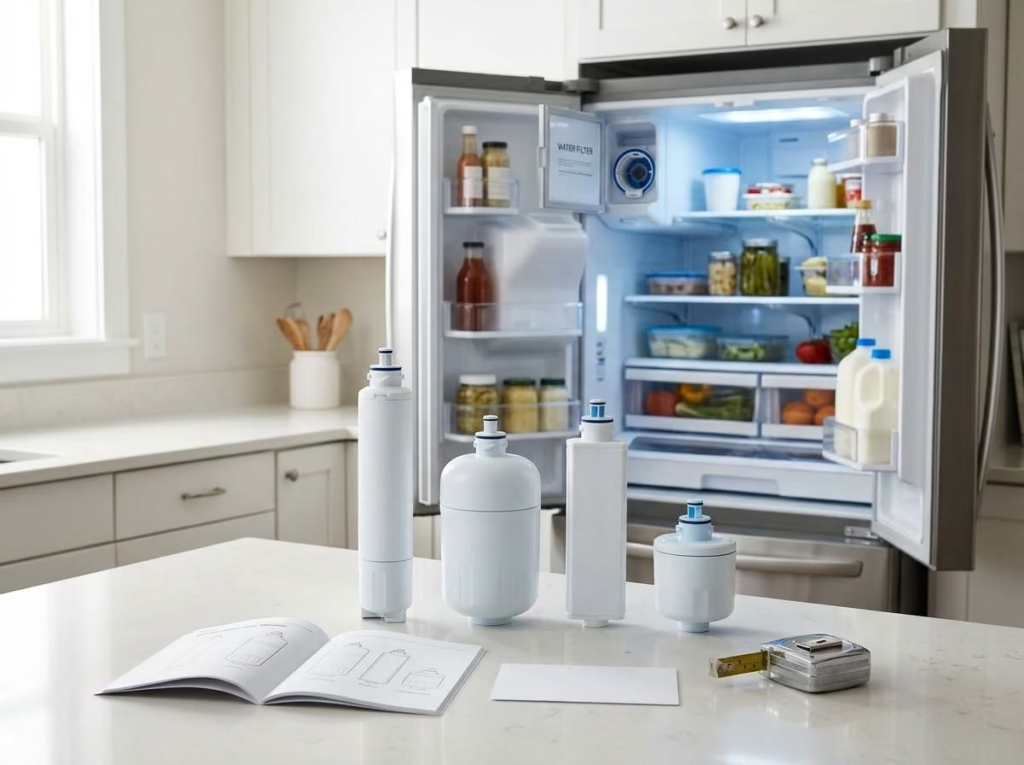
We gave the most weight to test scope and model fit. We also reviewed common user concerns.
Certification and independent testing
We looked for clear links between each model and its test claims.
The best records list:
- The full filter model
- The exact test standard
- Each pollutant reduced
- The test flow rate
- The rated gallon limit
- The group that ran or checked the test
A broad claim on a product page is not enough. The model on the box must match the model in the test file.
Refrigerator compatibility
Small shape changes can stop a filter from fitting. A small chip can also affect water flow.
We checked factors such as:
- Filter number
- Locking tab shape
- Cartridge length
- Seal position
- RFID needs
- Bypass plug needs
- Fridge model support
Always check your old filter. Then check the fridge model tag.
Contaminants reduced
Clean taste is useful. Yet it is only one part of water quality.
We gave more weight to filters that reduce:
- Chlorine
- Lead
- Mercury
- Cysts
- Asbestos
- Select drugs
- Farm chemicals
- Named PFAS compounds
No fridge filter removes every risk. Your local water report can help you set your needs.
Capacity and replacement cost
A low price may hide a short filter life. A high price may still offer poor value.
We compared:
- Gallons per filter
- Rated months of use
- Cost per month
- Cost per 100 gallons
- Single-pack cost
- Multi-pack cost
- Long-term waste
Rated capacity is not a promise. Sediment and heavy use can shorten filter life.
Real owner feedback
Forum comments help show repeat issues. They do not prove how well a filter removes lead.
We looked for common reports of:
- Slow water flow
- Poor taste
- Carbon specks
- Leaks
- Stuck filters
- Broken locking tabs
- Fake products
- RFID errors
- Wrong fit
One bad review can be user error. The same issue across many reports deserves more care.
OEM vs Aftermarket Refrigerator Water Filters
OEM filters come from the fridge maker. Aftermarket filters come from another brand.
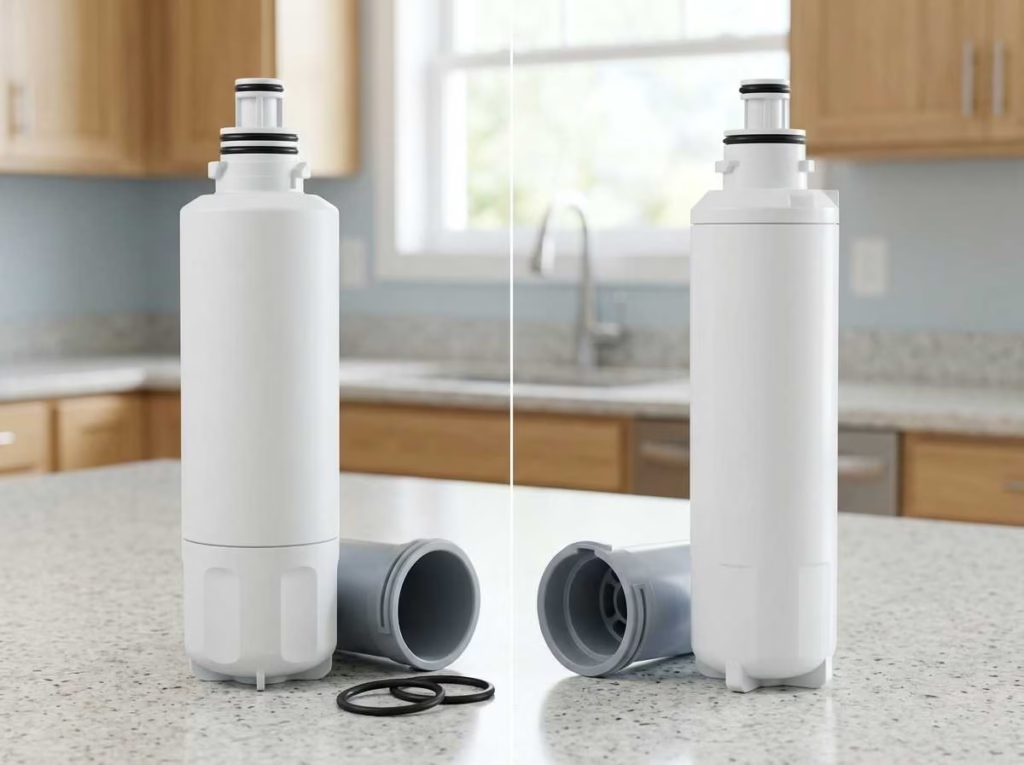
Neither group is always best. Your choice should rest on fit, testing, and cost.
Advantages of OEM filters
OEM models offer a more sure fit. The maker designed both the filter and its holder.
Other benefits include:
- Clear model support
- Stable seals
- Less risk of lock damage
- Better warranty help
- Simple filter reset
- Clear performance sheets
You still need to avoid fake OEM stock. A copied label does not make a filter real.
Advantages of aftermarket filters
Third-party filters can cost much less. Some offer two or three filters for one OEM price.
Other benefits may include:
- More pack sizes
- Wide store choice
- Plant-based carbon
- Better cost per gallon
- Options for old fridge models
Some third-party models have strong test records. Others cover chlorine taste and little else.
Risks of cheap aftermarket filters
Price cuts often come with trade-offs.
Possible issues include:
- Weak or vague test claims
- Poor seals
- Early flow loss
- Low carbon content
- Cracked shells
- Wrong locking tabs
- False fit lists
- Missing RFID tags
Water can cause costly harm if a filter leaks. Check the floor and cabinet after each change.
When an aftermarket filter makes sense
A third-party filter can be a smart choice if:
- Its exact model has a public test listing.
- It fits your exact fridge model.
- It comes from a known seller.
- Its test claims match your water.
- It offers real long-term savings.
- Your fridge does not block it with a chip.
Avoid the cheapest no-name option. A small saving is not worth a damaged filter head.
What Do NSF Refrigerator Filter Certifications Mean?
NSF standards help you compare filter claims. Each standard covers a different part of water quality.
An NSF mark does not mean a filter removes everything. You must check the exact standard and model number.
You should also review the filter’s performance sheet. It lists the contaminants the filter was tested to reduce.
NSF/ANSI 42 — Taste and Odor
NSF/ANSI 42 covers the way water looks, smells, and tastes. These are called aesthetic effects [changes you can sense].
A filter under this standard may reduce:
- Chlorine taste and odor
- Fine dirt and rust
- Small particles
- Cloudiness
- Other taste or smell issues
Standard 42 is useful if your city water tastes like chlorine. It may also help your ice taste fresher.
However, NSF 42 does not prove lead reduction. It also does not confirm that a filter reduces drugs, cysts, or PFAS.
Some product pages show “NSF certified” in large text. The small print may list only NSF 42. Always read the full claim.
NSF/ANSI 53 — Health-Related Contaminants
NSF/ANSI 53 covers contaminants that may affect your health. This makes it an important standard for many homes.
Depending on the exact claim, NSF 53 may cover:
- Lead
- Mercury
- Cysts
- Asbestos
- Turbidity [fine suspended matter]
- Certain chemicals
- Some forms of industrial waste
A filter does not gain every NSF 53 claim at once. It is tested for specific contaminants.
For example, one filter may reduce cysts but not lead. Another may reduce both.
Look for the exact words “certified for lead reduction.” Do not assume every NSF 53 filter removes lead.
The performance sheet should state:
- The contaminant tested
- The amount in the test water
- The final reduction rate
- The tested flow rate
- The filter’s gallon limit
This detail matters if your home has old pipes. It also matters if lead is known in your area.
NSF/ANSI 401 — Emerging Contaminants
NSF/ANSI 401 covers select chemicals found at low levels in water. These are often called emerging contaminants [newer water concerns].
This standard may include selected:
- Pharmaceuticals
- Herbicides
- Pesticides
- Insect repellents
- Household chemicals
- Personal care product compounds
NSF 401 does not mean a filter removes every drug or chemical. It applies only to the substances listed in the test claim.
This standard can add useful protection. Yet it should not replace NSF 53 if lead is your main concern.
For broad coverage, look for a filter with NSF 42, 53, and 401. Then check the exact claims under each standard.
NSF P473 — PFOA and PFOS
NSF P473 relates to two well-known PFAS compounds:
- PFOA
- PFOS
PFAS are long-lasting man-made chemicals. They can remain in water and soil for years.
A P473 claim shows that the filter was tested for named PFOA and PFOS reduction. It does not mean the filter removes every type of PFAS.
Many standard refrigerator filters lack a verified PFAS claim. If PFAS is a known local issue, check the performance sheet with care.
Look for:
- The exact PFAS compounds tested
- The filter model used in testing
- The rated gallon limit
- The flow rate during the test
- The group that checked the results
A broad phrase like “reduces forever chemicals” is not enough. You need a clear claim tied to the exact filter.
NSF/ANSI 372 — Lead-Free Materials
NSF/ANSI 372 deals with lead in the product’s parts. It limits how much lead those parts may contain.
This standard can apply to:
- Filter housings
- Fittings
- Connectors
- Valves
- Other parts that touch water
Here is the key point:
NSF 372 means the product meets lead-content rules. It does not prove that the filter removes lead from drinking water.
A filter may have NSF 372 but no lead reduction claim. This is common with low-cost filters.
For lead removal, look for a specific NSF 53 lead reduction claim. Check the exact model in the public listing.
“Certified” vs “Tested to NSF Standards”
These phrases may sound alike. They do not always mean the same thing.
Certified by an accredited organization
This is the strongest and clearest form of proof.
An approved group checks the filter’s test results. It may also review the factory, materials, labels, and production process.
Certification is tied to:
- A specific brand
- A specific filter model
- One or more standards
- Named contaminant claims
- A rated flow and filter life
Certification may require repeat checks. This helps confirm that later filters match the tested sample.
Independently tested to a standard
This means an outside lab tested the filter. The results may still offer useful proof.
However, independent testing may not include:
- Factory inspections
- Repeat product checks
- Label reviews
- Ongoing quality checks
- A public product listing
Check whether the lab is qualified. You should also read the full test report.
Made with NSF-certified materials
This claim applies to one or more materials. It does not prove the full filter removes any contaminant.
For example, the plastic may meet a material rule. The carbon filter may still lack a certified reduction claim.
Do not treat this phrase as full product certification.
Manufacturer-tested
The filter maker ran or paid for the test. The results may be accurate, but outside review is less clear.
Look for a full report rather than a short claim. The report should name the model and each test condition.
Compatible with an NSF-certified filter
This phrase only describes fit. It does not prove equal filter performance.
A low-cost cartridge may fit in place of an NSF-certified OEM filter. That does not give the cheaper filter the same certification.
Check the replacement filter itself. Never transfer the claims from one brand to another.
How to Find the Right Filter for Your Refrigerator
Filter shape alone cannot confirm fit. Several cartridges look alike but use different tabs, seals, or chips.
Use this five-step process before choosing a replacement.
Step 1 — Find the Refrigerator Model Number
Start with the refrigerator model number. Do not use the serial number by mistake.
Common model-label locations include:
- Inside the fresh-food section
- On a side wall near the produce drawers
- Around the inner door frame
- On the ceiling inside the fridge
- Behind the lower kick plate
- On the back of the appliance
- In the owner’s manual
The model number may contain letters, numbers, dashes, or slashes. Copy the full code.
Taking a clear photo is often easier. It also helps prevent small typing errors.
You may need to move food or a drawer to find the label. Do not remove parts unless the manual says it is safe.
Step 2 — Check the Old Filter Number
Remove the old filter and read its full part number. Look at both the front and back.
Do not match only the brand. A single fridge maker may use several filter systems.
For example, these filter details may differ:
- Length
- Width
- Locking tabs
- Seal location
- Water inlet shape
- Electronic tag
- Filter head design
Copy every letter and number. A missing letter can point to a different filter.
If the old filter is generic, do not rely on its label alone. Check the fridge model with the manufacturer.
Step 3 — Use the Manufacturer’s Compatibility Checker
Most major fridge brands offer an online parts checker. Enter the full refrigerator model number.
This method is safer than using a marketplace fit list. Seller lists can be old, copied, or too broad.
Use the appliance maker’s result as your starting point. You can then compare approved third-party replacements.
If two official sources show different filters, contact customer support. A replaced filter head may use a newer cartridge.
Save a screenshot of the result. It can help with returns or warranty questions.
Step 4 — Identify Electronic Restrictions
Some refrigerators use a chip or special label. The fridge reads it before allowing normal water flow.
Look for:
- RFID chips [small ID tags]
- Authentication stickers
- Filter status communication
- Automatic replacement tracking
- Leak-detection features
- Electronic filter locks
GE is well known for filters with electronic tags. Some models may reject a filter that lacks the right tag.
A third-party filter may have the correct shape. Yet your fridge may still block it.
Avoid moving or copying a filter chip unless the maker approves it. That change may affect leak alerts or warranty help.
Step 5 — Match Certification to Local Water Concerns
Your filter should match the problems found in your water. A taste-only filter may be enough for some homes.
Use these examples as a starting point:
- Chlorine taste: Look for NSF 42.
- Old plumbing: Look for an NSF 53 lead claim.
- Lead concerns: Confirm certified lead reduction.
- Cysts: Check for a specific NSF 53 cyst claim.
- Pharmaceuticals: Review NSF 401 claims.
- PFAS: Look for verified PFOA and PFOS reduction.
- Sediment: Check the particle class and capacity.
- Hard water: A fridge filter will not soften it.
Your city water report may list local test results. Private well users should arrange their own water test.
If your home uses well water, a fridge cartridge may be too small. A whole-house water filter for well water may offer better protection.
How Often Should You Change a Refrigerator Water Filter?
Most fridge filters need a change:
- Every six months
- After 200 to 300 gallons
- When the warning light appears
- Whichever limit comes first
The maker’s schedule is a starting point. Your real filter life may be shorter.
Write the change date on the cartridge. You can also set a phone reminder.
Do not wait for bad taste if the filter has reached its limit. Some contaminants have no smell or taste.
Replace It Sooner if You Notice
Change or inspect the filter if you see these signs:
- Slower dispenser flow
- Weak or small ice production
- Unusual taste or smell
- Cloudy water
- Cloudy or odd-tasting ice
- Continued black carbon particles
- Sputtering that does not stop
- A filter warning light
- A long period without fridge use
- High sediment in the supply water
- A leak near the filter housing
Slow flow is one of the most common signs. Sediment may have blocked the filter’s small pores.
First confirm that the water valve is fully open. Then inspect the line for bends.
A few black specks can appear with a new carbon filter. They should clear during the first flush.
Replace the filter if particles continue. You may have a damaged carbon block or cartridge.
Why Six Months Is Not Universal
Two homes can use the same filter at different rates. Water quality and daily use both affect filter life.
Household size
A family of five may use far more water than one person. Their filter may reach its gallon limit first.
Water consumption
Frequent use fills the filter with trapped matter faster. Large water bottles can also raise daily use.
Sediment levels
Sand, rust, and pipe scale can block a cartridge. High sediment often causes early flow loss.
A sediment prefilter may help. It catches larger dirt before water reaches your fridge.
Chlorine concentration
More chlorine gives the carbon more work. Taste may return as the carbon reaches its limit.
Water hardness
Hard water contains dissolved minerals. Most fridge filters do not remove them.
These minerals may form scale in the water line. Scale can reduce flow over time.
For help choosing the right system, compare a water softener vs reverse osmosis.
Filter capacity
Small filters may have a 200-gallon limit. Larger models may last for 300 gallons or more.
Do not compare filters by months alone. Compare their rated gallons too.
Water and ice use
Your fridge may use filtered water for both taps and ice. Heavy ice use still counts toward filter life.
Hot weather and large gatherings can raise use. Your normal six-month filter may clog sooner.
How to Install and Flush a Refrigerator Water Filter
Most filter changes take a few minutes. Care and proper flushing help prevent leaks and poor taste.
Read your refrigerator manual first. Filter designs and water shutoff steps can differ.
Basic Installation Process
- Confirm the replacement part number.
Match it with the old filter and fridge model. - Read the installation guide.
Check whether you need to close the water valve. - Turn off the water supply if required.
The valve is often behind the fridge or under the sink. - Place a towel below the filter.
A small amount of water may spill. - Remove the old cartridge.
Twist, pull, or press the release button as directed. - Inspect the filter housing.
Look for cracks, dirt, or damaged seals. - Remove all protective caps.
Check both ends of the new filter. - Inspect the O-rings.
An O-ring is the small rubber seal. - Install the new filter without force.
It should lock with firm but light pressure. - Restore the water supply.
Open the valve slowly if you closed it. - Check for leaks.
Inspect the filter and water line. - Flush the required amount of water.
Follow the maker’s instructions. - Reset the filter light.
The button steps vary by fridge model. - Check again after one hour.
A slow leak may take time to appear.
Do not use tools to force a plastic cartridge. Too much pressure can damage the filter head.
How Much Water Should You Flush?
Follow the instructions on the filter box. Each model may need a different flush amount.
Some makers list gallons. Others tell you to dispense water for a set time.
Flushing helps:
- Remove loose carbon dust
- Clear trapped air
- Wet the carbon media
- Improve initial taste
- Reduce temporary cloudiness
- Stop short bursts of air
- Check that water flows well
Dispense the water in short rounds. Long runs can strain the dispenser motor in some fridges.
Cloudy water after a change often comes from tiny air bubbles. It should clear from the bottom upward.
Carbon specks should also fade during flushing. Stop using the filter if dark particles continue.
Do not use the first flush water for drinking or ice. Empty the first batches of ice as the manual directs.
What to Do if the New Filter Leaks
Stop dispensing water if you see a leak. Dry the area so you can find its source.
Then take these steps:
- Remove the new cartridge.
- Confirm that all caps were removed.
- Check the O-rings for cuts.
- Clean dirt from the filter port.
- Confirm the exact part number.
- Reinstall the cartridge.
- Lock it fully without force.
- Turn the water back on slowly.
- Check the filter under pressure.
- Recheck it after one hour.
Do not use a cartridge with a cracked shell. Replace it at once.
A filter that feels too tight may be the wrong model. Forcing it can break the filter head.
If the leak continues, turn off the water supply. Contact the fridge or filter maker for help.
A smart leak sensor can alert you before water spreads. See our guide to the best water leak detectors for more options.
How to Avoid Counterfeit Refrigerator Filters
Fake filters can copy the shape and label of a real product. Their internal parts may be very different.
A counterfeit may not meet the stated test claims. It may also use weak seals or poor-grade plastic.
Use these steps to reduce your risk:
- Buy from the appliance manufacturer.
- Choose an approved parts seller.
- Use a known home appliance store.
- Avoid prices that seem far too low.
- Check the seller’s name, not just the website.
- Review the packaging and security marks.
- Compare it with your last genuine filter.
- Inspect the shell seams.
- Check the print quality.
- Look for missing or loose caps.
- Inspect the O-rings.
- Check the date or batch code.
- Verify the exact model’s certification.
- Return damaged or poorly printed products.
Be careful with marketplace listings marked “OEM style.” That phrase does not mean the filter is an OEM product.
Watch for small spelling errors. Faded ink and poor box printing may also raise concern.
Compare the new cartridge’s weight with the old one. A very light filter may contain less media.
Do not use a filter with:
- A cracked case
- Loose parts
- Crooked seams
- Missing seals
- A chemical smell
- A damaged safety wrap
- Signs of prior use
A counterfeit may copy an OEM label without matching its build, safety tests, or reduction performance.
If you have doubts, return it. Do not risk a leak or weak filtration.
Can a Refrigerator Filter Make Tap Water Safe?
A refrigerator filter can reduce the contaminants listed in its test claims. It cannot make every unsafe water source safe.
Most fridge filters use activated carbon. Carbon is good at improving taste and reducing select chemicals.
However, a standard fridge filter may not remove:
- Bacteria
- Viruses
- Nitrates
- Arsenic
- Fluoride
- Dissolved salts
- Water hardness
- Every type of PFAS
- All farm chemicals
- Fuel spills
A refrigerator filter also does not disinfect water. It should not replace a boil-water notice or public health warning.
If officials issue a boil-water notice, follow their directions. Do not trust the fridge filter to remove germs.
Our guide on whether water filters remove bacteria explains this limit in more detail.
Private well water needs extra care. A small fridge cartridge cannot fix every well-water problem.
Well water may contain:
- Harmful germs
- Iron
- Sulfur
- Nitrates
- Arsenic
- Farm runoff
- Sediment
Test the water before choosing a system. Your results should guide the filter type.
A whole-house filter, UV unit, or reverse-osmosis system may be needed. The right setup depends on what the test finds.
In short:
- A certified filter can reduce listed contaminants.
- It does not remove every water risk.
- It cannot disinfect unsafe water.
- It does not replace a water test.
- It may need help from a larger system.
Frequently Asked Questions
What Is the Best Refrigerator Water Filter Overall?
EveryDrop Filter 1 is our best overall pick for compatible Whirlpool-family fridges. It offers a sure OEM fit and broad NSF claims.
Still, it is not the best filter for every fridge. Your filter must match the appliance’s exact model and filter port.
Samsung, LG, GE, Bosch, and Frigidaire use other filter shapes. Check the old cartridge before choosing.
Are Aftermarket Refrigerator Water Filters Safe?
Some aftermarket filters are safe and well-tested. Others offer little proof beyond a product-page claim.
Choose one with:
- A verified model number
- Clear test standards
- A reliable fit
- Food-safe materials
- Strong seals
- A known seller
Do not assume a compatible filter matches the OEM model’s test results. Each product needs its own proof.
Is NSF 42 Certification Enough?
NSF 42 is useful for chlorine taste, odor, and particles. It may be enough if those are your only concerns.
It does not prove that a filter reduces lead. It also does not confirm drug or PFAS reduction.
For lead concerns, look for a clear NSF 53 lead claim.
Is NSF 53 Better Than NSF 42?
NSF 53 covers health-related contaminants. NSF 42 focuses more on taste, odor, and appearance.
That does not make every NSF 53 filter equal. Each product is tested for named contaminants.
A filter may have NSF 53 for cysts but not lead. Check the full performance sheet.
Do Refrigerator Filters Remove Lead?
Some do. The exact model needs a verified lead reduction claim.
Look for lead under NSF/ANSI 53. Do not rely on NSF 42 or NSF 372 alone.
NSF 372 limits lead in the product’s materials. It does not prove lead removal.
Do Refrigerator Filters Remove PFAS?
Most basic fridge filters do not make a verified PFAS claim. Some premium filters reduce named PFAS compounds.
Look for clear PFOA and PFOS test results. Check the exact model and gallon limit.
Do not trust vague claims such as “targets forever chemicals.” The test sheet should name each compound.
Do Refrigerator Filters Remove Fluoride?
Most standard carbon cartridges do not reduce much fluoride. Carbon works better for chlorine and many organic chemicals.
Some premium inline systems target fluoride. Reverse osmosis is another common option.
Check the full test data. Do not assume fluoride removal from a broad “clean water” claim.
Can I Use a Generic Water Filter in My Refrigerator?
Yes, if the filter meets three key needs:
- It fits the exact filter port.
- It works with the fridge’s chip system.
- It has suitable third-party test results.
A cartridge may fit but still leak. It may also fail if the fridge needs an RFID tag.
Install it with care. Check again for leaks after one hour.
Why Does My Water Taste Strange After Replacing the Filter?
The most common cause is poor flushing. New carbon filters may release small bits of carbon dust.
Other causes include:
- Air in the water line
- A loose filter
- A damaged cartridge
- The wrong filter model
- Old ice in the bin
- A dirty water line
- Long periods without use
Flush the filter as directed. Empty the first batches of ice.
Contact the maker if the taste remains.
Why Is My Refrigerator Water Slow After a Filter Change?
The filter may not be fully locked. Air can also block normal flow for a short time.
Other causes include:
- Closed water valve
- Bent water line
- Wrong cartridge
- Poor filter fit
- High sediment
- Blocked filter media
- Damaged filter head
- Low home water pressure
Remove and reinstall the filter once. Do not keep forcing it.
Try a confirmed genuine filter if the issue began with a cheap replacement.
Can I Run My Refrigerator Without a Water Filter?
Some fridges can run without one. Others need a bypass plug.
A bypass plug keeps water moving around the empty filter space. It does not clean the water.
Some models stop the dispenser if no filter is present. Check your manual before removal.
Never leave an open port if the fridge requires a cartridge or plug.
Can Refrigerator Water Filters Be Cleaned and Reused?
Standard sealed cartridges should not be washed or refilled.
Washing does not restore used carbon. It can also add germs or damage the cartridge.
Opening the shell may weaken it. A weak filter can fail under water pressure.
Replace the cartridge at its rated limit. Choose a long-life inline filter if waste is your main concern.
Is an Inline Refrigerator Filter Better?
An inline filter can offer more filter media and longer life. Some models also reduce more contaminants.
However, setup takes more work. You need access to the water line behind the fridge.
Your fridge may also need a bypass plug. Check this before adding an inline filter.
An inline filter is not always better. Its test claims still need to match your water.
Do Refrigerator Filters Reduce Total Dissolved Solids?
Most carbon fridge filters do not cut total dissolved solids by much.
Total dissolved solids include:
- Calcium
- Magnesium
- Sodium
- Other dissolved minerals
These particles are too small for most carbon blocks. A normal meter may show little change after filtration.
Reverse osmosis can reduce dissolved solids. It may be a better fit if that is your goal.
Final Verdict
The best choice depends on your refrigerator and water concerns. Start with the exact filter number.
Then match its test claims to the contaminants you want to reduce.
- Choose EveryDrop Filter 1 for compatible Whirlpool, Maytag, and KitchenAid fridges. It offers a strong mix of OEM fit and broad certification.
- Choose Samsung HAF-CINS for Samsung models using DA29-00020B. Its 300-gallon rating also suits homes with heavy water use.
- Choose LG LT1000P for compatible newer LG fridges. It offers broad filtration and a simple twist-in fit.
- Choose GE RPWFE if your GE fridge requires an RFID filter. It also offers some of the widest reduction claims here.
- Choose ICEPURE PRO if you want to spend less. Verify the exact model and each filter claim first.
- Choose Frigidaire ULTRAWF for compatible PureSource Ultra systems. It offers a quick push-in fit and broad reduction claims.
- Choose Clearly Filtered Inline if you want wider contaminant reduction. It also works across many fridge brands.
- Choose Bosch UltraClarityPro for a compatible Bosch fridge. Its OEM design lowers the risk of fit issues.
- Choose EcoPure EPINL30 for long life and less cartridge waste. It works best for chlorine taste and sediment.
The best refrigerator water filter is not the one with the highest star rating. It is the filter that fits your fridge and matches your water.
Check the exact model. Verify the reduction claims. Then choose a seller you can trust.