
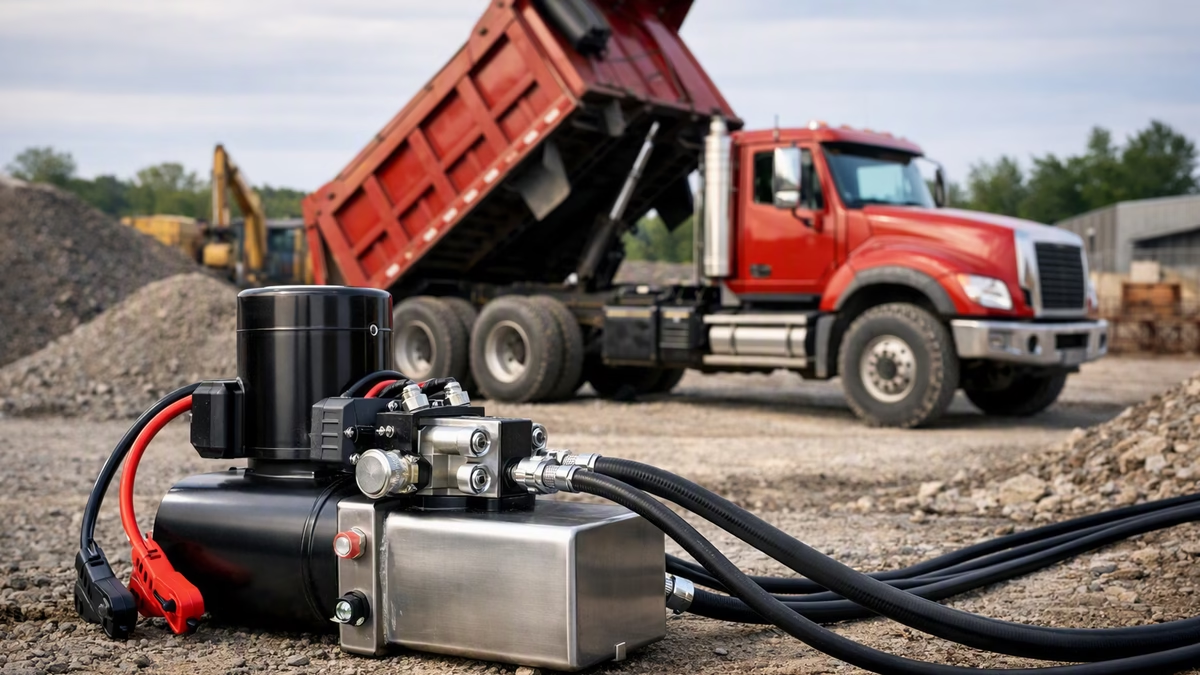
The best electric hydraulic pump for dump truck use depends on your cylinder, oil demand, and work cycle. It also depends on how you want the bed to lower.
For most setups, the KTI DC-45597 offers the best overall balance. It has solid parts support and several tank sizes. For daily work, the Bucher/Monarch M-3319 is a stronger commercial choice. Budget users may prefer a VEVOR or DC HOUSE unit.

This guide compares ten practical options. You will also learn how to match pressure, flow, voltage, and tank size. For detail and maintenance, see here.
Quick Comparison Table
This page contains Amazon affiliate links. If you buy through them, I may earn a small commission at no additional cost to you.
Pressure figures tell only part of the story. A high-pressure pump may still lift slowly. Flow rate, cylinder size, battery health, and cable size all affect speed.
Best Electric Hydraulic Pump for Dump Truck Reviews
1. KTI DC-45597 — Best Overall
The KTI DC-45597 is a strong fit for many dump trucks. It also works well on dump trailers, tilt decks, and flatbeds.
This 12V unit supports powered lift and powered return. That makes it suitable for a double-acting cylinder. The cylinder has two oil ports and moves under power in both ways.
The lift side can use a relief setting up to 3,200 PSI. The return side has a lower setting. This helps control the bed as it comes down.
Check PriceKTI offers this pump with several tank sizes. Poly tanks are light and resist rust. Steel tanks deal better with knocks and rough work. Available sizes can range from compact tanks to 20-quart models.
The broad tank range is a major benefit. You can match the unit to your cylinder instead of changing the whole hydraulic plan.
Parts support is another strong point. Remotes, valves, solenoids, tanks, and motors are easier to find than parts for many generic pumps. That matters if your truck earns money each day.
Keep the unit dry. These pumps need a covered pump box. Road spray can harm the motor, switch, and power points.
Key strengths:
- Good parts supply
- Many tank sizes
- Powered lift and return
- Clear pressure settings
- Compact shape
- Wired remote included on many versions
Possible drawbacks:
- Costs more than a generic pump
- Not fully waterproof
- Needs thick battery cables
- May still feel slow on a huge cylinder
This is the best starting point for most buyers. It gives you useful options without forcing a custom build.
2. Bucher/Monarch M-3319 Dyna-Jack — Best Heavy-Duty Commercial Pump
The Bucher/Monarch M-3319 suits trucks that work for a living. It comes from a long-running line of mobile hydraulic power units.
The main strength is not one headline figure. It is the system behind the pump. You can source motors, tanks, valves, and other service parts. A hydraulic shop may also know the product line.
That can reduce downtime. If a switch or motor fails, you may not need a whole new pump. You can find the fault and replace the failed part.
Check PriceThe M-3319 comes in more than one setup. That is useful, but it can also cause confusion. You must check the full model code before you order. One M-3319 may not match another M-3319 in every detail.
Confirm these points with the seller:
- Pump flow
- Relief pressure
- Tank size
- Port type
- Mount position
- Valve design
- Motor voltage
- Single or double action
The M-Series was built for mobile and work equipment. It appears in lift, transport, and material handling systems. The product line also has a wide service network.
Key strengths:
- Good fit for regular commercial use
- Strong repair support
- Many circuit choices
- Known product family
- Replaceable service parts
Possible drawbacks:
- Higher cost
- Model codes can be hard to read
- You may need help with selection
- Some builds are made to order
This pump makes sense if one day of downtime costs more than the pump. It is less attractive for an old truck used twice each month.
3. VEVOR 8-Quart Pump — Best Budget Pump
The VEVOR 8-quart unit gives you a low-cost entry point. It is aimed at dump trailers, small dump bodies, and lift systems.
The common version uses a 12V motor. It has a double-acting valve and an 8-quart tank. Its listed relief pressure reaches 3,200 PSI. Its stated flow is about 0.91 GPM on some models.
That flow rate is the main limit. The pump may make enough pressure to raise your bed. Yet it can still take time to fill a large cylinder.
Check PriceThink of flow as filling a bucket. A stronger stream fills the bucket faster. A weak stream may reach the same height, but it takes longer.
This unit suits light or rare use. It can work well on a small farm trailer. It may also suit a truck used for yard work.
The 8-quart tank gives it more oil than many cheap four-quart units. That helps with larger cylinders. Still, you must calculate your oil need before you choose it.
Build quality can vary on pumps in this price group. Check each fitting before use. Look for loose wires, poor seals, and metal dust in the tank.
Key strengths:
- Affordable
- Useful 8-quart tank
- Double-acting design
- Common port size
- Simple wired control
Possible drawbacks:
- Slow on large cylinders
- Limited trust for daily work
- Parts support may vary
- Quality checks are wise before use
This is a fair budget choice for light use. For daily hauling, a serviceable commercial pump makes more sense.
4. Buyers Products PU319 — Best 12V Pump
The Buyers Products PU319 is a simple 12V power unit. It works best with a standard gravity-down dump body.
The pump powers the cylinder up. A release valve then lets oil return to the tank. The load and gravity bring the bed down.
This layout uses one hose at the cylinder. It has fewer working parts than a double-acting system. It also draws no motor power during most of the down cycle.
Check PriceThe PU319 has a 12V motor and a 0.75-gallon tank. That equals about three US quarts. It uses a three-way control design and a pressure setting near 2,500 PSI.
The tank is small. That may be fine for a short-stroke cylinder. It will not suit every long telescopic ram.
Buyers Products designs truck gear for hard use. The pump also includes filtration and an electric release valve. These details help keep the system simple.
Key strengths:
- Made for dump bodies
- Simple gravity-down design
- Low power use during lowering
- Compact size
- Good brand support
- Easy push-button control
Possible drawbacks:
- Small tank
- Not for a double-acting cylinder
- Lower pressure than some rivals
- Limited use outside simple dump systems
Choose this model if your bed uses one hydraulic hose. It is also a good fit if you want a simple 12V unit from a known truck gear brand.
Do not choose it for power-down use. A second hose does not turn it into a double-acting pump.
5. Magister HPU-DT-111 — Best Double-Acting Pump
The Magister HPU-DT-111 is built for powered movement both ways. It sends oil to either side of a double-acting cylinder.
That gives you more control over bed travel. It can also help when gravity cannot pull the bed down with ease.
The common eight-quart version uses a 12V, 1.6 kW motor. It has SAE #6 ports and a handheld remote. Listed flow is about 1.25 GPM at 2,500 PSI.
Check PriceThat flow is useful for small and medium systems. It may feel slow on a large truck body. You should work out cylinder volume before judging the speed.
Magister uses an eight-quart plastic tank on this model. Plastic will not rust. It is also easy to check for dirt or low oil if the tank is clear.
A plastic tank still needs care. A hard hit can crack it. Place the unit inside a firm box and leave space around the motor.
Key strengths:
- True double-acting valve
- Eight-quart tank
- Powered bed control
- Compact build
- Remote included
- Clear basic specifications
Possible drawbacks:
- Not made for gravity-down cylinders
- Flow may be slow on large bodies
- Plastic tank needs impact protection
- Correct hose routing is required
This is a useful choice for a tilt bed or dump body that must move down under power. It also fits custom builds where you need firm control in both ways.
6. MTE D203T-4850-53-32 — Best Single-Acting Pump
The MTE D203T is made for a single-acting cylinder. It lifts, holds, and then releases oil for gravity down.
This is the basic setup used on many dump beds. It keeps the hose plan simple. It also saves battery power during lowering.
The unit comes with a 3.5-quart horizontal tank. It uses an SAE #6 oil port and an inner check valve. The check valve helps prevent oil from flowing back while the bed is held up.
Check PriceIts relief setting can reach 3,200 PSI. The setting is also adjustable within its stated range. The motor uses ball bearings and a heavy start switch.
The small tank makes the unit compact. It also limits the cylinder volume it can support. You must measure your oil need before fitting it.
MTE builds many parts in its own system. That includes pumps, manifolds, and valves. This may help if you need a special part later.
Key strengths:
- Purpose-built single-action circuit
- Adjustable pressure
- Heavy motor design
- Built-in check valve
- Compact tank
- Good fit for one-hose cylinders
Possible drawbacks:
- Tank may be too small
- Not built for power down
- Costs more than generic pumps
- Pressure must be set with care
This pump suits you if your truck has a basic gravity-down bed. It is also a sound replacement for a worn single-action power pack.
Do not raise the pressure just to lift more weight. That can harm the cylinder, hoses, mounts, or truck frame.
7. KTI DC-45597 20-Quart Steel Tank — Best Large Reservoir Pump
Some dump bodies need far more than four quarts of oil. A large telescopic cylinder can empty a small tank before full lift.
The KTI steel-tank system solves that issue. It is offered with tank choices up to 20 quarts. The larger versions suit custom trucks and long-stroke cylinders.
The pump still uses a compact 12V power unit. It also supports double-acting work. The steel tank adds strength and helps shield the oil.
Check PriceA large tank does not make the pump faster. It only gives the system more oil. Pump flow still controls much of the lift time.
The extra oil can help with heat. More fluid takes longer to warm. Yet a large tank also adds weight and needs more space.
Measure the pump box before you order. Leave room for:
- The motor
- Cable bends
- Hose bends
- Tank fill cap
- Oil checks
- Cooling air
- Service access
Key strengths:
- Large oil supply
- Steel tank options
- Good for long cylinders
- Double-acting control
- Known service parts
Possible drawbacks:
- Takes more space
- Heavier than a poly tank
- More oil adds cost
- Large tank will not fix low flow
Choose this option because your cylinder needs the oil. Do not choose it only because a bigger tank looks stronger.
A tank should hold enough fluid at every stage. It should also leave air space for oil growth and foam.
8. MTE Custom DC Power Unit — Best High PSI Pump
Some custom systems need more than the common 2,500 to 3,200 PSI range. MTE offers custom DC power units rated up to 4,200 PSI.
Its range includes different pump sizes, tanks, valves, and motor voltages. Tanks can also be built for very small or very large oil needs.
This option needs careful planning. High pressure does not mean faster lift. It means the pump can push against more load.
Flow controls speed. Pressure controls force.
You must check every part in the system. This includes the cylinder, hoses, valves, ports, and fittings. The bed hinge and frame must also handle the force.
Never set the relief valve above the lowest-rated part. A hose rated for less pressure can burst. Fluid under the skin can cause a severe injury.
A custom unit may make sense for a special truck. It may also suit a factory build with exact design data.
Key strengths:
- Pressure options up to 4,200 PSI
- Broad tank range
- Many motor choices
- Custom valve layouts
- Strong technical support
Possible drawbacks:
- Too complex for a simple replacement
- Higher build cost
- Longer order time
- High pressure raises risk
- Full system data is needed
For a common dump truck, you may not need this much pressure. Use it only if your design calls for it.
9. KTI Dual-Pump Unit — Best Fast Lift Speed Pump
A common 12V pump may lift a large bed too slowly. This can hurt work speed if you make many dump runs.
A dual-pump setup moves more oil. Two pumps feed the system at the same time. That can cut lift time when the hoses and valves can pass the added flow.
A real-world dual-pump conversion produced close to twice the lift speed. Results will vary with load, pressure, and system design.
Check PriceThis setup has a cost. Two motors draw a huge amount of current. You may need two batteries, very thick cable, and a better charge plan.
Heat can also rise. Fast oil flow through small hoses makes heat and pressure loss. The tank must hold enough oil and let heat escape.
A dual-pump build needs more space. It also adds wires, fuses, relays, hose joints, and service points.
Key strengths:
- Faster bed lift
- Good for repeat dump work
- Can improve truck output
- Backup use may be possible
- Flexible custom layout
Possible drawbacks:
- High battery load
- More parts to fail
- Higher cost
- More heat
- Careful flow design required
This option suits a work truck where slow lift costs real time. It is not needed for a truck used a few times per week.
Before adding another pump, find the current limit. A weak battery or narrow hose may be the true cause.
10. DC HOUSE 4-Quart Pump — Best Value for Money
The DC HOUSE four-quart unit gives you basic double action at a low cost. It fits small trucks, trailers, and light lift systems.
A common version uses a 12V, 1.6 kW motor. It is sold with a four-quart tank and a wired control. Its listed pressure can reach 3,200 PSI.
The small size makes the unit easy to fit. It can replace a worn pump without taking much box space.
Check PriceThe four-quart tank is also its main limit. It may not hold enough oil for a large or long cylinder. Check the cylinder volume first.
This pump makes sense for rare use. It may also work as a low-cost backup unit.
Before installation, inspect the pump with care. Tighten mounts and check the fittings. Clean the tank if you see dust or dirt.
Key strengths:
- Low purchase cost
- Compact shape
- Double-acting design
- Simple control
- Good for small systems
Possible drawbacks:
- Small tank
- Limited record in hard daily use
- Parts support may be weak
- Quality can vary
- Weather cover is required
This model gives you useful features for the money. It is not the best fit for a full-time work truck.
What Is an Electric Hydraulic Pump for a Dump Truck?
An electric hydraulic pump turns battery power into oil pressure. That pressure moves the truck’s lift cylinder.
The full assembly is often called a hydraulic power unit. It may include:
- An electric motor
- A hydraulic gear pump
- An oil tank
- A control valve
- A pressure relief valve
- A start solenoid
- A handheld switch
- One or two oil ports
The motor spins the hydraulic pump. The pump pulls oil from the tank. It then pushes that oil into the cylinder.
As oil enters the cylinder, the ram moves. The ram raises the dump body through a hoist or hinge system.
The pump does not lift the load by itself. It creates oil flow. The system builds pressure when the load resists that flow.
Most small dump bodies use a 12V pump. The truck battery powers it. Larger trucks may use 24V systems or an engine-driven pump.
An electric unit works well for short work cycles. You raise the body, unload, and lower it. The motor then rests.
Most compact DC motors are not meant to run nonstop. Long use can heat the motor, relay, and cables.
Single Acting vs Double Acting
This choice affects the pump, cylinder, valve, and hose plan. Check your cylinder before you compare brands.
Single-Acting Pumps
A single-acting pump sends oil to one side of the cylinder. The pump raises the dump body. Gravity lowers it.
The cylinder often has one working oil port. The other end may have a vent.
This setup is common on dump trucks. It is simple and uses less battery power.
Main benefits:
- Fewer hoses
- Simple valve design
- Lower cost
- Less battery use
- Easy fault finding
- Good fit for heavy dump beds
The motor does not have to power the bed down. A valve opens and lets oil return to the tank.
Single action has limits. An empty bed may lower slowly. Cold oil can also slow the drop.
The bed may not lower if the frame binds. Gravity must do the work.
Double-Acting Pumps
A double-acting pump sends oil to both sides of the cylinder. It powers the cylinder out and back in.
These systems use two oil hoses. The control valve sends flow to one side at a time.
Main benefits:
- Powered lowering
- Better control
- Useful on tilt decks
- Helpful on low-angle beds
- Less need for gravity
A double-acting setup uses more power. The return stroke runs the motor. It also needs more valves and hoses.
Do not fit a double-acting pump to a one-port cylinder without a proper system plan. Do not block a vent port and treat it as an oil port.
Which One Should You Choose?
Choose single acting if:
- Your cylinder has one hose
- Gravity can lower the bed
- You want a simple system
- Battery use matters
- Your dump body has a steep lift angle
Choose double acting if:
- Your cylinder has two oil ports
- You need powered lowering
- Your bed can bind or stick
- You need more control
- You use a tilt or loading deck
Match the pump to the cylinder. Do not choose based on price alone.
12V vs 24V Pumps
Most light dump trucks use a 12V electrical system. That makes a 12V pump the simple choice.
A 12V pump can connect to the truck battery or a separate deep-cycle battery. Many dump trailers use their own battery.
Why Choose a 12V Pump?
A 12V pump is easy to find. Parts are common and wiring is simple.
It suits:
- Pickup-based dump trucks
- Small tipper bodies
- Dump trailers
- Farm carts
- Landscape trucks
- Light work vehicles
The main issue is current draw. A 12V motor can draw a large amount of power under load. Small cables cause heat and voltage loss.
Why Choose a 24V Pump?
A 24V pump can move the same power with less current. Lower current can reduce cable loss.
It may suit:
- Heavy commercial trucks
- Machines with a 24V system
- Large custom bodies
- Longer cable runs
- Higher-power pump units
Do not connect a 24V pump to a 12V battery. It may turn slowly or not work.
Do not connect a 12V pump to 24V power. That can ruin the motor and valves.
Check the Whole Electrical System
Match these items:
- Pump voltage
- Battery voltage
- Control voltage
- Solenoid voltage
- Charger voltage
- Remote voltage
A mixed system can fail in odd ways. The motor may work while a valve does not.
Required PSI and GPM
PSI and GPM mean different things. You need both to judge a pump.
What PSI Means
PSI is pressure. It tells you how much force the oil can apply.
More pressure can create more lift force. Yet the cylinder size also affects force.
A large piston makes more force at the same pressure. A small piston needs more pressure for the same load.
Many compact dump pumps work between 2,500 and 3,200 PSI. This range fits many small trucks and trailers.
Do not assume your truck needs the highest figure. Check the cylinder and hose ratings.
The relief valve sets the safe pressure limit. It opens when pressure rises too high.
What GPM Means
GPM means gallons per minute. It tells you how fast the pump moves oil.
More GPM usually means faster cylinder travel. A large cylinder needs more oil, so it moves slower with the same pump.
Some low-cost pumps move about one GPM under load. Other compact units may move more.
Flow often drops as pressure rises. A pump may show a high free-flow figure. It may deliver less while lifting a full bed.
Pressure Creates Force
You can estimate cylinder force with this basic rule:
Cylinder force = piston area × oil pressure
You need the piston area, not just the rod size. Use the inner bore of the cylinder.
Cylinder force is not the same as payload. The hoist angle and hinge point change the force needed.
A poor lift angle can demand very high force at the start. That is why a bed may struggle at first and then speed up.
Flow Controls Lift Time
You can estimate lift time with two figures:
- Cylinder oil volume
- Pump flow under working pressure
Divide oil volume by flow. This gives a rough fill time.
For example, a cylinder may need five gallons. A pump may deliver one GPM under load. The basic fill time would be near five minutes.
Real systems may differ. Hose size, oil heat, battery voltage, and valve loss all change the result.
Do Not Fix Slow Speed With More Pressure
Raising pressure does not add much speed. It only lets the pump push against a harder load.
If your bed lifts but moves slowly, check:
- Pump flow
- Cylinder volume
- Battery voltage
- Cable size
- Hose size
- Oil type
- Blocked filters
- Tight hinge points
If the pump stalls under load, pressure may be part of the issue. Test it with a proper gauge.
Reservoir Size Guide
The tank stores the hydraulic oil. It must hold enough oil for full cylinder travel.
A tank that is too small can run dry. The pump may pull air and make foam. That can harm the pump and cause rough movement.
A tank that is too large costs more. It also takes space and adds weight.
Estimate Cylinder Oil Volume
For a single-acting cylinder, use the bore size and stroke.
Use this basic method:
- Measure the cylinder bore.
- Divide the bore by two.
- Square that number.
- Multiply by 3.14.
- Multiply by the stroke.
- Convert cubic inches to gallons.
One US gallon holds 231 cubic inches.
Here is a simple example:
- Cylinder bore: 5 inches
- Radius: 2.5 inches
- Stroke: 30 inches
The oil volume is about 589 cubic inches. That equals about 2.55 gallons.
You would not choose a 2.5-gallon tank. The pump needs spare oil and air space. A larger tank would be safer.
Common Tank Sizes
3–4 Quarts
Best for:
- Small cylinders
- Lift gates
- Tiny dump trailers
- Short-stroke rams
- Compact pump boxes
6–8 Quarts
Best for:
- Many medium dump trailers
- Small dump trucks
- Double-acting systems
- Common replacement jobs
10–15 Quarts
Best for:
- Large cylinders
- Long strokes
- Custom dump bodies
- Systems that run more often
20 Quarts or More
Best for:
- Large custom hoists
- Multiple cylinders
- High oil demand
- Heavy commercial builds
Single Action Tank Needs
A single-acting cylinder takes oil from the tank as it extends. The tank level drops during lift.
It must keep the pump inlet covered at full extension. It also needs space for all returning oil during lowering.
Double Action Tank Needs
A double-acting cylinder sends oil back from one side as the other side fills.
The two sides hold different amounts. The rod takes up space on one side. Tank level can still change during travel.
Check the full cylinder data. Do not assume a double-acting setup needs no spare oil.
Motor Power Explained
Motor power affects how much work the pump can do. It does not tell you the full performance story.
A motor may be listed in kilowatts or horsepower. One kilowatt equals about 1.34 horsepower.
Many compact 12V hydraulic units use motors near 1.5 or 1.6 kW. Some larger units use more.
Power, Flow, and Pressure Work Together
The motor must spin the pump while oil is under pressure. More flow at high pressure needs more motor power.
A small motor may move oil fast with no load. It may slow down during a hard lift.
That is why free-flow numbers can mislead you. Look for flow at working pressure if it is listed.
Current Draw Matters
A strong 12V motor draws high current. The exact draw changes with load.
A weak battery causes voltage to fall. The motor slows and draws more current. Heat then builds in the motor and cables.
Use:
- A healthy battery
- Short cable runs
- Thick copper cable
- Clean cable ends
- A firm ground path
- A rated fuse or breaker
- A heavy start solenoid
Duty Cycle Matters
Duty cycle means how long the motor can run before it rests.
Most compact dump pumps use short duty cycles. They are made to lift, stop, and cool.
Long use can overheat:
- The motor
- The solenoid
- The cables
- The oil
- The battery
If you make many cycles, choose a pump built for that work. You may also need a larger tank and better charge system.
How to Choose the Right Pump
The right pump must fit the full truck. Brand and price come later.
1. Check the Cylinder Type
Count the working oil hoses at the cylinder.
- One hose often means single acting.
- Two hoses often mean double acting.
Do not rely on hose count alone. Check the cylinder label or port plan.
2. Find the Cylinder Oil Volume
Measure the bore and stroke. Then work out the oil volume.
For a telescopic cylinder, ask the maker for total oil demand. Each stage may have a different size.
Choose a tank with room to spare. Keep the pump inlet covered at all times.
3. Confirm Operating Pressure
Find the rated pressure for the:
- Cylinder
- Hoses
- Fittings
- Control valve
- Pump
- Hoist system
The lowest-rated part sets the limit.
Set the relief valve at or below that limit. A gauge is the only safe way to check it.
4. Decide How Fast You Need the Bed to Lift
A home-use truck can lift slowly. A commercial truck may need a much shorter cycle.
Work out cylinder volume. Then compare it with pump flow under pressure.
Do not use the motor speed as your guide. Motor speed does not show true oil flow.
5. Match the Voltage
Use a 12V pump on a 12V system. Use a 24V pump on a 24V system.
Check the truck while the engine is off and running. Charging voltage should suit the battery system.
6. Plan the Battery Setup
A pump needs strong power at the motor. A small trailer battery may run flat after a few lifts.
Think about:
- Battery size
- Battery age
- Charge cable from the truck
- Local charger
- Solar charger
- Cycle count
- Cable length
A small trickle charger may maintain a full battery. It may not recharge a weak battery fast enough.
7. Check Mounting Space
Measure the pump box in three ways. Leave room for service.
Check:
- Full unit length
- Tank width
- Motor height
- Hose exits
- Remote cable
- Fill cap access
- Battery cable bends
A tight hose bend can cut flow. A crushed cable can cause a short.
8. Compare Tank Material
Poly tanks resist rust and let you see the oil level. They are also light.
Steel tanks resist knocks and may suit rough truck use. They can rust if water gets inside.
A tank should have a working vent. A blocked vent can slow oil flow and strain seals.
9. Check Parts Support
Cheap pumps can work well. The issue may come later.
Before you choose, check whether you can find:
- A replacement remote
- A motor solenoid
- A lowering valve
- A motor
- Tank seals
- Fill caps
- Valve coils
- Port fittings
A pump with parts support may cost less over time.
10. Think About Weather
Most electric pumps need cover. Water can enter the motor and switches.
Mount the unit in a pump box. Add drain holes so trapped water can escape.
Do not seal the box with no air flow. The motor needs a way to lose heat.
11. Match the Pump to Your Work
For occasional use:
- A basic single pump may be enough.
- Lower flow may not matter.
- A generic unit can save money.
For daily paid work:
- Choose known service parts.
- Use a larger battery.
- Plan for heat.
- Keep spare switches and fuses.
- Avoid a pump with no repair path.
The lowest price rarely matters after a truck stops on a job.
Installation Tips
Hydraulic pressure and high current can cause serious harm. Use a trained installer if you lack the right tools.
Mount the Pump Firmly
Use a flat and strong base. The tank should sit in its approved position.
A pump built for horizontal use may not work well when mounted upright. Oil can move away from the inlet.
Use lock nuts or thread control made for the job. Road shake can loosen bolts.
Protect It From Water
Place the unit inside a pump box. Shield it from rain, mud, salt, and pressure washing.
Keep the box drain open. Water should not pool near the motor.
Use the Right Cable
Follow the pump maker’s cable guide. Keep power cables as short as you can.
Use thick copper cable. Do not use thin car wire for the motor feed.
Connect the ground with equal care. A poor ground can make the motor slow and hot.
Clean paint and rust from the ground point. Coat the final joint to slow rust.
Install Circuit Protection
Fit a rated fuse or breaker near the battery. This protects the cable if it rubs through.
Do not place the fuse far from the power source. An unprotected wire can start a fire.
Route Hoses With Care
Keep hoses away from:
- Sharp edges
- Hot exhaust
- Moving joints
- Tire paths
- Pinch points
- Loose cargo
Use smooth hose bends. A sharp bend can limit oil flow.
Clean Every Part
Dirt can jam a valve or score the pump. Cap open hoses during the job.
Clean new fittings before use. Do not use dirty funnels or oil cans.
Fill With the Correct Fluid
Use the fluid named by the pump maker. Do not mix fluids unless the types are known to work together.
Cold weather may call for a thinner approved fluid. Thick oil can slow both lift and drop.
Bleed the System
Air may enter during installation. Air can cause noise and jerky travel.
Cycle the cylinder without a heavy load. Keep clear of the raised bed.
Check the tank level after each cycle. Add oil only as needed.
Test for Leaks Safely
Never use your hand to find a high-pressure leak. Use cardboard or wood.
A fine oil jet can pierce skin. Get urgent medical care if that happens.
Always support the dump body with a rated brace before working below it.
Common Problems
A pump fault may not be the true cause. Battery, cable, oil, or valve issues can create the same signs.
Pump Clicks but Does Not Run
Possible causes include:
- Weak battery
- Loose ground
- Burned solenoid
- Broken motor
- Seized pump
- Poor cable joint
- Faulty remote
Check battery voltage at rest. Then check it while you press the switch.
A sharp voltage drop points to a weak battery or bad cable path.
Motor Runs but the Bed Does Not Lift
Check for:
- Low oil
- Wrong motor direction
- Open lowering valve
- Worn pump
- Broken pump link
- Blocked suction
- Internal cylinder leak
- Relief valve set too low
Listen for oil moving back into the tank. That can point to an open valve or relief problem.
Bed Lifts Slowly
Common causes include:
- Low battery voltage
- Thin cables
- Cold oil
- Small pump flow
- Large cylinder
- Tight hose
- Dirty filter
- Worn pump
- Overloaded bed
Do not turn up pressure before testing the system.
Bed Will Not Lower
Check:
- Lowering valve power
- Valve coil
- Remote switch
- Tank vent
- Bent cylinder
- Pinched return hose
- Mechanical bed bind
- Dirty valve stem
An empty gravity-down bed may lower more slowly than a loaded bed. Less weight is pushing oil back.
Pump Gets Very Hot
Possible causes include:
- Long run time
- Low voltage
- High pressure setting
- Relief valve bypass
- Small hoses
- Dirty oil
- Tight cylinder
- Too many back-to-back cycles
Stop and let the pump cool. Heat can harm the motor and oil seals.
Pump Makes a Whining Sound
Whining often means poor oil supply.
Check:
- Low tank level
- Blocked tank vent
- Thick cold oil
- Dirty suction screen
- Loose suction seal
- Foamy oil
Air in the oil can make the cylinder move in short jumps.
Battery Dies After a Few Cycles
The battery may be too small, weak, or poorly charged.
Check the truck charge wire. A thin wire may not replace the power used by the pump.
A battery maintainer prevents slow power loss. It may not restore a deeply drained battery during a busy day.
Maintenance Tips
Simple care can prevent many pump problems.
Check the Oil Level
Check the level with the cylinder in the position stated by the maker. For many systems, that means the bed is fully down.
Do not overfill the tank. Returning oil needs space.
Inspect the Oil
Clean oil should match its normal color. Cloudy oil may contain water.
Dark oil may be old or too hot. Foam points to air entry or a low tank level.
Keep the Tank Vent Clean
A blocked vent can slow flow and deform the tank.
Wipe dirt from the cap before you open it. This keeps grit out of the oil.
Clean Power Connections
Battery posts and motor studs collect rust. Clean them before they create heat.
Check the ground cable as often as the positive cable. A poor ground is a common hidden fault.
Inspect the Remote
Remote cords can crack or get pinched. Check the buttons and cable entry points.
Keep a spare remote if the truck works each day.
Check Hoses and Fittings
Look for:
- Wet fittings
- Cracked hose covers
- Rusted wire braid
- Rub marks
- Bulges
- Sharp bends
Replace a damaged hose. Do not wrap it with tape.
Tighten Mounts
Truck shake can loosen the pump base. Check all mounting bolts.
Also inspect the battery clamp and tank straps.
Cycle the Pump During Long Storage
Run the system from time to time. This keeps seals wet and helps you spot faults early.
Store the bed down. This protects the cylinder rod and reduces risk.
Keep Water Away
Do not spray the pump with a pressure washer.
Check the pump box after rain. Fix bad seals and blocked drains.
Follow a Simple Service Plan
A useful plan may include:
- Quick visual check before work
- Cable check each month
- Oil check each month
- Hose check every few months
- Full oil service by use and fluid condition
- Pressure test after major repairs
Your work level matters more than the calendar. A daily truck needs more checks than a farm trailer used once per month.
FAQs
What is the best electric hydraulic pump for a dump truck?
The KTI DC-45597 is a strong all-around choice. It has several tank sizes and good parts support.
For daily commercial work, the Bucher/Monarch M-3319 may be a better fit. For a simple gravity-down bed, consider the Buyers PU319 or MTE D203T.
Can I use a dump trailer pump on a dump truck?
Yes, if the specifications match. Check voltage, pressure, flow, tank size, valve type, and port size.
The pump does not know whether it is on a truck or trailer. It only responds to the hydraulic load.
How much PSI does a dump truck pump need?
Many small electric systems use 2,500 to 3,200 PSI. Your exact need depends on the cylinder and hoist design.
Never set the pump above the lowest-rated system part.
How much GPM should a dump pump have?
Small electric units may provide around one to two GPM under load. That can work for a small body.
Large cylinders need more flow for fast travel. Work out the cylinder volume and desired lift time.
Is higher PSI better?
Not always. Higher PSI gives more force, not more speed.
Excess pressure can damage hoses, valves, cylinders, and mounts. Use only the pressure your system needs.
Is higher GPM better?
Higher GPM can make the bed move faster. Yet the hoses, valves, tank, and cylinder must support the flow.
More flow also needs more motor power and battery current.
What tank size do I need?
Calculate the oil needed for full cylinder extension. Then choose a tank with extra working room.
Common tanks range from three to eight quarts. Large cylinders may need 10, 15, or 20 quarts.
Can I replace a single-acting pump with a double-acting pump?
You can only do so with the right cylinder and hose plan. A double-acting system needs two working oil paths.
A one-port cylinder will not gain powered return from a simple pump swap.
Why does my dump bed rise slowly?
The cause may be low flow, a large cylinder, cold oil, weak voltage, thin cables, or a blocked filter.
Measure battery voltage while the motor runs. Then check oil flow and system pressure.
Why does the pump work better with the engine running?
The alternator raises system voltage. The motor then receives more power.
This may also point to a weak battery or excess cable loss.
Can I run the pump from the truck battery?
Yes, if the battery, alternator, cables, and fuse can support it.
A separate battery may reduce strain on the truck. It still needs a proper charge path.
Can a solar panel charge a dump trailer battery?
A panel can help maintain the battery. A small panel may not replace the power used during many dumps.
Base the charger on daily power use, not only battery size.
What oil should I use?
Use the fluid named in the pump manual. Some units call for hydraulic oil. Others call for a type of automatic transmission fluid.
Do not mix unknown fluids. The wrong oil can harm seals or slow cold use.
Why does my empty dump bed lower slowly?
A gravity-down bed uses its own weight to expel oil. An empty bed has less down force.
Cold oil, a blocked vent, or a tight valve can make it even slower.
Can I increase the relief pressure myself?
You should not change it without a pressure gauge and full system ratings.
Guessing can cause a hose burst or frame damage. Ask a hydraulic shop if you lack the test gear.
Why does the solenoid click?
The click means the control is trying to switch power. It does not prove the motor has enough voltage.
Check the battery, cable ends, ground, fuse, and motor studs.
Should I choose a plastic or steel tank?
Choose plastic for low weight and rust resistance. Choose steel for better impact strength.
Both types need a clean vent and safe mount.
How can I make my dump bed lift faster?
Start by fixing voltage loss and blocked oil flow. Use a healthy battery, thick cables, clean filters, and the right oil.
If the system still runs too slowly, choose more pump flow. A dual-pump system is one advanced option.
Can a high-flow pump damage the system?
Yes. Small hoses and valves can create heat and high back pressure.
Fast bed movement can also create control and safety issues. Match flow to the full hydraulic circuit.
How long can a 12V hydraulic pump run?
Most compact 12V pumps are made for short cycles. Exact limits differ by motor and load.
Stop if the motor, cables, or solenoid become very hot. Follow the pump’s stated duty cycle.
How long should an electric dump pump last?
Life depends on workload, oil cleanliness, battery health, and weather cover.
A pump used within its limits can last for years. Dirty oil and low voltage can shorten its life fast.
Final Thoughts
The best electric hydraulic pump for dump truck use is the one that matches your system. Pressure alone will not tell you that.
Start with your cylinder type and oil volume. Then check flow, voltage, tank size, and parts support.
The KTI DC-45597 is a balanced choice for most setups. Bucher/Monarch suits hard commercial work. Buyers Products and MTE offer strong single-action options.
Budget pumps can work for light use. Just do not expect a low-cost compact unit to match a full commercial system.
A five-minute calculation can prevent a costly mismatch. Measure first, size the pump, and protect it from water.