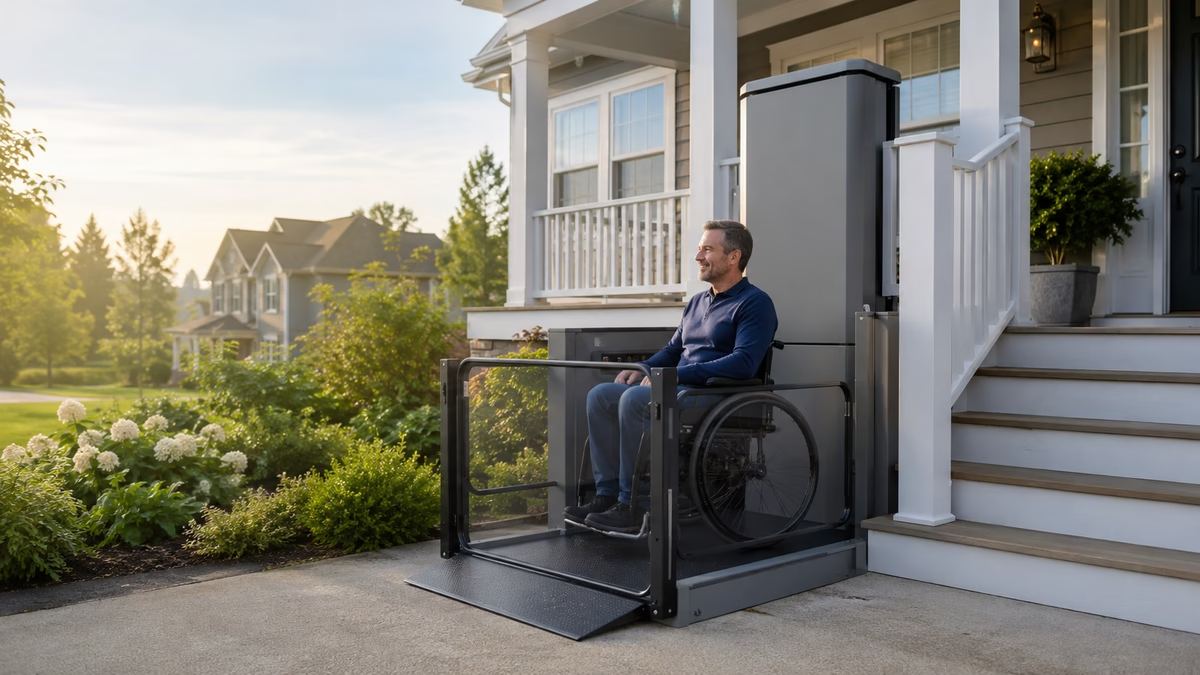
A wheelchair platform lift for home helps you move between levels without leaving your wheelchair. It can serve a porch, deck, garage, or indoor landing. Most models take far less space than a long ramp.
The best lift must fit your home, chair, weight, and rise height. It should also have safe gates, backup lowering, and local service. Below are ten strong options for different needs and budgets.
Top 10 Wheelchair Platform Lifts for Home Options
1. Best Overall: Bruno VPL-3100B / VPL-3200B
The Bruno VPL range works indoors and outdoors. It supports up to 750 pounds. You can choose models for short porch rises or taller home access.
The weather-safe finish suits exposed sites. Battery-powered versions can also work during a power cut. Standard safety parts include a non-slip floor, emergency stop, and obstruction sensor.
What stands out
- Up to 750-pound load limit
- Indoor and outdoor use
- Battery-powered options
- Automatic folding entry ramp
- Several platform sizes
- Models for rises up to about 14 feet
Best for
Choose this range if you want a flexible all-round lift. It can fit porches, decks, garages, and tall landings.
2. Best Value: AmeriGlide Hercules 750 Residential
The AmeriGlide Hercules 750 offers many useful features at a fair base price. It works inside or outside. You can use it near a porch, deck, or garage door.
The standard load limit is 750 pounds. A 1,000-pound option is also available. Its battery system lets the lift run during many power cuts.
What stands out
- 750-pound standard limit
- Optional 1,000-pound limit
- Weather-safe steel panels
- Non-slip platform
- Battery power
- Obstruction detection
- Automatic folding ramp
Best for
This model suits you if you want good load support without premium styling.
3. Best Outdoor: RAM Residential Trus-T-Lift
The RAM Trus-T-Lift is made for indoor and outdoor use. Its weather-safe design suits hot, cold, wet, and coastal sites.
The lift can move up to 750 pounds. Some setups can travel as high as 14 feet. Large paddle controls also help users with weak grip or hand motion.
What stands out
- Weather-safe design
- Up to 14 feet of travel
- Large, soft-touch controls
- Quiet electric drive
- Custom gates and platform sizes
- No hydraulic fluid
Best for
Pick this lift for an exposed outdoor site. It may suit homes near salt air or harsh winter weather.
4. Best Indoor: Liftup EasyLift 800
The EasyLift 800 has a clean design that fits modern rooms. Its narrow platform makes it a good choice for tight indoor spaces.
It has an 800 mm platform width. The lift supports up to 400 kg, or about 882 pounds. Its top lifting height is about 53 inches.
What stands out
- Slim design
- Clear side panels
- Custom floor and color options
- Battery backup
- Low pit depth
- Strong load limit
Best for
This model fits homes where looks and floor space both matter. It can work near a split-level room or raised indoor floor.
5. Best Heavy-Duty: Atlas Vista Vertical Platform Lift
The Atlas Vista offers load limits from 750 to 1,000 pounds. That extra strength can help with large power chairs.
It may also allow room for a caregiver. Yet total weight must stay below the rated limit. Some Vista setups can travel up to 160 inches.
What stands out
- Up to 1,000-pound capacity
- Indoor and outdoor use
- Screw-driven lift system
- Compact tower
- Several height choices
- Enclosed model available
Best for
Choose it for a large power chair or high combined load. Measure the chair before you select the platform.
6. Best for Porches: Savaria Multilift
The Savaria Multilift is built for short home access points. It works well beside a porch, entry, or garage.
Its standard travel reaches 48 inches. An optional model reaches 72 inches. The lift can support up to 750 pounds.
What stands out
- Made for porch and deck access
- 750-pound limit
- Up to 72 inches of travel
- Weather-safe platform
- Manual lowering crank
- Optional battery backup
Best for
This lift is a sound match for a porch with several steps. It needs a stable concrete base in most cases.
7. Best for Decks: Harmar Highlander II
The Harmar Highlander II can serve decks, porches, garages, and tall entries. It supports up to 750 pounds.
Several platform and height choices are available. Outdoor models use coated parts and steel hardware to resist the weather. An optional backup system can provide several trips during a power cut.
What stands out
- 750-pound load limit
- Up to about 14 feet of travel
- Several platform sizes
- Outdoor-rated finish
- Easy-to-use paddle control
- Optional backup power
- Built-in status lights
Best for
Use it for a deck that sits well above ground. It also works for complex entry layouts.
8. Best Compact Lift: Atlas Nano
The Atlas Nano uses a thin tower. This helps it fit near steps, tight paths, and small landings.
It supports up to 800 pounds. Its maximum rise is 64 inches. The tower can also switch sides to fit different layouts.
What stands out
- Small tower footprint
- 800-pound limit
- Up to 64-inch rise
- Reversible tower
- Folding entry ramp
- Indoor and outdoor use
Best for
Choose it where space is your main issue. Still, check room for chair entry and exit.
9. Best Premium Lift: Savaria V-1504 Lux
The Savaria V-1504 Lux has a full glass and steel enclosure. It looks more like part of the home than an open porch lift.
It supports up to 750 pounds. It can serve several stops and travel up to 10 feet. Platform and entry layouts can also be changed for the site.
What stands out
- Glass and steel enclosure
- Indoor or outdoor use
- Up to four stops
- Up to 10 feet of travel
- Straight or side entry
- Several platform sizes
- Hydraulic drive [fluid-powered lift system]
Best for
This model fits a high-end home project. It also gives you more shelter from sun, rain, and wind.
10. Best Budget-Friendly Option: AmeriGlide Hercules Mini
The Hercules Mini is made for short rises. It can replace a small set of porch or garage steps.
It supports up to 750 pounds. Its maximum lift height is 30 inches. That limit keeps it useful for low entries, not tall decks.
What stands out
- Lower starting price
- 750-pound capacity
- 30-inch maximum rise
- Indoor and outdoor use
- Small footprint
- Non-slip platform
Best for
Choose it for one to four low steps. Measure the true landing height before ordering.
What is a wheelchair platform lift?
A wheelchair platform lift moves you between two or more levels. You stay in your wheelchair or scooter during the trip.
Most home models have a flat platform, drive tower, controls, and safety gates. You roll onto the platform and close the gate. Then you hold the control until the lift reaches the next level.
These lifts are also called:
- Vertical platform lifts
- Wheelchair porch lifts
- Residential wheelchair lifts
- Home access lifts
- Scooter platform lifts
- Deck lifts
A vertical model moves straight up and down. An inclined model follows the path of a staircase.
Vertical models are common near porches and decks. They often take less space than a long ramp.
Vertical platform lift vs stair lift
A vertical platform lift carries you while you remain in your chair. A stair lift usually has a fixed seat.
With a stair lift, you must move from your wheelchair to the seat. You may need another wheelchair on the next floor. This can add cost and effort.
Choose a vertical platform lift if:
- You cannot move safely onto a stair-lift seat.
- You use a power chair or scooter.
- You need porch, deck, or garage access.
- You want to carry your mobility device.
- You have space beside the steps.
Choose a stair lift if:
- You can move between seats with little risk.
- Your stairs are narrow.
- Outdoor ground space is limited.
- You do not need to carry a wheelchair.
- You want a less complex install.
A stair lift often costs less. Yet it may not provide full wheelchair access.
Think about each part of the trip. Getting upstairs is only one step. You must also have a chair waiting there.
Platform lift vs home elevator
A platform lift and a home elevator can both link home levels. Yet their design and cost can differ a lot.
A platform lift often serves short or medium rises. Many models have open sides or a simple enclosure. They may need less building work.
A home elevator usually has a full car and shaft. It may serve more floors. It can also carry people who do not use mobility aids.
A platform lift may suit you if:
- You need access over a few steps.
- You want a smaller footprint.
- You need porch or deck access.
- You use a wheelchair or scooter.
- You want to avoid major indoor work.
A home elevator may suit you if:
- You need access to several floors.
- Several people will use the lift.
- You want a fully enclosed car.
- Your project includes major home work.
- You need a larger range of cabin sizes.
A platform lift cannot pass through an open floor without the right enclosure. Local rules may also limit its travel or use.
Indoor vs outdoor models
Indoor and outdoor lifts may look alike. Their parts and finish can be quite different.
An outdoor wheelchair platform lift for home needs protection from rain, dust, heat, and cold. It may also need better drainage and sealed controls.
Indoor lift features
Look for:
- Quiet movement
- A finish that matches your room
- A small tower
- Low entry height
- Clear side panels
- Simple gate layouts
Indoor lifts may need a pit. A pit is a shallow space below the platform. It lets the lift floor sit level with your room floor.
Outdoor lift features
Look for:
- Weather-safe controls
- Coated or zinc-treated steel
- Stainless-steel hardware
- Good water drainage
- A non-slip platform
- A cold-weather kit, if needed
- A roof or full enclosure, if useful
Do not assume every home lift can stay outside. Ask for clear proof that the exact model is outdoor rated.
Also check the lowest and highest working temperatures. This matters in very hot or cold areas.
Weight capacity explained
Weight capacity means the full safe load on the platform. It does not mean the user’s weight alone.
You must include:
- Your body weight
- The wheelchair or scooter
- Oxygen tanks
- Bags and medical gear
- A caregiver, if allowed
- Other items carried on the lift
For example, a heavy power chair may weigh several hundred pounds. That leaves less room for a second person.
Many home platform lifts support 750 pounds. Some models offer 800, 882, or 1,000 pounds.
How much spare capacity do you need?
Do not plan to run the lift at its limit each day. Leave a fair safety margin.
A higher rating may help if:
- You use a large power chair.
- A caregiver must ride with you.
- You carry medical gear.
- Your chair may change later.
- More than one family member will use it.
The platform must also fit the chair. A high load limit will not fix a platform that is too short or narrow.
Lift height guide
Lift height is the vertical distance between two finished floors. It is not the number of steps.
Measure from the lower landing to the upper landing. A trained installer should check the final height.
Up to 30 inches
This range suits:
- Low porches
- One to four steps
- Raised patios
- Small garage entries
The AmeriGlide Hercules Mini is one example in this group.
31 to 53 inches
This range fits many porch and split-level sites. You will find more compact lift choices here.
The Liftup EasyLift and several standard home lifts cover this range.
54 to 75 inches
This height may suit raised decks and tall porches. You may need a taller gate or added landing work.
The Savaria Multilift can reach 72 inches in an optional form.
76 inches to 14 feet
Taller lifts may need more support, added gates, or a full enclosure. Local rules can also become stricter.
The Bruno VPL-3200B, RAM Trus-T-Lift, and Harmar Highlander II offer tall-rise setups.
Allow for future needs
Your current chair may not be your last chair. A larger platform can help with future changes.
Also think about entry direction. Straight-through entry is often easier. A 90-degree exit needs more room to turn.
Installation requirements
A platform lift is not just a plug-in appliance. The site must support the lift and keep each landing safe.
The exact needs depend on the model and local rules.
A stable base
Many outdoor lifts need a level concrete pad. The pad keeps the tower stable and square.
The base should also drain water away. Standing water can cause rust, ice, or electrical risk.
Safe upper landing
The top landing may need:
- A locked safety gate
- A gate interlock
- Guardrails
- A level floor
- Enough turning space
- A clear path to the door
An interlock keeps the gate closed while the lift moves.
Electrical work
Some lifts use standard household power. Others need a dedicated circuit.
Battery-powered lifts still need power for charging. Ask what happens if the batteries fail during an outage.
Entry and exit space
You need room to enter, leave, and turn. Check the chair’s full length and width.
Do not forget:
- Footrests
- Rear wheels
- Headrests
- Oxygen holders
- Control sticks
- Bags attached behind the seat
Weather protection
An outdoor lift may need a drain, cover, or roof. A full enclosure can help at exposed sites.
However, a tight cover can trap water. The lift still needs air flow and proper drainage.
Permits and inspection
Some areas require:
- A building permit
- An electrical permit
- A final safety check
- A licensed installer
- Regular inspection
Rules can differ by city, state, province, or country. Check them before site work starts.
ADA considerations (where applicable)
The Americans with Disabilities Act applies mainly to public places in the United States. It does not cover every private home project in the same way.
Still, its access rules can guide a safer setup. Local building rules may also use similar standards.
Platform size
The platform must give your chair enough room. Some public-use sites need set clear floor sizes.
A private home may allow more choice. Yet extra space can make entry and exit much easier.
Controls
Controls should be easy to reach and use. Large buttons or paddles can help if you have weak grip.
Many lifts use constant-pressure controls. You must hold the button while the lift moves.
Gates and doors
A gate should not open while the platform is away. An interlock helps prevent this risk.
The entry ramp may also fold up during travel. It then acts as a safety edge.
Clear landing space
You need enough room to roll off the lift. You may also need space to turn toward the home door.
Check this area with your real chair. Tape the platform and landing size on the floor.
Public-use projects
A lift in a shop, church, rental building, or shared space may face stricter rules. Residential approval may not cover public use.
Ask whether the model is rated for:
- Private home use
- Public use
- Light commercial use
- Full commercial use
Average cost
The price of a home platform lift varies by height and design. Site work can also change the total by thousands.
Current market guides place many vertical platform lift projects between $9,000 and $20,000. Simpler residential units may cost less. Tall, enclosed, or custom lifts can cost far more.
Costs that may appear in your quote
Your total may include:
- Lift unit
- Delivery
- Concrete pad
- Electrical work
- Gates and doors
- Landing rails
- Site changes
- Permit fees
- Labor
- Final safety checks
- Weather package
- Battery backup
- Service plan
Why cheap lift prices can mislead
A listed product price may cover the unit alone. It may not include shipping or installation.
A low-cost lift can become costly if you need:
- A new concrete base
- A custom upper gate
- Wider doors
- Major deck work
- Long power runs
- A full enclosure
- Complex drainage
Compare full project prices. Ask each dealer to list every cost.
How to control the cost
You can reduce waste by planning early.
- Measure the rise before choosing a model.
- Use a standard platform size if it fits.
- Pick straight-through entry where possible.
- Plan the concrete and power work together.
- Avoid custom colors unless they add real value.
- Check local rules before placing an order.
- Ask who pays for warranty labor and shipping.
Do not remove key safety parts to cut the price.
Maintenance
A wheelchair lift needs regular care. Outdoor units often need more checks than indoor lifts.
Follow the maker’s service plan. Keep a written record of each visit.
Checks you can do
Look for:
- Water on the platform
- Dirt near the lower safety pan
- Loose items near the tower
- Damage to gates or ramps
- Worn non-slip coating
- New sounds or shaking
- Rust or chipped paint
- Slow or uneven movement
Do not open the motor housing. A trained lift worker should handle repairs.
Keep the area clear
Leaves, gravel, toys, and snow can block the lift. Check below the platform before each trip.
Do not store boxes beside the tower. Keep the entry path clear.
Test backup systems
If your lift has batteries, test them as directed. Batteries lose strength with age and heat.
Also learn how emergency lowering works. Keep the instructions near the lift.
Plan professional service
Your service plan may call for one or more visits each year. Use may change that schedule.
A busy lift may need more care. Salt air, rain, heat, and cold also cause faster wear.
Stop using the lift if:
- A gate will not lock.
- The lift moves with a gate open.
- The platform stops at the wrong height.
- You smell burning.
- The lift makes a harsh new sound.
- The floor or tower feels loose.
- A safety sensor does not work.
Use the emergency stop if needed. Then contact a trained service provider.
Warranty comparison
A long warranty can look good. Yet the details matter more than the headline.
Check coverage for parts, labor, batteries, shipping, and outdoor damage.
Bruno VPL-3100B / VPL-3200B
Bruno provides one year of coverage for parts. Major parts receive two years of coverage. Dealer labor for a product fault is covered for the first 30 days.
AmeriGlide Hercules 750 Residential
AmeriGlide lists two years for key parts and the drive system. Batteries receive 30 days of coverage. Labor is not included in the stated warranty.
Savaria Multilift
Savaria lists a 36-month parts warranty for the Multilift. Labor terms may come from the dealer. Regular care by an approved dealer may be needed to keep cover active.
Harmar Highlander II
Warranty terms can differ by model and seller. Some current dealer listings state a three-year limited warranty. Check the written plan for your exact unit.
Other models
Warranty terms for Atlas, RAM, and Liftup may vary by region. The dealer may add its own labor plan.
Ask for full written terms before you sign.
Warranty questions to ask
- When does coverage start?
- Are labor costs covered?
- Who pays for shipping?
- How long are batteries covered?
- Is outdoor rust covered?
- Must an approved dealer service the lift?
- How often must the lift receive service?
- Does the warranty transfer to a new owner?
- Are gates and controls included?
- What happens if the local dealer closes?
Keep the invoice, serial number, and service records in one place.
Frequently Asked Questions
Can a wheelchair platform lift be used outside?
Yes, if the exact model is rated for outdoor use. Look for sealed controls, coated steel, and good drainage.
Do not place an indoor-only lift outside. Rain and heat can damage its parts.
Can two people ride on a home platform lift?
Some lifts may carry a user and caregiver. Both must fit safely within the platform.
Their full combined weight must stay below the rated limit. Local rules may also limit use.
Will the lift work during a power cut?
A battery-powered model may keep working. An AC model may only offer manual lowering.
Some lifts have an optional backup unit. Ask how many trips it can provide.
Does a platform lift need a concrete pad?
Many outdoor lifts do. The pad gives the tower a firm, level base.
Some indoor models use a pit or fixed floor mounts. Follow the maker’s site plan.
How much space does a platform lift need?
Space needs vary by platform and gate type. You must allow room for the tower, platform, ramp, and landing.
You also need space to turn your chair. A compact tower does not always mean a small total layout.
How high can a residential wheelchair lift travel?
Short-rise models may stop at 30 inches. Taller units may reach about 14 feet.
Higher travel often needs more gates, support, or an enclosure.
Is a wheelchair platform lift safe?
A well-made and well-kept lift can provide safe home access. Key parts include gate locks, obstruction sensors, and an emergency stop.
Safe use also depends on correct installation. Never bypass a gate or sensor.
Can I install a platform lift myself?
Some sellers offer units aimed at simple assembly. Yet local rules may still require a licensed installer or final check.
A poor install can harm safety and void the warranty. Professional work is the safer choice.
How long does installation take?
The lift itself may take one day to install at a prepared site. Site work can take much longer.
Concrete must cure. Gates, wiring, and permits can also add time.
Can a wheelchair lift increase home value?
It may add value for buyers who need step-free access. It can also help you stay in your home longer.
Yet resale value depends on the home and local demand. Safe placement matters more than style.
What platform size should I choose?
Measure your chair from its widest and longest points. Include footrests and rear gear.
Add space for safe entry and exit. Test the marked size on your floor before you decide.
What is the best wheelchair platform lift for home use?
There is no single best model for every home.
The right wheelchair platform lift for home should match:
- Your required lift height
- Your full loaded weight
- Your wheelchair size
- Your entry direction
- Your indoor or outdoor site
- Your local rules
- Your service options
- Your full project budget
Final Thoughts
Start with your space, not a brand name. Measure the rise, platform area, and landing room first.
Then check load capacity, gates, backup power, and service access. These details shape daily use far more than paint or trim.
A good lift should feel simple and safe. It should fit your chair today and leave room for future needs.