
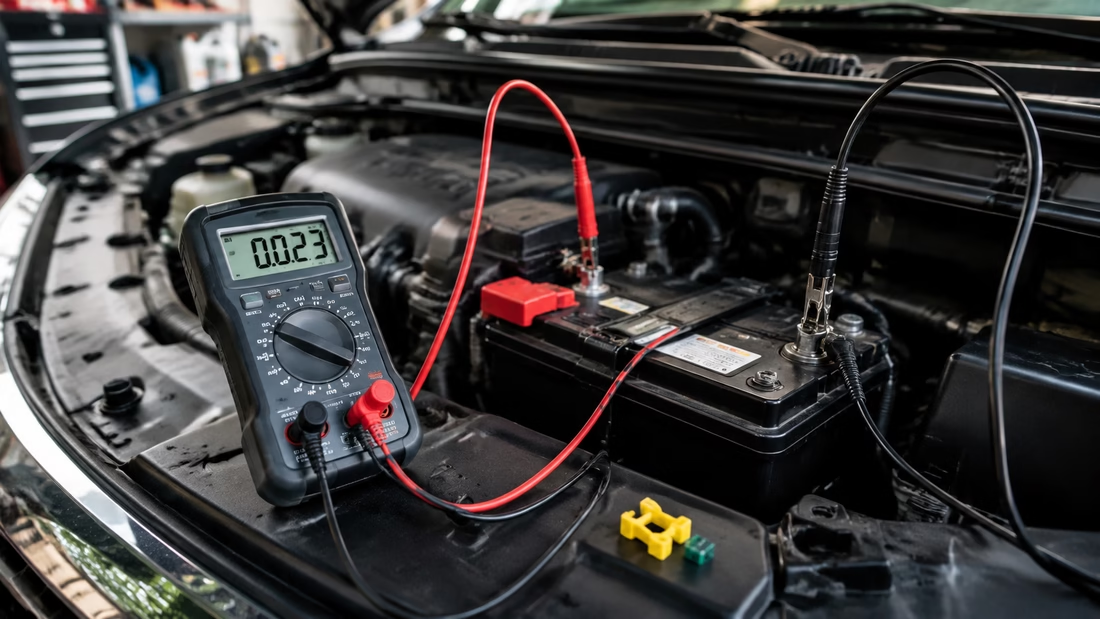
Your car battery is full when you park. Yet the engine barely turns the next morning. In some cases, the battery is dead.
This often points to a parasitic draw. Pinpointing the source of power loss is critical; explore this article detailing what drains a car battery for actionable insights.
A small amount of power use is normal when your car is off. The clock, alarm, and computer memory still need power. But a faulty part can pull too much current and drain the battery.
The good news? You can test for this problem at home with a multimeter.
This guide shows you how to do a parasitic draw test safely. You will also learn what readings are normal and how to find the faulty circuit.
Important: Never start the engine while your multimeter is connected in series with the battery. You could blow the meter’s fuse or damage the meter. If you are unsure about any step, ask a qualified mechanic for help.
What Is a Parasitic Draw?
A parasitic draw is electrical power that a vehicle uses while the engine is off.
Some power use is normal. Your car may need a small amount of current for:
- The clock
- Radio presets
- Alarm system
- Keyless entry
- Computer memory
- Security features
The problem begins when a light, relay, module, or other part stays active. It keeps drawing power after the car should have gone to sleep.
That extra draw may seem small. However, it continues for hours. Leave the car parked long enough, and the battery may no longer have enough power to start the engine.
A parasitic draw is not always the cause of a no-start issue. The starter, cables, or ignition system may also be at fault. If the battery tests well but the car still does not crank, read our guide on why your engine won’t turn over when the battery is good.
Symptoms of a Parasitic Battery Drain
A parasitic drain can look like a weak or failing battery. That is why it helps to check the full pattern rather than one symptom.
Common warning signs include:
- The battery dies after the car sits overnight.
- The engine cranks slowly in the morning.
- A charged battery loses power within a few days.
- The car starts well when driven each day but dies after sitting.
- The interior lights appear dim.
- A glove box or trunk light stays on.
- An electrical part works when the car is off.
- You hear a relay clicking after you remove the key.
- The problem began after adding an alarm, stereo, or dash camera.
- The battery passes a test but keeps going flat.
A bad battery can cause many of the same symptoms. So can a weak alternator or loose battery cable.
Test and fully charge the battery before you look for a parasitic draw. Otherwise, a weak battery may lead you in the wrong direction.
Tools Needed for a Parasitic Draw Test (battery drain test)
You do not need a large tool collection. However, you do need a meter that can safely measure direct current.
Gather these items before you begin:
- A digital multimeter with a fused 10-amp input
- A fuse puller
- Basic wrenches or sockets
- Safety glasses
- Work gloves
- Your vehicle’s fuse-box diagram
- A notepad or phone for recording readings
- A battery charger if the battery is low
An ammeter clamp can make the first check easier. A clamp meter reads current without disconnecting the battery.
However, it must measure low DC current with enough detail. Many basic clamp meters are better at reading high current than tiny standby loads.
An OBD-II scanner is optional. It will not measure the battery drain directly. Still, it may reveal a fault in a control module that refuses to shut down.
How to Set Up the Multimeter Safely
Correct meter setup matters. One wrong port or dial setting can blow the meter’s fuse.
Take your time with this part.
Charge the Battery First
Start with a fully charged battery.
A low battery may cause control modules to act in unusual ways. It can also make the test harder to trust.
If the battery is deeply discharged, charge it before testing. Do not depend on a short drive to restore it fully.
Turn Off Every Accessory
Before disconnecting anything, switch off:
- Headlights
- Cabin lights
- Climate control
- Radio
- Heated seats
- Phone chargers
- Dash cameras
- Other plug-in devices
Remove the key from the ignition. If your car uses a smart key, move the key fob well away from the vehicle.
A nearby key fob can wake the car’s electronics and raise the current reading.
Prepare the Doors, Hood, and Trunk
You may need a door or hood open to reach the fuse boxes. Yet an open panel can keep lights and control modules awake.
You can often press or latch the related switch by hand. Some owners use a screwdriver to close the door-latch mechanism while the door remains open.
Be careful if you do this. Release the latch before trying to close the door. Never slam a door against a closed latch.
You can also remove the bulb from a glove box, trunk, or hood light when needed.
Put the Meter Leads in the Correct Ports
Most digital multimeters have several input ports.
For the first reading:
- Put the black lead in the COM port.
- Put the red lead in the port marked 10A, A, or the meter’s high-current limit.
- Turn the dial to DC amps.
- Start on the highest amp range.
Look for the straight-line DC symbol. Do not select AC current.
Do not start with the red lead in the milliamp port. An unknown draw could exceed that port’s small fuse.
Avoid High-Current Loads
Once the meter is part of the battery circuit, do not:
- Start or crank the engine
- Switch on the headlights
- Run the blower motor
- Use the power seats
- Operate the windows
- Unlock the car with the remote
- Switch on the rear defroster
These parts can pull far more current than the meter can handle.
How to Do a Parasitic Draw Test Step by Step
The basic plan is simple. You will disconnect one battery cable and place the multimeter between the battery post and the cable.
This allows all standby current to flow through the meter.
1. Park the Vehicle in a Safe Place
Park on a flat surface with good lighting and airflow.
Then:
- Switch off the engine.
- Set the parking brake.
- Remove the key.
- Keep the key fob away from the car.
- Open any fuse panels you will need.
- Lower a window in case the doors lock.
- Turn off every accessory.
Check that no charger, phone cable, or device remains in a power socket.
2. Fully Charge and Check the Battery
A parasitic draw test cannot tell you if the battery itself is healthy.
Charge the battery first. Then check its resting voltage after the surface charge settles.
A fully charged standard lead-acid battery often rests near 12.6 volts. A much lower reading may point to a low or weak battery.
Battery voltage can vary with temperature and battery type. Use the battery maker’s information when available.
Also inspect the terminals. Clean away corrosion and tighten loose connections before testing.
3. Let the Vehicle Enter Sleep Mode
Modern cars do not shut down at once.
After you turn off the engine, several systems may stay awake. They may run checks, save data, or wait for further input.
Many cars settle within 20 to 60 minutes. Some take longer.
During this waiting time:
- Do not open a door.
- Do not press the brake pedal.
- Do not use the remote.
- Do not move the key fob near the car.
- Do not touch any electrical controls.
If you interrupt the sleep process, the timer may start again.
Older cars may settle much faster. Newer vehicles with connected services may wake up from time to time. Check the owner’s or service manual when possible.
4. Disconnect the Negative Battery Cable
Wear eye protection before working near the battery.
Use the correct wrench to loosen the negative cable clamp. The negative terminal usually has a minus sign and a black cable.
Lift the cable off the battery post. Keep it from touching the post or nearby metal.
Avoid placing tools across the battery terminals.
5. Connect the Multimeter in Series
Now place the meter between the negative battery post and the removed cable.
Connect:
- One meter probe to the negative battery post
- The other probe to the disconnected negative cable
The exact probe direction is not critical on a digital meter. A reversed connection may simply show a minus sign.
Do not place the probes across the positive and negative battery posts. That would create a direct current path and may damage the meter.
The meter must become part of the circuit. This is called a series connection.
Secure the leads if possible. A loose connection can reset the car’s systems and force you to repeat the sleep period.
6. Read the Initial Current Draw
The reading may start high. That does not always mean something is wrong.
Disconnecting and reconnecting the circuit can wake the vehicle. Interior systems, computers, and security features may become active again.
Watch the reading as the car settles.
For example:
- 1.00 A means 1 amp.
- 0.50 A means 500 milliamps.
- 0.10 A means 100 milliamps.
- 0.05 A means 50 milliamps.
- 0.02 A means 20 milliamps.
To convert amps to milliamps, multiply the amp reading by 1,000.
Let the reading settle before deciding whether the draw is too high.
7. Move to a Lower Range Only When Safe
A lower range may give you a more exact reading. However, only switch ranges after you know the draw is below that range’s limit.
For example, do not move the red lead to a 200-milliamp input if the meter still shows 0.40 amps. That equals 400 milliamps and may blow the fuse.
When in doubt, stay on the 10-amp input.
What Is a Normal Parasitic Draw?
There is no single perfect number for every vehicle.
Many vehicles settle between 20 and 50 milliamps, or 0.02 to 0.05 amps. Older and simpler cars may use less. Modern vehicles may use more due to alarms, computers, and connected features.
Use these figures as a general guide:
- Below 20 mA: Low draw on many vehicles
- 20–50 mA: Often normal
- 50–85 mA: May be acceptable on some modern vehicles
- Above 100 mA: Often worth further testing
- Several hundred mA: Likely to drain the battery over time
- 1 amp or more: A serious draw that needs prompt attention
Vehicle design matters. A reading of 70 milliamps may be normal for one car but excessive for another.
Before replacing any part, compare your reading with the maker’s limit.
How Fast Can a Parasitic Draw Kill a Battery?
That depends on:
- Battery size
- Battery age
- State of charge
- Outside temperature
- Current draw
- How long the car sits
A 50-milliamp draw may not cause trouble in a healthy daily driver. The same draw can be a problem for an older battery in cold weather.
A 500-milliamp draw is ten times larger. It can weaken a battery much faster.
Avoid draining a starter battery to zero. Deep discharge can shorten its life, even after you recharge it.
How to Isolate the Faulty Circuit
Once you confirm the draw is too high, your next job is to find the circuit causing it.
The easiest method is to pull one fuse at a time while watching the meter.
Find Every Fuse Box to do the battery drain test
Your vehicle may have fuse boxes in several places, including:
- Under the hood
- Below the dashboard
- Behind the glove box
- In the trunk
- Under a rear seat
- Near the side of the dashboard
Use the owner’s manual or fuse-box label to locate each one.
Pull One Fuse at a Time
Keep the meter connected and watch the reading.
Then:
- Remove one fuse.
- Wait a few seconds.
- Check the meter.
- Record any change.
- Reinstall the fuse if the reading does not change.
- Move to the next fuse.
A fuse puller makes this job quicker and helps protect small fuses.
You are looking for a clear drop.
For example, suppose the reading starts at 0.35 amps. You pull one fuse, and it falls to 0.04 amps. That fuse controls the circuit causing most of the draw.
Do not assume the fuse itself is bad. A fuse protects the circuit. The real fault is usually a light, relay, module, motor, switch, accessory, or damaged wire on that circuit.
Check the Components on That Circuit
Use the fuse diagram to see which parts share the problem circuit.
Then inspect each part.
Look for:
- A light that stays on
- A stuck switch
- A warm relay
- A powered USB adapter
- A dash camera that never shuts down
- An aftermarket alarm
- A stereo wired to constant power
- A motor that keeps trying to move
- Damaged or pinched wiring
Disconnect one component at a time. Watch for the current to return to normal.
This process can take time. Still, it is better than replacing parts at random.
Watch for Modules Waking Up
Pulling and reinstalling a fuse can wake a control module. The meter reading may rise for a few minutes before settling again.
Do not judge the change too fast.
Wait for the vehicle to return to sleep. Then compare the settled reading.
Check the Alternator
The alternator may not sit behind a normal plug-in fuse. A failed diode inside it can allow current to flow while the engine is off.
Possible clues include:
- The battery drains while parked.
- No normal fuse makes the draw disappear.
- The alternator has charging problems.
- The alternator feels warm after the car has been off.
- You notice odd electrical behavior.
Alternator wiring carries high current. A wrong move can cause a short, sparks, burns, or vehicle damage. Do not disconnect its main cable unless you know the correct and safe process for your vehicle.
A repair shop can test the alternator if standard fuse checks do not find the drain.
Common Causes of Parasitic Battery Drain
Some causes appear far more often than others. Start with simple items before blaming an expensive module.
Glove Box or Trunk Light
A small light can stay on without being easy to see.
The switch may stick or fall out of position. The trunk or glove box may also fail to close fully.
Use your phone camera to record inside the closed space. You can then check whether the light stayed on.
Interior or Vanity Mirror Light
A cabin light may remain dimly lit. A sun visor mirror cover can also fail to press its light switch.
Check every interior lamp, including footwell and door lights.
Stuck Relay
A relay is an electric switch. When it sticks, it may keep sending power to a fan, pump, computer, or other device.
A stuck relay may feel warm or produce a faint click.
Swap testing is not always safe because relays may look alike but serve different roles. Match every part number and pin layout before moving one.
Faulty Door, Hood, or Trunk Switch
A bad switch may tell the car that a panel is still open.
That can keep lights, alarms, and control modules awake. The dashboard may also show an open-door warning.
Aftermarket Stereo
A stereo can drain the battery if it is wired to constant power instead of switched power.
An amplifier may also remain on after the car shuts down. Look for an amplifier power light that stays lit.
Dash Camera
Parking mode is useful, but it draws power.
A poor hardwire kit may let the camera run until the battery is too low to start the engine. Use a proper low-voltage cutoff if you want parking protection.
Alarm or Remote Starter
Aftermarket security and remote-start systems connect to several circuits. A poor connection or failed module can keep the vehicle awake.
If the drain began after an installation, inspect that system first.
Control Module That Will Not Sleep
A car may contain dozens of small computers. One faulty module can keep other modules awake through the vehicle’s data network.
This issue can be hard to find with fuse pulling alone. An OBD-II scanner may reveal related fault codes, though basic models cannot test every module.
Alternator Diode Failure
The alternator should charge the battery while the engine runs. A failed internal diode may allow power to flow backward after shutdown.
This can drain the battery even when the alternator still appears to charge.
Damaged Wiring
A wire may rub against metal, trap moisture, or develop internal damage.
Rodents can also chew insulation. Pay close attention to wiring near the battery, fuse boxes, aftermarket parts, and hot engine parts.
Plug-In Accessories
Check every power outlet for:
- Phone chargers
- USB adapters
- Bluetooth devices
- GPS units
- Diagnostic devices
- Coolers
- Air fresheners with lights
- Dash cameras
Some outlets stay powered when the engine is off.
Common Parasitic Draw Testing Mistakes
A simple mistake can give you a false reading or damage the meter.
Avoid these common errors.
Starting the Engine With the Meter Connected
Starter current is far beyond a standard multimeter’s amp limit.
Do not crank or start the engine during an in-series draw test.
Connecting the Meter Across the Battery
Do not touch one probe to the positive post and the other to the negative post while the meter is set to amps.
The meter must sit between a disconnected battery cable and its battery post.
Starting on the Milliamp Port
Always begin with the high-amp input when the amount of draw is unknown.
Move to a lower range only after verifying that it is safe.
Testing Before the Car Sleeps
A high reading right after shutdown may be normal.
Give the vehicle time to turn off its computers. Opening a door or using the remote can restart the waiting period.
Testing a Low Battery
A low battery can affect how the vehicle’s electronics behave.
Charge and test the battery first.
Pulling Several Fuses at Once
Pulling many fuses may save a little time, but it creates confusion.
Remove one fuse at a time. Record what happens. Reinstall it before moving on unless it controls the problem circuit.
Forgetting More Than One Drain
A vehicle can have two separate faults.
Finding one current drop does not always mean you are finished. Continue testing until the total draw reaches the correct range.
Replacing Parts Based on a Fuse Alone
One fuse may protect several parts.
The fuse identifies the circuit, not the exact failed part. Test the items on that circuit before buying replacements.
An Easier Option: Use a DC Clamp Meter for battery drain test
A low-current DC clamp meter can measure draw without disconnecting the battery cable.
To use one:
- Charge the battery.
- Turn off the vehicle.
- Clamp the meter around one battery cable.
- Set the meter to DC current.
- Zero the meter if required.
- Allow the car to sleep.
- Read the current.
This method reduces the chance of waking or resetting the car. It also keeps radio presets and learned settings intact.
However, not every clamp meter is sensitive enough for tiny current levels. Check its lowest DC range and resolution before relying on it.
A regular digital multimeter often gives a clearer low-current reading.
What to Do After You Find the Draw
Once the reading drops after removing a fuse, identify every device on that circuit.
Then follow this order:
- Inspect simple lights and switches.
- Unplug aftermarket accessories.
- Check relays.
- Inspect visible wiring.
- Disconnect suspect parts one at a time.
- Scan for module fault codes if needed.
- Repair the fault.
- Repeat the parasitic draw test.
Do not stop after the first successful repair. Let the vehicle sleep again and check the final reading.
You want to confirm that the draw stays within the correct range.
Remember to return the red meter lead to the voltage port when you finish. Leaving it in the amp port can cause trouble the next time you check voltage.
When to Call a Mechanic
A home test can find many battery drains. But some problems need advanced tools and wiring diagrams.
Consider professional help if:
- The draw remains after you pull every standard fuse.
- The suspected circuit contains several control modules.
- A module keeps waking up without a clear reason.
- The alternator may have an internal fault.
- The wiring shows signs of heat or burning.
- The vehicle has high-voltage hybrid or electric systems.
- You cannot access the battery safely.
- The meter reading is unstable and never settles.
- The main battery cable or high-current fuse must be disconnected.
Hybrid and electric vehicles can contain dangerous high-voltage circuits. Do not touch orange cables or high-voltage parts. Follow the maker’s safety process and use a trained technician.
Frequently Asked Questions
Can a Parasitic Draw Kill a Battery Overnight?
Yes. A large enough draw can weaken or drain a battery overnight.
The result depends on the size of the draw, battery capacity, battery health, and temperature. A small draw may take days or weeks. A large draw can cause trouble within hours.
Is 100 Milliamps an Excessive Parasitic Draw?
A settled draw of 100 milliamps, or 0.10 amps, is high for many vehicles.
However, vehicle limits vary. Some modern cars use more standby power than older models. Check the service information before replacing a part.
How Long Should I Wait Before Reading the Multimeter?
Many vehicles need 20 to 60 minutes to enter sleep mode. Some may need longer.
Keep the key fob away and avoid opening doors during this time.
Why Does the Reading Rise When I Open a Door?
Opening a door switches on lights and wakes several control modules.
The reading may jump from a few milliamps to several amps. This is normal. It is also why door and latch switches must be handled before the test.
Can I Test for Battery Drain Without Disconnecting the Battery?
Yes. You can use a low-current DC clamp meter around one battery cable.
This method is quick and does not break the circuit. However, the clamp meter must be sensitive enough to measure small standby current.
Should I Disconnect the Positive or Negative Battery Cable?
The negative cable is normally used for this test.
Working on the negative side reduces the risk of a short if your tool touches the vehicle’s metal body. Always follow vehicle-specific service instructions.
Can a Bad Alternator Cause a Parasitic Draw?
Yes. A failed alternator diode can let current flow when the engine is off.
Consider an alternator test if no normal fuse reveals the drain.
Will Disconnecting the Battery Erase Settings?
It may.
Disconnecting the battery can erase:
- Clock settings
- Radio presets
- Window positions
- Seat memory
- Computer learning data
- Security codes
Some vehicles may need a special reset or relearn process. Check the owner’s manual before disconnecting the battery.
Final Thoughts
A parasitic draw test helps you find where battery power goes while your car is parked.
Start with a fully charged battery. Set the multimeter to its highest DC amp range. Connect it in series with the negative battery cable, then wait for the vehicle to sleep.
Many cars settle near 20 to 50 milliamps. If your reading stays too high, pull one fuse at a time. A sharp drop will point you toward the problem circuit.
From there, inspect the lights, switches, relays, wiring, modules, and aftermarket accessories on that circuit.
Most of all, work slowly. Never start the engine with the multimeter connected in series. If the problem involves high-current wiring, a hybrid system, or a complex module network, let a trained mechanic handle it.