
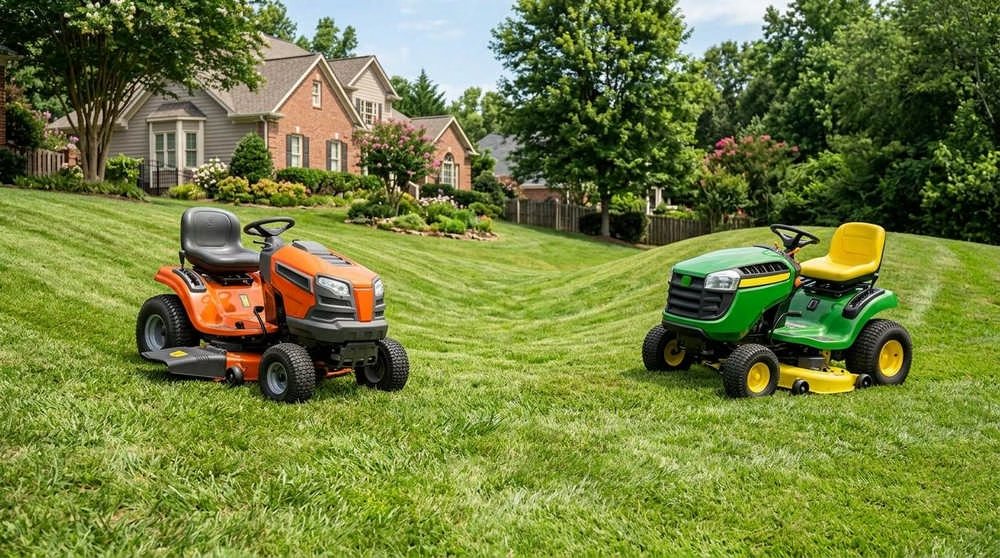
The Husqvarna TS 140X and John Deere S130 look similar on paper. Both have a 22-horsepower engine. Both use a 42-inch cutting deck. Both also have an easy-to-use automatic drive system.
Yet hills reveal differences that flat lawns often hide.
Power matters on a slope. But grip, balance, controls, and build quality matter just as much. A strong engine means little if the rear wheels spin on damp grass.
So, which mower is better for hills?
The John Deere S130 is the safer overall pick for gentle hills. It has proven cutting performance and far more customer feedback. Its controls also feel simple and predictable. You may visit here for it’s equipment and parts.
The Husqvarna TS 140X offers the better seat, a larger fuel tank, and a reinforced deck. However, it is a much newer model. There is not enough long-term owner feedback to know how well it will hold up on rolling land. Look here for it’s parts and equipment.
Neither mower is a smart choice for steep slopes. If your lawn has sharp hills, loose soil, or wet grass, you need a machine built for better traction.
Let’s compare them in detail.
Husqvarna TS 140X vs John Deere S130: Quick Comparison

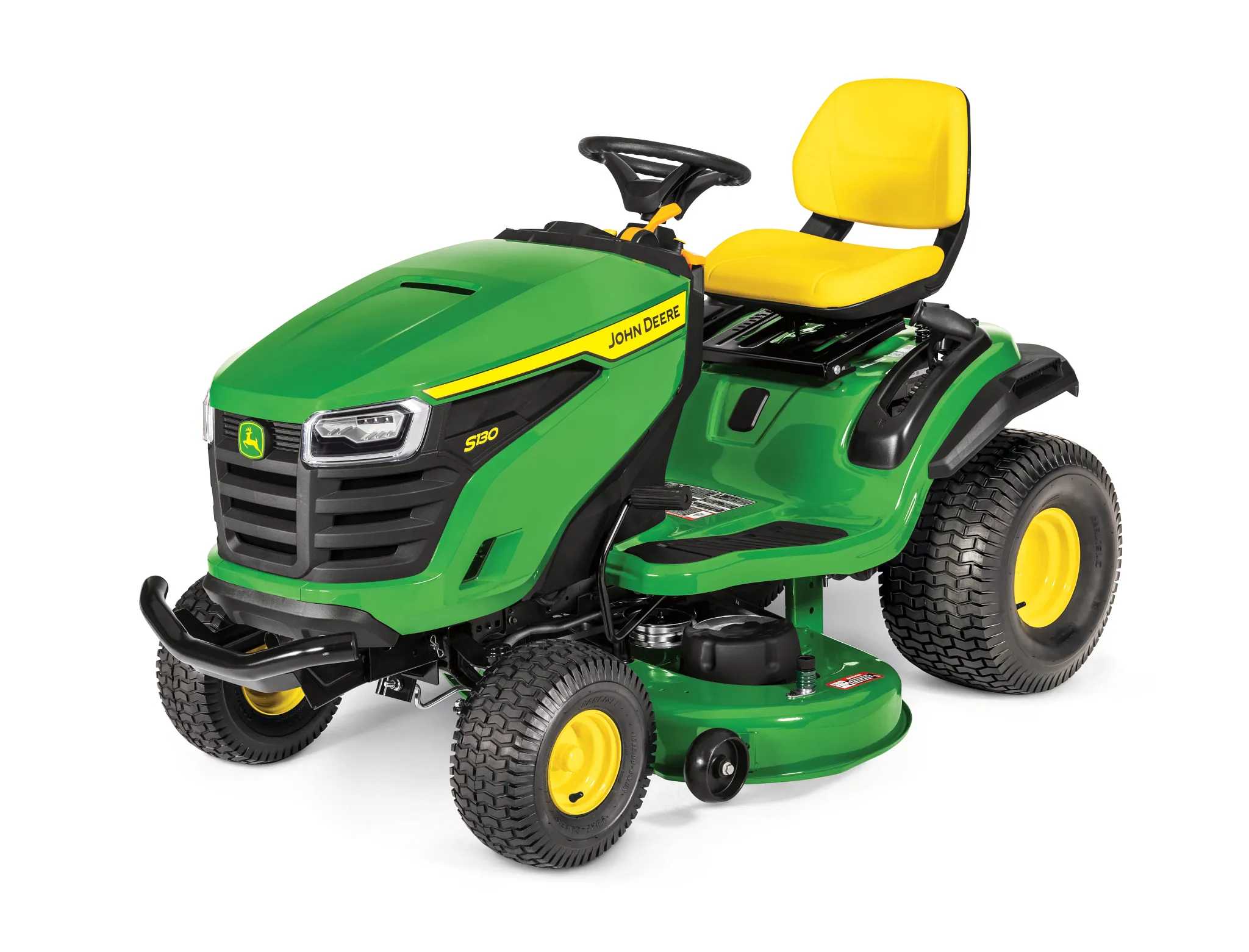
| Feature | Husqvarna TS 140X | John Deere S130 | Edge |
|---|---|---|---|
| Engine | 22-hp Briggs & Stratton V-twin | 22-hp Briggs & Stratton V-twin | Tie |
| Cutting Width | 42 inches | 42 inches | Tie |
| Drive System | Foot-controlled automatic | Foot-controlled automatic | Tie |
| Locking Rear Axle | No | No | Tie |
| Fuel Tank | 3 gallons | 2.4 gallons | Husqvarna |
| Seat | 18″ high-back seat | 15″ open-back seat | Husqvarna |
| Deck | Reinforced stamped steel | Stamped steel Edge deck | Husqvarna |
| Max Forward Speed | 5.2 mph | 5.5 mph | Deere |
| Max Reverse Speed | 2.2 mph | 3.2 mph | Deere |
| Customer History | Very limited | Extensive | Deere |
| Best Use | Flat to gently rolling lawns | Flat to gently rolling lawns | Tie |
John Deere link goes to the official Deere.com product page (not available on Amazon).
This page contains Amazon affiliate links. If you buy through them, I may earn a small commission at no additional cost to you.
The two mowers are close in basic size and power. The biggest differences involve comfort, controls, owner history, and dealer support.
If you want a broader brand comparison, read our guide to Husqvarna riding mowers vs John Deere. It covers the main strengths and weaknesses of each brand.
Which Mower Has More Power for Hills?
Both mowers use a 22-horsepower V-twin engine from Briggs & Stratton. A V-twin engine has two cylinders. It tends to run more smoothly than a basic single-cylinder engine.
That power is enough for:
- Routine mowing on gentle slopes
- Cutting normal residential grass
- Light bagging and mulching
- Pulling a small yard cart on level ground
Still, horsepower does not tell the whole story.
A mower may have enough power to climb a hill while still struggling for grip. The drive system may also run hotter when it pushes the mower uphill for long periods.
Husqvarna TS 140X Engine
The TS 140X 42 uses a 22-horsepower Briggs & Stratton EXi2200 engine. It has two cylinders and an oil filter.
This engine should provide enough power for normal residential mowing. It should also feel smoother than cheaper single-cylinder engines.
The three-gallon fuel tank is another advantage. It holds more fuel than the S130. That can help if you have a large property or long mowing sessions.
However, the TS 140X is still new. There is little real-world feedback about how its engine and drive system perform after several seasons on hills.
John Deere S130 Engine
The S130 also uses a 22-horsepower Briggs & Stratton V-twin engine. It has a full-pressure oil system, an oil filter, and a 2.4-gallon fuel tank.
Owners often praise its smooth power. It can handle normal grass without feeling weak. It also works well with a bagger or mulch cover when the lawn is dry.
The engine can climb gentle hills. But the mower may lose speed in tall or wet grass. This becomes more likely if the bagger is full.
Power Winner: Tie
There is no clear winner based on engine power.
Both have enough power for mild slopes. Neither gains a major advantage from its 22-horsepower rating.
Grip and drive-system strength matter more here.
Which Mower Has Better Hill Traction?
This is the most important part of the comparison.
Neither mower has a locking rear axle. That means engine power does not always reach both rear wheels equally.
If one rear tire slips, the mower may stop climbing. This can happen on:
- Wet grass
- Loose soil
- Muddy patches
- Sharp slopes
- Uneven ground
Adding aggressive tires may improve grip. But more grip is not always safer. It can place more strain on the drive system. It may also increase rollover risk on steep ground.
Husqvarna TS 140X Traction
The TS 140X uses a pedal-controlled Tuff Torq automatic drive system. You press a pedal to move forward and another to reverse.
This setup is easy to use. It lets you adjust speed without shifting gears.
However, Husqvarna does not advertise a locking rear axle on this model. The machine may struggle if one rear tire reaches a slick patch.
The lack of owner feedback is also a concern. We do not yet have enough reports from people who have used the TS 140X on rolling ground for several years.
John Deere S130 Traction
The S130 uses side-by-side forward and reverse pedals. The rear tires are wide enough for standard lawn work, but the mower still has an open rear axle.
Owners report mixed results on hills.
Many find the S130 stable and easy to control on gentle slopes. Others say it struggles on steep, damp, or uneven ground.
That does not make the S130 a poor mower. It simply shows its limits. It is a residential lawn tractor, not a heavy garden tractor.
Traction Winner: John Deere S130, but Only by a Small Margin
The S130 gets the win because it has a longer real-world track record. We know more about how it behaves and where it struggles.
That does not mean it has a major mechanical traction advantage. Neither mower has the feature that would make a real difference: a locking rear axle.
Which Mower Feels More Stable on a Hill?
Stability depends on more than the mower’s weight.
Seat height, tire grip, ground condition, speed, and direction of travel all affect how secure a mower feels.
The Husqvarna has a taller and more supportive seat. That can improve comfort, but it does not prove that the mower has a lower center of gravity.
The Deere has a simple seating position with clear controls. Many owners find it easy to judge speed and steering.
Both mowers feel safest when used slowly on firm, dry ground.
Be extra careful around:
- Drop-offs
- Ditches
- Ponds
- Retaining walls
- Hidden holes
- Tree roots
A wheel dropping into a hole can quickly change the mower’s angle. That can turn a mild slope into a dangerous one.
Always follow the slope limits and mowing directions in the operator’s manual. Do not mow a hill if the wheels slip or the front end feels light.
Stability Winner: Tie
Neither mower has a clear design feature that makes it a true hill specialist.
The safest choice depends on your exact land. A test drive on the property can tell you more than a specification sheet.
Which Mower Cuts Better on Uneven Ground?
A mower deck must follow the shape of the lawn without digging into high spots.
Both models use two anti-scalp wheels. These small wheels help stop the deck from scraping uneven ground.
They do not turn the deck into a fully floating system. You still need to set the cutting height correctly.
Husqvarna TS 140X Cutting Performance
The TS 140X has a 42-inch reinforced stamped-steel deck. Flat steel supports the deck around key areas. This may help it resist dents and wear.
Husqvarna also uses its Air Induction design. The deck pulls air upward to help grass stand before the blades cut it.
Key deck features include:
- 42-inch cutting width
- Two anti-scalp wheels
- Cutting range of about 1.5 to 4 inches
- Spring-assisted height control
- Optional bagger and mulch kit
The reinforced edges are useful near trees, paths, and fence posts. Still, the deck needs proper setup. A deck that is not level can leave strips or an uneven finish.
John Deere S130 Cutting Performance
The S130 uses John Deere’s 42-inch Edge cutting deck. It has two blades and electric blade control.
Its cutting height ranges from about 1 to 4 inches. The small height steps make it easy to fine-tune the cut.
Owners often praise the S130’s cut on flat and gently rolling lawns. It performs best when the blades are sharp and the deck is level.
However, retailer setup can vary. Some new units arrive with the wrong tire pressure or an uneven deck. Both problems can cause a poor cut.
Check these items before your first mow:
- Front and rear tire pressure
- Side-to-side deck level
- Front-to-back deck angle
- Blade condition
- Anti-scalp wheel height
Cutting Winner: John Deere S130
The S130 wins because its cutting results are better proven.
The TS 140X deck looks good on paper. It may match or beat the Deere over time. We just do not have enough owner data yet.
Which Mower Is More Comfortable on Hills?
Comfort matters more than it may seem.
A rough seat can make you rush. Poor pedal placement can make speed changes harder. Both problems can reduce control on a slope.
Husqvarna TS 140X Comfort
The TS 140X has an 18-inch high-back seat. It offers more back support than the S130’s smaller seat.
It also includes:
- An easy-grip steering wheel
- Foot-controlled speed
- Cruise control
- A spring-assisted deck lift
- A digital hour meter
The high-back seat should feel better during long mowing sessions. This gives the Husqvarna a clear comfort advantage.
Do not use cruise control while climbing or descending a hill. You need direct speed control when the ground changes.
John Deere S130 Comfort
The S130 uses a 15-inch open-back seat. It provides airflow and basic support, but it does not feel as plush as the Husqvarna seat.
Its side-by-side pedals are easy to understand. You can change direction without moving your foot far across the platform.
The dash fuel gauge is easy to see. Electric blade control also makes it simple to stop and start the deck.
Comfort Winner: Husqvarna TS 140X
The TS 140X wins this round because of its larger high-back seat.
The S130 remains comfortable for normal residential use. The Husqvarna should feel better during longer sessions.
What Do Real Owners Say?
Customer feedback matters because hills place extra stress on a mower. A short dealer test may not reveal weak traction, heat buildup, or deck setup problems.
The challenge is that these two products have very different review histories.
Husqvarna TS 140X Owner Reviews
The TS 140X is a new model. Very few model-specific customer reviews exist.
That means there is not enough evidence to judge:
- Long-term drive-system life
- Traction on wet slopes
- Deck durability after several seasons
- Parts availability
- Common factory defects
Some websites claim to have many TS 140X owner ratings. Be careful with those pages. At least one mixes the TS 140X with features from other Husqvarna models.
Broad reviews of the Husqvarna brand do not solve this problem. A review of another tractor, chainsaw, or pressure washer tells us little about the TS 140X.
For now, treat the TS 140X as promising but unproven.
John Deere S130 Owner Reviews
The S130 has a much larger pool of owner feedback. Most customers like its smooth drive, easy controls, and clean cut.
Common praise includes:
- Strong power for normal grass
- Simple forward and reverse pedals
- Comfortable ride
- Easy blade control
- Good turning ability
- Easy routine service
Owners also report several problems.
Common complaints include:
- Weak or poorly charged batteries
- Decks that need leveling after delivery
- Oil leaks on some units
- Limited grip on steep or wet hills
- Uneven retailer assembly
- An awkward reverse-mowing safety control
Many early problems appear linked to delivery and setup. That is why buying from a good dealer can matter as much as the badge on the hood.
Which Mower Is Better for Gentle Hills?
The John Deere S130 is the better choice for most gentle hills.
It offers predictable controls and proven residential performance. It also has enough owner feedback to expose its strengths and flaws.
Choose the S130 if:
- Your lawn is mostly flat with a few mild slopes
- The grass stays fairly dry
- You want a mower with a known track record
- John Deere service is easy to find near you
- You plan to mow, mulch, or bag rather than do heavy work
The TS 140X can also handle mild rolling ground. Its engine has enough power, and the large seat makes long jobs more comfortable.
Choose the TS 140X if:
- You have a trusted Husqvarna dealer nearby
- You want a larger seat and fuel tank
- You prefer a steel hood
- You like the reinforced deck design
- You are comfortable buying a newer model
Which Mower Is Better for Steep Hills?
Neither.
That may not be the exciting answer. But it is the honest one.
Both models lack a locking rear axle. Both use a light residential drive system. Neither is meant for constant work on sharp slopes.
A steep hill can cause:
- Rear tire spin
- Loss of steering control
- Drive-system heat
- Longer stopping distance
- Deck scalping
- Rollover risk
Do not assume that a heavier mower or aggressive tires will solve every problem. Better grip may help the mower climb, but climbing is only part of the job. The machine must also turn and stop in a controlled way.
Better Choices for a Hilly Lawn
If your yard has serious hills, consider a different type of mower.
A Tractor With a Locking Rear Axle
A locking rear axle lets both rear wheels push together. This can improve grip when one tire reaches loose or damp ground.
It does not make unsafe slopes safe. It does give the mower a better chance of maintaining steady movement.
A Heavier Garden Tractor
A garden tractor often has a stronger frame and drive system. It may handle long climbs and towing better than an entry-level lawn tractor.
These machines cost more. However, they may last longer under demanding use.
An All-Wheel-Drive Rider
An all-wheel-drive mower can offer better grip on complex terrain. It may work well where the lawn includes dips, changing slopes, and damp areas.
A Walk-Behind Mower
A self-propelled walk-behind mower may be safer for a short, steep section. You do not sit on top of the machine, so rollover risk is different.
It may take more effort, but safety matters more than speed.
A Remote-Controlled Slope Mower
For extreme banks, a remote-controlled mower is the boldest option. The operator stays away from the slope while the machine does the work.
These mowers cost far more than a normal lawn tractor. Yet they can make sense for large or dangerous banks.
How to Get Better Hill Performance From Either Mower
Good setup can improve control and cut quality.
Before mowing, take these steps:
- Check the tires. Use the stated tire pressure. An overfilled tire has a smaller contact patch and may grip poorly.
- Level the deck. A tilted deck can drag on one side and make the mower harder to control.
- Remove excess weight. Do not carry a full bagger uphill unless needed.
- Mow dry grass. Wet grass reduces grip and can hide soft soil.
- Use a moderate speed. Fast turns and sudden braking can upset the mower.
- Keep the blades sharp. Sharp blades need less engine power to cut cleanly.
- Plan the route first. Avoid tight turns, holes, roots, and drop-offs.
- Stop if the mower slips. Wheel spin is a warning, not a challenge.
Do not modify safety controls to make reverse mowing or hill work easier. Those controls exist for a reason.
Final Verdict
The John Deere S130 is the better riding mower for gentle hills. It has a proven cut, simple controls, and a large body of customer feedback.
The Husqvarna TS 140X wins for comfort. Its 18-inch seat, larger fuel tank, steel hood, and reinforced deck make it appealing. But it is still too new to earn a confident long-term hill rating.
Here is the simple breakdown:
- Best for gentle hills: John Deere S130
- Best for comfort: Husqvarna TS 140X
- Best fuel capacity: Husqvarna TS 140X
- Best proven cutting performance: John Deere S130
- Best for steep hills: Neither
If your lawn only rolls in a few places, the S130 is the safer buy. If comfort matters most and a strong Husqvarna dealer supports you, the TS 140X deserves a look.
For steep, wet, or rough ground, skip both. Buy a mower with better traction and a stronger drive system instead.
Frequently Asked Questions
Can the Husqvarna TS 140X mow hills?
Yes, it can mow gentle, dry slopes. It has enough engine power for normal hill work.
However, it does not have a locking rear axle. It may lose grip on steep, wet, or loose ground. Always follow the slope limit in the operator’s manual.
Is the John Deere S130 good on steep hills?
No. The S130 works best on flat to gently rolling lawns.
Its open rear axle and residential drive system limit its performance on steep slopes. Owners often report better results on dry, mild hills than on wet or sharp ones.
Which mower has better traction?
Neither mower has a major traction advantage. Both have two-wheel drive without a locking rear axle.
The John Deere earns a slight edge because more owners have tested it in real conditions. That gives buyers a clearer idea of its limits.
Which mower has the stronger transmission?
Both use automatic drive systems made for residential mowing. Neither should be used like a heavy garden tractor.
Avoid repeated heavy towing, sharp hills, and large loads. Those jobs create extra heat and wear.
Is the Husqvarna TS 140X better than the John Deere S130?
It depends on what you value.
The TS 140X has the better seat, larger fuel tank, and reinforced deck. The S130 has a stronger owner history, proven cutting results, and broad parts support.
For hills, the S130 is the lower-risk choice. For comfort, the TS 140X has the edge.
How steep is too steep for a riding mower?
The answer depends on the mower and its operator’s manual. Do not guess based on how a hill looks from a distance.
If the tires slip, the steering feels light, or the mower leans in a way that makes you uneasy, stop. Use a safer machine or another mowing method for that area.