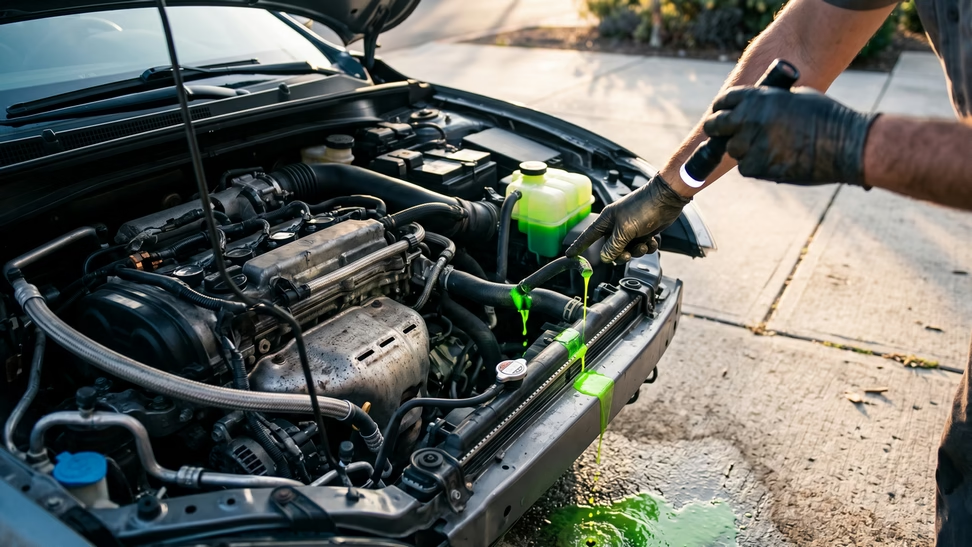
This guide covers all 12 causes of coolant leaks. We rank each one by severity. We show you exactly how to spot it. And we walk you through the fix step by step.
By the end, you’ll know if you’re dealing with a five-minute hose clamp tweak or a tow-truck emergency. You’ll save money. You’ll avoid engine damage. And you’ll never panic at a puddle again. Also from here you will know why is your coolant leaking.
Quick Glance: How Bad Is Your Leak?
| Severity | Cause | Can You Fix It? | Cost |
|---|---|---|---|
| 🟢 Minor | Loose hose clamp | Yes — 5 minutes | $0–$15 |
| 🟡 Moderate | Cracked radiator hose | Yes — 30 minutes | $15–$50 |
| 🟠 Serious | Water pump failure | Yes — if you’re handy | $300–$750 |
| 🔴 Critical | Blown head gasket | No — tow it now | $1,500–$2,500+ |
Keep this table handy. We’ll reference it throughout.
II. WHAT IS COOLANT & WHY LEAKS MATTER
What Coolant Actually Does
Your engine gets hot. Really hot. We’re talking 200 degrees Fahrenheit or more.
Coolant keeps that heat in check. It’s a mix of water and ethylene glycol. Think of it as your engine’s personal air conditioner.
Coolant flows through your engine in a loop. It picks up heat from the engine block. Then it carries that heat to the radiator. The radiator dumps the heat into the air. The now-cool fluid cycles back. Rinse and repeat.
Without coolant, your engine overheats in minutes. Metal parts warp. Seals fail. The engine destroys itself.
That’s why a leak is never “no big deal.”
Why Even a Small Leak Is Dangerous
A slow drip seems harmless. It’s not.
Here’s what happens when you ignore it.
Your engine overheats. Low coolant means less fluid to absorb heat. The temperature gauge creeps up. Warning lights flash. Keep driving, and you warp the cylinder head. That leads to a blown head gasket. Now you’re looking at thousands in repairs.
Your oil turns to sludge. Coolant can leak into the oil system. The mixture looks like a chocolate milkshake. This sludge doesn’t lubricate. It grinds your engine bearings to dust.
Your heater dies. The heater core uses hot coolant to warm your cabin. A leak starves it. You get cold air in winter. And if the heater core itself leaks, coolant floods your floorboards.
It’s toxic. Coolant tastes sweet. Pets love it. Kids might try it. Just a small amount can kill a dog or cat. Clean up spills right away. Store leftover coolant where animals and children can’t reach it.
It hurts the planet. Coolant is poisonous to plants and groundwater. Never dump it in the gutter. Take it to an auto parts store. Most recycle it for free.
The Bottom Line
A coolant leak is your car’s cry for help. Ignore it, and you risk engine failure. Fix it early, and you might spend ten bucks and ten minutes.
Now that you know the stakes, let’s dive into the causes. We’ll start with the most common culprit: worn hoses.
III. THE COMPLETE CAUSE BREAKDOWN
1. Worn or Cracked Coolant Hoses (Most Common)
Hoses fail because they work hard. They flex. They expand. They contract. They do this thousands of times.
Rubber breaks down under stress. Heat speeds it up. Age finishes the job. Most hoses last four to ten years. After that, they crack. They bulge. They burst.
The lower radiator hose takes the worst beating. It sits lower. It handles more pressure. It wears out first.
How to Spot a Bad Hose
Look for these warning signs:
- Cracks or splits. Check the bends. Stress concentrates there.
- Bulges or soft spots. The hose wall is thinning. A blowout is coming.
- Wet residue near the ends. Coolant seeps past bad seals.
- White crusty deposits. This is dried coolant. It means a slow leak has been happening for weeks.
The Fix: Replace the Hose Yourself
You can do this. Really. Here’s how.
Step 1: Let the engine cool completely. Hot coolant sprays and burns. Wait at least an hour.
Step 2: Slide a drain pan under the hose. You’ll lose some coolant. Catch it.
Step 3: Loosen the clamps. Use a screwdriver or socket. Twist the hose to break the seal. Pull it off.
Step 4: Inspect the metal fittings. Scrape off old crust. Clean them shiny.
Step 5: Slide the new hose on. Use OEM-grade hose. Cheap ones fail faster. Double-clamp high-pressure lines.
Step 6: Refill the system. Use the correct coolant type. Check your owner’s manual.
Step 7: Bleed the air. Run the engine with the cap off. Squeeze the upper hose. Bubbles rise out. Top off as needed.
Step 8: Pressure test. Rent a tester free at AutoZone. Pump to 15 PSI. Wait twenty minutes. No drop means no leaks.
What you need: Screwdriver set, drain pan, replacement hose ($15–$50), fresh coolant.
Time: Thirty minutes for your first one. Fifteen once you get the hang of it.
2. Radiator Leaks and Corrosion
Your radiator looks tough. It’s not invincible.
Inside, thin metal tubes carry coolant. Old coolant loses its protective additives. Rust forms. It eats holes right through the metal.
Outside, road debris hits the fins. Plastic end tanks get brittle. Solder joints crack from heat cycles.
How to Find the Leak
- Look for wet spots. Green, orange, or pink fluid on the fins means trouble.
- Pressure test. Pump to 13–16 PSI. Watch for seepage. It reveals hidden cracks.
- UV dye test. Add fluorescent dye to the coolant. Shine a UV flashlight. The leak glows bright green.
Your Fix Options
| Problem | Fix | Cost |
|---|---|---|
| Tiny pinhole | Radiator stop-leak or epoxy | $10–$30 |
| Fin damage | Solder or braze repair kit | $20–$50 |
| Cracked tank or big split | Replace the whole radiator | $150–$1,000 |
Stop-leak works for small leaks. It’s temporary. Think of it as a bandage, not a cure.
For major damage, replace the radiator. It’s a bigger job. But it beats engine overheating on the highway.
3. Faulty Radiator Cap
This little cap does a huge job. It seals the system. It holds pressure.
Most caps keep 13 to 16 PSI inside. This raises the boiling point. Coolant can get hotter without turning to steam.
A bad seal ruins everything. Pressure escapes. The boiling point drops. Coolant boils away as steam. You lose fluid fast. The engine overheats.
Quick Cap Test
Pop it off. Look at the rubber seal. Is it cracked? Hard as plastic? That’s your leak.
Test it with a pressure tester. Many kits include a cap adapter. It should hold rated pressure. If it leaks, replace it.
Cost: Under $10 to $34. Cheapest fix on this list.
4. Water Pump Failure
The water pump is the heart of your cooling system. It pushes coolant through the engine. When it fails, circulation stops. Heat builds up fast.
Pumps fail in two ways. The seal leaks. Or the bearing dies.
Seal Leak
Look for a small hole on the pump body. It’s called a weep hole. It’s designed to leak when the seal wears out.
See a drip there? The seal is dying. Fix it soon. The leak gets worse fast.
Bearing Failure
The pulley wobbles. You hear grinding or whining. The belt may squeal.
A bad bearing means the pump is dying. It could seize. The belt snaps. You lose alternator power too.
Can You Fix It Yourself?
This one is tricky. Many pumps hide behind the timing belt or chain. You need to remove that first. It’s intermediate to advanced work.
DIY cost: $100–$250 for parts.
Shop cost: $300–$750.
Time: Two to four hours if you know your way around engines.
5. Thermostat Housing and Gasket Leaks
The thermostat sits near the top of the engine. It controls coolant flow. The housing around it holds everything together.
Heat and pressure attack this area constantly. Gaskets get hard and brittle. Plastic housings crack with age. Metal ones corrode.
Signs of Trouble
- Coolant pools near the top front of the engine.
- The temperature gauge acts erratic.
- The engine overheats at idle but cools when moving.
The Fix
Gasket replacement: Cheap and easy. The part costs $15–$30. Remove the housing. Scrape off the old gasket. Clean the surface shiny. Install the new one. Torque to spec.
Housing replacement: If the housing itself is cracked, you need a new one. Part runs $50–$150. Same process, just swap the whole piece.
6. Heater Core Leaks (The Hidden Culprit)
This one is sneaky. The heater core sits inside your dashboard. You can’t see it. But you can smell it.
The heater core is a mini radiator. Hot coolant flows through it. A fan blows air across it. Warm air fills your cabin.
When it leaks, coolant vapor enters the vents.
Telltale Signs
- Wet carpet under the dashboard. Usually on the passenger side.
- Sweet smell inside the car. You smell it when the heater or defroster runs.
- Foggy windows that won’t clear. Coolant vapor coats the glass.
- Heater blows cold. Not enough hot coolant reaches the core.
Can You Fix It?
Not easily. The dashboard must come out. That’s four to eight hours of labor.
DIY cost: $100–$300 for the part. But only attempt this if you’re experienced.
Shop cost: $500–$1,500.
Some people bypass the heater core. They loop the hoses together. No heat in winter. But it’s a cheap temporary fix.
7. Expansion Tank Cracks
Modern cars use a plastic expansion tank. It gives coolant room to expand when hot.
Plastic hates heat cycles. It gets brittle. It cracks. It leaks.
The good news? This tank is usually see-through. You can spot cracks with your eyes.
The Fix
Replace it. There’s no reliable temporary patch. The part costs $30–$100. Swapping it takes thirty minutes.
Top off the coolant afterward. Bleed the air. Done.
8. Blown Head Gasket (The Nightmare)
This is the one every car owner fears.
The head gasket seals the engine block to the cylinder head. It keeps combustion gases, oil, and coolant in their own lanes.
When it blows, those lanes merge. Coolant enters the combustion chamber. It burns. It turns to steam.
Why Head Gaskets Blow
- Prolonged overheating warps the metal.
- Age and mileage wear it down.
- Skipped maintenance lets corrosion attack it.
Critical Warning Signs
- Thick white exhaust smoke. It looks like a steam cloud. It smells sweet.
- Milky oil on the dipstick. Coolant mixes with oil. It looks like a chocolate milkshake.
- Bubbles in the radiator. With the cap off, you see bubbles while the engine runs. That’s exhaust gas pushing into the cooling system.
- Rapid overheating. The engine gets hot fast.
- Rough idle and power loss. Combustion pressure leaks away.
Do Not Drive. Do Not Try to Fix This Yourself.
This is not a DIY job. It requires engine teardown. Machine work. Precision torque specs.
Stop driving the moment you suspect it. Tow the car. Every mile you drive grinds the engine worse.
Shop cost: $1,500–$2,500 or more.
Some stop-leak products claim to seal head gaskets. Results vary. It might buy you time on an old beater. It won’t save a good engine.
9. Cracked Engine Block or Cylinder Head
This is rare. It’s devastating.
The engine block houses the cylinders. The cylinder head sits on top. Both can crack.
Causes
- Severe overheating warps and cracks metal.
- Freeze damage. Not enough antifreeze in winter. Water expands. It cracks the block.
- Factory defect. Rare, but it happens.
Symptoms
- External: Coolant streams from a seam in the block.
- Internal: Same as a blown head gasket. But worse.
Reality Check
This often means total engine replacement. Stop-leak won’t touch a structural crack.
Sometimes a machine shop can weld or sleeve the block. It’s expensive. Often more than a used engine swap.
10. Loose or Corroded Hose Clamps
The simplest cause. The simplest fix.
Hose clamps hold hoses onto metal fittings. Heat cycles loosen them over time. Cheap worm-gear clamps strip or rust.
The Fix
Tighten them. That’s it. Five minutes. Zero dollars.
If the clamp is corroded or stripped, replace it. Upgrade to T-bolt clamps. They seal better and last longer. They cost $2–$5 each.
Check clamps every oil change. Catch them loose before they leak.
11. Freeze Plug Failure
Freeze plugs seal holes in the engine block. These holes are from the casting process. The plugs fill them.
They’re also called core plugs. They protect the block in cold weather. If coolant freezes, pressure pops the plugs out. The block survives.
But they corrode over time. Old coolant accelerates it.
Symptoms
Coolant streams from the side of the engine block. It’s a steady drip or flow.
The Fix
Knock out the old plug. Drive in a new one. The part costs $5–$15.
The catch? Access. They’re often buried behind exhaust pipes or accessories. You might need to remove parts to reach them.
12. Internal Corrosion from Skipped Maintenance
This is the silent killer. It hides inside your engine.
Coolant contains corrosion inhibitors. They protect metal parts. But they wear out. Old coolant becomes acidic. It eats metal from the inside.
You see nothing from the outside. No drips. No puddles. Then a hose bursts. Or a radiator tube rots through. Or a water pump seal fails.
Prevention
Flush your coolant on schedule. Check your owner’s manual. Most cars need it every 30,000 to 100,000 miles.
Use the right coolant type. Green. Orange. Pink. Yellow. They are not interchangeable. Mixing wrong types creates sludge. It blocks flow. It accelerates corrosion.
Never use plain water. It rusts everything. Always use a 50/50 mix of coolant and distilled water.
IV. THE DIAGNOSIS FRAMEWORK
You found a puddle. Or you smell something sweet. Or your temperature gauge is climbing.
Now what?
Don’t guess. Follow this framework. It turns you into a coolant leak detective. You’ll find the exact cause. You’ll know if it’s a five-minute fix or a shop job.
Step 1: The Visual Sweep (Five Minutes)
Pop the hood. Grab a flashlight. Look around.
Check the ground first. Note the puddle color and location. Green, orange, or pink fluid under the front means coolant. Brown or black means oil. Red means transmission fluid.
Trace the leak upward. Gravity pulls fluid down. The real source is always higher than the drip.
Inspect every hose. Squeeze them gently. Feel for soft spots or bulges. Look for cracks at the bends. Check both ends for wet residue.
Check the radiator. Look between the fins. Look at the seams. Look at the plastic end tanks. Any green or orange crust?
Find the water pump. Look for the weep hole. It’s a small opening near the bottom of the pump body. Any drip there means the seal is dying.
Check the expansion tank. Is it cracked? Is the level dropping? Look for dried coolant trails.
Inspect the radiator cap. Is the rubber seal cracked? Is it hard as plastic?
Look under the car. Use the flashlight. Check the heater core area behind the firewall. Check freeze plugs on the block.
Take photos. They help you remember what you saw.
Step 2: The Pressure Test (The Definitive Method)
This is the best way to find a leak. It reveals hidden problems. It confirms your visual hunch.
You need a cooling system pressure tester. AutoZone and O’Reilly rent them free. You pay a deposit. You get it back when you return the tool.
How to Do It
Step 1: Let the engine cool completely. Never test a hot system. You’ll get burned.
Step 2: Remove the radiator cap. Wipe the filler neck clean.
Step 3: Attach the tester. It comes with adapters. Pick the one that fits your cap style. Twist it on tight.
Step 4: Pump the handle. Watch the gauge. Pump until you reach the pressure rating on your radiator cap. Most modern cars use 13 to 16 PSI.
Step 5: Stop pumping. Wait twenty to thirty minutes.
Step 6: Watch the gauge. Does it hold steady? Good. No leak.
Does it drop? Bad. You have a leak.
Step 7: Inspect everything again. The pressure forces coolant out. Small leaks become obvious. Look for new drips. Look for seepage at hose ends. Look at the pump weep hole.
Test the Cap Too
Most tester kits include a cap adapter. Screw your cap onto it. Pump to the rated pressure. A good cap holds it. A bad cap leaks. Replace it if it fails.
This test costs nothing but time. It saves you from throwing parts at the problem.
Step 3: The Internal Leak Check
External leaks leave puddles. Internal leaks hide inside the engine. They’re harder to spot. But they do leave clues.
Check the Oil
Pull the dipstick. Wipe it clean. Dip it again. Pull it out.
What color is the oil?
- Amber or dark brown. Normal. Good.
- Milky, frothy, or like a chocolate milkshake. Coolant is mixing with oil. This means a blown head gasket or cracked block. Stop driving. Tow the car.
Check the Exhaust
Start the engine. Let it warm up. Look at the tailpipe.
- Thin white vapor on cold mornings. Normal condensation. No worry.
- Thick white smoke that keeps coming. Coolant is burning in the cylinders. Head gasket or block crack. Stop driving.
Check the Radiator for Bubbles
Remove the cap. Start the engine. Let it idle. Watch the coolant.
- Small bubbles as it warms. Normal air purging.
- Steady stream of bubbles. Exhaust gases are entering the cooling system. The head gasket is blown. Stop driving.
Step 4: UV Dye Detection (For Invisible Leaks)
Some leaks hide. They seep slowly. They leave no puddle. But your coolant level keeps dropping.
UV dye solves this.
How to Use It
Step 1: Buy a cooling system UV dye kit. It costs $15 to $25.
Step 2: Add the dye to your coolant. Follow the bottle instructions. Usually one ounce does the trick.
Step 3: Run the engine for fifteen minutes. The dye circulates.
Step 4: Shut it off. Let it sit for ten minutes.
Step 5: Put on yellow UV glasses. Shine the UV flashlight around the engine. Look for bright green or yellow glow.
The dye escapes with the coolant. It highlights the exact leak point. Even pinholes glow.
This works great for heater core leaks too. Shine the light under the dashboard. Glow means a bad core.
Putting It All Together
| What You Found | What It Means | What to Do |
|---|---|---|
| Wet hose with soft spot | Bad hose | Replace it |
| Drip from water pump weep hole | Failing pump | Replace pump soon |
| Pressure drops in test | Active leak somewhere | Re-inspect with pressure on |
| Milky oil | Internal coolant leak | Tow to shop |
| Thick white exhaust | Burning coolant | Tow to shop |
| Bubbles in radiator with cap off | Blown head gasket | Tow to shop |
| UV glow at hose clamp | Loose or bad clamp | Tighten or replace |
Diagnosis is half the battle. Fix the right part. Skip the guesswork. Save your money. Save your engine.
V. COLOR-CODED COOLANT LEAK GUIDE
Your leak has a color. That color tells a story. Learn to read it. You’ll diagnose faster.
Bright Green
This is the classic color. Traditional coolant uses inorganic acid technology. Mechanics call it IAT.
It glows neon green under sunlight. It smells sweet. It feels slippery between your fingers.
What it means: Standard coolant leak. Could be a hose. Could be the radiator. Could be a loose clamp.
What to do: Follow the diagnosis framework. Check hoses first. Pressure test next.
Orange or Amber
Orange coolant is common in newer cars. It uses organic acid technology. Mechanics call it OAT.
But orange can also mean trouble. Rust mixes with coolant. It turns the fluid brownish-orange.
How to tell the difference:
- Clear orange. The coolant is OAT or HOAT. It’s the right color for your car. You have a standard leak.
- Murky orange with grit. Rust is eating your engine from inside. The coolant has lost its protective power. Flush the system immediately.
What to do: For clear orange, diagnose normally. For rusty orange, flush and inspect for corrosion damage.
Pink or Red
Pink coolant is popular in Toyota and Lexus vehicles. It’s long-life formula. It lasts up to 100,000 miles.
But red also means transmission fluid. The transmission cooler sits inside the radiator. If that cooler cracks, fluid mixes.
How to tell the difference:
- Thin and watery. Coolant. It drips fast. It evaporates slowly.
- Thick and oily. Transmission fluid. It smells burnt. It feels slicker than coolant.
What to do: For pink coolant, diagnose normally. For red transmission fluid, check the radiator. You may need a new radiator and a transmission flush.
Yellow
Yellow coolant is less common. Some BMW and Mercedes models use it. Universal coolants also run yellow.
What it means: Check your owner’s manual. Confirm what color your car should use. If the leak matches your spec, diagnose normally.
If the color looks wrong, someone may have mixed incompatible coolants. That creates sludge. It blocks flow. Flush the system.
Brown or Dirty
Brown coolant is bad news. It means severe corrosion. The fluid is full of rust and debris.
What it means: The coolant is ancient. Or someone used plain water. Or they mixed incompatible types.
The protective additives are gone. Metal parts are dissolving from inside.
What to do: Flush the system completely. Inspect the radiator for blockage. Check the water pump for erosion. Replace any damaged parts.
Milky White (In the Oil)
This is not a puddle color. This is what you see on the dipstick.
What it means: Coolant is mixing with oil. The head gasket is blown. Or the block is cracked.
What to do: Stop driving immediately. Tow the car. This is not a DIY fix.
Quick Reference Table
| Color | Meaning | Urgency |
|---|---|---|
| Bright green | Standard IAT coolant leak | Normal |
| Clear orange | OAT/HOAT coolant leak | Normal |
| Murky orange | Rust contamination | Flush now |
| Pink | Toyota long-life coolant | Normal |
| Red and thick | Transmission fluid leak | High |
| Yellow | BMW/Mercedes or universal | Verify spec |
| Brown | Severe corrosion | Flush and inspect |
| Milky in oil | Internal coolant leak | Tow now |
VI. DIY REPAIR COST BREAKDOWN
Money matters. You want to know what you’re in for. This table breaks it down. DIY cost versus shop cost. No surprises.
The Cheap Fixes (Under $50)
Tighten a hose clamp.
- DIY: Free. Five minutes.
- Shop: $50–$100. They charge labor minimums.
Replace a hose clamp.
- DIY: $2–$5. Ten minutes.
- Shop: $50–$100.
Replace a radiator cap.
- DIY: $10–$34. Two minutes.
- Shop: $50–$75.
Add stop-leak additive.
- DIY: $10–$50. Pour and go.
- Shop: They won’t use it. They replace parts.
The Moderate Fixes ($50–$400)
Replace a coolant hose.
- DIY: $15–$50. Thirty minutes.
- Shop: $100–$200.
Replace thermostat gasket.
- DIY: $15–$30. One hour.
- Shop: $150–$400.
Replace thermostat housing.
- DIY: $50–$150. One to two hours.
- Shop: $200–$500.
Replace expansion tank.
- DIY: $30–$100. Thirty minutes.
- Shop: $150–$300.
The Serious Fixes ($100–$1,000)
Replace radiator.
- DIY: $100–$400. Two to four hours.
- Shop: $300–$1,000.
Replace water pump.
- DIY: $100–$250. Three to five hours.
- Shop: $300–$750.
Replace heater core.
- DIY: $100–$300. Six to eight hours.
- Shop: $500–$1,500.
The Professional-Only Fixes ($1,500+)
Blown head gasket.
- DIY: Not recommended.
- Shop: $1,500–$2,500+.
Cracked engine block or head.
- DIY: Not recommended.
- Shop: $2,000–$5,000+. Often cheaper to replace the engine.
Why DIY Saves So Much
Shops charge $100 to $150 per hour for labor. A water pump takes three hours. That’s $450 in labor alone. The part costs $80. You pay $530 total.
Do it yourself. You pay $80 for the part. You invest three hours. You save $450.
Your time has value. But so does your money. For simple jobs, DIY wins big.
When to Pay the Shop
Know your limits. Head gaskets need precision. Machine work. Special tools.
Water pumps hide behind timing belts. One mistake ruins the engine.
Heater cores require dashboard removal. One broken clip means a rattle forever.
Be honest about your skills. A botched DIY job costs more than the shop would have charged.
IX. PREVENTION & MAINTENANCE SCHEDULE
The best leak is the one that never happens. Prevention is cheap. Neglect is expensive.
Follow this schedule. Your cooling system will last longer. Your wallet will thank you.
Monthly Checks (Five Minutes)
Pop the hood once a month. Look at the coolant level. Most cars have a see-through expansion tank. The level should sit between the min and max lines.
Look under the car. Any new puddles? Any wet spots?
Sniff around. Do you smell something sweet? That’s coolant. Find the source now.
Every Oil Change (Every 3,000–7,500 Miles)
Check the hose clamps. Squeeze them. Are they tight? Do they wiggle? Tighten or replace as needed.
Inspect every hose. Look for cracks. Look for soft spots. Look for bulges. Catch them before they burst.
Check the radiator cap seal. Is it flexible? Is it cracked? Replace it every three to four years.
Look at the belts. Are they cracked? Are they fraying? A bad belt kills the water pump and alternator.
Every 30,000 to 50,000 Miles
Flush the coolant. Drain the old stuff. Refill with fresh coolant. Use the type your manufacturer specifies.
Old coolant turns acidic. It eats metal. It clogs passages. Fresh coolant protects everything.
Use distilled water for the 50/50 mix. Tap water has minerals. They leave deposits inside. They block flow.
Every 60,000 to 100,000 Miles
Inspect the water pump. Look for weep hole leaks. Listen for bearing noise. Replace it before it fails.
Replace all rubber hoses. Even if they look fine. Rubber ages from the inside. It gets hard and brittle. Preventive replacement beats roadside failure.
Every Four to Five Years
Replace the radiator. Not always needed. But if your car is high-mileage, consider it. Radiators corrode inside. You can’t see it. A new radiator is cheaper than an overheated engine.
Replace the heater core. Same logic. It’s a pain to access. Do it before it leaks into your floorboards.
Best Practices to Live By
Use the right coolant. Green. Orange. Pink. Yellow. Your owner’s manual tells you which one. Never guess. Never mix incompatible types. Sludge forms. Flow stops. Overheating follows.
Maintain the 50/50 mix. Half coolant. Half distilled water. Too much water causes corrosion. Too much coolant reduces heat transfer. Both hurt your engine.
Never use plain water. Not even in an emergency. Water rusts everything. It boils at 212 degrees. Coolant raises the boiling point. It protects better.
Fix small leaks immediately. A drip today is a flood tomorrow. A $10 hose clamp prevents a $2,500 head gasket job.
Store coolant safely. Keep it away from pets and kids. It tastes sweet. It kills. Clean up spills right away. Recycle old coolant at an auto parts store.
X. FAQ SECTION
Can I drive with a coolant leak?
Only if you must. And only for a short distance.
A small hose leak might get you to the shop. Keep an eye on the temperature gauge. Stop if it climbs.
A big leak or internal leak means tow the car. Driving overheats the engine. Warped heads cost thousands.
Why does my coolant leak only when the car is parked?
Pressure drops when the engine shuts off. The system contracts. Small cracks open up. Coolant seeps out.
When running, pressure seals those cracks. The leak hides. Park the car, and gravity takes over.
How do I know if my leak is internal or external?
External leaks leave puddles. You see them. You trace them.
Internal leaks hide. Look for these signs:
- White exhaust smoke that won’t stop.
- Milky oil on the dipstick.
- Bubbles in the radiator with the cap off.
- Coolant vanishes with no visible leak.
Internal leaks need a shop. Tow the car.
Is a coolant leak expensive to fix?
It depends. Tighten a clamp for free. Replace a hose for $15. Those are cheap.
A water pump runs $300 to $750. A heater core runs $500 to $1,500.
A blown head gasket starts at $1,500. It can climb past $2,500.
Catch leaks early. Costs stay low. Wait too long, and the bill explodes.
What does coolant smell like?
Sweet. Syrupy. Almost like candy.
If you smell it inside the car, suspect the heater core. It’s leaking behind the dashboard. Vapor enters the vents.
If you smell it outside, trace it to the source. Hose. Radiator. Water pump. Find it fast.
Can a coolant leak cause the check engine light?
Yes. Low coolant triggers temperature sensors. The computer sees overheating. It sets codes.
You might see codes for coolant temperature, oxygen sensors, or emissions. Fix the leak first. Clear the codes after.
How long can I drive after adding stop-leak?
Stop-leak is a bandage. Not a cure.
It might hold for weeks. It might hold for months. It might fail tomorrow.
Monitor your coolant level daily. Watch the temperature gauge. Plan the real repair soon.
What happens if I use the wrong coolant?
Bad things. Mixing green and orange creates sludge. It gels up. It blocks radiator passages.
Always use what your manufacturer specifies. Check the owner’s manual. When in doubt, flush and refill with the right stuff.
Can I mix tap water with coolant?
Don’t. Tap water has calcium and magnesium. They leave scale inside your engine. It blocks flow. It reduces cooling.
Use distilled water. It’s cheap. It’s pure. It mixes clean.
XI. CONCLUSION
You started with a puddle. Maybe a smell. Maybe a climbing temperature gauge.
Now you know what to do.
You know the twelve causes. You know how to diagnose them. You know which ones you can fix. You know which ones need a tow truck.
You know that a $10 hose clamp beats a $2,500 engine rebuild. You know that monthly checks save thousands. You know that old coolant kills engines from the inside.
Coolant leaks don’t fix themselves. They get worse. They always get worse.
But you can catch them early. You can fix them cheap. You can keep your engine running strong for years.
Pop the hood this weekend. Check your hoses. Check your clamps. Check your coolant level.
Five minutes of prevention beats five hours on the roadside.
Your car will thank you. Your wallet will thank you. And you’ll never panic at a puddle again.