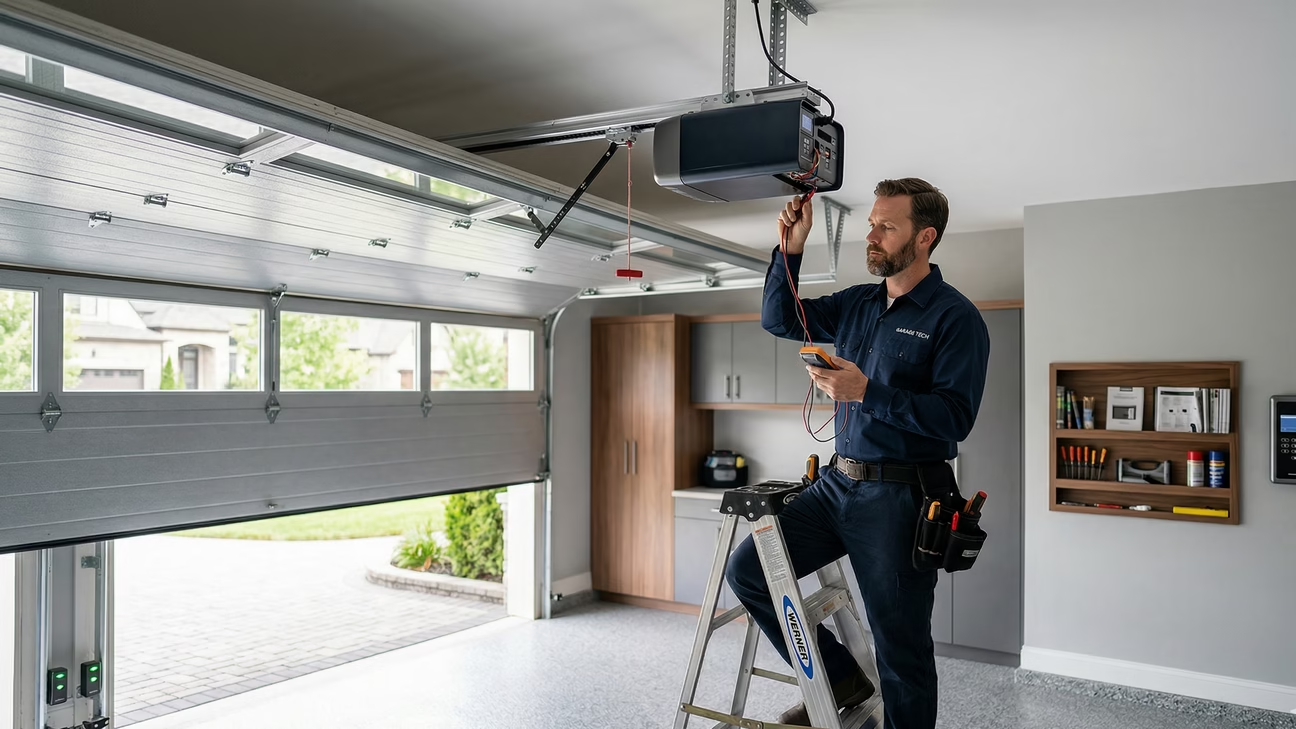
Quick safety note: This guide covers safe, basic checks for homeowners. Do not touch springs, cables, or major electrical parts. If the door feels heavy, hangs crooked, or shows damaged hardware, stop and call a trained garage door technician.
A garage door should make life easier. When it does not, the whole day feels off. Maybe the remote stopped working. Maybe the door starts down, then jumps back up. Maybe the opener hums, but nothing moves.
The good news is this: many common LiftMaster problems have simple causes. A dead battery. A blocked sensor. A loose plug. A setting that drifted over time. In many cases, you can find the issue fast and fix it without stress.
This guide walks you through safe, simple Liftmaster garage door repair steps. You will learn what to check first, what each symptom may mean, and when it is smarter to stop and call for help.
Before You Start: A Few Safety Rules
Start with safety. It saves time, money, and trouble.
Unplug the Opener Before You Inspect Anything Close Up
If you need to look near the motor unit, unplug it first. This lowers the risk of a sudden start. It also helps you work with a clear head.
Do Not Touch Springs or Cables
This matters most. Springs and cables hold a lot of tension. They can cause serious injury if handled the wrong way. If you think the spring is broken, do not test more things. Stop there.
Gather a Few Basic Items
Keep these nearby:
- A ladder
- A clean cloth
- Fresh remote batteries
- A screwdriver
- A flashlight
- Your LiftMaster manual, if you still have it
You do not need a full toolbox for basic LiftMaster opener troubleshooting. Most early checks are simple and visual.
How a LiftMaster System Works
You do not need to know every detail. But a basic picture helps.
A LiftMaster setup usually has:
- The opener motor
- A wall control
- One or more remotes
- Safety sensors near the floor
- A rail and trolley that pull the door
- Tracks, rollers, and hinges on the door itself
Most problems fall into one of three groups:
- Power or control problems
- Sensor or setting problems
- Mechanical door problems
That is useful because it narrows the search. If the wall button works but the remote does not, you are likely dealing with a control issue. If the opener runs but the door does not move, the problem may be mechanical. If the door will not close, the sensors are often the first place to look.
Quick Diagnostic Check: What Is the Door Doing?
Before you start, match the symptom.
The Garage Door Will Not Open
Possible causes include:
- No power to the opener
- Dead remote battery
- Locked wall control
- Disconnected trolley
- Broken spring
The Garage Door Will Not Close
Common causes include:
- Dirty or blocked safety sensors
- Sensors out of line
- Something in the door path
- Travel limit setting issue
The Door Starts Closing, Then Reverses
This often points to:
- Sensor trouble
- Resistance in the tracks
- Force or travel settings that need adjustment
The Remote Does Not Work, but the Wall Button Does
This usually means:
- The remote battery is dead
- The remote lost its programming
- The opener is in lock mode
- There is signal interference
The Opener Runs, but the Door Does Not Move
This can happen when:
- The trolley is disconnected
- An internal gear is worn
- A door part has failed
The Unit Clicks or Blinks
That may suggest:
- A sensor issue
- A wire problem
- A fault inside the opener
Once you know the symptom, the next steps get easier.
Step-by-Step Liftmaster Garage Door Repair
Work through these checks in order. Start simple. Test after each step.
Step 1: Check the Power Source
This sounds obvious. It still solves a lot of calls.
Make sure the opener is plugged in. Then check the outlet with another device, like a lamp or charger. If the outlet is dead, look at the breaker panel. Also check for a nearby reset button if the outlet is protected.
If the opener shows no lights and gives no sound, the issue may be power related, not a bad opener.
What to do next
- Plug the opener back in firmly
- Reset the breaker if needed
- Test the wall button again
If power is live but the opener is still dead, move on.
Step 2: Test the Wall Control and the Remote
Press the wall button first. This tells you a lot fast.
If the wall button works but the remote does not, the opener is likely fine. The problem is often the remote, its battery, or the programming.
Try these steps:
- Replace the remote battery
- Stand closer to the door and test again
- Check if the lock or vacation mode is on
- Reprogram the remote if needed
This is one of the most common garage door opener not responding complaints. The fix is often small.
Step 3: Inspect the Safety Sensors
If your garage door will not close, start here.
LiftMaster sensors sit near the bottom of the door tracks. One sends a beam. The other receives it. If the beam is blocked or misaligned, the door may refuse to close or reverse at once.
Look for:
- Dirt on the lenses
- Storage bins, tools, or leaves in the way
- Loose brackets
- One sensor light off or flickering
Wipe the lenses with a soft cloth. Then check that both sensors face each other straight on. Even a small bump can throw them off.
This is one of the top causes of LiftMaster sensor problems. It is also one of the easiest to fix.
Step 4: Check for Obstructions in the Door Path
Look at the full path of the door. Then look at the tracks.
You are checking for:
- Small objects on the floor
- Dirt buildup
- Bent spots in the track
- Sticky rollers
Even a minor blockage can make the opener think the door hit something. That can trigger reverse mode.
Do not force bent metal back into place if the damage is serious. Minor dirt is one thing. Structural damage is another.
Step 5: Listen to the Door While It Moves
Sound can tell you a lot.
If you hear grinding, the opener may have a worn gear. If it hums but does not move, the motor may be struggling. If the door squeals, the rollers or hinges may need service.
Pay attention to when the sound happens:
- Right at the start
- Halfway through travel
- Near the floor
- Only when opening or only when closing
This helps narrow the issue fast. It is a simple form of garage door opener repair diagnosis without taking things apart.
Step 6: Check the Trolley and Emergency Release
If the opener runs but the door does not move, the trolley may be disconnected.
This often happens after someone uses the emergency release during a power outage. The opener still works, but it is no longer linked to the door.
Look along the rail and check whether the trolley is engaged. Many systems reconnect when you pull the release back into place and run the opener. If you are not sure, check your manual for your model.
This is a common fix when the garage door opener not responding problem is really a door connection issue.
Step 7: Test the Door Balance by Hand
Only do this if the door is fully closed first, if possible.
Use the emergency release to disconnect the opener. Then lift the door by hand a little. It should move with moderate effort. It should not feel very heavy. It should not slam down. It should not rise on its own.
If the door feels heavy, jerky, or crooked, stop. That often means a spring or major hardware issue. This is not a safe DIY repair.
A heavy door is one of the clearest signs that you need professional LiftMaster garage door opener repair or full door service.
Step 8: Review Travel and Force Settings
If the door closes too far, stops too soon, or reverses for no clear reason, the travel or force settings may be off.
These settings control how far the door moves and how much resistance the opener allows before it stops or reverses.
Make only small adjustments. Test after each one. If you make a large change, you may create a new problem.
If you do not have the manual, do not guess too much here. A careful reset and small change is fine. Big changes are not.
Step 9: Reprogram the Remote if Needed
If you already changed the battery and the remote still does not work, it may need to be paired again.
This can happen after a power outage, a battery swap, or a memory reset. It can also happen when you add a new remote and the old one stops syncing well.
Follow your LiftMaster model instructions for this step. The process varies by unit. In many cases, the learn button on the opener is part of the process.
When people search LiftMaster remote not working, this is often the step that solves it.
Step 10: Reset the System
Sometimes a simple reset clears the problem.
Unplug the opener for a short time. Plug it back in. Then test:
- The wall control
- The remote
- The safety sensors
- The full open and close cycle
This can help after brief power issues or strange behavior that started out of nowhere.
Common LiftMaster Problems and Helpful Fixes
Some issues come up again and again. Here are the most common ones.
LiftMaster Garage Door Will Not Close
Start with the sensors. Clean them. Align them. Make sure nothing blocks the beam.
Then check the path of the door. Clear any object on the floor or near the track. If the problem continues, the close travel setting may need a small adjustment.
LiftMaster Remote Not Working
Swap in a fresh battery. Then test the remote from a close distance. If it still fails, check the wall control lock mode and try reprogramming the remote.
If the wall button also fails, the issue is likely not the remote.
LiftMaster Wall Control Not Working
First, check for power at the opener. Then see if the opener lights are on. If the unit has power but the wall control is dead, there may be a wiring issue or a lock setting in place.
Do not open wiring if you are not comfortable with it. This is where a garage door repair professional can save time.
Garage Door Reverses Before It Fully Closes
This often points to the sensors, but not always. Resistance in the track can also cause it. So can settings that are too sensitive.
Clean the sensors first. Then inspect the track. Then review the close travel setting.
Opener Motor Runs, but the Door Does Not Move
Check the trolley. If it is engaged and the door still does not move, the opener may have a worn gear or another internal part problem. That is usually a job for a technician.
LiftMaster Flashing Light Codes
Flashing lights often signal a fault. In many cases, sensors are involved. If the lights blink and the door will not close, start there. If the pattern persists after you clean and align the sensors, consult the model guide or call for service.
DIY Fixes You Can Safely Try
Homeowners can often handle these steps:
- Replacing remote batteries
- Cleaning sensor lenses
- Clearing items from the door path
- Checking the outlet and breaker
- Reconnecting the trolley
- Doing a simple reset
- Light cleaning around tracks
These steps cover a large share of basic LiftMaster garage door repair needs.
Repairs You Should Not Attempt
Some jobs are too risky for DIY work.
Do not attempt:
- Spring repair
- Cable repair
- Major track repair
- Motor teardown
- Logic board work if wiring is unclear
- Any repair on a door that feels heavy or hangs unevenly
If the repair involves tension, damaged metal, or hidden wiring, it is better to stop early.
Preventive Maintenance Tips That Help You Avoid Bigger Repairs
A little care goes a long way.
Clean the Sensors Often
Dust builds up fast, especially near the floor. A quick wipe can prevent false sensor trips.
Watch the Tracks and Rollers
Look for dirt, wear, or wobble. Early signs are easy to miss. Catching them early can help you avoid a larger garage door opener repair later.
Replace Remote Batteries Before They Die
Weak batteries cause spotty performance. That can make you think the opener is failing when it is not.
Pay Attention to New Sounds
Small changes often come before bigger failures. A new click, scrape, or groan is worth checking.
Schedule Service Before the Door Fails
If the door has become louder, slower, or less smooth, a tune-up may cost less than an emergency repair.
When to Call a Professional for Liftmaster Garage Door Repair
Some signs mean it is time to stop troubleshooting.
Call a pro if:
- The door feels heavy by hand
- The door hangs crooked
- You see a broken spring or damaged cable
- The motor smells hot or burnt
- The opener runs, but internal parts seem to slip
- The problem keeps coming back after basic checks
A fast service call may cost less than replacing more parts later. It also keeps the door safe to use.
Frequently Asked Questions About Liftmaster Garage Door Repair
Why is my LiftMaster garage door opener not responding?
Start with power. Then test the wall button. Then check the remote battery and lock mode. If the opener has power but still does nothing, the issue may be inside the unit.
Why will my LiftMaster garage door not close all the way?
The most common cause is a sensor problem. Dirty lenses, poor alignment, or an object in the beam can stop the close cycle. Resistance in the track can also do it.
Can I fix a LiftMaster opener myself?
You can handle basic checks and simple fixes. That includes batteries, sensors, power checks, and reset steps. Leave springs, cables, and major mechanical work to a pro.
Why does my LiftMaster opener click but not close?
This often points to blocked or misaligned sensors. Start there first.
Why is my garage door heavy to lift by hand?
That usually means the spring system may be failing. Stop using the door and call a technician.
How often should I inspect my system?
A quick visual check once a month is a smart habit. Pay special attention to sensors, tracks, and changes in sound or movement.
Final Thoughts
Most garage door problems feel bigger than they are. In many cases, the fix is simple. Check the power. Test the wall control. Replace the remote battery. Clean the sensors. Look for obstructions. Review the trolley. Reset the unit if needed.
These basic steps solve many common issues without hassle. They also help you spot the difference between a quick fix and a job that needs expert hands.
If your troubleshooting does not solve the problem, do not force it. A safe, timely repair is always better than a risky guess. And when the issue goes beyond the basics, professional Liftmaster garage door repair can get your system back to smooth, reliable use.