You spent two hours on a perfect two-bucket wash. You used the expensive pH-neutral soap. You even used a grit guard. The car looked like liquid glass while it was wet.
Then, you dried it.
And when you pulled it into the sun, you saw them. Thousands of tiny, circular scratches reflecting the light like a spider web.
Here is the hard truth: You put them there.
Most people think scratches happen while driving. They don’t. Industry studies show that 90% of paint defects are inflicted during the drying process. You didn’t clean the car; you ground microscopic dust into the paint with a towel.
The Science: Why Paint is So Delicate
To understand why this happens, you have to understand what you are touching.
Modern car paint is made of three layers: Primer, Base Coat (Color), and Clear Coat. The clear coat is the shield. It protects the color from UV rays and bird droppings. But it is shockingly thin.
- Thickness: The average factory clear coat is about 40 to 50 microns thick. That is thinner than a Post-it note.
- The Risk: Every time you polish a scratch out, you shave off a micron. You cannot “buff it out” forever. Eventually, you will burn through to the paint.
Hard Paint vs. Soft Paint
Not all clear coats are created equal.
- Soft Paint (Honda, Subaru, Toyota): This paint is incredibly delicate. If you look at it wrong, it scratches. A cheap towel will ruin a black Subaru in one wash.
- Hard Paint (Audi, VW, Mercedes): German paint is harder and resists scratches better, but once they are there, they are a nightmare to polish out.
The Culprit: Friction & Drag
A swirl mark is not a “swirl.” It is actually a straight line scratch. It only looks circular because of how the sun reflects off the edges of the jagged trench you cut into the clear coat.
The Physics of a Scratch
Scratch = Abrasive + Pressure + Motion
Even a single grain of sand trapped in a towel, combined with the downward pressure of your hand, acts like a diamond-tipped cutting tool.
The Chamois (“Shammy”) Myth
If you still use a leather chamois or “The Absorber,” stop immediately. Throw it away.
A chamois is flat. It has no “pile” or fibers. When you drag a chamois across a panel, any leftover dirt has nowhere to go. It gets trapped between the leather and the paint. You are effectively sandpapering your car.
The Bath Towel
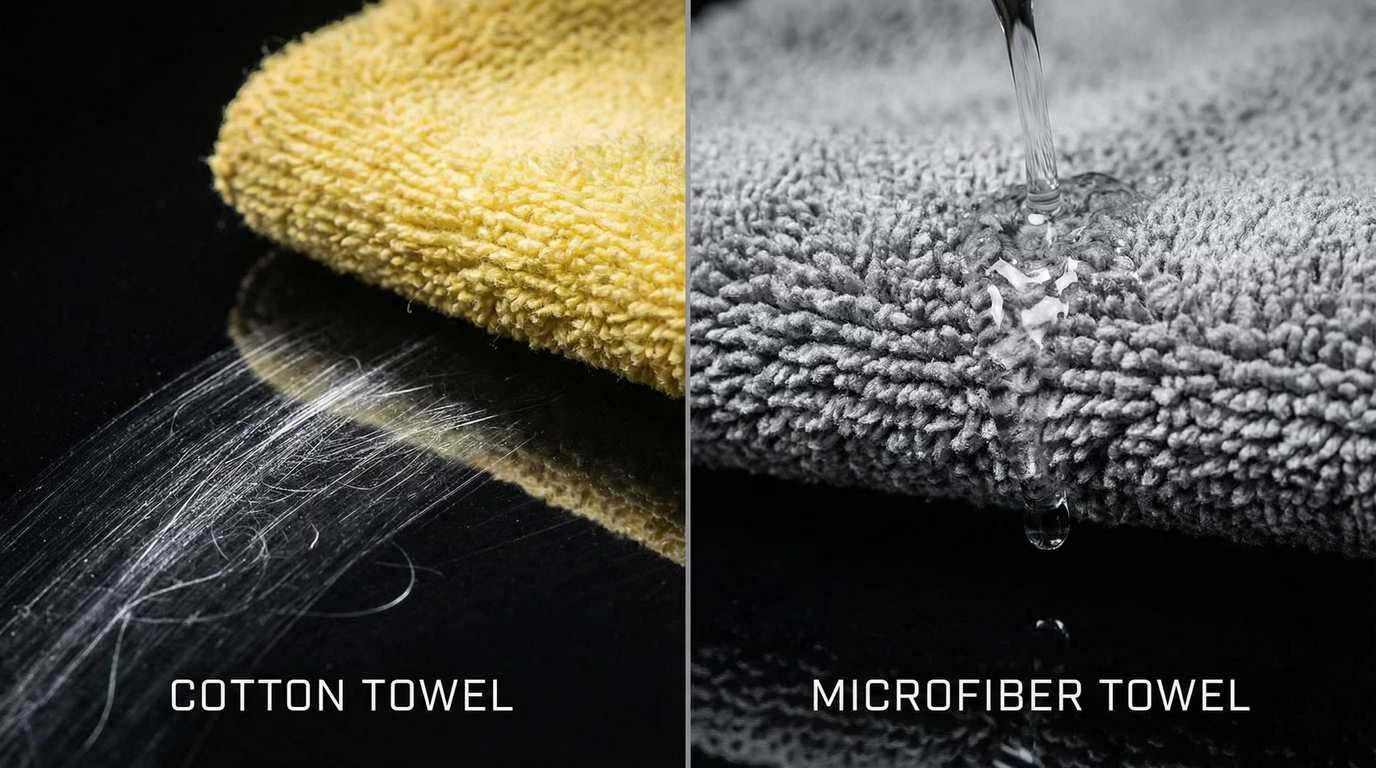
Never let an old cotton bath towel touch your car. The polyester threads are often harder than the clear coat itself. Plus, the edges are usually stitched with nylon, which cuts paint like a knife.
The Towel Hierarchy: GSM & Pile
If you must touch the paint, you need Microfiber. But not the cheap yellow ones from Costco. You need to look at GSM (Grams per Square Meter).
- Low Pile (300 GSM): Great for interiors or wheels. Bad for paint. The fibers are too short to absorb dirt.
- Twisted Loop (1000+ GSM): The gold standard. The fibers are twisted into long loops that act like a mop. They lift water and dirt away from the surface, trapping it deep in the towel so it doesn’t drag across the paint.
| Drying Tool | Safety Rating (1-10) | The Detailer’s Verdict |
|---|---|---|
| Forced Air (Blower) | 10/10 (Safest) | Zero contact = Zero scratches. The only perfect method. |
| Twisted Loop Microfiber | 9/10 | Holds massive water. Lifts dirt away from paint. |
| Waffle Weave | 6/10 | Okay for glass. Too flat for soft paint. |
| Cotton Bath Towel | 2/10 | Guaranteed scratches. Do not use. |
| Chamois / Squeegee | 0/10 (DANGER) | Grinds dirt directly into clear coat. |
The Only 100% Safe Method: Touchless Drying
This is the secret high-end shops charge you for. If you don’t touch the paint, you can’t scratch it.
We use Forced Air. Using a dedicated car dryer or a powerful leaf blower pushes the water off the car without any friction.
- The Benefit: It blasts water out of the side mirrors, the front grille, and the lug nuts. No more annoying drips running down your clean door panel five minutes after you finish.
- The Switch: If you are serious about preserving your clear coat, you need to retire the towel. (Check our test on the Best Car Drying Blower to see why dedicated dryers beat standard leaf blowers).
Lubrication: The “Drying Aid”
If you absolutely must use a towel (maybe you live in an apartment and can’t use a blower), you need Lubrication.
Never wipe a dry towel on wet paint. The water isn’t enough lubricant. Spray a “Drying Aid” (usually a diluted spray wax or ceramic detailer) on the wet car before you wipe. This adds a slick layer of protection that allows the towel to glide over the surface, drastically reducing drag.
(See our top picks for the Best Ceramic Spray Coating to use as a drying aid).
Final Thoughts
Paint correction is expensive. Prevention is free. If your paint already looks like a spider web, you need to polish it. (Read our Paint Correction 101 Guide to learn the order of operations).
But once it is fixed, protect it. Throw away the chamois, buy a blower, and treat your clear coat like the delicate skin it is.