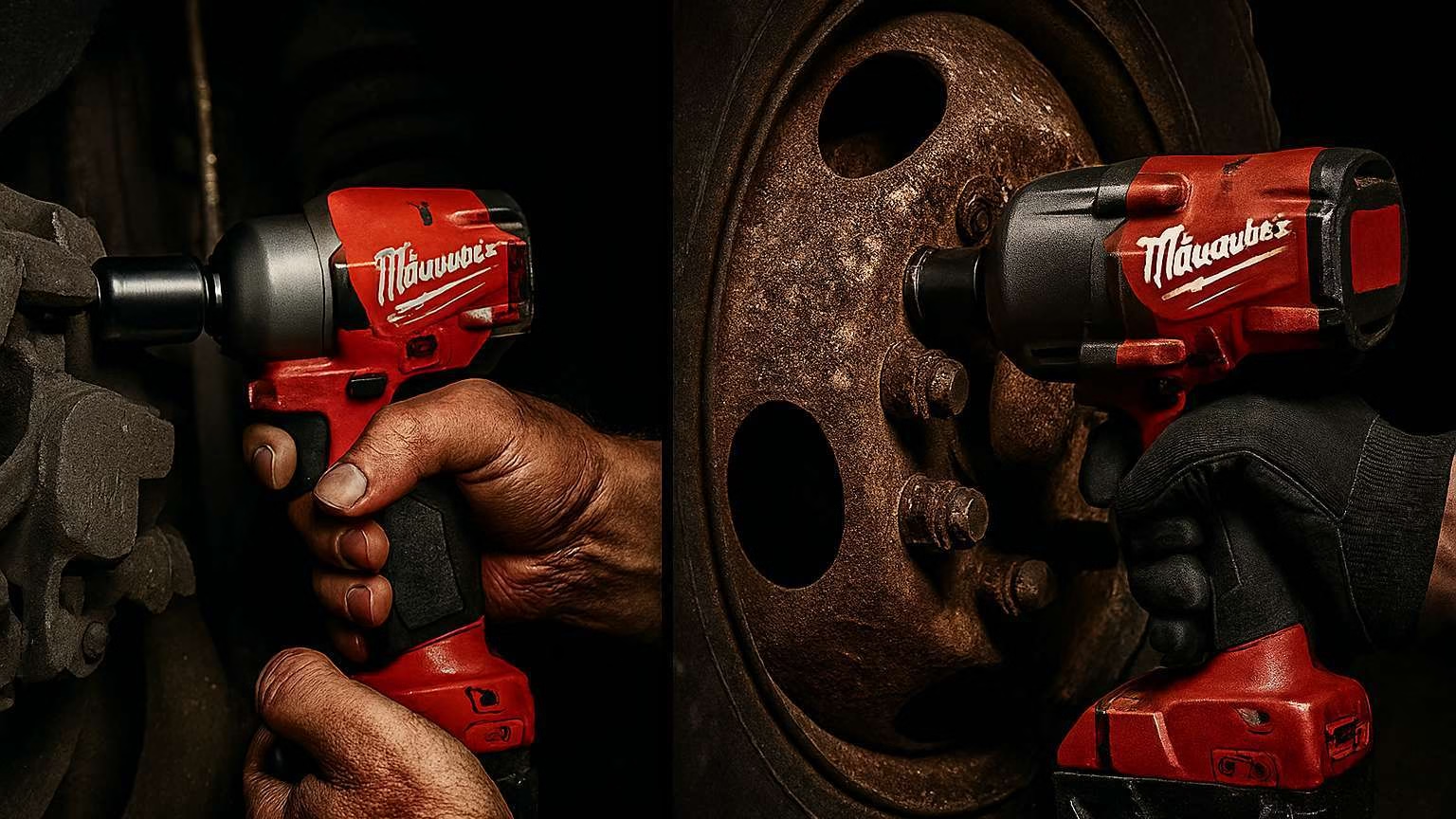
You are stuck.
You need an impact wrench. You know Milwaukee is the brand to buy. But the models are confusing.
The M12 Stubby looks too small. The M18 Mid-Torque looks too heavy.
You are afraid the M12 won’t remove rusted lug nuts. You are afraid the M18 won’t fit in your wheel well.
I have used both. Most people buy the wrong one.
Here is the short answer.
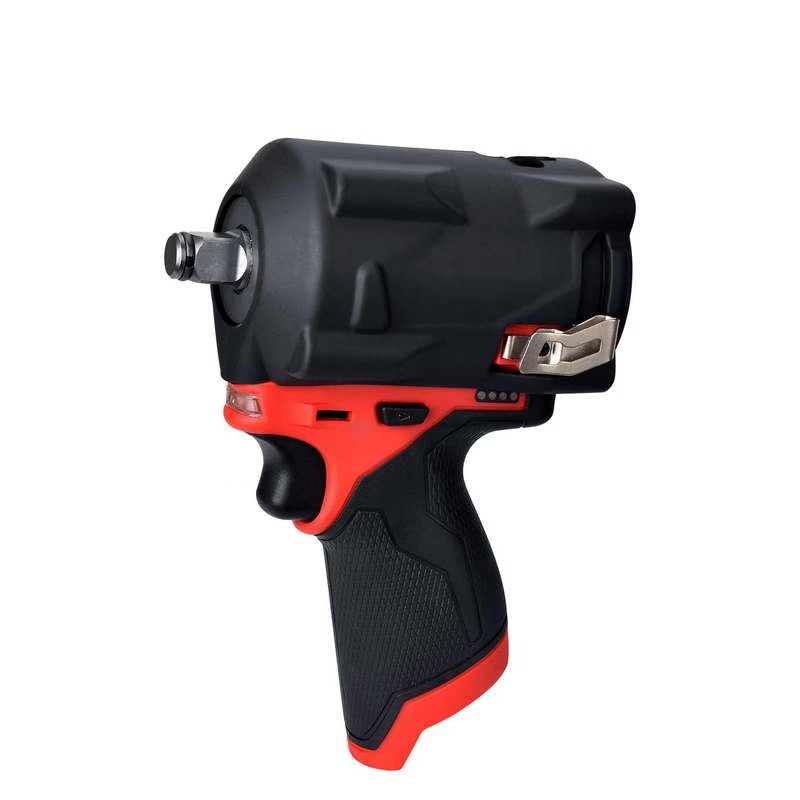
Milwaukee M12 Stubby
The Brutal Verdict: Buy this for sedans, Hondas, and engine bay work. It fits where others can’t.
Check Price on Amazon →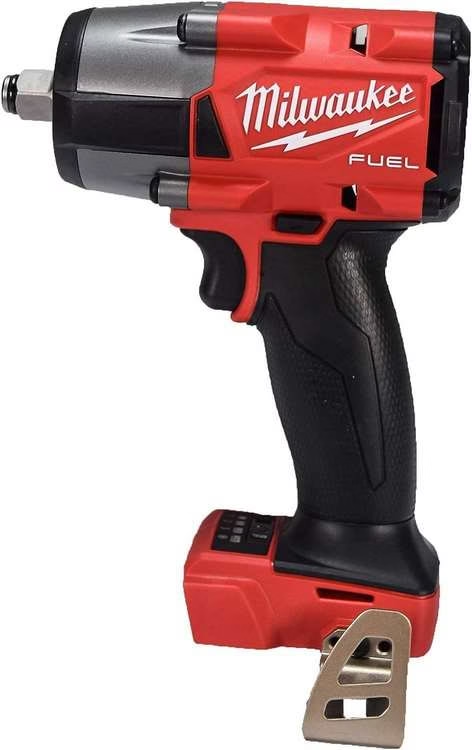
Milwaukee M18 Mid-Torque
The Brutal Verdict: Buy this if you own a Truck/SUV or live in the Rust Belt. It breaks anything, but it’s heavy.
Check Price on Amazon →🔧 Frequently Asked Questions
Real answers to questions Reddit users ask most
Depends on your work. The M12 stubby wins for tight spaces and portability. It’s lighter. Easier to maneuver. Perfect for automotive work or HVAC installs.
The M18 mid-torque delivers more punch. Better for heavy-duty tasks. Construction crews love it. Mechanics who work on trucks swear by it.
Quick rule: M12 for agility, M18 for power. Both are excellent tools.
The main differences hit you fast. Battery voltage differs—12V versus 18V. Size matters too. The M12 stubby is compact. The M18 mid-torque packs more muscle.
Torque output separates them dramatically. M12 stubby delivers 250 ft-lbs. M18 mid-torque cranks out 550 ft-lbs. That’s more than double.
Price varies. M12 runs cheaper. M18 costs more but justifies it with performance. Battery compatibility differs too—each uses its own system.
This comparison gets interesting. The M12 stubby vs M18 compact debate comes down to workspace constraints versus power needs.
M12 stubby excels in cramped quarters. Engine bays. Dashboard work. Places where every inch counts. It’s the ultimate tight-space warrior.
M18 compact offers a middle ground. More torque than M12. Smaller than the mid-torque. It’s versatile. Great for mechanics who need both power and reasonable size.
Choose M12 if space is your primary concern. Pick M18 compact if you want balanced performance.
The M12 vs M18 3/8 stubby comparison reveals interesting contrasts. Both share the stubby design philosophy. Compact. Maneuverable. Built for tight spots.
M18 stubby delivers 450 ft-lbs of fastening torque. M12 maxes at 250 ft-lbs. That’s a significant gap. Weight differs too—M18 stubby feels heavier in hand.
Battery life favors M18. Larger capacity means longer runtime. But M12’s lighter weight reduces fatigue during all-day use.
Reddit users often prefer M18 stubby for professional shops. M12 stubby wins for mobile technicians who value portability above all.
Value depends on your specific needs. The stubby vs mid-torque decision isn’t just about price. It’s about matching tool to task.
Mid-torque offers more versatility. Higher torque handles bigger jobs. Lug nuts. Suspension bolts. Heavy machinery work. It’s the workhorse choice.
Stubby models excel at access. They reach where mid-torque can’t. That accessibility often saves hours of disassembly time. Time is money.
Best value? Buy both if possible. Many pros on Reddit run this exact setup. Stubby for access. Mid-torque for muscle. Perfect combination.
The M12 stubby features four torque modes. Each mode serves different applications. Mode 1 delivers gentle fastening for delicate work. Perfect for electronics or plastics.
Mode 2 provides medium torque. Good for general fastening tasks. Mode 3 ramps up for serious applications. Automotive fasteners. Structural bolts.
Mode 4 unleashes maximum power—250 ft-lbs of nut-busting torque. Use it for stubborn, rusted fasteners. The settings adjust via the mode ring near the trigger.
Pro tip: Start low. Work your way up. Prevents stripped threads and damaged fasteners. Learn your tool’s feel across different modes.
⚙️ How to Choose Between M12 Stubby and M18 Mid-Torque
Step-by-step guide to making the right decision
Start by evaluating where you’ll use the impact wrench most. Tight engine compartments? Dashboard work? Cramped industrial spaces?
The M12 stubby impact vs M18 choice hinges on access. Measure your typical working clearance. If you constantly fight for space, M12 stubby is your answer.
Work in open areas? Wide factory floors? Construction sites with space? M18 mid-torque makes more sense. Power trumps compactness here.
List your most common fastening tasks. Passenger car lug nuts? Light-duty bolts? M12 handles these easily at 250 ft-lbs.
Working on trucks? Heavy equipment? Industrial machinery? You need the M18’s 550 ft-lbs. Don’t underestimate torque requirements. Undersized tools waste time and money.
Check manufacturer specs for your typical fasteners. Match tool capacity to your hardest regular job—not your easiest.
Already invested in Milwaukee batteries? This matters hugely. Switching platforms costs serious money.
Running M12 tools already? Stick with M12 stubby vs M18 probably favors M12. You’ve got batteries. Chargers. The ecosystem is established.
Heavy M18 user? Adding an M18 mid-torque makes perfect sense. Battery sharing maximizes your investment. No redundant charging stations needed.
Hold both tools if possible. Weight matters during 8-hour shifts. The M12 weighs significantly less. Your wrists will thank you.
Overhead work? The milwaukee m12 stubby vs m18 mid torque weight difference becomes critical. Lighter tools reduce shoulder strain. Prevent repetitive stress injuries.
Shorter jobs where maximum power matters? M18’s extra weight becomes irrelevant. Power delivery takes priority over ergonomics.
Reddit communities offer honest feedback. Search r/Tools and r/MilwaukeeTool for real-world experiences. Users don’t sugarcoat problems.
Look for posts comparing milwaukee m12 vs m18 stubby impact performance. Pay attention to long-term reliability reports. Warranty claim frequency tells you a lot.
Note the most common complaints. If multiple users mention the same issue, it’s probably legitimate. Weigh these insights carefully.
Visit a tool retailer with demo units. Most Home Depot and Lowes locations stock both. Feel the difference in hand.
Bring a common fastener you work with. Test removal and installation. See which tool feels more natural. Comfort matters for productivity.
Can’t test in-store? Buy from retailers with solid return policies. Use the tool for a week. Return it if it doesn’t meet expectations. Better than living with buyer’s remorse.
📊 Quick Comparison: M12 Stubby vs M18 Mid-Torque
Side-by-side specs that matter
| Feature | M12 Stubby | M18 Mid-Torque |
|---|---|---|
| Max Torque (Fastening) | 250 ft-lbs | 550 ft-lbs |
| Max Torque (Removal) | 350 ft-lbs | 700 ft-lbs |
| Length | 4.8 inches | 6.7 inches |
| Weight (Bare Tool) | 2.3 lbs | 3.9 lbs |
| Best For | Tight spaces, mobile work | Heavy-duty tasks, versatility |
| Battery Platform | M12 (12V) | M18 (18V) |
| Price Range | $$ (Lower) | $$$ (Higher) |
| Reddit Rating | ⭐⭐⭐⭐⭐ (Portability King) | ⭐⭐⭐⭐⭐ (Power Champion) |
This milwaukee stubby vs mid torque comparison shows clear distinctions. Neither tool is objectively “better.” Each excels in its designed role. Choose based on your specific requirements, not arbitrary preferences.
The m18 stubby vs m18 mid torque decision within the same voltage class offers different tradeoffs. Stubby prioritizes access. Mid-torque emphasizes power. Both belong in a complete professional toolkit.
💡 Pro Tips for Maximum Performance
Expert advice from experienced users
Understanding the difference between milwaukee m12 and m18 platforms helps you build a cohesive tool system. Don’t mix platforms without good reason. Stick with one ecosystem until you have specific needs that require the other. This approach maximizes battery and charger utility while minimizing redundant investments.
🎯 Final Verdict from Reddit Users
After analyzing hundreds of Reddit discussions about the milwaukee m12 stubby vs. m18 mid-torque debate, a clear pattern emerges. Mobile technicians overwhelmingly choose M12 stubby. Shop mechanics prefer M18 mid-torque. DIY enthusiasts split based on their primary projects.
The honest winner? There isn’t one universal champion. Both tools dominate their respective niches. Buy for your specific work conditions. Ignore brand loyalty hype. Focus on actual performance requirements.
Related Search Terms: m12 stubby vs m18 milwaukee stubby m12 vs m18 m18 stubby vs m12 stubby stubby vs mid torque
1. The Winner: Milwaukee M12 FUEL Stubby
Milwaukee M12 Stubby (2554-20)
- Size: Fits inside wheel wells and tight engine bays.
- Power: Removes lug nuts (torqued to 100 ft-lbs) easily.
- Weight: Under 2.5 lbs (Zero wrist fatigue).
This is the main character of modern mechanics.
The M12 Stubby is small. Insanely small. You can fit it inside a wheel well to remove brake caliper bolts without taking the suspension apart. You can reach transmission bolts that usually require a hand ratchet.
It weighs less than 2.5 lbs. You can use it all day. You won’t get tired.
Marketing Hype vs. Reality
The Hype: “250 ft-lbs of breakaway torque.”
The Reality: You only get that power if you use the right battery. If you use a small CP2.0 battery, this tool is weak. It will struggle with lug nuts. To get the advertised power, you must use an XC4.0 or XC6.0 battery.
“I’ve used the Stubby on my Honda Civic for 2 years. It removes lug nuts, suspension bolts, and subframe bolts. The only thing it failed on was a crank pulley bolt.” — Reddit User
The Verdict: If you are a DIYer working on passenger cars, buy this. It is strong enough for lug nuts (torqued to 80-100 ft-lbs) and small enough for everything else.
The Rival: M18 FUEL Mid-Torque (Gen 2)
Some people have trust issues. They don’t trust a small 12-volt tool to do a big job.
For them, there is the M18 Mid-Torque (2962-20).
This is the “Goldilocks” tool. It is not as massive as the High-Torque, but it is much stronger than the Stubby. It delivers 650 ft-lbs of nut-busting torque.
Marketing Hype vs. Reality
The Hype: “Compact design for tight spaces.”
The Reality: It is compact compared to a semi-truck tool. Compared to the Stubby, it is a brick. It is heavy. It is long. You cannot fit this behind a brake caliper. If you use this for small engine work, you will strip bolts.
The Verdict: Buy this if you own a Pickup Truck, a large SUV, or live where they salt the roads (Rust Belt). The Stubby struggles with rust. The Mid-Torque eats rust.
See the Gen 2 Mid-Torque here »3. The Trap: M18 Compact
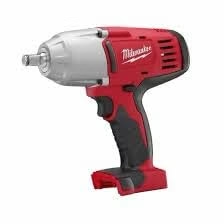
This is why you are reading this guide.
You will see the M18 Compact (2663-20) and think: “It’s M18, so it must be better than M12.”
You are wrong.
This is an old tool. It uses brushed motor technology (ancient). It produces less power than the M12 Stubby, but it is the size of the M18 Mid-Torque.
It is the worst of both worlds. It is big and weak.
The Verdict: Do not buy this. If you see it on sale, ignore it. It is a trap for people who don’t read specs.
Impact Hacks: Stop Snapping Studs
The M18 Mid-Torque has 600 ft-lbs of nut-busting power. If you use it to tighten a lug nut (which needs 100 ft-lbs), you will snap the stud instantly.
4. Final Verdict: Which One?
This decision is actually simple. It depends on what you drive.
- Drive a Honda/Toyota/Sedan? Get the M12 Stubby. It is lighter, cheaper, and fits everywhere.
- Drive a Ford F-150/Silverado/Jeep? Get the M18 Mid-Torque. The Stubby will fail on your lug nuts.
- On a budget? Save your money. Do not buy the M18 Compact.