
Introduction
A small laundry room can quickly feel crowded. Detergent bottles take over every surface, laundry piles up, and there never seems to be enough space to fold or air-dry clothes.
The good news is that you do not need a larger room. These laundry room ideas for small spaces help you use walls, doors, corners, and narrow gaps more effectively. You will find practical storage, drying, and folding solutions that work for laundry closets, apartments, and both front-loading and top-loading machines. Some require installation; others are renter-friendly and need no drilling.
Looking for more practical home essentials? See our full list of useful things to buy for a new home.
Disclosure: This post contains affiliate links. If you purchase through one of these links, I may earn a commission at no extra cost to you. As an Amazon Associate I earn from qualifying purchases.
Before You Organize Your Small Laundry Room
It is tempting to start shopping for shelves and baskets right away. But even a useful organizer can become clutter if it does not fit your space or solve a real problem. Spend a few minutes measuring and planning first.
Measure and Plan First
Measure more than the open wall. Account for appliances, doors, hoses, controls, and anything that moves. Write down:
- Width and height of each open wall
- Space above the washer and dryer
- Gaps beside and between the appliances
- Depth of existing shelves
- Door width and clearance for lids or doors to open fully
Always open the washer lid or door (and the dryer) before measuring. Leave room for water connections, outlets, hoses, and vents so maintenance stays easy.
Spot Unused Space and Prioritize
Look for storage potential in overlooked spots: above the appliances, behind the door, beside the machines, on empty walls, under shelves, and in corners. Focus on the one or two problems that bother you most—supplies covering the machines, no drying space, missing folding surface, or floor hampers taking over.
Before you install anything, check whether drilling is allowed (especially if you rent), follow product instructions, and confirm the wall can support the weight. Keep controls, outlets, vents, and doors clear. For a no-drill approach, consider tension rods, freestanding shelves, rolling carts, removable hooks, and over-the-door organizers.
A quick checklist before shopping: measure carefully, open every door and lid, identify your main problem, decide on permanent vs. temporary solutions, note machine type (front- or top-loading), keep access to utilities, set a budget, and choose storage that fits what you actually use.
Vertical Laundry Room Storage Ideas
When floor space is limited, look up. Empty walls can hold many of the items that would otherwise crowd your machines or work surfaces.
Before adding wall storage, check the available height and depth. Shelves and racks should not block appliance doors, lids, controls, outlets, or water connections.
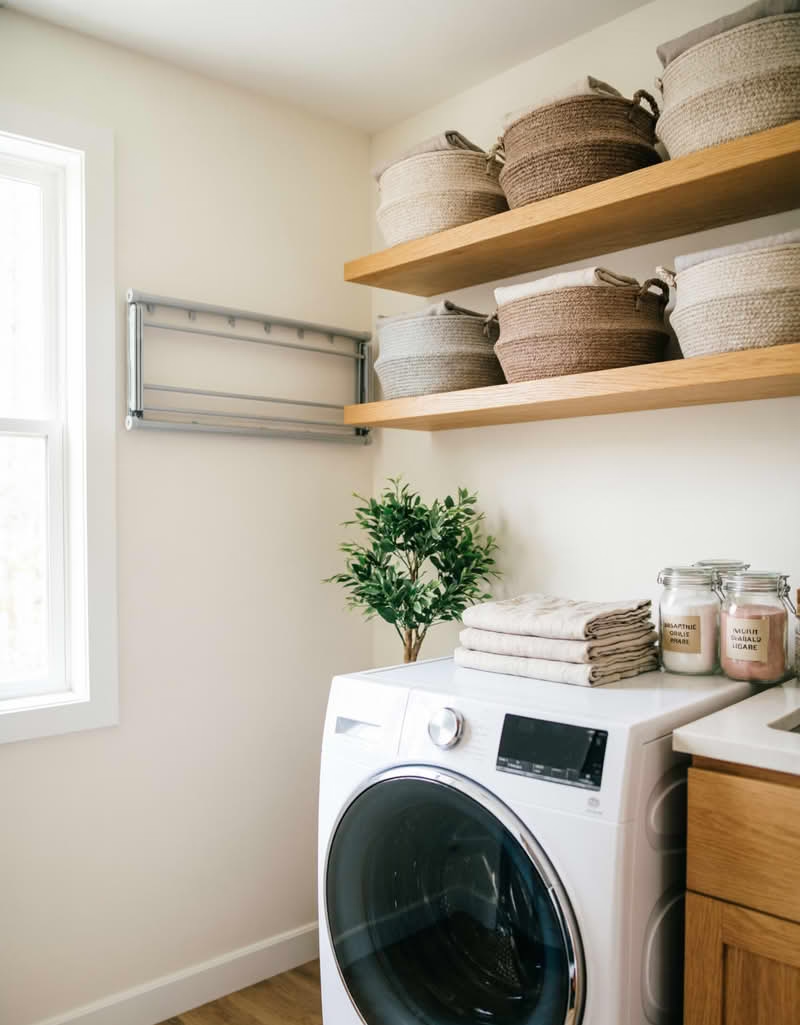
1. Add Floating Shelves Above the Machines
Floating shelves can turn an empty wall into useful storage. They work well for detergent, stain removers, dryer balls, cleaning cloths, and other supplies.
Before installing shelves, open your washer and dryer completely. Make sure the shelf will not prevent a lid or door from opening.
Consider these points when planning the shelves:
- Keep everyday supplies within comfortable reach.
- Place less-used items on the highest shelf.
- Choose a shelf depth that does not stick out too far.
- Leave enough room between shelves for bottles and baskets.
- Check that the wall and mounting hardware can support the expected weight.
- Store heavier items on the lowest suitable shelf.
Use small baskets to group similar items. For example, one basket could hold stain-removal supplies, while another holds mesh bags and dryer accessories.
Avoid filling the shelves with too many decorative objects. A small laundry room normally benefits more from practical storage.
Useful option: A set of floating shelves may work well when you need open storage but do not have room for a full cabinet.

If you’re considering freestanding or heavy-duty shelving, compare Husky vs Gladiator shelving to see which system fits better.
Quick Tip
Measure your tallest bottle before deciding how much space to leave between shelves. This helps prevent buying containers or arranging shelves that cannot hold your regular supplies.
2. Install a Wall-Mounted Drying Rack
A floor-standing drying rack can block the walkway in a narrow room. A wall-mounted rack provides hanging space without taking up permanent floor space.
Many wall-mounted designs fold against the wall when they are not in use. This makes them useful for drying:
- Delicate clothing
- Small towels
- Reusable cleaning cloths
- Lightweight shirts
- Items that should not go in the dryer
Choose a position where wet clothes will not hang over appliance controls or electrical connections. The rack should also have enough space to open without hitting a door or cabinet.
Before installation:
- Measure the rack in both its open and closed positions.
- Check the recommended weight limit.
- Confirm that the wall can support the loaded rack.
- Follow the supplied mounting instructions.
- Allow enough airflow around hanging clothes.
- Keep dripping items away from outlets and electrical equipment.
If permanent installation is not possible, a compact folding rack or an over-the-door model may be a better choice.
Useful option: A fold-down drying rack can provide temporary hanging space and then close against the wall when the laundry is dry.

Quick Tip
Do not place garments too close together. Leaving a little space between them can improve airflow and make drying more effective.
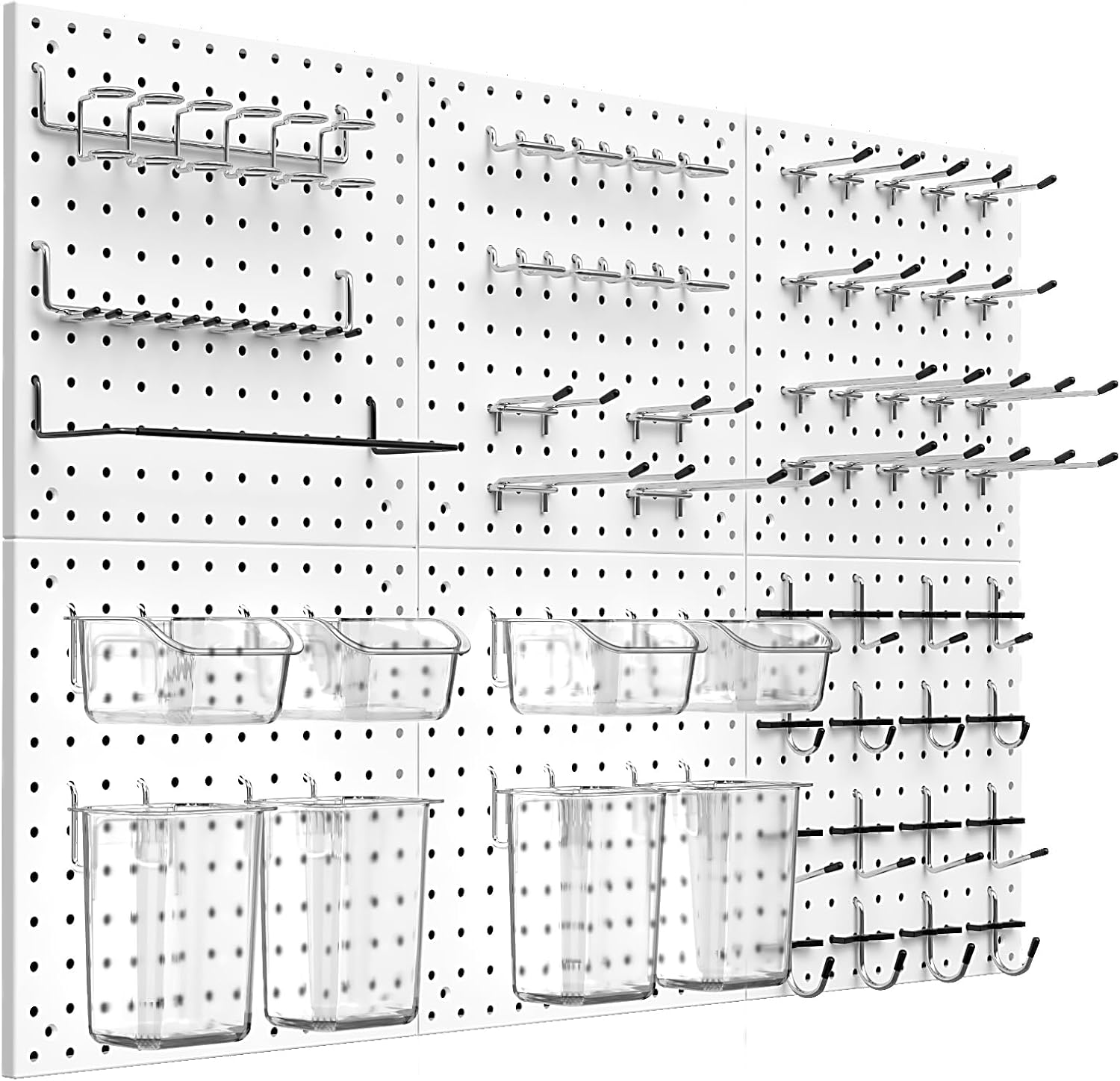
3. Use a Pegboard for Laundry Tools
A pegboard keeps small tools visible and easy to reach. Unlike fixed shelves, it allows you to move hooks and holders as your storage needs change.
A laundry room pegboard can hold:
- Lint brushes
- Small cleaning brushes
- Mesh washing bags
- Clothespin bags
- Measuring cups
- Cleaning cloths
- An empty spray bottle
- Lightweight ironing accessories
Group similar items together instead of hanging them randomly. This makes the board easier to use and gives it a cleaner appearance.
You can also add small pegboard baskets for items that cannot hang from hooks. Keep frequently used tools at eye level and less-used items higher up.
Check the weight of everything you plan to store. A pegboard is helpful for small accessories, but it may not be suitable for large detergent bottles or heavy equipment.
Useful option: A pegboard kit with adjustable hooks and small baskets can adapt as your laundry routine changes.
Renter-Friendly Alternative
If drilling is not allowed, consider a freestanding pegboard or a small pegboard secured to an existing shelving unit. Do not use removable strips unless the strip maker states that they can support the board and everything placed on it.
4. Mount an Ironing Board Holder
An ironing board can be awkward to store in a small room. Leaning it against a wall takes up floor space and may allow it to fall.
A wall-mounted or over-the-door holder keeps the board upright and out of the walkway. Some organizers also include a separate shelf or basket for ironing supplies.
When choosing a location:
- Make sure the board will not block the door.
- Check that it will not hit the machines.
- Keep it away from appliance hoses and connections.
- Place it where you can remove it without moving other items.
- Confirm that the holder fits your ironing board’s frame.
Store the iron only after it has cooled completely. If the organizer includes iron storage, check that the compartment matches the size and shape of your iron.
Useful option: An over-the-door holder may be suitable for renters or rooms without enough open wall space.

Quick Tip
Open and close the laundry room door before settling on an over-the-door organizer. Some holders may prevent a tight-fitting door from closing properly.
Door and Narrow-Gap Storage Ideas
The back of a door and the slim gaps beside appliances often go unused. These areas can provide useful storage without adding another cabinet or large piece of furniture.
Measure every gap carefully. Walls, baseboards, hoses, and appliance doors can reduce the usable space.
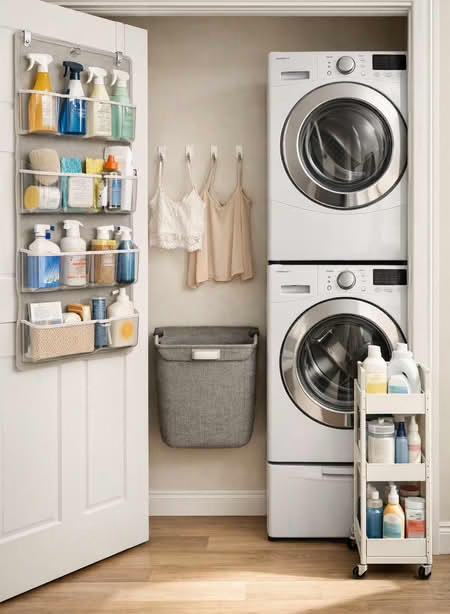
5. Add an Over-the-Door Organizer
An over-the-door organizer can hold small laundry supplies while keeping counters and appliance tops clear.
Depending on its pocket or basket sizes, you could use it for:
- Dryer balls
- Clothespins
- Mesh laundry bags
- Cleaning cloths
- Stain-removal tools
- Small bottles
- Extra clothes hangers
- Lint rollers
Place heavier items near the bottom when possible. This may help the organizer hang more steadily and makes heavier products easier to reach.
Before buying one, check:
- The thickness of the door
- The space above the door
- The clearance between the door and its frame
- The depth of the organizer
- Whether the door can open fully
- The organizer’s stated weight limit
Do not overload the organizer. Too much weight may affect the door or cause the organizer to swing when the door moves.
Useful option: Choose an organizer with pockets or baskets that match the items you actually need to store.

Quick Tip
If bottles tend to tip inside deep pockets, use the lower sections for soft items such as cloths and mesh bags. Store liquids upright in stable baskets.
6. Place a Slim Rolling Cart Beside an Appliance
A narrow rolling cart can use the gap between a machine and the wall. It offers easy access to supplies and can be moved when you need to reach the side or back of the appliance.

A slim cart may hold:
- Detergent and fabric-care products
- Stain removers
- Cleaning sprays
- Dryer accessories
- Spare cloths
- Small household supplies
Measure the narrowest part of the gap, not only the opening at the front. Baseboards, pipes, hoses, and uneven walls can make the space tighter farther back.
Allow some extra clearance so the cart can move without scraping the appliance or wall.
Look for a cart that has:
- A suitable width and depth
- Stable wheels
- Raised shelf edges
- Enough height for your bottles
- A handle or open area that is easy to grip
- Shelves that are easy to clean
Avoid placing the cart where it could press against hoses, vents, or electrical cords.
Useful option: A cart with raised edges can help prevent bottles from falling when you roll it out.
Quick Tip
Store frequently used products on the top shelf. Put refills and less-used supplies below. This reduces the need to pull the entire cart out for every load.
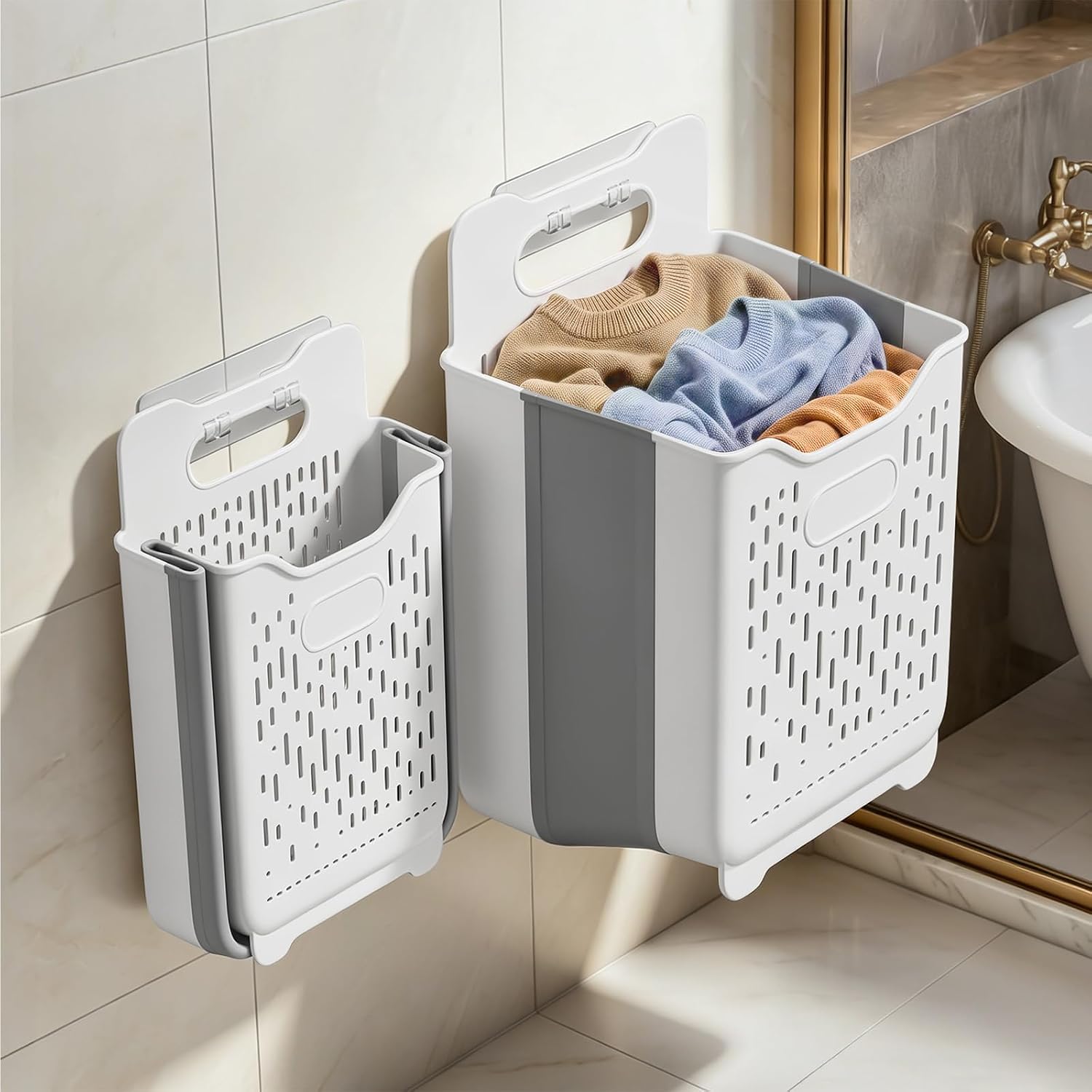
7. Install a Wall-Mounted Hamper
A traditional hamper can take up valuable floor space. A wall-mounted or hanging hamper keeps dirty clothes off the floor and may make a narrow room easier to walk through.
A single hamper works well for everyday laundry. If you sort clothes before washing, you could use two or three smaller bags for categories such as:
- Lights
- Darks
- Delicates
- Towels
- Cleaning cloths
Look for a hamper that can be removed easily when it is time to carry clothes to the washer. A washable bag is also helpful because hampers can collect dust, moisture, and odors.
Before mounting it:
- Check the filled weight it needs to support.
- Install it at a comfortable height.
- Make sure it will not block a door or walkway.
- Keep it away from appliance controls.
- Avoid placing damp clothes inside for long periods.
- Follow the mounting instructions.
If you have limited wall space, consider a hamper that hangs from the back of a door.
Useful option: A removable hanging hamper bag can serve as both storage and a carry bag.
Renter-Friendly Alternative
Use an over-the-door hamper or a collapsible hamper that folds flat when empty. These options usually require less permanent installation.
8. Use Hooks for Small Laundry Tools
Hooks are one of the simplest ways to use a narrow strip of wall. They work best for lightweight items that do not need a full shelf.
Use hooks for items such as:
- Mesh laundry bags
- Lint brushes
- Small dusters
- Cleaning cloths with loops
- Reusable shopping bags
- Empty clothes hangers
- A lightweight ironing mat
- Small baskets designed for hanging
Install hooks near the area where each item is used. For example, place a mesh-bag hook near the washer and a lint-brush hook near the dryer.
Avoid placing hooks where hanging items could become trapped in an appliance door or fall behind a machine.
Renter-friendly option: Removable adhesive hooks may work for lightweight items when used on a suitable surface.

Always clean and prepare the surface as directed. Check the weight guidance and allow the adhesive to set for the recommended time before loading the hook.
Quick Tip
Do not cover an entire wall with hooks. Start with a few items you use regularly. Add more only when there is a clear need.
Folding and Sorting Station Ideas
Laundry is easier to manage when you have a place to sort and fold clothes. A small room may not have space for a permanent counter, but a temporary or multi-use surface can still help.
The best option depends on your appliance type. Front-loading and top-loading machines need different amounts of space above them.
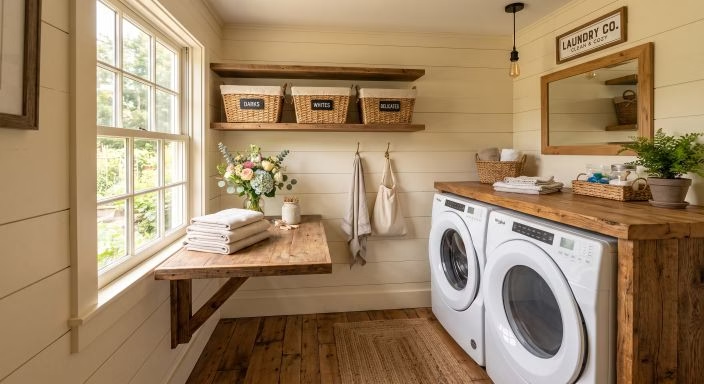
9. Install a Wall-Mounted Folding Table
A wall-mounted folding table gives you a work surface only when you need it. After folding clothes, you can close the table to clear the walkway.
It can be used for:
- Folding clean clothes
- Sorting small loads
- Treating stains
- Pairing socks
- Organizing laundry supplies
Choose a wall where the open table will not block a door, appliance, or main walkway. Make sure there is enough room to stand in front of it comfortably.
Before installation:
- Measure the table in its folded and open positions.
- Check the wall construction.
- Use suitable mounting hardware.
- Review the stated weight limit.
- Make sure the support mechanism locks securely.
- Keep the table away from water connections and electrical outlets.
A folding table should not be used as a seat or a support for heavy items unless it is specifically designed for that purpose.
Useful option: A shallow fold-down table may be a good fit for a narrow laundry room or hallway laundry area.

Quick Tip
Mount the table at a comfortable working height for the people who will use it most. Test the proposed height with a temporary piece of cardboard before drilling.
10. Use a Protective Washer-Top Mat
The top of a front-loading washer or dryer may provide a temporary place to sort or fold small items. A suitable protective mat can help reduce scratches and keep lightweight objects from sliding.
Use this surface for simple tasks, such as:
- Folding towels
- Pairing socks
- Sorting a small load
- Holding an empty laundry basket
- Organizing clothes before putting them away
Do not cover appliance controls, vents, openings, or warning labels. A mat should not hang down the back of the appliance or interfere with connections.
Before using one:
- Check the appliance manual for placement restrictions.
- Choose a mat intended for an appropriate surface and environment.
- Make sure the surface stays dry.
- Remove items before operating the appliance if vibration could cause them to fall.
- Do not treat the mat as a permanent counter.
- Keep liquids in stable, upright containers.
This idea is usually more practical for front-loading appliances. A top-loading washer needs open space above it so the lid can operate freely.
Useful option: A properly sized protective mat can make a machine top more practical for light, temporary tasks.

Important Distinction
A mat protects the appliance surface. It does not create a fully supported countertop. If you need a large or permanent folding area, consider a properly installed counter or a folding wall table.
11. Create a Sorting Station With Baskets
A simple sorting system can keep dirty clothes from forming one large pile. It can also make it easier to see when there is enough for a full load.
Possible sorting categories include:
- Light clothing
- Dark clothing
- Towels and bedding
- Delicate items
- Cleaning cloths
- Items needing stain treatment
You do not need a basket for every possible category. Choose a system that matches your actual laundry routine.
For a small room, consider:
- Stackable baskets
- Baskets placed on open shelves
- A narrow vertical sorter
- Removable fabric bags
- Wall-mounted hamper bags
- Baskets that nest when empty
Labels can help everyone in the home use the same system. Keep them simple and easy to read.
Useful option: Matching baskets can make open storage look calmer while keeping loads separated.

Quick Tip
Avoid buying baskets before measuring the shelf or floor area. Check the full width, height, and depth. Remember to leave enough space to lift or slide each basket out.
12. Add a Counter Above Front-Loading Machines
A counter above side-by-side front-loading machines can create a generous folding surface. It also prevents socks and small items from falling into the gap between the appliances.
This setup may provide space for:
- Folding clothes
- Sorting clean laundry
- Holding lightweight baskets
- Keeping a few frequently used supplies
- Adding small storage containers
The counter should be properly supported. It should not rest in a way that damages the appliance or prevents access for maintenance.
Plan for:
- Appliance movement and vibration
- Manufacturer-recommended clearance
- Access to controls and detergent drawers
- Water hoses, outlets, and dryer connections
- Enough space to move an appliance for repairs
- A surface that can be cleaned easily
This idea usually works best above front-loading machines. It is not suitable above a top-loading washer if the counter prevents the lid from opening.
If you are unsure about the support, clearance, or installation, ask a qualified professional for help.
Useful option: A removable or carefully installed counter can add a useful folding area without placing another table on the floor.

Keep the Surface Practical
A folding counter can quickly become a place for unrelated clutter. Limit what stays there permanently. A small tray or basket for everyday laundry supplies may be enough.
Hidden Storage and Clutter-Control Ideas
Open storage is convenient, but it can make a small laundry room look busy. Bottles, boxes, brushes, and cleaning products all compete for attention.
You do not need to hide everything. The goal is to keep everyday supplies easy to reach while reducing unnecessary visual clutter.
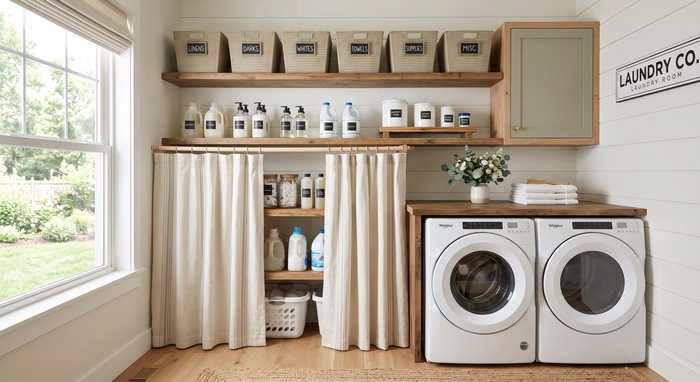
13. Use Matching Opaque Baskets
Opaque baskets hide colorful packaging and small items that can make open shelves look untidy. They are useful when you want the convenience of open storage without displaying every product.
You can use separate baskets for:
- Stain-removal supplies
- Dryer balls and sheets
- Cleaning cloths
- Mesh laundry bags
- Extra hangers
- Ironing accessories
- Small product refills
Choose baskets that fit the shelf with enough room to lift or slide them out. Handles can make higher baskets easier to reach.
Before buying baskets:
- Measure the shelf width, depth, and height.
- Check that the material is easy to clean.
- Avoid baskets that are too deep to search comfortably.
- Choose a size that fits the items stored inside.
- Leave some open space around frequently used products.
Matching baskets can create a calmer look, but every basket does not need to be identical. Using the same color or material may be enough to make the storage feel consistent.
Useful option: Lightweight baskets with handles can make supplies easier to remove from high shelves.

Quick Tip
Do not create a basket labeled “miscellaneous.” It often becomes a hiding place for items that have no clear purpose. Give each basket one simple category.
14. Add a Curtain Below Open Shelving
A short curtain can hide detergent bottles, cleaning tools, or a small hamper beneath an open shelf or counter. It is a simple option when installing cabinet doors is not practical.
A curtain may work well beneath:
- A laundry counter
- A utility sink
- An open shelf
- A wall-mounted table
- A simple storage unit
Choose a washable fabric that does not drag on the floor. A shorter curtain stays cleaner and is less likely to become caught under a basket or cart.
A tension rod may provide a renter-friendly setup when the opening has two suitable sides. Make sure the rod fits securely and does not interfere with appliance doors or controls.
Keep the curtain away from:
- Water valves
- Electrical outlets
- Dryer vents
- Hot surfaces
- Moving appliance parts
- Areas that require regular access
Useful option: A tension rod and washable curtain can hide open storage without a permanent installation.
Quick Tip
Choose a plain fabric or a small pattern if the room already contains wallpaper, labels, and decorative baskets. Too many competing patterns can make a small space feel more crowded.
15. Transfer Supplies Into Labeled Containers
Matching containers can reduce visual clutter and make some supplies easier to handle. Clear containers also help you see when a product is running low.
However, not every laundry product should be removed from its original package. Keep safety, handling, and storage information available.
If you transfer a suitable product into another container:
- Use a clean container with a secure lid.
- Add a clear label immediately.
- Include the product name.
- Keep the original directions and warnings.
- Never mix different products in one container.
- Keep supplies away from children and pets.
- Do not use food or drink containers.
- Avoid transferring liquids unless the new container is designed for them.
A simple label is usually better than a decorative label that is difficult to read.
Useful option: A label maker or a set of waterproof labels can help keep containers clearly identified.

Safety Note
Do not transfer an unfamiliar cleaning product simply for appearance. If the original package provides safer storage or clearer instructions, leave the product in that package and place it inside a basket instead.
16. Use One Closed Cabinet for Visual Clutter
You may not need a full wall of cabinets. One shallow cabinet can hide less attractive supplies while leaving the rest of the room open.
A closed cabinet may be useful for:
- Product refills
- Cleaning tools
- Extra light bulbs
- Spare cloths
- Ironing supplies
- Items used only occasionally
Place everyday products on a shelf that is easy to reach. Less-used items can go higher.
Before installing a cabinet:
- Measure its depth with the doors open.
- Check appliance and room-door clearance.
- Confirm that the wall can support the cabinet.
- Keep heavy products on lower shelves.
- Avoid blocking outlets or water connections.
- Make sure maintenance areas remain accessible.
A deep cabinet can feel bulky in a narrow room. A shallower model may provide enough storage without extending too far into the space.
Useful option: A compact wall cabinet can provide hidden storage without using valuable floor space.

Quick Tip
Leave some empty room inside the cabinet. Storage becomes frustrating when every item must be moved to reach something at the back.
Small-Space Drying Solutions
Air-drying clothes can be difficult when there is no room for a permanent drying rack. Wall-mounted, hanging, and foldable options can provide temporary drying space without taking over the room.
Think about airflow before choosing a location. Wet clothes need enough space around them to dry properly.
17. Install a Retractable Clothesline
A retractable clothesline stays out of the way when it is not needed. You pull it across the room for drying and return it to its housing afterward.
It may be suitable for:
- Lightweight shirts
- Delicate clothing
- Cleaning cloths
- Small towels
- A few hand-washed items
Install the line where hanging clothes will not block a doorway or rest against the machines. Both mounting points must be secure enough for the intended load.
Before installation:
- Measure the full extended distance.
- Check the manufacturer’s mounting directions.
- Confirm the stated weight capacity.
- Allow room for clothes to hang below the line.
- Keep wet items away from outlets and controls.
- Make sure the line does not cross a busy walkway.
A retractable line works best for a small number of items. Placing too much weight on it may cause sagging or strain the mounting points.
Useful option: A retractable indoor clothesline can add temporary drying space between two suitable walls.

Quick Tip
Place heavier garments closer to the mounting points when possible. Keep enough space between clothes for air to move around them.
18. Add a Hanging Rail Under a Shelf
A rail mounted beneath a shelf can combine storage and hanging space in one area. The shelf holds supplies, while the rail provides room for hangers below.
It can be used for:
- Shirts removed from the dryer
- Lightweight clothing
- Delicate garments
- Empty clothes hangers
- Items waiting to be ironed
Leave enough vertical space between the rail and the appliances. Clothing should not rest on controls or block a top-loading washer.
Before adding a rail:
- Measure the available hanging height.
- Check the shelf’s strength.
- Confirm the rail’s weight limit.
- Use suitable mounting hardware.
- Keep clothes away from outlets and connections.
- Make sure hangers will not block nearby doors.
Avoid loading a small rail with heavy, wet garments unless the rail and shelf are designed to support them.
Useful option: An under-shelf rail can make one section of wall serve two useful purposes.

Quick Tip
Use slim hangers if the rail is shallow. They can reduce crowding and help clothes hang more evenly.
Ways to Make a Small Laundry Room Feel Bigger
Good storage improves how a room functions. A few visual changes can also make the space feel cleaner, brighter, and less crowded.
You do not need to decorate every wall. In a small room, one or two thoughtful updates often have more impact than many small accessories.
19. Use a Light or Consistent Color Palette
A consistent color palette reduces visual noise. This can make shelves, baskets, appliances, and walls feel like parts of the same space.
You do not need to make everything white. Choose a simple combination such as:
- White and warm wood
- Soft gray and black
- Cream and natural woven textures
- Pale green and white
- Light blue and neutral gray
Use one main color and one or two supporting colors. Extra color can come from a small rug, wallpaper panel, or labeled basket.
If you already have colorful product packaging, place it inside baskets or a cabinet. This allows the room’s main colors to stand out.
Quick Tip
Work with the appliance color instead of trying to hide it. For example, white appliances can blend with light shelves, while dark appliances can connect with black hooks or cabinet handles.
20. Improve the Task Lighting
A dim laundry room can feel smaller and make it difficult to check stains or sort colors. Better lighting can make the room more practical as well as more welcoming.
Useful lighting locations may include:
- Beneath wall shelves
- Under cabinets
- Above a folding counter
- Inside a dark laundry closet
- Near a utility sink
- Beside a sorting area
Motion-activated light bars may be useful in closets or beneath shelves. Check how they are powered and make sure they are intended for the chosen location.
Do not run loose cords across walkways or near water connections. Permanent electrical work should be completed by a qualified professional.
Useful option: A motion-sensor light may brighten a dark shelf or closet without taking up work-surface space.

Quick Tip
Place task lighting toward the front of a shelf. A light installed too close to the back may leave the folding area in shadow.
21. Add a Small Washable Runner
A narrow runner can add color and warmth to a plain laundry room. It may also make the floor more comfortable during sorting and folding.
Choose a rug that:
- Fits without curling against walls or appliances
- Does not block doors
- Has a low profile
- Can be cleaned easily
- Has suitable slip resistance
- Does not cover floor vents or drains
Measure the walkway before buying. A rug that is too wide may fold at the edges or make appliance access difficult.
Place it where it will not create a tripping hazard. If the floor often becomes wet, address the source of the moisture instead of relying on the rug to absorb it.
Useful option: A narrow washable runner can introduce pattern without taking up storage space.

Quick Tip
Choose a simple pattern if the walls or storage containers already have strong visual details.
22. Keep Storage Containers Visually Consistent
A mix of random boxes, baskets, and product packages can make open shelving feel crowded. Using a limited number of container styles creates a more organized look.
Consistency can come from:
- Using similar colors
- Repeating one material
- Choosing the same label style
- Keeping basket heights similar
- Grouping clear and opaque containers separately
You do not need to replace every container. Start by moving unrelated items elsewhere and grouping the containers you already own.
Keep frequently used products easy to identify. Appearance should not make the room harder to use.
Quick Tip
Choose containers based on size and purpose first. Color and style come second. A beautiful basket is not helpful if it cannot hold the intended supplies.
23. Add Removable Wallpaper to One Area
Peel-and-stick wallpaper can add personality without covering the entire room. A small section is often enough to create a focal point.
Possible locations include:
- Behind floating shelves
- Above a folding counter
- On one short wall
- Inside an open storage area
- Behind a utility sink, if the material is suitable for that location
Choose a pattern that does not make the room feel too busy. Small patterns, simple lines, and soft colors may be easier to use in a tight space.
Before installing removable wallpaper:
- Check that it suits the wall surface.
- Clean and prepare the wall as directed.
- Test a small hidden area first.
- Consider the room’s heat and moisture.
- Avoid damaged, damp, or peeling walls.
- Follow the removal instructions.
Removable does not always mean damage-free on every painted surface. The wall condition, paint type, and installation method can affect the result.
Useful option: A small roll of peel-and-stick wallpaper may be enough for an accent section behind shelves.
Quick Tip
Order or create the full layout before installing shelves over the wallpaper. This makes it easier to align the pattern and mark mounting points.
Best Laundry Room Ideas by Situation
Not every idea works for every room. Appliance type, wall space, rental rules, and daily habits should guide your choices.
Use the suggestions below as a starting point.
Best Ideas for Renters
Look for solutions that require little or no permanent installation:
- Over-the-door organizer
- Slim rolling cart
- Removable hooks
- Tension-rod curtain
- Collapsible hamper
- Freestanding drying rack
- Matching storage baskets
Check your rental agreement before drilling, painting, or applying wallpaper. Removable products can still affect some surfaces, so follow their application and removal instructions.
Best Ideas for Laundry Closets
Laundry closets need storage that does not interfere with folding or sliding doors.
Consider:
- Shelves above the appliances
- Over-the-door storage
- A hanging rail beneath a shelf
- Wall-mounted hamper bags
- Narrow baskets
- Foldable drying solutions
- Motion-activated lighting
Measure with the closet doors and appliance doors fully open. Make sure stored items cannot fall behind the machines.
Best Ideas for Rooms Without Cabinets
Open wall storage can replace some of the function of a cabinet.
Useful choices include:
- Floating shelves
- A pegboard
- Matching opaque baskets
- A slim rolling cart
- Wall-mounted organizers
- Clearly labeled containers
- A curtain beneath open storage
Use baskets for unattractive packaging and keep the most-used supplies within easy reach.
Best Ideas for Front-Loading Machines
Front-loading appliances may allow you to use the area directly above them.
Possible options include:
- A properly supported folding counter
- A protective appliance-top mat
- Shelves above the counter
- A hanging rail
- Wall cabinets
- Sorting baskets
- Under-shelf lighting
Maintain the clearance recommended for the appliances. Keep detergent drawers, controls, vents, and connections accessible.
Best Ideas for Top-Loading Machines
A top-loading washer needs clear space above the lid.
Better choices may include:
- Higher wall shelves
- Side-mounted storage
- A slim rolling cart
- An over-the-door organizer
- A separate folding wall table
- A wall-mounted hamper
- Hooks beside the appliances
Open the washer lid fully before deciding where to place any shelf, rail, or rack.
Best Low-Cost Improvements
You may be able to improve the room without a large project.
Start with:
- Removing unused products
- Grouping similar supplies
- Adding simple labels
- Using baskets you already own
- Installing a few suitable hooks
- Improving the lighting
- Adding a tension-rod curtain
- Moving supplies off the appliances
Set a budget before shopping. Fix the most frustrating problem first rather than buying several small organizers at once.
Small Laundry Room Solution Comparison
The best solution depends on the problem you need to fix. Use this table to narrow down the options before buying or installing anything.
| Small-space problem | Possible solution | Installation | Renter-friendly | Best use |
| No cabinet storage | Floating shelves with baskets | Usually required | Sometimes | Bottles, cloths, and small supplies |
| No folding surface | Wall-mounted folding table | Required | Usually not | Folding and sorting clothes |
| No available wall space | Over-the-door organizer | Usually not required | Often | Lightweight accessories |
| Narrow appliance gap | Slim rolling cart | Not required | Yes | Bottles and product refills |
| No air-drying area | Over-door or foldable drying rack | Varies | Often | Small loads and delicate clothes |
| Too much visible clutter | Opaque baskets or a short curtain | Little or none | Often | Open shelving and counters |
| Floor hamper blocks the walkway | Hanging or wall-mounted hamper | Varies | Sometimes | Dirty clothes and basic sorting |
| Laundry closet is too dark | Motion-activated light | Usually minimal | Often | Shelves and small work areas |
| Washer top is always crowded | Wall shelves or a side cart | Varies | Sometimes | Moving products off the appliance |
| Limited hanging space | Under-shelf rail | Usually required | Usually not | Shirts and lightweight garments |
Do not choose a solution based only on appearance. Check the dimensions, installation needs, and available clearance first.
Frequently Asked Questions
How Do I Organize a Small Laundry Room With No Cabinets?
Start by using the wall above or beside the appliances. Floating shelves can hold baskets, detergent, and cleaning supplies without using floor space.
Other useful options include:
- A slim rolling cart
- An over-the-door organizer
- A pegboard
- Wall-mounted baskets
- Removable hooks
- A freestanding shelving unit
Use opaque baskets if open shelves look cluttered. Keep everyday products within reach and place refills or rarely used supplies higher up.
What Can I Use Instead of a Laundry Room Counter?
A wall-mounted folding table provides a work surface that can be closed after use. A rolling cart with a stable top may also provide a small sorting area.
If you have front-loading appliances, a properly supported counter may fit above them. A protective washer-top mat can provide temporary space for light folding tasks, but it is not the same as a permanent counter.
Top-loading washers need open space above the lid. A separate folding table or cart is usually more practical.
How Can I Dry Clothes Without Using Floor Space?
Consider solutions that attach to a wall, shelf, or door.
Possible options include:
- A retractable clothesline
- A fold-down wall rack
- An over-the-door drying rack
- A rail beneath a shelf
- A ceiling-mounted airer, where suitable
Choose a location with reasonable airflow. Keep wet clothes away from outlets, controls, and appliance connections.
How Do I Organize a Small Laundry Closet?
Use the wall above the appliances first. Add shallow shelves, baskets, or a hanging rail without blocking appliance doors.
The back of the closet door may hold an organizer or hamper. Removable hooks can store mesh bags and small cleaning tools.
Keep the floor as clear as possible. If you need a rolling cart, make sure the closet door can still close and the appliances remain accessible.
Can I Install Shelves Above My Washer and Dryer?
Shelves can often be installed above appliances if there is enough space and the wall can support them.
Before installation:
- Open every appliance door or lid.
- Measure the full clearance.
- Check the shelf depth.
- Keep controls and detergent drawers accessible.
- Avoid blocking outlets, hoses, and vents.
- Use suitable mounting hardware.
Follow your appliance guidance and the shelf maker’s installation instructions. Ask a qualified professional for help if you are unsure about the wall or mounting method.
How Can I Make a Small Laundry Room Look Less Cluttered?
Begin by removing empty containers, duplicate tools, and products you no longer use.
Then try these changes:
- Group similar supplies.
- Use a small number of matching baskets.
- Move bottles off the machine tops.
- Keep labels simple.
- Hide refills inside a cabinet or opaque basket.
- Limit decorative objects.
- Use a consistent color palette.
- Leave some shelf space empty.
A less cluttered room is usually easier to maintain because every frequently used item has a clear place.
Final Small Laundry Room Checklist
Use this checklist before making changes to your laundry space.
Measure and Plan
- Measure all open walls.
- Measure the gaps beside the appliances.
- Open machine doors and lids to check clearance.
- Check the room-door clearance.
- Identify outlets, hoses, vents, and water valves.
- Decide whether permanent installation is allowed.
- Set a realistic budget.
Choose the Right Storage
- Use walls before adding more floor furniture.
- Keep everyday supplies within comfortable reach.
- Store heavy products on lower shelves.
- Choose baskets that fit the available space.
- Leave room to remove baskets easily.
- Use folding or retractable products where practical.
- Avoid creating storage for items you do not use.
Protect Appliance Access
- Keep controls visible and accessible.
- Do not block appliance vents.
- Leave access to hoses and electrical connections.
- Keep storage away from moving lids and doors.
- Allow room for appliance maintenance.
- Follow appliance and product instructions.
Reduce Visual Clutter
- Group similar items together.
- Use simple labels.
- Hide product refills when possible.
- Keep appliance tops mostly clear.
- Limit the room to one main decorative feature.
- Leave some open space on shelves and counters.
Want more ideas for making any room feel organized and comfortable? Check out these 30 things to add to your room.
Final Thoughts
A small laundry room does not need storage in every corner. It needs a few solutions that match the space and your routine.
Start with the problem that causes the most frustration. This might be crowded machine tops, nowhere to fold clothes, or a drying rack that blocks the walkway. Measure the area, choose one suitable solution, and see how it changes the room before adding anything else.
Walls, doors, and narrow gaps can provide useful storage without taking over the floor. Simple baskets, better lighting, and a clear folding area can also make laundry feel more manageable.
Save this guide to your laundry room Pinterest board so you can return to the ideas when you are ready to plan your space.