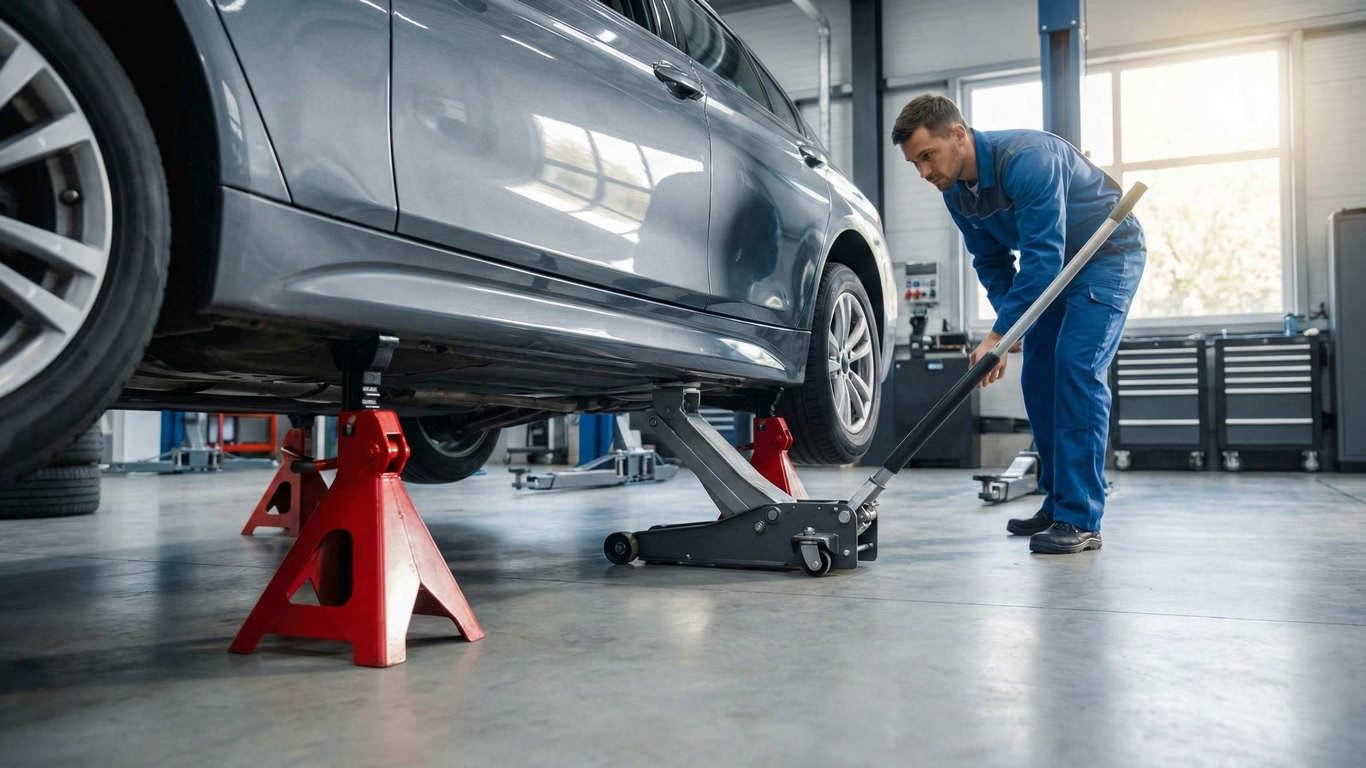
A hydraulic floor jack is for lifting, not for holding.
Every year, home mechanics are crushed because they trusted a $100 hydraulic cylinder to hold a 4,000-pound vehicle, or because they placed a jack stand on a patch of asphalt that softened in the sun.
If you are changing your oil, rotating tires, or detailing the undercarriage, you need the vehicle stable on all four corners. This guide will teach you the correct order of operations to lift a unibody or frame-based vehicle safely.
The Prerequisites: Surface & Equipment
Before you touch the car, look at the floor.
1. The Surface: You must be on level concrete.
- Never lift on asphalt (tarmac). Jack stands exert massive pressure on a tiny surface area and will sink into asphalt on a hot day, causing the car to tip.
- Never lift on gravel or dirt.
- Garage Tiles: If you have plastic tiles, be careful. Some jack stands can puncture them.
2. The Equipment:
- Floor Jack: Ensure it has enough reach. If you have a lowered car, you need a long-reach low-profile jack to reach the central lift points.
- Jack Stands: You need 4 stands. Avoid “ratchet” style stands if possible; “pin” style is generally safer.
- Wheel Chocks: To stop the car from rolling before the wheels leave the ground.
Step 1: Prep and Chock
Status: Car is on the ground.
- Park the car on level concrete.
- Engage the Parking Brake (Emergency Brake) tightly.
- Place Wheel Chocks behind the Rear tires. (We are lifting the front first, so we must lock the rear).
- Crack the Lug Nuts: If you are removing wheels, loosen the lugs slightly while the car is still on the ground. Do not remove them yet.
- Tool Tip: Use a breaker bar or a high-torque impact wrench.
- Read More: Best Impact Sockets Reddit (2026): Sunex vs. Astro
Step 2: Lift the Front (The Central Point)
Status: Lifting front wheels.
To place jack stands on the side “Pinch Welds,” you cannot lift from the side. You must lift from the Front Central Jack Point.
- Unibody (Honda, Subaru, Toyota): Look for a reinforced metal plate or tow hook loop in the center of the subframe, behind the oil pan.
- Body-on-Frame (Trucks, Jeeps): You can usually lift from the center of the front crossmember.
☠️ CRITICAL WARNING: The Oil Pan
Do NOT jack up the car by the oil pan or transmission pan. These are made of thin stamped metal or aluminum.
If you put the weight of the car on the oil pan, you will crush it, block the oil pickup tube, and destroy your engine instantly. Always find the solid steel subframe.
Step 3: Place the Front Stands
Status: Front is in the air.
- Raise the jack high enough to clear your jack stands.
- Place the stands under the Pinch Welds (the metal seam running under the rocker panel) or the Frame Rails.
- Pinch Weld Warning: If you have a standard “V-Shape” jack stand, it can crush the pinch weld. We highly recommend using rubber pads or Flat-Top stands (like ESCO) to prevent damage.
- Read More: Best Jack Stands for Unibody Cars (Preventing Pinch Weld Damage)
- Lower the Jack: Slowly lower the hydraulic jack until the car rests fully on the stands. Leave the jack in place as a backup, but with no pressure.
Step 4: Lift the Rear
Status: Front is on stands, Rear is on the ground.
- Move the Wheel Chocks: The front is now locked on stands, so move the chocks to the front (optional but safe) or rely on the stands.
- Disengage Parking Brake: If you are lifting the rear wheels, the parking brake might fight you as the suspension geometry changes.
- Lift Point:
- RWD/AWD/Trucks: You can usually lift from the Rear Differential (the “Pumpkin”). Note: Check your manual. Some aluminum diffs cannot support the weight.
- FWD Cars: Look for the rear tow hook or the center of the rear beam axle.
- Place Rear Stands: Position them under the rear pinch welds or frame rails.
- Lower the Jack: Lower the car onto the rear stands.
Step 5: The “Shake Test” (Do Not Skip)
Status: Car is on 4 stands.
Before you crawl under that 4,000 lb metal object, you need to simulate an earthquake.
- Walk to the corner of the car.
- Give it a firm shove. Shake it side to side.
- The Goal: If the car is going to fall, you want it to fall now, while you are standing next to it—not later when you are underneath it wrestling with a stuck bolt.
- If the stands wobble, jack it up and reseat them on flatter concrete.
⚠️ HYDRAULIC FAILURE IS REAL
Never work under a car supported only by a floor jack. Seals blow. Valves leak. It happens silently and instantly.
If you are doing a quick job (like a tire change), and don’t want to use stands, slide the removed wheel under the frame rail. If the jack fails, the car will land on the wheel, not on your rotor (or your leg).
Lifting Hacks: The “Arc” Movement
Floor jacks pull the car toward them as they lift. If you don’t account for this, the car will slip off the first pair of stands while you lift the second pair.
Summary: Tools for the Job
- For Low Cars: You need a “Long Reach” jack to hit those central lift points without hitting your bumper. (See our Daytona vs Arcan test 6)
- For Safety: Use “Flat Top” jack stands for unibody cars to avoid folding your pinch welds. (See our Safety Test 7)
- For Home Mechanics: If this process scares you, consider using an Oil Extractor to change oil from under the hood without lifting the car at all. (See Topside Oil Change Guide 8)
Stay safe, take your time, and never trust a hydraulic seal with your life.