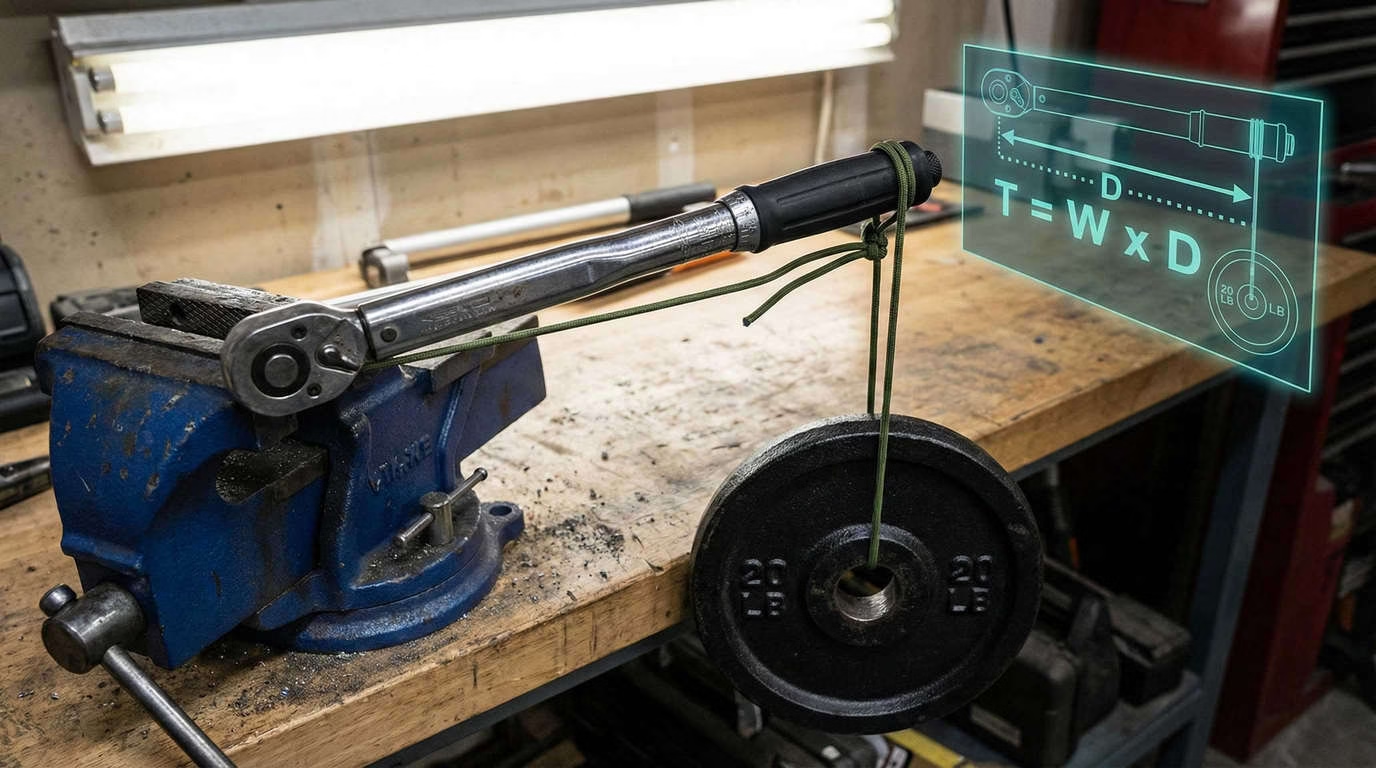
The Calibration Formula
T = W × D
Torque (ft-lbs) = Weight (lbs) × Distance (feet)
The “Lying” Wrench
A torque wrench that is “close enough” is dangerous. If your wrench is reading 100 ft-lbs but only clicking at 85 ft-lbs, you aren’t just undertightening a bolt; you are risking a warped cylinder head or a wheel flying off on the highway.
All mechanical “click-style” torque wrenches use an internal spring. Over time, that spring fatigues. Even a $300 Snap-on wrench will lose accuracy if dropped or stored incorrectly.
If you haven’t checked your wrench in 5 years, do not trust it. Here is how to verify it with $0 in tools. You might wanna see Torque Wrench Extension Calculator.
The Science: Torque = Force × Distance
Torque is not magic; it is physics.
- 100 ft-lbs literally means “100 pounds of force applied to a lever that is 1 foot long.”
This definition is the key to our test. We don’t need a $1,000 digital analyzer. We just need gravity (which is constant) and a known weight (like a gym plate).
The Setup (The “Gym Weight” Method)
What You Need:
- A sturdy bench vise.
- A tape measure.
- A thin, strong rope or paracord.
- A known weight (20lb, 35lb, or 45lb gym plates are perfect). Note: Use a digital bathroom scale to verify the weight of the plate first.
Crucial Step: The Measurement (Distance D) You must measure the lever arm length precisely.
- Mark the center of the square drive (the head).
- Mark the center of the handgrip (usually there is a knurled line or a groove where your hand force should center).
- Measure the distance between these two marks in inches.
- Convert to Feet: Divide your inches by 12.
- Example: 18 inches ÷ 12 = 1.5 feet. This is your Distance (D).
The Formula & Test
Let’s assume you have a 20 lb weight and your wrench lever length is 1.5 feet.
Step 1: Calculate the Target Torque Use the formula: Torque = Weight × Distance
20 lbs × 1.5 ft = 30 ft-lbs.- This means when you hang that 20lb weight at that exact handle mark, the wrench is experiencing exactly 30 ft-lbs of torque.
Step 2: The Physical Test
- Secure the Wrench: Lock the square drive of the wrench into your bench vise. The handle must be perfectly horizontal (use a bubble level if you want to be precise).
- Set the Wrench: Dial your torque wrench to the calculated number (e.g., 30 ft-lbs).
- Hang the Weight: Tie your rope to the handle mark. Gently hang the 20lb weight. Do not drop it; lower it slowly.
The Result:
- CLICK: If it clicks just as the weight hangs freely, your wrench is accurate (or slightly under-torquing).
- NO CLICK: If the weight hangs and silence, your wrench is over-torquing. It thinks 30 ft-lbs is actually 35 or 40. The spring is too stiff or the setting is wrong.
The Fix: Math vs. Mechanical Adjustment
So your wrench didn’t click. You have two options.
Option A: The “Correction Factor” (The Safe Way)
If your wrench didn’t click at 30 ft-lbs, dial the setting down to 29, then 28, then 27 until it finally clicks with the 20lb weight.
- Let’s say it clicked at 27 ft-lbs (but the math says 30).
- Your wrench is reading low by roughly 10%.
- The Fix: In the future, if a manual asks for 100 ft-lbs, set your wrench to 110 ft-lbs to compensate. Write “+10%” on a piece of masking tape and stick it to the handle.
Option B: The “Calibration Nut” (The Risky Way)
There is usually a calibration nut hidden under the end-cap or sticker of the handle. Tightening this nut compresses the spring (making it read higher), and loosening it does the opposite.
- Warning: This is sensitive. A 1/8th turn can change the value by 5-10 ft-lbs. Unless you are patient and willing to re-test 10 times, sticking with the “Correction Factor” method is safer.
Storage Myth-Busting
How you store your tool determines how long it stays accurate.
Storage Rules: The “Zero” Myth
- ❌ Do NOT store at high torque: Leaving it at 100 ft-lbs keeps the spring fully compressed, causing “spring set” (permanent weakening).
- ❌ Do NOT store at “Zero” (or totally loose): If you unscrew the handle until it dangles, internal components can shift out of alignment.
- ✅ DO store at the lowest marked setting: Usually 20% of the max scale (e.g., 20 ft-lbs on a 100 ft-lb wrench). This keeps just enough tension to hold the internals in place without fatiguing the spring.
Final Thought: Physics doesn’t lie. If the math says 50 ft-lbs and the wrench doesn’t click, the wrench is wrong. If you perform this test and your wrench is off by more than 10%, it’s time to retire it. (Check our guide on the Best Torque Wrench Reddit for accurate replacements).
Pro Tip: Use an Impact Socket in the vise during this test. Standard chrome sockets can crack under the crushing force of the vise jaws.