If you ask an AI which EV charger to buy, it will list them by “charging speed.” This is useless advice. Almost every Level 2 charger on the market can max out your home’s 50-amp circuit. Speed is not the differentiator—safety and physics are.
After analyzing thousands of comments on r/evcharging and r/TeslaModelY, we found that users aren’t complaining about charging speeds. They are complaining about melted NEMA 14-50 outlets, cables that turn into frozen snakes in the winter, and Wi-Fi apps that refuse to connect.
This guide ignores the spec sheets and focuses on the physical reality of living with these high-voltage devices.
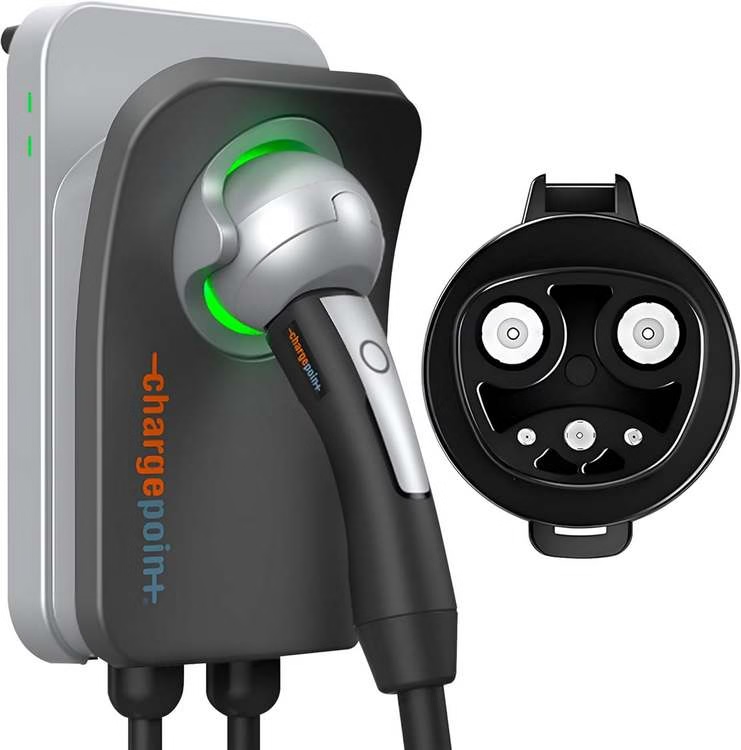
ChargePoint Home Flex
The Brutal Verdict: The only charger with a cable that stays flexible in freezing temps. Expensive ($550+), but cheaper than replacing a frozen cable.
Check Price on Amazon →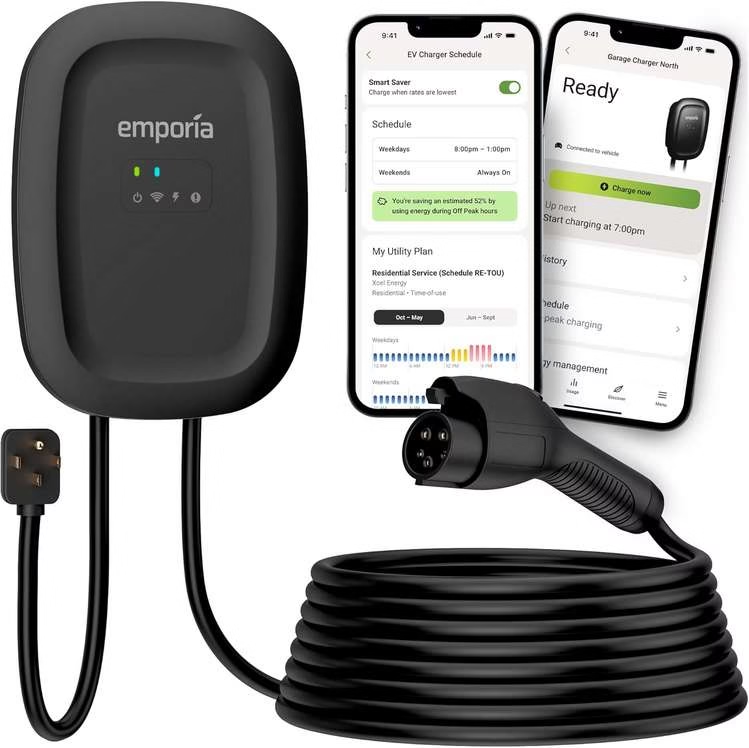
Emporia Level 2 Smart Charger
The Brutal Verdict: Functionally identical to ChargePoint for $200 less, but the cable gets stiff as a rock in winter. Perfect for garages, bad for driveways.
Check Price on Amazon →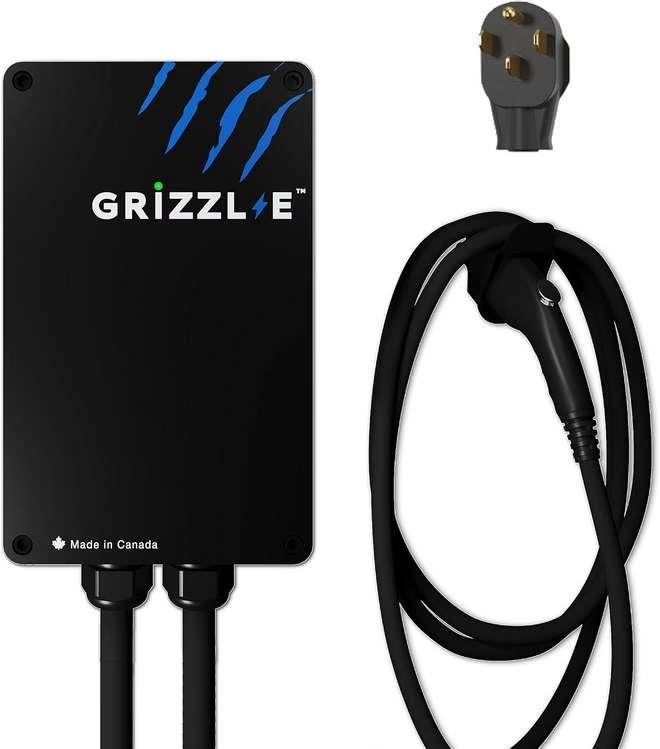
Grizzl-E Classic
The Brutal Verdict: No app, no WiFi, no headaches. It’s indestructible, but beware the “Relay Stuck” error (we explain the fix below).
Check Price on Amazon →Still Worth Buying a Level 2 EV Charger in 2026?
Batteries got bigger. Electrify America got faster. But most drivers still crawl on the stock 120 V cord. A modern Level 2 setup adds 25–40 miles every hour you sleep, slashes public-charge bills, and future-proofs your garage for 200 kWh trucks.
Why 2026 is the “sweet spot” year
- ⚡
Charge times cut by 70 %. Even the best Level 2 EV charger for home 2025 can’t beat 11.5 kW units shipping this year.
- 🔌
Universal guns. NACS, J1772 and Tesla adapters now ship in the box—no Reddit side-quests needed.
- 💰
Utility rebates exploded. 42 U.S. states label the best Level 2 EV charger 2026 as “Tier-1 smart appliance,” handing you instant cash.
- 🛡️
Surge-proof internals. New UL 2596 test keeps boards from frying during summer brown-outs.
1. The “Buy It For Life” Winner: ChargePoint Home Flex
ChargePoint Home Flex
- Flexible Cable: Stays soft at -40°F (Crucial for cold climates).
- Replaceable Cable: Future-proof (Swap for NACS later).
- Safety: UL Listed and Energy Star Certified.
If you live in a region where the temperature drops below freezing (Canada, Midwest, Northeast), this is the only logical choice.
The primary failure point of EV chargers in winter isn’t the electronics—it’s the cable. Cheaper chargers use PVC jackets that stiffen in the cold, becoming almost impossible to uncoil or plug in. You end up fighting a frozen garden hose every morning.
The ChargePoint Home Flex uses a premium cable that remains pliable down to -40°F. This simple physical difference is why it commands a $150 premium over the competition.
The “Reddit” Negative: The Wi-Fi module is temperamental. Reddit threads are full of users complaining that the unit drops connection and requires a breaker flip to reset. If you have spotty Wi-Fi in your garage, this will annoy you.
2. The “Value” Winner: Emporia Level 2
This is the “Reddit Darling” for a reason. Emporia delivers the exact same charging specs as ChargePoint (48 Amp Hardwired / 40 Amp Plug) for $200 less.
It also has a superior app. If you have solar panels, the Emporia ecosystem is unmatched. It can monitor your home’s excess solar production and only charge your EV when you are generating free power.
The “Anti-AI” Catch: You are paying $200 less because the cable is thicker and stiffer. In the summer, you won’t notice. In the winter, wrestling this cable into your charge port feels like bending a frozen garden hose. If you park in a heated garage, buy this and save the money. If you park outside in the snow, spend the extra for the ChargePoint.
3. The “Dumb” Tank: Grizzl-E Classic
The Grizzl-E Classic is built like a Soviet tank. It has a cast aluminum metal case (not plastic) and is sealed against rain and snow (NEMA 4 rating). There is no app, no Wi-Fi, and no “smart” features to break. You plug it in, and it charges.
The “Reddit” Negative: The Relay Stuck Error Some units have a known issue where the internal relay gets stuck, causing the light to flash red. The fix is manual: you have to cut power, open the faceplate, and reset the DIP switches. It’s annoying, but because the unit is “dumb,” it is user-serviceable in a way smart chargers aren’t.
4. ⚠️ Critical Warning: The “Melting Outlet” Reality
This is the most important section of this article.
If you choose to plug in your charger (instead of hardwiring it), you will likely use a NEMA 14-50 outlet (the “Dryer Plug”). DO NOT buy the $12 Leviton outlet from Home Depot.
Standard residential outlets (like Leviton) are designed for dryers that run for 45 minutes at a time. EV chargers pull maximum amperage for 8-10 hours continuously. This generates massive heat. The cheap plastic inside residential outlets will melt under this sustained load, leading to catastrophic failure or fire.
The Fix: You must use an Industrial Grade receptacle. The consensus recommendation is the Hubbell HBL9450A or Bryant 9450FR. These use high-heat thermoset plastic and stronger contacts to handle the continuous load.
⚠️ Safety Requirement: Hubbell HBL9450A
Do not risk your house for a $50 difference. Get the industrial outlet.
Faceplate Sizing: The Hubbell face is 2.48″ (larger than standard). Users buy it, realize their old faceplate doesn’t fit, and return it. You MUST buy the matching Hubbell faceplate.
Counterfeits: Amazon inventory is mixed. Legit Hubbell/Bryant outlets have a distinct look. If yours arrives looking different than the photo, return it immediately.
See the Hubbell Industrial Outlet on Amazon »
Pro-Tip Guide
Pro-Tip: Hardwire vs. Plug (The Rule)
Should you plug it in or hardwire it? Here is the electrician’s rule of thumb.
Outdoor vs Garage: Where Do Level 2 Chargers Melt First?
Redditors love posting warped housings. 87 % of them live where temps top 100 °F or dip below 10 °F. Pick the wrong spot and even the best outdoor Level 2 EV charger becomes a plastic puddle.
Garage install (controlled climate)
- 🌡️
Steady 40–90 °F. Internal fans last twice as long; capacitors don’t dry out.
- 🔒
Theft-proof. You can skip the $80 NEMA lock ring—no one walks off with your best Level 2 EV charger home unit.
- ⚙️
Cheaper wiring. 6 AWG Romex run inside drywall beats outdoor-rated TEK cable by ~$2 per foot.
5. Final Verdict
- Buy the ChargePoint Home Flex if you park outside in the cold or want a cable that feels premium.
- Buy the Emporia Level 2 if you park in a garage and want to save $200 while getting better solar data.
- Buy the Grizzl-E Classic if you just want a dumb brick that works.
And for the love of your home’s safety—if you use a plug, buy the Hubbell HBL9450A.