
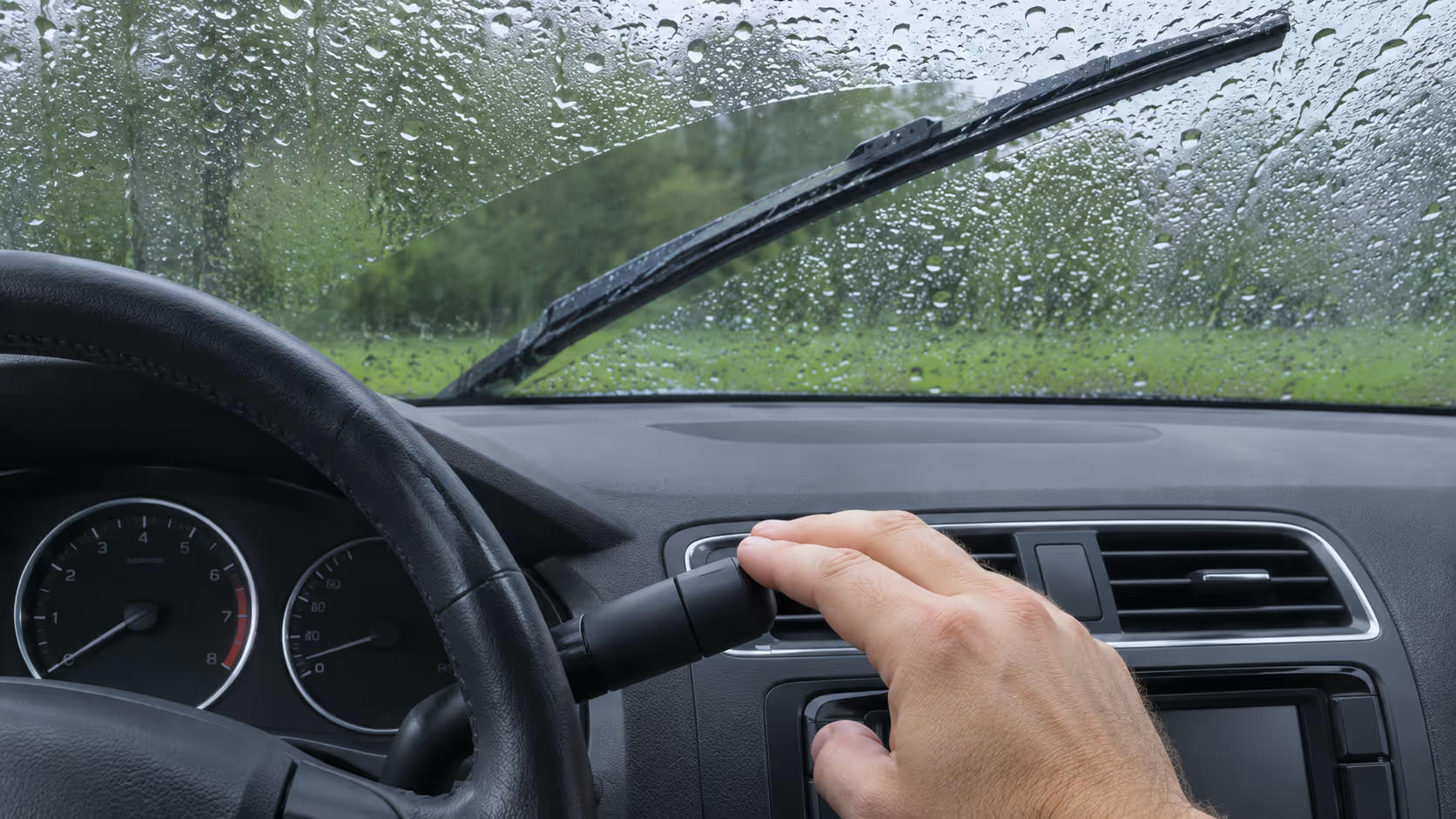
The rain lets up, so you turn the wipers down. The blades stop, and high is the only speed that still works.
If your windshield wipers only work on high speed, start by checking low, intermittent, and what the blades do when you switch them off. High speed tells you the motor can still move the arms. A fault in the motor’s low-speed side, the stalk, or the wires and relays can still cut out the slower modes.
You can narrow down the fault from the driver’s seat. Here’s what to check, when to call a shop, and what each fix may cost.
Can You Drive if the Wipers Only Work on High?
Get the wipers fixed before you drive in rain or snow. High may clear the glass for now, but you can’t count on a system that’s already lost some of its modes.
If the glass won’t stay clear while you drive, slow down and pull off the road at a safe spot away from traffic. Wait until you can see well enough to drive safely. If you can’t, call for a tow.
Test the wipers while parked. Keep your hands and tools clear of the arms any time the system has power. Switch off the ignition and auto wipers before you look at parts near the arms.
How the Front Wiper System Works
What changes between low, high, and intermittent?
The stalk is the lever you use to pick a speed. It may switch a circuit itself or send your choice to a control unit. The motor turns, and a set of links moves the arms across the glass.
Low and high can take different paths through the wiring or motor. On many cars, intermittent mode uses the low-speed path and adds a pause between sweeps. That’s why both modes can stop working at once.
What does it mean when wipers “park”?
Park is the spot where the blades rest at the base of the glass. When you turn the stalk to OFF mid-sweep, the blades should finish the sweep and return to that spot.
If they stop right where you turn them off, write that down. The fault could be in the park switch inside the motor or in the path that lets the motor finish the sweep.
Why Windshield Wipers Only Work on High Speed
Start with the motor’s low-speed side, the stalk, and the circuit that links them. Your car’s wiring and the way the fault showed up can change the best place to start.
1. Low-speed failure inside the wiper motor
A wiper motor can lose one speed and still run at the other. If it gets the right low-speed feed and has a good ground under load, the motor moves up the list of suspects.
A shop should also check that the links move freely. A part that binds can strain the motor and make a good motor look weak.
2. Faulty wiper stalk or multifunction switch
The stalk can still register HIGH when it fails to register LOW or INT. If a light touch on the lever makes a mode cut in and out, tell the shop. That gives the shop a good place to look.
3. Fault in the low-speed circuit
A loose pin, a frayed wire, a poor ground, or a bad relay can cut the low-speed path. If your car has a speed relay, its socket is worth a check too.
For example, some 2011–2012 Chevy Equinox and GMC Terrain vehicles can lose low speed and fail to park due to a poor fit at a relay terminal in the underhood fuse box. Some 2021 Chevy Trailblazer and Buick Encore GX vehicles have a known fuse-block fault that leaves only high working. The build date matters, so check it before you order a part.
4. Wiper control module or body control module fault
Some cars use a separate wiper control unit. Others put that function in the motor or in the body control module, also called the BCM.
A shop can check whether the unit sees each move of the stalk. It can then check whether the unit sends the right command and whether that command reaches the motor.
5. Binding linkage or an obstruction
Move this check up the list if both arms got slow, jumped, or made noise before low speed went out. Clear ice or packed leaves from around the arms. If the arms still drag on wet glass, have the linkage checked.
How to Diagnose High-Speed-Only Wipers at Home
Step 1. Test each mode while parked
Wet the glass with washer fluid or a spray bottle. Give each intermittent setting time to make a sweep. If your car has AUTO, test the manual modes first.
- Try LOW, HIGH, and INT.
- Try the single-wipe and wash/wipe modes if your car has them. Note whether fluid sprays and whether the blades sweep.
- From HIGH, switch to OFF mid-sweep. Note if the blades park, stop on the glass, or keep going.
- Write down any drag, jerks, or noise. Note any recent work or hard freeze.
Step 2. Use the symptom pattern
- LOW and INT both fail. Start with the low-speed path. The motor, stalk, wiring, or a relay can cause this pair of faults.
- LOW works but INT fails. The motor can run on low. Check the delay setting and have the park signal or timer function checked if needed.
- HIGH works but the blades stop mid-sweep. Note the loss of park as a second clue. The shop can check the park signal and any parts it shares with the low-speed circuit.
- Each setting runs fast or OFF won’t stop the blades. Tell the shop exactly what the stalk does. It can check the switch inputs and see if a relay or control unit keeps high speed on.
Step 3. Do the easy checks with the ignition off
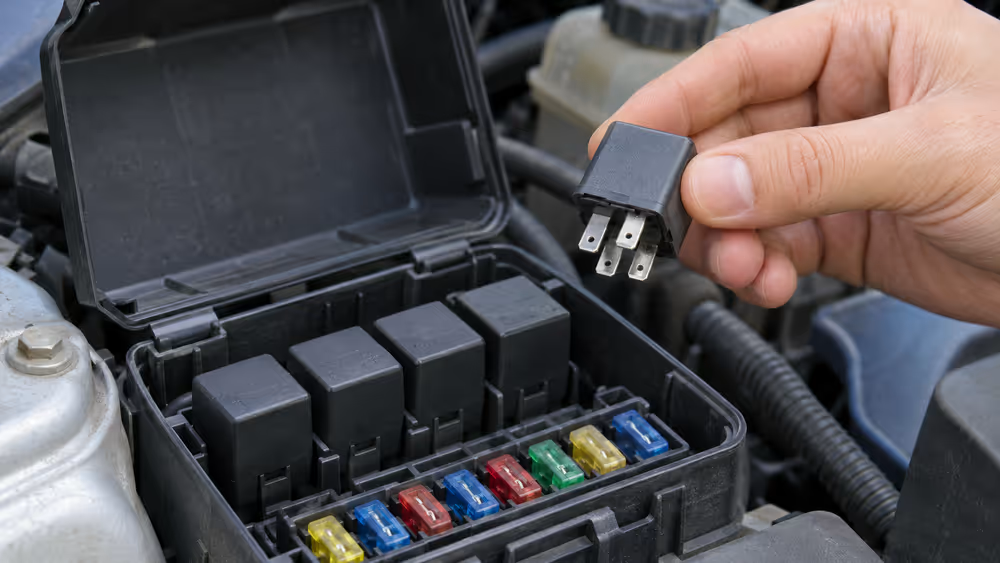
Turn off the car and auto wipers. Look for ice, leaves, or damage where the arms meet the base of the glass. If a plug is in plain sight, look for moisture or green crust near it. Leave parts under trim alone if you aren’t sure how they come off.
Use your owner’s manual to find the right fuse and any plug-in relay. If both speeds share a main fuse and high still works, that fuse is unlikely to be blown. A separate feed or a fault inside the fuse box can still stop low speed.
If you find a blown fuse, use the same type and amp rating. If the new fuse blows too, stop and have the fault traced.
If that happens, see what to check when a car fuse keeps blowing.
Step 4. Check the exact vehicle before buying parts
Use the year, make, and model to check for a service bulletin. Match the build date and the symptoms. Look up open recalls with your VIN.
If the checks don’t show a clear cause, take your notes to a shop. Ask whether the motor gets the right feed and ground while low is called for. On a car with a control unit, the tech may need a scan tool that can read the body module.

Fixes, U.S. Cost Estimates, and DIY Difficulty
Use the prices here to plan a budget. Your car, ZIP code, and the way the parts are sold can change the bill. Ask if the quote covers the fault check, labor, tax, fees, and any setup the part may need.
| What the checks show | DIY difficulty | U.S. cost |
|---|---|---|
| Motor fails a low-speed test | Moderate to advanced | $488–$547 installed |
| Stalk fails to register low | Moderate if easy to reach | $254–$294 installed |
| Bad plug-in speed relay | Easy if in reach | $7.99–$9.99 parts examples |
| Bad wire, socket, or fuse box | Moderate to advanced | Quote after testing |
| Confirmed BCM fault | Advanced | $702–$762 installed |
| Links bind or drag | Moderate to advanced | $248–$317 installed examples |
Wiper motor
DIY difficulty: Moderate to advanced. If tests point to the motor, check the service steps for your car. You may need to lift the trim at the base of the glass, set the motor to park, and line up both arms.
Shop estimate: $488–$547 installed. Ask if the quote covers the motor alone or also the linkage. If the old links bind, ask the shop to deal with that before it fits the new motor.
Wiper stalk or multifunction switch
DIY difficulty: Moderate. A stalk that you can reach with a small trim panel off may be a home job. Leave it to a shop if the wheel or airbag has to come out.
Shop estimate: $254–$294 installed. The shop can test whether the car sees each stalk setting. It should fix a loose plug or bad wire if that’s where the signal drops out.
Relay, socket, wiring, or fuse block
DIY difficulty: Easy for a plug-in relay. A few plug-in wiper relay examples cost $7.99–$9.99 for the part. Check the part number and fit before you buy one.
If you have a removable relay, learn what an automotive relay tester can check before you buy a replacement.
Shop difficulty: Moderate to advanced. Get a quote once the fault has been traced. A bad wire near a plug may need a small repair. A burnt relay socket or a fault inside the fuse box may call for more work or a new block.
Wiper control module or BCM
DIY difficulty: Advanced. Have a shop test the unit’s feeds, grounds, and signals first. Some units come with the motor. Others have to be set up for your car once they’re in place.
Shop estimate: $702–$762 installed for a BCM. A stand-alone wiper module needs its own quote. Ask if the price covers any programming your car needs.
Obstruction or binding linkage
DIY difficulty: Easy for snow, ice, or loose debris. Clear loose debris with the car off. Let frozen blades thaw before you move them. These checks can cost you nothing.
Linkage difficulty: Moderate to advanced. If the links bind after you clear the area, the shop can check the joints and see what needs to come out. Example shop estimates run from $248 to $317 for a linkage sold on its own. If it comes with the motor, ask for a quote for the whole unit.
Prevention and Maintenance
Clear snow and thaw ice before you switch the wipers on. Clean the glass and wipe dirt from the blade edges. Keep the washer tank topped up so you can wet the glass before you wipe.
If the arms move at every speed but the rubber skips, check what causes wiper blade chatter.
Before a wet trip, check LOW, INT, HIGH, and OFF on wet glass. Get new drag, noise, or odd parking checked if it keeps up. A short clip can help the shop see what you saw.
FAQ
Why do my wipers work on high but stop halfway when I turn them off?
The motor can still sweep in HIGH even if the park function has failed. The fault may be in a switch inside the motor, a relay socket, or the wires shared with the park circuit. Tell the shop exactly where the blades stop.
Can the motor be bad if high speed still works?
Yes. The motor can lose its low-speed function and still run on high. A tech should first check that the right low-speed feed and ground reach the motor and that the links can move freely.
Could it be a fuse or relay if high speed still works?
Yes, if your car has a separate feed on the low-speed side or uses a speed relay. A shared main fuse is less likely when high still works. The fuse diagram helps you see which design you have.
Why did the washer stop spraying at the same time?
Check the fluid level, then listen for the pump when you pull the stalk. If the pump stays quiet and you lost low speed at the same time, have the shop check for any shared switch, power feed, or control unit. The washer can also have a fault of its own.
Is there a wiper resistor like the one for the heater fan?
The heater fan and the wipers use separate systems. Look up how your car picks wiper speed before you shop for a resistor. It may use a separate low-speed path in the motor or a relay or control unit.
Why do my wipers still only work on high after I replaced the motor or stalk?
Check that the new part is right for your car and that its plug is fully seated. If both check out, ask a shop to trace the low-speed path, including any relay socket and grounds. A fault there can leave the same symptom after a part swap.
Conclusion and Call to Action
If your windshield wipers only work on high speed, start with three clues. Write down which modes work and where the blades stop. Note any drag or noise.
Bring those notes and your year, make, and model to a shop if the quick checks don’t find the fault. Before you pay for a part, ask which test showed it had failed.