
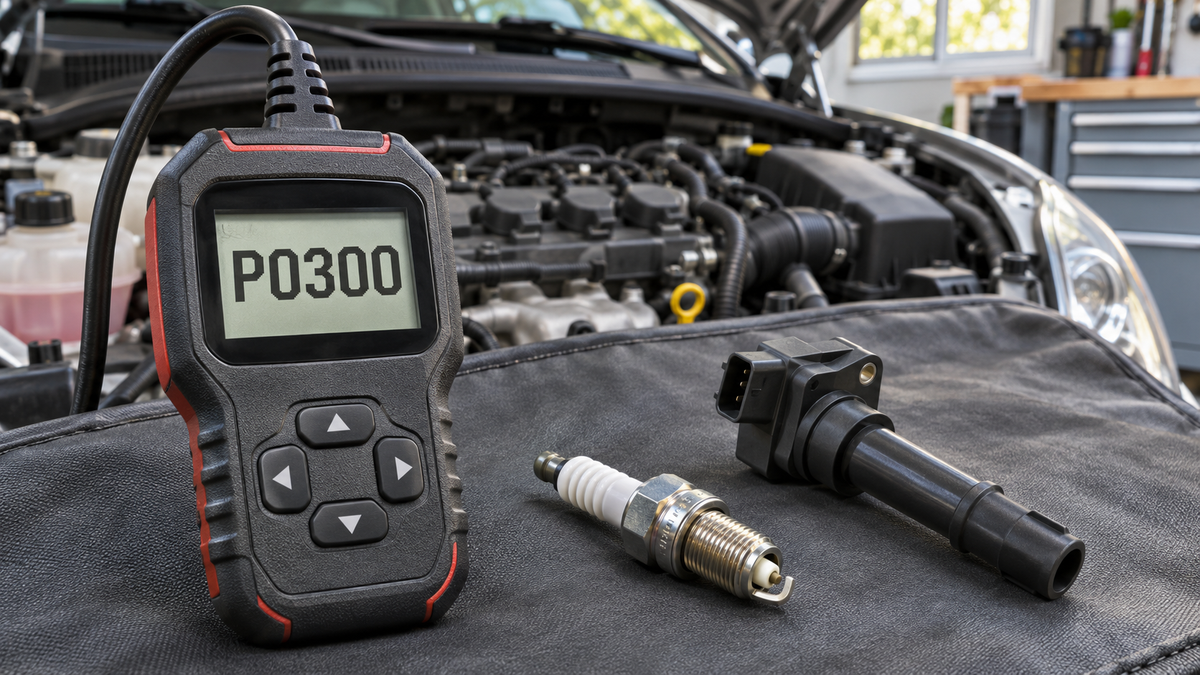
Got a P0300 code after changing spark plugs? If the engine ran fine before the job, start with the parts you touched. Check the coil connectors and boots, then look for a loose hose. If those checks pass, verify the new plugs and their gap.
If you changed the plugs to fix the same rough idle, check your work first. Then pick up where you left off with the old fault. If the check engine light flashes or the car shakes hard, pull over safely and shut off the engine.
What Does P0300 Mean After Changing Spark Plugs?
P0300 means the car logged a random or multiple-cylinder misfire. A misfire is when the fuel and air in a cylinder fail to burn as they should. You might feel a rough idle, a shake, or a stumble when you press the gas.
The code tells you what the car saw. Look for a second code to see where to start. If you also find P0302, check cylinder 2 first. Look up your engine’s cylinder layout so you pick the right one.
Most Likely Causes After a Spark Plug Change
Use this order for a new misfire that starts right after the job. It’s a guide to what to check first. Think back to what you moved to reach the plugs. If the intake came off, move hoses and seals up the list. If the same misfire was there before, give the old fault more weight.
1. Loose coil connector, unseated boot, or crossed plug wires
A coil connector can look plugged in when the latch hasn’t clicked into place. A coil boot can also sit high and miss the top of the plug. If you have an extra cylinder code, start with the coil and plug on that cylinder.
If your engine uses plug wires, check both ends of each wire. Trace them against the firing-order diagram for your engine. Two wires can reach the wrong plugs and still look like they fit.
2. Wrong spark plug, incorrect gap, or installation damage
Check the part number for your exact year and engine. A plug may thread in and still be the wrong part. Check the gap too. A pre-gapped plug can come set for a different engine.
Look for a crack in the white insulator or a bent ground strap over the tip. A drop or a socket held at an angle can damage a new plug. A loose plug may fail to seal, and too much torque can damage the plug or threads.
3. Disconnected hose or intake leak from reassembly
Think about how you reached the rear plugs. Did you move the air duct, pull off a vacuum hose, or lift the intake manifold? Check those spots first. A hose can slip free or a seal can shift as the intake goes back on.
A leak can let extra air in. If several cylinders miss and you see a lean code, give the intake a close look. A lean code tells you where to look next. Fuel supply can cause one too.
4. Weak coil, damaged boot, or contamination in a plug well
Look down into the plug well for oil or water. Check the boot for a split and the plug’s white insulator for a thin dark line. That line can be a sign that the spark took a path down the side of the plug.
A weak coil can also cause a miss, such as a stumble when you press the gas. If one cylinder does most of the misfiring, a swap with a known good coil can help. Use this check only if both coils are the same type and fit.
5. An existing fuel, wiring, or mechanical fault
Did you change the plugs because the engine already shook at idle? If it still shakes the same way, the cause may still be there. Note whether the same cylinder code came back or whether the pattern changed.
A miss that stays on one cylinder can come from its wiring, fuel injector, or low compression. A miss spread across several cylinders gives you a reason to check things they share, such as the air intake or fuel supply.
How to Diagnose P0300 After Changing Spark Plugs
Start with a scan tool, a light, and the service info for your engine. If you need to pull a plug, get the right socket, a gap gauge, and a torque wrench. Change one thing at a time so you know what helped.
Step 1. Save the codes and note when the misfire happens
Save the stored and pending codes before you clear anything. Save the freeze-frame data too, if it’s there. It’s a snapshot from when a fault set and may show engine speed, load, and coolant temperature.
Note whether the car misses on a cold start, at warm idle, or when you press the gas. If your scanner shows misfire counts by cylinder, look for one count that rises faster than the rest. If you only see P0300, start with the area where you worked.
Step 2. Recheck everything you disconnected
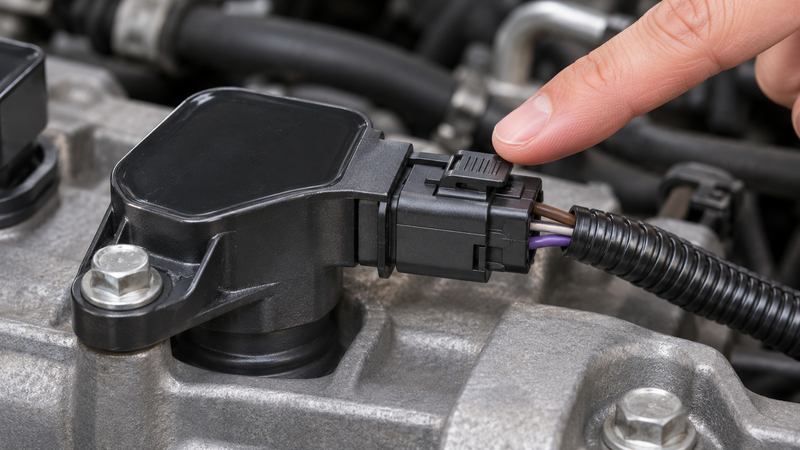
Turn the engine off and let it cool. Check that each coil connector is fully in and its latch holds. Check that the boots sit all the way down. If you have plug wires, make sure they go to the right plugs.
Follow the same path you took to reach the plugs. Look for a loose hose, a gap in an intake duct, an intake clamp left loose, or a connector you forgot to snap back in. Fix any clear fault here before you pull a plug.
Step 3. Verify the new plugs
If one cylinder stands out, pull that plug first. If several miss, start by checking the part number for the whole set. Use a light to look for a crack, a bent tip, or marks where the plug failed to seat.
Check the gap with the gauge the plug maker calls for. If the maker allows you to set the gap, move the ground strap with the right tool. Keep force off the fine center tip and white insulator.
Start the plug by hand. If it binds or the threads look torn, stop. Once it goes in cleanly, use the torque spec for your engine and follow its thread prep steps.
Step 4. Follow one cylinder or investigate what several cylinders share
One cylinder keeps missing. On an engine with matching coils that sit on top of the plugs, swap the suspect coil with a known good one. Leave both spark plugs in place. If the miss moves to the other cylinder, focus on the coil and boot you moved. Use a fresh code or a rising misfire count to tell where the miss went.
If the miss stays on the same cylinder, check the plug and the coil wiring. If both check out, the next tests may be for the injector or for compression. Check the part that the test points to before you buy a set of coils.
Several cylinders keep missing. Recheck any air hoses and seals they share. A lean code and a rough idle can make an intake smoke test a useful next step. If the miss is worse under load and the plug and coil checks pass, a shop can use scan data and a fuel pressure test to check the fuel supply.
How to Fix the Cause and Confirm the Repair
Use the test result to choose the fix. Here’s what that looks like for faults you can find during a plug job.
- Loose connector, boot, or plug wire. Seat the connector or boot fully. Put crossed plug wires back in the right order.
- Wrong or damaged spark plug. Fit the right plug, replace any cracked plug, and set the gap only if the plug maker allows it. Tighten it to spec.
- Bad coil or oil in the well. Replace the coil if the test points to it. If oil is in the well, find and fix the leak, then clean the well and check the boot for damage.
- Intake leak. Refit the hose or duct, or replace a seal if a test shows it leaks.
Once the engine runs well and it’s safe to drive, check it the way the fault first showed up. If it missed on a cold start, let the car cool all the way and check the next start. Scan again for fresh pending codes and look at misfire counts if your tool shows them.
If P0420 returns after you’ve fixed the misfire, check the cause of P0420 before buying a catalytic converter.
When to Stop Driving or See a Mechanic
If the light flashes, the car shakes hard, or it loses power, pull over safely and shut it off. Check your owner’s manual. If severe symptoms persist, arrange a tow. An active misfire can send unburned fuel into the exhaust and overheat the catalytic converter.
If the warning went away, see what to do when the check engine light flashes and then stops.
Call a shop if a plug binds, the threads look bad, or you still have a misfire after the basic checks. A shop can test injector control, fuel pressure, wiring, and how well each cylinder holds pressure. Bring the codes, freeze-frame data, plug part number, and a list of what you moved.
How to Prevent a Misfire After Your Next Spark Plug Change
Before you start, look up the plug part number, gap, and torque for your exact engine. If you use fine-wire plugs, check what the plug maker says about measuring or setting the gap. Take a photo of the hose and wire layout before you take it apart.
If you can, do one cylinder at a time. Clean around each well before you pull the plug, start each new plug by hand, and use a torque wrench. Give every boot, connector, and hose you touched one last look before you start the car.
FAQ
Can brand-new spark plugs cause P0300?
Yes. The plug may be the wrong part, the gap may be off, or the plug may have cracked during the job. Check the part number on the plug and inspect the tip before you buy another set.
Do pre-gapped spark plugs still need to be checked?
Yes. Check the gap against the spec for your exact engine. If it’s off, follow the plug maker’s rules on whether you can adjust it and what tool to use.
What if I have P0300 and P0302 together?
Start with cylinder 2. Check its coil connector, boot, and spark plug. Then use fresh scan data to see if that cylinder still misses or if others do too.
Why is P0300 still there after I changed the plugs and coils?
The original fault may still be there, or something may have come loose as you put it back together. Check the new parts and connections first. Then use the codes and misfire counts to decide whether to check for an air leak, fuel fault, wiring fault, or low compression.
Why does it misfire only when I accelerate?
A wide gap or a weak coil can show up when the engine is under load. Check whether the freeze frame shows that the fault set under load. If the spark checks pass, look at fuel delivery next.
If the car still stumbles when you press the gas, see what else can make a car jerk when accelerating.
Will clearing P0300 fix the rough idle?
No. The rough idle will stay until you fix its cause. Save the scan data before you clear it. After the repair, check for fresh codes or misfire counts under the same conditions.
Can I drive with P0300 after a spark plug change?
If the light flashes or the car shakes hard, pull over safely and shut it off. Use the owner’s manual to guide your next step. If the light stays on and the engine feels normal, check the manual and get the car checked soon.
What to Do Next With a P0300 Code After Changing Spark Plugs
If you get a P0300 code after changing spark plugs, let the timing guide your next check. If the shake began on the first start, recheck the parts you touched. If the same shake was there before, save the scan data and use it to pick your next test.