
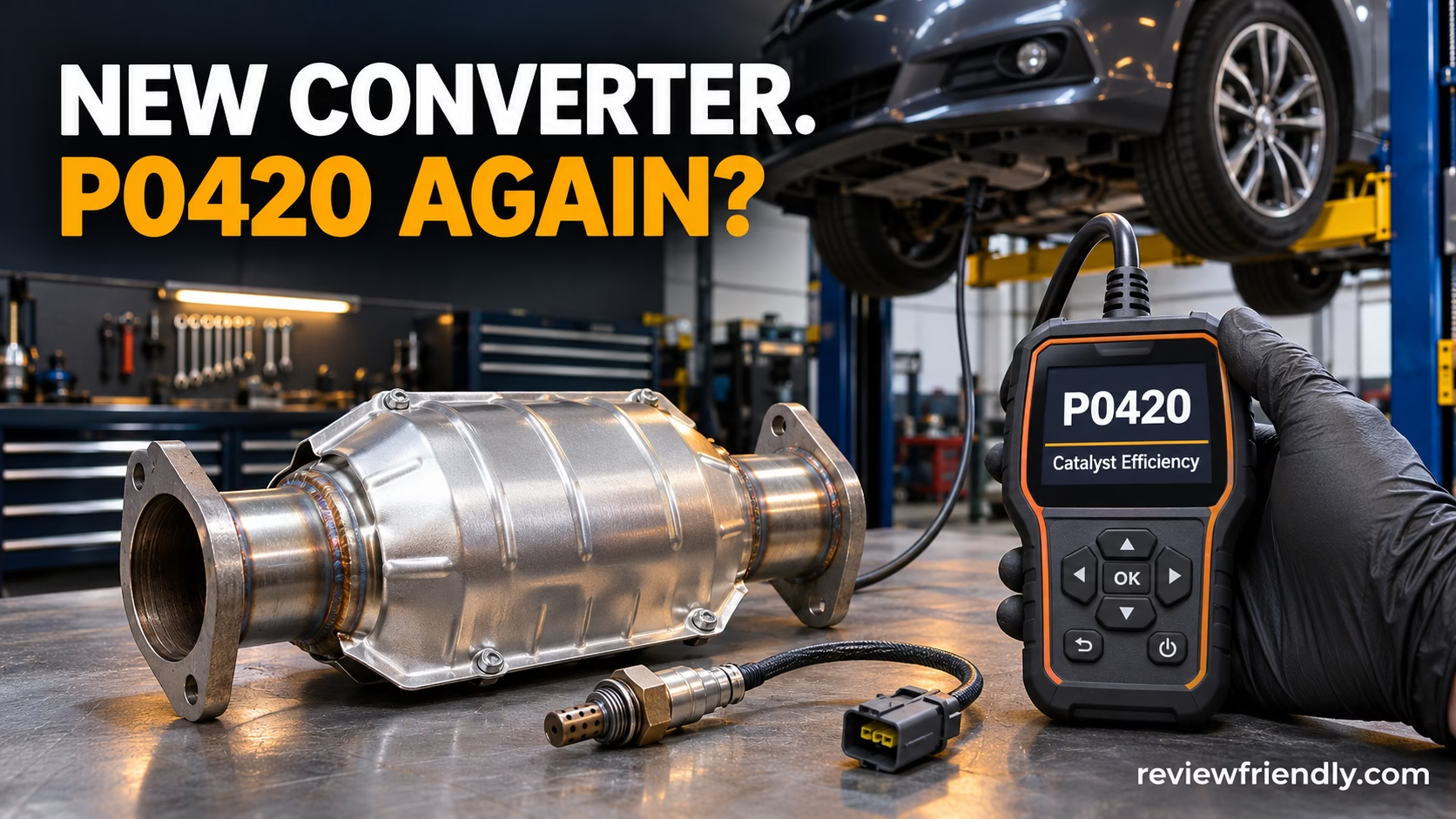
You paid for a new converter. Now the same code is on your screen, and you want to know what that bill bought you. If you see P0420 after catalytic converter replacement, take a photo of the scan before you clear it. Look for the word next to the code.
If it says permanent and the check engine light is off, you may be seeing a record of the old fault. If the light came back on, ask the shop to read all the codes. A leak at a new joint, a damaged wire, or an engine fault can all affect the result.
1. Why can P0420 come back with a new catalytic converter?
P0420 means your car found low catalyst efficiency on Bank 1 [the side with cylinder one]. The catalyst is the coating inside the converter that helps clean the exhaust. Your car uses exhaust sensors to judge how well the converter stores oxygen. That test can flag a weak part, but it can also pick up air from a leak.
If P0430 also appears, follow the diagnostic order for P0420 and P0430 together before replacing both converters.
Think of a rock that keeps hitting the same window. New glass fixes the first break. If the rock keeps coming, the next pane is at risk. A misfire can do that to your new converter. A leak is different. It can change what the sensor reads while the part itself is still sound.
Why did the light stay off for days? The catalyst monitor [the car’s built-in converter test] needs the right heat and driving conditions to run. The day you saw the light may simply be the day the test ran again.
2. The P0420 checklist to work through with your repair shop
Start with the dash light and the full scan report. Which of these fits what you see?
- The light flashes or the engine shakes badly. Pull over as soon as it’s safe. A severe misfire can overheat the new converter. If the flashing or rough running continues, arrange a tow.
- The light is off. P0420 shows only as permanent. Check whether the catalyst monitor says “ready” or “complete.” If it hasn’t run, ask when to bring the car back for a scan. The car clears a permanent code itself once it verifies the fix. A battery reset won’t erase it.
- The light is back, or P0420 shows as pending. Pending means the car has seen a possible fault. Ask the shop which code turned the light on. Save the freeze-frame data [engine readings when the fault set]. If there’s an active misfire or fuel fault, have that checked first.
Phase 1, check the recent repair first

1. P0420 returns after exhaust replacement? Start with the joints.
Read the parts list on your invoice. A new rear muffler quiets the exhaust but leaves the old converter in place. A new downpipe [pipe leading down from the engine] or converter puts fresh joints much closer to the sensors. That gives the shop a place to start.
Exhaust flows in pulses. A small gap ahead of the rear oxygen sensor can draw in fresh air between pulses. The sensor sees the extra oxygen, and the car may read it as poor converter performance. On some cars, a leak just past that sensor can affect the test too.
Ask the shop to check the manifold gasket, downpipe joints, flex pipe, clamps, fresh welds, and the spot where each sensor screws in. A small leak can be hard to hear. A low-pressure smoke test lets the tech watch for smoke escaping at the joint.
2. Check the oxygen sensors and the wiring that moved during the job.
The front sensor helps the engine set the fuel mix. The rear one helps check the converter’s work. A plug left loose, a corroded pin, or a wire touching the hot pipe can spoil a reading. Start with the plug and wire closest to the work.
Ask the tech to show you how each sensor responds when the fuel mix changes. The two sensors do different jobs, and the front sensor type varies by car. One screenshot at idle tells you less than a response test done to the carmaker’s specs. If the shop suggests a sensor, ask which test it failed. If you already fitted one, see what to check when P0420 returns after an oxygen sensor change.
Phase 2, find anything that could damage the replacement

3. Check for misfires, oil or coolant burning, and a rich fuel mixture.
Misfires. When a cylinder misses a spark, raw fuel can reach the hot converter. The fuel can burn there and melt the honeycomb inside. Ask whether the scan shows repeated misses on one cylinder. That can guide a check of its plug, coil, injector, or compression [pressure the cylinder can build].
Oil or coolant loss. Tell the shop how much you add and how far you drive between top-ups. Worn piston rings or valve guides can let oil burn in the engine. An internal leak, such as a failed head gasket, can let coolant reach a cylinder. Both can leave deposits on the catalyst. Ask the shop to trace the loss, since an external drip can also lower the level.
Too much fuel. A leaking injector or high fuel pressure can make the engine run rich [too much fuel for the air]. Fuel that reaches the exhaust can overheat the converter. Ask for the short- and long-term fuel trims [immediate and learned fuel corrections]. If the engine keeps taking fuel away, ask what a fuel pressure or injector test showed. That helps explain the reading before you pay for a part.
Phase 3, verify the converter itself
4. Confirm the shop fitted the right converter and tested its performance.
Ask the shop to match the number on the installed part to your engine, emissions label, and the bank named in the code. Two converters can fit the same pipe yet have different approved uses. Once the engine runs well and the joints are sealed, ask for the carmaker’s converter test.
One such test checks oxygen storage. The tech changes the fuel mix and watches how long the rear sensor takes to respond. Ask how your result compares with the spec for your car. That gives you something concrete to take to the parts supplier if you need a warranty claim.
Why budget converters can trigger the code again
Inside the converter, a thin coating uses metals such as platinum, palladium, and rhodium to help clean the exhaust. A part with too little capacity for your engine may fit and still fail the car’s test. The price tag alone can’t tell you what’s in that coating or how well the part works.
Even a costly converter can hide a fuel problem for a while. If the engine still sends raw fuel down the pipe, a second swap leaves the new part exposed to the same heat. Ask what the shop found before you pay the price difference for an upgrade.
When to choose OEM or a CARB-approved aftermarket converter
An OEM part [original equipment manufacturer part] is a straightforward way to match the factory setup. An aftermarket part can also be a good fit. Ask the shop to show you the listing for your exact year, engine, emissions family, and converter position.
In California, you need the correct OEM unit or an aftermarket unit approved for your car by the California Air Resources Board (CARB). For an aftermarket unit, ask for the Executive Order number [approval number for the listed applications]. Have the shop match it to your car. Get the terms for parts and labor in writing before you agree to the work.
3. What to ask your mechanic before authorizing another repair
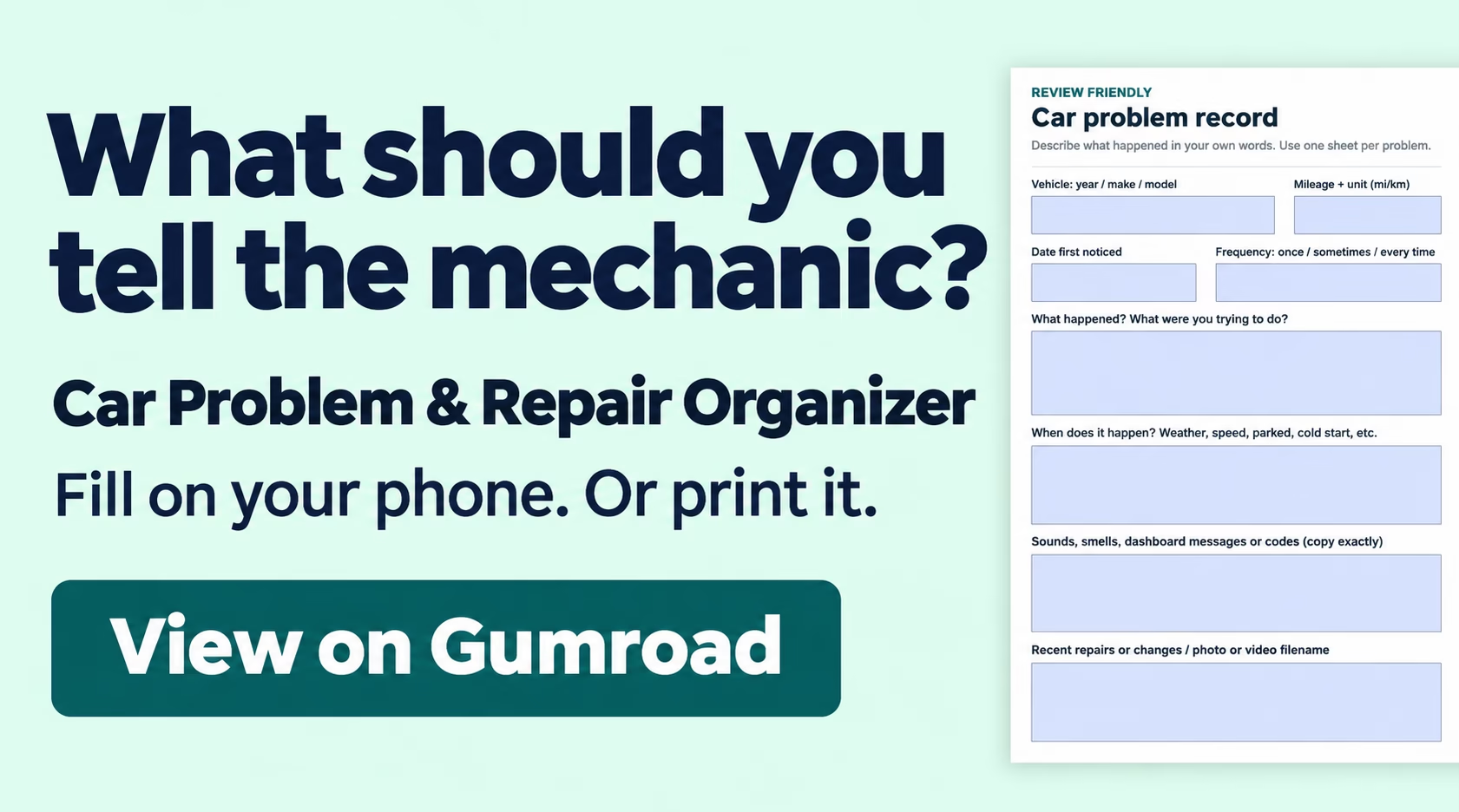
Bring your scan photo, invoice, and the mileage when the light came back. If the car shook or needed an oil top-up, jot that down too. These five questions can guide the call.
- Is P0420 fresh or only permanent? Has the car run its converter test since the repair?
- What test showed the first converter had failed? Did you find what damaged it?
- Did you smoke-test the new joints and check the sensor wires? Can you show me how each sensor responded?
- Did you save the fuel trims and misfire counts from the first visit? What do they show now?
- Which part number did you install? If it fails the carmaker’s test, what does my warranty cover for parts, testing, and labor?
4. P0420 after catalytic converter replacement — what to do before spending more
Call the shop that did the work while you have the invoice in hand. Ask whether it covers a return inspection and what fee, if any, you need to approve. Give the service writer the code status and the date the light came back. That gives them a more useful starting point than “the light’s on again.”
Before you pick up the car, ask for the test result on the work order. If the monitor hasn’t run yet, agree on a time for a follow-up scan. What you want to see is a completed catalyst test with no fresh P0420.
5. Frequently asked questions
Why did P0420 come back a week after my new cat was installed?
Your first few trips may not have met the conditions for the car to test the converter. Ask whether the shop cleared the codes during the repair and whether the light actually came back on. Finding an old permanent code a week later is different from seeing the light return on the drive home.
Can a new catalytic converter be bad out of the box?
Yes. If the part number matches, the joints are sealed, and the engine checks out, ask for a converter test under warranty. The result can support a claim. The date the light came on, by itself, can’t establish that the part arrived damaged.
New catalytic converter, still P0420 — should I replace the rear O2 sensor?
Ask what points to that sensor. If the wire and plug are sound but the sensor fails its response test, the shop has a reason to replace it. If it responds as expected, ask the tech to explain what the exhaust and converter tests showed before you buy one.