

If you are looking for the best headphones for people with hearing aids, the main goal is simple: find a pair that fits well, feels good, and does not fight your hearing aids. That means looking past flashy specs and focusing on comfort, ear room, sound control, and how you actually listen day to day.
Before I ranked these picks, I spent a lot of time reading real buyer feedback and owner reports from people who have used them in the real world. These picks are based on what users say after daily use, not on slick first-impression hype. This page also includes Amazon affiliate links, and if you buy through them, I may earn a small commission at no extra cost to you.
At a Glance
| Product | Best For | Quick Fit Note |
|---|---|---|
| Shokz OpenRun Pro 2 | All-day comfort and awareness | No earcup pressure |
| Bose QuietComfort Ultra Headphones | Premium comfort | Soft over-ear fit |
| Sony WH-1000XM5 | ANC and tuning | Strong noise block with app control |
| Anker Soundcore Space Q45 | Budget over-ear value | Good room for the ears |
| Sennheiser RS 195 RF Wireless System | TV listening at home | Easy living-room setup |
| Sennheiser HD 560S | Quiet-room sound quality | Open-back, airy feel |
| Apple AirPods Max | Apple users who want high-end | Premium build, strong ecosystem tie-in |
Introduction
Finding the best headphones for people with hearing aids is not just about sound. It is about fit, comfort, and how the headphone sits around your ears. A great-looking model can still be a bad pick if it presses on your hearing aid or blocks the wrong spot.
The good news is that some styles work much better than others. Open-ear models avoid pressure. Deep over-ear cups can work well. RF systems are great for TV. And open-back sets can feel more natural in a quiet room.
This guide focuses on the models that make the most sense for real use. You will see which ones suit travel, home TV, long listening, and daily wear.
Top Picks: Ranked Recommendations
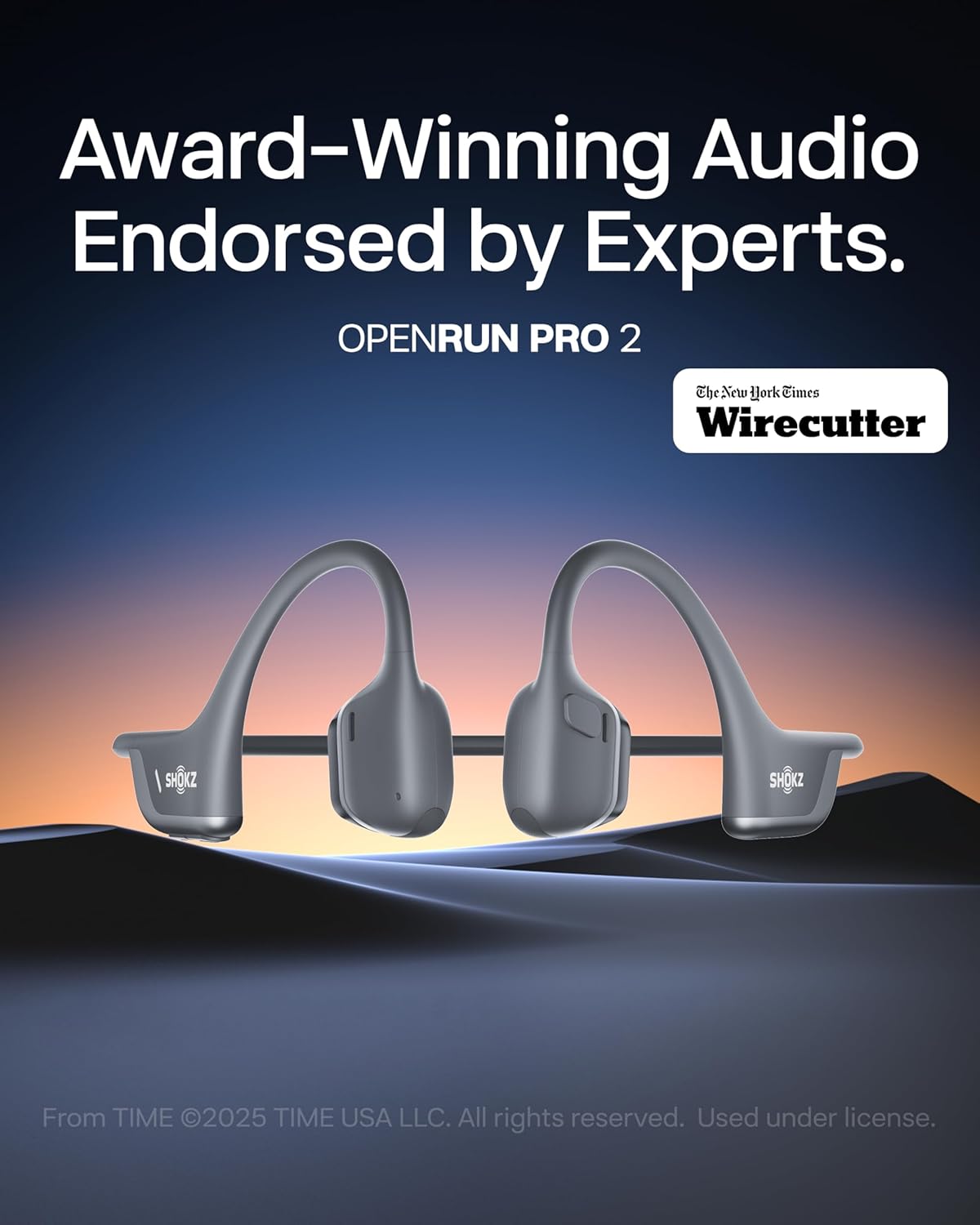
1. Shokz OpenRun Pro 2
Award / Category
Best Overall / Best Open-Ear (Bone Conduction)
Why it was selected
This is the easiest pick for many hearing-aid users. It avoids the ear area almost fully. That means less pressure, less fuss, and less chance of a bad fit.
Key features
- Open-ear design
- Bone conduction style [sound through cheekbone]
- Light feel
- Secure fit for movement
- Good for staying aware of your surroundings
Real-world advantages
- Very little contact with your hearing aids
- Easy to wear for walks, chores, and daily use
- Lets you hear traffic and people around you
- Good choice if over-ear cups feel too tight
Frequent drawbacks
- Not as rich as full over-ear sound
- Weak isolation
- Bass is limited compared with closed headphones
Common complaints
- Some users want more low-end punch
- Sound is less private
- The feel is different if you have never used bone conduction
Best suited for
You should look here if comfort and awareness matter most. It is a smart fit for active users and people who dislike anything near the ear.
Check Price on Amazon2. Bose QuietComfort Ultra Headphones

Award / Category
Best Premium Comfort
Why it was selected
This model stands out for its soft feel. If your hearing aids make tight headphones annoying, the comfort angle matters a lot.
Key features
- Plush over-ear build
- Strong ANC
- High-end materials
- Easy all-day listening feel
Real-world advantages
- Good for travel and long use
- Very soft padding
- Strong noise reduction in busy spaces
- Nice choice if you want a polished feel
Frequent drawbacks
- High price
- Still depends on ear room
- Can run warm after long wear
Common complaints
- Some buyers feel the price is high
- Over-ear fit is not ideal for every hearing aid style
- Not the cheapest path to comfort
Best suited for
This is best if you want a soft, premium headphone and your hearing aids fit cleanly under over-ear cups.
Check Price on Amazon3. Sony WH-1000XM5

Award / Category
Best ANC & Sound Customization
Why it was selected
This is a strong all-around pick for users who want noise block and tuning control. It gives you more ways to shape the sound for speech and daily listening.
Key features
- Strong ANC
- App EQ [sound tuning]
- Over-ear wireless design
- Multi-device pairing
Real-world advantages
- Great for flights, commutes, and loud offices
- Lets you shape the sound to your taste
- Works well for voice-focused listening
- Often a good mix of comfort and control
Frequent drawbacks
- Cost is still high
- Fit may not suit every ear shape
- Can feel warm over time
Common complaints
- Some users prefer a different headband feel
- ANC is excellent, but not magic
- Fit still matters more than specs
Best suited for
Pick this if you want strong noise control and the freedom to tweak the sound.
Check Price on Amazon4. Anker Soundcore Space Q45

Award / Category
Best Budget Over-Ear
Why it was selected
This is the value pick. It gives you a more familiar over-ear shape without the high cost of a flagship model.
Key features
- Over-ear wireless design
- ANC
- App EQ [sound tuning]
- Strong value for the money
Real-world advantages
- More room than many tight-budget headphones
- Good for work, travel, and casual use
- Helpful if you want to test over-ear listening before spending more
- Easy to recommend for budget shoppers
Frequent drawbacks
- Build is not as premium
- ANC is good, not top tier
- Sound may feel less refined than pricier models
Common complaints
- Some users want better sound detail
- The app and buttons are not fancy
- Not as luxurious as flagship picks
Best suited for
This is a strong choice if you want a budget-friendly over-ear headphone that still gives you decent comfort and space.
Check Price on Amazon5. Sennheiser RS 195 RF Wireless System

Award / Category
Best for Home TV Listening
Why it was selected
This is the best fit for people who mainly want clear TV audio at home. It is built for that job, and it keeps things simple.
Key features
- RF wireless system [radio link]
- Base station transmitter
- TV-focused setup
- Voice-friendly listening modes
Real-world advantages
- Very easy for living-room use
- Good for dialogue
- No need to keep pairing devices
- Great for long, seated listening
Frequent drawbacks
- Not made for travel
- Not a general-purpose headphone
- Takes up more space than regular wireless sets
Common complaints
- Not useful outside the home
- Less modern than Bluetooth-only gear
- Some buyers want one set for everything
Best suited for
Choose this if you want a dedicated TV solution and do most of your listening at home.
Check Price on Amazon6. Sennheiser HD 560S

Award / Category
Best Open-Back Audiophile
Why it was selected
This is a great pick for quiet rooms. Open-back headphones feel airy and natural, which many listeners love.
Key features
- Open-back wired design
- Wide sound stage [sense of space]
- Neutral sound
- Comfortable for long home sessions
Real-world advantages
- Natural sound for music
- Less enclosed feeling than closed headphones
- Good for detail and stereo space
- Nice for home use when quiet matters
Frequent drawbacks
- Sound leaks out
- Outside noise gets in
- Not a travel pick
Common complaints
- Not private
- Not ideal for busy rooms
- Best only when your space is calm
Best suited for
This is for the listener who wants sound quality first and uses headphones in a quiet spot.
Check Price on Amazon7. Apple AirPods Max

Award / Category
Best High-End / Apple Ecosystem
Why it was selected
If you live in Apple gear, this one is easy to like. It fits well into the Apple world and gives you a premium feel.
Key features
- Over-ear premium build
- ANC
- Strong Apple device fit
- Easy device switching in the Apple ecosystem
Real-world advantages
- Great for iPhone, iPad, and Mac users
- High-end feel
- Simple daily use
- Good for users who want a luxury product
Frequent drawbacks
- Very expensive
- Heavy compared with many rivals
- Still needs enough ear room for your hearing aids
Common complaints
- Price is the biggest issue
- Weight can wear on you
- Not the best value if fit is your only goal
Best suited for
This is best for Apple users who want a top-shelf headphone and do not mind paying for it.
Check Price on AmazonKey Buying Considerations
Hearing aid placement and ear-cup clearance
Your hearing aid style matters a lot. If the headphone touches the device, comfort drops fast. You may also hear rubbing, pressure, or a weak seal.
Look for:
- Deep earcups
- Soft padding
- A shape that leaves space around the ear
- Low clamp force if you wear them for hours
If your hearing aid sits behind the ear, a tight cup can push it out of place. If it sits in the ear, pressure can still build where the cup rests.
ANC vs physical compatibility
ANC means active noise cancellation. It helps cut outside noise by using sound processing. That is useful, but it does not fix a poor fit.
A headphone can have strong ANC and still feel wrong on your head. If it presses your hearing aid or pinches your ear, the comfort issue stays. So you need both:
- good noise control
- enough physical space
Comfort over long sessions
If you wear headphones for long blocks, comfort can matter more than sound. Heavy cups, hot pads, and tight sides wear you out fast.
Look for:
- soft pads
- light weight
- even headband pressure
- enough room so your ears do not get squashed
Open-ear vs closed-back vs open-back vs RF systems
Each style serves a different need.
- Open-ear: Best if you want awareness and almost no ear pressure.
- Closed-back over-ear: Best if you want noise block and privacy.
- Open-back: Best if you want a natural sound in a quiet room.
- RF systems: Best if you mainly watch TV at home.
Battery life and ease of use
Battery life matters, but ease matters too. A long battery does not help much if the controls are hard to read or the pairing is fussy.
Useful extras include:
- easy buttons
- app EQ [sound control]
- multipoint pairing [two devices at once]
- stable wireless connection
Sound customization and call quality
Some hearing aid users like a little more control over sound. That is where EQ [tone tuning] helps. You can boost speech, soften sharp highs, or bring down bass.
Call quality also matters if you use headphones for work or chats. Clear voice pickup and stable Bluetooth can make a big difference.
Best Headphone Categories for People With Hearing Aids
Best overall open-ear option
This is the safest pick for comfort-first users. Open-ear designs stay away from the ear itself. That makes them a strong choice if you hate pressure or do not want to mess with your hearing aid fit.
Best premium comfort over-ear option
This is for you if you want a soft, high-end feel. These models are good when you want long-wear comfort and a more private sound experience.
Best ANC and sound customization
This category fits users who spend time in loud places. You get better noise control and more room to tune speech and music.
Best budget over-ear option
This is the value lane. You get a more familiar headphone shape without paying flagship prices.
Best for TV and home listening
This is for easy home use. If you watch a lot of TV, a dedicated RF system is often less annoying than pairing a regular Bluetooth set.
Best open-back audiophile choice
This is for quiet-room listeners. Open-back sound feels wide and natural, but it leaks sound. So it works best when you are alone or in a calm space.
Best high-end ecosystem pick
This is for Apple users who want a polished experience and do not mind paying more for it. It is a premium lifestyle pick.
Comparison Table
| Product & Award | Form Factor | ANC / Isolation | Key HA Compatibility Feature | Battery Life | Target User |
|---|---|---|---|---|---|
| Shokz OpenRun Pro 2 Best Overall / Open-Ear | Bone Conduction | None (Open-Ear) | Bypasses outer ear & HA mics 100% | 12 Hours | Active / All-day wearers |
| Bose QuietComfort Ultra Best Premium Comfort | Over-Ear | World-Class ANC | Ultra-deep earcup clearance | 24 Hours | Frequent travelers & commuters |
| Sony WH-1000XM5 Best ANC & EQ Tuning | Over-Ear | Top-Tier ANC | In-app 5-band graphic EQ custom tuning | 30 Hours | Custom EQ & ANC seekers |
| Anker Soundcore Space Q45 Best Budget Over-Ear | Over-Ear | Adaptive ANC | Budget-friendly deep earcup cavity | 50 Hours | Budget-conscious buyers |
| Sennheiser RS 195 Best Home TV System | Over-Ear (RF Wireless) | Passive Isolation | Zero-latency RF + Dialogue Boost | 18 Hours | Home TV & movie viewers |
| Sennheiser HD 560S Best Open-Back Audiophile | Open-Back Over-Ear | None (Open-Back) | Pressure-free feedback elimination | Wired (N/A) | Home audiophiles & gamers |
| Apple AirPods Max Best High-End / Apple | Over-Ear | Premium ANC | iOS native Audiogram import profile | 20 Hours | Apple ecosystem users |
If you want the fast answer, this table can save you time. It shows the style first, which is usually the key detail for hearing aid users. After that, look at the comfort note and the target user line.
Why Some Headphones Work Better With Hearing Aids
Why some models are easier to wear
Some headphones fit around hearing aids better because they leave more space. Others press right on the same area and make things cramped. That is where the trouble starts.
If you wear hearing aids, you usually want one of two things:
- no ear contact at all
- enough ear room so nothing gets pushed around
Open-ear models solve the first problem. Deep over-ear cups solve the second, at least for some people.
ANC vs physical compatibility
ANC helps with noise. It does not help with pressure. That is the key split.
You can think of it this way:
- ANC = less outside sound
- Fit = how the headphone feels on your head
A headphone with great ANC may still be a poor choice if it hits your hearing aid. So you need to judge both parts.
Why earcup depth matters
Earcup depth can make or break comfort. Shallow cups may press the hearing aid, the ear hook, or the top of the ear. That can lead to sore spots fast.
Deeper cups help because they:
- leave more room
- reduce side pressure
- make it easier to wear for longer
- often feel less cramped
When each style makes sense
Use the style that matches your day.
- Open-ear: Best for walks, light work, and comfort.
- Over-ear: Best for travel, home use, and noise block.
- Open-back: Best for quiet rooms and music detail.
- RF systems: Best for TV and easy home listening.
If you move around a lot, open-ear is often the least annoying. If you sit in one place and want better isolation, over-ear makes more sense. If your main use is TV, a dedicated RF set can be a very good fit.
Practical tips for hearing-aid users
Here are the things worth checking before you buy:
- Look for deep cups or an open-ear build.
- Check the clamp force.
- Read user reviews from people with hearing aids.
- Think about your main use first.
- Do not overpay for features you will not use.
- Use the return window well. Fit is personal.
A small fit issue can turn a good product into a bad one. So comfort should lead the choice, not just brand name or bass.
Expert Tips for Choosing the Right Pair
- Start with your main use.
- Walking and errands? Try open-ear.
- Noise and travel? Try ANC over-ear.
- TV at home? Try RF.
- Quiet music listening? Try open-back.
- Check your hearing aid style before you buy.
- Behind-the-ear models need more room.
- In-the-ear models may still need a soft, light clamp.
- Do not trust specs alone.
- A long battery means little if the cups hurt.
- Strong ANC means little if the seal fails.
- Prioritize comfort over hype.
- A lighter, softer model often wins in real life.
- Use EQ if speech sounds dull.
- Small tuning changes can make voices easier to hear.
- Keep return options in mind.
- Fit is hard to judge from a listing alone.
FAQ Section
Can you wear headphones with hearing aids?
Yes, you often can. The best match depends on your hearing aid style and the headphone shape. Open-ear and roomy over-ear models are usually the easiest starting points.
Are open-ear headphones better for hearing aid users?
For many people, yes. They avoid ear pressure and keep the ear area free. That makes them a strong comfort pick.
Do over-ear headphones cause feedback?
They can in some cases, but not always. Feedback is more likely when the headphone presses on the hearing aid or changes its position. A good fit lowers the risk.
Is ANC useful for hearing aid users?
Yes, especially in loud places. It can reduce background noise and make listening easier. But it does not replace a good fit.
Are open-back headphones a good choice with hearing aids?
They can be, but only in a quiet space. Open-back models leak sound and do not block much noise. They are best for home listening, not travel.
What is the best option for watching TV?
An RF wireless system is often the easiest choice. It gives you a steady home setup and usually works better for that one job than a general Bluetooth headphone.
What should buyers check before ordering?
Check:
- earcup depth
- clamp force
- battery life
- weight
- return policy
- real user reviews from hearing aid wearers
Conclusion
If you want the best headphones for people with hearing aids, start with fit. That is the part that matters most. Once the fit is right, the rest gets much easier.
For most readers, the top choices break down like this:
- Shokz OpenRun Pro 2 for open-ear comfort
- Bose QuietComfort Ultra Headphones for premium comfort
- Sony WH-1000XM5 for ANC and tuning
- Anker Soundcore Space Q45 for budget value
- Sennheiser RS 195 RF Wireless System for TV
- Sennheiser HD 560S for quiet-room sound
- Apple AirPods Max for Apple users who want a premium pick
The best move is to match the headphone to your real routine. That way, you get a pair that fits your hearing aids, feels good for long wear, and works the way you need it to.