
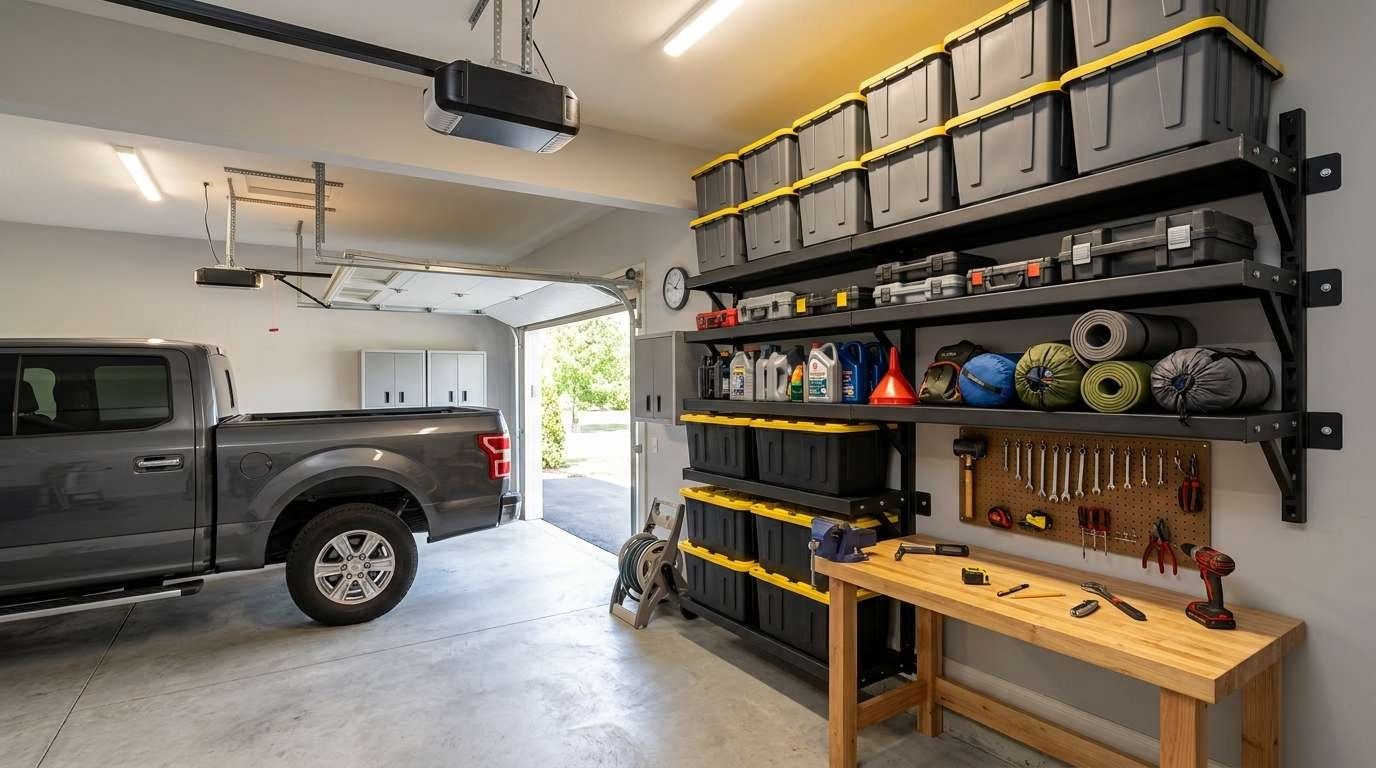
The best wall mounted heavy duty shelving gives you more storage without stealing floor space. It keeps tools, bins, and car supplies within reach. It can also leave enough room to park your vehicle.

The FLEXIMOUNTS WR26MB Pro is our best overall pick. It offers deep storage, a high claimed load limit, and broad stud support. Yet it will not suit every garage. Rhino Shelf works better for large totes, while HyLoft fits tighter spaces.
Below, you will find seven useful options for different storage needs.
Safety note: Load ratings assume correct installation and even weight spread. Your wall, fasteners, and bracket placement can lower the safe limit.
Best Wall Mounted Heavy Duty Shelving at a Glance
The table below compares each system without prices. Prices change often and may distract from fit, strength, and build quality.
Capacity figures come from product claims. They are not a promise for every wall or setup.
How We Chose the Best Heavy Duty Wall Shelves for Garage Storage
A large load rating looks good on a box. Yet it does not tell the full story.
We compared shelf depth, frame design, mounting needs, and ease of use. We also looked for common themes in garage forums and owner discussions.
Structural Strength
A shelf is only as strong as its weakest part. That part may be the bracket, fastener, wall rail, or stud.
We looked at the full support system, including:
- Frame and bracket design
- Wall rails
- Steel cables
- Deck construction
- Lag screws
- Shelf joints
- Rear support points
We also favored brands that explain their ratings. A large number means little without clear mounting rules.
Shelf Depth and Usable Storage
Shelf depth has a direct effect on storage.
A shallow shelf may hold tools with ease. It may not fit standard garage totes. A deep shelf can hold more, but it also sticks farther into your space.
We looked at how each depth works in a real garage:
- 12 to 15 inches: Small tools and supplies
- 18 inches: Medium bins and sports gear
- 24 inches: Large bins and power tools
- Over 30 inches: Bulky totes and camping gear
You should also check the shelf frame. Thick front rails can reduce the space below the shelf.
Installation Requirements
Not all walls support the same shelf.
Some products work with several wood-stud layouts. Others need studs spaced at exact points. A few can mount to concrete with the right hardware.
We also checked whether each shelf needs:
- Wood studs
- Concrete anchors
- Ceiling joists
- A second person
- Separate wood boards
- Extra brackets or tracks
Drywall alone should not hold heavy garage shelves.
Owner and Forum Feedback
Owner comments reveal issues that product pages may miss.
We looked for repeated points about:
- Hard installation steps
- Weak or small hardware
- Shelf movement
- Deck sag
- Awkward bracket spacing
- Useful shelf depth
- Long-term strength
We did not treat one comment as proof. We gave more weight to points raised by several owners.
Long-Term Flexibility
Your storage needs may change.
Today, you may store holiday bins. Next year, you may need space for tools or car parts. An adjustable or expandable system gives you more freedom.
We considered whether each system lets you:
- Add more shelf sections
- Move shelf heights
- Add hooks
- Form a corner section
- Replace the deck
- Take the system to another garage
1. FLEXIMOUNTS WR26MB Pro — Best Overall
The FLEXIMOUNTS WR26MB Pro offers a strong mix of depth, capacity, and wall support. That makes it our best general pick.
The set includes two large steel shelves. Each shelf is about six feet wide and two feet deep. This size works well for storage totes, tool cases, and car care supplies.
Why It Stands Out
FLEXIMOUNTS claims an 800-pound limit per shelf. That gives the two-shelf set a total claimed limit of 1,600 pounds.
The system can fit several common wood-stud layouts. These include 12, 16, 18, and 24-inch spacing. It can also mount to concrete with the correct method.
Helpful setup features include:
- A mounting guide
- A small bubble level
- Snap-in shelf parts
- Ties that help secure the deck
- Support bars beneath the shelf
- Hardware for approved wall types
The 24-inch depth is a key benefit. Many large garage bins fit well on this type of platform.
What Owners Say
Owners often compare FLEXIMOUNTS with NewAge and SafeRacks. FLEXIMOUNTS tends to appeal to those who want high capacity without a custom build.
The main concern involves shelf placement. Your studs may force gaps between nearby shelf units. This matters when you want one long shelf across the whole wall.
Some garage owners prefer a wood frame for that reason. A custom frame can match the exact wall length. It also lets you place supports where needed.
What Could Be Better
This is a large system. You need a long, clear wall and enough room in front.
The high claimed limit may also be more than you need. Most holiday bins and sports gear weigh far less.
Other limits include:
- Stud positions can affect shelf placement.
- The shelf may block wall cabinets or lights.
- Deep shelves can reduce headroom.
- Concrete installation needs suitable anchors.
- Heavy items are still safer near the floor.
Best For
The FLEXIMOUNTS WR26MB Pro is a good fit for:
- Power tools
- Large storage totes
- Car care products
- Camping supplies
- Seasonal equipment
- Workshop stock
- Heavy tool cases
It makes sense when you want a full metal system. It also saves you from cutting wood shelf boards.
FLEXIMOUNTS WR26MB Pro Pros and Cons
Pros
- High claimed capacity
- Deep storage area
- Fits several stud layouts
- Can work with concrete
- Complete steel system
- Useful setup aids
Cons
- Needs a large wall
- Stud positions may cause gaps
- Can project far into the garage
- More capacity than some homes need
What About the FLEXIMOUNTS 4×8?
People often search for a FLEXIMOUNTS 4×8 while planning garage storage. The term usually points to a large overhead rack.
That is not the same as a wall shelf. You should check the exact model before making plans.
Is the FLEXIMOUNTS 4×8 Wall Mounted?
Many FLEXIMOUNTS 4×8 racks attach to ceiling joists. They hang above a vehicle, workbench, or open floor area.
A wall shelf attaches to wall studs or concrete. It sends the load into the wall instead of the ceiling.
Never mount an overhead rack to a wall unless its manual allows it. Similar steel parts do not make the two systems equal.
FLEXIMOUNTS 4×8 vs. Wall-Mounted Shelving
| Feature | FLEXIMOUNTS 4×8-style overhead rack | Wall-mounted shelf |
|---|---|---|
| Main support | Ceiling joists | Wall studs or concrete |
| Floor space used | None | None |
| Best use | Seasonal totes | Tools and regular-use bins |
| Main setup concern | Joist direction and spacing | Stud spacing and wall type |
| Access | Often needs a ladder | Can sit at an easy height |
| Effect on parking | May reduce roof clearance | May affect side clearance |
| Ease of use | Better for rare access | Better for frequent access |
An overhead rack offers more storage above your car. Yet it can be harder to reach.
A wall shelf gives you faster access. It also works in garages where ceiling storage may block lights or doors.
Which One Should You Choose?
Choose a FLEXIMOUNTS 4×8 overhead rack if:
- You have open ceiling space.
- Your joists suit the rack.
- You store items used a few times each year.
- The rack will not block your garage door.
- Your vehicle has enough roof clearance.
Choose wall-mounted shelving if:
- You need easier access.
- Your ceiling has limited support.
- You want storage above a bench.
- Garage-door tracks block overhead space.
- You need several shelf heights.
A mixed setup can work even better. Keep daily gear on the wall. Put seasonal bins overhead.
2. HyLoft 00651 — Best Budget

The HyLoft 00651 is a simple two-shelf set. It suits smaller items and narrow spaces.
Each steel wire shelf measures about 45 inches wide and 15 inches deep. The low-profile brackets leave useful room below.
Check PriceWhy It Stands Out
HyLoft keeps the design simple. You get two steel shelves with mounting parts.
You can place them side by side. You can also stack them to form two levels.
The shallow depth works well above:
- Workbenches
- Laundry machines
- Tool cabinets
- Utility sinks
- Small storage carts
Wire decking also allows air and light to pass through. It collects less visible dust than a solid board.
Capacity Discrepancy to Explain
You may see two load ratings for the HyLoft 00651. Some product records list 150 pounds per shelf. Newer sales pages may list 200 pounds.
This may reflect a new version or updated test. It may also be a listing error.
Use the rating printed on your box and manual. If the details conflict, use 150 pounds as the safer limit.
Do not mix parts from old and new sets. Small changes in brackets or hardware may affect the rating.
Best For
HyLoft works best for:
- Hand tools
- Cleaning products
- Small power tools
- Paint supplies
- Sports gear
- Garden products
- Light household bins
It is also a good choice for a tight laundry room.
What Could Be Better
The 15-inch depth is too shallow for many large bins. A tote may hang over the front edge.
Wire decking can also be awkward for small parts. You may need a tray or thin liner.
Other limits include:
- Lower capacity than larger systems
- Fixed shelf depth
- Limited room for bulky gear
- Need for sound wall framing
3. Rhino Shelf Universal Kit — Best for Large Storage Totes

Rhino Shelf takes a different path. Its platform is about 33.5 inches deep.
That depth lets you turn many totes so their short ends face the wall. You can fit more bins along a long shelf.
Check PriceWhy It Stands Out
Rhino Shelf sells its system in four-foot sections. You can build a short shelf or cover a long wall.
The brand claims each four-foot section can hold 650 pounds. Correct support and even loading still matter.
The design can work in several layouts:
- In the middle of a wall
- From a left corner
- From a right corner
- Between two side walls
- Across a long garage wall
The system attaches to the wall. It does not need ceiling support.
The Lumber Requirement
The kit includes the frame parts and fasteners. It does not include the wood deck.
You will need to buy and install lumber. This adds work, yet it also gives you more choice.
You can replace a damaged board without replacing the frame. You can also choose a finish that suits your garage.
Before you start, account for:
- Lumber cost
- Board length
- Cutting tools
- Wood finish
- Total shelf weight
- Time needed for setup
Use the wood type and size stated in the manual. A thinner board may sag.
Best For
Rhino Shelf is well suited to:
- Large storage totes
- Camping gear
- Holiday items
- Coolers
- Sports bags
- Bulky car parts
- Long-term storage
It works best on a long wall with open space below.
What Could Be Better
A 33.5-inch platform is very deep. It may reach over a parked car or work area.
Check these points first:
- Can your car doors still open?
- Will the shelf block garage-door tracks?
- Can you walk below it?
- Can you reach the rear bins?
- Will deep bins hide small items?
The need for lumber also makes setup less direct. You have more parts to measure and install.
4. NewAge Pro Series — Best Premium Wall-Mounted Garage Shelving

The NewAge Pro Series has a clean steel design. It works well in a finished garage where looks matter.
Several shelf sizes are available. The 2 x 8-foot model gives you a long shelf with a 24-inch depth.
Check PriceWhy It Stands Out
The system uses steel support cables. These help hold the front edge of the shelf.
Slotted rear rails offer more choice around stud positions. The slots let you adjust the mounting points within the approved range.
Key features include:
- Heavy steel frame
- Adjustable support cables
- Wire deck panels
- Raised front edge
- Slotted rear mounting rail
- Options for linked shelves
NewAge claims a load limit of up to 600 pounds per shelf. The exact figure depends on the model.
Installation Options
You can use NewAge shelves in several ways.
A single shelf can sit above a workbench. Several shelves can join to form a long run. You may also form a corner or stack shelves.
Common layouts include:
- Above parked vehicles
- Along a side wall
- Over a garage window
- Above tool cabinets
- Around a corner
- In two vertical rows
The cable position needs care. It must connect to an approved support point.
Best For
NewAge Pro Series shelves suit:
- Finished garages
- Long-term storage
- Large bins
- Sports equipment
- Seasonal supplies
- Matching garage systems
- Open wall layouts
This system makes the most sense when you plan to keep it in place.
What Could Be Better
Long shelf parts can be hard to hold alone. A second person may make setup safer.
The cables can also limit placement near:
- Lights
- Windows
- Garage-door rails
- Ceiling beams
- Other shelves
- Wall cabinets
Measure the full support path, not just the shelf area.
5. SafeRacks Wall Shelves — Best for Finished Garages

SafeRacks offers compact steel shelves with a neat powder-coated finish. The 18 x 48-inch two-pack fits many common garage spaces.
Each shelf carries a claimed limit of 250 pounds. The set also includes hooks for added storage below.
Check PriceWhy It Stands Out
The wire decks sit on steel brackets. Clips help hold the deck in place and cut down on movement.
Some versions use a slight rear angle. This helps items settle toward the wall instead of the front edge.
Useful features include:
- Steel wire decks
- Powder-coated finish
- Deck clips
- Heavy lag screws
- Four hanging hooks
- Compact shelf depth
The hooks are handy for cords, helmets, and small bags.
Best For
SafeRacks wall shelves work well for:
- Car cleaning supplies
- Sports gear
- Medium storage bins
- Extension cords
- Tool bags
- Helmets
- Garden supplies
The 18-inch depth offers a useful middle ground. It holds more than a shallow shelf without reaching too far into the room.
What Could Be Better
Many SafeRacks wall-shelf models need wood studs. The maker may not approve them for concrete or metal studs.
Other concerns include:
- Large totes may not fit.
- Wire gaps can catch small objects.
- Hooks need clear space below.
- Stud positions affect placement.
- A slight rear angle may not suit all items.
Check the exact model guide before you drill.
6. John Sterling Heavy-Duty Dual-Trak — Best Adjustable System

John Sterling Dual-Trak is not a fixed shelf kit. It is a set of wall tracks and movable brackets.
This gives you more control over shelf height and spacing.
Check PriceWhy It Stands Out
The vertical tracks have slots at several heights. You insert brackets into the slots, then place boards on top.
You can move a shelf later without removing the main wall tracks.
This setup works well if your stored items often change. Tall tool cases may need more space than short bins.
Some bracket pairs have a claimed limit of up to 340 pounds. That figure depends on the tracks, bracket size, studs, and shelf board.
Components You May Need
A full system may require:
- Vertical wall standards
- A top hanging rail
- Shelf brackets
- Wood shelf boards
- Board screws
- Wall screws
- Stud-rated fasteners
Some parts are sold on their own. Plan the full system before ordering any one piece.
Use thick, sound shelf boards. Thin boards may sag even if the metal parts stay firm.
Best For
John Sterling Dual-Trak works well in:
- Home workshops
- Tool rooms
- Busy garages
- Utility rooms
- Garden work areas
- Mixed storage walls
It is a smart choice if you expect your storage needs to change.
What Could Be Better
This is not a one-box solution. You must choose parts that work together.
Setup also needs care. Tracks must stay level and plumb [straight up and down].
Common drawbacks include:
- More planning
- More parts
- Separate shelf boards
- Need for exact track spacing
- Capacity changes by setup
- Exposed tracks on the wall
If you prefer a cleaner floating look, a fixed rack may suit you better.
7. StoreYourBoard Garage Wall Shelves — Best with Storage Hooks

StoreYourBoard combines broad shelf space with hooks below. This helps you use one wall for two types of storage.
The two-shelf set measures about 71 inches wide and 24 inches deep per shelf. Each shelf has a claimed 250-pound limit.
Check PriceWhy It Stands Out
The wide platform can hold bins and toolboxes. The hooks below can hold loose gear that would waste shelf space.
Good hook items include:
- Extension cords
- Garden hoses
- Helmets
- Tool bags
- Gloves
- Light sports gear
The brackets allow some placement choice around studs. This can help on walls that do not match fixed shelf joints.
Best For
This system suits garages with mixed storage needs.
You can keep bins on top and hang gear below. That leaves the floor open and cuts down on loose cords.
It works well for:
- Family garages
- Sports gear
- Garden tools
- Car care kits
- Camping supplies
- Power tool bags
- Storage totes
What Could Be Better
The claimed load is lower than some larger systems. That does not make it weak, but it may limit dense items.
The hooks also need free space below. They may bump into a bench, cabinet, or vehicle.
Other limits include:
- Large 24-inch depth
- Need for even loading
- Lower limit than FLEXIMOUNTS
- Open wire or metal deck feel
- Fixed shelf level after setup
How to Choose Heavy Duty Wall Mounted Garage Shelving
The best shelf is not always the one with the highest rating. It is the one that fits your wall, bins, and daily routine.
Start with the items you need to store. Then measure the space around them.
For more floor-based options, compare our guide to the best heavy-duty shelves for garage storage. You can also review these heavy-duty metal shelving units before choosing a wall system.
Start With What You Plan to Store
Sort your items into simple weight groups.
Light Storage
This group includes:
- Empty bins
- Sports balls
- Paper goods
- Cleaning cloths
- Light garden gear
Most garage shelves can hold these items with ease.
Medium Storage
This group includes:
- Power tools
- Full household bins
- Paint cans
- Detailing products
- Tool bags
A steel shelf with sound brackets often suits this group.
Heavy Storage
This group includes:
- Dense car parts
- Large tools
- Boxes of fasteners
- Heavy batteries
- Full fluid containers
Keep very dense items low. A high load rating does not remove the risk of falling objects.
Measure Shelf Depth Carefully
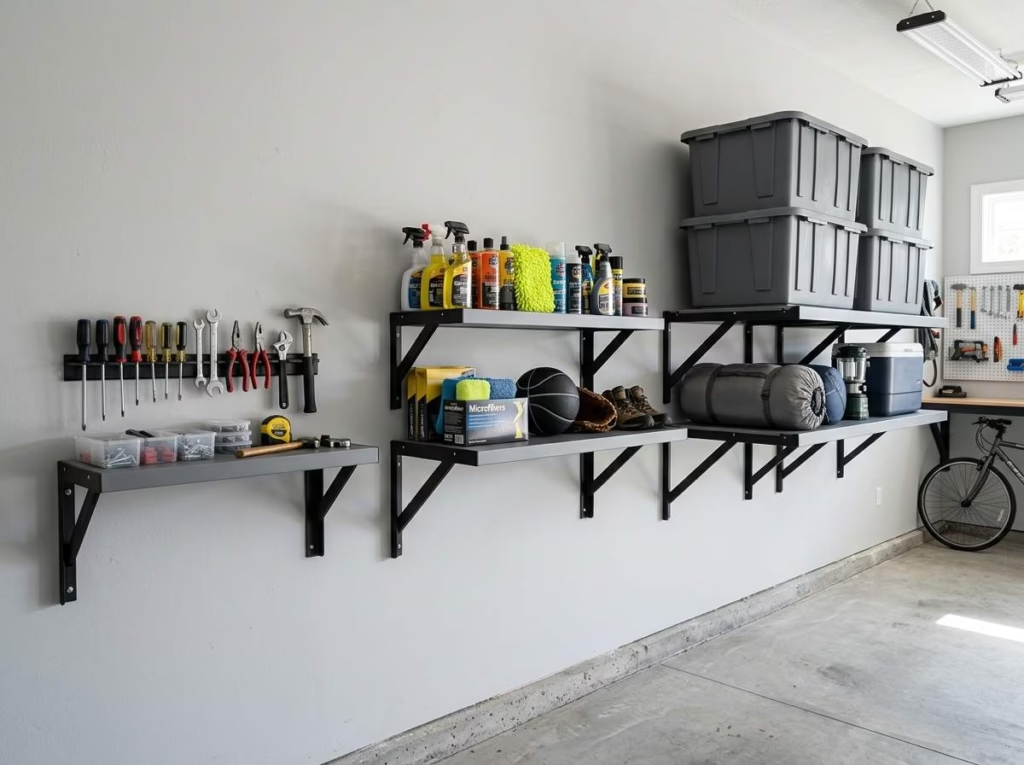
Do not guess based on shelf photos. Measure your largest bin.
Use this rough guide:
- 12 to 15 inches: Hand tools and small tubs
- 18 inches: Medium bins and common supplies
- 24 inches: Large totes and tool cases
- Over 30 inches: Bulky gear and deep tote rows
Add room for lids and handles. A 24-inch bin may need more than 24 inches of clear shelf space.
Also check:
- Car-door swing
- Walking space
- Headroom
- Garage-door tracks
- Window access
- Workbench lights
Mark the shelf depth on the floor with tape. This gives you a useful view of its reach.
Check Your Wall Structure
Find out what sits behind the drywall.
Common garage walls include:
- Wood studs
- Metal studs
- Solid concrete
- Concrete block
- Brick
- Drywall over wood
Heavy shelves should connect to a sound support. Drywall alone cannot carry a large garage load.
Metal studs need special care. Many shelf makers do not approve their standard kits for metal framing.
Concrete and block may work with masonry anchors. Use only the anchor type stated in the manual.
Understand Weight-Capacity Claims
A capacity may apply to one shelf, one section, or the full set.
Check the wording before comparing products.
Key terms include:
- Per-shelf limit: Maximum for one platform
- Total limit: Maximum for the full set
- Even load: Weight spread across the deck
- Point load: Weight placed in one small spot
- Test load: Weight used during product testing
- Working load: Weight allowed during normal use
Do not assume a tested load is the daily limit. Look for the stated working capacity.
The shelf also has weight. That load acts on the wall before you add any bins.
Consider Bracket Placement
Brackets send shelf weight into the wall.
A long gap between brackets can cause the deck to sag. This can happen even if the brackets stay firm.
Do not move a bracket just to avoid an outlet. Follow the approved mounting range.
Plan around:
- Stud positions
- Power sockets
- Water pipes
- Wall lights
- Cabinets
- Window frames
Adding random brackets does not always raise the safe limit. The wall rail or deck may still set the limit.
Wire Shelves vs. Solid Shelves
Both shelf types have useful traits.
Wire Shelves
Benefits
- Allow airflow
- Collect less dust
- Weigh less
- Make spills easier to spot
Drawbacks
- Small parts can fall through
- Feet may catch between wires
- Bottles may sit at an angle
Solid Shelves
Benefits
- Support small items
- Give bins a flat base
- Make sliding items easier
- Can look warmer
Drawbacks
- Collect dust
- May trap spills
- Wood can absorb fluids
- Thin boards can sag
You can place a thin tray on a wire shelf. This creates a flat area without covering the full deck.
Think About Future Expansion
Ask where your garage will be in two years.
You may need room for more tools, new sports gear, or another vehicle.
An expandable system can let you:
- Add a shelf section
- Build around a corner
- Add hooks
- Change shelf height
- Replace a damaged deck
- Form a second storage level
Fixed shelves look neat. Adjustable tracks give you more choice later.
Wall-Mounted Shelving vs. Freestanding Garage Shelving
Both types can solve garage clutter. Your floor plan should guide the choice.
Wall-Mounted Advantages
Wall shelves:
- Keep the floor clear
- Leave room for vehicles
- Fit above benches
- Make sweeping easier
- Use empty wall space
- Can clear floor drains
They work best for light to medium items you need often.
Wall-Mounted Disadvantages
Wall systems:
- Need sound framing
- Take more time to fit
- Are harder to move
- Can damage finished walls
- May reduce headroom
- Depend on correct fasteners
A poor setup can pull away from the wall.
Freestanding Advantages
Floor shelves:
- Are easy to place
- Can move to a new wall
- Do not rely on wall strength
- Keep heavy items near the floor
- Often offer several levels
They may be the safer choice for dense car parts.
Freestanding Disadvantages
Floor units:
- Take parking space
- Block wall access
- Trap dirt behind them
- May need anti-tip straps
- Can block car doors
A mix of both types often works well. Use wall shelves for bins and floor racks for heavy tools.
Wall-Mounted Shelving vs. Overhead Garage Racks
Wall shelves and overhead racks solve different problems.
Wall shelves give you easier access. You can place them at chest, head, or upper-wall height.
Overhead racks offer more storage above parked cars. Yet you may need a ladder to reach them.
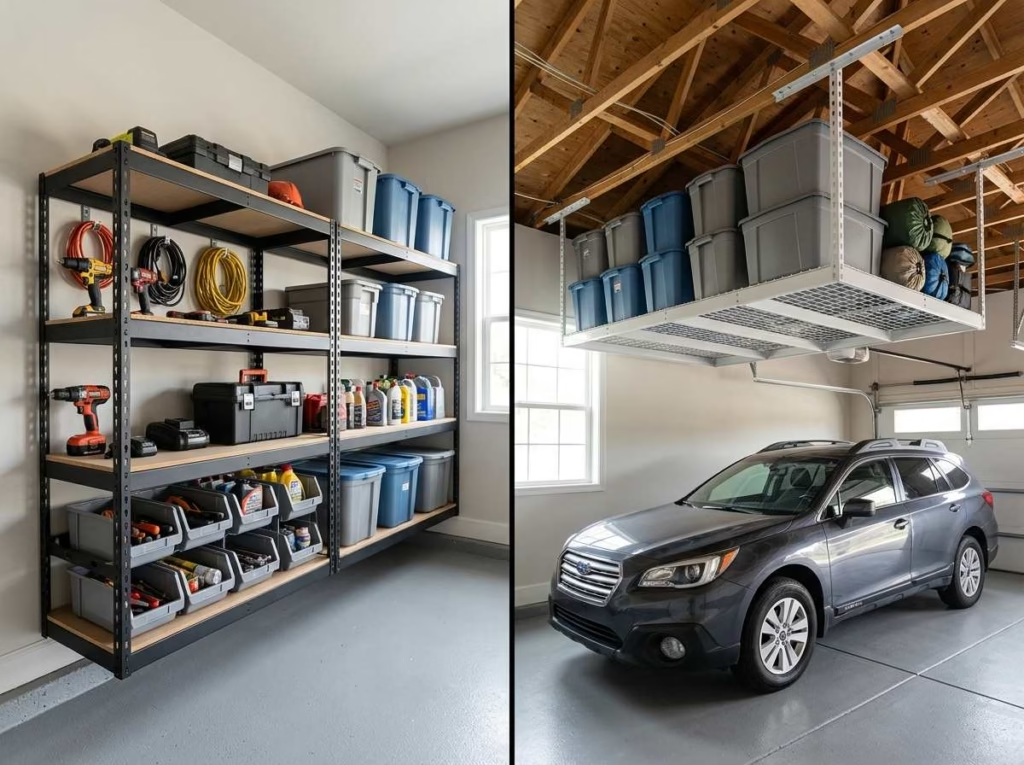
Choose wall shelves for:
- Daily tools
- Car care supplies
- Sports gear
- Power tool cases
- Garden products
Choose overhead racks for:
- Holiday décor
- Empty coolers
- Camping gear
- Rarely used bins
- Seasonal clothing
A hybrid layout often gives the best use of space. It also prevents you from placing every item high above your car.
Installation and Safety Tips
Heavy shelf setup needs more than a drill and a level.
Plan the load path first. That means the route weight takes from the shelf into the wall.
Find the Structural Framing
A stud finder can help, but do not depend on one reading.
Use several checks:
- Scan the wall.
- Look for outlet positions.
- Tap across the wall.
- Confirm with a small test hole.
- Mark both stud edges.
Electrical wires and pipes may pass through studs. Avoid drilling where you are unsure.
Older garages may not use regular stud spacing. Measure each point.
Use the Correct Hardware
Use the fasteners listed in the product guide.
Do not replace lag screws with drywall anchors. The two fastener types serve very different loads.
For concrete, use approved masonry hardware. The anchor must suit the base material and hole size.
For wood framing:
- Drill the stated pilot hole.
- Drive into the center of the stud.
- Use the full fastener depth.
- Do not over-tighten the screw.
- Check for split wood.
If the included hardware looks damaged, replace it with an approved match.
Keep Heavy Items Low
Put your heaviest items on lower shelves.
High shelves work better for large but light objects. Think empty coolers, camping chairs, and holiday décor.
Avoid storing these items above your head:
- Car batteries
- Brake parts
- Dense toolboxes
- Open fluid cans
- Unstable metal parts
- Glass containers
A falling object can harm a person or damage a car.
Distribute Weight Evenly
Spread bins across the whole shelf.
Do not place all the weight at the center or front edge. Keep dense items near bracket points where allowed.
A good load plan looks like this:
- Light items near the front
- Dense items near support points
- Similar weight on both sides
- No tall, loose stacks
- No round items without stops
Use closed bins on high shelves. Label the short end so you can find items fast.
Inspect the Shelves Regularly
Check the system after the first few weeks. Fasteners can settle as the shelf takes a load.
Then inspect it every few months.
Look for:
- Loose screws
- Bent brackets
- Cracked wood
- Rust
- Cable movement
- Shelf sag
- Wall cracks
- Deck clips out of place
Remove the load if you see a sudden change.
Common Wall-Mounted Garage Shelving Mistakes
Avoid these common setup errors:
- Attaching the shelf to drywall alone
Drywall is a wall finish, not a heavy support. - Treating a test load as the daily limit
Use the stated working load. - Ignoring shelf weight
The frame and deck also load the wall. - Placing all weight in one spot
Spread heavy bins across the platform. - Blocking garage-door parts
Check the full door path before drilling. - Choosing too much depth
A deep shelf can block doors and walking space. - Storing unsafe items overhead
Keep dense parts and open fluids low. - Assuming every FLEXIMOUNTS 4×8 is wall mounted
Many 4×8 racks attach to ceiling joists. - Ordering before finding the studs
Stud positions may change your shelf plan. - Using thin wood decking
A thin board can sag between brackets.
Frequently Asked Questions
What is the best wall mounted heavy duty shelving?
The FLEXIMOUNTS WR26MB Pro is our best all-around option. It offers deep platforms, a high claimed limit, and broad mounting support.
Rhino Shelf is better for oversized totes. NewAge Pro suits a polished garage. HyLoft works well in small spaces.
Your wall type and stored weight should guide the final choice.
How much weight can wall-mounted garage shelving hold?
The limit ranges from moderate to very high. Small shelves may hold around 150 pounds. Large systems may claim several hundred pounds per shelf.
Your real limit depends on:
- Wall framing
- Fasteners
- Bracket spacing
- Shelf design
- Load position
- Setup quality
Use the lowest limit among all parts.
Can heavy-duty garage shelves be attached to drywall?
No heavy shelf should rely on drywall alone.
The fasteners should connect to wood studs, concrete, block, or another approved support. Drywall can sit between the bracket and stud, but it should not carry the main load.
What depth is best for heavy duty wall shelves for garage storage?
Choose depth based on your largest item.
- Use 12 to 15 inches for tools and small tubs.
- Use 18 inches for common garage supplies.
- Use 24 inches for large storage bins.
- Use extra-deep shelves for bulky gear.
Measure vehicle and walking clearance before choosing.
Is FLEXIMOUNTS 4×8 wall mounted?
Many products sold under the FLEXIMOUNTS 4×8 search term are overhead racks. They attach to ceiling joists.
Check the exact model and manual. Do not attach a ceiling rack to a wall unless the maker approves it.
Are wire or wood garage shelves stronger?
Neither material is always stronger.
Strength depends on the frame, bracket spacing, deck thickness, and mounting method.
Wire decks resist moisture and allow airflow. Wood gives small items a flat base. Thick plywood can work well when it has enough support.
Can I install wall-mounted garage shelving by myself?
You may install a small shelf alone. Long and deep shelves are easier with two people.
Ask for help when:
- The shelf is over six feet long.
- The unit mounts above your head.
- You need to drill concrete.
- Steel cables need careful alignment.
- The frame is hard to hold level.
Professional help may make sense if the wall type is unclear.
Is it safe to store heavy items above a parked vehicle?
It can be safe with correct setup and secure storage. Yet the risk never falls to zero.
Use a raised edge, closed bins, and even loading. Keep dense or unstable items away from high shelves.
Check the system often for loose parts or movement.
Final Verdict
The best wall mounted heavy duty shelving should fit your wall before it fits your wish list.
FLEXIMOUNTS WR26MB Pro offers the best all-around mix for heavy garage storage. Rhino Shelf gives bulky totes more room. NewAge Pro suits a neat, permanent setup.
HyLoft is a practical choice for smaller items. SafeRacks balances size and finish. John Sterling gives you more control over shelf height. StoreYourBoard adds useful hanging space.
Measure your bins, studs, and vehicle clearance first. Then choose the shelf depth. A well-sized shelf with a sound mount is more useful than a huge load rating you never need.