
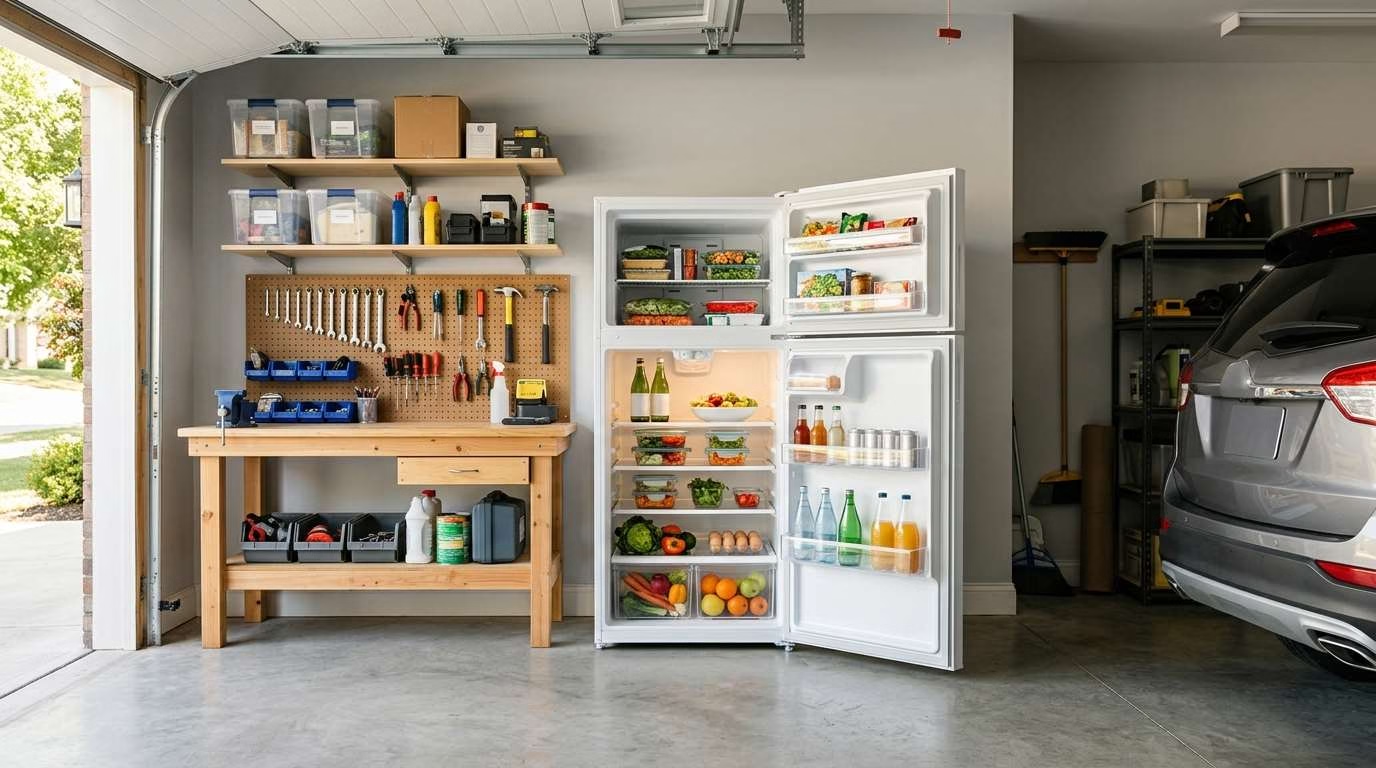
A kitchen fridge may not work well in a hot or cold garage. The wrong model can use more power, lose food, or wear out early.
This Garage Refrigerator Buying Guide helps you avoid those risks. You will learn how to check temperature limits, size, energy use, storage, and setup needs. Start with your garage climate. Then choose a fridge rated for those conditions.
Garage Refrigerator Buying Checklist
Use this quick list before you compare models:
- Record the lowest and highest garage temperatures.
- Check the fridge’s approved room temperature range.
- Decide if you need fresh food, frozen food, or both.
- Measure the full space, including door clearance.
- Check the delivery route into your garage.
- Compare yearly power use.
- Review the outlet and circuit needs.
- Look for shelves that fit your food.
- Choose frost-free or manual defrost.
- Check the full warranty terms.
- Make sure garage use will not void the warranty.
- Plan enough space for airflow.
Keep these details in one note. They will make it easy to reject poor fits.
What Is a Garage-Ready Refrigerator?
A garage-ready refrigerator is built for wider temperature swings. It may work in places that get far hotter or colder than your kitchen.
Still, the label needs a closer look. Not all garage-ready models handle the same conditions.
What “garage ready” actually means
“Garage ready” often means the fridge can work outside a normal home setting. It may have controls made for heat, cold, or both.
The design may include:
- Better insulation
- Wider temperature limits
- More precise temperature sensors
- Special compressor controls
- Separate fridge and freezer settings
- Cold-weather heating near the thermostat
The exact design will vary. Some models focus on high heat. Others work well in both hot and cold rooms.
Always check the approved ambient range. Ambient range means safe room temperatures. This range should cover your garage through all four seasons.
“Garage ready” is not one universal standard
There is no single temperature range for every garage-ready fridge. One model may work from about 38°F to 110°F. Another may work near 0°F.
A broad claim on a store page is not enough. Check these files before choosing:
- Owner’s manual
- Installation guide
- Product specification sheet
- Warranty terms
Also check each operating mode. A convertible unit may have one range in fridge mode. Its freezer mode may have a different range.
Use the manufacturer’s manual as your final guide. It offers more detail than a short sales page.
Garage-ready refrigerator vs regular refrigerator
A regular refrigerator expects a stable indoor setting. Most kitchens stay warm enough for the controls to work as planned.
A garage may not offer that comfort. Heat, cold, sun, and poor airflow can affect cooling.
| Factor | Garage-ready refrigerator | Regular refrigerator |
|---|---|---|
| Main location | Garages and other less stable spaces | Climate-controlled rooms |
| Temperature range | Usually wider | Often narrower |
| Cold-weather use | Made to handle more seasonal change | Freezer performance may suffer |
| Hot-weather use | Better suited within its stated range | May run for longer periods |
| Price | May cost more | More low-cost choices |
| Warranty | Garage use may be allowed | Garage use may have limits |
A garage-ready fridge is not always the better choice. If your garage stays near room temperature, a standard model may work.
Can You Put a Regular Refrigerator in a Garage?
Yes, but only under the right conditions. Your garage must stay within the fridge’s approved room temperature range.
A heated and cooled garage may be fine. An open, unheated garage creates more risk.
What happens when the garage gets too cold?
Cold weather can fool a standard fridge’s thermostat. The thermostat senses cold air and runs the compressor less often.
That may keep the fridge section cool. Yet the freezer can slowly warm. Food may soften before you spot the problem.
Other cold-weather risks include:
- Frozen water lines
- Cracked water parts
- Failed ice makers
- Condensation during warm spells
- Poor temperature recovery
A fridge-freezer combo needs steady compressor cycles. Cold room air can upset that cycle.
What happens when the garage gets too hot?
A hot garage forces the fridge to work harder. The compressor may run for long periods.
This can lead to:
- Higher power bills
- More wear on cooling parts
- Slow cooling after you open the door
- Warm spots inside the cabinet
- Poor freezer performance
- Shorter service life
Heat can build near a closed garage door. It can also collect around the fridge if airflow is poor.
Never place the unit in direct sun. Keep it away from water heaters and other heat sources.
When a standard refrigerator may be acceptable
A standard model may work if your garage stays mild all year. Check real temperature readings before you decide.
It may be a sound choice in these cases:
- Your garage has heating and cooling.
- The walls and door have good insulation.
- You live in a mild climate.
- The fridge runs during one season only.
- You use the unit for drinks, not costly food.
- A temperature alarm warns you of trouble.
- The warranty permits garage use.
Do not base your choice on outdoor weather alone. The air inside your garage may be quite different.
Measure Your Garage Temperature Before Shopping
Your garage temperature is the best place to start. It tells you which refrigerators can work safely.
Measure first. Shop second.
How to measure the temperature correctly
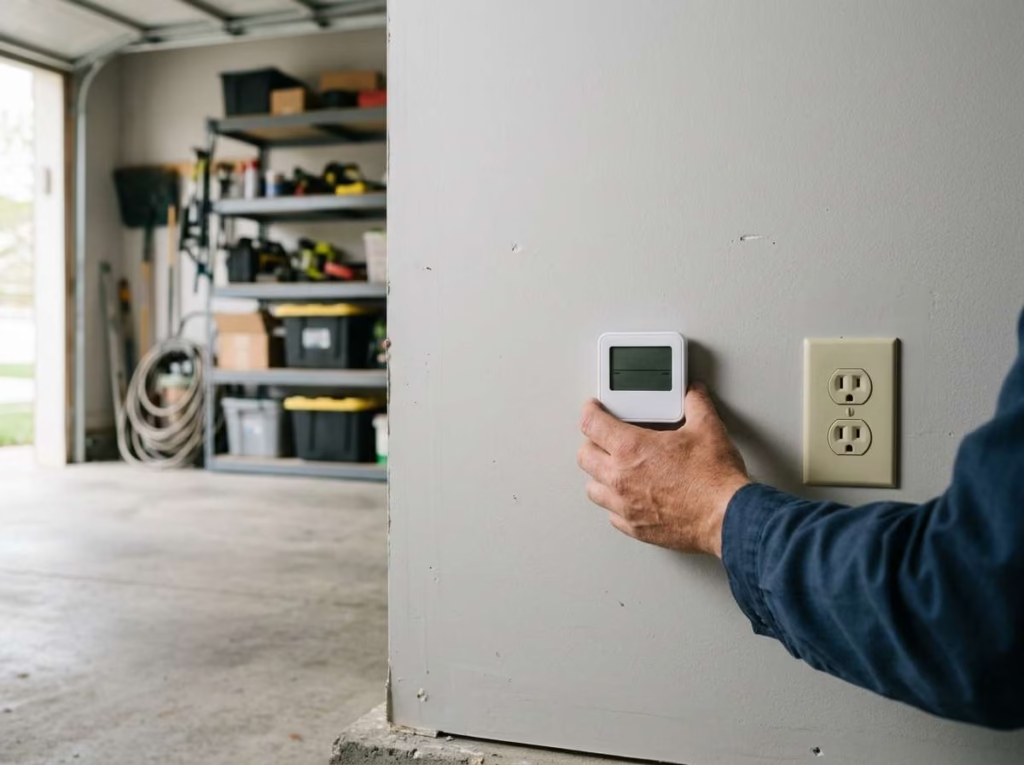
Use a digital thermometer that records daily highs and lows. Place it where the fridge will stand.
Follow these steps:
- Keep the sensor away from direct sunlight.
- Place it at about fridge height.
- Avoid exterior doors and heater vents.
- Record the daily low and high.
- Check readings during hot and cold spells.
- Measure for more than one season if possible.
- Compare the results with each fridge’s approved range.
A wireless sensor makes this easier. Some models can send an alert to your phone.
For help choosing one, see this guide to the best refrigerator thermometers.
Why local weather data is not enough
Outdoor weather reports do not show your exact garage conditions. Your garage design can change the temperature by a wide margin.
Key factors include:
- Wall and door insulation
- Sun exposure
- Roof color
- Air leaks
- Attached or detached design
- Vehicle heat
- Ceiling height
- Natural airflow
- Nearby heated rooms
A west-facing garage may trap strong afternoon heat. A detached garage may get much colder overnight.
Measure the spot itself. That gives you useful data instead of a guess.
Create a safety margin
Do not choose a fridge at the edge of its limit. Leave room for rare heat waves and cold snaps.
For example, your garage may reach 102°F. A fridge rated to 100°F would be a poor fit.
The same rule applies in winter. If readings fall near 34°F, a model rated down to 38°F may not work well.
A wider margin offers:
- More stable food temperatures
- Less strain on the compressor
- Better handling of rare weather
- Lower risk of food loss
Use the worst reading you record, not the yearly average.
Choose the Right Type of Garage Refrigerator
The best layout depends on what you plan to store. Drinks need a different setup than frozen meat.
List your main use before choosing the appliance type.
Top-freezer refrigerator
A top-freezer model is a good all-purpose choice. You get fresh-food space below and frozen storage above.
It works well for:
- Extra groceries
- Drinks and snacks
- Meal prep
- Party food
- Moderate frozen-food storage
Top-freezer units are often simple and easy to organize. They also come in many sizes.
The main drawback is door space. Wide doors may hit a wall, cabinet, or parked vehicle.
For a closer look at current designs, visit this guide to the best garage refrigerators.
Freezerless refrigerator
A freezerless refrigerator gives all its space to fresh food. That makes it useful for drinks, produce, and large trays.
It may suit you if you already own a freezer. It also works well for large families and frequent hosts.
Common benefits include:
- More fresh-food space
- Wide, clear shelves
- Simple organization
- No small freezer taking up room
- Easy access to drinks
The clear drawback is the lack of frozen storage. It may also cost more than a basic top-freezer model.
You can explore more options in this freezerless refrigerator guide.
Convertible refrigerator/freezer
A convertible unit can switch between fridge and freezer modes. This gives you more choice as your needs change.
You might use fridge mode for summer drinks. Then you can switch to freezer mode after a bulk food trip.
This type works well for:
- Garden harvests
- Large family events
- Holiday food
- Hunting and fishing trips
- Seasonal bulk shopping
The change may take several hours. You must also remove food that does not match the new mode.
Check the room temperature limit in both modes. Do not assume both modes have the same rating.
Compact or mini refrigerator
A compact fridge fits small garages and work areas. It can hold drinks, lunch, and a few snacks.
Its small size can also mean low capacity. Bottles and cans fill the space fast.
Before choosing one, check for:
- A true garage-ready rating
- A useful shelf layout
- Enough room for tall bottles
- A safe room temperature range
- A clear warranty
- Proper freezer performance
Many mini fridges have a tiny freezer box. That box may not keep food frozen during harsh weather.
Glass-door drink coolers need extra care. Some have narrow room temperature limits.
Upright refrigerator or freezer
An upright unit uses less floor space than a chest freezer. Shelves also make each item easier to find.
It suits users who need:
- Frequent access
- Clear food groups
- Narrow storage space
- Adjustable shelves
- Eye-level organization
However, cold air escapes when you open the door. Frequent use can raise power use and slow recovery.
Check shelf strength as well. Heavy frozen goods can bend weak wire shelves.
Chest freezer as an alternative
A chest freezer may be the better tool if you only need frozen storage. It can hold large and odd-shaped items.
It also keeps cold air inside when you open the lid. Cold air sinks, so less escapes.
Its limits include:
- More floor space
- Harder access to items at the bottom
- Baskets that may become cluttered
- A lid that needs clear space above it
Do not buy a refrigerator if your real need is frozen food. Match the appliance to the job.
What Size Garage Refrigerator Do You Need?
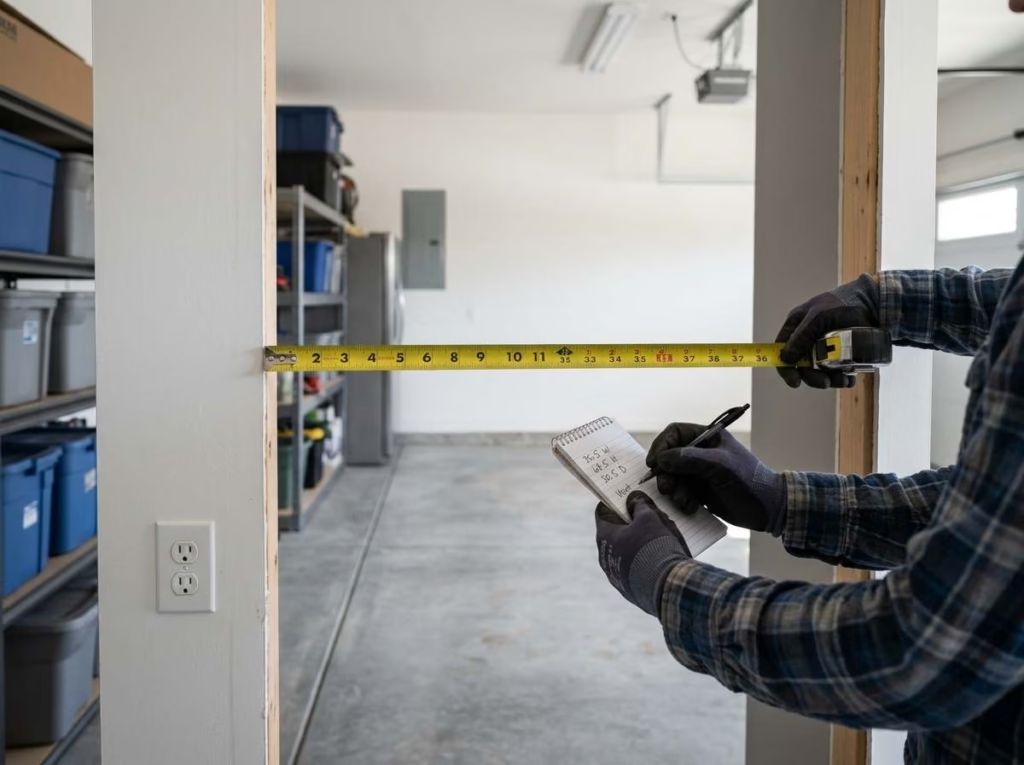
Capacity is often listed in cubic feet. Cubic feet means inside storage volume.
That number helps, but the shelf layout matters too. A well-planned small fridge may hold more useful food.
Choose capacity by intended use
Use these ranges as a starting point:
| Typical use | Capacity to consider |
|---|---|
| Drinks and a few snacks | 3–5 cubic feet |
| Light household overflow | 7–12 cubic feet |
| Regular family overflow | 14–18 cubic feet |
| Bulk food and large households | 18–24+ cubic feet |
Think about the shape of your food. A large party tray needs wide shelves. Bottles need tall shelf gaps.
Door bins can also free shelf space. Yet weak bins may not hold heavy drinks.
Bigger is not automatically better
Extra space sounds useful. Yet a large fridge can cost more to buy and run.
An oversized model may bring:
- A higher power bill
- Less room for your car
- Harder delivery
- More unused shelf space
- Higher repair costs
- Longer cooling time after loading
Choose enough room for your normal needs. You do not need space for a rare event each year.
A smaller second fridge may work better than one huge unit.
Measure the full footprint
Measure more than the empty floor area. The fridge needs room to breathe and open.
Record these measurements:
- Total width
- Total height
- Cabinet depth
- Depth with handles
- Depth with the door open
- Space behind the fridge
- Space above the fridge
- Space on both sides
Then measure the delivery path. Check gates, steps, entry doors, shelves, and tight turns.
Do not forget the power cord. The outlet must sit within safe reach.
Check door swing and hinge direction
A fridge may fit the space yet fail to open fully. This can block bins, shelves, and food drawers.
Check for nearby:
- Walls
- Tool chests
- Storage racks
- Workbenches
- Entry doors
- Parked cars
- Garage tracks
A reversible door can solve many layout issues. It lets you move the hinges to the other side.
Still, not every door is easy to reverse. Check the manual before setup.
The Most Important Features to Compare
A long feature list can distract you. Focus on parts that affect safe cooling and daily use.
Start with temperature range. Then consider storage and alerts.
Published ambient operating range
This is the first feature to check. It tells you where the appliance can work as planned.
Look for the range in the:
- Owner’s manual
- Installation guide
- Product data sheet
- Support page
- Warranty document
Do not confuse room temperature with the fridge setting. The fridge setting controls food temperature. The ambient range covers the room around it.
Reject any model that does not cover your garage readings.
Independent refrigerator and freezer controls
Separate controls let you adjust each section. This can help during seasonal temperature changes.
They may also improve food storage. You can keep drinks cool without making fresh food too cold.
One control for both sections offers less choice. That may be fine in a stable garage.
Look for clear controls you can use with cold or dirty hands. Small touch buttons may be less useful in a work area.
Temperature display and alarms
A display lets you spot changes fast. Alarms can warn you before food starts to spoil.
Useful alert types include:
- High-temperature alarm
- Open-door alarm
- Power-loss warning
- Low-temperature warning
- Phone notification
A separate thermometer adds another level of protection. It does not depend on the fridge’s own sensor.
This matters most when you store costly frozen food or meal prep.
Adjustable shelves
Fixed shelves may waste space. Adjustable shelves let you fit large bottles, trays, and food tubs.
Look for shelves that:
- Move without tools
- Offer several height slots
- Support heavy food
- Clean with little effort
- Leave room around air vents
Clear storage bins can keep small items together. This guide to the best refrigerator storage bins can help you plan the inside space.
Do not pack the cabinet too tightly. Cold air still needs room to move.
Strong door bins
Door bins hold drinks and sauces well. They also carry more weight than many users expect.
Check the bin depth and support points. Thin plastic may crack under rows of glass bottles.
Wide bins are useful for:
- Gallon jugs
- Two-liter bottles
- Cans
- Condiments
- Small cartons
Avoid overloading the door. Too much weight can affect the hinges and seal.
Frost-free vs manual defrost
A frost-free fridge manages ice on its own. This saves time and keeps shelves clear.
Its benefits include:
- Less routine care
- No full thawing session
- Better access
- Easier year-round use
A manual-defrost model needs planned thawing. You must remove food and manage the meltwater.
Manual models may have simple parts and a lower price. Yet the upkeep can be hard in a busy garage.
Choose based on how often you use the appliance. Frequent use tends to favor frost-free designs.
Reversible door
A reversible door gives you more layout choice. It can help in a corner or beside a workbench.
Check whether the handle can move too. Some doors reverse, but the handle position may still feel odd.
You should also test the final swing. The door needs to open far enough for shelves and drawers to slide out.
Interior lighting
Garage lighting is often weak. A bright interior light helps you find food without leaving the door open.
Light-emitting diode lamps, often called LED lights, use little power. They also create less heat than old bulb types.
Lighting should not guide your whole choice. Treat it as a useful extra.
Lock
A lock may help in a shared or open garage. It can also keep young children out.
Locks may suit:
- Shared homes
- Rental units
- Workshops
- Community spaces
- High-value food storage
Keep the key in a safe place. Never lock a fridge where a child could climb inside.
Casters or leveling feet
Casters are small wheels. They make cleaning and moving easier.
Leveling feet hold the fridge steady. They can also help the door close and seal.
Some units offer both. If yours has casters, lock them after setup.
The cabinet should sit firm and level. A tilted fridge may rock or leave the door partly open.
Durable exterior finish
A garage fridge faces dust, moisture, and bumps. Choose a finish that cleans with mild soap.
Useful traits include:
- Smooth surfaces
- Strong door coating
- Rust resistance
- Simple handles
- Few dirt-catching seams
A stainless look does not always mean true stainless steel. It may still scratch or rust.
Wipe spills fast. Road salt and damp air can harm the finish over time.
Energy Efficiency and Real Running Cost
The purchase price is only part of the cost. Your fridge may run all day for many years.
Compare power use before you choose a large model.
Read the EnergyGuide label
The EnergyGuide label gives an estimate of yearly power use. It also shows a sample yearly cost.
Check:
- Yearly power use in kWh
- Estimated yearly cost
- Appliance capacity
- Comparison with similar models
A kilowatt-hour, or kWh, is a unit of power use. Your utility bill uses the same unit.
Use the power number for close comparisons. The cost estimate may use a rate unlike yours.
Look for ENERGY STAR certification
ENERGY STAR models meet set energy-use rules. The label can help you find efficient choices.
Still, compare the actual yearly power use. Two approved models may use different amounts.
Also compare size. A large fridge may use more total power but offer more storage.
Garage conditions affect real use. A label test cannot copy every hot garage.
Calculate the appliance’s cost using your electricity rate
Find your local rate on your power bill. Then use this formula:
Yearly running cost =
Yearly electricity use in kWh × Your price per kWh
Here is a simple example:
367 kWh × $0.17 = $62.39 per year
This is only a sample. Use your rate and the fridge’s listed power use.
You can also multiply the result by ten. That gives a rough ten-year power cost.
Why real garage energy use may be higher
The power label uses set test conditions. Your garage may be hotter and less stable.
Real power use can rise due to:
- High summer heat
- Frequent door use
- Poor airflow
- Dust on cooling parts
- Weak door seals
- Warm food loads
- Blocked vents
- Ice buildup
Do not place a hot pot straight into the fridge. Let food cool in a safe way first.
Check the seal with a sheet of paper. A closed door should grip it with light force.
New efficiency standards are coming
Fridge efficiency rules change over time. Newer designs may use less power than old garage units.
This does not mean you should replace a working fridge at once. First compare its real power use and cooling results.
A plug-in power meter can track use. Test during both mild and hot weather.
Replace an old unit if it uses too much power or cannot hold safe temperatures. Do not keep it just because it was free.
Installation and Electrical Requirements
A sound setup protects the fridge, your food, and your garage.
Read the manual before you plug in the appliance.
Use the correct outlet
Use a grounded outlet with the right voltage. The outlet should match the instructions for your model.
Do not:
- Remove the ground pin
- Use a loose outlet
- Add a cheap adapter
- Share an overloaded circuit
- Run the cord under a rug
- Pinch the cord behind the fridge
Garage wiring rules vary by area. Hire an electrician if the outlet looks old or damaged.
Garage outlet protection
Garage outlets often have added safety protection. This helps cut power during an electrical fault.
However, a power loss can leave food warming for hours. Use a power-loss or high-temperature alarm.
If the outlet trips often, do not bypass the safety device. Find the cause.
Possible causes include:
- A weak outlet
- A damaged cord
- Moisture
- Circuit overload
- A fridge fault
A qualified electrician can test the circuit and outlet.
Avoid ordinary extension cords
An extension cord may heat up or cause a voltage drop. Voltage drop means less power reaches the fridge.
It can also create a trip risk. Some warranties may not cover problems linked to cord use.
The safer fix is a nearby grounded outlet. Ask an electrician to place one within cord reach.
Do not treat an extension cord as a permanent setup.
Provide ventilation clearance
A fridge releases heat into the room. It needs open space to get rid of that heat.
Follow the manual for:
- Rear space
- Side space
- Top space
- Front airflow
Do not guess. Some units need more room than others.
Keep boxes and tools away from vents. Clean dust from open cooling areas as directed.
Choose a dry, stable location
Pick a flat area away from water and heat.
Avoid spots:
- Beside a water heater
- Under a roof leak
- In direct sun
- Near welding work
- Near a space heater
- Where rain enters
- Where a car door may hit it
Use a firm floor. A soft mat can block airflow or make the unit lean.
Protect the fridge from shop dust. Fine dust can collect on cooling parts.
Level the refrigerator
Use a small level on top of the cabinet. Adjust the feet until the unit sits firm.
Good leveling helps with:
- Door closure
- Door sealing
- Stable shelves
- Low vibration
- Proper water flow
Some models need a slight backward tilt. Follow the manual for the correct setup.
Check the level again after loading the shelves.
Allow time before plugging it in
Delivery crews may tilt the fridge. Oil inside the compressor can move during transport.
The manual will state how long to wait before plugging it in. The wait may depend on how the unit was carried.
Do not guess or rush this step. Early startup may harm the cooling system.
After startup, let the fridge reach its set temperature. Then add food.
Climate-Specific Buying Advice
Your local climate shapes the choice. A fridge that works in a cool garage may struggle in desert heat.
Plan for your harshest season.
Best refrigerator features for a hot garage
For high heat, focus on:
- A high approved temperature limit
- Strong door seals
- Good cabinet insulation
- Open airflow around the unit
- A high-temperature alarm
- An easy-to-clean cooling area
- A solid door
A glass door may let in more heat. It may also show dirt and marks.
Keep the fridge out of direct sun. If possible, add safe garage airflow or insulation.
Best refrigerator features for a cold garage
For cold weather, look for:
- A low approved room temperature
- Separate fridge and freezer controls
- Cold-weather control
- A remote temperature sensor
- A power-loss alarm
- No exposed water line
Do not rely on the fridge section alone. Check the freezer with its own thermometer.
A garage heater may help. Yet it must be safe and fit for that space.
Best setup for a humid garage
Humidity can lead to surface moisture and rust. It may also harm cardboard food packs.
Choose a dry spot with good airflow. Keep the appliance off damp or flood-prone areas.
Helpful steps include:
- Wipe condensation at once.
- Check the door seal often.
- Leave space around the cabinet.
- Use rust-safe shelf racks nearby.
- Keep cardboard off the floor.
- Repair garage leaks.
- Avoid blocking wall vents.
A small humidity meter can help you track damp conditions.
What to do if your garage exceeds every model’s range
Do not force a fridge into the wrong setting. Change the space or move the appliance.
Possible fixes include:
- Insulate the garage door.
- Seal gaps around doors.
- Improve safe ventilation.
- Add approved climate control.
- Move the fridge to a utility room.
- Use the fridge during mild seasons only.
- Choose separate fridge and freezer units.
Insulation may slow temperature swings. It will not always stop extreme heat or cold.
Measure again after you make changes.
Garage Refrigerator Features You May Not Need
Premium features can raise the price without helping garage use.
Choose simple parts that support steady cooling.
Features that may not justify the added cost
You may not need:
- An outer ice dispenser
- A water dispenser
- A large touch screen
- An inside camera
- App-based food lists
- Two ice makers
- Decorative door panels
- Door-in-door storage
Ice and water systems add hoses, valves, and seals. Those parts can leak or freeze.
If you do choose a water system, plan for filter care. This guide to the best refrigerator water filters explains what to check.
Why simpler may be better in a garage
A simple fridge often has fewer parts that can fail. It may also cost less to repair.
Simple designs may offer:
- More usable interior space
- Easier cleaning
- No water line
- Fewer electronic controls
- Lower upfront cost
- Less winter freeze risk
Use this order when comparing models:
- Correct room temperature range
- Stable food temperature
- Reasonable power use
- Useful storage
- Clear warranty
- Extra features
Do not pay more for a feature you will rarely use.
How Much Should You Spend?
There is no perfect budget for every garage. Your use, climate, and space will shape the cost.
Think about long-term value, not the lowest price.
Budget compact models
Compact models can work for drinks and snacks. They may suit small workshops or light seasonal use.
Check for common limits:
- No garage-ready rating
- Short warranty
- Weak freezer section
- Manual defrost
- Fixed shelves
- Narrow temperature range
A cheap fridge that fails in winter is not good value. Check the manual before comparing prices.
Midrange garage-ready refrigerators
A midrange top-freezer model will suit many homes. It offers useful space without too many extra parts.
Look for:
- A verified garage rating
- Adjustable shelves
- Frost-free cooling
- Clear temperature controls
- An efficient power label
- Reversible doors
- Strong bins
Focus on the fit and rated range. Brand name alone does not prove garage performance.
Premium and convertible models
Premium models may offer large capacity, alarms, and mode changes. They can work well for bulk food storage.
You may gain:
- Fridge-to-freezer conversion
- Digital controls
- Remote alerts
- Strong drawer systems
- Wide temperature settings
- Longer part coverage
Make sure you will use these features. A basic unit may offer better value for drinks and spare food.
Encourage total-cost thinking
Compare every cost linked to the fridge:
- Purchase price
- Delivery charge
- Old-unit removal
- Outlet work
- Yearly power use
- Filter costs
- Repair risk
- Food-loss risk
- Warranty coverage
A lower sale price can hide high power use. A larger model can also cost more each year.
Estimate at least five years of use. This gives you a fairer comparison.
Warranty and Reliability Questions to Ask
A garage can fall outside normal warranty terms. Read the full policy before choosing a model.
Ask these questions:
- Does the warranty allow garage use?
- What room temperatures are covered?
- How long is full coverage?
- Does the compressor get longer coverage?
- Are both parts and labor included?
- Is home service offered in your area?
- Who handles a claim?
- Is delivery damage covered?
- Does coverage pass to a new owner?
- Is spoiled food excluded?
Save your receipt and purchase date. Take a photo of the model and serial numbers.
Do not judge reliability by an average star rating alone. Read low ratings for patterns.
Watch for repeat complaints about:
- Warm freezer sections
- Failed control boards
- Weak shelves
- Poor door seals
- Loud compressor sounds
- Hard-to-find service
- Shipping damage
One bad review proves little. A clear pattern deserves attention.
Common Garage Refrigerator Buying Mistakes
Small errors can cause years of poor performance. Avoid these common traps:
- Buying based on capacity alone
A large fridge may not fit the climate or space. - Assuming every refrigerator works in a garage
Standard models may need stable indoor temperatures. - Trusting the label without reading the manual
The manual gives the true operating limits. - Ignoring winter lows
The freezer may warm even when the fridge feels cold. - Ignoring summer heat
A closed garage can get much hotter than outdoor air. - Buying too much space
Extra capacity costs money and takes floor space. - Forgetting the door swing
A wall or car may block the door. - Blocking airflow
Trapped heat makes the compressor work harder. - Using a permanent extension cord
This can cause heat, power loss, and trip risks. - Adding a water line in a freezing garage
Frozen lines can crack and leak. - Skipping a temperature alarm
You may not spot a failure until food smells warm. - Ignoring warranty limits
Garage placement may affect coverage. - Moving an old fridge to “save money”
An old model may use far more power. - Loading costly food too soon
Test the fridge first and confirm stable temperatures.
How to Set Up and Test a New Garage Refrigerator
Do not fill a new fridge right away. Test it first.
Use this process:
- Check the cabinet for dents and damage.
- Confirm the model and serial numbers.
- Move it into the planned space.
- Leave the required airflow gaps.
- Level the cabinet.
- Clean the shelves and bins.
- Wait after transport as directed.
- Plug it into the correct outlet.
- Set the recommended temperatures.
- Place a thermometer in each section.
- Let the unit cool fully.
- Add food in small batches.
- Keep all air vents clear.
- Track readings for several days.
- Test again during extreme weather.
A simple log can help:
| Date | Garage low | Garage high | Fridge temperature | Freezer temperature | Notes |
|---|---|---|---|---|---|
Check the log after a heat wave or cold snap. You may need a small setting change.
Do not keep changing the control each day. Give the fridge time to settle.
Our Recommended Decision Process
A clear process keeps you focused. It also stops extra features from guiding the choice.
Step 1: Define the job
Write down what the fridge must store.
Your list may include:
- Drinks
- Fresh groceries
- Meal prep
- Frozen meat
- Garden produce
- Party trays
- Holiday food
Decide if you need a fridge, freezer, or both. This one choice will narrow the field fast.
Step 2: Record garage temperature extremes
Use real readings from the planned spot.
Track:
- Lowest temperature
- Highest temperature
- Humidity
- Direct sun
- Heat from parked vehicles
Measure during harsh weather if you can. Mild-week data may hide the true risk.
Step 3: Set the required operating range
Use your lowest and highest readings. Then add a safe margin.
Reject any model that falls short. Do this even if the size and price look ideal.
Check both fridge and freezer modes on convertible models.
Step 4: Measure the space
Measure the width, height, and depth. Add all required airflow gaps.
Also check:
- Door swing
- Hinge side
- Outlet position
- Delivery path
- Car clearance
- Shelf clearance
Write the maximum safe appliance size. Take that note while you compare options.
Step 5: Compare ownership costs
Add more than the purchase price.
Estimate:
- Delivery
- Electrical work
- Five-year power use
- Filter costs
- Routine care
- Likely repairs
A simple model with lower power use may cost less over time.
Step 6: Verify the warranty
Read the garage-use terms. Check the stated room temperature limits.
Save a digital copy of the policy. Product pages can change after you purchase.
If the terms are not clear, get written details before making a choice.
Frequently Asked Questions
What is the best type of refrigerator for a garage?
A garage-ready top-freezer model suits many homes. It offers both fresh and frozen storage.
Your climate still matters more than the layout. Choose a model rated for your garage temperatures.
Do I really need a garage-ready refrigerator?
You may need one if your garage gets very hot or cold. A standard fridge may work in a climate-controlled garage.
Measure the room first. Then compare those readings with the model’s manual.
What temperature range should a garage refrigerator handle?
It should cover the lowest and highest temperatures in your garage. Leave a safe margin at both ends.
Many models list a range near 38°F to 110°F. Others may handle lower temperatures. Check the exact manual.
Will a refrigerator work in a freezing garage?
Only if its maker approves that use. Some garage-ready models still need room temperatures above freezing.
Cold air may stop normal compressor cycles. This can make the freezer too warm.
Why does a garage freezer thaw during winter?
The fridge may sense that the room is already cold. It then runs the compressor less often.
The fridge section stays cool from room air. Yet the freezer may slowly warm and thaw food.
Can a garage be too hot for a refrigerator?
Yes. High heat can force the compressor to run for long periods.
If the room exceeds the rated limit, food temperatures may rise. The fridge may also use more power.
Is a freezerless refrigerator good for a garage?
Yes, if you mainly need fresh-food or drink storage. It offers more shelf space than a fridge-freezer combo.
Confirm that the model can handle your garage climate.
Are convertible refrigerator-freezers worth it?
They can be useful if your storage needs change. You can use fridge mode for drinks and freezer mode for bulk meat.
They offer less value if you always need both types of storage.
Should a garage refrigerator be placed on a dedicated circuit?
Follow the fridge manual and local electrical rules. A dedicated circuit can reduce overloads from tools and other equipment.
An electrician can check the current load and outlet condition.
Can I use an extension cord with a garage refrigerator?
A permanent extension cord is not a good setup. It may cause heat, voltage drop, and trip risks.
A nearby grounded outlet is the safer answer.
Does a garage refrigerator use more electricity?
It may use more power in a hot garage. Poor airflow and frequent door use also raise energy needs.
Dirty cooling parts and weak seals can increase use as well.
How long should I wait before putting food in a new refrigerator?
Wait until the fridge reaches and holds its recommended temperature. Follow the setup time in the manual.
Use a separate thermometer before loading costly food.
Should I unplug a garage refrigerator during winter?
You can unplug it if you do not need it. First remove all food and clean the inside.
Dry it well and leave the door open slightly. Follow the storage steps in the manual.
How can I monitor a garage refrigerator remotely?
Use a wireless temperature sensor with high and low alerts. Place a sensor in both the fridge and freezer.
Choose a system that warns you about power loss. Test the alerts before relying on them.
Final Thoughts: Match the Refrigerator to the Garage, Not Just Your Grocery List
A sound choice starts with two facts: your garage temperature and your available space. Those facts will rule out more poor matches than any feature list.
Use this Garage Refrigerator Buying Guide as a practical filter. Verify the room temperature range, energy use, airflow, electrical needs, and warranty. Then choose the layout that fits your food.
Simple models often make the most sense. Stable cooling matters more than screens, apps, or ice features. Measure first, read the manual, and test the fridge before you trust it with a full load.