
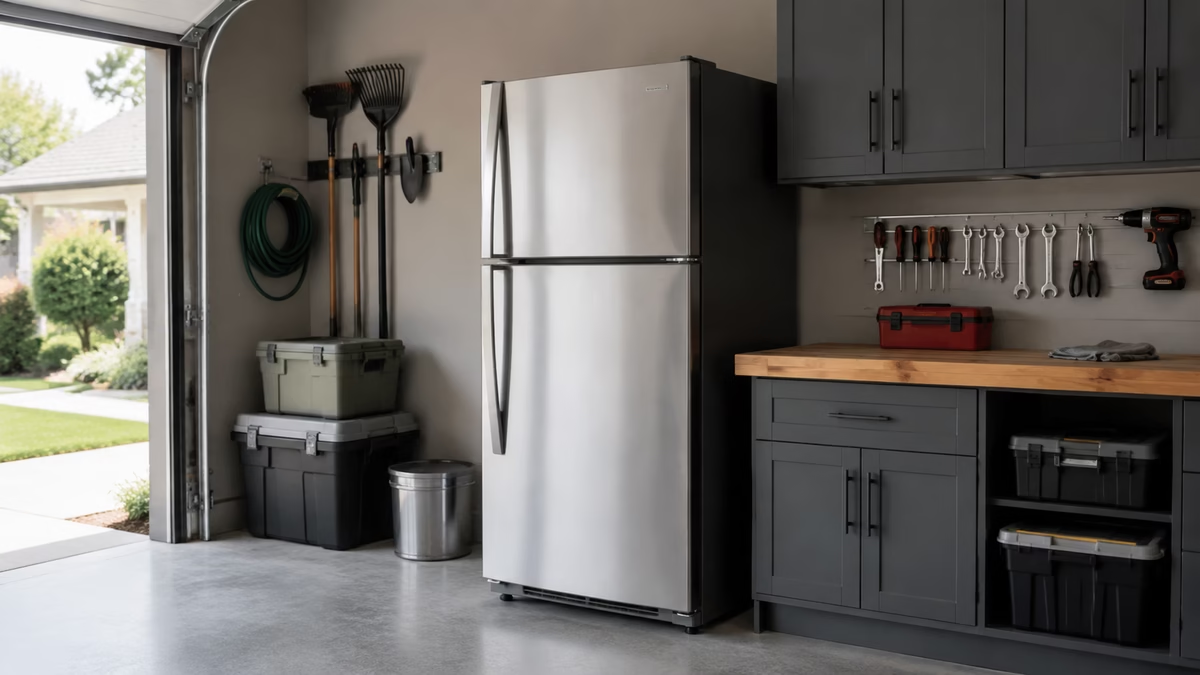
The best garage refrigerator should keep food cold through wide temperature swings. It should also fit your space, budget, and storage needs.
For most homes, the GE GTS22KGNRWW is the best overall choice. It offers ample storage and a garage-ready design. The simple top-freezer layout also has fewer parts that may fail.
Yet no fridge works well in every garage. Your lowest winter temperature matters most. This guide covers full-size, compact, freezerless, and convertible models. You might be interested in 10 Best Freezerless Refrigerators for Garage, Home & Office.
Best Garage Refrigerators at a Glance
Temperature limits can change between related models. Check the current manual before choosing any fridge.
A freezer-mode rating may not apply in fridge mode. That detail is easy to miss on store pages. You might like to read- 7 Best Refrigerator Thermometers for Accurate, Worry-Free Cooling. For those looking to maximize every inch of available shelf room, checking out the best refrigerator storage bins is a great place to start.
1. GE GTS22KGNRWW — Best Garage Refrigerator Overall
The GE GTS22KGNRWW is our best rated garage refrigerator for most homes. It offers ample room without complex features.
You get a traditional top freezer and simple controls. That basic design makes sense in a dusty, hot garage.
Why We Chose It
This GE holds 21.9 cubic feet. It gives you room for drinks, fresh food, and frozen goods.
GE tests it between 38°F and 110°F. That range suits many attached garages.
Separate controls serve the freezer and fresh-food sections. This helps you manage seasonal changes.
The broad glass shelves are easy to wipe clean. They also stop small items from falling between gaps.
This model works well as the best second refrigerator for garage use. It has enough room to take real pressure off your kitchen fridge.
What Real Owners Say
Owners often praise the large interior. The wide door bins also hold bulky bottles and jugs.
Many people like its plain design. There are no touchscreens or smart apps to manage.
Some owners notice compressor noise. It may sound louder in a quiet, enclosed garage.
The freezer does not have its own light. That can make small items hard to spot.
Key Specifications
- Total capacity: 21.9 cubic feet
- Design: Top-freezer refrigerator
- Tested ambient range: 38–110°F
- Width: About 33 inches
- Shelves: Edge-to-edge glass
- Controls: Separate fridge and freezer controls
- Ice maker: Optional on compatible versions
- Finish options: Vary by model suffix
The stainless version may use a different model suffix. Check the core model and dimensions before ordering.
Pros
- Large, practical interior
- Clear garage temperature rating
- Separate temperature controls
- Wide glass shelves
- Large door bins
- Simple top-freezer design
- Optional ice-maker support
Cons
- Wider than many budget models
- Compressor noise may be clear
- No freezer light
- Not suitable below 38°F
Who Should Buy It?
Choose this GE if you want one dependable choice. It suits families, bulk shoppers, and busy garages.
It is also a strong best garage refrigerator with large freezer option. The freezer has useful shelf space and door storage.
Look at an ice-maker-ready version if ice matters to you. A factory-ready setup is safer than a homemade line in a cold garage.
Want to ensure your drinking water stays fresh? Explore our picks for top fridge filters to find the perfect match.
2. Kenmore 4661342 — Best Value Garage Refrigerator
The Kenmore 4661342 gives you full-size storage without a premium price. It is our best value garage refrigerator for mild climates.
Its 18.1-cubic-foot body is about 30 inches wide. That size fits spaces where the GE may feel too large.
Check PriceWhy We Chose It
This model pairs a basic top freezer with an inverter compressor. An inverter compressor adjusts its speed to match demand.
That design can reduce noise and power use. It may also keep the temperature more stable.
You get adjustable glass shelves and large door bins. Two produce drawers help keep fresh items in order.
Its garage range starts at 45°F. That limit matters in cold areas.
What Real Owners Say
Owners tend to like the quiet motor and clean layout. The shelves can hold large trays and drink containers.
The slim width is another plus. It offers full-size storage without a vast footprint.
Cold-weather use is the main concern. This fridge should not sit in a space that drops below 45°F.
Newer versions may also have less long-term feedback. Check local repair support before you choose one.
Pros
- Good capacity for the price
- Fits many 30-inch openings
- Energy-saving compressor
- Clear glass shelves
- Useful door storage
- Simple controls
Cons
- Minimum ambient rating is 45°F
- Poor fit for freezing winters
- Limited history for newer versions
- Finish choices may affect price
Who Should Buy It?
Choose this Kenmore for an attached or insulated garage. It makes the most sense where winter temperatures stay mild.
It is also one of the better best inexpensive garage refrigerator options. Just do not trade a safe temperature range for a low price.
3. Gladiator GARF30FDGB — Best Premium Garage Refrigerator
The Gladiator GARF30FDGB looks like it belongs beside a tool chest. It is a true garage-focused appliance.
This is a freezerless refrigerator. All 17.8 cubic feet go toward drinks and fresh food.
Check PriceWhy We Chose It
The heavy casters let you move the unit for cleaning. A foot pedal opens the door when your hands are full.
Thick glass shelves support heavy drink packs. The dark finish also suits most garage cabinets.
Its tested range runs from 38°F to 110°F. That covers many garage settings, but not deep winter cold.
This model costs far more than basic top-freezer units. You pay for a special design and garage-focused features.
What Real Owners Say
Owners like the storage space and strong shelves. The foot pedal is useful when carrying food or drink cases.
The wheels make floor cleaning much easier. They also help when you need to change your garage layout.
Long-term feedback is less positive. Some owners report cooling faults and costly repairs.
The bottom area may collect dust. Regular cleaning matters in a workshop.
Pros
- Built for garage use
- Easy to move
- Foot-pedal door
- Strong glass shelves
- Large freezerless interior
- Distinct garage styling
Cons
- High price
- No freezer compartment
- Mixed reports on long-term life
- Heavy drink loads need care
- Not rated below 38°F
Who Should Buy It?
Pick the Gladiator for a finished garage or home bar. It works best when drinks take up most of your storage.
It is not the best value for basic food storage. A standard GE or Frigidaire gives you a freezer for less money.
4. Frigidaire FFTR2045VS — Best Large-Capacity Garage Refrigerator
The Frigidaire FFTR2045VS offers 20 cubic feet in a 30-inch-wide body. That balance makes it our best large garage refrigerator.
This simple top-freezer model avoids most luxury extras. You get more room without a wide French-door body.
Check PriceWhy We Chose It
Frigidaire has a broad range of garage-ready top-freezer models. The brand also makes many simple freezer units.
The FFTR2045VS works well for food, drinks, and frozen goods. Its tall shape uses wall space well.
The interior feels less cramped than many 18-cubic-foot models. Large households should notice the difference.
You should still check the current manual. Similar Frigidaire models may have different temperature limits.
What Real Owners Say
Owners often praise the amount of usable space. The wide shelves make food easy to sort.
The controls are simple. That is useful for a second fridge you may not check each day.
Some people find the compressor loud. Others say the interior feels plain.
A plain interior is not always bad in a garage. It is easy to clean and has fewer fragile parts.
Pros
- Large 20-cubic-foot capacity
- Fits a 30-inch-wide space
- Simple freezer-on-top layout
- Good door storage
- Broad service network
- Easy-to-clean shelves
Cons
- Basic interior finish
- May make clear running sounds
- Exact temperature range needs checking
- Some versions include few extras
Who Should Buy It?
Choose this model for bulk food and drink storage. It also suits large families with a crowded kitchen fridge.
If you want the largest garage refrigerator possible, compare it with the 21.9-cubic-foot GE. Then check the width of your space.
5. Frigidaire FRTE1026AV — Best Compact Garage Refrigerator
The Frigidaire FRTE1026AV brings real food storage to a narrow garage. It holds about 10 cubic feet.
That is far more useful than a tiny dorm fridge. You also get a separate top freezer.
Check PriceWhy We Chose It
The body is about 21.5 inches wide. It can fit beside cabinets, shelves, or a workbench.
A full-height design uses less floor space. You still get shelves, door bins, and frozen storage.
Frigidaire lists this model within its garage-ready range. Check the manual for its exact temperature limits.
This is our best small garage refrigerator for everyday use. It can hold more than cans and snacks.
Pros
- Narrow body
- Separate freezer compartment
- Better storage than a mini-fridge
- Full-height design
- Energy-conscious size
- Good fit for workshops
Cons
- Too small for large households
- Narrow shelves limit wide trays
- Exact ambient range needs checking
- Freezer room is modest
Who Should Buy It?
Choose this fridge for a small garage or workshop. It suits drinks, lunches, frozen snacks, and overflow food.
Measure the door swing first. A narrow body will not help if the door hits your workbench.
6. Insignia NS-UZ70SS26L — Best Upright Convertible Garage Refrigerator
The Insignia NS-UZ70SS26L can serve as a fridge or freezer. A control dial changes its operating mode.
It holds 7.1 cubic feet and has a small floor footprint. Glass shelves make the upright space easy to sort.
Check PriceWhy We Chose It
Flexible storage is this model’s biggest strength. You can chill drinks in summer and freeze food later.
Its freezer mode is rated from 0°F to 110°F. That range gives it an edge in harsh garage conditions.
The inverter compressor adjusts its speed as needed. This can cut noise and reduce wasted power.
However, the wide rating applies to freezer mode. Do not assume fridge mode has the same cold limit.
What Real Owners Say
Owners often like the quiet motor. They also praise the simple shelves and useful size.
The low price makes it appealing as a second unit. It can fit where a full-size fridge cannot.
This model needs manual defrosting. Ice may build up over time.
Delivery dents can also occur with thin metal panels. Inspect the unit as soon as it arrives.
Pros
- Switches between two modes
- Compact upright shape
- Glass shelves
- Quiet compressor
- Wide freezer-mode operating range
- Good storage flexibility
Cons
- Manual defrost
- Small total capacity
- Wide temperature rating may not cover fridge mode
- Thin outer panels can dent
Who Should Buy It?
Choose this Insignia if your needs change by season. It works well for meal prep, frozen food, or drinks.
If frozen storage is your main goal, see our guide to the best garage freezer. A dedicated freezer may offer more space and a wider safe range.
7. Frigidaire FFHT1425VV — Best Energy-Efficient Refrigerator for a Garage
The Frigidaire FFHT1425VV holds 13.9 cubic feet. It uses about 332 kilowatt-hours each year under standard test conditions.
That makes it an efficient garage refrigerator for a controlled space. It is not our pick for harsh heat or cold.
Check PriceWhy We Chose It
The fridge offers useful space without a large cabinet. It also has glass shelves and an auto-close door.
The airflow system helps reduce warm spots. Your food stays more even across the shelves.
Lower power use can matter for a second fridge. It runs all day, even when you use it less.
Yet energy use will rise in a hot garage. Dusty coils can raise it further.
Important Garage Limitation
This model is not the best refrigerator for unheated garage use. Its low power use does not prove it can handle winter cold.
Use it in an insulated or cooled garage. Confirm the room limits in the current manual.
A normal fridge may stop cooling at the wrong time. Its freezer can then warm, even if the garage feels cold.
Pros
- Low yearly power use
- Compact full-height body
- Useful glass shelves
- Auto-close door
- Even interior airflow
- Good fit for controlled spaces
Cons
- Not built for severe garage temperatures
- Smaller than full-size options
- Freezer space is limited
- Hot rooms can raise power use
Who Should Buy It?
Choose this model for an insulated garage. It suits you if low running cost matters most.
Skip it for a detached building with hard winter freezes. A low power label cannot make up for the wrong room range.
8. Hamilton Beach 14-Cu.-Ft. Convertible Upright — Best for Extreme Cold Climates
This Hamilton Beach unit switches between fridge and freezer modes. It gives you about 14 cubic feet of upright storage.
Its freezer mode can handle a broad ambient range. That makes it useful for an unheated garage.
Check PriceWhy We Chose It
A standard fridge-freezer can act oddly in cold weather. The fresh-food area may feel cold enough, so the compressor stays off.
The freezer can then grow too warm. A freezer-focused unit avoids that shared-control problem.
The Hamilton Beach includes glass shelves and door bins. A lower basket helps hold loose items.
This is a strong choice for frozen food. It may not solve every cold-weather fridge need.
Pros
- Large upright capacity
- Converts between fridge and freezer
- Broad freezer-mode range
- Easy-to-see shelves
- Uses less floor space than many chest freezers
- Good seasonal flexibility
Cons
- Fridge-mode limits need checking
- No separate fridge and freezer sections
- Stock may vary by store
- More moving parts than a basic freezer
Who Should Buy It?
Choose this model if frozen food is your main need. It is a good fit for a cold, detached garage.
Do not assume it can keep drinks from freezing. If the room drops below 32°F, the room itself can freeze them.
9. Midea MRB19B7AST — Best Bottom-Freezer Runner-Up
The Midea MRB19B7AST places fresh food near eye level. Its freezer sits beneath the main compartment.
You get 18.7 cubic feet of total room. That includes a large fridge and a pull-out freezer.
Check PriceWhy We Chose It
Bottom-freezer designs reduce bending during daily use. You can reach drinks and fresh food with less effort.
The electronic control is simple to adjust. Glass shelves and large door bins help with storage.
The rated sound level is about 43 decibels. That means a low, steady background sound.
Midea promotes this model for garage use. Still, check the full ambient range in its manual.
What Real Owners Say
Owners like the fresh-food layout and clean look. The price can be fair for a bottom-freezer model.
The freezer drawers help sort small bags. They can feel tight with large boxes.
Repair support is the main concern. Parts may be harder to find in some areas.
Service access matters more than a long feature list. Check local support before making it your main backup fridge.
Pros
- Fresh food sits at eye level
- Large total capacity
- Quiet listed sound level
- Clean, modern design
- Electronic temperature control
- Two-year limited warranty on some listings
Cons
- Parts may be harder to source
- Freezer drawers limit large items
- Full garage range needs checking
- Fewer long-term owner reports
Who Should Buy It?
Choose the Midea if bending causes strain. It also suits a clean, finished garage.
It is not our first choice for severe weather. The model’s exact room limits should guide that choice.
10. Danby DAR110A1BSLDD — Best Narrow Freezerless Garage Fridge
The Danby DAR110A1BSLDD is a 24-inch-wide all-fridge. It offers 11 cubic feet of fresh-food room.
There is no freezer section. You get more shelf room for drinks, produce, and party food.
Check PriceWhy We Chose It
The narrow body fits tight garage layouts. Its reversible door can open from either side.
Adjustable glass shelves give you more control. The automatic defrost system also cuts routine work.
The freezerless layout is great for bottled drinks. You do not lose top space to a small freezer box.
However, Danby does not present this model as a harsh-weather fridge. Use it in a controlled space.
What Real Owners Say
Many owners like the simple layout. The broad shelves hold food trays and rows of drinks.
Some people report long service life from Danby units. Others mention trouble finding small replacement parts.
Door bins can crack if loaded with heavy bottles. Spread the weight across shelves when possible.
Pros
- Slim 24-inch body
- Large freezerless interior
- Adjustable glass shelves
- Reversible door
- Automatic defrost
- Good drink storage
Cons
- No freezer
- Not rated for harsh garage weather
- Parts support may vary
- Heavy bottles can strain door bins
Who Should Buy It?
Choose this Danby for an insulated garage with little floor space. It is best for fresh food and drinks.
For wine, use a true wine cooler instead. Wine needs a steadier range than most garage fridges provide.
You can compare purpose-built options in our guide to the best high-end wine fridge.
How We Chose the Best Garage Refrigerators
A long feature list does not make a fridge right for your garage. Room temperature comes first.
We also looked at usable space, owner concerns, energy use, and repair access.
Published Operating-Temperature Range
We gave more weight to clear room temperature limits. “Garage ready” on its own tells you very little.
One model may start at 38°F. Another may need at least 45°F.
A freezer can often work in colder rooms. Its rating may not apply in fridge mode.
Real Owner Reviews
Owner feedback can reveal issues that store pages miss. Noise, weak bins, dents, and repairs often appear after months of use.
The most useful feedback comes from long-term owners. Short first-day reviews tell you little about service life.
We also looked for repeat patterns. One bad review may be chance, but the same fault across many reviews deserves attention.
Reliability and Repairability
A garage fridge should be simple to fix. Basic controls often cost less to replace.
We looked at:
- Compressor complaints
- Seal quality
- Shelf strength
- Parts access
- Local service options
- Warranty terms
- Control-board complexity
Skip features you will not use. Each extra part adds another possible fault.
Useful Capacity
The largest listed capacity is not always the best. A poor shelf layout can waste space.
Wide shelves work well for dishes and drink packs. Deep door bins suit milk and large bottles.
Freezer drawers keep bags sorted. Yet fixed drawers can block large pizza boxes.
Energy Consumption
A second fridge runs all year. A small power gap can grow over time.
Hot garages make compressors work harder. Poor airflow and dirty coils make the problem worse.
Compare yearly energy labels where possible. Then allow for higher use in summer heat.
Value
The cheapest fridge can become costly after food loss or repair. The most costly model is not always safer.
We weighed:
- Purchase cost
- Delivery fees
- Power use
- Size
- Service options
- Warranty coverage
- Expected repair risk
A basic model with local parts can offer the best value. Fancy garage styling gives you little help during a breakdown.
What Does “Garage Ready” Mean?
A garage-ready refrigerator can work across a wider room range. The maker tests it under hotter and colder conditions.
That does not mean it will work in every garage. Each model has its own limits.
A fridge rated from 38°F to 110°F is not safe at 20°F. The label does not cancel the manual.
Garage Ready vs. Outdoor Rated
Garage-ready and outdoor-rated mean different things.
A garage-ready unit can handle wider room temperatures. It still needs a dry, covered space.
An outdoor-rated fridge is built for outdoor exposure. Its body and electrical parts may resist damp air better.
Do not place a garage fridge in rain. Keep it away from wet floors and direct sun.
The best outdoor garage refrigerator is one with a true outdoor rating. A normal garage model is not the same thing.
Garage Ready vs. Regular Refrigerator
A regular kitchen fridge expects a mild room. Many work best in spaces near normal home temperatures.
A garage model has controls made for a wider range. It may also change how the compressor runs in cold air.
The key differences include:
- Wider room temperature range
- Cold-weather control settings
- Heat tolerance
- Different warranty terms
- Better fit for seasonal air changes
Do not judge by thick doors alone. The control system matters just as much.
Why Regular Refrigerators Struggle in Cold Garages
Most fridge-freezer units use the fresh-food section to call for cooling. The compressor starts when that section gets warm.
Now picture a 35°F garage. The fridge section may already feel cold enough.
The compressor may stay off for long periods. The freezer can then rise above its safe range.
This creates a strange result. Your drinks stay cold, but your frozen food starts to thaw.
A normal fridge can also freeze fresh food. If room air stays below 32°F, the fridge cannot warm its contents.
Use separate appliance thermometers. Keep the fridge at 40°F or below. Aim for about 0°F in the freezer.
Check both sections during the first cold snap. Do the same during peak summer heat.
How to Choose the Best Refrigerator for Your Garage
The best type of refrigerator for garage use depends on four things. Check temperature, space, storage needs, and service access.
Start with the room, not the brand.
Measure Your Garage Space
Measure the width, height, and depth. Then measure the path from your door to the final spot.
Leave room for:
- Door and hinge movement
- Handles
- Airflow
- Wall trim
- Floor slope
- Nearby car doors
- Shelves and cabinets
Open the fridge door on paper before you buy. A door that hits a wall can block drawers.
Also check the depth with the doors open. Large models can reach far into a parking bay.
Check Your Garage’s Temperature Range
Place a digital thermometer near the fridge location. Check it through summer and winter.
A model’s room range must cover your real highs and lows. Do not use your local outdoor forecast alone.
Attached garages may stay warmer than outside air. Metal sheds may become far hotter.
If your garage falls to 25°F, a 38°F-rated fridge is not a match. Choose another setup.
Decide Whether You Need a Freezer
A freezer takes up room that could hold drinks. Yet it adds useful backup space for meals and meat.
Your main choices are:
- Top-freezer fridge: Best all-round option
- Freezerless fridge: Best for drinks
- Convertible upright: Best for changing needs
- Separate fridge and freezer: Best for cold climates
- Compact fridge: Best for tight spaces
A separate freezer often works better in an unheated garage. It does not share controls with a fresh-food section.
Choose the Right Capacity
Use this quick guide:
- 1.7–4.5 cu. ft.: A few drinks and snacks
- 7–11 cu. ft.: A small home or workshop
- 13–18 cu. ft.: General overflow storage
- 19–22 cu. ft.: Families and bulk shopping
Do not fill every inch. Cold air needs space to move.
Buy based on your normal load. A half-empty giant fridge may waste floor space and power.
Favor Simple Controls
Simple controls are often best in a garage. You do not need a screen to keep drinks cold.
Look for:
- Clear temperature dials
- Separate freezer control
- Few control boards
- No required app
- No door screen
- An optional ice maker
- Easy-to-find parts
Many people search for the best LG garage ready refrigerator. Some LG models may work in mild garages, but not all have a clear garage rating.
Check the exact LG model manual. Never assume a kitchen fridge is garage-ready due to its brand.
Look for Adjustable Glass Shelves
Glass shelves catch spills and support small items. They are also easy to wipe clean.
Adjustable rails let you make room for tall bottles. Check shelf weight limits before stacking drink cases.
Wire shelves allow better air movement. Yet cans may tip or fall through gaps.
Glass is often the better choice for a drink-heavy garage fridge.
Compare Energy Use
Read the yearly power estimate on the energy label. Compare models of a similar size.
A smaller fridge is not always more efficient per cubic foot. Old units can use far more power than new ones.
Keep in mind:
- Hot rooms raise power use.
- Dirty coils trap heat.
- Weak door seals leak cold air.
- Empty space can cause wider swings.
- Blocked vents reduce airflow.
You can place sealed water jugs in unused space. They help add stable cold mass.
Consider Parts and Service
Search for local repair shops before you choose a lesser-known brand. Ask whether they service that maker.
Check the price of common parts, such as:
- Door seals
- Shelves
- Door bins
- Fans
- Sensors
- Start relays
- Control boards
A cheap fridge loses value if no one can repair it. Shipping a simple door bin can also cost more than expected.
Best Garage Refrigerator by Use Case
Your storage habits may matter more than rank. Use these quick picks to narrow your list.
Best Garage Refrigerator for Drinks
A freezerless model gives you the most drink space. The Gladiator has strong shelves and a large interior.
The Danby is a better fit for a narrow, controlled garage. Neither suits deep winter cold.
For cans and bottles, look for:
- Strong glass shelves
- Wide door bins
- A flat interior
- Easy-clean surfaces
- A reversible door
Do not stack heavy drink cases on shelves without checking their limits.
Best Garage Refrigerator for Beer
Beer storage does not need a built-in freezer. A steady fridge range and strong shelves matter more.
A freezerless fridge can hold far more cans. Adjustable shelves also fit tall bottles.
Keep glass bottles away from freezing air. They may crack if your garage drops below 32°F.
Wine has different storage needs. The best garage wine refrigerator needs stable room conditions and a safe compressor range.
A hot or freezing garage is often a poor wine storage site. Use an indoor wine cooler where possible.
Best Garage Refrigerator for a Hot Climate
Choose a unit rated to at least 110°F. The GE GTS22KGNRWW is a good full-size option.
Give it room to release heat. Do not push its back or sides tight against cabinets.
You can also:
- Shade windows
- Vent hot roof air
- Clean coils often
- Keep the door closed
- Check the seal each season
Do not place the fridge beside a dryer or water heater. That adds more heat around the compressor.
Best Garage Refrigerator for a Cold Climate
A combined fridge-freezer may struggle in deep cold. A separate freezer is often safer.
The Hamilton Beach convertible upright is useful in freezer mode. The Insignia also has a broad freezer-mode range.
For fresh food, use a fridge in a warmer space. Another option is to stop using it during winter.
The best refrigerator for uninsulated garage use may not be a combined unit. Two simple appliances can work better than one.
Best Garage Refrigerator for a Small Space
The Frigidaire FRTE1026AV is a strong compact choice. It gives you a true freezer in a slim body.
The Danby works if you need fridge space only. Its 24-inch design fits many narrow gaps.
Avoid tiny mini-fridges for large food loads. Their small freezer boxes also frost up fast.
Best Garage Refrigerator for a Workshop
A workshop fridge should be simple and easy to clean. It should also stay clear of dust and sparks.
Look for:
- A reversible door
- Strong shelves
- A plain finish
- No water line
- Easy controls
- A compact footprint
Keep it away from paint fumes and fuel. Do not place it near grinding sparks.
If outlet access is awkward, install a safe wall outlet. Avoid a loose cord across the floor.
For better cable control, see our guide to the best garage extension cord reel. Your fridge should still use a safe, direct outlet.
Where Should You Place a Refrigerator in a Garage?
Choose a dry, level area with good airflow. Keep the unit out of direct sun.
Avoid spots near:
- Water heaters
- Clothes dryers
- Furnaces
- Sunny windows
- Paint and fuel
- Grinding tools
- Floor drains that may flood
Leave the gap stated in the manual. The fridge needs that space to shed heat.
A tight cabinet may look neat but trap hot air. That forces the compressor to work harder.
Use a level to check the floor. A slight rear tilt may help some doors close, but follow the manual.
Raise the fridge only on a strong, stable base. A weak wooden stand may tip under a full load.
Keep the plug easy to reach. Use a grounded outlet that meets local electrical rules.
How to Make a Garage Refrigerator Last Longer
A little care can cut heat, noise, and wear. It also helps you spot faults before losing food.
Clean the Coils
Dust acts like a blanket around hot parts. The compressor then runs longer.
Unplug the fridge before cleaning. Follow the manual for safe coil access.
Use a soft brush and vacuum. Clean more often in a dusty workshop.
Check the Door Seal
Close the door on a sheet of paper. Pull it gently.
A good seal should grip the paper. Test several spots around the door.
Clean dirty seals with mild soap and water. Replace cracked or loose seals.
Leave Space Around the Refrigerator
Do not guess the needed gap. Check the installation guide.
Some models vent at the back. Others shed heat through the sides or bottom.
Keep boxes and rags away from vents. Blocked airflow can cause excess heat.
Use Appliance Thermometers
The control dial does not show the true food temperature. A small thermometer gives you a real reading.
Place one in the fridge and one in the freezer. Check both after large weather changes.
A wireless alarm can warn you about a warm freezer. It is useful for high-value food.
Avoid Overloading the Shelves
Drink cases are very heavy. Spread them across strong shelves.
Do not block cold-air vents with boxes. Leave small gaps for air to move.
Do not pack food against the rear wall. Some items may freeze there.
Protect It From Extreme Heat
Shade can help reduce garage heat. Roof vents and safe air movement may help too.
Never wrap the fridge in added insulation. That can trap heat near the compressor.
If the garage exceeds the rated range, move the unit. A fan cannot change the model’s limit.
Inspect It Before Winter
Check the room temperature before the first freeze. Remove cans and glass bottles if needed.
Inspect the freezer thermometer often. Cold room air can hide a warming freezer.
If you turn the fridge off:
- Remove all food.
- Unplug the unit.
- Clean the inside.
- Dry every surface.
- Leave the door open a little.
This helps prevent mold and stale odors.
New vs. Used Garage Refrigerator
A cheap used fridge can work well in a mild garage. It can also waste power and fail without warning.
Base your choice on risk, not looks.
When a Used Refrigerator Makes Sense
A used fridge may suit you when:
- The garage stays mild.
- You only store drinks.
- The price is very low.
- You can test the unit first.
- Food loss would be small.
- The door seal is still firm.
A scratch-and-dent unit can offer better value. You may get a new warranty with a damaged outer panel.
When to Buy New
Buy new when:
- Your garage gets very hot.
- Winter temperatures fall hard.
- You store meat or costly food.
- You need a clear garage rating.
- Low power use matters.
- You want warranty cover.
A new model can also be easier to service. Parts may remain in stock for longer.
Used Refrigerator Inspection Checklist
Check these points before taking a used fridge home:
- Find the model number.
- Read its room temperature limits.
- Inspect the plug and cord.
- Check the door seal.
- Look for rust near the base.
- Look for oily marks around cooling lines.
- Listen for hard clicks or loud knocks.
- Test both sections with thermometers.
- Check the yearly energy label.
- Make sure shelves and bins are complete.
- Confirm the door closes on its own.
- Smell for mold or spoiled food.
Let the fridge stand upright after moving it. Follow the manual before plugging it in.
Frequently Asked Questions
What is the best garage refrigerator?
The GE GTS22KGNRWW is the best overall choice for many homes. It combines 21.9 cubic feet with a 38–110°F tested range.
It also has a simple top-freezer design. Choose another model if your garage drops below 38°F.
Do I really need a garage-ready refrigerator?
You need one if your garage falls outside normal indoor temperatures. A regular fridge may struggle in hard heat or cold.
An insulated garage may stay mild enough for a standard unit. Track the room temperature before deciding.
Can a regular refrigerator be used in a garage?
Yes, if the garage stays within the fridge’s rated range. You must check the exact model manual.
Heat can strain the compressor. Cold air can stop the freezer from getting enough cooling.
What temperature is too cold for a garage refrigerator?
It depends on the model. Many garage fridge-freezer units stop at 38°F or 45°F ambient air.
Some freezer-only modes can work down to 0°F. Check which mode the rating covers.
Will a refrigerator work in a freezing garage?
A common fridge may not work as planned. Its freezer can warm while the fresh-food section stays cold.
Fresh food and drinks may also freeze. The fridge cannot heat them above the room temperature.
What is the best garage refrigerator for extreme cold?
A garage-rated convertible upright in freezer mode is often the safer choice. The Hamilton Beach and Insignia models are examples.
For fresh food, use a unit in a warmer area. No normal fridge can protect drinks from a room that stays below freezing.
Do garage refrigerators use more electricity?
They may use more during hot weather. The compressor must run longer to remove heat.
Old fridges may also use more power than new ones. Dirty coils and bad seals raise use further.
Can I keep a garage refrigerator outside?
Not unless it has an outdoor rating. Garage-ready does not mean weatherproof.
Rain, damp air, sunlight, and pests can cause damage. The warranty may not cover outdoor use.
Is a freezerless refrigerator better for a garage?
It can be better for drinks and fresh food. You get more shelves and no wasted freezer space.
It is not better for deep cold. Its contents can still freeze if the room drops below 32°F.
Should I unplug my garage refrigerator during winter?
Unplug it if the room falls outside its safe range and you do not need it. Remove all food first.
Clean and dry the interior. Leave the door open a little to prevent mold.
What size refrigerator is best for a garage?
A 10–18-cubic-foot fridge suits many homes. Large families may prefer 20–22 cubic feet.
Choose based on normal use. Do not buy the largest unit if it will stay almost empty.
Can I plug a garage refrigerator into an extension cord?
Plug it into a grounded wall outlet when possible. Many makers warn against extension cords.
If the outlet is too far away, ask a qualified electrician to add one. Do not run a loose cord under a car or rug.
Which Garage Refrigerator Should You Buy?
The best garage refrigerator depends on your room’s real temperature range.
The GE GTS22KGNRWW is the strongest all-round option. It offers ample room, simple controls, and a clear garage rating. The Kenmore 4661342 is a sound value choice for milder spaces.
Choose the Frigidaire FRTE1026AV if floor space is tight. For frozen food in a cold garage, consider a garage-rated convertible upright instead.
Do not rely on the words “garage ready” alone. Measure your space and track the coldest and hottest room temperatures. Then match those figures to the current manual.
That quick check can prevent spoiled food, frozen drinks, and an early repair bill.