
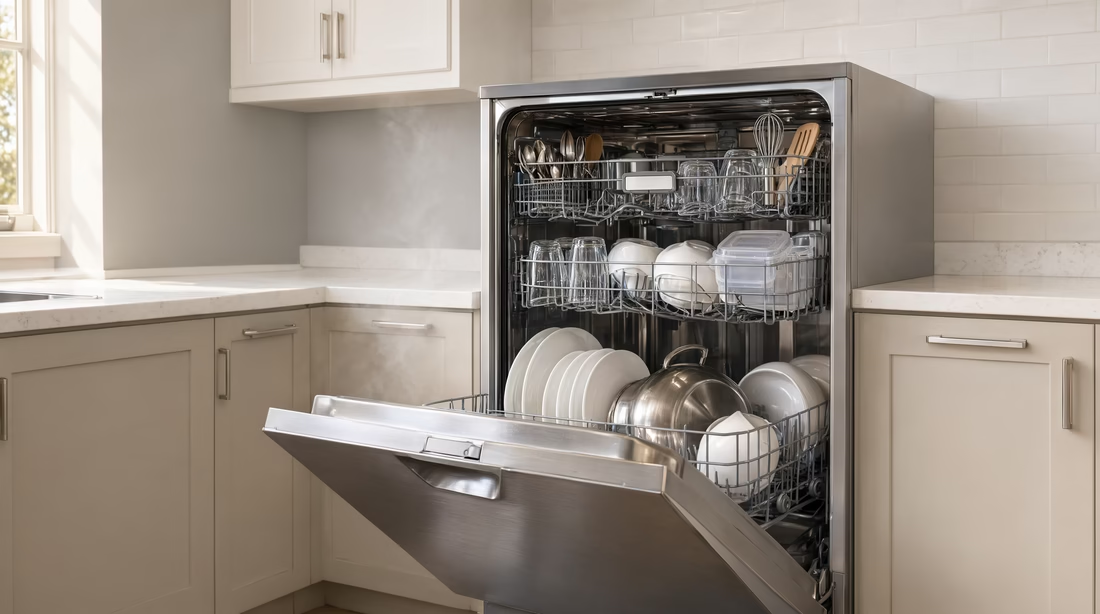
The Bosch 500 Series sits in the middle of the brand’s dishwasher lineup. Check latest price from here.
That may not sound exciting. Yet this middle spot is exactly what makes it so appealing.
You get better drying than the Bosch 300 Series. You also get quieter cycles and a focused wash zone for dirty cookware. At the same time, you avoid the higher price of the Bosch 800 Series.
For many homes, that balance makes the Bosch 500 Series the smart choice.
It cleans well, runs quietly, and holds a large family load. Its AutoAir system also helps dishes dry by opening the door at the end of a cycle.
Still, no dishwasher is perfect. AutoAir may not suit every kitchen. Plastic items can also keep a few drops of water.
This Bosch 500 Series dishwasher review covers everything you need to know. We will look at cleaning, drying, noise, rack space, smart features, and long-term value.
Bosch 500 Series Dishwasher at a Glance
| Feature | Bosch 500 Series |
|---|---|
| Best for | Families seeking the best mix of price and features |
| Wash system | PrecisionWash |
| Focused cleaning | Zone Wash on current select models |
| Drying system | AutoAir |
| Common noise rating | Around 44 dBA |
| Tub material | Stainless steel |
| Third rack | Standard third rack |
| Middle rack | Adjustable RackMatic rack |
| Capacity | Up to 16 place settings on select models |
| Smart features | Home Connect |
| Leak protection | AquaStop |
| Main strength | Quiet cleaning with better drying |
| Main drawback | AutoAir may not dry every plastic item |
Bosch sells more than one model under the 500 Series name. Controls, handles, finishes, and wash options can vary.
Always check the full model number before you buy.
Bosch 500 Series Key Features
The Bosch 500 Series combines practical features with a few premium upgrades.
Common features may include:
- PrecisionWash sensors
- Zone Wash
- A Deep Clean cycle
- AutoAir drying
- A stainless steel tub
- A standard third rack
- An adjustable middle rack
- Folding rack tines
- Smooth-gliding racks
- AquaStop leak protection
- Home Connect support
- A floor status light
- Quiet 44 dBA operation
This feature list puts the 500 Series a clear step above many mid-range dishwashers.
The upgrades are also easy to notice. Better drying saves time after each load. Lower noise makes the kitchen more pleasant. Flexible racks make large loads easier to manage.
Bosch 500 Series Cleaning Performance
The Bosch 500 Series delivers strong daily cleaning.
It can remove grease, dry sauce, drink stains, and most food marks. It also does well with plates, bowls, glasses, flatware, and normal cookware.
You do not need to scrub each dish first. A quick scrape should be enough for most loads.
How PrecisionWash Works
Bosch calls its main cleaning system PrecisionWash.
Sensors check the wash water during the cycle. They look at how much food and dirt are in the water.
The dishwasher can then adjust:
- Cycle time
- Water temperature
- Water use
- Wash strength
- Rinse time
A light load may need less work. A dirty load may need more.
You do not have to make those choices yourself. The Auto cycle handles most of them for you.
What Can the Bosch 500 Series Clean?
The Bosch 500 Series works well with:
- Plates with dried sauce
- Greasy plastic containers
- Coffee mugs
- Drinking glasses
- Cereal bowls
- Flatware
- Cooking tools
- Lightly dirty pots
- Frying pans
- Baking dishes
- Stuck-on food
A proper cycle still matters.
Use Auto for a normal mixed load. Choose Heavy or Deep Clean for dirty cookware and dried food. Speed60 works best for fresh, light mess.
Do You Need to Pre-Rinse Dishes?
No. You should not need to rinse every plate before loading it.
Remove large scraps such as:
- Bones
- Seeds
- Paper labels
- Toothpicks
- Thick pieces of food
- Large amounts of grease
Small food marks can stay. The dishwasher’s sensors use them to judge how much cleaning the load needs.
Heavy pre-rinsing wastes water. It also turns your dishwasher into an expensive drying rack.
Scrape, load, and let the machine work.
Zone Wash and Deep Clean Explained
Zone Wash is one of the most useful upgrades in the current Bosch 500 Series.
It creates a focused cleaning area in the lower rack. This area gets stronger water action for tough food marks.
Place your dirtiest items in that zone.
Good examples include:
- A pan with dry grease
- A casserole dish with baked cheese
- A pot with stuck rice
- Plates with dry egg
- A baking tray with burnt food
- A bowl with thick oatmeal
The rest of the dishwasher can still hold normal dishes.
Why Zone Wash Is Useful
A normal load often has one or two very dirty items. The rest may only have light food marks.
Without a focused zone, you might run a heavy cycle for the full load. You might also wash the dirty pan by hand.
Zone Wash gives you another option.
It directs stronger cleaning toward the hard items. This can save effort without treating every glass and plate like dirty cookware.
Does Zone Wash Replace Soaking?
It can reduce the need to soak many dishes. Yet it cannot fix every burnt pan.
Very thick, blackened food may still need extra care. Dishwashers also struggle when food has baked onto a surface through several rounds of heat.
For the best results:
- Scrape away loose food.
- Place the dirty side toward the spray.
- Keep other items from blocking it.
- Select the right wash cycle.
- Use good dishwasher detergent.
Zone Wash has to reach the surface to clean it.
Is Zone Wash Worth It?
Zone Wash is useful for families that cook often.
It has less value if you mainly wash cups, plates, and light breakfast dishes. The standard wash system can handle those items on its own.
Do not buy the 500 Series for Zone Wash alone. Think of it as a helpful extra rather than the main reason to upgrade.
Bosch 500 Series Drying Performance
Drying is a key strength of the Bosch 500 Series.
Many lower-priced Bosch models use a closed drying system. That system works well on glass, metal, and ceramic. However, it can leave plastic wet.
The 500 Series takes a different path.
It uses AutoAir to let moisture escape.
What Is Bosch AutoAir?
AutoAir opens the dishwasher door near the end of the drying stage.
The door opens by a small amount. Warm, damp air can then leave the tub. Fresh air moves inside and helps finish the drying process.
It is a simple system. It also works well for many household loads.
Your dishes can dry without an exposed heating coil. This keeps the lower rack safer for plastic cups, lids, and food boxes.
Does the Door Open Fully?
No. The door only releases enough to create an air gap.
It does not drop flat onto the floor. It should not block the whole kitchen path.
Still, the open edge may surprise you at first. This is worth noting in a very small kitchen.
Does AutoAir Dry Plastic?
AutoAir improves plastic drying. However, it may not remove every drop.
You may still find water on:
- Deep food container lids
- Lightweight plastic cups
- Kids’ dishes
- Containers with raised edges
- Bowls with flat bases
- Measuring cups with deep rims
Plastic does not hold heat as well as glass or ceramic. Item shape can also trap water.
A lid with a raised edge may collect a small pool. No drying system can make trapped water flow uphill.
How to Get Better Drying Results
These simple steps can improve drying:
- Keep the rinse aid dispenser full.
- Place containers at an angle.
- Avoid laying lids flat.
- Leave space between plastic items.
- Use AutoAir when suitable.
- Do not overload the racks.
- Wait a few minutes before unloading.
- Unload the lower rack first.
Rinse aid is especially important. It helps water slide off each item instead of forming drops.
AutoAir vs. Heated Dry
The Bosch 500 Series does not use a hot, exposed coil at the bottom.
That brings several benefits:
- Plastic can go on the lower rack.
- Items face less direct heat.
- The machine can use less power.
- There is less risk of a plastic lid falling onto a hot coil.
A heated coil may dry some items faster. Yet it can also limit where you place plastic.
AutoAir offers a good balance between safety and drying power.
Is the Auto-Opening Door Safe for Cabinets?
AutoAir is made to work under a kitchen counter. Still, proper installation matters.
The dishwasher must sit at the correct depth. Any required moisture barrier should also be in place.
This matters most with:
- Wood counters
- Laminate edges
- Custom cabinets
- Low counter overhangs
- Poorly sealed worktops
Follow the setup guide for the exact model. A trained installer can also check that steam will not collect under the counter.
If you dislike the door-opening feature, check whether your chosen model lets you run a cycle without AutoAir.
Is the Bosch 500 Series Quiet?
Yes. Quiet operation is another strong point.
Many current Bosch 500 Series models run at about 44 dBA.
You may hear a soft hum or gentle water movement. The machine should not overpower a normal chat, TV show, or phone call.
This makes it a good choice for open floor plans.
What Does 44 dBA Sound Like?
At 44 dBA, the dishwasher fades into the background during normal home life.
You may hear it in a silent kitchen. Yet the sound should remain soft.
You are more likely to notice:
- Water draining
- A mild hum
- A soft change between cycles
- The detergent door opening
- The AutoAir door release
The cycle itself should not feel loud.
Is 44 dBA Good for an Open Kitchen?
Yes. A 44 dBA dishwasher should suit most open kitchens.
It works well when the kitchen connects to:
- A living room
- A dining room
- A home office
- A small apartment
- A family room
The Bosch 800 Series often runs a little more quietly. Still, the gap may not justify the extra cost for every buyer.
InfoLight Shows When It Is Running
A very quiet dishwasher creates a small problem. You may not know when it is on.
Bosch solves this with InfoLight on select top-control models.
The dishwasher shines a small red light onto the floor. The light remains visible while the cycle runs.
When the light goes out, the cycle has ended.
It is a simple feature, but it prevents you from opening the door halfway through a wash.
Installation Affects Noise
A 44 dBA rating does not guarantee a silent kitchen.
Poor setup can create rattles and vibration. A loose drain hose may tap the cabinet. An uneven unit may also move during a cycle.
A good installer should:
- Level the dishwasher
- Secure it to the cabinet
- Place the insulation correctly
- Check the water line
- Secure the drain hose
- Test the spray arms
- Make sure the racks move freely
Proper installation can make a quiet dishwasher feel even quieter.
Rack Design and Loading Space
The Bosch 500 Series has three racks.
This gives you more space for flatware, cooking tools, plates, glasses, and cookware. The middle rack also moves up or down.
The layout works well for mixed family loads.
Standard Third Rack
The third rack sits at the top of the dishwasher.
You can use it for:
- Forks
- Spoons
- Knives
- Spatulas
- Serving tools
- Measuring spoons
- Small lids
- Thin cooking tools
Moving flatware to the top frees space below. You can remove the lower flatware basket when you need more room.
Is the Third Rack Useful?
Yes. It adds real value for most homes.
Without it, large serving tools may block cups or take space from plates. The third rack gives these items a separate home.
It also keeps flatware spread apart. That allows water to reach each piece.
Limits of the Standard Third Rack
The Bosch 500 Series usually has a standard third rack rather than the more flexible design found in the 800 Series.
It works well for thin items. It may not hold:
- Deep bowls
- Thick cups
- Large ramekins
- Bulky cooking tools
- Oversized ladles
Tall items can also reduce room in the middle rack.
The rack remains useful. It just does not offer the same depth as Bosch’s premium version.
Adjustable RackMatic Middle Rack
The middle rack can move between several positions.
Raise it to make more room below. Lower it to fit taller items above.
This helps when you wash:
- Large dinner plates
- Tall wine glasses
- Travel mugs
- Mixing bowls
- Cutting boards
- Baking sheets
- Wide pans
The rack adjustment can solve many loading problems.
For example, lower the middle rack for tall glasses. Raise it when large plates hit the bottom of the rack above.
Some models let you adjust each side to create a slight angle. This can help fit tall items on one side and larger plates below the other.
FlexSpace Folding Tines
The upright prongs in a dishwasher rack are called tines.
Some Bosch 500 Series tines fold down. This creates a flatter area for bulky cookware.
Fold them down for:
- Large bowls
- Frying pans
- Casserole dishes
- Food storage boxes
- Wide serving plates
- Small pots
Raise them again when you need spaces for plates.
This feature makes the rack much easier to use. It also prevents you from forcing a pan into a row made for thin dishes.
EasyGlide Rack System
Bosch uses its EasyGlide design to help the racks move more smoothly.
A full rack can be heavy. Plates, glasses, and bowls quickly add weight.
Smooth wheels make it easier to pull the rack out without shaking the load. This can help protect glasses and reduce spills from cups that still hold water.
The rack movement may not feel as polished as the top Benchmark models. Yet it should feel solid for this price range.
Real-World Capacity
Select Bosch 500 Series models hold up to 16 place settings.
That number comes from a standard test. Real family loads look much less tidy.
Large bowls, frying pans, and storage boxes use more space than a formal place setting.
The 500 Series works well for:
- Couples who cook often
- Families with children
- Homes that run one load per day
- Buyers who use many bowls and glasses
- People who wash cookware with their dishes
- Entertaining small groups
The rack layout uses space well. Still, several large pans can fill the lower rack fast.
Bosch 500 Series Wash Cycles
The exact cycle list depends on the model.
Common cycles may include:
- Heavy
- Auto
- Normal
- Speed60
- Favorite
- Deep Clean
- Delicate
- Rinse
- Machine Care
Some extra cycles may only appear in the Home Connect app.
Auto Cycle
Auto is the best choice for most daily loads.
The sensors check the wash water and adjust the cycle. This reduces guesswork.
Use it for a mix of plates, bowls, glasses, and normal cookware.
Heavy Cycle
Heavy works well for very dirty items.
Use it for:
- Greasy pots
- Cooked-on sauce
- Baking dishes
- Dirty frying pans
- Dry food marks
It may run longer than Auto. Save it for loads that need extra work.
Deep Clean Cycle
Deep Clean works with the focused Zone Wash area.
Place hard-to-clean items in the correct part of the lower rack. The dishwasher sends stronger water action toward that zone.
This cycle makes sense for cookware and baked-on food.
Normal Cycle
The Normal cycle suits an average full load.
It often aims to balance cleaning with power and water use. Run time may vary as the sensors check the load.
Speed60
Speed60 aims to clean dishes in about one hour.
It works best for fresh, light food marks. It may not remove tough, dry mess as well as a longer cycle.
Use it when you need dishes for dinner, guests, or a second meal.
Favorite
Favorite lets you save a cycle and option pair.
For example, you could save Auto with AutoAir and Sanitize. This gives you quick access to your normal setup.
Machine Care
Machine Care helps clean the dishwasher itself.
Run it when the tub starts to smell or shows signs of buildup. Use a cleaner made for dishwashers and follow the care guide.
Bosch 500 Series Options
Common options may include:
- AutoAir
- Sanitize
- Remote Start
- Delay Start
- Extra drying controls
- Half Load
- Eco settings
Some options appear on the control panel. Others may require Home Connect.
Sanitize
The Sanitize option raises the heat during the final rinse.
It can help with:
- Baby items
- Cutting boards
- Dishes used during an illness
- Food prep tools
- Heavily used kitchen items
Check the care label before placing delicate material in a high-heat wash.
Delay Start
Delay Start lets you choose when the dishwasher begins.
This may help if:
- You want it to run at night.
- Your power rate drops at certain times.
- You want the cycle to finish before breakfast.
- You prefer it to run after the family leaves.
The app may offer more control over the start time than the physical panel.
Home Connect Smart Features
Current Bosch 500 Series models may connect to the Home Connect app.
The app can offer:
- Remote cycle checks
- End-of-cycle alerts
- Delay Start
- Smart Cycle suggestions
- Extra wash programs
- Favorite settings
- Care reminders
- Remote Start
- Voice controls
You do not need the app for basic use.
However, Bosch places some extra cycles and settings inside it. This keeps the control panel simple, but not everyone wants to use a phone to unlock dishwasher features.
Is Home Connect Worth Using?
Some Home Connect features are more useful than others.
End alerts can help because the dishwasher runs so quietly. You will know when the load has finished without checking the floor light.
Delay Start is also useful. You can plan a wash around bedtime or lower power rates.
Smart Cycle may help new users choose the right wash. After a few weeks, most people will settle on one or two main cycles.
Remote Start is less important. You still need to load the dishwasher and add detergent before leaving.
The app is a handy bonus. It should not decide your purchase.
Bosch 500 Series Build Quality
The Bosch 500 Series feels solid for a mid-range dishwasher.
Its stainless steel tub gives the interior a clean and durable feel. Stainless steel also holds heat better than plastic and can help lower noise.
The door feels firm. The racks move smoothly, and the controls have a neat layout.
It may not feel as luxurious as the Bosch 800 or Benchmark Series. Yet it does not feel cheap.
That balance suits buyers who want useful quality rather than costly decoration.
Design and Finish Options
Bosch offers several designs within the 500 Series.
Options may include:
- Stainless steel
- Fingerprint-resistant stainless steel
- Black
- White
- Bar handles
- Pocket handles
- Recessed handles
- Hidden top controls
Availability changes by model and seller.
Top Controls
Top controls sit along the upper edge of the door.
They remain hidden when the dishwasher is closed. This creates a simple and modern look.
InfoLight helps because you cannot see the panel during a cycle.
Pocket Handle
A pocket handle keeps the front smooth.
It does not stick far into the room. This makes it a good choice for a narrow kitchen or busy walkway.
Bar Handle
A bar handle is easy to grab. It can also hold a kitchen towel.
However, it extends farther from the cabinet. Check door and walkway clearance before buying.
Fingerprint-Resistant Finish
A fingerprint-resistant finish can reduce visible marks.
It does not prevent every smudge. You will still need to wipe the front now and then.
Use a soft cloth. Avoid harsh scrub pads that may scratch the finish.
Bosch 500 Series Pros and Cons
Pros
- Strong daily cleaning
- Focused Zone Wash area
- Better drying than PureDry models
- Quiet 44 dBA operation
- Three-rack design
- Adjustable middle rack
- Folding tines
- Stainless steel tub
- Useful floor status light
- Smart app support
- Good family capacity
- Strong balance of price and features
Cons
- AutoAir may not suit every kitchen
- Plastic items may still hold some water
- Standard third rack has limited depth
- Some extra features require the app
- Costs more than the Bosch 300 Series
- Does not dry plastic as well as CrystalDry
- Exact features vary by model
Bosch 500 vs. 300 Series
The Bosch 300 Series is a strong lower-cost choice.
It often gives you a stainless steel tub, three racks, and an adjustable middle rack. It can also clean normal dishes very well.
The key difference is drying.
Many 300 Series models use PureDry. This closed system works well on glass, ceramic, and metal. Plastic may stay wet.
The 500 Series adds AutoAir. Opening the door allows damp air to escape and can improve drying.
The 500 Series may also offer:
- Lower noise
- Zone Wash
- Deep Clean
- Smoother rack movement
- Better drying for mixed loads
Is the 500 Series Worth More Than the 300 Series?
For many families, yes.
Choose the 500 Series if you run the dishwasher each day. Better drying can save time after every load.
It also makes sense for an open kitchen. The lower sound level will be easier to live with.
Choose the 300 Series if price matters more. It remains a smart choice if you wash little plastic or do not mind opening the door by hand.
For a closer look at all three options, read our Bosch 300 vs. 500 vs. 800 Series comparison.
Bosch 500 vs. 800 Series
The Bosch 800 Series sits above the 500 Series.
Both lines clean well. Both offer three racks, quiet cycles, and a stainless steel tub.
The 800 Series mainly improves drying, noise, and wash control.
It may add:
- CrystalDry
- PowerControl
- A flexible third rack
- Quieter operation
- More premium rack movement
- More targeted wash settings
AutoAir vs. CrystalDry
The 500 Series uses AutoAir. The door opens to release damp air.
The 800 Series uses CrystalDry. It uses special minerals to create extra heat inside the tub.
CrystalDry works better on plastic. It can dry food boxes, cups, and lids without opening the door.
AutoAir still performs well for most mixed loads. It simply cannot match CrystalDry on hard-to-dry plastic.
Zone Wash vs. PowerControl
Zone Wash gives you one focused area for dirty cookware.
PowerControl offers more control over separate parts of the lower rack. You can change the wash strength based on where each item sits.
PowerControl is more flexible. Zone Wash is easier to understand and may be enough for most families.
Is the 800 Series Worth the Upgrade?
Choose the 800 Series if:
- You wash plastic every day.
- You want the quietest possible kitchen.
- You need a deeper third rack.
- You want more control over mixed loads.
- You dislike auto-opening doors.
- The higher price fits your budget.
Stay with the 500 Series if you want better value.
The 800 Series offers a more polished experience. It does not create a huge leap in basic cleaning for normal plates and bowls.
Want to see where every Bosch line fits? Read our full Bosch dishwasher series guide.
Which Bosch 500 Series Model Should You Choose?
The best model depends on your kitchen and habits.
Use these points to compare your options.
Check the Full Model Number
Do not shop by the “500 Series” name alone.
Two models in the same series may have different:
- Handle styles
- Sound ratings
- Finishes
- Rack parts
- Wash cycles
- Control panels
- Installation needs
Read the full product sheet before placing an order.
Choose the Right Handle
Pick a pocket or recessed handle for a narrow walkway.
Choose a bar handle if you want a firm grip or a place to hang a towel.
Make sure the handle will not block a nearby drawer or cabinet.
Compare Noise Ratings
Many current models run near 44 dBA. Still, check the exact rating.
A small sound difference matters most in an open kitchen. It matters less in a closed room.
Check Rack Features
Look for:
- Middle-rack height positions
- Folding tines
- Cup shelves
- A removable flatware basket
- Third-rack shape
- Smooth rack wheels
Rack design has a major effect on daily use.
Review the Cycle List
Check which cycles appear on the panel and which require the app.
If you do not want to use Home Connect, make sure the physical controls offer everything you need.
Measure Your Cabinet Opening
Most Bosch 500 Series models fit a standard 24-inch opening. Yet small differences in height and depth can still matter.
Measure:
- Opening width
- Opening height
- Cabinet depth
- Door clearance
- Distance from an island
- Water line location
- Drain location
Do not rely on the size of your old dishwasher.
Compare Sale Prices
Dishwasher prices change throughout the year.
A discounted 800 Series model may cost close to a full-price 500 Series model. A discounted 500 Series may also cost close to a 300 Series.
Compare the full installed cost. Include:
- Delivery
- Old appliance removal
- Installation
- Water hose
- Power connection
- Cabinet work
- Sales tax
The lowest sticker price may not be the lowest final price.
Bosch 500 Series Maintenance
Regular care can keep your dishwasher running well.
The main tasks are simple.
Clean the Filter
Check the filter every few weeks.
Clean it more often if you leave more food on your dishes.
To clean it:
- Pull out the lower rack.
- Turn and lift the filter.
- Rinse it under warm water.
- Use a soft brush if needed.
- Place it back and lock it.
Never run the dishwasher without the filter in place.
Check the Spray Arms
Food can block the small holes in each spray arm.
Remove debris with a soft brush or wooden toothpick. Avoid sharp metal tools.
Spin each arm after loading. Make sure no pan, plate, or cooking tool blocks it.
Refill the Rinse Aid
Rinse aid improves drying and reduces spots.
It is very helpful with plastic. Check the level when drying performance starts to drop.
Wipe the Door Seal
Use a soft, damp cloth to clean the rubber seal.
Grease and food can collect along the edge. This may create odor over time.
Run Machine Care
Run a cleaning cycle when you notice:
- Odor
- Grease
- White mineral marks
- Food buildup
- A dirty filter area
Use a dishwasher cleaner and follow the care instructions.
Keep the AutoAir Path Clear
Do not place a mat, box, or other item in front of the dishwasher door.
The door needs room to open slightly. A blocked door may stop AutoAir from working as planned.
Bosch 500 Series Warranty
Warranty terms can vary by model, seller, and country.
Bosch often provides limited parts and labor coverage for the full appliance during the first year. Longer limited parts coverage may apply to certain components.
Read the warranty for the exact model.
Check:
- Parts coverage
- Labor coverage
- Rack coverage
- Control board coverage
- Rust-through terms
- Service visit costs
- Items not covered
- Approved repair rules
Keep your receipt. Registering the appliance may also make future service easier.
Who Should Buy a Bosch 500 Series Dishwasher?
The Bosch 500 Series is a strong fit for:
- Busy families
- Couples who cook often
- Open-kitchen homes
- People who run daily loads
- Buyers who wash pots and pans
- Households that use some plastic
- Shoppers who want a quiet machine
- Buyers seeking the best balance of features and price
It offers upgrades you can notice after each cycle.
Who Should Skip the Bosch 500 Series?
Consider another series if:
- You need the lowest possible price.
- You dislike an auto-opening door.
- You wash plastic in almost every load.
- You want the quietest Bosch dishwasher.
- You need the most flexible third rack.
- You want full wash-zone control.
- You rarely wash dirty cookware.
The Bosch 300 Series costs less and still cleans well.
The Bosch 800 Series makes more sense when plastic drying and very low noise are top goals.
Is the Bosch 500 Series Dishwasher Worth It?
Yes. The Bosch 500 Series is worth buying for many households.
It improves the parts of dishwasher use that often cause frustration.
AutoAir helps dishes dry. Zone Wash tackles dirty cookware. The three-rack layout creates more room. The 44 dBA sound level keeps the kitchen calm.
The machine is not perfect.
AutoAir may leave a few drops on plastic. The standard third rack is also less flexible than the 800 Series rack.
Even so, the 500 Series offers a strong mix of cleaning, comfort, and value.
The jump from the 300 Series feels useful. The move to the 800 Series feels more like a luxury unless you wash a lot of plastic.
Final Verdict
The Bosch 500 Series is one of the most balanced dishwashers in the Bosch lineup.
It cleans normal dishes with ease. Zone Wash adds more power for dirty cookware. AutoAir improves drying without using an exposed heating coil.
Its three racks also make good use of the tub. The adjustable middle rack helps with tall glasses, large plates, and mixed family loads.
Best of all, it runs quietly.
The main drawback is easy to understand. AutoAir dries better than PureDry, but CrystalDry still wins on plastic.
Choose the Bosch 500 Series if you want quiet cleaning, better drying, and useful rack space at a fair price.
Choose the Bosch 300 Series if keeping the price low matters most.
Choose the Bosch 800 Series if you want the best plastic drying and a more premium experience.
For most families, the Bosch 500 Series is the sweet spot. It spends money where you will notice it—and avoids charging you for luxury features you may never use.