
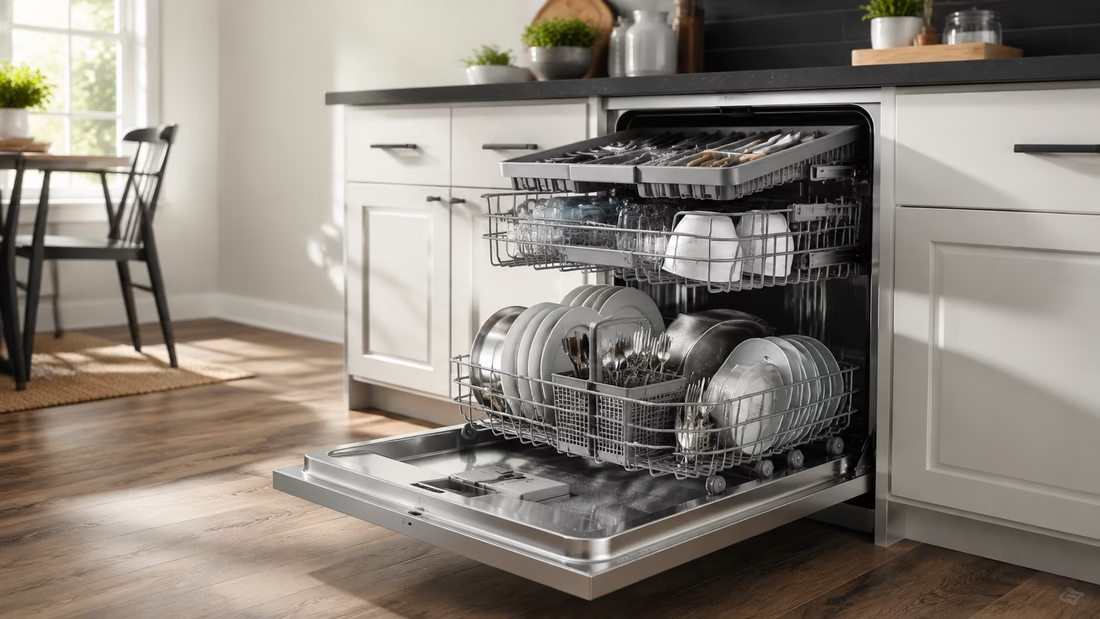
The Bosch 300 Series sits in a sweet spot. Check the updated price from here.
It costs more than Bosch’s basic models. Yet it stays well below the brand’s premium choices. You get three racks, a stainless steel tub, smart controls, and strong daily cleaning.
That sounds like a great deal. But there is one clear catch.
The drying system works well on plates and glasses. It is less impressive with plastic. Food boxes, cups, and lids may still feel damp after a cycle.
So, is the Bosch 300 Series dishwasher worth buying?
For many homes, the answer is yes. It is a smart pick if you want flexible loading and quiet cleaning at a fair price. However, buyers who wash lots of plastic may prefer the Bosch 500 or 800 Series.
This Bosch 300 Series dishwasher review covers cleaning, drying, noise, racks, controls, and value. It will help you decide if this is the right dishwasher for your kitchen.
Bosch 300 Series Dishwasher at a Glance
| Feature | Bosch 300 Series |
|---|---|
| Best for | Buyers who want three racks at a fair price |
| Wash system | PrecisionWash |
| Drying system | PureDry |
| Tub material | Stainless steel |
| Third rack | Standard third rack |
| Middle rack | Adjustable on most models |
| Common noise range | Around 46 to 48 dBA |
| Capacity | Up to 16 place settings on select models |
| Smart features | Home Connect on current models |
| Leak protection | AquaStop |
| Main strength | Flexible rack design |
| Main weakness | Average plastic drying |
Features can vary by model. Some Bosch 300 dishwashers have front controls. Others hide the controls along the top edge of the door.
Handle styles and sound levels may also differ. Always check the full model number before you buy.
Bosch 300 Series Key Features
The Bosch 300 Series includes many features found in higher-priced machines.
Common features include:
- PrecisionWash cleaning
- PureDry drying
- A full stainless steel tub
- A standard third rack
- An adjustable middle rack
- Folding rack tines
- AquaStop leak protection
- Home Connect support
- A quick wash cycle
- A sanitize option
- Several handle and control styles
The 300 Series does not try to impress you with flashy extras. Instead, it focuses on space, simple controls, and steady cleaning.
That approach works well for most daily loads.
Bosch 300 Series Cleaning Performance
Cleaning is the most important part of any dishwasher review. The good news is that the Bosch 300 Series performs well here.
It can handle normal food mess with little trouble. This includes dried sauce, grease, coffee marks, and bits of cooked food.
You do not need to wash each plate before loading it. In fact, heavy pre-rinsing can waste water and time.
Scrape off large pieces. Then let the machine do its job.
How PrecisionWash Works
Bosch calls its cleaning system PrecisionWash.
Sensors check the wash water during the cycle. They look for signs of food and dirt. The dishwasher can then change the heat, water use, and cycle time.
A light load may need less work. A dirtier load may need more.
This all happens without much input from you. For most loads, the Auto cycle is a simple choice.
What Can It Clean?
The Bosch 300 Series works well with:
- Dinner plates
- Cereal bowls
- Coffee mugs
- Drinking glasses
- Flatware
- Serving tools
- Lightly dirty pots
- Plastic food boxes
- Pans with normal grease
- Dishes with dry sauce
The machine can also handle tougher mess. You may need the Heavy cycle for a baking dish with baked-on cheese or a pan with dry food.
No dishwasher can fix poor loading, though. A large tray can block the spray and leave other items dirty.
Do You Need to Pre-Rinse?
No. A quick scrape is normally enough.
Remove:
- Bones
- Seeds
- Toothpicks
- Paper labels
- Large food chunks
- Thick layers of grease
Leave small food marks on the plate. The sensors use that dirt to judge how much cleaning the load needs.
Heavy pre-rinsing can also make the dishwasher seem less useful than it is. If the dishes already look clean, there is little left for the machine to do.
Tips for Better Cleaning
Use these simple loading habits:
- Face dirty surfaces toward the center.
- Angle bowls so water can drain.
- Leave space between plates.
- Keep tall items away from the spray arms.
- Place large pans along the sides or back.
- Do not stack bowls on top of each other.
- Check that each spray arm can turn.
- Use fresh dishwasher detergent.
- Clean the filter when it looks dirty.
These steps matter more than most premium wash features.
Bosch 300 Series Drying Performance
Drying is the weakest part of the Bosch 300 Series.
That does not mean the machine leaves the whole load wet. Plates, bowls, glasses, and metal tools often dry well.
Plastic is the problem.
Light plastic items do not hold much heat. As a result, moisture can stay on lids, cups, and food boxes.
What Is Bosch PureDry?
Most Bosch 300 Series dishwashers use PureDry.
PureDry is a closed drying system. It uses the heat left inside the stainless steel tub to remove moisture.
It does not use an exposed heating coil at the bottom.
That offers one useful benefit. You can place plastic items on the lower rack without worrying about them falling onto a hot coil.
The system is safe and simple. However, it does not force enough heat onto plastic to dry every drop.
Does the Bosch 300 Series Dry Plastic?
It dries some plastic. It rarely dries all plastic with perfect results.
You may notice water on:
- Food storage lids
- Kids’ cups
- Reusable lunch boxes
- Deep plastic bowls
- Containers with raised edges
- Lightweight measuring cups
Item shape matters too. A lid with a deep edge can collect water even in a premium dishwasher.
Flat items tend to dry better when you angle them. This allows water to run off instead of forming a small pool.
How to Improve Drying
You can get better drying with a few simple changes:
- Keep the rinse aid dispenser full.
- Angle cups and containers.
- Avoid placing flat lids face-up.
- Use the Extra Dry option when available.
- Open the door after the cycle.
- Wait a few minutes before unloading.
- Unload the lower rack first to avoid drips from above.
Rinse aid makes a clear difference. It helps water slide off each surface rather than forming drops.
Still, these tips will not turn PureDry into Bosch CrystalDry. If you wash plastic every day, consider a higher series.
Is the Bosch 300 Series Quiet?
Yes. The Bosch 300 Series is quiet enough for most homes.
Many models fall near 46 to 48 dBA. The exact rating depends on the model.
At this sound level, you may hear:
- A soft motor hum
- Water moving inside
- The drain pump
- A light clicking sound between stages
The machine should not overpower a normal chat. Still, you may notice it in a silent room.
What Does 46 to 48 dBA Feel Like?
A dishwasher near 48 dBA works well in a closed kitchen. You can hear that it is running, but it should not feel loud.
A 46 dBA model sounds a bit softer. It may suit an open kitchen, though you can still hear it during quiet moments.
The Bosch 500 and 800 Series run more quietly on many models. That may matter if your kitchen opens into a living room or work area.
Installation Can Affect Noise
Even a quiet dishwasher may sound loud if it is not set up well.
Poor leveling can cause vibration. Gaps around the sides can also let more sound escape.
Make sure the installer:
- Levels the machine
- Secures it to the cabinet
- Places the insulation correctly
- Checks the drain hose
- Prevents the water line from hitting the cabinet
- Tests the racks and spray arms
Good installation can improve both sound and cleaning.
Rack Design and Loading Space
Rack space is the strongest reason to buy the Bosch 300 Series.
Most models give you three racks. The middle rack also moves up or down to fit dishes of different sizes.
This setup makes the dishwasher easy to use, even when the load includes an odd mix of items.
Standard Third Rack
The third rack sits at the top of the tub.
It gives you a separate place for:
- Forks
- Spoons
- Knives
- Spatulas
- Serving tools
- Measuring spoons
- Small lids
- Thin kitchen tools
Moving flatware to the third rack can free space below. You may remove the lower flatware basket when you need room for a pot.
This small change can make the dishwasher feel much larger.
Limits of the Third Rack
The standard third rack is fairly shallow.
It works best for flatware and thin tools. It may not hold small bowls, thick cups, or deep cooking tools as well as the flexible rack in the Bosch 800 Series.
Tall items in the third rack can also reduce space in the middle rack.
The third rack is still useful. Just do not expect it to act like a full extra dish rack.
Adjustable Middle Rack
The adjustable middle rack gives you more control over loading.
Raise it when you need room for:
- Large dinner plates
- Cutting boards
- Baking sheets
- Tall pans
Lower it when you need space for:
- Wine glasses
- Travel mugs
- Large bowls
- Tall cups
Some models let you change the rack height even when it is loaded. They may also offer several height positions.
This feature is easy to overlook in a store. At home, it can solve a lot of loading problems.
Folding Rack Tines
The upright prongs inside a dishwasher rack are called tines.
Some tines fold down. This creates a flatter space for large bowls, pans, and wide dishes.
Folding tines help when a load contains bulky cookware. They also prevent you from forcing a pan into a space designed for plates.
The available folding sections can vary by model.
Real-World Capacity
Select Bosch 300 Series models hold up to 16 place settings.
That figure comes from a standard test. It does not always reflect the way a family loads dishes.
Large bowls and wide plates use more room. So do lunch boxes, frying pans, and travel cups.
In real life, the Bosch 300 Series suits:
- Couples who cook often
- Families with one or two children
- Homes that run one load per day
- Buyers who use many glasses and bowls
- People who want a separate flatware rack
A large household may still fill it quickly. Yet the rack layout uses the space well.
Wash Cycles and Options
Cycle names can change by model. Many Bosch 300 Series dishwashers include common choices such as:
- Heavy
- Auto
- Normal
- Speed60
- Delicate
- Rinse
- Favorite
- Sanitize
- Extra Dry
Some cycles may only appear in the Home Connect app.
Auto Cycle
Auto is the best choice for most loads.
The dishwasher uses its sensors to adjust the wash. This removes much of the guesswork.
Use it for plates, cups, bowls, and normal cookware.
Heavy Cycle
Heavy adds more time and cleaning power.
Use it for:
- Greasy pans
- Dried pasta sauce
- Baking dishes
- Cookware with stuck food
Do not use it for every load. It may take longer and use more energy than you need.
Speed60
Speed60 aims to wash a load in about one hour.
It works best for fresh, light food marks. It may not match the results of a longer Auto or Heavy cycle on dry food.
It is useful when you need clean dishes before dinner or a family event.
Sanitize Option
The Sanitize option raises the final rinse heat.
It can help with baby items, cutting boards, and dishes used during an illness. Follow the care label on each item before using high heat.
Favorite Setting
The Favorite setting saves a cycle and option pair.
For example, you could save Auto with Extra Dry. This lets you start your normal setup with fewer steps.
Home Connect Smart Features
Many current Bosch 300 Series dishwashers work with the Home Connect app.
The app may let you:
- Start a cycle
- Check the cycle status
- Set a delayed start
- Get an alert when the load ends
- Save a favorite setup
- Access extra cycles
- Get care reminders
- Use voice control
- Choose a cycle based on the load
You do not need the app for basic washing.
Still, some extra cycles and options may only appear there. Buyers who prefer physical controls should check what the machine can do without a phone.
Is Home Connect Useful?
It depends on your routine.
The end alert is useful if your dishwasher is quiet. You do not need to keep checking the floor light or opening the door.
Delay Start can also help if your power rates change by time of day.
Remote Start is less important for many people. You still need to load the dishes and add detergent first.
Home Connect is a nice extra. It should not be the main reason you buy this dishwasher.
Build Quality and Design
The Bosch 300 Series feels well built for its price.
Its full stainless steel tub is a clear step up from dishwashers with more plastic inside. Stainless steel holds heat well and can help reduce odor.
The door often feels solid. The racks move with less shake than those in many low-cost machines.
Still, the 300 Series does not feel as refined as the 800 or Benchmark lines.
The rack wheels may not feel quite as smooth. The third rack is also more basic.
These are comfort differences. They do not mean the 300 Series cleans poorly.
Front Controls vs. Top Controls
Bosch sells 300 Series dishwashers with different control styles.
Front Controls
Front controls remain visible when the door is shut.
Benefits include:
- Easy cycle checks
- Simple access
- Clear buttons
- Better visibility for shorter users
The downside is a busier look.
Top Controls
Top controls sit along the upper edge of the door.
They stay hidden when the dishwasher is closed. This creates a smooth, modern front.
The downside is that you cannot see the controls during a cycle. Some models use a floor light to show that the dishwasher is running.
Neither design cleans better. Choose the one that feels easier to use.
Handle Styles
Bosch offers several handle designs.
Recessed Handle
A recessed grip sits inside the front panel.
It creates a simple look and does not stick into the walkway.
Pocket Handle
A pocket handle hides near the top of the door.
It works well in narrow kitchens and modern spaces.
Bar Handle
A bar handle extends across the front.
It is easy to grip and can hold a towel. However, it sticks out farther.
Measure nearby drawers and walkways before choosing a bar handle.
Bosch 300 Series Pros and Cons
Pros
- Strong daily cleaning
- Full stainless steel tub
- Standard third rack
- Adjustable middle rack
- Flexible loading
- Quiet operation
- Smart app support
- Good leak protection
- Several control and handle styles
- Solid value for the features
Cons
- Plastic items may stay damp
- PureDry is weaker than AutoAir and CrystalDry
- Standard third rack is shallow
- Some extra controls require the app
- Features vary between model numbers
- Premium Bosch models run more quietly
- No advanced wash-zone control on most models
Bosch 300 vs. 100 Series
The Bosch 100 Series costs less. It gives you the core Bosch wash system without as many rack features.
The 300 Series often adds:
- A full stainless steel tub
- A standard third rack
- Better rack adjustment
- More loading space
- Smoother rack movement
- Stronger leak protection on select models
- A more refined interior
Both lines may use PureDry. That means moving from the 100 to the 300 Series does not always solve wet plastic.
The real upgrade is space and ease of loading.
Which One Should You Buy?
Choose the 100 Series if price matters most and two racks meet your needs.
Choose the 300 Series if you want more rack space and a better stainless steel interior. For a family that runs the dishwasher often, the extra loading freedom can be worth the cost.
For a deeper look at every line, read our Bosch dishwasher series guide.
Bosch 300 vs. 500 Series
The Bosch 500 Series is the next step up.
The biggest change is drying.
Many 500 Series models use AutoAir. The dishwasher opens its door near the end of the cycle. This lets moist air escape and fresh air enter.
AutoAir often dries better than PureDry. It can also improve results on plastic.
The 500 Series may also add:
- Lower sound levels
- Zone Wash on select models
- A more refined rack system
- Better drying for mixed loads
- A floor status light on select designs
Is the Bosch 500 Series Worth the Upgrade?
It can be.
Choose the 500 Series if you wash plastic often or have an open kitchen. The lower noise and better drying can improve each load.
Stay with the 300 Series if you want to save money. It remains a good choice for homes that wash mostly plates, glasses, and metal cookware.
You can compare these upgrades in our full Bosch 300 vs. 500 vs. 800 Series comparison.
Bosch 300 vs. 800 Series
The 800 Series costs much more than the 300 Series.
You are not paying for twice the cleaning power. You are paying for better drying, less noise, and more control.
The Bosch 800 Series may add:
- CrystalDry
- PowerControl
- A flexible third rack
- Quieter operation
- Smoother rack movement
- More premium controls
- Better plastic drying
PureDry vs. CrystalDry
PureDry works best on glass, ceramic, and metal.
CrystalDry uses special minerals to create more heat inside the tub. It works much better on plastic.
That is the biggest difference between these two lines.
Is the Bosch 800 Series Worth More?
Choose the 800 Series if:
- You wash plastic every day.
- Your kitchen opens into a living room.
- You want very low noise.
- You want a deeper third rack.
- You wash delicate dishes and dirty pans together.
- You can afford the premium.
Choose the 300 Series if you care more about value. It can still clean normal dishes very well.
How Does the Bosch 300 Series Compare With Other Brands?
The 300 Series competes with mid-range dishwashers from KitchenAid, LG, GE, Whirlpool, and Samsung.
Its main strengths are:
- Quiet operation
- A full stainless steel tub
- Flexible rack space
- A useful third rack
- Strong sensor-based cleaning
- Clean, simple design
Its weakness is drying.
Some rival dishwashers use heated drying or a fan. Those systems may dry plastic better. However, an exposed heating coil can limit where you place light plastic items.
Bosch takes a safer but gentler approach.
The better choice depends on your priorities. Choose Bosch for quiet washing and rack design. Consider another drying system if bone-dry plastic matters more.
Which Bosch 300 Series Model Should You Choose?
Bosch sells several dishwashers under the 300 Series name.
Do not assume they all have the same features.
Compare these points before buying:
Noise Rating
Look at the exact dBA rating.
A small change may matter in an open kitchen. It matters less in a separate room.
Control Location
Choose front controls for easy access. Choose top controls for a cleaner look.
Handle Type
Pick a recessed or pocket handle for a tight walkway. Choose a bar handle if you want a firm grip.
Finish
Common options may include:
- Stainless steel
- Fingerprint-resistant stainless steel
- Black
- White
- Black stainless steel
Check whether the finish matches your other appliances. Stainless steel shades can differ between brands.
Rack Features
Look for:
- Adjustable middle-rack positions
- Folding tines
- Cup shelves
- A removable flatware basket
- Smooth rack wheels
Small rack changes can have a large effect on daily use.
Wash Cycles
Check which cycles appear on the control panel.
Some models place extra choices inside Home Connect. That may not suit buyers who want to avoid app controls.
ADA Height
Some models have a shorter design for lower counters or accessible kitchens.
Measure the opening before ordering. Do not assume every Bosch 300 Series dishwasher has the same height.
Current Price
Sales can change the value of each series.
A discounted 500 Series model may cost only a little more than a 300 Series machine. If so, the better drying may justify the upgrade.
Compare prices from more than one approved seller.
Bosch 300 Series Maintenance
Regular care can help the dishwasher clean well and smell fresh.
Clean the Filter
Check the filter every few weeks.
If you leave more food on your plates, clean it more often.
To clean it:
- Pull out the lower rack.
- Turn and lift the filter.
- Rinse it under warm water.
- Use a soft brush if needed.
- Lock it back into place.
Do not run the dishwasher without the filter.
Check the Spray Arms
Food bits can block the small spray holes.
Remove trapped debris with a soft brush or wooden toothpick. Avoid using metal tools that may damage the holes.
Make sure each arm can spin freely after loading.
Use Rinse Aid
Rinse aid helps water slide off dishes.
It is extra useful with PureDry. Keep the dispenser filled if you want fewer drops and spots.
Clean the Door Seal
Wipe the rubber seal with a soft, damp cloth.
Food and grease can collect around the edge. This may create odor over time.
Run a Cleaning Cycle
Use a dishwasher cleaner when you notice odor or buildup.
Use a product made for dishwashers. Follow the product and Bosch care directions.
Bosch 300 Series Warranty
Warranty terms may differ by country, seller, and model.
Bosch commonly offers limited coverage for the full appliance during the first year. Longer limited parts coverage may apply to certain racks, controls, or rust-through.
Read the warranty that comes with the exact model.
Check:
- Parts coverage
- Labor coverage
- Rust-through terms
- Service call fees
- Items excluded from coverage
- Rules for moving the appliance
- Requirements for approved service
Keep your sales receipt. Registering the dishwasher can also make service easier.
Who Should Buy a Bosch 300 Series Dishwasher?
The Bosch 300 Series is a strong choice for:
- Couples who cook at home
- Small and medium families
- Buyers who want three racks
- Homes that wash mostly glass and ceramic
- People who value quiet cleaning
- Shoppers who want a stainless steel tub
- Buyers who do not need luxury drying
- Anyone seeking a well-rounded mid-range dishwasher
It offers useful features without adding too much cost.
Who Should Skip the Bosch 300 Series?
Consider another model if:
- You wash plastic containers every day.
- You want every item dry at the end.
- Your kitchen needs near-silent operation.
- You want an auto-opening door.
- You need targeted lower-rack cleaning.
- You want a deeper, more flexible third rack.
- You are willing to pay more for premium comfort.
The Bosch 500 Series offers better open-door drying. The 800 Series offers the best plastic drying of the three.
Is the Bosch 300 Series Dishwasher Worth It?
Yes, the Bosch 300 Series is worth considering.
It offers strong cleaning, flexible racks, and a stainless steel tub. It also runs quietly enough for most homes.
The third rack adds real value. So does the adjustable middle rack. These features make it easier to load glasses, plates, tools, and cookware in the same cycle.
PureDry is the main drawback.
It works well on glass and ceramic. It may leave plastic damp. If that does not bother you, the 300 Series provides a lot of dishwasher for the money.
If you wash plastic each day, compare the price with the Bosch 500 Series. A small price gap may make AutoAir worth the upgrade.
Final Verdict
The Bosch 300 Series is a dependable mid-range dishwasher.
It cleans well. It gives you three useful racks. The stainless steel tub feels solid, and the controls remain easy to use.
It is also quiet enough for most kitchens.
The weak point is plastic drying. PureDry cannot match AutoAir or CrystalDry. You may need to open the door or dry a few items by hand.
That trade-off will not bother every buyer.
Choose the Bosch 300 Series if you want flexible loading and strong cleaning at a fair price.
Choose the Bosch 500 Series if better drying and lower noise matter more.
Choose the Bosch 800 Series if you want dry plastic, premium racks, and the quietest experience.
For the right household, the Bosch 300 Series is not just the cheaper choice. It is the sensible one.