
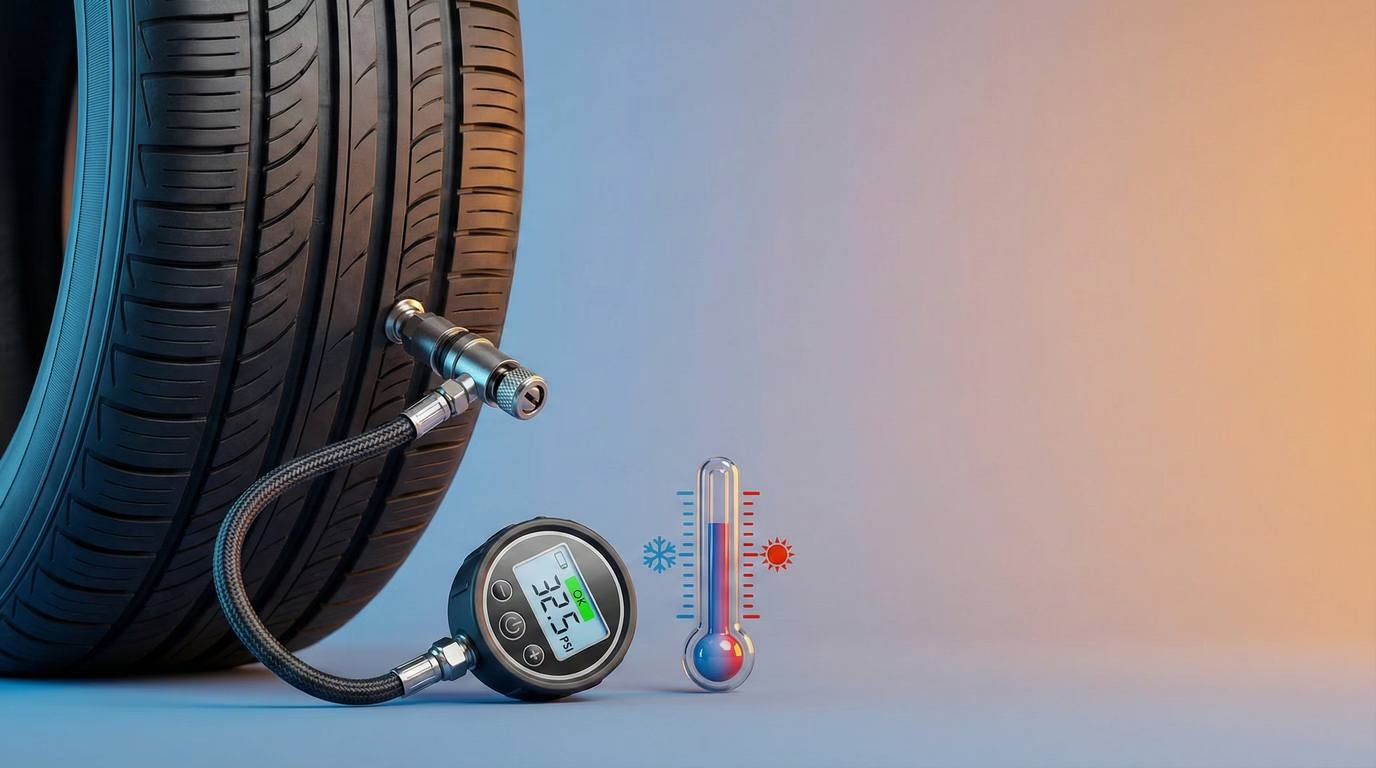
Temperature swings change tire pressure. This calculator estimates how many PSI your tires gain or lose when the weather changes, and tells you how much to adjust so you stay near the recommended cold PSI.
Tire Pressure Temperature Adjuster
Estimate how much your tire pressure changes with temperature, then get a simple “inflate/deflate by X PSI” answer.
Result
This calculator estimates pressure change from temperature change (ideal gas approximation).
Always set tire pressure when tires are cold. Driving heats tires and increases PSI. If a tire is visibly low, damaged, or losing pressure quickly, don’t rely on estimates—inspect/repair immediately.
Quick answers
Roughly, pressure drops when temperature drops and rises when temperature rises. This tool estimates that change and tells you how many PSI to adjust.
No. Use the door-jamb sticker recommended cold PSI. Sidewall PSI is the tire’s maximum, not the correct setting.
Cold air reduces pressure. If you were already slightly low, a temperature drop can push you below the warning threshold.
Symptoms + Quick Diagnosis
You wake up to a crisp morning, hop in your car, and—bam—that annoying TPMS light glares back. Or maybe your steering feels sluggish on the highway, like the tires are dragging through mud. Sound familiar?
Temperature swings are likely the culprit. Cold weather shrinks air volume in your tires, dropping PSI fast. Hot pavement? It inflates them beyond safe limits. If your dashboard warning light flickers after a cold snap or heatwave, or if your fuel economy suddenly dips, don’t ignore it. A 3–5 PSI shift can happen overnight when temps plunge 20°F. That’s not just inefficient—it’s dangerous.
Quick diagnosis: Park your car for 3+ hours (so tires cool to ambient temp). Check pressure. If it’s below your vehicle’s door-jamb spec (not the max PSI on the tire sidewall!), temperature’s probably guilty.
Common Mistakes
Mistake #1: Filling tires to the “MAX PSI” molded on the sidewall. Never do this. That number is for maximum load capacity, not daily driving. You’ll get a bone-jarring ride, uneven tread wear, and worse traction.
Mistake #2: Adjusting pressure while tires are hot. Adding air after a drive? You’re compensating for heat-induced expansion, not actual underinflation. When temps drop later, you’ll be dangerously low.
Mistake #3: Ignoring seasonal shifts. Waiting until winter hits to check pressure? By then, you’ve already lost 4–8 PSI from summer highs. That’s like driving on flat tires—blowout risk skyrockets.
Safety Warnings
⚠️ Underinflated tires overheat. At highway speeds, this can cause catastrophic blowouts. NHTSA links underinflation to 250+ U.S. fatalities yearly.
⚠️ Overinflated tires reduce grip. Less rubber meets the road = longer stopping distances, especially on wet pavement. Hydroplaning risk jumps by 30% at 10% overinflation.
⚠️ NEVER “set and forget” pressure. A 50°F temperature drop (common between summer nights and winter days) can slash PSI by 5 units. Check monthly—and always after drastic weather changes.
⚠️ TPMS lights lie sometimes. They only alert at 25% underinflation (e.g., 24 PSI when you need 32). By then, tread wear is already accelerating.
Recommended Tools List (Tied Directly to Your Calculator Output)
Your tire pressure calculator spits out a precise PSI adjustment target. These tools ensure you hit it exactly—no guesswork:
- Digital Tire Gauge
Why it matters: Analog gauges lie ±3 PSI. This gives laser-accurate readings so you know if you’re at 33.7 PSI (your calculator’s output) or dangerously low. - Valve Stem Caps with Built-in Pressure Sensors
Why it matters: They flash red if pressure drops while you drive, catching slow leaks before your next cold-check. Perfect for validating your calculator’s seasonal adjustments. - Portable 12V Air Compressor
Why it matters: When your calculator says “add 2.3 PSI after a cold front,” this delivers exactly that—not an overfilled “top-off.” Auto-shutoff prevents overinflation.
Pro Tip: Run the calculator before seasonal shifts (e.g., early October for winter). Pair it with these tools, and you’ll dodge 90% of pressure-related risks. No more guessing—just safe, precise driving.
Note: Always confirm adjustments against your vehicle’s cold PSI spec (sticker on driver’s door jamb). This calculator estimates temperature effects—not mechanical issues like leaks.
Car Maintenance Resource Hub
Smart guides, tools & safety checks — keep your ride optimal in any weather
Tire Pressure Guide: Door Jamb vs. Sidewall & Winter Drops
Understand why door jamb numbers rule, the danger of sidewall max, and how cold weather affects PSI.
Read guideTPMS Light Won’t Reset? Relearn vs Reset vs Bad Sensor
Real reasons the light stays on—sensor faults, relearn procedures, and when to replace.
Fix itHow to Find a Slow Tire Leak: Valve Core vs Bead Leak vs Nail
Quick tests to locate the exact source of pressure loss without wasting air.
Find leaksTire Plug vs Patch vs Replace: What’s Actually Safe
Learn which repairs risk a blowout and the only methods approved by tire engineers.
Stay safeUse a 12V Tire Inflator Without Blowing Fuses (Direct-to-Battery)
Stop popping cigarette lighter fuses — proper wiring tricks for heavy‑duty inflation.
Wire it rightBest Tire Inflator for Trucks: “Blown Fuse” Survivor 2026
Rugged inflators that survive high altitude, dust, and constant use—tested on F‑250s.
See pickBest Tire Inflator for Tesla (2026): Why Cordless is the Only Safe Choice
12V systems are different in EVs — avoid bricking your car with the wrong inflator.
EV pickBest Tire Inflator for Speed: Why the Milwaukee M18 Wins
If you need 0–35 PSI in under a minute, this cordless beast dominates.
FastestBest TPMS Relearn Tool Reddit 2026: Autel vs. The “Orange Box”
Which scan tool actually resets sensors on Hondas, Fords, and European cars?
CompareHow to Torque Lug Nuts Correctly: Star Pattern, Re‑Torque, Anti‑Seize Myths
Proper torque sequence, when to re‑torque after installation, and why anti‑seize can be dangerous.
Torque right