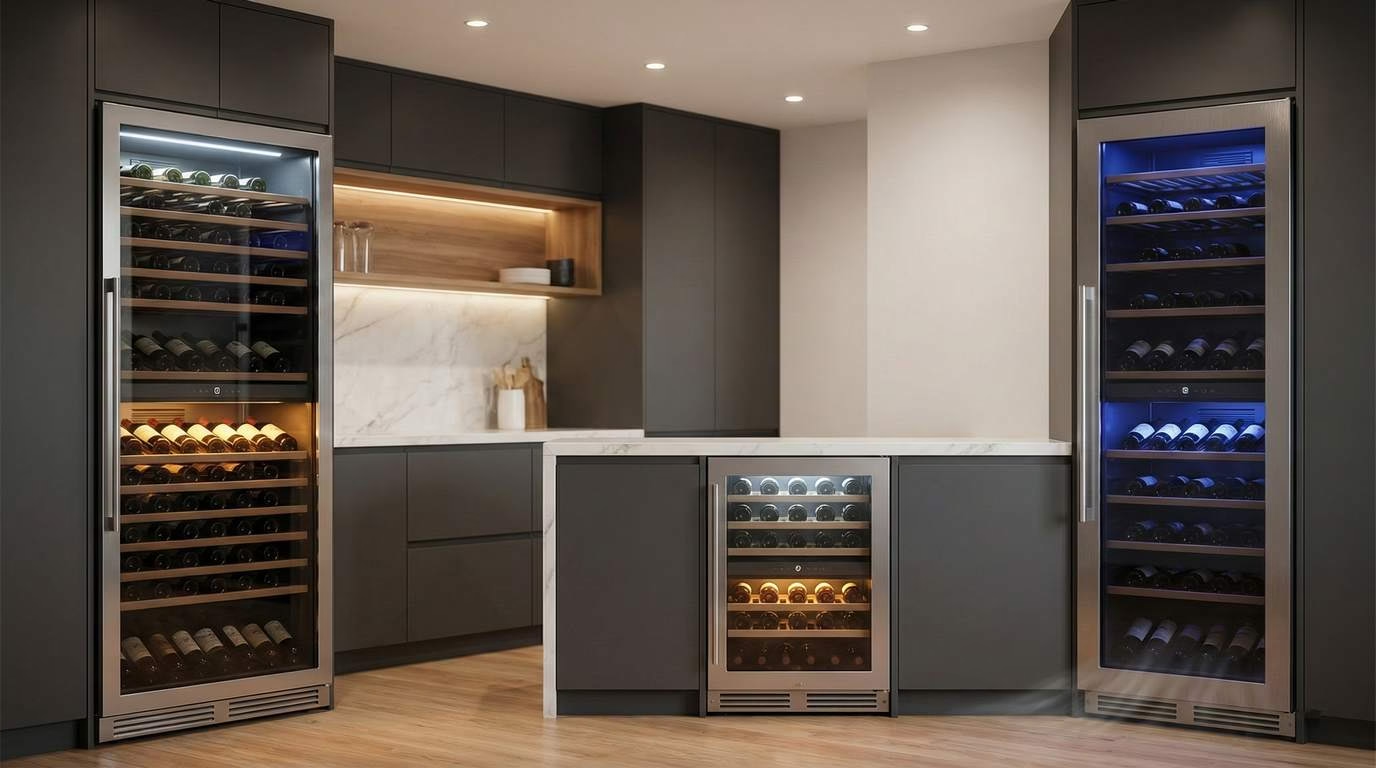
A “high end wine fridge” is not just a shiny door and blue lights.
It’s stable temps. Low shake. Solid shelves. And a door seal that does its job.
Below are three real options at three price levels.
One is a value monster. One fits under a counter. One is true premium.
If you want the short answer, start here.
Quick Verdict: Pick the Right High-End Wine Fridge Fast
Three price tiers. Three different buyers. Choose based on your real use: serving vs cellaring, space limits, and noise tolerance.
FoMup 24″ Dual Zone (up to 180 bottles)
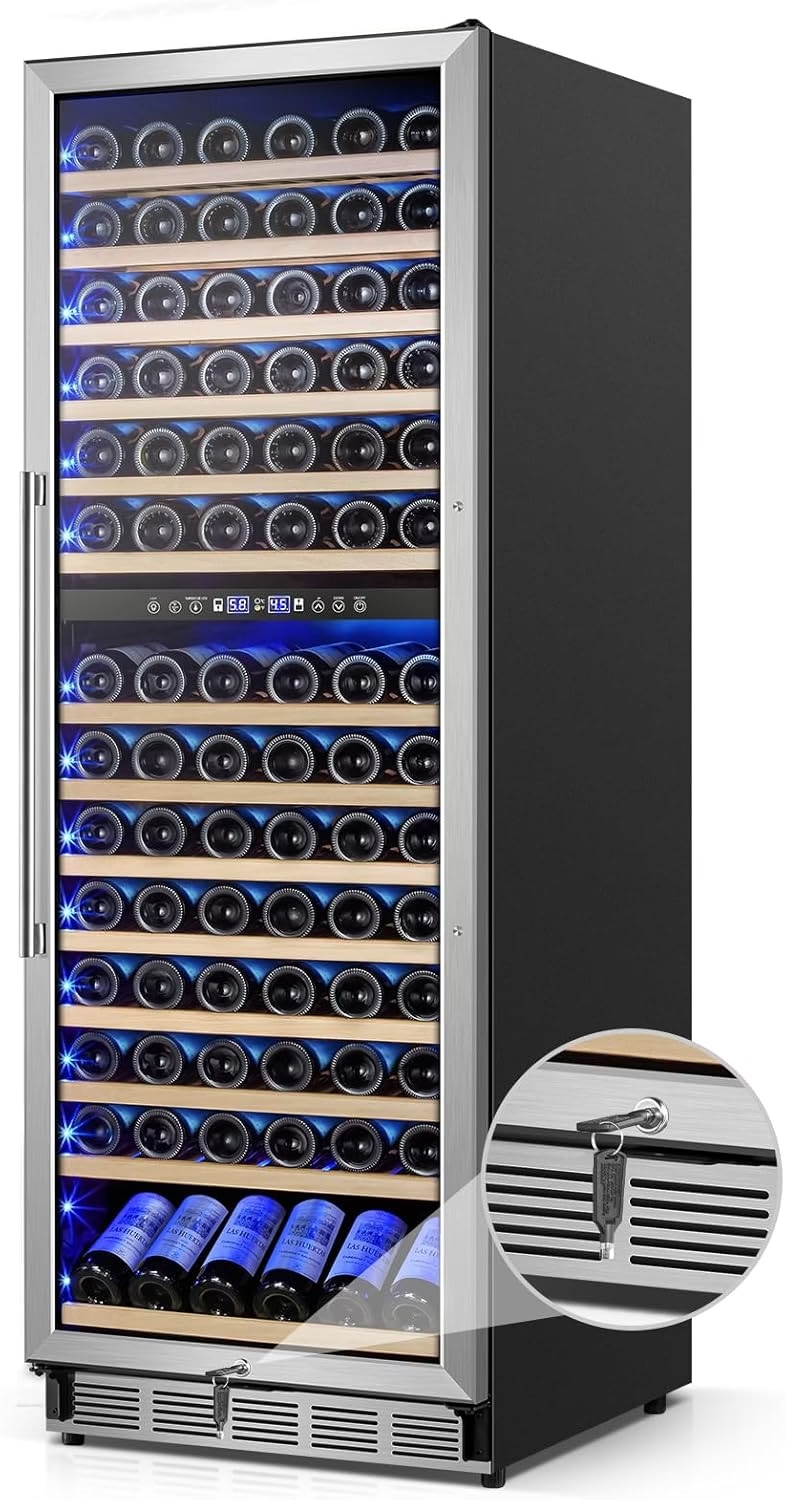
Buy this if you want maximum bottles per dollar and dual-zone serving temps.
- Pros: huge stated capacity, dual-zone flexibility, modern look.
- Cons: real capacity drops with wider bottles; noise reviews are mixed.
Ca’Lefort 24″ Dual Zone (52 bottles)
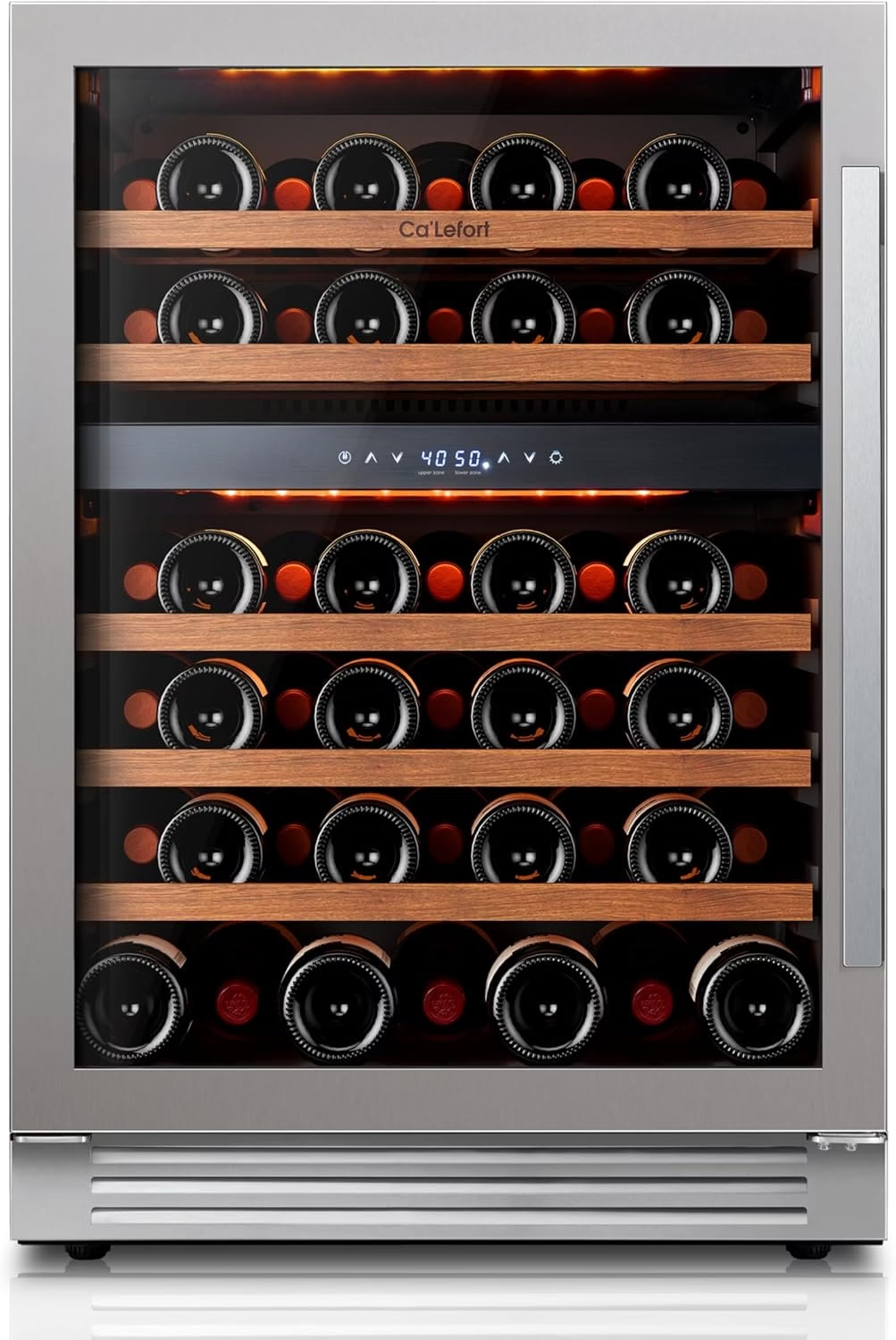
Buy this if you need under-counter height, clean styling, and precise 1°F control.
- Pros: compact fit, dual-zone, 3-color LEDs, wood shelves.
- Cons: small review sample; watch for early-life issues during returns.
Zephyr Presrv PRW24F02CG (148 bottles, single zone)
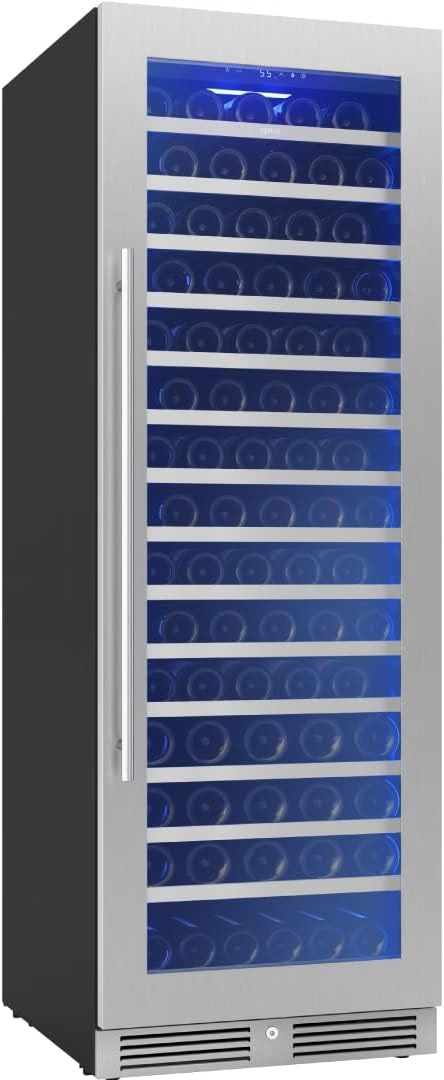
Buy this if you actually mean “high-end” and want premium build, filtration, and vibration control.
- Pros: premium materials, filtration, dampening; strong owner satisfaction.
- Cons: pricey; single-zone only; one long-term cycling-noise complaint exists.
Now let’s make the choice easy.
No fluff. No fake “perfect” ratings.
Quick note: This post contains affiliate links to Amazon. If you buy through them, I may earn a commission at no extra cost to you.
What “high end” really means in a wine fridge
Most wine fridges can hit a target temperature.
That’s the easy part.
The hard part is holding it steady.
Day after day. Door opens. Room gets warm. Power flickers.
A high end wine fridge usually wins in five places:
- Temperature stability
You want small swings. Not just a nice number on the screen.
Big swings can stress corks and push air in and out. - Low vibration
Wine ages best when it’s left alone.
A stronger build and better dampening helps. - Air quality
Odors can creep in over time.
A carbon filter is a real quality upgrade. - Light and UV protection
Glass is nice. But it must block heat and light well.
Also, LEDs should not add heat. - Build and fit
Strong hinges. Smooth shelves. Solid door seal.
These are the boring parts that matter most.
If you want “luxury wine cooler” looks, you can get that cheap.
If you want “elite wine fridges” performance, you pay for the guts.
Single zone vs dual zone (The truth)
Dual zone sounds premium. It sells well.
But it is not always the best choice.
Choose dual zone when:
- You serve whites cold and reds warmer.
- You want “ready to drink” storage for both types.
- You rotate bottles often.
Choose single zone when:
- You mostly cellar and age wine.
- You want the simplest, most stable setup.
- You keep most bottles at one long-term temp.
This is why some “high end wine coolers” are single zone on purpose.
Simple can be better.
Built-in vs freestanding (Don’t mess this up)
Built-in needs correct venting.
If the unit is made for built-in, it should vent from the front.
If you trap heat, the compressor works harder.
Noise goes up. Life goes down.
All three of these models can be used built-in or freestanding.
Still, give them breathing room when you can.
It makes everything easier.
Real bottle capacity (Marketing vs reality)
This is where people get angry after delivery.
Because “180 bottles” is a best-case math problem.
Rated capacity assumes:
- Mostly Bordeaux-style bottles
- Tight packing
- Not many Pinot Noir or Champagne bottles
If you store wider bottles, capacity drops fast.
That’s normal.
So read “180” as “up to 180.”
In real life it can be closer to 150, sometimes less.
That is not a scam. It’s physics.
Side-by-side snapshot (Quick comparison)
High-End Wine Fridge Shortlist
Match your space, serving style, and risk tolerance. Capacity is best-case with Bordeaux bottles.
FoMup 24″ Dual Zone
Ca’Lefort 24″ Dual Zone
Zephyr Presrv PRW24F02CG
Which One Is Right for You?
I need max capacity
Go FoMup. You’ll get 180-bottle capacity at a competitive price point. Just be aware of mixed noise reports and test thoroughly in the first 30 days.
I need an under-counter dual-zone
Go Ca’Lefort. Great fit and features, but treat the first 30 days as a strict performance check.
I want true premium cellaring
Go Zephyr. You’re paying for better materials, filtration, and stability. Single-zone is a feature here, not a flaw.
Product 1 Review: FoMup 24″ Dual Zone (up to 180 bottles)
If you want a big “luxury wine fridge” look for a sane price, this is it.
It is tall. It is wide. It stores a lot.
But this is not a magic box.
It has trade-offs.
Best fit for:
- Large collections on a budget
- People who want dual-zone serving temps
- Buyers who can tolerate some noise risk
Standout features:
- Dual-zone cooling: 40–55°F on top, 55–65°F on bottom
- Reversible stainless steel door with tempered glass
- Door lock
- Sliding shelves designed to reduce label scratching
- Built-in or freestanding installation
The real pros:
- Big capacity for the money
This is the main reason to buy it. - Dual-zone flexibility
You can keep whites and reds in their happy ranges. - Modern display look
Stainless + glass + interior light is a clean vibe. - Decent policies for the price
30-day return/replacement and 12 months support.
The real cons:
- Capacity is “Bordeaux perfect-world”
If you own lots of Pinot or fat bottles, plan for less. - Noise is a gamble
Some owners say quiet. Others say loud compressor cycling. - Shelf design complaints
Some users feel shelves are thin.
The bottom shelf resting on the floor is also a common nitpick.
My take (direct):
This is a value-first pick.
You buy it for capacity and price.
If you expect “near silent,” don’t.
How to buy this safely:
- Unbox fast.
- Let it sit 24 hours before turning on.
- Run both zones for a full week.
- Listen at night when your home is quiet.
- Load it with your real bottles, not ideal ones.
If it passes that week, you’ll likely be happy.
Where to buy:
- Amazon listing: FoMup dual-zone on Amazon
Product 2 Review: Ca’Lefort 24″ Dual Zone (52 bottles, under-counter height)
This is the “fits the kitchen” choice.
Shorter height. Clean lines. Dual zone.
If you want a premium wine cooler that slides under a counter, start here.
It’s sized like a practical appliance, not a tall cabinet.
Best fit for:
- Kitchen remodels and bar builds
- People with a curated collection
- Buyers who care about display lighting
Standout features:
- Dual zones with precise 1°F adjustments
- 40–65°F range
- Compressor cooling with automatic defrost
- Reversible left-hinged door
- Dual-layer tempered glass for UV protection
- Brushed stainless steel frame
- 3-color interior LED (White, Blue, Amber)
- Wood shelves (Shabill wood)
The real pros:
- Under-counter friendly size
This is a big deal for most homes. - Nice shelf vibe
Wood racks look and feel more “luxury cooler.” - Fine temp steps
1°F adjustments are great for serving control. - Three LED colors
It’s a simple feature that adds “luxury wine cooler” polish.
The real cons:
- Tiny review sample
With only a handful of ratings, you don’t get a full reliability picture. - A specific red flag exists (on the 15″ variant)
One report mentions a chemical smell and an “F8” error code.
It’s not confirmed for the 24″, but it’s a signal to stay alert. - Capacity limits
52 bottles is fine, but it’s not for big collectors.
My take (direct):
This is the most “normal home” choice.
It looks premium. It fits. It’s dual zone.
But you must treat the first 30 days like a test period.
How to buy this safely:
- Run it in a ventilated spot first, even if it will be built-in later.
- Smell check on day 1 and day 3.
- Test both zones at two setpoints each.
- Watch for any error codes.
- Confirm door swing works for your space.
Where to buy:
- Amazon listing: Ca’Lefort 24″ on Amazon
Product 3 Review: Zephyr Presrv PRW24F02CG (True high-end single zone)
This is the expensive one.
And yes, it should be.
If you want a high end wine fridge that feels like a real appliance, not a gadget, this is the pick.
Best fit for:
- Buyers who want premium build and long-term confidence
- Cellaring and aging focused collections
- People who hate flimsy shelves and loud rattles
Standout features:
- 24″ tall cabinet, freestanding
- 304-grade stainless steel finish
- Reversible glass door
- Single zone cooling
- Active Cooling Technology
- Vibration dampening system
- Carbon filter air filtration
- Capacitive touch controls
- 3-color LED (Cloud White, Deep Blue, Amber)
- Door lock + door-open alarm
- Noise level: 44 dBA
- Capacity: up to 148 bottles
- 15 shelves total, including glass shelves, rollout bin, and wood racks
The real pros:
- Real premium materials
304 stainless is a quality flex, and it lasts. - Better “cellar conditions” focus
Air filtration and vibration control matter for aging. - Smart storage layout
Mixed shelving types make it easier to organize. - Strong customer reception overall
Most buyers praise build, looks, and stable temps.
The real cons:
- Price
This is not “value.” This is “I want the good one.” - Single zone only
If you need whites icy and reds warm, this won’t do both at once. - One longer-term noise complaint exists
A review mentions cycling noise after a few years.
That can happen with any compressor unit over time.
My take (direct):
This is the closest thing here to an “elite wine fridges” experience.
It’s built like a premium appliance.
And it’s designed for wine storage, not just display.
If you want to age wine, single zone is not a downgrade.
It’s often the smarter move.
Where to buy:
- Amazon listing: Zephyr Presrv on Amazon
Which one should you buy? (Simple decision guide)
Buy the FoMup if:
- You want maximum storage for the least money.
- You like dual zones.
- You can accept a noise lottery.
Buy the Ca’Lefort if:
- You need under-counter height.
- You want dual-zone serving flexibility.
- You’re okay being strict during the return window.
Buy the Zephyr if:
- You want a true premium wine fridge.
- You care about filtration and vibration control.
- You want something that feels “built, not budget.”
If you’re still torn, ask yourself one question:
Are you building a collection, or storing drinks?
If you’re building a collection, lean Zephyr.
If you’re storing drinks for hosting, lean FoMup or Ca’Lefort.
Common mistakes people make
- Buying by bottle count
Most “high end wine coolers” numbers are best-case.
Count your bottle shapes before you buy. - Installing too tight
Heat needs a path out.
A cramped install means more noise and more wear. - Expecting silent operation
Even “quiet” compressors make noise.
At night, your ears notice more. - Ignoring door swing
A reversible door helps.
But measure your space anyway. - Not testing during the return window
This is the biggest one.
Treat the first month as a trial.
FAQs
What temperature should a high end wine fridge be set to?
For long-term storage, many collectors aim around the mid‑50s °F.
For serving, whites often go colder and reds warmer.
Dual zone makes serving easier.
Do I need dual zone in a luxury wine fridge?
Only if you serve both types often.
If you mostly cellar, single zone is simpler and stable.
Why does my wine fridge sound louder sometimes?
Compressors cycle.
Room temperature changes. Door opens. The unit works harder.
Can a built-in wine fridge be used freestanding?
Often yes, if it’s designed for both.
Just give it space to vent and breathe.
Quick recap
If you want the “biggest premium wine cooler for the money,” start with FoMup:
View FoMup on Amazon
If you want an under-counter luxury wine cooler with dual zones, go Ca’Lefort:
View Ca’Lefort on Amazon
If you want a true high end wine fridge with premium build, go Zephyr:
View Zephyr Presrv on Amazon
About those extra terms you’ll see online
You’ll run into names and phrases like:
- “premium 34 bottle wine cooler”
- “kenmore elite wine cooler”
- “elite wine fridges”
- “luxury coolers”
- “premium wine fridge” and “premium wine cooler”
Here’s the simple filter:
Ignore the label. Check the fundamentals.
Temperature stability. Vibration control. Venting. Door seal. Shelves.
That’s what separates a real luxury wine fridge from a shiny box.
Smart Home Tech
Automate your space with rigorously tested smart devices that actually work.
Browse Smart HomeLiving & DIY Projects
From air purifiers like the IQAir HealthPro Plus to clever home hacks—real solutions for everyday life.
See Living & DIYKitchen Appliances
Reliable, efficient appliances that make cooking and cleaning easier—no fluff, just facts.
Explore AppliancesGarage & Automotive Gear
Tools and gear that hold up under pressure—tested for performance, durability, and value.
Check Garage Gear