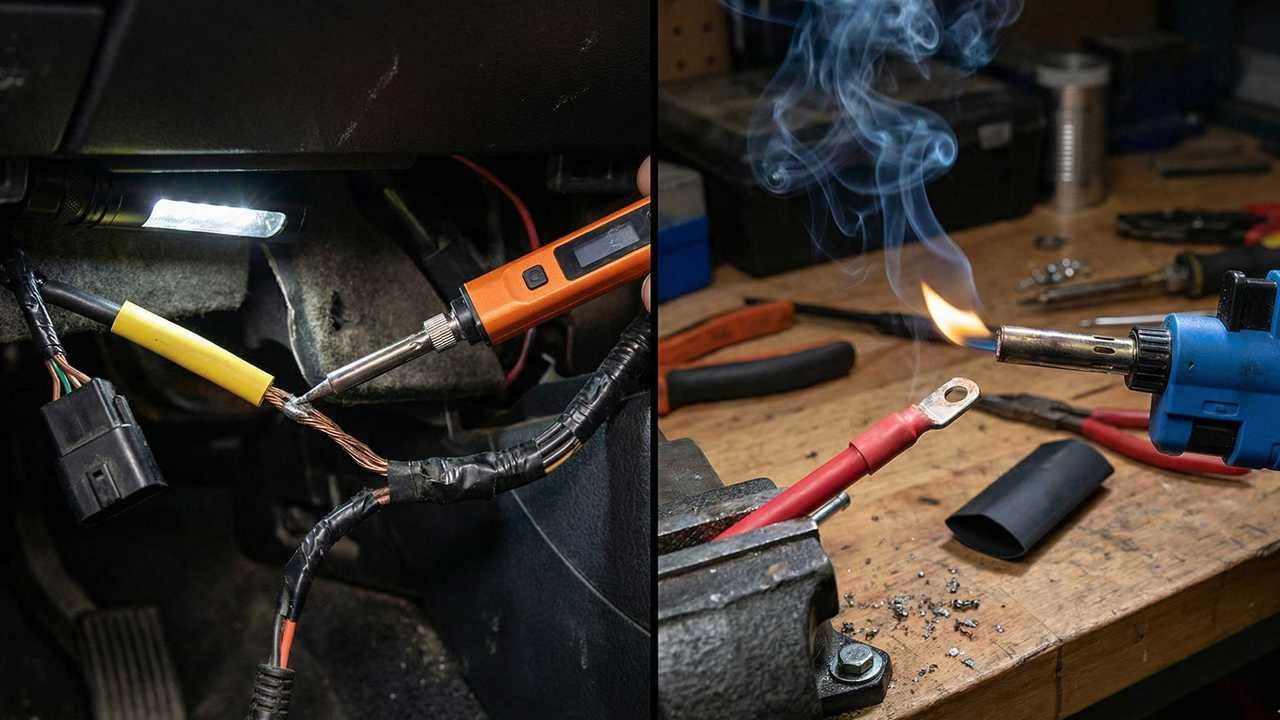
You’re not soldering “electronics.” You’re soldering in a place that vibrates, heat-soaks, and hides the joint behind brittle plastic. Under a dash. Next to a connector you can’t replace easily. And that’s why the cute little iron that works fine on a bench suddenly turns your splice into a cold, crusty joke.
Affiliate disclosure: This post contains affiliate links. If you buy through them, we may earn a commission at no extra cost to you.
Also, quick reality check: a lot of OEMs prefer crimp + adhesive-lined heat shrink for repairs because solder can create a stiff “hinge” point that fatigue-cracks with vibration if your strain relief is trash. If you’re doing harness repair and want it to survive, you need to do it properly (or crimp it properly).
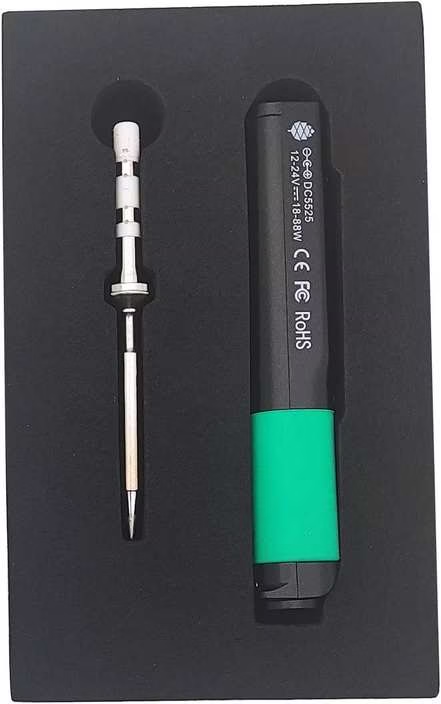
Pinecil V2
The Brutal Verdict: The smallest iron here that actually keeps up with real car wire—until you feed it a weak charger and it turns into a hot-looking liar..
Check Price on Amazon →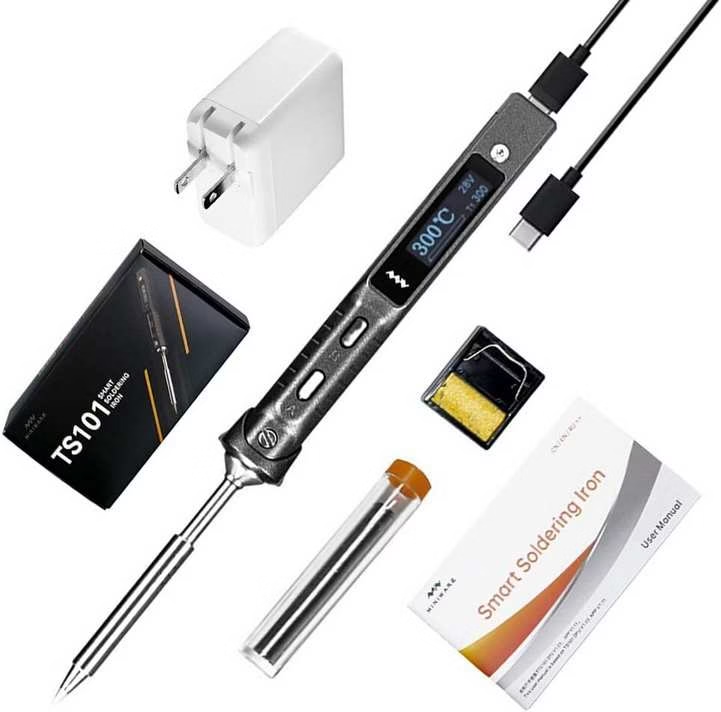
Miniware TS101
The Brutal Verdict: More “grown-up” than most portable irons, but you can still waste an afternoon fighting the wrong USB‑C PD brick or a flaky cable..
Check Price on Amazon →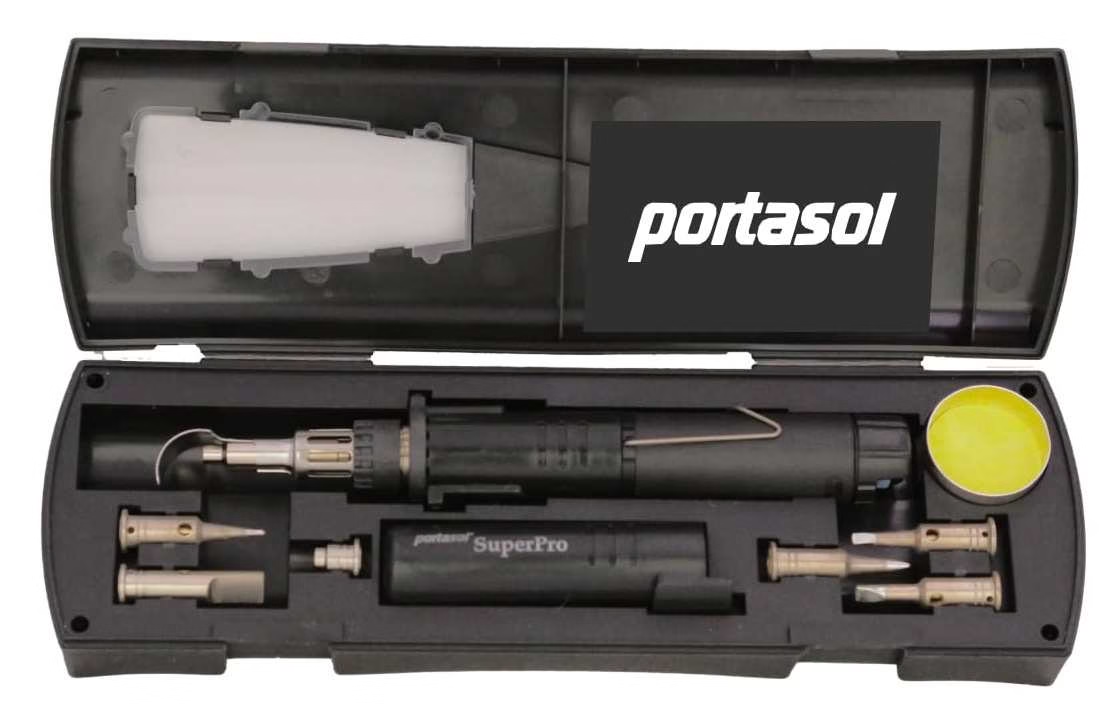
Portasol Super Pro 125
The Brutal Verdict: When you refuse cords, this is the move—just accept that butane refills can be messy and heat control is more “close enough” than precise..
Check Price on Amazon →How to Pick the Best Soldering Iron (Without the Fluff)
The community has spoken. Whether you need a cordless soldering iron for electronics or a heavy-duty beast for automotive work, the rules have changed. Here is exactly what to look for to avoid buying e-waste.
The “Must-Have” Features for 2026
Active Temperature Control. Old analog dials are obsolete. The best soldering iron for electronics must use PID control to detect heat loss instantly. Consistency is king for delicate PCBs.
Internal Heating Element (T12/C245). Avoid irons where the tip slides over the heater. Look for “cartridge style” tips where the heater is integrated. This is the secret to best value soldering iron performance.
Ergonomics Over Watts. A massive 100W iron often hurts your accuracy. A smart 65W iron (like the Pinecil) handles 90% of jobs better than a bulky heavy duty soldering iron.
Silicone Cables. If you buy a station, ensure the cord is heat-resistant silicone. Stiff PVC cords fight your hand movements and ruin precision soldering on drone building or jewelry.
Pinecil V2 (Best Overall for in-car wiring — if you power it right)
The consensus strength (why people keep recommending it)
Pinecil V2
- Feature A: Cartridges heat up fast, so you spend less time cooking insulation
- Feature B: Runs off USB‑C PD or barrel DC so you can build a proper “car kit”
- Feature C: Short grip-to-tip control for awkward under-dash angles
This one keeps getting recommended for “field” work because it heats fast, feels nimble, and doesn’t require a full station. On car wiring, that matters because you’re often working one-handed, wedged in weird angles, and you need the iron to recover heat quickly when the wire acts like a little heatsink.
The nice part: it can be genuinely great on splices without camping on the joint forever, which is how you melt insulation and deform connectors. The bad part: it’s only great if the power setup isn’t trash.
Marketing vs. reality (the ugly truth)
Here’s the ugly thing portable-iron marketing won’t say clearly: your power setup is part of the tool. If you run this off a weak phone charger or a random cable, it can show a happy temperature on-screen while the joint stays stubborn because the tip can’t deliver heat into a real automotive splice. People hit weird behaviors and “it used to work, now it won’t melt solder” situations that go away the moment they switch to a better power source.
That “reads hot, feels cold” problem shows up faster in cars because stranded copper, terminals, and nearby metal brackets pull heat out of the tip like a sponge. If the iron is underpowered, you compensate by sitting longer… and then you melt insulation or soften connector bodies.
Buy if / Avoid if
Buy if:
- You’ll run a real 20V USB‑C PD brick (or barrel DC), and you want something compact enough for under-dash work.
Avoid if:
- Your plan is “whatever charger is in the drawer.” That’s how you end up with cold joints and blame the iron.
Miniware TS101 (Best “portable that feels like a real tool”)
The consensus strength
This is the portable pick for people who want something that feels less like a hobby gadget. It’s still small and still quick to heat, but the vibe is more “tool” than “toy,” which matters when you’re doing real repairs instead of tinkering.
Also: the tip ecosystem is huge, so you can actually choose tip shapes that make sense for car wire (chisel/bevel), not just needle tips that are great at doing nothing on thick copper.
Marketing vs. reality (the ugly truth)
Two common headaches show up in real-world threads:
- Adapter roulette. Some USB‑C PD bricks won’t hold voltage under load, or the iron complains when it wakes from idle. You end up swapping chargers and cables like you’re troubleshooting a laptop, not soldering a wire.
- Tip/contact fuss. Some users hit “No Tip” type errors or intermittent connection weirdness that’s fixed by cleaning contacts or adjusting fit. That’s not a deal-breaker on a bench; it’s infuriating when you’re contorted under a steering column.
Buy if / Avoid if
Buy if:
- You want a portable iron that feels sturdier and you’re willing to standardize your power setup (one known-good PD brick + cable, kept with the iron).
Avoid if:
- You hate the idea of troubleshooting USB‑C PD behavior. You’ll be happier with a traditional station or a butane setup.
Portasol Super Pro 125 (Best when you refuse cords entirely)
The consensus strength
If you’re doing work in a driveway, in a yard, or on a vehicle where dragging cords is a pain, butane irons keep showing up for one reason: they don’t care about outlets, PD profiles, or cables. They just make heat.
That “always works anywhere” factor is real. It’s also why techs keep these around as a backup even when they own fancy bench stations.
Marketing vs. reality (the ugly truth)
Butane is never as clean and simple as people pretend:
- Refilling can be messy or finicky. Even when you do it right, you can get hissing/spitting and imperfect seals. It’s a known annoyance across butane tools.
- Heat control is less precise than electric. You can absolutely do solid splices, but it’s easier to overcook a tip or toast nearby plastics if you’re careless.
So yes, it’s cordless freedom. It’s also one more consumable (fuel) and one more variable (how well it refills today).
Buy if / Avoid if
Buy if:
- You need true portability and you’re working where power is inconvenient.
Avoid if:
- Most of your work is in tight plastic-heavy areas (under-dash, near connectors) and you want the most predictable temperature behavior.
Pro-Tip Guide
How to Stop a Portable Iron From Feeling Weak on Car Wire
Portable irons fail in cars for two dumb reasons: starving power and bad heat transfer. Fix those and they suddenly act expensive.
🚗 Car Wiring & Power Guides
If you’re touching car wiring, do it once and don’t chase ghosts later.
How to Hardwire a Dash Cam (Clean Install)
Fuse taps, routing, and the one mistake that kills trim clips.
Dash Cam Wiring Without Hardwiring
Power it cleanly without touching the fuse box (and why some methods still suck).
Parking Mode Voltage Cut-Off Explained
How to stop parking mode from nuking your battery overnight.
Final verdict & summary
If you want the cleanest, least annoying path for automotive wiring:
- Pinecil V2 is the best overall only if you treat the power setup like part of the purchase. Good PD brick/cable (or barrel power) turns it into a legit in-car iron. Weak charger turns it into a liar with a temperature display.
- Miniware TS101 is for people who want portable but “tool-like,” and don’t mind the occasional USB‑C PD fuss. It’s a great choice when you standardize your charger/cable combo and stop experimenting.
- Portasol Super Pro 125 is for true cordless work where outlets are not happening. Just accept the butane refill nonsense and the less precise heat control, especially near plastic connectors.
And if your goal is “factory-style reliability” on a harness? Don’t ignore the boring truth: a proper crimp with sealing heat shrink is often the more durable repair in a vibrating vehicle environment.