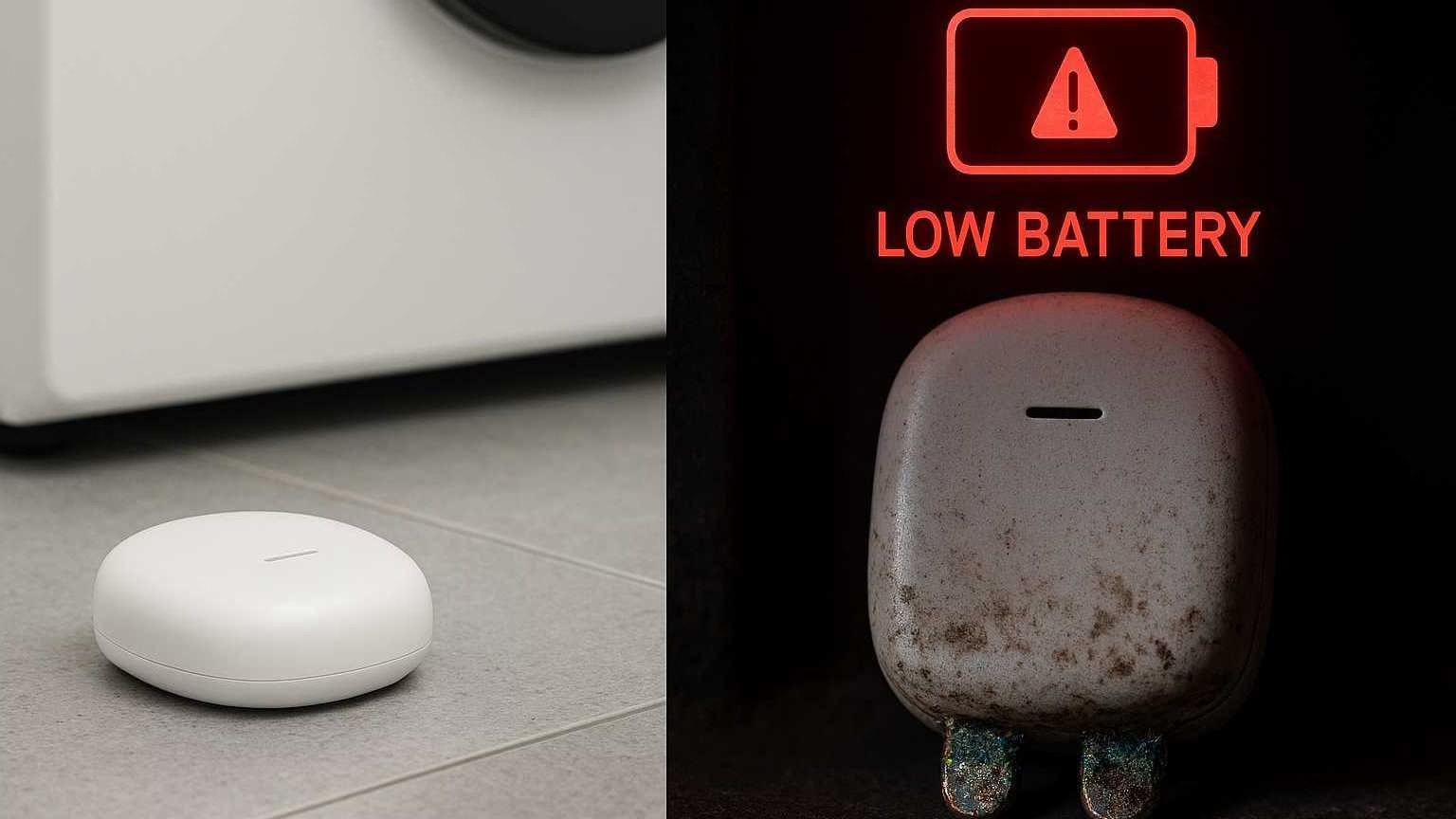
Most “smart” water leak detectors are just dumb noisemakers that connect to Wi-Fi. You buy them to sleep better, but the reality is often the opposite: 3 AM battery screamers, corroded sensors that fail after one splash, and “automatic” shutoff valves that refuse to pair when it actually matters.
We dug through user logs to find the few that actually work—and specifically, how they fail, so you don’t find out the hard way.
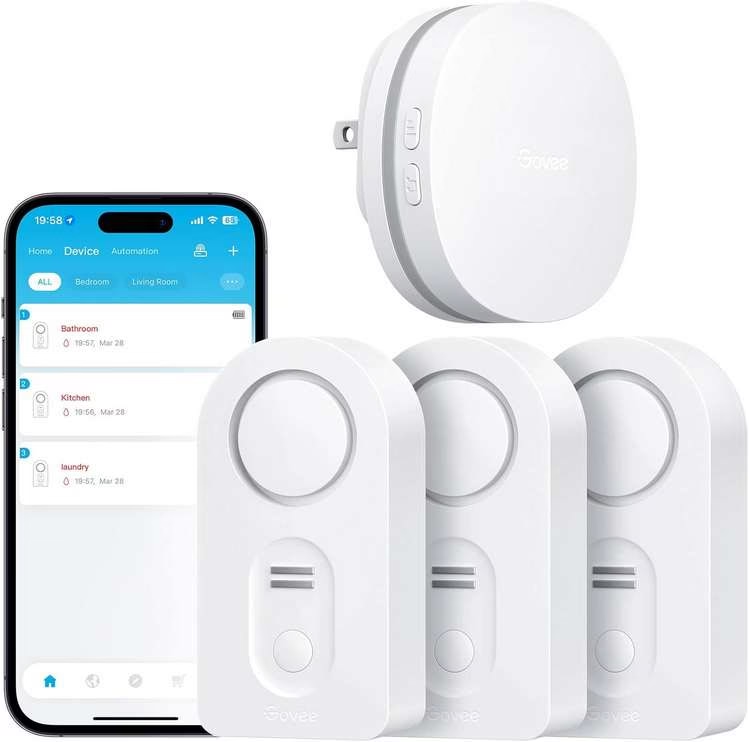
Govee WiFi Water Leak Detector
The Brutal Verdict: The most reliable localized siren, but the low-battery alarm is a nightmare you can’t silence without a screwdriver.
Check Price on Amazon →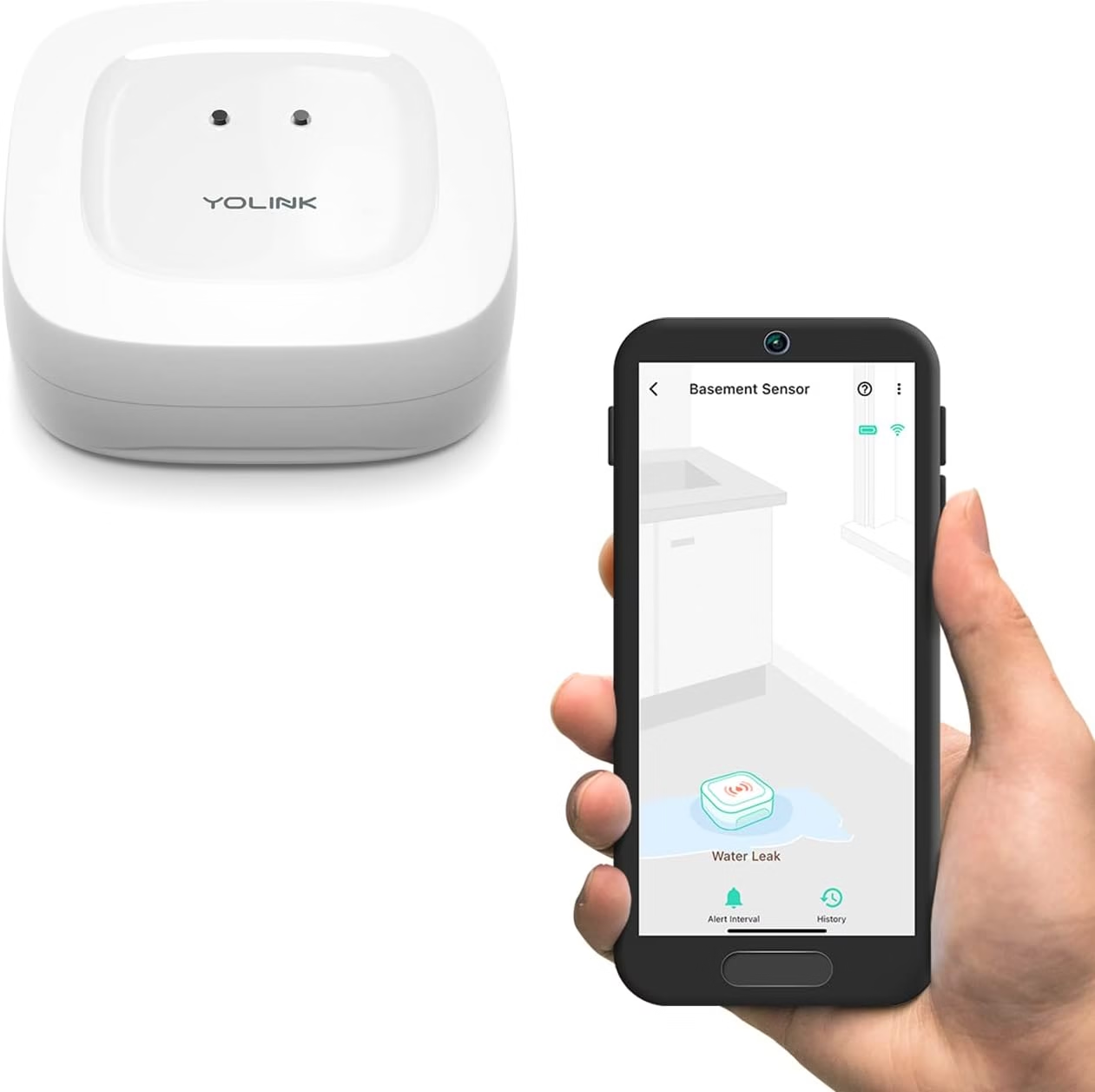
YoLink Leak Sensor System
The Brutal Verdict: Incredible range (LoRa), but the “auto-shutoff” pairing logic is fragile and requires a specific setup sequence to work.
Check Price on Amazon →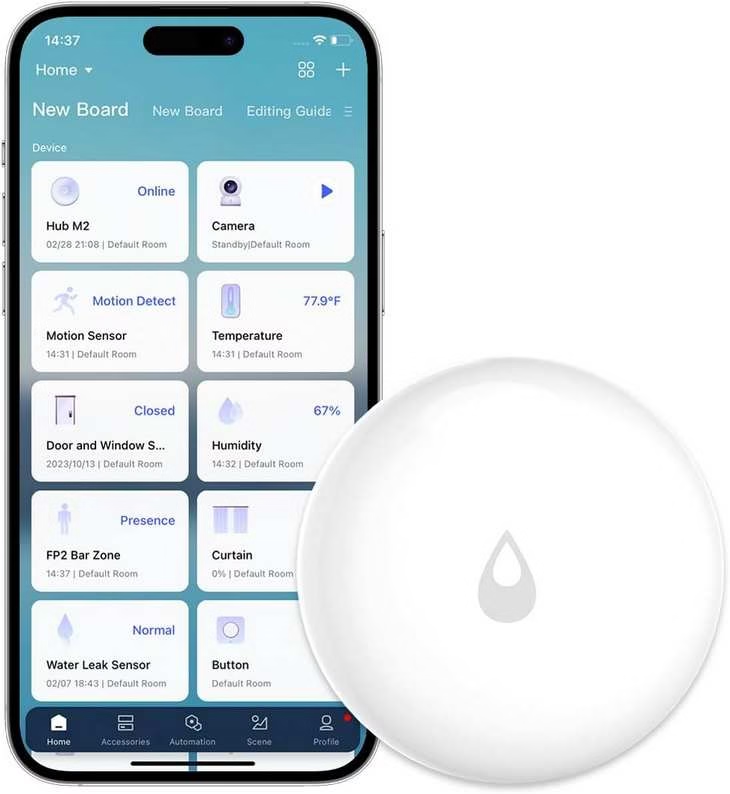
Aqara Water Leak Sensor
The Brutal Verdict: Cheap and integrates well, but the contacts corrode instantly upon water exposure, often making them single-use.
Check Price on Amazon →Stop Water Damage Before It Starts
Most users ask: “Do water leak detectors work?” The answer is yes, but only if you choose reliability over gimmicks. The best smart water leak detector Reddit users recommend isn’t just a sensor—it’s an ecosystem that shuts the water off automatically.
The “Must-Have” Features for 2026
Long-Range Connectivity. Avoid standard Wi-Fi sensors for basements. The best smart leak detector uses LoRa (like YoLink) or Zigbee to punch through concrete walls where Wi-Fi fails.
Cables Over Pucks. A single “puck” sensor only detects water directly underneath it. Look for sensors with a sensing rope/cable. This covers the entire perimeter of a washing machine or heater.
Automatic Shut-Off Integration. Notification is not enough if you aren’t home. The best smart water leak detection system pairs sensors with a motorized valve to cut the main water supply instantly.
Local Execution. Cloud outages happen. Ensure your best smart home water leak detector can trigger the alarm or valve locally, even if your internet is down.
1. Govee Water Leak Detector
Govee WiFi Water Leak Detector
- Loudest Alert: 100dB physical siren wakes you instantly.
- Hub-Free: Connects directly to Wi-Fi without extra gear.
- Flexible Placement: Sensors use AAA batteries for easy swapping.
The Govee system markets itself on “Always-On Leak Protection,” emphasizing a clear distinction between leak alarms and system notifications. For most users, it is the default entry point into leak detection because it doesn’t require a complex hub setup—just Wi-Fi and the sensors.
The Ugly Truth: The “Screaming” Battery Problem The marketing claims you get distinct notifications, but the hardware reality is different. The low battery alarm triggers the exact same physical siren as a water leak detection. There is no way to silence this specific alarm without physically opening the device.
If the battery hits the critical 10% threshold at 3 AM, your house will sound like it is flooding. You cannot turn it off from the app. You have to get out of bed, find a screwdriver, and physically remove the batteries to stop the noise. Users with 15-20 sensors report this is unsustainable, with one user noting, “nothing like a 5am water leak alarm that only stops by taking batteries out which requires a screwdriver.”
The Verdict:
- Buy if: You want a loud, physical alarm that will definitely wake you up if a pipe bursts.
- Avoid if: You aren’t willing to proactively manage battery changes and hate the idea of middle-of-the-night false alarms.
2. YoLink Leak Sensor System
YoLink promises “Automatic Water Shutoff Integration” using LoRa (Long Range) technology. The key selling point is a direct Sensor-to-Valve pairing that supposedly triggers water shutoff even if your Wi-Fi is down and the cloud is unreachable.
The Ugly Truth: The “Inverted” Logic Flaw While the range is fantastic, the Device-to-Device pairing is surprisingly fragile. Users report that sensors will detect leaks properly in the app, but fail to trigger the physical shutoff valve—rendering the primary safety feature useless.
The flaw lies in the pairing sequence. Support documents reveal that pairing requires the valve to be in the CLOSED position during setup. If you pair it while the valve is open (which is intuitive), the logic inverts. The system thinks “Open = Closed,” and when a leak happens, it tries to “close” an already closed valve (or vice versa), resulting in total automation failure. Furthermore, “offline” sensor alerts sound exactly like “water detected” alerts, creating panic when a sensor simply drops off the network.
The Verdict:
- Buy if: You have a large property or basement where Wi-Fi doesn’t reach (LoRa is king here).
- Avoid if: You expect “set it and forget it” automation without rigorously testing the shutoff logic yourself.
3. Aqara Water Leak Sensor
Aqara markets this as “Simple, Reliable Leak Detection” for the smart home enthusiast, specifically those using Zigbee hubs, HomeKit, or Home Assistant. At roughly $18-20, it’s the ultra-affordable solution designed to “just work.”
The Ugly Truth: The One-Time Use Sensor The device is cheap for a reason. The exposed metal contact electrodes are prone to rapid corrosion and oxidation immediately after water exposure.
Users report that sensors work perfectly for the first test, but the water exposure causes galvanic corrosion on the bare copper prongs. When a real leak happens months later, the sensor has lost sensitivity and fails to trigger. One user documented a 50% failure rate over two years specifically due to this contact corrosion. The design lacks the conformal coating or gold plating necessary to survive repeated wet/dry cycles.
The Verdict:
- Buy if: You are deep in the Apple HomeKit/Zigbee ecosystem and need a cheap sensor for dry areas (like under a washing machine).
- Avoid if: You live in a humid environment or expect frequent minor water splashes, as the sensor will die.
4. How to Stop False Alarms & Failure
If you buy the “Winner” (or the others), you must use these workarounds to bypass the flaws mentioned above.
How to Fix the “Deal-Breaker” Flaws
Final Verdict
- For Total Protection: Get the YoLink System, but pair it carefully.
- For Renters: Get the Govee, but buy Lithium batteries.
- For Tinkerers: Get the Aqara, but check them monthly.